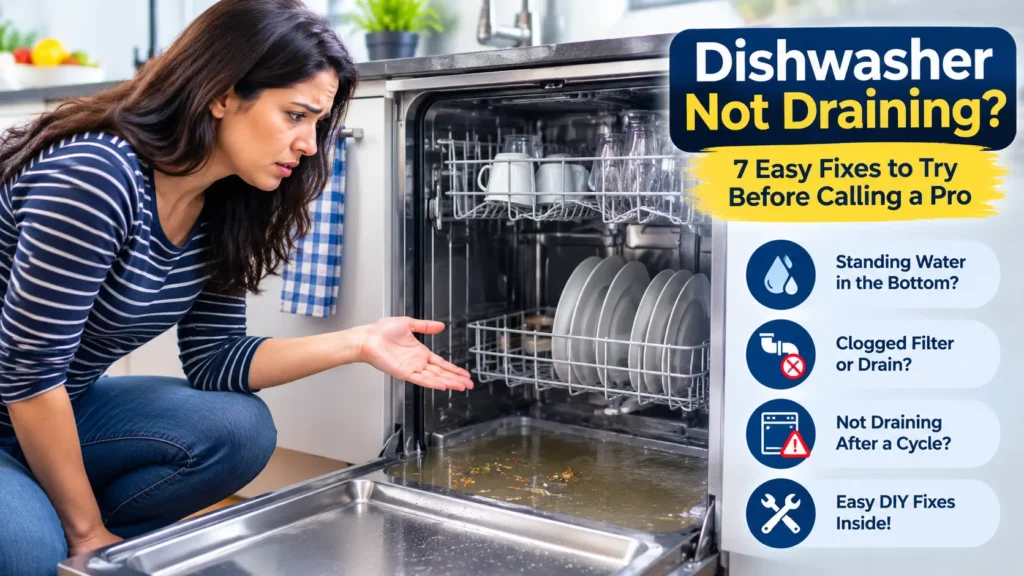
A dishwasher not draining is one of those kitchen problems that can quickly become frustrating. You open the dishwasher after a cycle and discover dirty water sitting at the bottom instead of an empty, clean tub.
The good news is that standing water does not always mean your dishwasher is broken. A clogged filter, blocked drain hose, garbage disposal connection, or interrupted cycle can sometimes prevent water from draining properly.
If your dishwasher is not draining, start with the simple checks below before assuming that the drain pump or another expensive component has failed.
In this guide, we’ll cover 7 practical ways to troubleshoot a dishwasher that won’t drain, along with signs that it’s time to stop DIY troubleshooting and call a professional.
If your dishwasher is not draining, the problem is often caused by a clogged filter, blocked drain hose, or improper garbage disposal connection.
Why Is My Dishwasher Not Draining?
A dishwasher removes dirty water through a drainage system that typically includes a filter, drain pump, drain hose, and a connection to your home’s plumbing or garbage disposal.
If any part of that path becomes blocked or fails, water may remain inside the dishwasher.
Common reasons include:
- A dirty or clogged dishwasher filter
- Food debris around the drain area
- A kinked or blocked drain hose
- A clogged garbage disposal connection
- An improperly installed drain hose
- An interrupted dishwasher cycle
- A malfunctioning drain pump
- A plumbing blockage farther down the drain line
Before troubleshooting a dishwasher not draining, turn the appliance off and follow the manufacturer’s safety instructions. If you need to access components or hoses, disconnect electrical power first.
7 Easy Fixes for a Dishwasher Not Draining
1. Run or Reset the Dishwasher Cycle
Before removing anything, make sure the dishwasher actually completed its cycle.
Opening the door early, losing electrical power, or accidentally interrupting a cycle can leave water inside the tub.
Close the dishwasher properly and check the control panel.
Depending on your model, you may have a Cancel, Drain, or Cancel/Drain function.
Follow your dishwasher manufacturer’s instructions to cancel or reset the cycle and allow the drain function to run.
After the drain cycle finishes, open the dishwasher and check whether the standing water has disappeared.
If your dishwasher is not draining after a reset, continue with the physical checks below.
Best for: Water left behind after an interrupted or incomplete cycle.
2. Clean the Dishwasher Filter
A dirty filter is one of the first things worth checking when water remains inside a dishwasher.
Food particles, grease, labels, broken pieces of food, and other debris can accumulate around the filter and interfere with normal water movement.
A dirty filter is one of the most common reasons for a dishwasher not draining properly.
How to Check the Filter
Remove the lower dish rack.
Locate the filter at the bottom of the dishwasher. The exact design varies by model, so consult your owner’s manual if you are unsure how it should be removed.
Carefully remove the filter according to the manufacturer’s instructions.
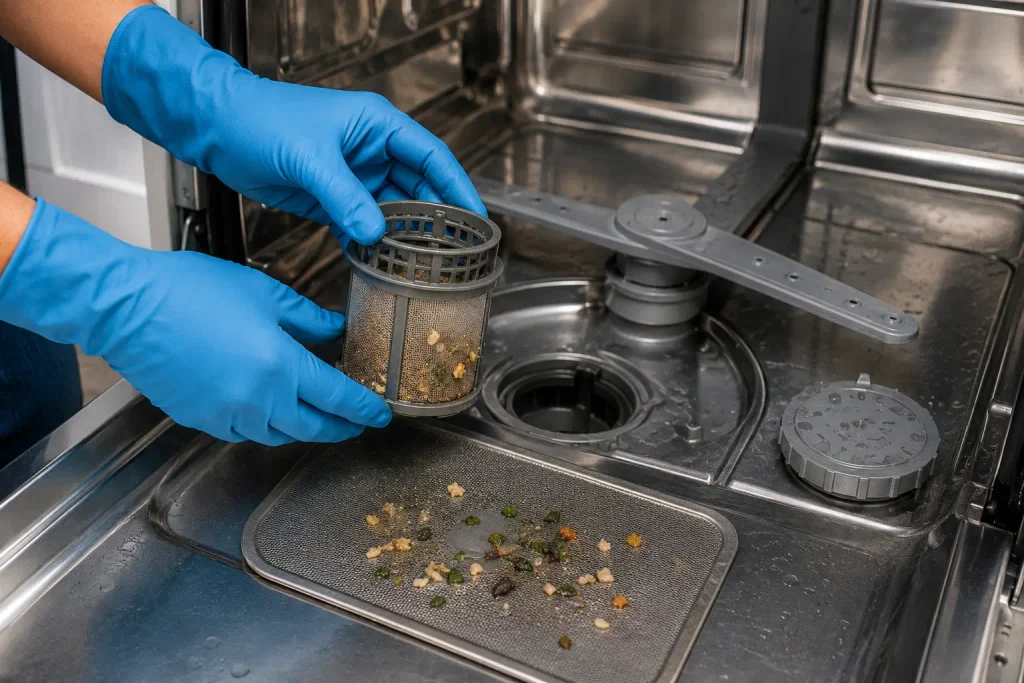
Rinse it under running water and use a soft brush if necessary to loosen stubborn debris.
Also inspect the area around the filter opening for food particles or other visible obstructions.
Reinstall the filter correctly before operating the dishwasher.
When troubleshooting a dishwasher not draining, cleaning the filter is a simple maintenance step that can sometimes solve the problem without any tools.
Best for: Dishwashers with visible food buildup or a dirty filter.
3. Check the Bottom of the Dishwasher for Debris
Even with a filter, small pieces of food, glass, labels, or other debris can sometimes collect around the drain area.
Turn the dishwasher off and disconnect power if you’ll be reaching into or removing components from the bottom of the appliance.
Remove the lower rack and inspect the bottom of the tub with a flashlight.
Look for obvious debris around the filter and accessible drain area.
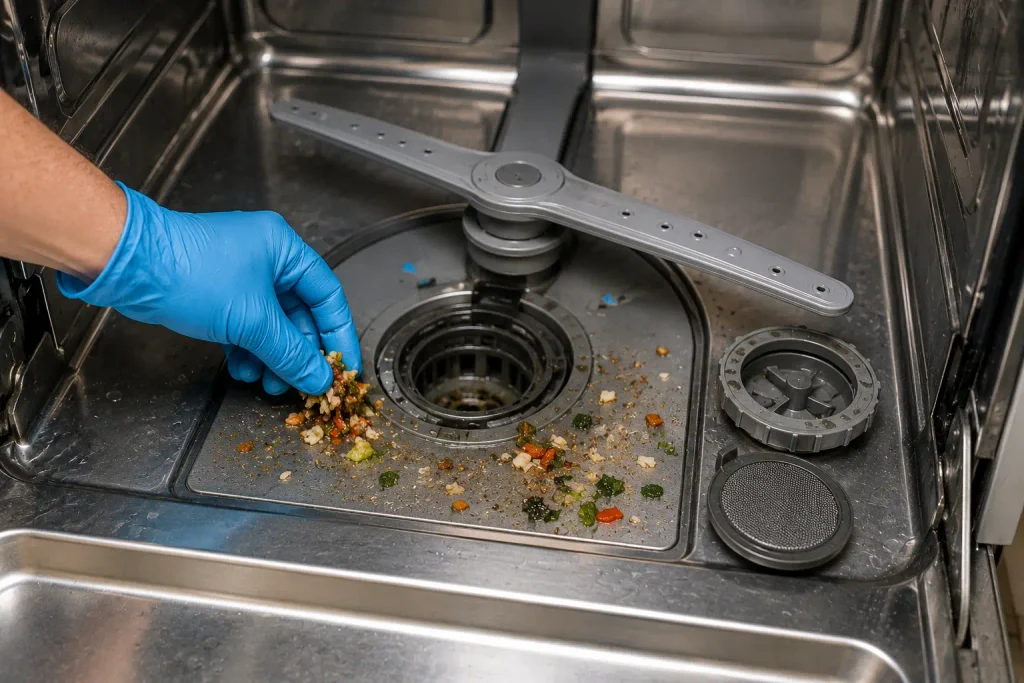
Wear protective gloves if there is any possibility of broken glass.
Remove only objects that are safely accessible. Do not dismantle the drain pump or electrical components unless the manufacturer’s user instructions specifically describe the procedure.
Once the visible debris has been removed and everything is correctly reassembled, restore power and run a short cycle to test drainage.
When a dishwasher is not draining, checking the drain area for food particles and debris is an important troubleshooting step
Best for: Dishwashers with visible debris near the drain area.
4. Inspect the Dishwasher Drain Hose
The drain hose carries wastewater from the dishwasher to the sink drain or garbage disposal.
If the hose becomes kinked, crushed, or blocked, the dishwasher may have difficulty draining.
Before inspecting it, turn off power to the dishwasher.
Look underneath the sink and locate the dishwasher drain hose.
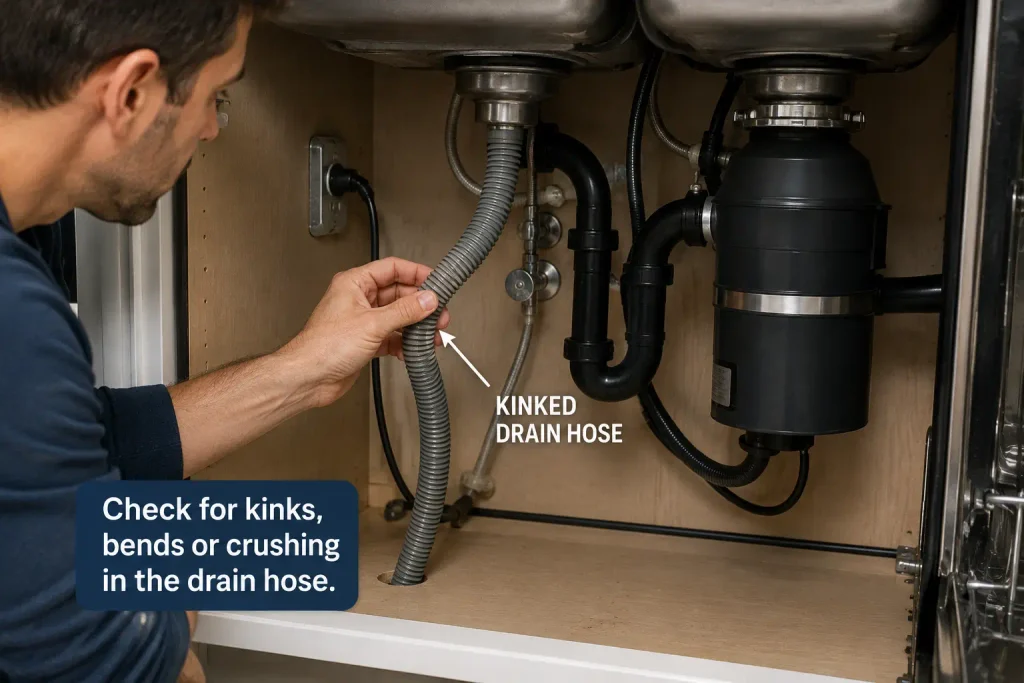
Check for:
- Sharp bends
- Kinks
- Crushing
- Loose connections
- Visible damage
- Improper routing
If the hose is visibly kinked, carefully straighten it without damaging the material.
A dishwasher not draining because of a restricted drain hose may begin working normally once the water has a clear path out of the appliance.
However, if you suspect a blockage inside the hose that cannot be safely accessed, follow your appliance manufacturer’s service instructions or contact a professional.
For additional troubleshooting guidance, see Whirlpool’s official dishwasher drain troubleshooting guide.
Best for: Dishwashers that drain slowly or have a visibly kinked hose.
5. Check the Garbage Disposal Connection
If your dishwasher drains through a garbage disposal, the disposal connection is another important place to check.
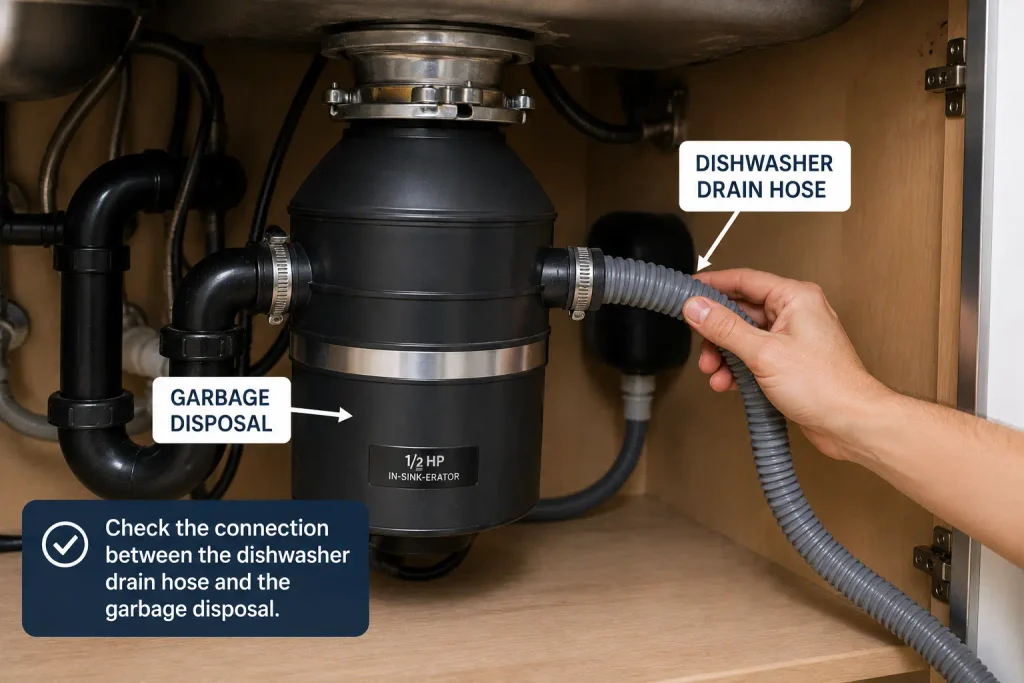
A dishwasher not draining after a new garbage disposal installation may indicate that the knockout plug was not removed.
First, run the garbage disposal according to its normal operating instructions. Food waste inside the disposal or connected plumbing can sometimes interfere with drainage.
If the garbage disposal itself isn’t operating correctly, fix that problem before continuing.
If you’ve recently installed a new garbage disposal and the dishwasher has stopped draining afterward, there is another possibility: some disposal installations require removal of an internal dishwasher connection plug before attaching the dishwasher drain hose.
The exact procedure depends on the disposal model, so always follow the manufacturer’s installation instructions rather than trying to remove parts without confirming the correct procedure.
If you are also having trouble with the disposal, read our guide on how to fix a garbage disposal before continuing with dishwasher troubleshooting.
Best for: Dishwashers connected to a garbage disposal, particularly after disposal installation or replacement.
6. Check the Drain Hose Installation and High Loop
The way the dishwasher drain hose is routed can affect drainage.
Depending on local plumbing requirements and your dishwasher installation, the drain hose may use a high loop or an air gap.
A high loop means the drain hose rises high beneath the countertop before connecting to the sink drain or garbage disposal.
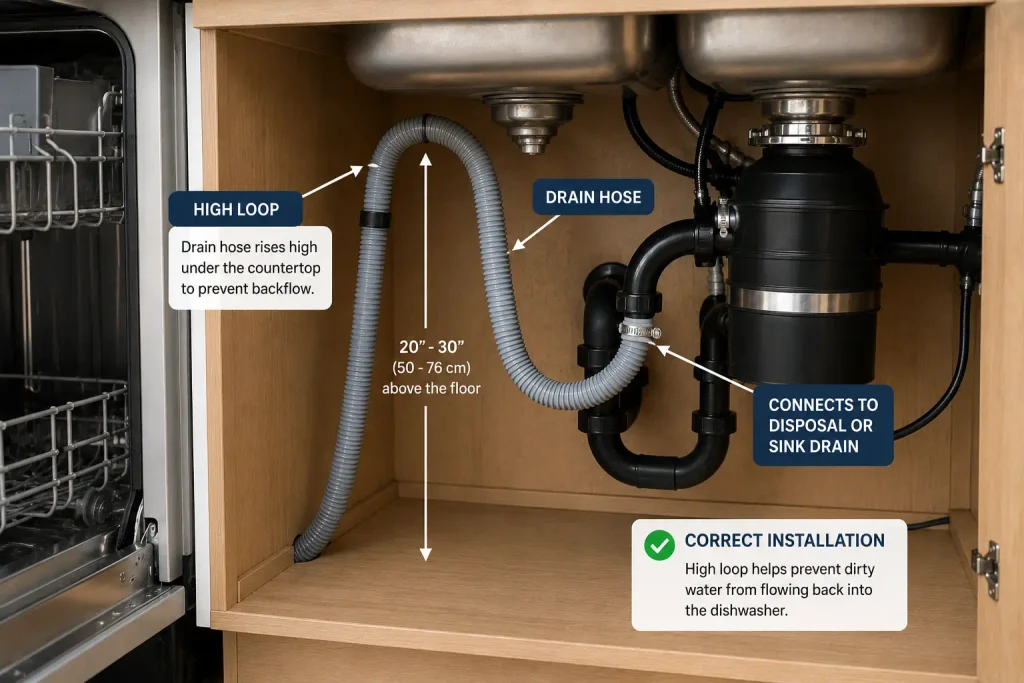
This arrangement helps reduce the chance of dirty sink water flowing backward into the dishwasher.
Inspect the hose underneath the sink.
If it has fallen down or appears incorrectly routed, compare the installation with your dishwasher manufacturer’s instructions and applicable local plumbing requirements.
Do not assume that every installation should be modified in exactly the same way. Air-gap and high-loop requirements can vary depending on the dishwasher, installation configuration, and local codes.
Best for: Drainage problems after dishwasher installation or plumbing work.
7. Consider a Drain Pump or Mechanical Problem
If you’ve checked the filter, debris, drain hose, garbage disposal connection, and installation but the dishwasher is still not draining, the problem may involve the drain pump or another internal component.
Possible symptoms include:
- No draining sound when the dishwasher should drain
- Unusual buzzing or grinding
- Water remaining after every cycle
- Drainage stopping despite a clear hose and filter
- Error codes related to drainage
Do not open electrical components or attempt internal motor repairs unless you are qualified and the manufacturer’s instructions specifically allow the work.
At this stage, an appliance technician can test the drain pump and related components and determine whether repair or replacement is necessary.
Best for: Persistent drainage problems after basic troubleshooting.
How Much Standing Water in a Dishwasher Is Normal?
Seeing a small amount of water near the filter does not automatically indicate a drainage problem.
Some dishwasher designs may retain a small amount of water in or around the sump area as part of normal operation.
However, a noticeable pool covering the bottom of the dishwasher after the cycle has finished deserves investigation.
Check your appliance manual if you’re uncertain about what is normal for your specific model.
If water is unusually high, dirty, or accompanied by an unpleasant odor, start with the filter and drainage checks described above.
What If the Dishwasher and Kitchen Sink Are Both Not Draining?
If your dishwasher and kitchen sink are both draining slowly or backing up, the problem may not be inside the dishwasher.
A blockage in the shared kitchen plumbing could be restricting water flow.
In that situation, repeatedly cleaning the dishwasher filter may not solve the underlying problem.
If the sink is also clogged, follow our step-by-step guide on how to unclog a kitchen sink before assuming the dishwasher itself has failed.
If multiple fixtures continue backing up or wastewater returns into the dishwasher, professional plumbing help may be appropriate.
What Should You Avoid When a Dishwasher Won’t Drain?
When dealing with a dishwasher not draining, avoid randomly taking components apart or using aggressive methods without checking the appliance instructions.
In particular:
- Don’t reach into areas where broken glass may be present without protective gloves.
- Don’t work on electrical components while the appliance is powered.
- Don’t force drain-pump components.
- Don’t mix household cleaning chemicals.
- Don’t pour chemical drain cleaner into the dishwasher unless the appliance manufacturer specifically says it is safe for your model.
- Don’t repeatedly run a dishwasher that is overflowing or leaking.
The safest troubleshooting process starts with accessible items such as the cycle, filter, visible debris, hose, and disposal connection.
How to Prevent Dishwasher Drainage Problems
Once your dishwasher is draining properly again, a few simple habits can reduce future problems.
Clean the Filter Regularly
Check and clean the filter according to your dishwasher manufacturer’s recommendations.
A filter covered in food debris can interfere with performance and may contribute to unpleasant odors.
Remove Large Food Scraps
Scrape large pieces of food from dishes before loading them.
You generally don’t need to make dishes spotless before putting them into a modern dishwasher, but large food scraps, bones, labels, and non-food objects should stay out.
Load the Dishwasher Correctly
Incorrect loading can interfere with spray arms and cleaning performance.
Follow the manufacturer’s rack-loading recommendations for your model.
Check Under the Sink Occasionally
Take a quick look at the dishwasher drain hose from time to time.
Make sure stored items under the sink haven’t pushed against, crushed, or kinked it.
Address Slow Drainage Early
If you notice water taking longer than usual to disappear, investigate the problem before the dishwasher stops draining completely.
These simple habits can reduce the chances of dealing with another dishwasher not draining problem.
When Should You Call a Professional?
DIY troubleshooting should stop when the problem involves electrical components, internal pumps, persistent leaks, inaccessible plumbing, or anything outside the manufacturer’s normal maintenance instructions.
Consider professional service if:
- The dishwasher never drains after basic troubleshooting.
- The drain pump makes unusual noises.
- An electrical breaker repeatedly trips.
- You notice burning smells.
- The dishwasher is leaking.
- Error codes continue returning.
- The drain hose and filter are clear but water remains.
- Wastewater repeatedly backs up into the dishwasher.
A qualified appliance technician can diagnose dishwasher components, while a plumber may be more appropriate when the problem involves the sink drain or household plumbing.
Frequently Asked Questions
Why is there water in the bottom of my dishwasher?
A small amount near the sump or filter may be normal for some models. A larger pool can indicate an interrupted cycle, clogged filter, blocked drain hose, plumbing restriction, or drain-pump problem.
What is the first thing to check if my dishwasher is not draining?
Start by confirming that the cycle completed. Then check and clean the dishwasher filter. These are relatively simple checks that don’t require extensive disassembly.
Can a clogged filter stop a dishwasher from draining?
Heavy food and debris buildup around the filter can interfere with normal operation. Cleaning the filter is therefore an important early troubleshooting step.
Can a garbage disposal cause a dishwasher not to drain?
Yes. If the dishwasher drains through a garbage disposal, a disposal or connection problem can affect dishwasher drainage. This is especially worth checking after a new disposal has been installed.
Why is my dishwasher humming but not draining?
A humming or buzzing sound during the drain portion of the cycle may indicate that the pump is attempting to operate but something is obstructed or the component has a problem. If accessible filters and hoses are clear, professional diagnosis may be needed.
Should I use drain cleaner in a dishwasher?
Don’t pour chemical drain cleaners into your dishwasher unless the dishwasher manufacturer explicitly approves that product and procedure for your model. These products may damage components or create safety risks.
Why does my dishwasher keep having drainage problems?
Recurring problems can be caused by repeated filter buildup, improper drain-hose routing, plumbing restrictions, installation issues, or failing components. If basic maintenance repeatedly provides only temporary relief, investigate the underlying cause.
Final Thoughts
A dishwasher not draining doesn’t necessarily mean you need a new appliance.
In many cases, a dishwasher not draining can be fixed by cleaning the filter, checking the drain hose, and inspecting the garbage disposal connection.
Start with the simplest possibilities: make sure the cycle finished, clean the filter, remove accessible debris, inspect the drain hose, and check the garbage disposal connection.
These basic checks can solve many common drainage problems without requiring complicated repairs.
If the dishwasher still contains standing water after you’ve worked through the seven steps, stop before dismantling internal electrical or pump components and consider professional diagnosis.
Fixing the underlying cause—and keeping the filter and drainage path clean—can help prevent the same annoying problem from returning.