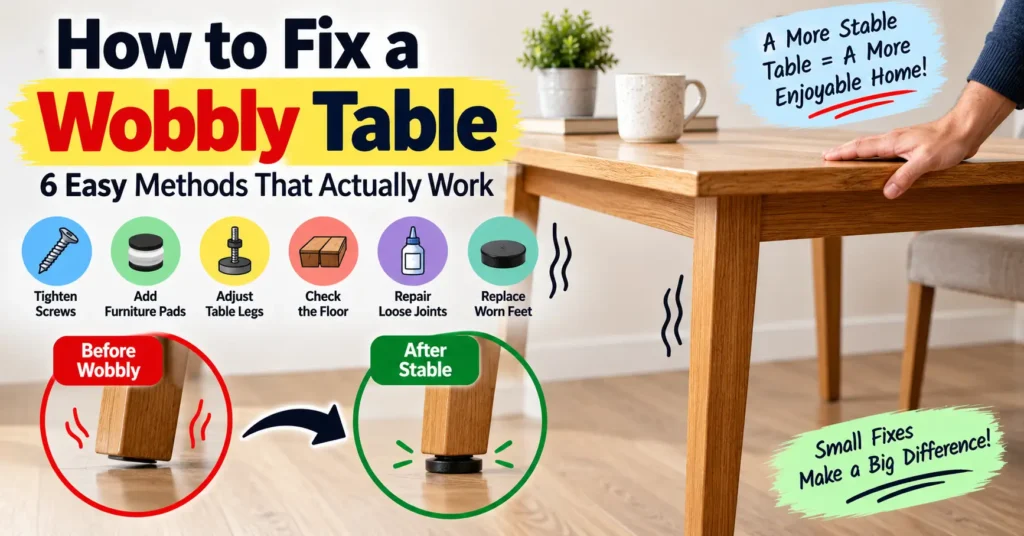
How to fix a wobbly table? A table that rocks every time you touch it can be annoying, especially when you’re trying to eat, work, write, or place drinks on it. Fortunately, most wobbly tables don’t need to be replaced.
The problem is often caused by an uneven floor, a loose leg, worn-out feet, loose screws, or a table frame that has shifted slightly over time.
The good news is that you can usually fix a wobbly table with a few simple tools and materials. In this guide, you’ll learn 6 easy methods that actually work, from tightening loose hardware to adding a small furniture pad under the right leg.
Why Is My Table Wobbly?
Before fixing the table, it’s helpful to find out what’s causing the movement.
Common causes include:
- One table leg is slightly shorter than the others
- The floor is uneven
- Leg screws or bolts have become loose
- Rubber or plastic foot pads are worn out
- The table frame has shifted
- A wooden joint has become loose
- The table is sitting at an angle
Sometimes the problem is with the table itself, while other times the floor is responsible.
Place the table on a hard, level surface and gently push each corner. This can help you identify which leg or area is causing the rocking.
How to Fix a Wobbly Table: 6 Easy Methods
1. Tighten All the Screws and Bolts
Loose hardware is one of the easiest causes of a wobbly table to fix.
Turn the table upside down if it is safe and practical to do so. Check the screws, bolts, nuts, and brackets connecting the legs to the tabletop or frame.
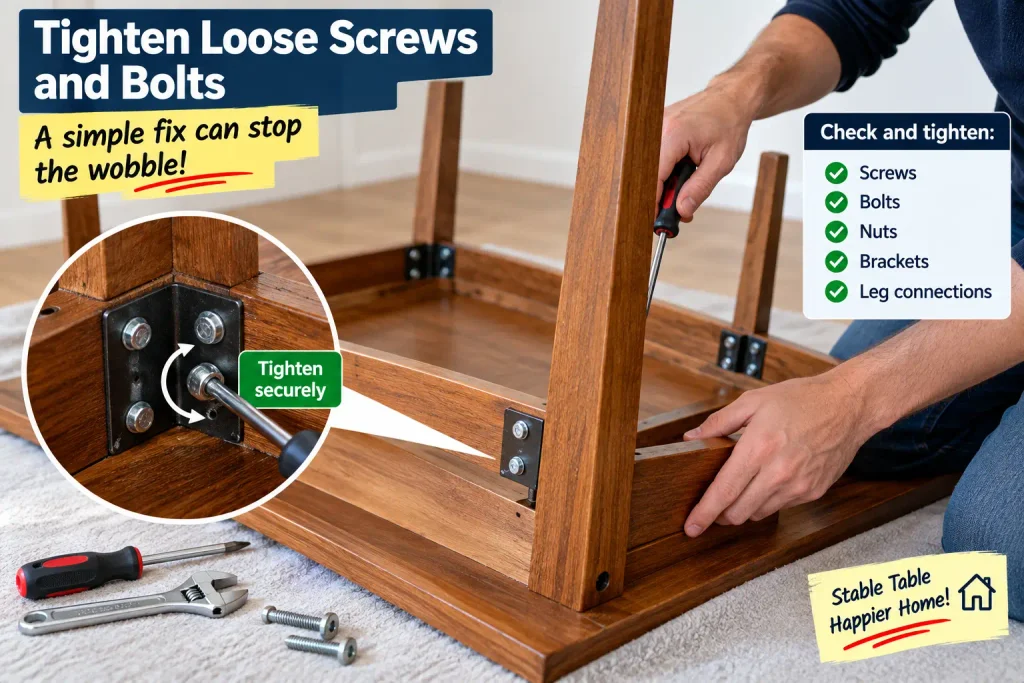
Use the correct screwdriver or wrench and tighten loose hardware carefully.
Don’t overtighten screws, especially when working with wood. Excessive force can strip the screw hole or damage the material.
For general furniture assembly and stability guidance, see IKEA’s official assembly and care instructions.
After tightening everything, place the table upright and test it again.
If the wobble has disappeared, the loose hardware was probably the main cause.
2. Add a Furniture Pad Under the Short Leg
If one leg is slightly shorter than the others, a small furniture pad can provide a quick and effective solution.
Start by identifying the leg that isn’t making proper contact with the floor.
Place a thin felt, rubber, cork, or purpose-made furniture pad underneath that leg. Press it firmly into position and check whether the table still rocks.
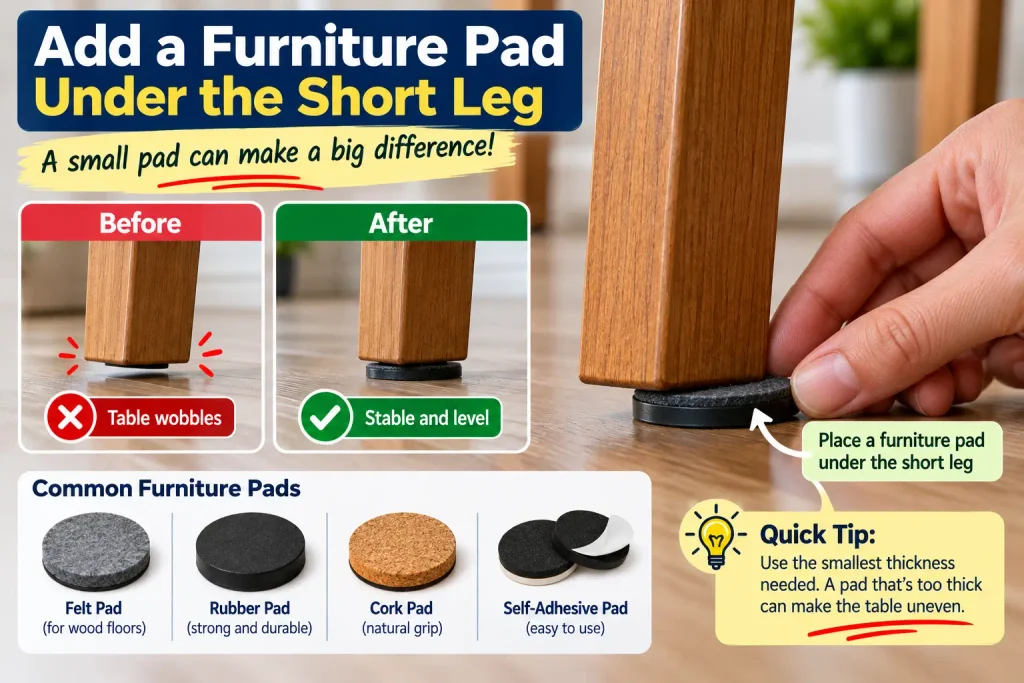
If it still wobbles, try a slightly thicker pad.
Use the smallest thickness necessary. A very thick pad can raise the leg too much and create a new imbalance.
For a temporary fix, you can use a small piece of sturdy material, but avoid anything that can easily slide out when the table is being used.
3. Adjust the Adjustable Table Legs
Some tables come with adjustable feet or leveling mechanisms. These are particularly useful when the floor isn’t perfectly level.
Look underneath each leg for a threaded foot, leveling screw, or adjustable pad.
Turn the adjustable foot a little at a time and test the table after each adjustment.
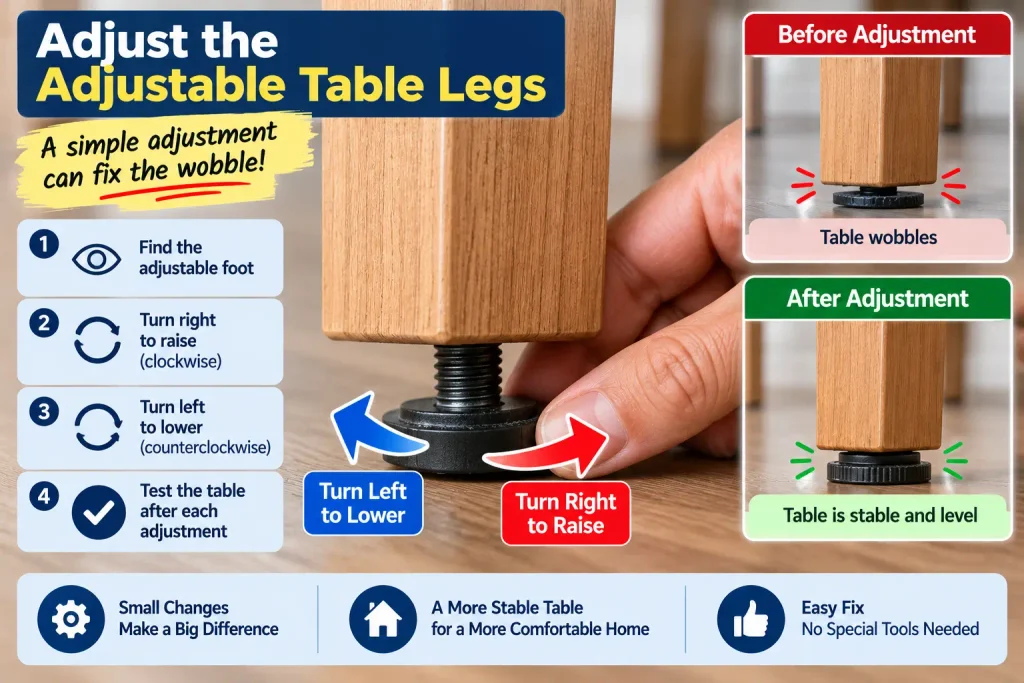
The goal is to make all four legs sit firmly on the floor without forcing the tabletop into an awkward position.
Don’t make large adjustments all at once. Small changes are easier to control and can prevent you from accidentally creating another wobble.
If your table has locking nuts, tighten them after finding the correct position so the adjustment doesn’t move later.
4. Check the Floor, Not Just the Table
Sometimes the table isn’t the real problem.
Hard floors such as tile, wood, laminate, and stone can have small variations in height. Even a well-built table can wobble if one leg sits over a slightly higher or lower area.
Move the table a short distance in different directions and test it again.
If the wobble changes or disappears when you move the table, the floor may be contributing to the problem.
In that situation, use a suitable furniture pad or leveling foot rather than modifying the table leg itself.
This is especially important if you are renting or don’t want to make permanent changes to the floor.
5. Repair a Loose Wooden Joint
Wooden tables can develop loose joints over time.
If the legs connect to the frame with wooden joints, gently check whether any connection moves independently from the rest of the table.
A loose joint may require more than simply tightening a screw.
For a minor problem, you may be able to carefully tighten the existing hardware. If the joint itself has separated, a suitable wood adhesive may help, but the joint needs to be properly aligned and clamped while the adhesive cures.
Don’t rely on glue alone when the joint is responsible for supporting significant weight.
For a valuable, antique, heavily damaged, or structurally important table, professional furniture repair may be the safer option.
6. Replace Worn or Damaged Leg Feet
Many tables have small rubber, plastic, or felt feet attached to the bottom of their legs.
These feet protect floors and help the table sit evenly. Over time, one may become compressed, detached, or damaged.
Turn the table over and inspect each foot.
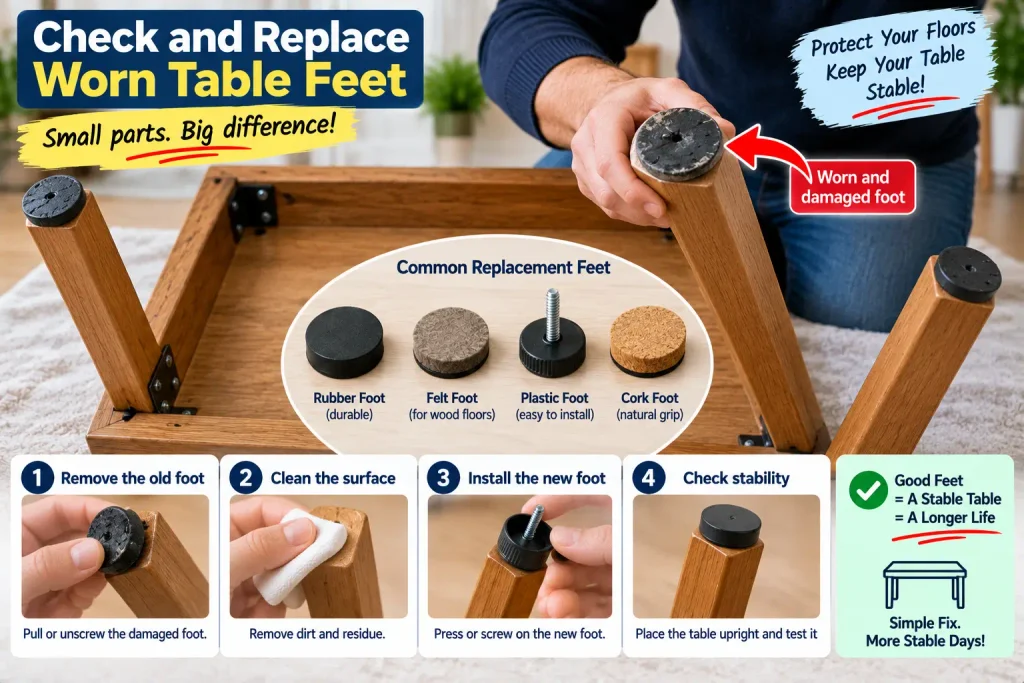
Look for:
- Missing feet
- Cracked rubber
- Uneven wear
- Loose pads
- Different-sized replacement feet
If one foot is noticeably different from the others, replacing the damaged foot may solve the wobble.
Choose a replacement that is appropriate for the table’s weight and floor type. After installing it, place the table upright and test all four corners again.
How to Find Which Table Leg Is Causing the Wobble
If you’re not sure which leg is responsible, don’t start adding pads randomly.
Place the table on a hard, flat surface.
Then gently push down on each corner one at a time.
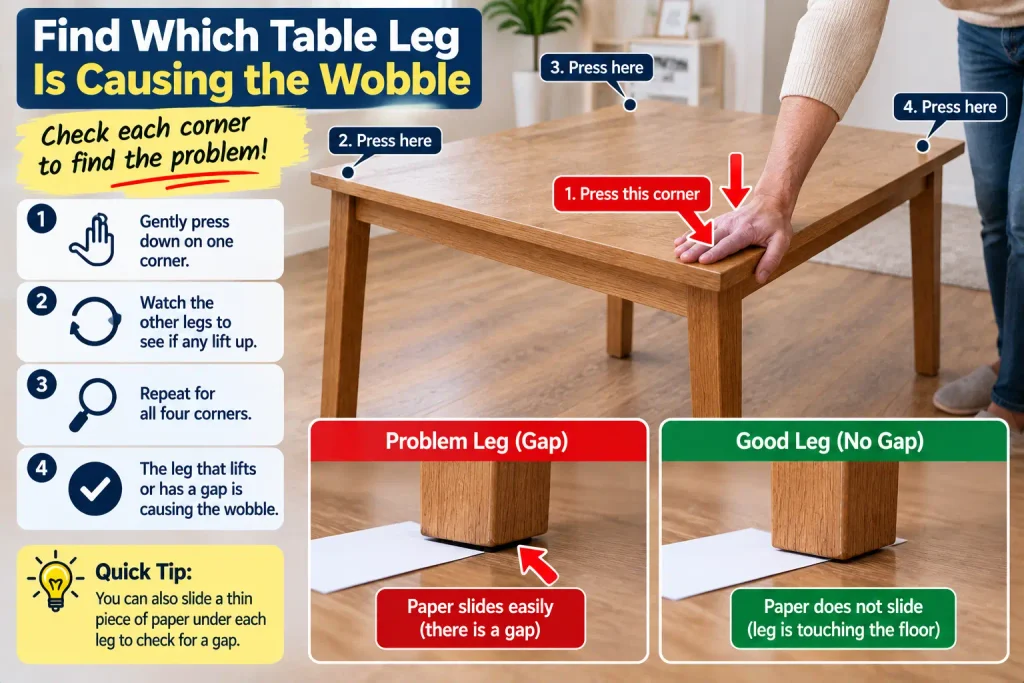
Watch the opposite legs while doing this. The corner that moves or lifts away from the floor can help identify the problem area.
You can also slide a thin piece of paper underneath each leg while the table is stationary.
If the paper slides easily underneath one leg while the other legs are firmly touching the floor, that leg may have a small gap.
This simple test can help you determine whether you need a furniture pad, leg adjustment, or a more involved repair.
How to Fix a Wobbly Wooden Table Without Damaging It
Wood furniture can be sensitive to excessive force.
If you’re also dealing with marks or stains on wooden furniture, see our guide on How to Remove Water Rings From Wood Furniture.
When fixing a wooden table:
- Use the correct screwdriver or wrench
- Tighten hardware gradually
- Avoid forcing stripped screws
- Don’t sand a table leg unless you have confirmed it is actually too long
- Use furniture pads that won’t scratch the floor
- Keep the table properly supported while working on it
- Avoid drilling new holes unless necessary
If the table has a painted, stained, or finished surface, protect it while turning the table over.
A small mistake, such as removing too much material from a leg, can make the table more uneven instead of fixing the problem.
Can You Fix a Wobbly Table With Cardboard?
A small piece of sturdy cardboard can work as a temporary shim, but it isn’t always the best long-term solution.
Cardboard can compress over time, especially under a heavy table. It may also move when the table is dragged across the floor.
For a more durable fix, use a furniture leveling pad, rubber foot, cork pad, or adjustable leg designed for furniture.
If you use a temporary shim, make sure it is fully underneath the leg and cannot easily slide out during normal use.
What Not to Do When Fixing a Wobbly Table
Some quick fixes can create bigger problems.
Don’t Cut a Table Leg Immediately
A leg that appears too long may actually be sitting on an uneven floor.
Cutting it before identifying the real cause can make the table permanently uneven.
Don’t Overtighten Screws
Too much force can strip screw heads, damage wood, or crack certain materials.
Tighten hardware firmly but stop when it is secure.
Don’t Use Slippery Materials
Avoid materials that can easily slide across the floor. A table that feels stable initially may become unstable when someone leans against it.
Don’t Ignore Structural Damage
A table with a cracked leg, severely damaged joint, or broken frame may need proper repair rather than a simple shim.
If the table supports heavy equipment or is used in a situation where stability is especially important, don’t rely on a temporary fix.
How to Prevent a Table From Becoming Wobbly Again
Once you’ve fixed the table, a few simple habits can help prevent the problem from returning.
Check Screws Occasionally
Furniture hardware can loosen with regular use and movement. Check important screws and bolts from time to time.
Avoid Dragging the Table
Dragging can put unnecessary stress on the legs and joints. Lift the table when moving it whenever practical.
Protect the Feet
Keep rubber, felt, or plastic feet in good condition. Replace damaged ones before they cause uneven contact with the floor.
Keep Heavy Items Balanced
Avoid placing very heavy objects on one side of the table for long periods.
Use the Right Surface
If possible, position the table on a stable, reasonably level surface.
When Should You Replace a Wobbly Table?
Most minor wobbling problems are repairable, but replacement may make more sense when the table has serious structural damage.
Consider professional repair or replacement if:
- A table leg is cracked or broken
- The frame is badly damaged
- Multiple joints have failed
- The tabletop is separating from the frame
- The table remains unstable after basic repairs
- The table supports heavy or valuable equipment
A table that continues to move significantly after several repair attempts may have a deeper structural problem.
FAQs
How do I fix a wobbly table quickly?
Start by checking whether the screws or bolts are loose. If the hardware is secure, identify the leg that isn’t touching the floor properly and add a thin furniture pad or adjust the leveling foot.
Why does my table wobble on a flat floor?
Even floors that look flat can have small variations in height. A slightly uneven leg, worn foot, or loose joint can also cause wobbling.
Should I put a pad under a wobbly table leg?
Yes. A thin furniture pad can be an effective solution when one leg is slightly shorter or doesn’t make proper contact with the floor. Add only enough thickness to eliminate the gap.
Can I fix a wobbly wooden table with glue?
Glue may help with a loose wooden joint, but the joint needs to be properly aligned and supported while the adhesive cures. Glue alone isn’t appropriate for every structural problem.
How do I know which leg is causing my table to wobble?
Place the table on a hard surface and gently press down on each corner. You can also use a thin piece of paper to check for a gap underneath each leg.
Is cardboard a good permanent fix for a wobbly table?
Cardboard can work as a temporary shim, but it may compress or move over time. A furniture pad or proper leveling foot is generally a more durable solution.
Can an uneven floor make a table wobble?
Yes. A small difference in floor height can prevent all four table legs from making firm contact with the surface.
Final Thoughts
Learning how to fix a wobbly table doesn’t usually require complicated tools or expensive repairs.
Start by checking the simplest possibilities: tighten loose screws, identify the uneven leg, inspect the furniture feet, and check whether the floor is contributing to the problem. A thin furniture pad or an adjustable leg can often solve a minor wobble quickly.
For wooden tables, take extra care around joints and avoid cutting or sanding a leg until you’ve confirmed that the leg itself is actually the problem.
If the table has serious structural damage or remains unstable after basic repairs, professional furniture repair or replacement may be the better choice.
With the right fix, even a frustratingly wobbly table can often become stable and usable again.