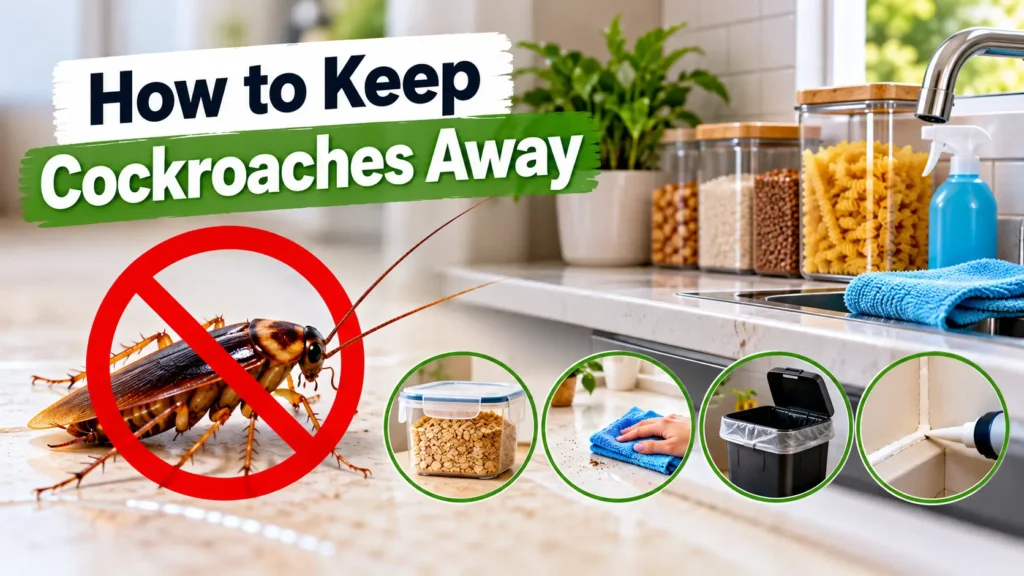
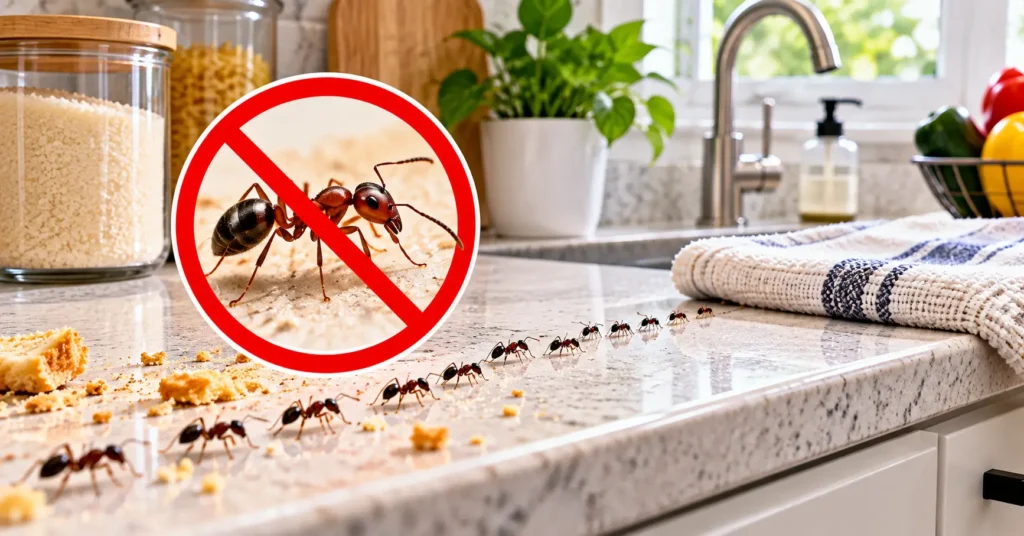
How to stop ants from coming into your kitchen is a common question when you keep finding ants around countertops, sinks, cabinets, or food storage areas. Ants are usually attracted by accessible food, moisture, and small entry points around windows, doors, walls, pipes, and cabinets.
The good news is that you can often reduce or stop an ant problem by removing the things that attract them and blocking the places where they enter.
In this guide, you’ll learn 9 practical ways to stop ants from coming into your kitchen, how to find their entry points, what mistakes can attract them, and when professional pest control may be necessary.
Why Are Ants Coming Into My Kitchen?
Ants can enter a kitchen for several reasons. Even small amounts of food or moisture can attract them.
Common causes include:
- Food crumbs on countertops or floors
- Sugar, honey, or other sweet spills
- Open food packages
- Dirty garbage bins
- Pet food left out
- Moisture around the sink
- Leaking pipes or faucets
- Cracks and gaps around walls or windows
- Ant trails leading from an outdoor or hidden nest
Before trying to get rid of ants, look for what may be attracting them. Removing the source can make prevention much easier.
How to Stop Ants From Coming Into Your Kitchen: 9 Easy Ways
1. Clean Food Crumbs and Spills
One of the easiest ways to make your kitchen less attractive to ants is to keep food surfaces clean.
Wipe countertops, dining areas, and kitchen floors regularly. Pay special attention to small crumbs, sticky spills, sugar, juice, honey, and other food residue.
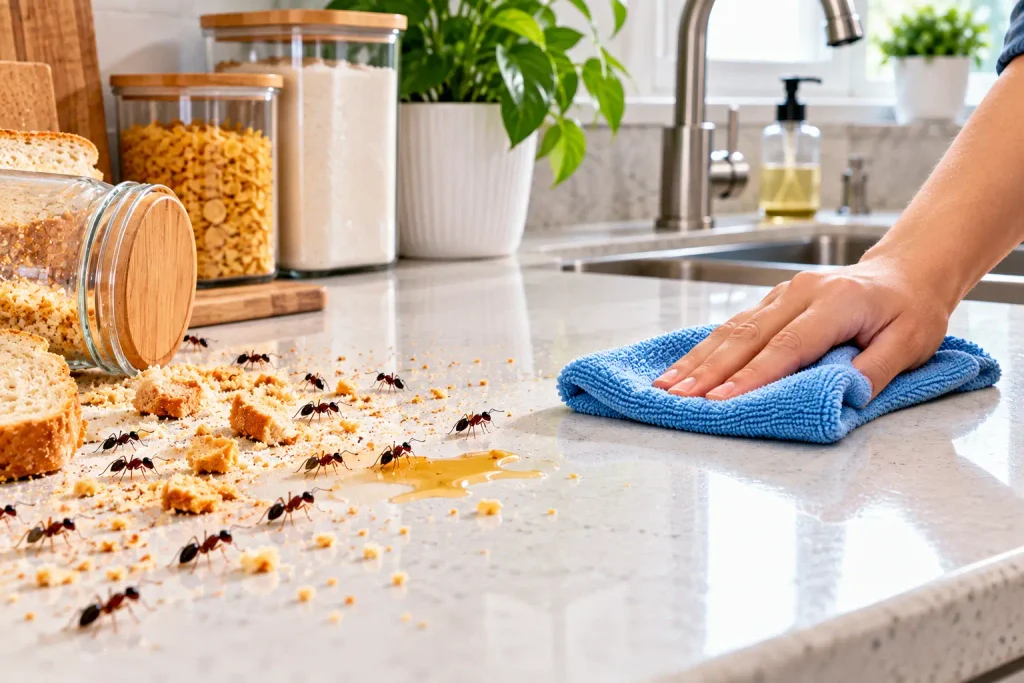
After preparing food, clean the area rather than leaving crumbs or spills for later.
Quick tip: Check underneath appliances and furniture because small food particles can collect in places that are easy to overlook.
2. Store Food in Sealed Containers
Ants can find their way into opened packets and poorly sealed food containers.
Keep sugar, flour, biscuits, cereals, snacks, and other foods in tightly sealed containers. Don’t leave sweet foods or leftovers uncovered on the counter.
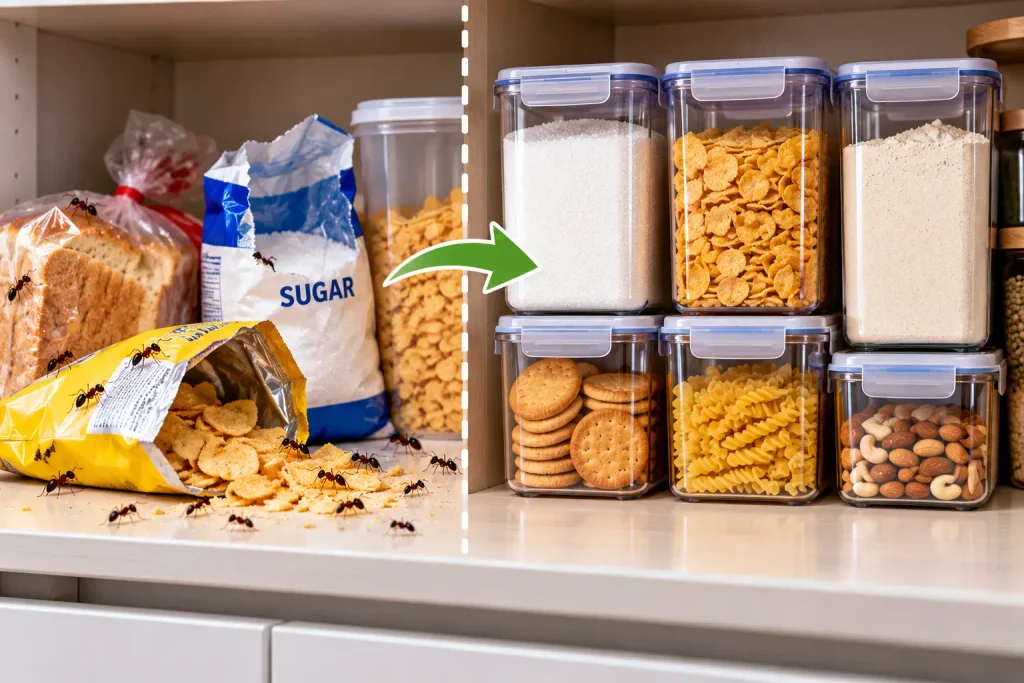
If you notice ants around a particular food package, inspect it and clean the surrounding area before storing the food again.
Quick tip: Wipe the outside of sticky containers before putting them back into a cabinet.
For additional guidance on preventing ants in your home, see the University of Minnesota Extension guide on ants, which covers food storage, kitchen sanitation, ant trails, and sealing entry points.
3. Remove the Ant Trail
If you see a line of ants moving across your kitchen, don’t just remove the visible ants. Try to identify where the trail starts and ends.
Ants can leave scent trails that help other ants follow the same route. Cleaning the surface where ants have been traveling can help remove food residue and trail cues.
Use a suitable household cleaner and wipe the affected countertop, floor, wall edge, or cabinet surface. Follow the product label and keep the area safe for children and pets.
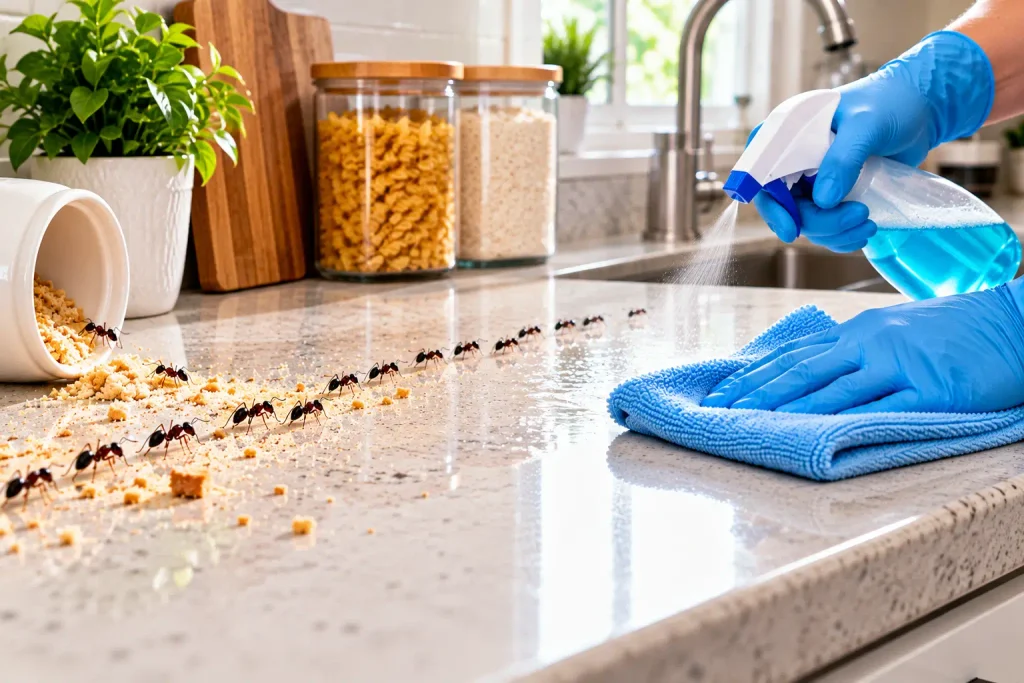
Avoid mixing household cleaning products.
4. Take Out the Garbage Regularly
Garbage can provide food sources for ants, especially when it contains sweet, greasy, or food-related waste.
Use a bin with a secure lid and empty it regularly. Clean the inside and outside of the bin if food residue has accumulated.
Also check the area around the garbage bin for crumbs or spills.
Quick tip: If ants repeatedly appear around the garbage area, clean the floor and nearby cabinet surfaces as well.
5. Seal Cracks and Entry Points
If ants keep appearing even after cleaning, look for places where they may be entering.
Check around:
- Windows
- Doors
- Wall cracks
- Cabinet joints
- Plumbing openings
- Pipe penetrations
- Gaps around countertops
- Areas where walls meet floors
Small gaps can provide access into your kitchen.
For suitable small gaps, use an appropriate household sealant or caulk according to the product instructions. Larger openings or gaps around plumbing may require a different repair.
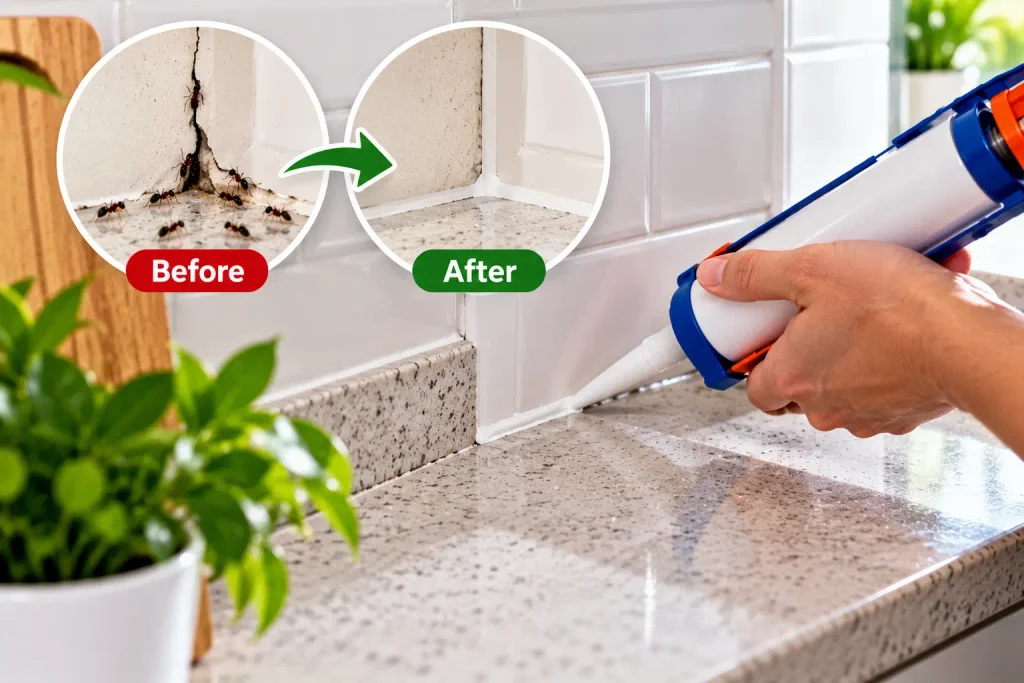
Important: Don’t seal an area until you’ve considered whether ants are actively coming through it. Blocking one visible opening may not solve the problem if there is another entry point nearby.
6. Keep the Sink and Counters Dry
Ants may also be attracted to moisture.
After washing dishes, wipe excess water from the countertop and around the sink. Don’t leave standing water in trays, containers, or around the faucet area.
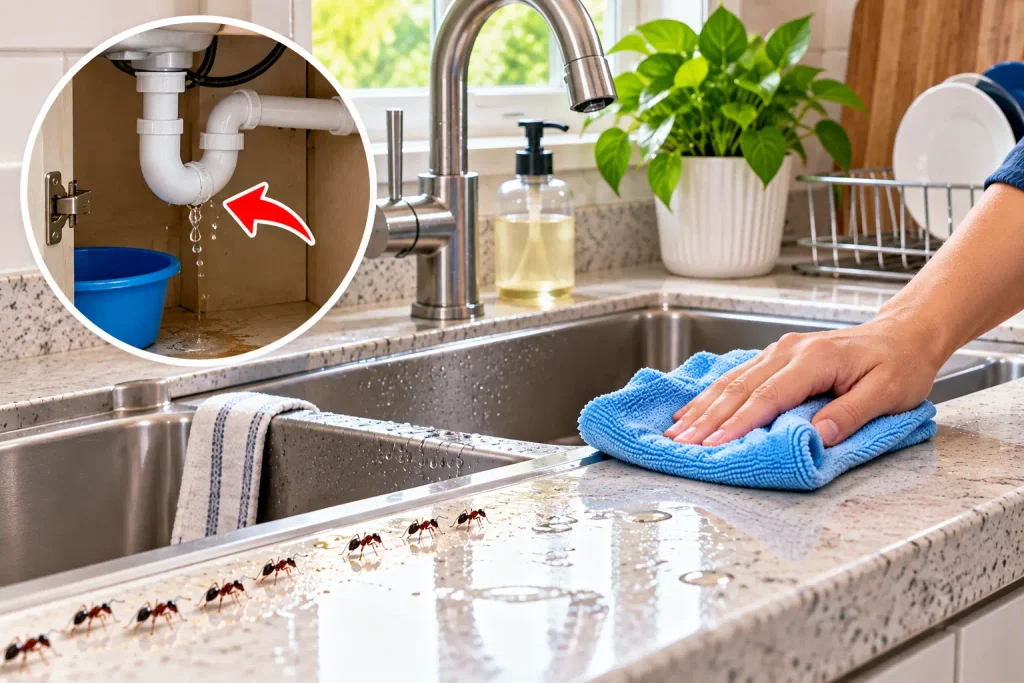
Check underneath the sink as well. A small plumbing leak can create a persistent moisture source.
If you find water collecting inside the cabinet, identify and fix the leak rather than simply wiping the water away.
7. Check for Water Leaks
A leaking faucet, supply connection, drain pipe, or other plumbing component can create moisture around your kitchen.
Look underneath the sink and around visible plumbing connections. Check for:
- Damp cabinet surfaces
- Water stains
- Dripping connections
- Wet pipes
- Musty smells
- Standing water
Fixing a leak can remove an important moisture source and may help make the area less attractive to ants.
If you’re dealing with a dripping kitchen faucet, see our guide Kitchen Faucet Is Dripping From the Spout? 7 Easy Fixes.
8. Keep Pet Food Areas Clean
If you have pets, their food can attract ants.
Avoid leaving wet food or food scraps exposed for long periods. Clean the feeding area regularly and wipe up spilled food.
Also check underneath food bowls because small pieces of food can remain hidden there.
Store unused pet food in a properly sealed container.
9. Use Ant Baits or Appropriate Ant-Control Products
If cleaning and sealing entry points haven’t solved the problem, an appropriate ant-control product may help.
Ant baits can be useful because worker ants may carry the bait back toward the colony. Always read and follow the product label carefully.
Keep ant-control products away from children and pets and use them only as directed.
Don’t use more product than the label recommends.
Important: If you have a large infestation, repeated ant activity, or ants appearing from wall cavities or other difficult-to-access areas, consider contacting a qualified pest control professional.
If you choose an ant bait, place it near active ant trails rather than directly on food-preparation surfaces. Avoid spraying insecticide directly around a bait station unless the product label specifically allows it, because this may interfere with ants reaching the bait.
How to Find Where Ants Are Entering
Finding the entry point can make ant prevention much easier.
When you see ants, follow their path from a safe distance instead of immediately wiping everything away.
Look for where the trail:
- Disappears behind a cabinet
- Enters a crack in the wall
- Goes around a window or door
- Passes through a plumbing opening
- Enters from underneath a countertop
- Comes through a gap near the floor
Once you’ve identified the likely entry point, clean the area and determine whether the gap can safely be sealed.
Quick tip: Check the same area at different times of the day. Ant activity can change depending on food availability, temperature, and moisture. Follow the ants without disturbing the trail and watch where they disappear. Check behind appliances, along cabinet edges, around plumbing openings, and near windows or doors.
Common Mistakes That Attract Ants
Even after cleaning, certain habits can make your kitchen attractive to ants.
Avoid these common mistakes:
- Leaving food uncovered
- Allowing crumbs to collect on counters
- Leaving sugary drinks or spills uncleaned
- Keeping garbage indoors for too long
- Leaving pet food out
- Ignoring leaks underneath the sink
- Leaving standing water around the sink
- Failing to seal obvious gaps
- Using excessive amounts of pest-control products
A clean and dry kitchen is generally easier to keep free of recurring ant activity.
When Should You Call a Pest Control Professional?
A few ants around the kitchen don’t always mean you need professional pest control. However, professional help may be appropriate when:
- Ants keep returning despite cleaning and sealing
- You see large numbers of ants regularly
- Ants are appearing from walls, ceilings, or inaccessible areas
- You suspect a nest inside the building
- The infestation is spreading to multiple rooms
- You cannot identify where the ants are coming from
- You have concerns about using pest-control products safely
A professional can help identify the type of infestation and determine where the ants may be entering or nesting.
If you notice different types of ants or signs of damage to wood around the kitchen, professional identification can help determine whether a more serious problem is present.
How to Prevent Ants From Coming Back
Once you’ve reduced the ant activity, focus on prevention.
Keep these habits in your routine:
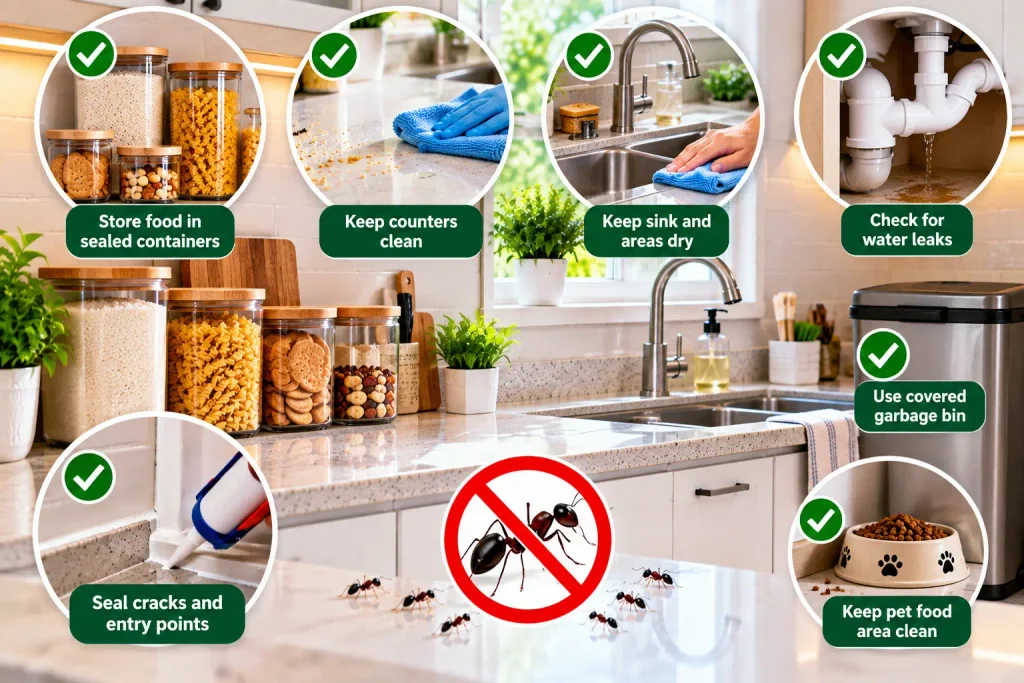
- Clean food crumbs and spills quickly.
- Store food in sealed containers.
- Keep kitchen counters clean.
- Empty garbage regularly.
- Keep the sink and surrounding areas dry.
- Repair plumbing leaks.
- Check for cracks and gaps periodically.
- Keep pet feeding areas clean.
- Monitor areas where ants previously appeared.
The goal isn’t just to remove the ants you can see. It’s to make your kitchen less attractive and reduce the routes they can use to enter.
For broader home pest-prevention guidance, see the EPA Pest Control Resources for Residents, which explains ways to reduce food, water, shelter, and pest entry points around the hom
Frequently Asked Questions
Why do I keep getting ants in my kitchen?
Ants may keep returning because they have access to food, moisture, or an entry point. Check for crumbs, spills, garbage, leaks, and cracks around the kitchen.
What attracts ants to a kitchen?
Food residue, sugary substances, garbage, pet food, and moisture can attract ants. Even small amounts of food can be enough to create a trail.
How do I stop ants from coming through cracks?
First identify the active entry point and clean the surrounding area. Once you’re confident the opening is the route ants are using, seal a suitable small gap with an appropriate household sealant.
Will keeping my kitchen clean stop ants?
Keeping the kitchen clean can reduce food sources that attract ants, but cleaning alone may not solve the problem if ants are entering through cracks or if there is an established infestation.
Why are ants coming around my kitchen sink?
Ants may be attracted to moisture, food residue, or a plumbing leak around the sink. Check the faucet, sink area, drain, and cabinet underneath for water or food buildup.
Should I use ant spray or ant bait?
The appropriate choice depends on the type and extent of the infestation. If using an ant-control product, follow the manufacturer’s label exactly and keep the product away from children and pets.
How can I stop ants from coming back?
Keep food sealed, clean spills quickly, remove garbage regularly, reduce moisture, repair leaks, and seal suitable entry points. If ants continue returning, consider professional pest control.
Final Takeaway
How to stop ants from coming into your kitchen starts with removing the things that attract them. Clean crumbs and spills, store food properly, keep the sink dry, take out garbage regularly, repair leaks, and look for cracks or gaps where ants may be entering.
If ants continue appearing after you’ve addressed food, moisture, and entry points, the problem may require a more targeted pest-control approach.
A clean, dry, well-maintained kitchen can make it much harder for ants to find the food and moisture they are looking for. If you’re working on other common bathroom plumbing problems, check out our guide Toilet Handle Feels Loose? 6 Easy Fixes to Try.