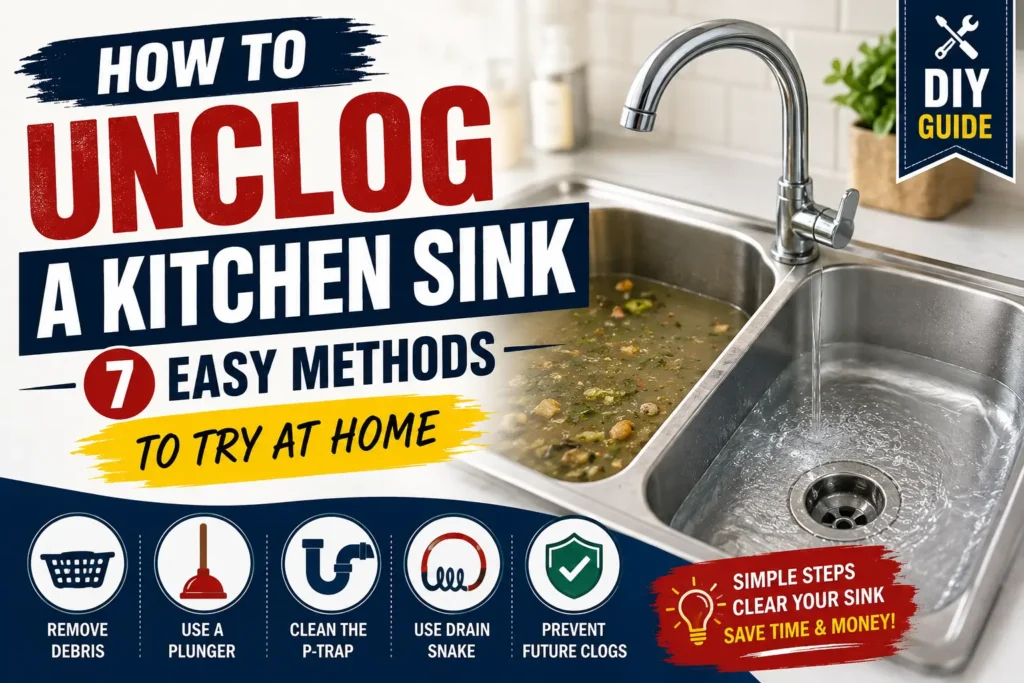
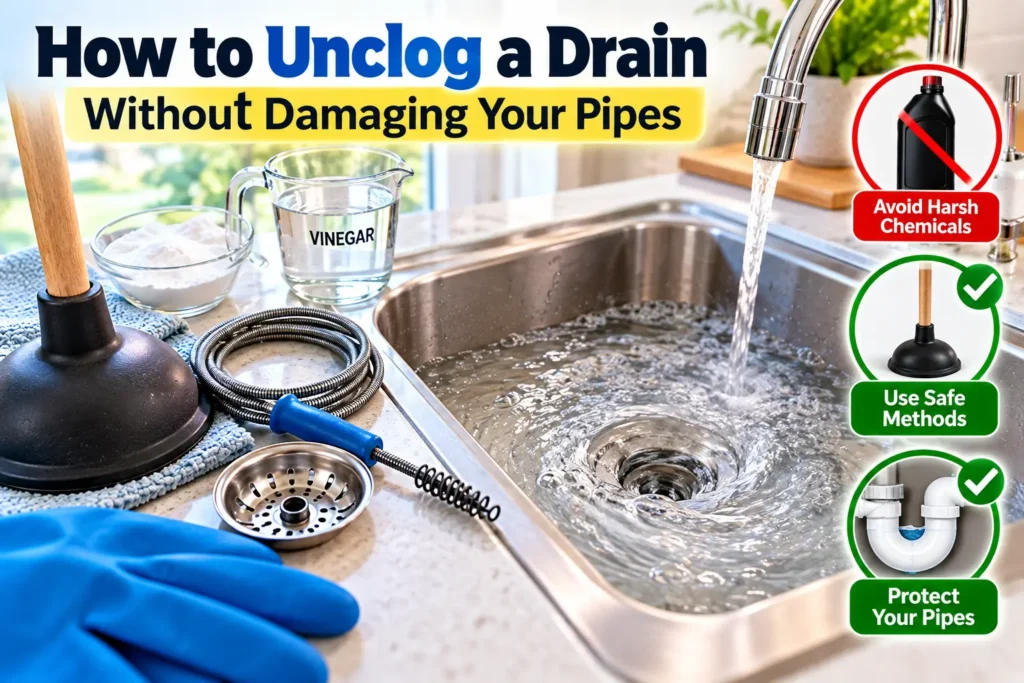
A clogged drain can turn a simple household task into a frustrating problem. Water may drain slowly from your kitchen sink, collect around your shower drain, or leave an unpleasant smell in your bathroom. Although it is tempting to reach for a strong chemical drain cleaner, the wrong method can damage plumbing components or create a safety hazard.
The good news is that many minor drain clogs can be cleared with simple tools and careful techniques. The key is to identify the likely cause, start with the gentlest solution, and avoid forcing anything through the pipe.
In this guide, you’ll learn how to unclog a drain without damaging your pipes using seven practical methods, what to avoid, and when it’s time to call a professional plumber.
Why Do Drains Get Clogged?
Understanding the cause helps you choose the right solution without putting unnecessary stress on your plumbing.
Common causes include:
- Hair and soap residue: These often collect in bathroom sinks, showers, and bathtubs.
- Grease and food scraps: Cooking oil, grease, and leftover food can accumulate inside kitchen drainpipes.
- Mineral deposits: Hard water can contribute to deposits that gradually restrict water flow.
- Foreign objects: Small items, wipes, and other materials can become trapped in the drain.
- Pipe or drainage problems: Damaged pipes, poor drainage design, or blockages farther down the line can cause recurring problems.
A single slow drain often indicates a local obstruction. If several drains become slow or back up at the same time, the problem may be farther along the drainage system.
7 Safe Ways: How to Unclog a Drain Without Damaging Your Pipes
Before starting, wear suitable gloves and protect the surrounding area. Never put your fingers inside a drain, and stop if you notice leaking pipes, sewage backup, or signs of damaged plumbing.
Fix 1: Remove Visible Debris From the Drain
Sometimes, the blockage is close to the drain opening and can be removed without using chemicals or applying pressure.
What you need:
- Rubber gloves
- A flashlight
- A plastic drain-cleaning tool or suitable tweezers
Steps:
- Remove the drain cover or stopper if it is designed to come off easily.
- Shine a flashlight into the opening to check for visible hair or debris.
- Use a plastic drain-cleaning tool or suitable tweezers to lift out accessible material.
- Dispose of the debris in the rubbish rather than pushing it farther into the pipe.
- Refit the cover and run a small amount of water to test the drain.
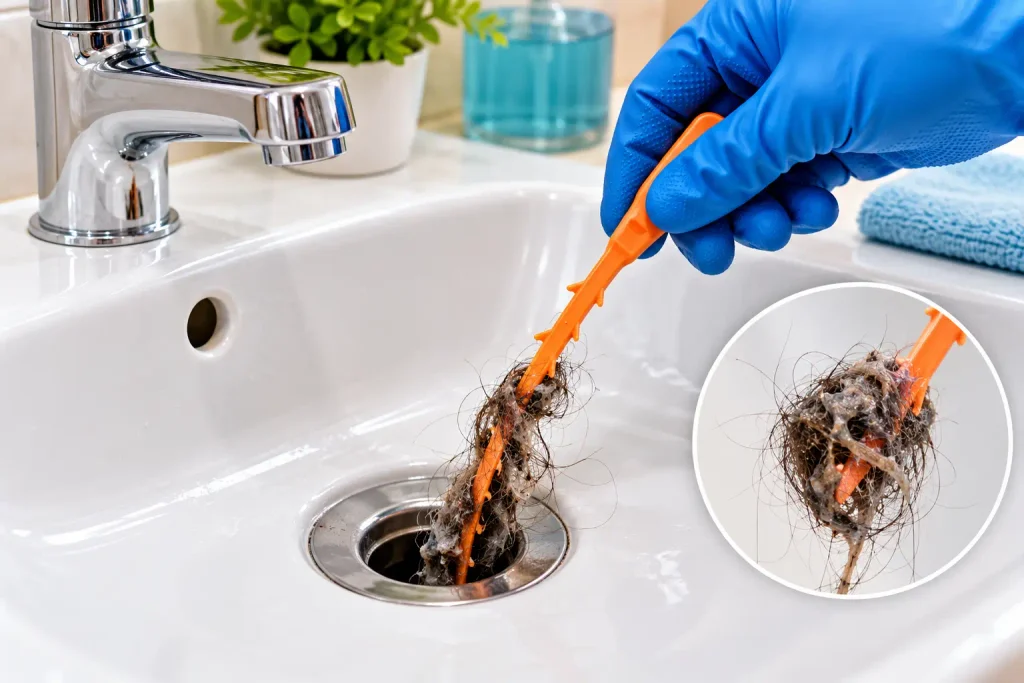
Why this helps: Removing an accessible hair or debris buildup may restore drainage without disturbing the pipework.
Important: Do not force a tool into the drain or use sharp objects that could damage seals or pipe surfaces. If the obstruction is deep or difficult to reach, move on to a suitable drain-cleaning tool or contact a plumber.
Fix 2: Use a Plunger Correctly
A plunger is often a good next step for a minor blockage. It works by creating pressure and suction that can loosen the obstruction.
What you need:
- A suitable sink or drain plunger
- Water to cover the plunger cup
- A damp cloth, if needed to cover an overflow opening
Steps:
- Choose a plunger that fits the drain opening. A flat-cup plunger is generally suitable for sinks, while a toilet requires a toilet-specific plunger.
- If the drain is not already covered by enough water, add a little water to help form a seal.
- If the sink has an overflow opening, cover it with a damp cloth to improve suction.
- Position the plunger directly over the drain.
- Press down gently at first to create a seal, then use controlled up-and-down movements.
- Lift the plunger and check whether the water drains away.
- Repeat a few times if necessary, then test the drain with running water.
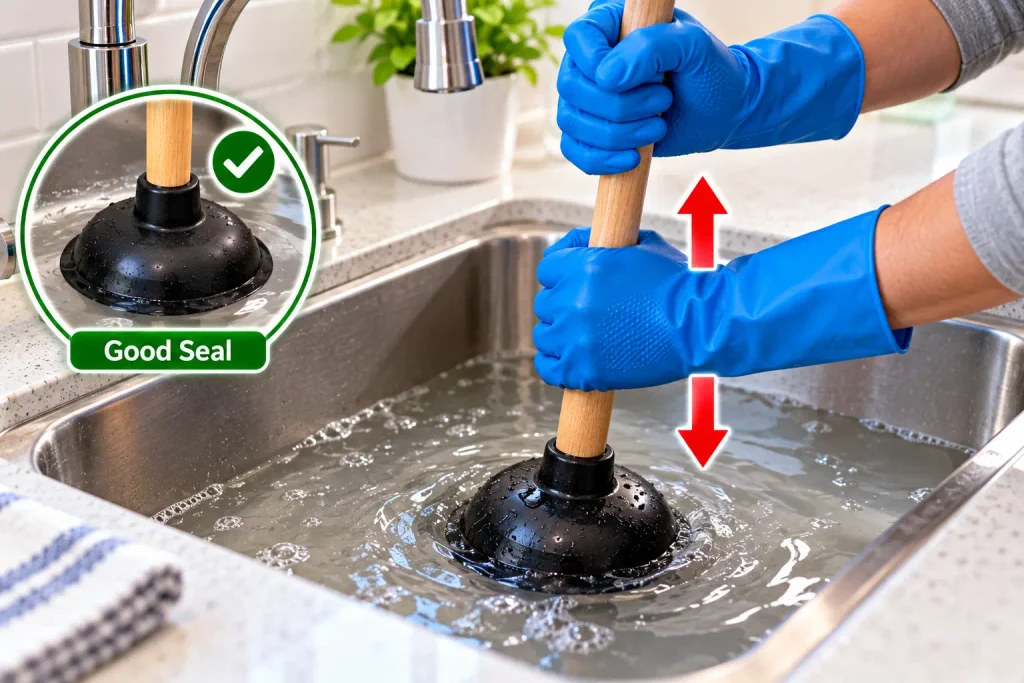
Why this helps: Controlled suction and pressure can loosen soft blockages without requiring harsh chemicals.
Avoid: Excessive force, which may disturb loose fittings or worsen an existing plumbing problem. Never plunge a drain if you have already poured a chemical drain cleaner into it and the product may still be present.
Fix 3: Flush With Warm Water
Warm water may help loosen light soap residue or some greasy buildup. However, it will not clear every clog, and very hot or boiling water can damage certain plastic components or seals.
Steps:
- Check the manufacturer’s guidance for your sink, drain, and plumbing materials.
- If the pipework is suitable, slowly pour a moderate amount of warm water into the drain.
- Allow it to work briefly without forcing additional water into a completely blocked drain.
- Run the tap gently to see whether drainage improves.
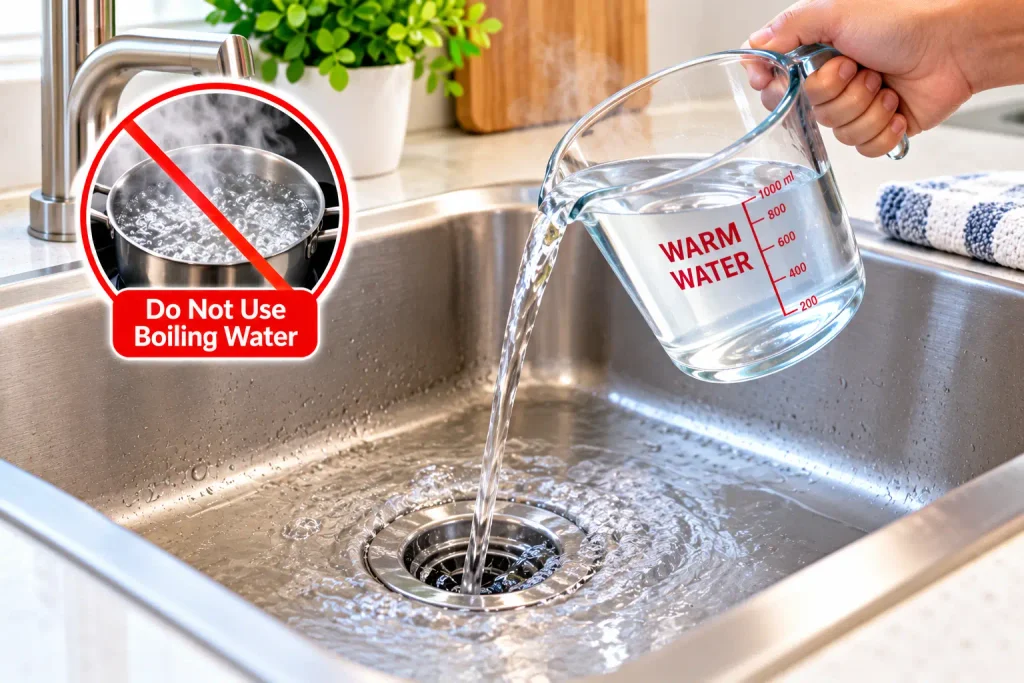
Why this helps: Warm water may soften some residues, particularly in a partially blocked kitchen drain.
Important: Avoid boiling water, especially when you do not know the pipe material or condition. Do not use this method if water is standing in the sink and cannot drain, or if there may be chemical drain cleaner inside the pipe.
Warm water is a gentle first attempt, not a guaranteed solution for hardened grease or a compacted blockage.
Fix 4: Try a Drain Snake or Plastic Drain-Cleaning Tool
A drain snake can help remove hair and other obstructions that a plunger cannot shift. A small plastic tool may be enough for a shallow bathroom clog, while a hand-operated drain snake may be better suited to a deeper blockage.
Steps:
- Select a tool designed for the type of drain you are clearing.
- Remove the drain cover or stopper if necessary and safe to do so.
- Insert the tool slowly, following the manufacturer’s instructions.
- If you meet resistance, turn or move the tool gently as directed.
- Withdraw the tool carefully and remove any debris it brings out.
- Clean the tool appropriately and test the drain with a small amount of water.
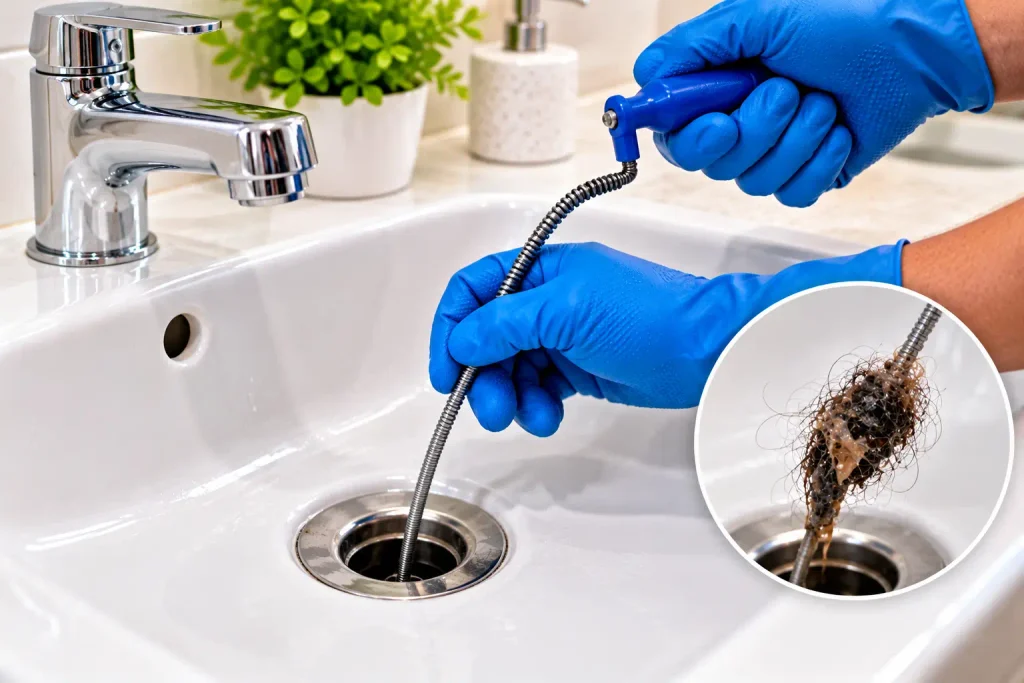
Why this helps: A suitable drain snake can catch or loosen hair and debris instead of relying on chemicals to dissolve the blockage.
Avoid: Forcing the cable, pushing aggressively against resistance, or using a tool that could scratch a fixture or damage a pipe. Stop if the tool becomes stuck or you suspect the obstruction is a solid object.
For additional guidance on using a drain-cleaning tool safely, read the manufacturer’s drain snake instructions. Always use a suitable tool and never force it into the pipe.
Do not use a drain snake after applying chemical drain cleaner if the chemical may remain in the drain. Splashback can cause serious injuries.
Fix 5: Clean an Accessible Sink Stopper or Drain Cover
Hair, soap residue, and small debris can collect around a sink stopper or beneath a removable shower drain cover. Cleaning this area may resolve the problem without needing to reach deeper into the pipe.
Steps:
- Check whether the stopper or cover can be removed according to the fixture’s instructions.
- Place a cloth or small container nearby to catch drips.
- Remove the accessible component carefully.
- Clear hair and residue using gloves and a suitable cleaning tool.
- Wash the removable component with an appropriate household cleaner.
- Reinstall it securely and run water to check drainage.
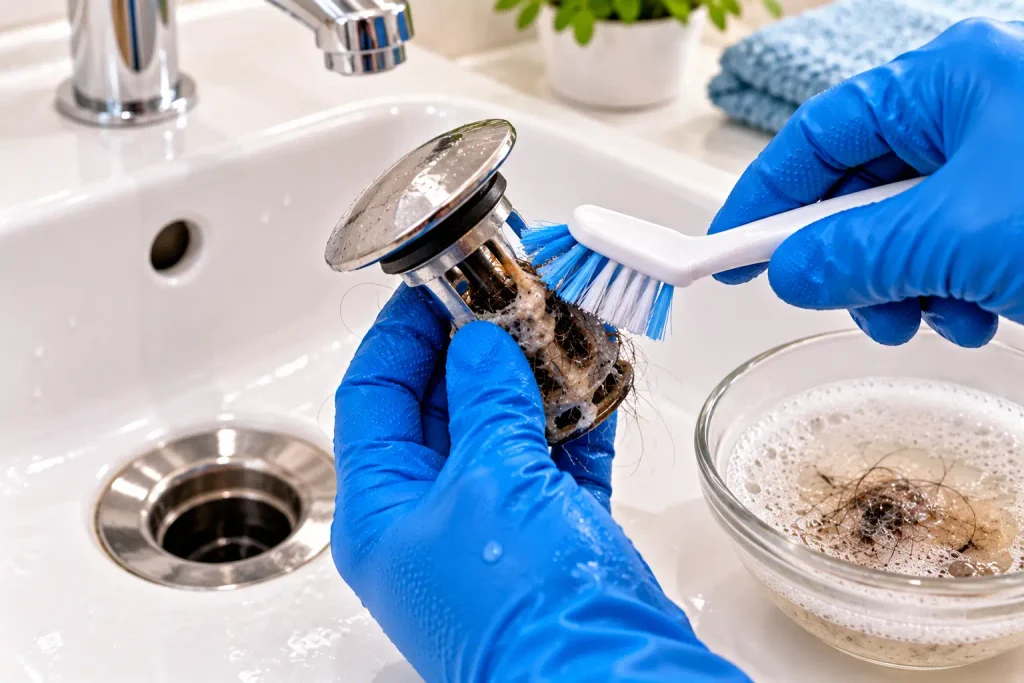
Why this helps: Removing buildup near the opening can restore water flow and reduce unpleasant drain smells.
Avoid: Disassembling unfamiliar plumbing connections or forcing a stuck stopper. If cleaning the accessible parts does not help, the clog may be deeper in the drain.
Fix 6: Clean the Sink Trap Only If You Can Do So Safely
Many sink drains have a curved section of pipe called a P-trap, where debris can collect. If the sink remains blocked after trying gentle methods, the obstruction may be inside the trap or farther down the drain.
Before you begin: Check the fixture manufacturer’s instructions. If the trap is brittle, corroded, glued in place, difficult to access, or unfamiliar, leave the work to a plumber.
For more information about blocked drains and trap maintenance, read Geberit’s guide to cleaning a sink trap.
What you can do:
- Stop using the sink to prevent water from overflowing.
- Look underneath the sink for visible leaks, corrosion, cracked pipes, or loose connections.
- Avoid loosening pipe fittings if you are unfamiliar with the plumbing or the connections appear damaged.
- If the blockage persists, contact a qualified plumber to inspect and clear the trap safely.
- Tell the plumber if any chemical drain cleaner has been used.
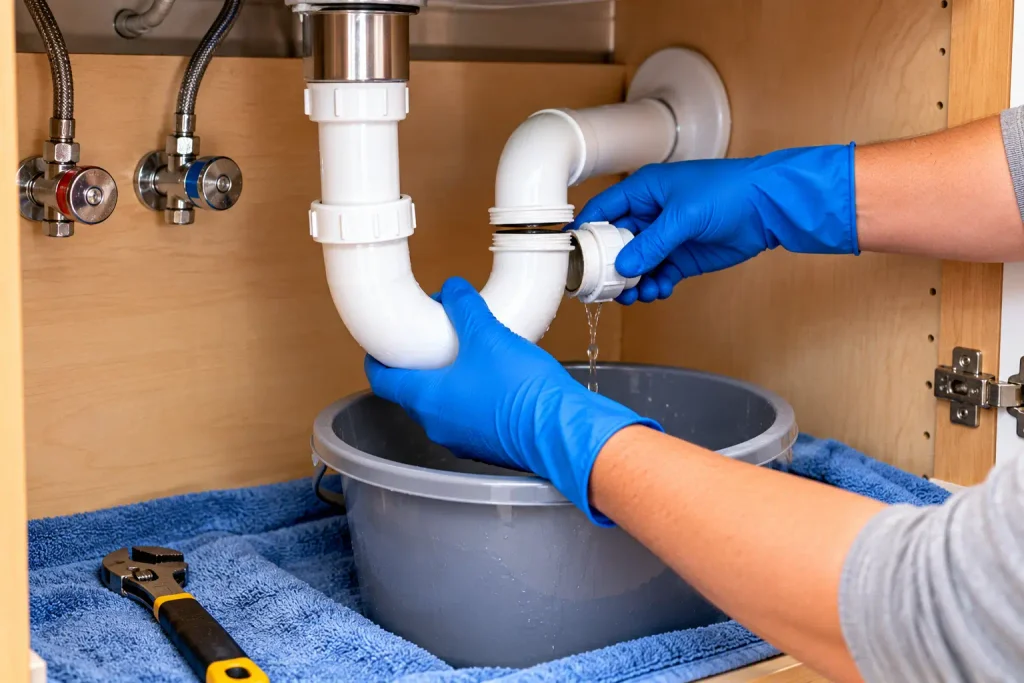
Why this helps: A professional can identify whether the blockage is in the trap or deeper in the drainage system without risking leaks from incorrectly removed or reassembled fittings.
Important: If a connection resists, a pipe starts to twist, or a seal appears damaged, stop. Incorrect reassembly can cause leaks and water damage. If chemical drain cleaner has been used, do not open the trap yourself; inform the plumber about the product.
Fix 7: Use a Professional Drain-Clearing Service for Stubborn Clogs
If gentle methods do not work, repeated DIY attempts may do more harm than good. A plumber can identify the location and cause of the blockage and select a method suited to the pipe material and condition.
A professional may use:
- A suitable drain auger
- Specialist tools for a blocked trap or branch drain
- A drain inspection camera, when appropriate
- Professional water-jetting equipment for suitable pipes and blockages
When this is the safer option:
- The drain remains blocked after reasonable attempts.
- Several fixtures are draining slowly or backing up.
- Water or sewage is coming back through another drain.
- You suspect a broken, corroded, or collapsed pipe.
- The blockage keeps returning.
- You suspect roots or a blockage in the main drainage line.
Professional equipment must be selected and used appropriately. High-pressure water-jetting is not a DIY shortcut and can damage unsuitable or already weakened pipes.
What Not to Do When Unclogging a Drain
Avoid these common mistakes if you want to protect your pipes and keep the job safe.
1. Don’t Mix Cleaning Chemicals
Never mix drain cleaners with bleach, vinegar, ammonia, or other cleaning products. Dangerous fumes or violent reactions can occur. Follow the product label and do not add another chemical to a drain that already contains a cleaner.
2. Don’t Use Boiling Water Without Checking Compatibility
Boiling water can damage some plastic plumbing components and seals. Use only a water temperature suitable for your drain and pipe materials.
3. Don’t Force Tools Into the Pipe
A tool that is pushed or twisted too aggressively can damage a fitting, get stuck, or push an obstruction farther down the line.
4. Don’t Keep Using a Blocked Drain
Repeatedly running water into a blocked sink or shower can cause an overflow. Stop using the fixture until the water can drain safely.
5. Don’t Assume Every Clog Is a Local Problem
If multiple fixtures are affected, the blockage may be in a shared drain or main line. Repeated plunging at one fixture will not necessarily solve it.
6. Don’t Plunge After Using a Chemical Drain Cleaner
A cleaner may remain in standing water even if the drain has not cleared. Plunging can splash the chemical onto skin or into the eyes. Follow the product’s safety instructions and contact a plumber if the blockage persists.
Before using a chemical drain opener, read the manufacturer’s drain cleaner safety instructions. Never mix drain cleaners with other household chemicals, and do not plunge a drain if the product may still be present.
Quick Troubleshooting Table
| Drain problem | A safe first step | When to stop |
|---|---|---|
| Slow bathroom sink | Clean accessible stopper debris | If the clog remains deep in the pipe |
| Shower drain clogged with hair | Remove visible debris using a suitable tool | If the tool becomes stuck |
| Partially blocked kitchen sink | Try a suitable plunger or warm water if compatible | If water cannot drain or the clog persists |
| Drain smells unpleasant | Clean the accessible cover or stopper | If the smell persists or sewage is suspected |
| Several drains backing up | Stop using affected fixtures and contact a plumber | Immediately if sewage is returning |
| Recurring blockage | Arrange a professional inspection | Avoid repeated forceful DIY attempts |
How to Prevent Drain Clogs in the Future
A few simple habits can reduce the chance of another blockage.
- Use drain screens: Catch hair and food scraps before they enter the plumbing.
- Dispose of cooking grease properly: Let it cool and place it in a suitable waste container instead of pouring it down the sink.
- Keep food scraps out of the drain: Scrape plates into the rubbish or compost where appropriate.
- Clean removable drain covers regularly: Remove hair and soap residue before they accumulate.
- Avoid flushing unsuitable items: Put wipes, cotton products, sanitary products, and other rubbish in the appropriate bin.
- Address slow drainage early: A minor blockage is often easier to manage than a complete obstruction.
- Avoid routine harsh chemical treatments: Use maintenance products only when suitable for your plumbing and according to their labels.
Regular home maintenance can help you spot plumbing problems early. Follow our Monthly Home Maintenance Checklist for more practical ways to maintain your home.
Frequently Asked Questions
What is the safest way to unclog a drain?
Start by removing visible debris, then try a suitable plunger or drain-cleaning tool. Choose a method appropriate for the fixture and pipe materials, and stop if you encounter resistance, leaks, or a recurring blockage.
Can vinegar and baking soda unclog a drain?
The combination may produce fizzing, but it is not a reliable solution for a substantial blockage. It may not remove compacted hair, solid objects, or hardened grease. Never combine it with a commercial drain cleaner that may remain in the pipe.
Is chemical drain cleaner bad for pipes?
It depends on the product, pipe material, and how it is used. Some products are labelled as compatible with specified plumbing materials, but chemical cleaners can still pose serious risks if misused. Always follow the label, never mix products, and never plunge a drain that may contain the cleaner.
Can boiling water damage drainpipes?
Yes. Boiling water can damage certain plastic components, seals, and fixtures. If you do not know what your plumbing can tolerate, avoid boiling water and follow the fixture manufacturer’s instructions.
When should I call a plumber?
Call a plumber if the drain remains blocked after reasonable attempts, the problem keeps returning, several fixtures are affected, a pipe is leaking, or sewage is backing up. Stop DIY work if you suspect damaged plumbing.
How can I unclog a drain without chemicals?
For suitable minor clogs, remove visible debris, use a plunger, clean an accessible stopper, or try an appropriate drain snake. Select the method according to the type and location of the blockage.
Final Thoughts
Learning how to unclog a drain without damaging your pipes starts with patience and the right method. Remove accessible debris first, use a suitable plunger or drain-cleaning tool when appropriate, and avoid harsh or incompatible treatments.
Most importantly, don’t force a stubborn blockage. If several drains are affected, a pipe is leaking, or the clog keeps returning, a qualified plumber can identify the underlying problem and help prevent further damage.
A gentle approach can restore drainage while helping protect your plumbing for the long term.