How to find a water leak in your home is an important skill that can help you prevent costly repairs and water damage. A small drip under the sink, a damp patch on the ceiling, or an unexplained increase in your water bill may indicate a hidden plumbing problem. Finding the source early can help you protect your walls, floors, furniture, and other parts of your home.
But how do you find a water leak when the pipe is hidden behind a wall or under the floor?
In this guide, you will learn how to find the source of a water leak in your home, recognize common warning signs, perform simple checks, and determine when to call a professional plumber.
Why Is It Important to Find a Water Leak Early?
Even a small leak can waste water and gradually damage your home. Moisture trapped behind walls, beneath flooring, or inside cabinets can also encourage mold growth and create unpleasant odors.
Finding a leak early can help you:
- Reduce unnecessary water waste.
- Prevent damage to walls, ceilings, and floors.
- Avoid expensive plumbing repairs.
- Protect wooden cabinets and furniture.
- Reduce the risk of mold and mildew.
- Identify plumbing problems before they become emergencies.
How to Find a Water Leak in Your Home: 9 Simple Checks
1. Check for Visible Signs of Water Damage
Start by inspecting the areas where water leaks commonly occur. Look for signs of moisture around plumbing fixtures, appliances, walls, and ceilings.
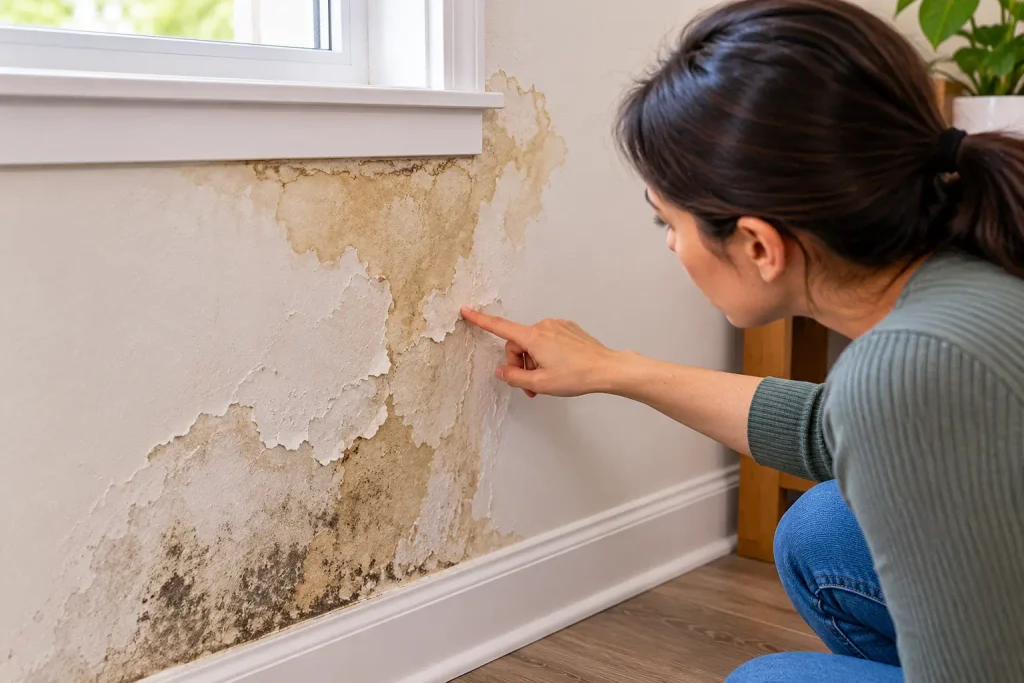
Common warning signs include:
- Damp or discolored patches on walls.
- Peeling paint or bubbling wallpaper.
- Swollen or warped flooring.
- Water stains on ceilings.
- Mold or mildew near plumbing fixtures.
- Musty smells in enclosed spaces.
Pay particular attention to areas around bathrooms, kitchens, laundry rooms, and water heaters.
Helpful tip: Take a photograph of any suspicious patch and check whether it grows or changes over time. Avoid touching wet electrical fixtures or areas where water may have reached electrical wiring.
2. Inspect Under Kitchen and Bathroom Sinks
Leaks under sinks are common because these areas contain water supply lines, drainpipes, valves, and connections.
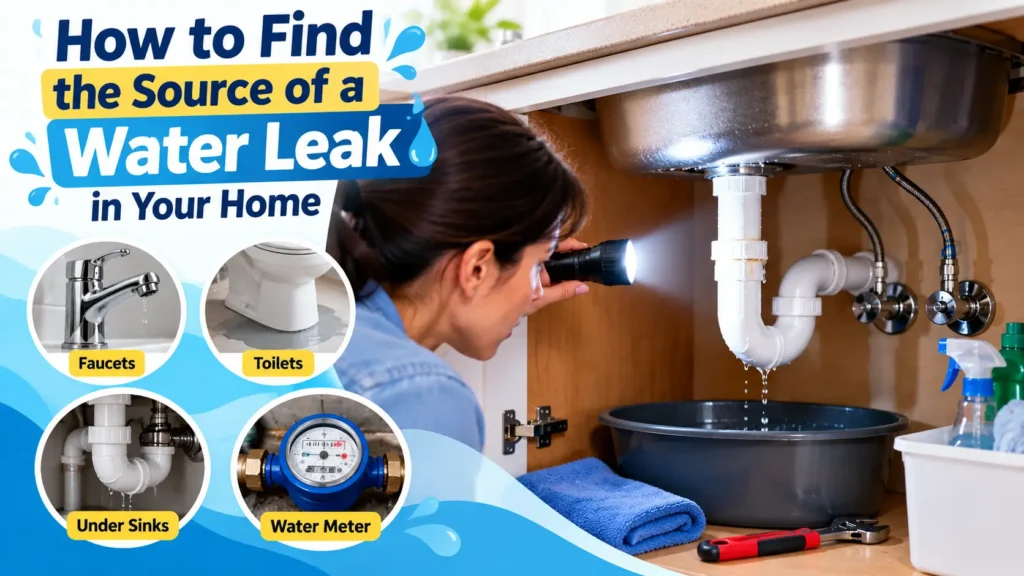
Open the cabinet beneath your kitchen and bathroom sinks and use a flashlight to inspect the plumbing.
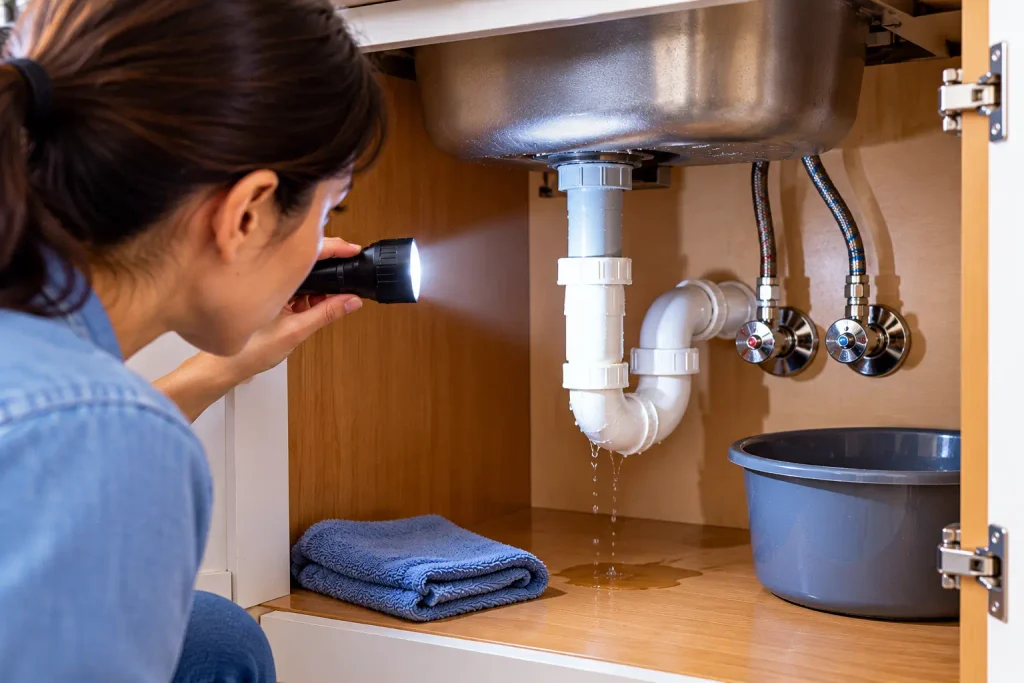
Check for:
- Drips around water supply connections.
- Moisture around shutoff valves.
- Loose or damaged drainpipe connections.
- Water collecting at the bottom of the cabinet.
- Dampness around the faucet connections.
Dry the area with a cloth and observe whether moisture returns. You can also place a dry paper towel beneath accessible connections to help identify small drips.
Important: Do not overtighten plumbing fittings. Excessive force can damage connections and make the leak worse.
3. Check Toilets for Hidden Leaks
A leaking toilet may waste water without leaving an obvious puddle on the bathroom floor. Water can quietly escape from the tank into the bowl because of a worn flapper or faulty fill valve.
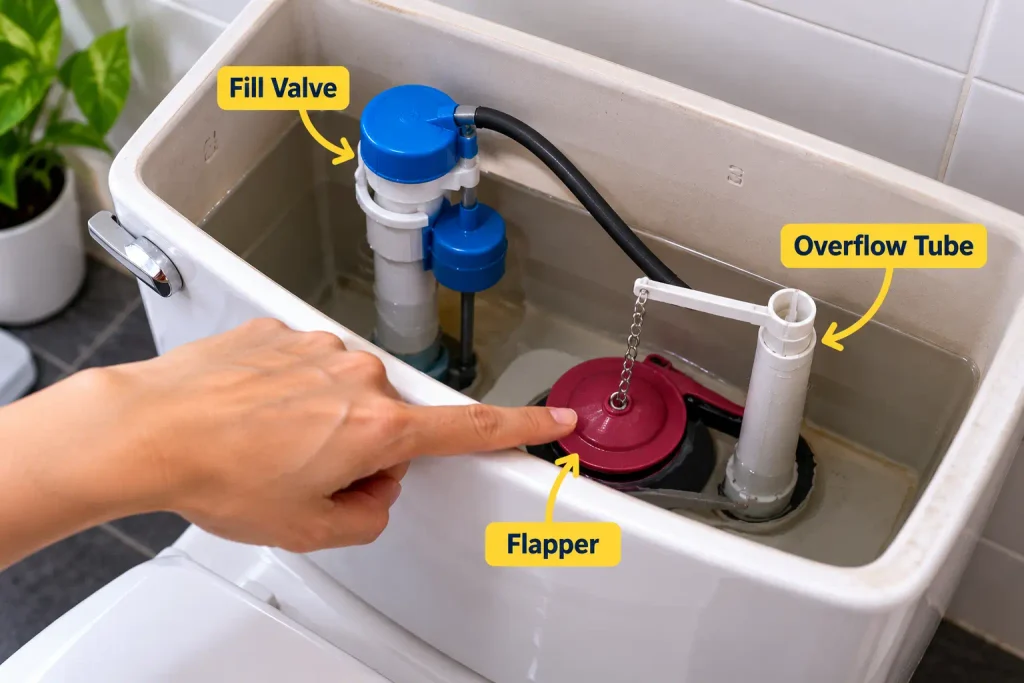
Try this simple test:
- Remove the toilet tank lid carefully.
- Add a few drops of food coloring to the tank water.
- Wait approximately 10–15 minutes without flushing.
- Check whether colored water appears in the toilet bowl.
If the color appears in the bowl, water is likely leaking from the tank into the bowl.
You should also inspect the toilet base for moisture and check whether the toilet continues refilling when nobody has used it.
Remember: This test identifies a possible internal toilet leak. It does not detect every leak around the toilet or beneath the floor.
4. Inspect Faucets, Showerheads, and Bathtubs
Dripping faucets and leaking shower connections are easy to overlook, especially when the dripping happens slowly.
Check your kitchen faucet, bathroom taps, showerhead, bathtub spout, and visible pipe connections.
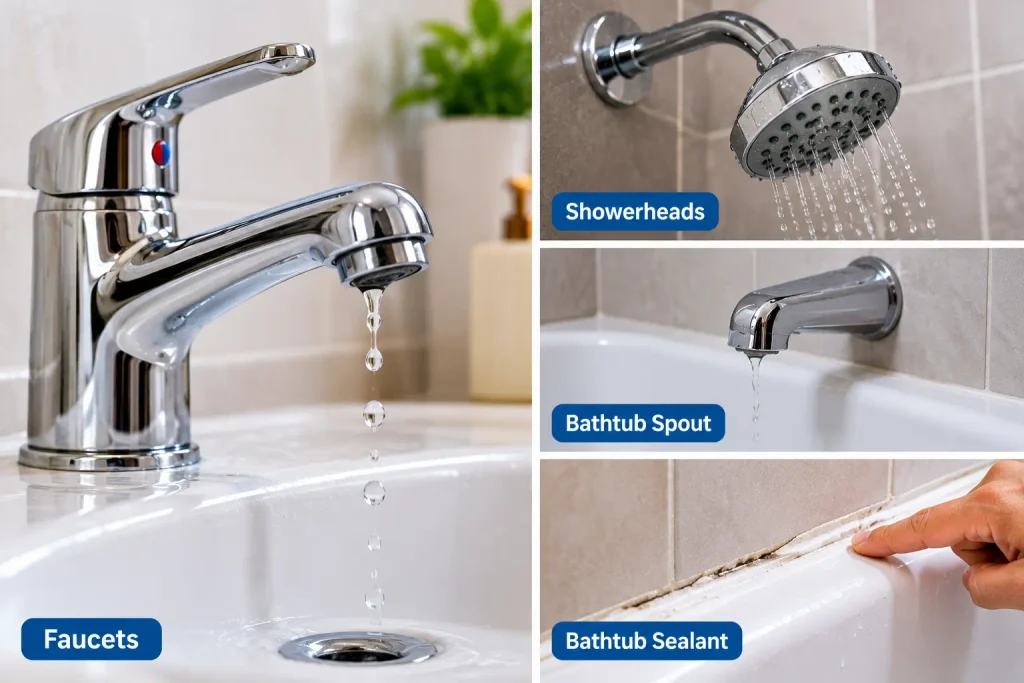
Look for:
- Water dripping when the fixture is turned off.
- Moisture around faucet handles.
- Water leaking from the shower hose.
- Loose showerhead connections.
- Cracked sealant around bathtubs or shower enclosures.
If water appears around a bathtub or shower, the problem may involve damaged sealant, a drain connection, or plumbing hidden behind the wall.
Avoid assuming that every wet bathroom floor is caused by a leaking pipe. Water can also escape through damaged waterproofing or poorly sealed joints.
5. Examine Washing Machines and Dishwashers
Household appliances that use water can develop leaks around their hoses, valves, pumps, or drainage connections.
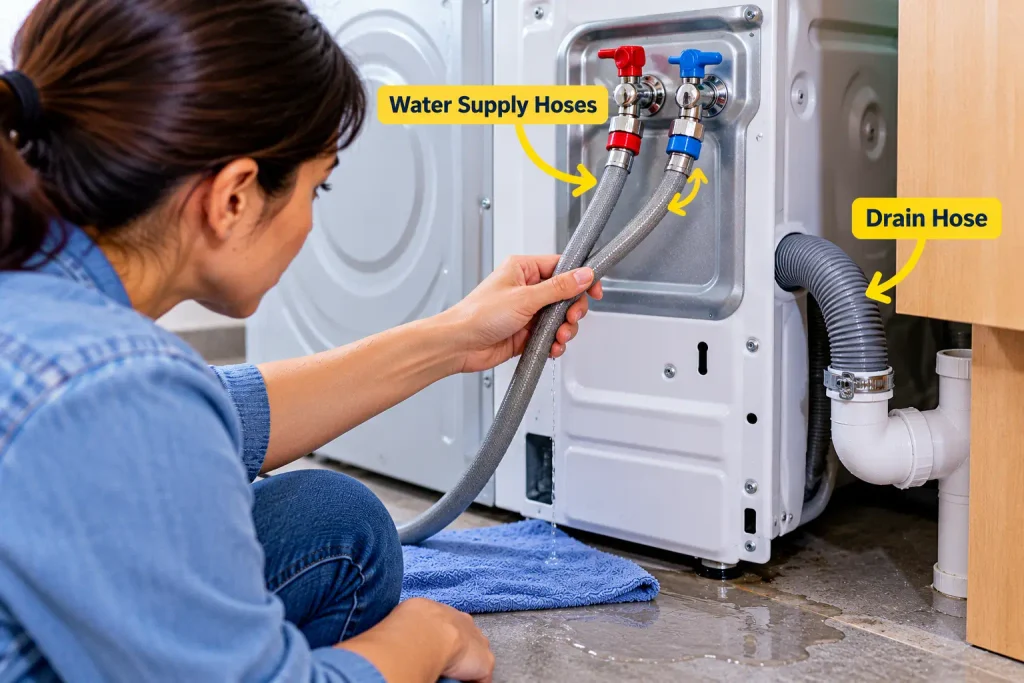
Inspect your washing machine and dishwasher for signs of moisture.
For washing machines, check:
- Water supply hoses and their connections.
- The drain hose.
- The floor around and beneath the appliance, where accessible.
For dishwashers, inspect the visible supply line, drain connection, and surrounding cabinet for dampness.
If you notice water leaking from an appliance, stop using it until the problem is identified. Follow the manufacturer’s instructions before moving or disconnecting the appliance.
Do not pull out a heavy appliance if doing so could damage its hoses, electrical connections, or surrounding cabinets.
6. Check Your Water Meter for Hidden Leaks
Your water meter can help you determine whether water may be escaping somewhere in your plumbing system.
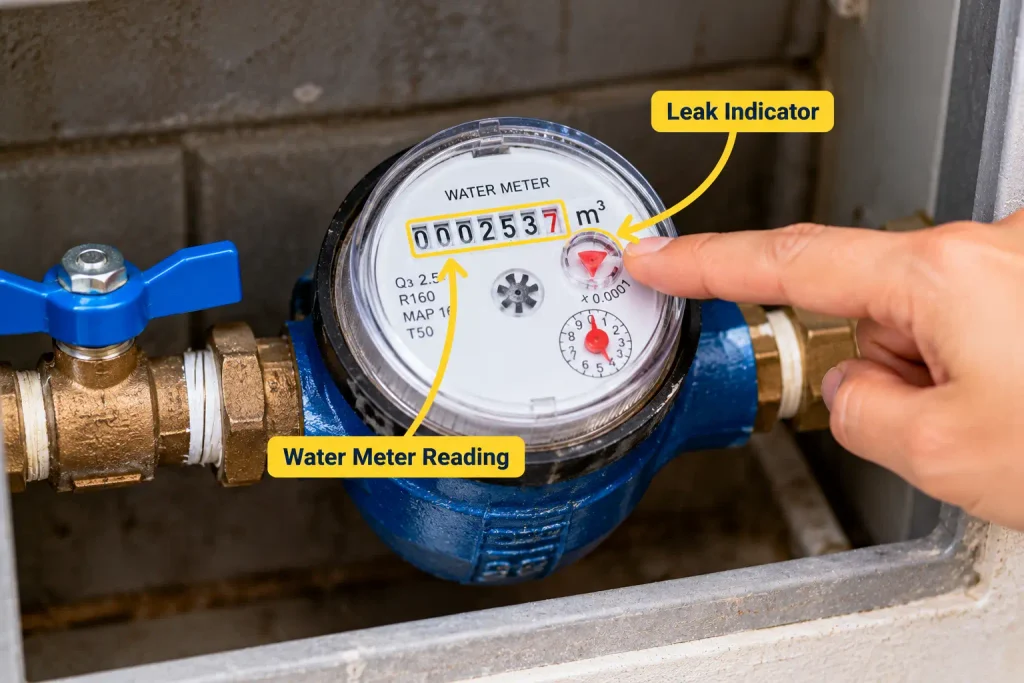
Follow these steps:
- Turn off all faucets and showers.
- Make sure washing machines, dishwashers, and other water-using appliances are not running or filling.
- Check that nobody is using water elsewhere in the home.
- Observe the water meter’s leak indicator or reading.
- Wait for a period without using water and check again.
If the meter continues recording water use, you may have a leak or another source of unexpected water consumption.
For a more controlled test, record the meter reading, avoid using water for a suitable period, and compare the reading afterward.
Important: Automatic appliances, water tanks, irrigation systems, and other connected equipment can affect the result. If you have a storage tank or an automatic filling system, make sure it is not refilling during the test.
A moving meter is a useful clue, but it does not identify the exact location of a leak. Contact your water supplier or a plumber if you need help interpreting the reading.
For additional guidance, read the U.S. Environmental Protection Agency’s Fix a Leak Week guide to learn how to check water meters, toilets, faucets, and other common sources of household leaks.
7. Look for Signs of a Hidden Pipe Leak
Hidden plumbing leaks can be more difficult to locate because the water may travel through building materials before becoming visible.
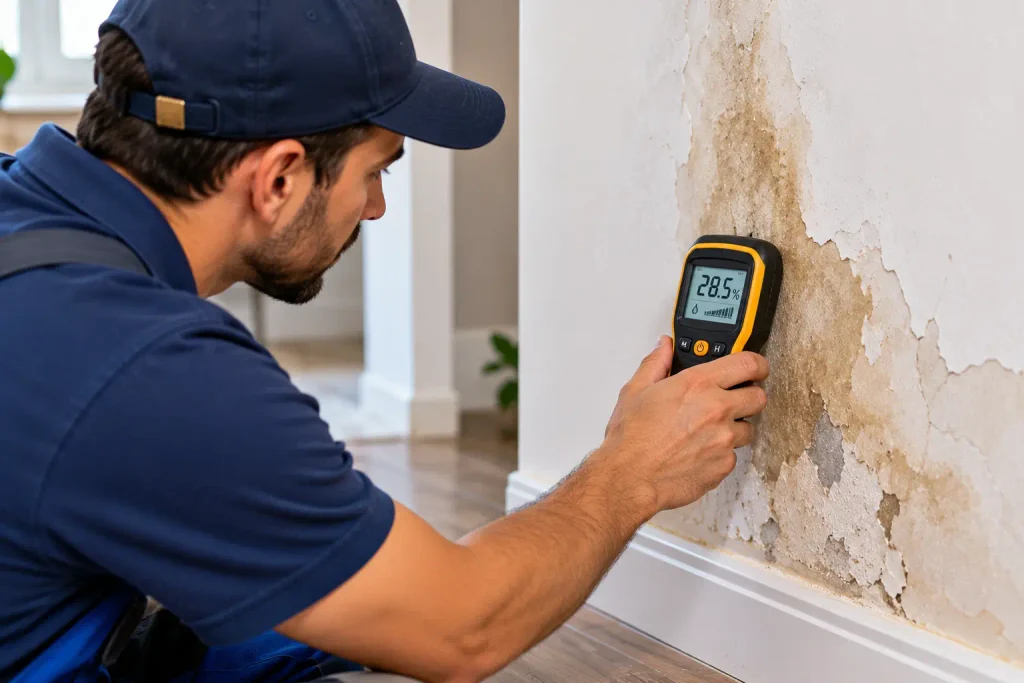
Watch for these warning signs:
- Damp patches that keep returning.
- Walls that feel unusually moist.
- A persistent musty smell.
- Unexpectedly warm or damp floor areas.
- Water stains appearing far from visible plumbing.
- A sudden, unexplained increase in water consumption.
If you suspect a hidden leak, avoid drilling into walls, removing tiles, or breaking flooring to search for the pipe.
A qualified plumber can use suitable leak-detection equipment, such as moisture meters, thermal imaging tools, or acoustic equipment, depending on the situation.
These tools can help narrow down the location before invasive repairs begin.
For information about technologies that can help detect hidden leaks, explore the EPA’s guide to leak detection and flow monitoring devices.
8. Inspect Outdoor Taps, Pipes, and Water Tanks
Not every water leak starts inside the house. Outdoor plumbing and water storage equipment can also develop problems.
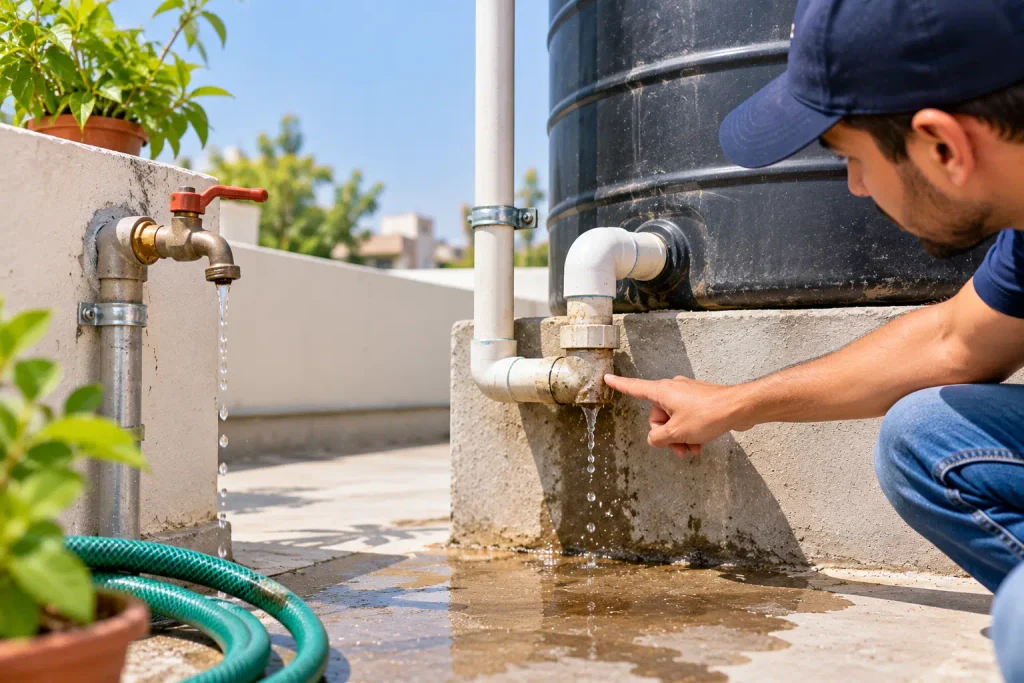
Check accessible areas around:
- Garden taps and hose connections.
- Exposed water supply pipes.
- Water tanks and their connections.
- Overflow pipes.
- Outdoor plumbing valves.
- Areas of soil that remain unusually wet.
If your home has an overhead water tank, look for signs of overflow, leaking fittings, or a malfunctioning float valve.
Persistent water pooling around outdoor pipes may indicate a leak, although rainwater and drainage problems can produce similar signs.
Never enter a water tank or climb onto an unsafe roof to inspect plumbing. Arrange a qualified professional for difficult-to-reach equipment.
9. Check Whether Your Water Bill Has Increased
An unexpected rise in your water bill can be an early warning sign of a plumbing leak.

Compare your recent bills with previous periods and consider whether the number of people in your household, water usage, or billing period has changed.
If your consumption has increased without a clear explanation, inspect your fixtures and water meter.
A higher bill does not automatically mean you have a leak. Changes in household usage, meter readings, or billing adjustments can also explain the difference.
However, when a higher bill occurs alongside damp patches, dripping sounds, or a continuously moving water meter, it is worth investigating promptly.
The EPA’s home maintenance guide recommends checking water bills and inspecting household plumbing regularly to help identify possible leaks before they cause further damage.
What Should You Do When You Find a Water Leak?
Once you identify a possible leak, take action to prevent further damage.
Turn Off the Water Supply if Necessary
If water is actively leaking from a pipe or fitting, turn off the relevant fixture’s shutoff valve if it is safe and accessible.
For a serious leak, you may need to close your home’s main water supply valve.
If you cannot locate the valve or cannot safely operate it, contact a plumber or your building’s maintenance team.
Protect Nearby Belongings
Move furniture, electronics, clothing, and other belongings away from the affected area if it is safe to do so.
Use towels or a suitable container to collect minor drips, but do not attempt to manage a major leak with household materials alone.
Keep Away From Electrical Hazards
If water is near electrical outlets, appliances, wiring, or your electrical panel, do not touch the wet area or electrical equipment.
Keep people away and contact a qualified electrician or emergency service as appropriate. Do not enter standing water that may be electrically energized.
Contact a Professional Plumber
Call a plumber if the leak is hidden, the pipe is damaged, water continues flowing after the supply is shut off, or you cannot determine the source.
Prompt professional help is particularly important for ceiling leaks, major pipe bursts, and water entering walls or floors.
Common Mistakes to Avoid When Searching for a Water Leak
Avoid these mistakes when investigating a suspected leak:
- Ignoring small drips: Minor leaks can gradually cause substantial damage.
- Assuming the nearest wet spot is the source: Water can travel along pipes, beams, and flooring.
- Breaking walls or tiles too early: Professional leak detection may locate the problem with less damage.
- Overtightening fittings: Excessive force can damage threads and seals.
- Using appliances during a leak test: Automatic water use can make meter readings misleading.
- Ignoring electrical risks: Wet electrical equipment can cause serious injury.
- Delaying repairs: Persistent moisture can damage building materials and encourage mold growth.
Frequently Asked Questions
How can I find a water leak without damaging my walls?
Start by checking visible plumbing, sink cabinets, toilets, appliances, water meters, and signs of moisture. If you suspect a hidden pipe leak, a plumber may use moisture meters, thermal imaging, or acoustic detection to narrow down the source without immediately opening the wall.
Why is my water meter moving when all taps are off?
A moving water meter can indicate a hidden leak, a running toilet, an appliance filling automatically, or another connected water system using water. Check that all water-consuming equipment is inactive before repeating the test.
Can a water leak cause mold in my home?
Yes. Persistent moisture from leaking pipes, fixtures, or building joints can encourage mold growth. Repairing the source and drying the affected materials promptly can help reduce the risk.
How do I know if a leak is coming from a pipe or the roof?
A pipe leak may occur even during dry weather and can be accompanied by unexplained water usage. A roof leak may become more noticeable after rain. However, these signs are not conclusive because water can travel before appearing indoors. A professional inspection can help identify the source.
When should I call a plumber for a water leak?
Call a plumber if you suspect a hidden pipe leak, cannot locate the source, notice recurring dampness, see a sudden unexplained increase in water usage, or discover damaged plumbing. For major leaks, shut off the water if safe and seek urgent assistance.
Final Thoughts
Finding the source of a water leak in your home starts with careful observation and a few simple checks. Inspect sinks, toilets, faucets, appliances, outdoor plumbing, and your water meter to identify common problems.
If the source remains unclear, avoid damaging walls or floors in an attempt to find it. A professional plumber can investigate hidden leaks and recommend the appropriate repair.
The sooner you identify and repair a leak, the better you can protect your home, reduce water waste, and avoid unnecessary repair costs.
Related Articles
Explore these related home maintenance guides on Fix The Annoying: