

Your refrigerator helps keep everyday food fresh, but spills, forgotten leftovers, and improperly stored ingredients can quickly make it dirty and unpleasant. A little regular care can help you maintain a cleaner refrigerator, reduce unwanted odors, organize groceries, and manage food waste.
Learning how to keep your refrigerator clean and fresh does not require expensive cleaning products or complicated routines. With warm water, mild dish soap, clean cloths, and a few simple habits, you can keep your fridge looking neat and make food easier to find.
For more practical advice, read our guide on how to keep your kitchen clean and organized.
In this guide, you will learn how to clean refrigerator shelves, remove sticky spills, prevent bad smells, organize food safely, and create an easy refrigerator maintenance routine.
Why Is It Important to Keep Your Refrigerator Clean and Fresh?
A clean refrigerator is easier to organize and maintain. Regular cleaning also helps you notice spoiled food, leaking containers, and forgotten leftovers before they become bigger problems.
Here are some important benefits:
- Helps control unpleasant odors: Removing spoiled food and cleaning spills eliminates common sources of bad smells.
- Supports food hygiene: Cleaning food-contact surfaces helps remove residue and contamination from spills.
- Reduces food waste: Organized shelves make it easier to see what you already have and use ingredients before they spoil.
- Makes food easier to find: Grouping similar items saves time when preparing meals.
- Helps identify maintenance problems: Cleaning gives you an opportunity to inspect door seals, shelves, and accessible areas.
Remember that cleaning alone cannot make spoiled food safe to eat. Proper refrigeration, safe storage, and timely disposal are equally important.
How Often Should You Clean Your Refrigerator?
The best approach is to handle small messes immediately and schedule a more thorough cleaning regularly.
Daily
- Wipe up spills as soon as they happen.
- Cover food and close containers securely.
- Return perishable groceries to the refrigerator promptly.
- Check leftovers for signs of spoilage.
Weekly
- Check for expired or spoiled food.
- Wipe visibly dirty shelves and door compartments.
- Clean sticky handles and frequently touched surfaces.
- Organize food that needs to be used soon.
Monthly
- Remove and wash shelves and drawers as needed.
- Clean the interior walls, corners, and door seals.
- Inspect accessible drainage areas according to the manufacturer’s instructions.
- Check the refrigerator temperature.
Occasionally
- Clean accessible exterior surfaces and ventilation areas according to the appliance manual.
- Inspect the condition of the door gasket and look for unusual moisture or persistent odors.
Adjust this schedule to suit your household, how often you cook, and how quickly spills accumulate.
What Do You Need to Clean a Refrigerator?
Gather these basic supplies before starting:
- Microfiber cloths or other soft cleaning cloths
- Warm water
- Mild dishwashing liquid
- A soft sponge
- A small, soft cleaning brush
- A clean, dry towel
- A cooler with ice packs for temporarily storing perishable food, if needed
Avoid abrasive scouring pads, harsh chemicals, and cleaners that are not approved for your refrigerator’s surfaces. Follow the manufacturer’s instructions, especially for stainless steel finishes, special coatings, and water dispensers.
Never mix cleaning chemicals. In particular, do not combine bleach with vinegar, ammonia, or other cleaning products.
How to Keep Your Refrigerator Clean and Fresh Step by Step
1. Remove Expired and Spoiled Food
Start by checking the contents of your refrigerator. Look for spoiled produce, leaking containers, forgotten leftovers, and products that are past their applicable use-by dates.
Discard questionable food safely. Never taste food to determine whether it is safe, and remember that harmful bacteria may be present even when food looks or smells normal.
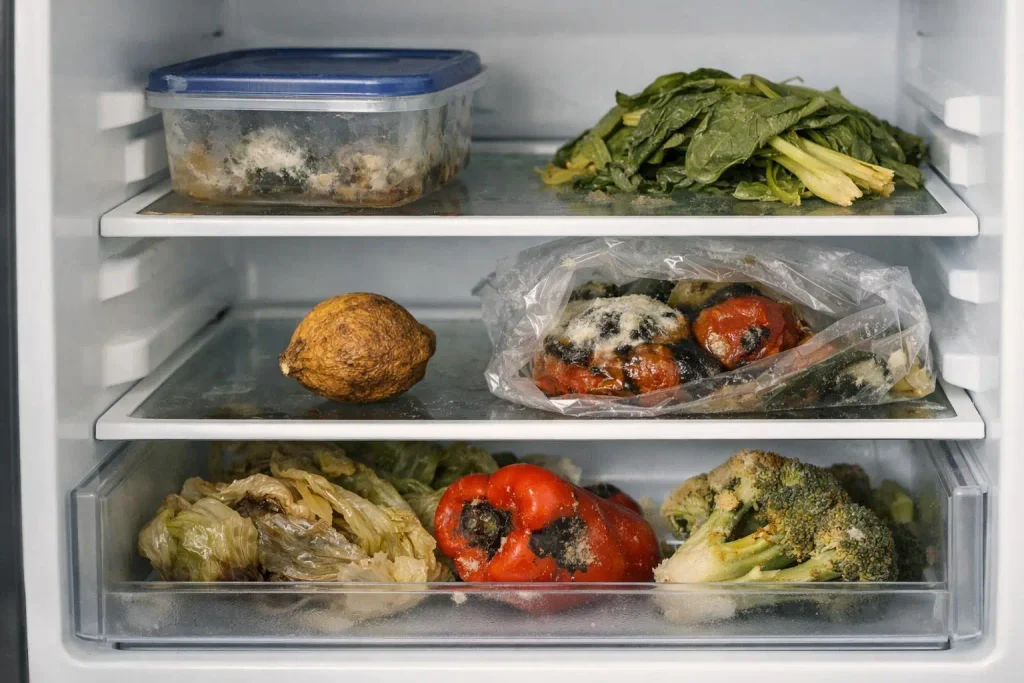
Place the remaining items on a clean surface temporarily, keeping perishable foods cold.
2. Store Perishable Food Safely While Cleaning
Avoid leaving milk, meat, seafood, cooked leftovers, and other perishable foods at room temperature while you clean.
Work quickly and clean one section at a time when possible. If you need more time, place perishable foods in a cooler with ice packs.
For additional advice, follow these safe food storage and refrigeration guidelines.
As a general food-safety rule, perishable food should not remain unrefrigerated for more than two hours, or one hour when the surrounding temperature exceeds 90°F (32°C). These are maximum limits, not a target for cleaning.
3. Remove Shelves and Drawers
Take out removable shelves, bins, and drawers according to the manufacturer’s instructions. Do not force components that seem stuck.
If a glass shelf is cold, let it gradually approach room temperature before washing it. Sudden temperature changes can cause glass to crack.
Keep track of where each component belongs so you can reinstall everything correctly.
4. Clean Refrigerator Shelves and Drawers
Wash removable shelves and drawers with warm water, mild dish soap, and a soft sponge. Pay attention to corners, grooves, and areas where food residue collects.
Rinse away soap residue when needed, then dry each component with a clean towel. For stubborn dried-on spills, allow warm, soapy water to loosen the residue before wiping it away.

Do not use abrasive tools that could scratch plastic or damage coated surfaces.
5. Wipe the Interior Walls and Surfaces
Use a soft cloth dampened with warm water and a small amount of mild dish soap to wipe the interior walls, ceiling, floor, and accessible corners.
Clean door shelves and the areas around containers carefully. Use a soft brush for small crevices that a cloth cannot easily reach.
Follow the appliance manual if your refrigerator has a special interior coating, water dispenser, or other components that require specific care. Avoid pouring water into vents or electrical openings.
6. Clean Refrigerator Door Seals
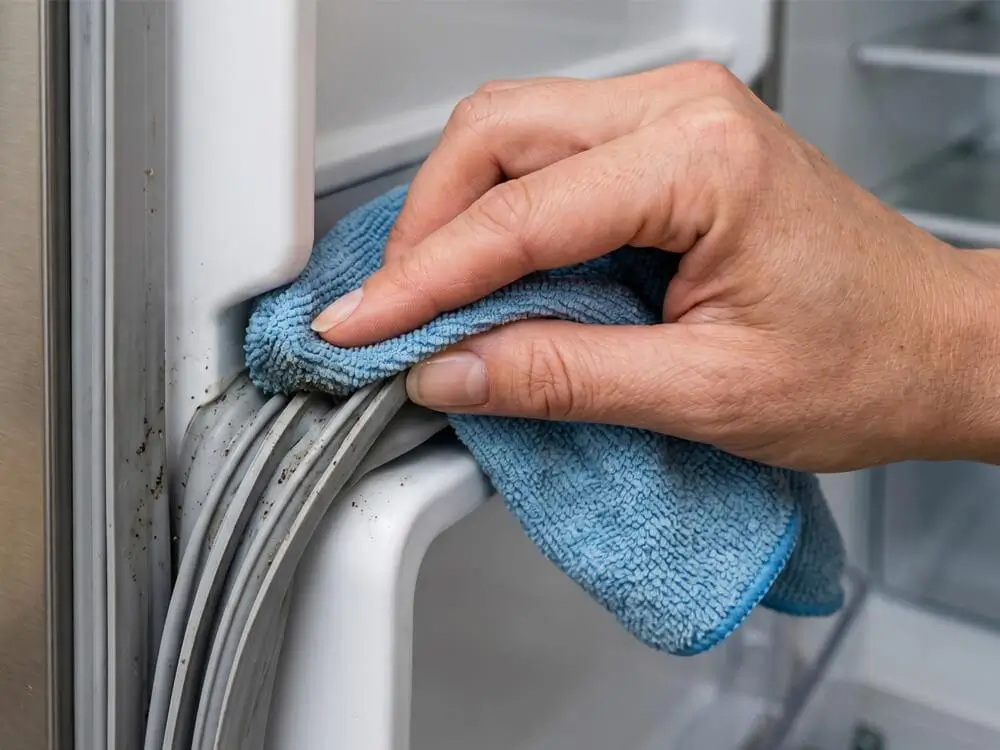
The rubber gasket around the refrigerator door can collect crumbs, grease, and sticky residue.
Gently wipe the seal with a soft cloth and mild soapy water. Use a soft brush to remove dirt from folds without stretching, pulling, or tearing the rubber.
Dry the seal thoroughly. Check that it sits properly against the door frame when closed. If it is cracked, loose, or visibly damaged, consult the manufacturer about replacement.
7. Remove Sticky Spills and Stubborn Food Residue
Sticky juice, sauces, milk, and other spills become harder to remove when left to dry.
Dampen the affected area with warm, soapy water and allow the moisture to loosen the residue. Wipe gently, repeat if necessary, and rinse the surface when required by the cleaning product or appliance instructions.
Clean spills promptly, particularly leaks from raw meat packages. Keep raw food and its juices away from ready-to-eat food, and wash your hands after handling contaminated items.
Avoid scraping surfaces with knives or sharp tools.
8. Dry Everything and Reassemble the Refrigerator
Before replacing shelves and drawers, make sure they are clean and dry. Wipe the interior to remove excess moisture, then reinstall all removable components correctly.
Dry surfaces help prevent water from collecting in corners and around food containers. They also make it easier to spot new leaks or spills.
Return the food promptly, keeping the refrigerator door open for as little time as possible.
9. Organize Food Properly
Good organization helps you locate ingredients and identify food that needs to be used soon.
Learn more about how to reduce food waste and maintain food safety while organizing your refrigerator.
Try these practical fridge organization tips:
- Ready-to-eat foods and leftovers: Keep them in clean, covered containers and follow recommended storage times.
- Raw meat, poultry, and seafood: Store them in sealed, leakproof containers on a shelf where juices cannot drip onto other food. A lower shelf is often useful.
- Dairy products: Follow package storage instructions and keep products properly chilled.
- Fruits and vegetables: Use the appropriate drawers and humidity settings where available. Store produce according to its needs.
- Food that should be used soon: Place it where you can see it easily, without blocking air vents.
Refrigerator layouts differ, so follow your appliance’s recommended storage arrangement. Do not overcrowd shelves; cold air needs room to circulate.

10. Check the Refrigerator Temperature
A clean fridge must also stay cold enough to store food safely.
Keep the refrigerator at 40°F (4°C) or below. A refrigerator thermometer is useful because the temperature dial may not show the actual temperature inside the appliance.

Check the thermometer periodically and adjust the settings according to the manufacturer’s instructions if necessary. Avoid settings that cause food to freeze unintentionally.
For more guidance, read the U.S. Food and Drug Administration’s resource on refrigerator thermometers and food safety.
11. Clean the Exterior and Handles
Wipe the door, handles, and accessible exterior surfaces with a soft cloth and a cleaner suitable for the finish.
Handles deserve regular attention because they are touched frequently throughout the day. Remove fingerprints, grease, and visible marks without scratching the surface.
For stainless steel, follow the manufacturer’s recommended cleaning direction and products. Avoid spraying liquid directly into control panels, electrical openings, or dispenser mechanisms.
12. Maintain a Regular Cleaning Routine
The easiest way to keep your refrigerator fresh is to prevent messes from building up.
Try these simple habits:
- Wipe spills immediately.
- Store food in covered containers.
- Label leftovers with the date they were prepared.
- Move older suitable items forward so they are used first.
- Check the refrigerator before grocery shopping.
- Keep shelves organized without blocking air vents.
- Clean door seals and handles regularly.
- Check the temperature and remove spoiled food promptly.
Small, consistent actions make deep cleaning easier and help you notice potential problems early.
How to Remove Bad Smells from a Refrigerator
If your refrigerator smells unpleasant, identify the source before trying to cover the odor with a fragrance.
Follow these steps:
- Check the food: Remove spoiled produce, leaking packages, and forgotten leftovers.
- Inspect containers: Look for spills beneath jars, bottles, and food storage boxes.
- Clean affected areas: Wash dirty shelves, drawers, and interior surfaces with warm, soapy water.
- Inspect accessible drain areas: If your refrigerator has a drain or drip tray, follow the manufacturer’s instructions for checking and cleaning it. Do not dismantle internal components.
- Dry the interior: Remove excess moisture and return food in clean, covered containers.
- Allow air to circulate: Avoid overcrowding shelves or blocking vents.
Can Baking Soda Help Remove Refrigerator Odors?
An open container of baking soda may help reduce some refrigerator odors. Place it securely in an appropriate spot where it cannot spill into food or interfere with airflow, and replace it according to the product directions.

However, baking soda is not a substitute for removing spoiled food, cleaning spills, or maintaining a safe refrigerator temperature.
If the smell persists after thorough cleaning, or you notice unusual leakage, standing water, or signs of a mechanical problem, consult the appliance manual or a qualified service professional.
Common Refrigerator Cleaning Mistakes to Avoid
Avoid these common mistakes when cleaning your fridge:
- Using harsh or abrasive cleaners: These may damage surfaces or coatings.
- Mixing cleaning chemicals: Mixing products can produce dangerous fumes.
- Washing cold glass shelves with hot water: Sudden temperature changes can crack glass.
- Leaving perishable food out too long: Use a cooler with ice packs when necessary.
- Ignoring door seals: Dirt and residue can accumulate in gasket folds.
- Overloading shelves: Crowded shelves can restrict cold-air circulation.
- Reinstalling wet shelves: Dry removable components before putting them back.
- Using strong air fresheners near food: Fragrances do not remove the source of odors and may contaminate food-contact areas.
- Pouring water into vents or electrical areas: Clean only accessible surfaces using the method recommended by the manufacturer.
For other kitchen cleaning tasks, see our guide on how to remove hard water stains from suitable surfaces.
Refrigerator Cleaning Checklist
Use this checklist during your regular kitchen cleaning routine.
Weekly refrigerator cleaning
- Check for spoiled food and old leftovers.
- Wipe up visible spills.
- Clean dirty shelves and door compartments.
- Wipe the handles and frequently touched surfaces.
- Check that food containers are closed securely.
- Move suitable older items forward.
- Confirm that the refrigerator is not overcrowded.
Monthly refrigerator deep cleaning
- Remove and wash removable shelves and drawers as needed.
- Wipe interior walls and corners.
- Clean the door seals gently.
- Dry surfaces and reinstall components correctly.
- Inspect accessible drain areas according to the manual.
- Check the refrigerator temperature with a thermometer.
- Inspect food containers for leaks.
- Review the appliance’s recommended maintenance instructions.
Conclusion
Keeping your refrigerator clean and fresh becomes much easier when you combine regular cleaning with safe food storage and simple organization habits.
Remove spoiled food, clean spills promptly, wash shelves and drawers carefully, maintain the door seals, and keep the refrigerator at 40°F (4°C) or below. If bad smells return after cleaning, investigate the source rather than relying on fragrances to cover them.
Save the refrigerator cleaning checklist and use it as part of your weekly kitchen routine. For more practical solutions, explore other kitchen cleaning and home maintenance guides on Fix The Annoying.
Frequently asked questions (FAQ)
1. How often should you clean your refrigerator?
Wipe spills immediately, check for spoiled food weekly, and clean shelves, drawers, and interior surfaces more thoroughly as needed. A monthly deep-cleaning routine works well for many households.
2. What is the best way to clean the inside of a refrigerator?
Remove food and detachable components, then wipe interior surfaces with warm water and mild dish soap. Rinse away residue when necessary and dry everything before replacing the food.
3. How can I keep my refrigerator smelling fresh naturally?
Remove spoiled food, clean spills, store food in covered containers, and dry damp areas. Baking soda may help control some odors, but removing their source is the most important step.
4. Is baking soda useful for refrigerator odors?
Yes, baking soda may help reduce some odors. However, it cannot replace cleaning dirty surfaces, removing spoiled food, or correcting problems that cause persistent smells.
5. What temperature should a refrigerator be set to?
Keep the refrigerator at 40°F (4°C) or below. Use an appliance thermometer to check the actual temperature rather than relying only on the control setting.
6. How do I remove sticky spills from refrigerator shelves?
Dampen the spill with warm, soapy water and let it loosen the residue. Wipe gently with a soft sponge, rinse if needed, and dry the shelf thoroughly.
7. How can I prevent bad smells from returning?
Discard spoiled food, clean spills immediately, keep food covered, wash dirty drawers, and inspect accessible areas where residue may collect. Avoid overcrowding the refrigerator.
8. Can I use vinegar to clean my refrigerator?
Check the appliance manufacturer’s instructions before using vinegar. A simple solution of warm water and mild dish soap is a suitable starting point for many refrigerator surfaces. Never mix vinegar with bleach or other cleaning chemicals.
9. How long can perishable food stay outside the refrigerator while cleaning?
Generally, no more than two hours at room temperature, or one hour when temperatures exceed 90°F (32°C). Use a cooler with ice packs if cleaning takes longer. These limits are maximums, not recommended cleaning durations.
10. What should I do if my refrigerator still smells bad after cleaning?
Check for hidden spills, spoiled food, and accessible drain or drip-tray areas identified in the manual. If the odor persists or you notice leakage or other unusual signs, contact a qualified appliance service professional.