
Bathroom Maintenance Checklist

Keep Your Bathroom Clean, Safe, and in Great Condition
Follow this simple bathroom maintenance checklist to prevent common problems, reduce moisture buildup, maintain plumbing fixtures, and keep your bathroom fresh throughout the year.
The Complete Bathroom Maintenance Checklist
Use this practical checklist to keep your bathroom clean, functional, and well-maintained. Complete these simple tasks regularly to prevent small issues from becoming bigger problems.

- Wipe the bathroom sink and countertop.
- Rinse away soap and toothpaste residue.
- Keep the toilet bowl clean.
- Hang towels properly to allow them to dry.
- Remove excess water from shower surfaces.
- Check for visible water drips or leaks.
- Keep the bathroom floor dry and clear.
- Restock essential bathroom supplies, e.g. hand soap and toilet paper.
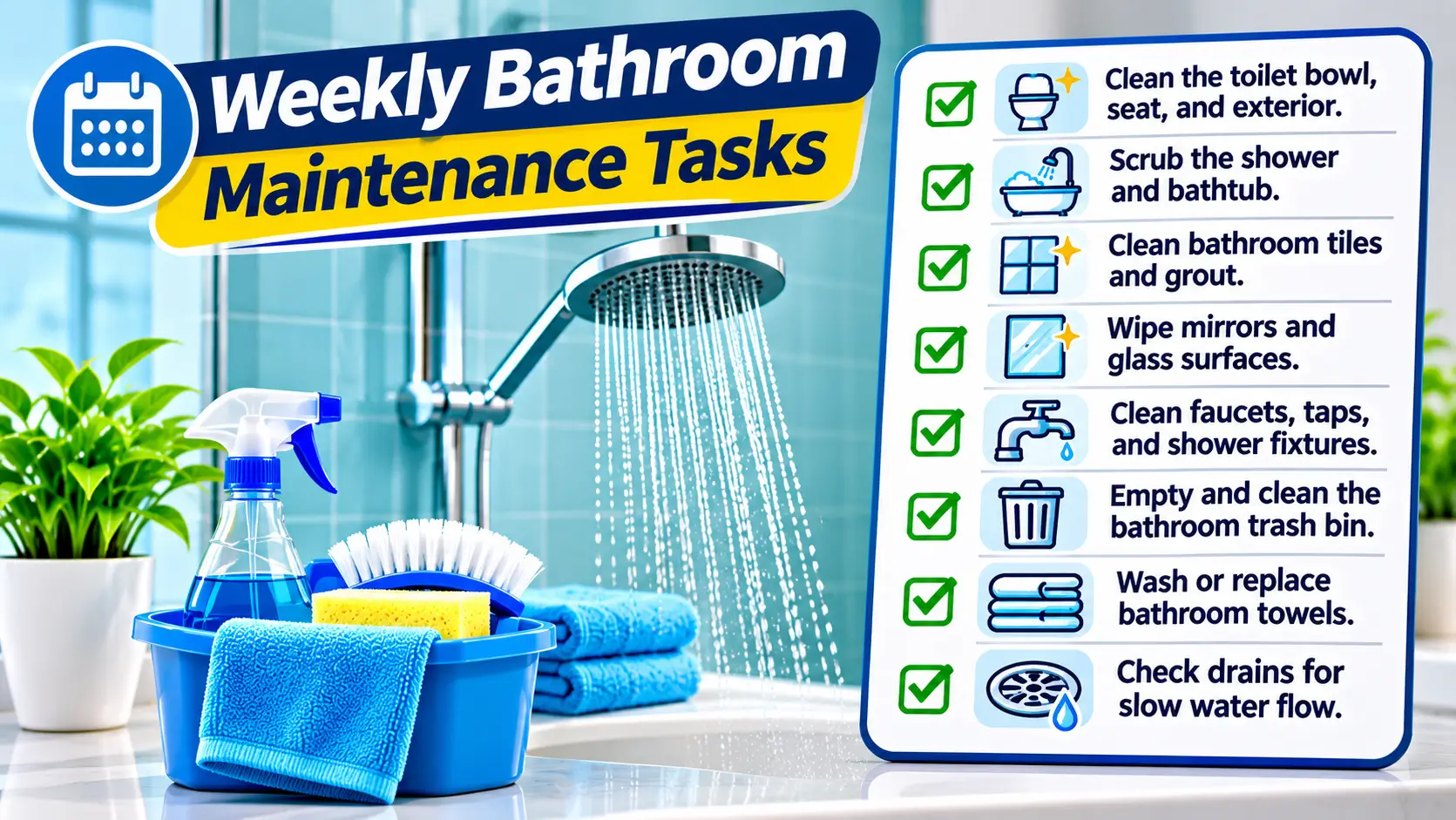
- Clean the toilet bowl, seat, and exterior.
- Scrub the shower and bathtub.
- Clean bathroom tiles and grout.
- Wipe mirrors and glass surfaces.
- Clean faucets, taps, and shower fixtures.
- Empty and clean the bathroom trash bin.
- Wash or replace bathroom towels.
- Check drains for slow water flow.

- Deep clean bathroom tiles and grout.
- Remove soap scum and hard water stains.
- Inspect caulk around the bathtub, shower, and sink.
- Check under the sink for plumbing leaks.
- Clean the exhaust fan cover and ventilation areas.
- Inspect corners for mold or mildew.
- Clean showerheads and faucet aerators if needed.
- Check cabinet hinges, handles, and storage areas.
- Inspect visible pipes and plumbing connections.
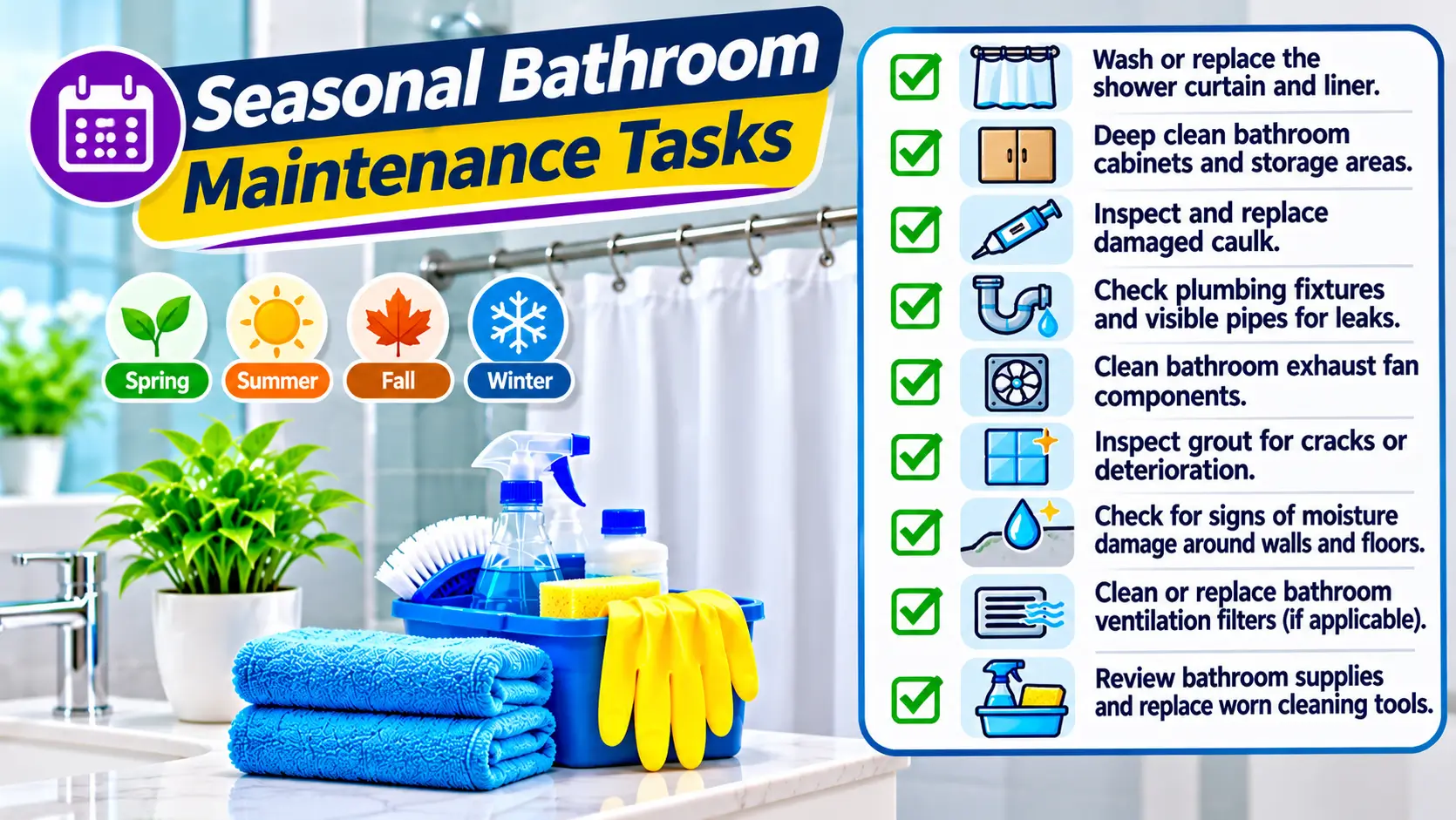
- Wash or replace the shower curtain and liner.
- Deep clean bathroom cabinets and storage spaces.
- Inspect and replace damaged caulk where necessary.
- Check plumbing fixtures and visible pipes for leaks.
- Clean bathroom exhaust fan components.
- Inspect grout for cracks or deterioration.
- Check for signs of moisture damage around walls and floors.
- Clean or replace bathroom ventilation filters, if applicable.
- Review bathroom supplies and replace worn cleaning tools.
Essential Bathroom Maintenance Areas
Some bathroom areas need extra attention because they are frequently exposed to water, moisture, and everyday use.
Toilet Maintenance
Check for running water, leaks around the base, and flushing problems. Clean the toilet regularly and address unusual noises or continuous water flow.
Sink and Faucet Maintenance
Keep the sink clean, remove mineral deposits from faucets, and inspect the drain and connections for leaks.
Shower and Bathtub Maintenance
Remove soap scum and water deposits, clean showerheads, and inspect the caulk around wet areas for cracks or gaps.
Drains and Pipes
Watch for slow drainage, unpleasant odors, and visible leaks. Clean drain covers regularly and avoid putting hair or debris into drains.
Tiles and Grout
Clean tile surfaces regularly and inspect grout lines for cracks, discoloration, or signs of moisture.
Bathroom Ventilation
Use the exhaust fan during and after showers when appropriate. Make sure vents are not blocked to help reduce excess moisture.
Bathroom Maintenance Tips
A few consistent maintenance habits can help prevent common bathroom problems and keep your space comfortable.
- Control Moisture: Use an exhaust fan or open a window when possible to reduce humidity.
- Fix Leaks Early: Repair dripping faucets and visible pipe leaks before water damage develops.
- Clean Regularly: Remove soap residue, dirt, and hard water deposits before they become difficult to clean.
- Check Caulk and Grout: Repair damaged areas to help prevent water from entering behind surfaces.
- Keep Drains Clear: Remove visible hair and debris from drain covers regularly.
- Use Suitable Cleaners: Choose cleaning products that are safe for your bathroom surfaces and follow label instructions.
Common Bathroom Problems to Watch For
Recognizing small warning signs early can help you avoid expensive repairs and unnecessary damage.
- Running Toilet: A toilet that continues running after flushing may have a faulty flapper or fill valve.
- Slow Drains: Water draining slowly may indicate a buildup of hair, soap, or debris.
- Leaky Faucets: Dripping faucets can waste water and may indicate worn internal components.
- Cracked Caulk: Damaged sealant can allow water to reach areas behind bathroom fixtures.
- Mold and Mildew: Persistent moisture can encourage mold growth on grout, caulk, and walls.
- Unpleasant Odors: Bad smells may be caused by dirty drains, dry traps, or plumbing problems.
Pro Bathroom Maintenance Tips
Follow these simple habits to make bathroom maintenance easier and help prevent recurring problems.
- Use a squeegee after showers to reduce water spots on glass and tiles.
- Keep bathroom surfaces dry whenever possible.
- Clean showerheads periodically to remove mineral buildup.
- Inspect visible plumbing connections for signs of leaks.
- Replace damaged caulk before moisture causes further problems.
- Keep cleaning products and tools organized in one place.
- Follow manufacturer instructions when maintaining bathroom fixtures and ventilation equipment.
Bathroom Maintenance Safety Tips
Stay Safe During Bathroom Maintenance
- Wear suitable gloves when using cleaning products.
- Keep the bathroom ventilated while cleaning.
- Never mix bleach with ammonia, acids, or other cleaning products.
- Follow the instructions and safety warnings on product labels.
- Use non-abrasive cleaners on delicate surfaces.
- Keep electrical appliances away from water.
- Avoid electrical repairs or major plumbing work unless you have the proper knowledge.
- Contact a qualified professional for serious leaks, electrical faults, or extensive mold problems.
Recommended Bathroom Maintenance Schedule
How Often Should You Maintain Your Bathroom?

Frequently Asked Questions
How often should I clean and maintain my bathroom?
Clean frequently used surfaces daily and perform a more thorough bathroom cleaning weekly. Inspect plumbing, caulk, grout, and ventilation monthly.
What should I check during a bathroom maintenance inspection?
Check faucets, toilets, drains, visible pipes, caulk, grout, ventilation, and areas around the sink, shower, and bathtub for leaks or moisture damage.
How can I prevent mold in my bathroom?
Reduce excess moisture by using an exhaust fan, improving ventilation, drying wet surfaces, and fixing leaks promptly.
How often should bathroom caulk be replaced?
There is no fixed replacement schedule. Inspect caulk regularly and replace it when it becomes cracked, loose, damaged, or no longer seals properly.
Why does my bathroom have a bad smell?
Possible causes include dirty drains, buildup in plumbing fixtures, a dry drain trap, or ventilation problems. Investigate persistent odors to identify the source.
When should I call a professional plumber?
Contact a qualified plumber for persistent leaks, recurring drain blockages, damaged pipes, low water pressure, or plumbing problems you cannot safely resolve.
Helpful Resources
EPA WaterSense – Home Maintenance
Learn practical ways to identify household leaks and use water more efficiently.
EPA – Leak Detection and Flow Monitoring
Understand how leak detection devices can help identify plumbing leaks and reduce water waste.
CDC – Cleaning and Disinfecting
Learn about recommended household cleaning and disinfecting practices.
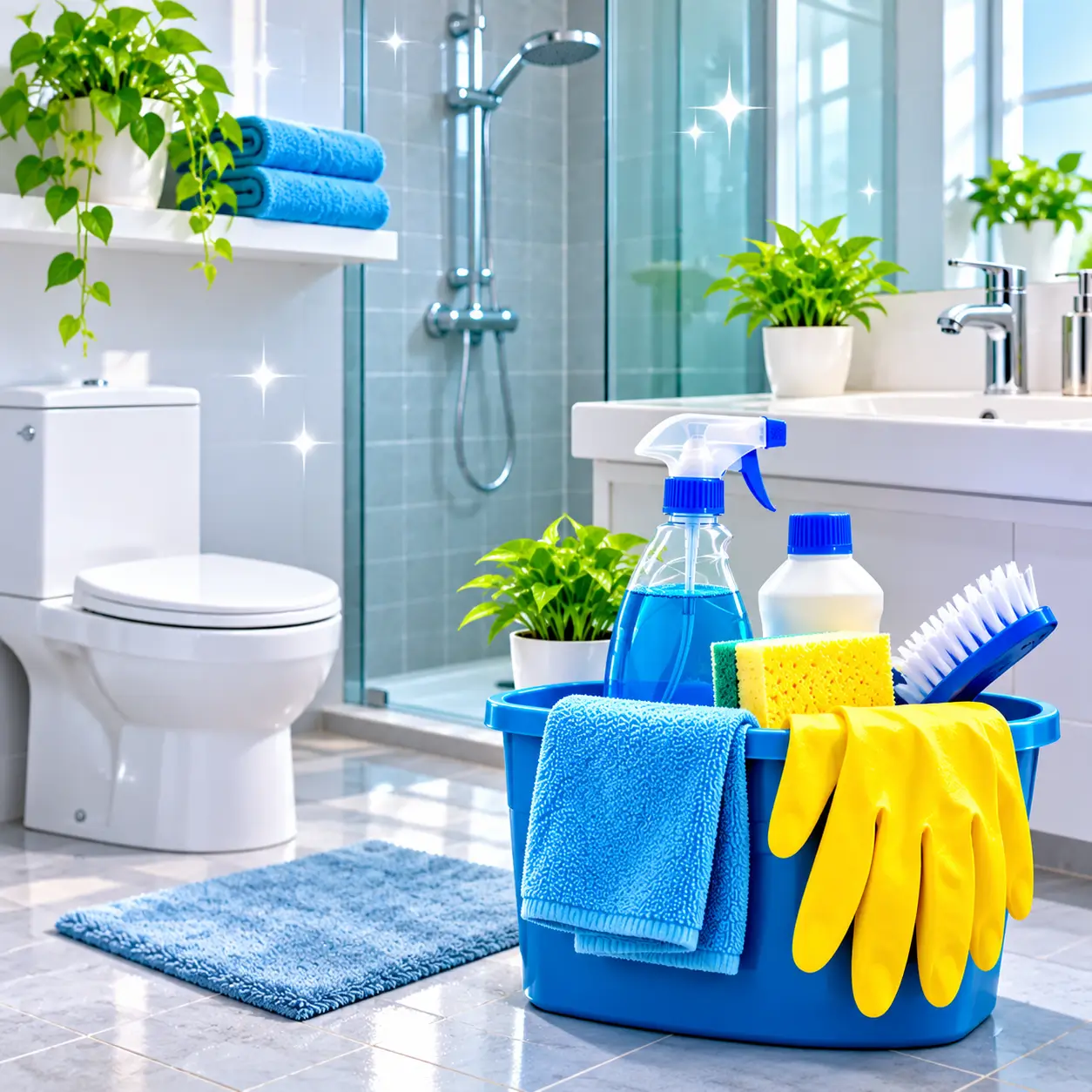
Ready for a Cleaner, Better-Maintained Bathroom?
Small maintenance tasks can make a big difference. Follow this checklist regularly to keep your bathroom clean, fresh, and in good working condition.