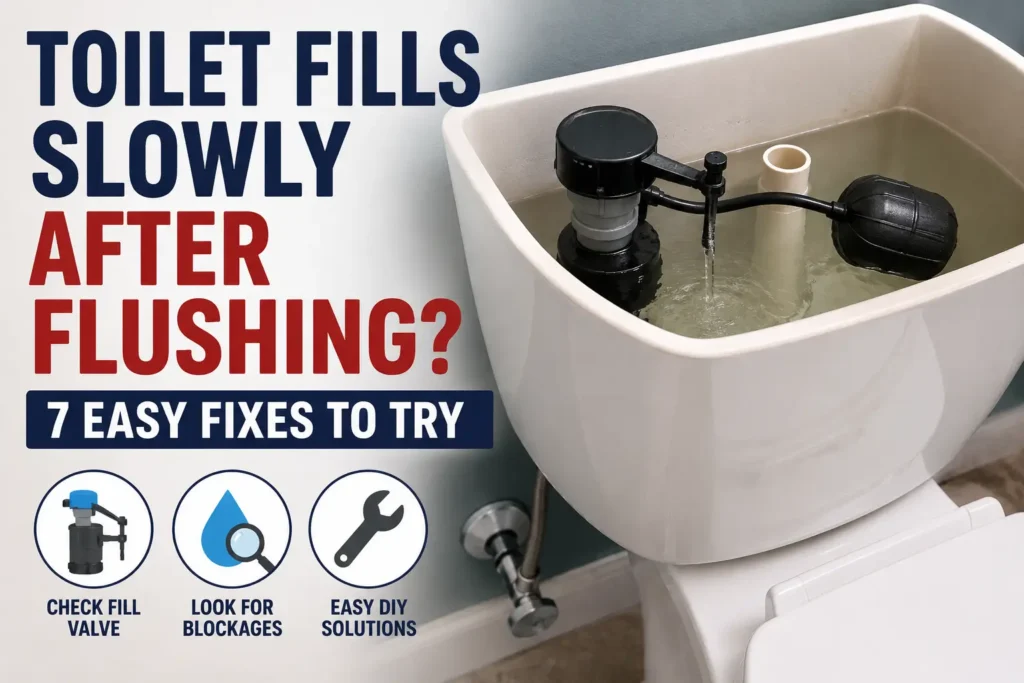
A toilet that takes too long to refill can be surprisingly frustrating, especially in a busy household. If your toilet fills slowly after flushing, the problem is often related to the water supply, fill valve, float, or mineral buildup inside the tank.
Fortunately, many slow-filling toilet problems can be diagnosed without replacing the entire toilet. Start with the simplest checks first and move on to the internal tank components only when necessary.
Below are seven practical fixes to help you find out why your toilet is filling slowly and what you can do about it.
Safety note: Before disconnecting a supply line or removing toilet components, turn off the toilet’s water supply valve. Don’t force old, corroded, or stuck plumbing parts. If you find a significant leak, damaged plumbing, or a problem you’re not comfortable repairing, contact a qualified plumber.
Why Does My Toilet Fill Slowly After Flushing?
After you flush a toilet, water should begin refilling the tank through the fill valve. As the water level rises, the float eventually signals the fill valve to shut off.
If something restricts this process, the tank can take much longer than normal to refill.
Common causes include:
- A partially closed water supply valve
- A kinked or restricted supply line
- Debris inside the fill valve
- Mineral buildup
- An incorrectly adjusted float
- A worn or failing fill valve
- Low water pressure elsewhere in the home
Before taking anything apart, flush the toilet and observe what happens inside the tank. Listening to the water and watching how quickly the tank refills can help narrow down the cause.
1. Make Sure the Water Supply Valve Is Fully Open
Start with one of the easiest things to check: the toilet’s water supply valve.
You’ll usually find the valve on the wall or floor behind or beside the toilet. A flexible supply line runs from this valve to the toilet tank.
If the valve is only partially open, it can restrict the amount of water reaching the fill valve and make the tank refill slowly.
Check whether the valve is fully open according to its design. If someone recently worked on the toilet or plumbing, the valve may have been closed and not completely reopened afterward.
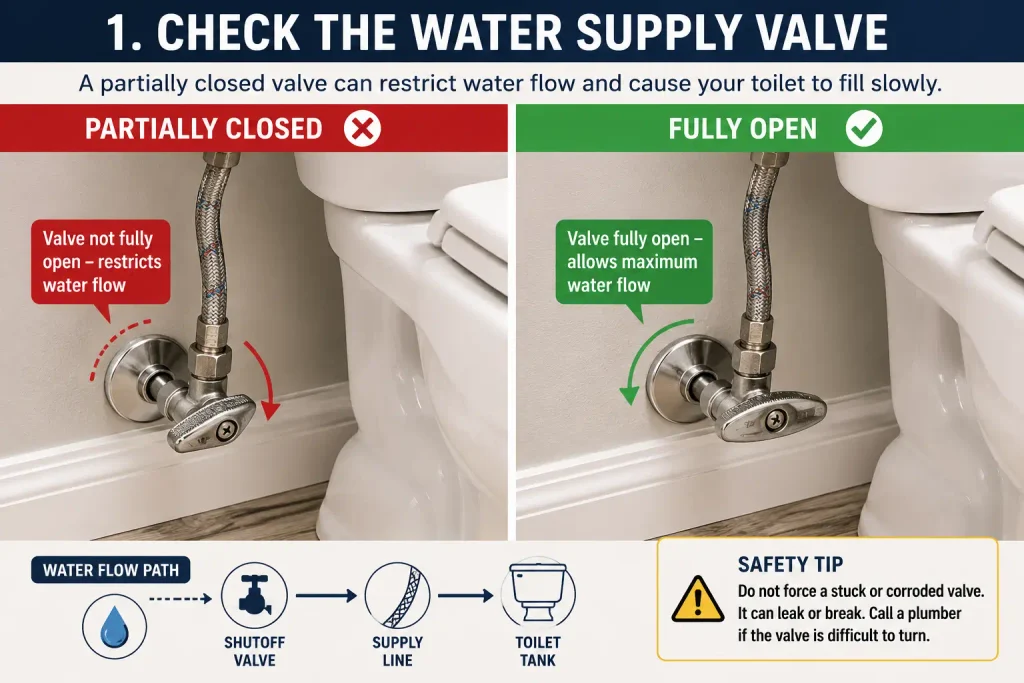
Flush the toilet again and observe whether the tank fills faster.
Don’t force a valve that is stuck, heavily corroded, or difficult to turn. Older valves can begin leaking when disturbed and may need professional attention.
2. Check the Toilet Fill Valve
If the water supply valve is fully open, inspect the fill valve inside the toilet tank.
Remove the tank lid carefully and place it somewhere safe where it won’t fall or crack.
The fill valve is typically the tall component connected to the water supply line. Its job is to allow fresh water into the tank after every flush and stop the flow when the correct water level is reached.
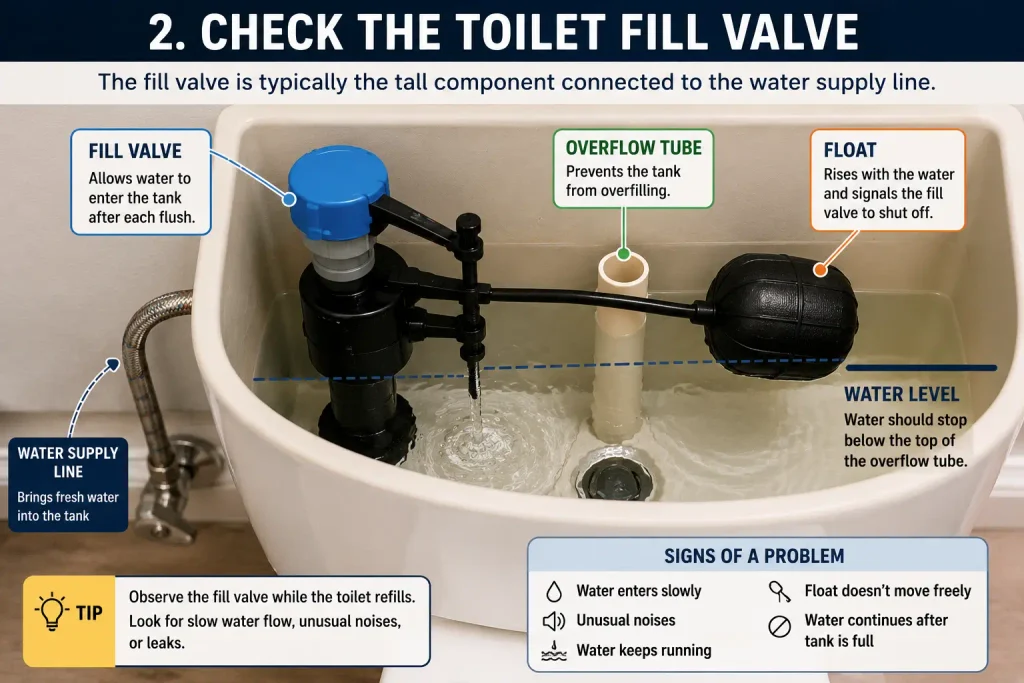
Flush the toilet while watching the fill valve.
Look for signs such as:
- Water entering unusually slowly
- Inconsistent water flow
- Unusual noises
- A float that doesn’t move freely
- Water continuing to run after the tank reaches its normal level
If your toilet fills slowly after flushing even though the supply valve is fully open, the fill valve becomes one of the main components to investigate.
3. Clean Debris From the Fill Valve
Small particles of sediment, rust, or debris can sometimes enter the water supply and restrict the fill valve.
This can be especially noticeable after plumbing work or after the home’s water supply has been shut off and turned back on.
The exact cleaning procedure depends on the fill valve design. Some models allow access to a cap or seal for cleaning, while others may require a different procedure.
For additional troubleshooting guidance, see Fluidmaster’s official toilet repair guide for slow-filling toilet tanks.
Before working on the fill valve:
- Turn off the toilet’s water supply.
- Flush the toilet to empty most of the tank.
- Follow the fill valve manufacturer’s cleaning instructions.
- Keep small components organized during disassembly.
- Reassemble everything correctly before restoring the water supply.
Avoid inserting sharp objects into small openings or forcing components apart.
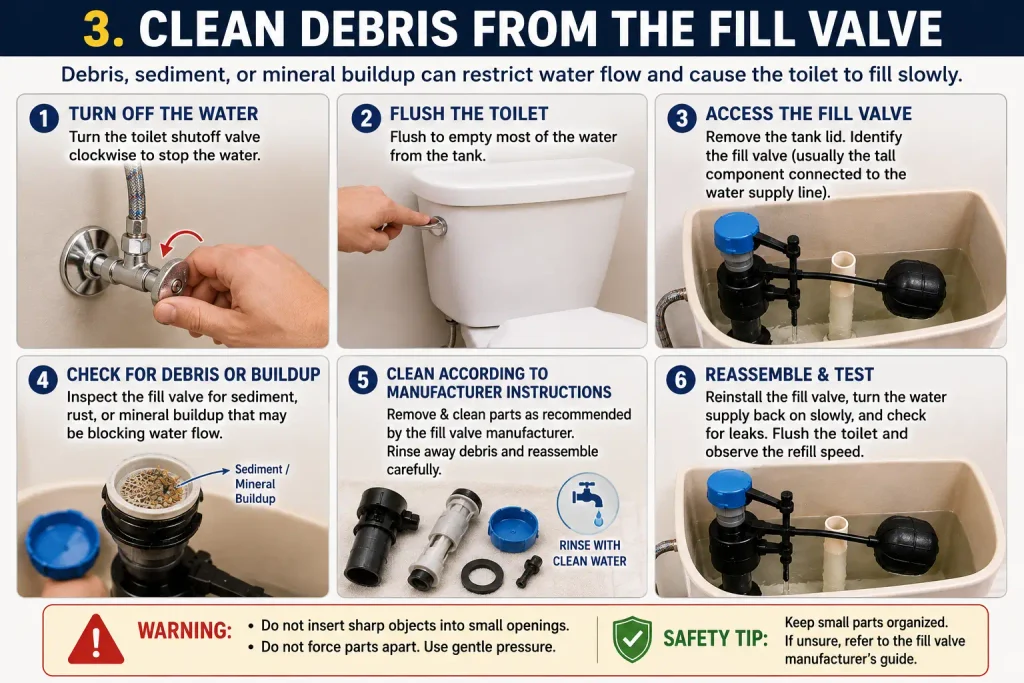
Once the valve is cleaned and reassembled, slowly restore the water supply and check for leaks before flushing the toilet again.
4. Check and Adjust the Toilet Float
The toilet float helps control when the fill valve opens and closes.
Depending on the toilet, you may have a float cup that moves vertically along the fill valve or an older float-ball design attached to an arm.
If the float is incorrectly adjusted, stuck, rubbing against another component, or unable to move freely, it can interfere with normal tank filling.
Remove the tank lid and check whether the float moves smoothly.
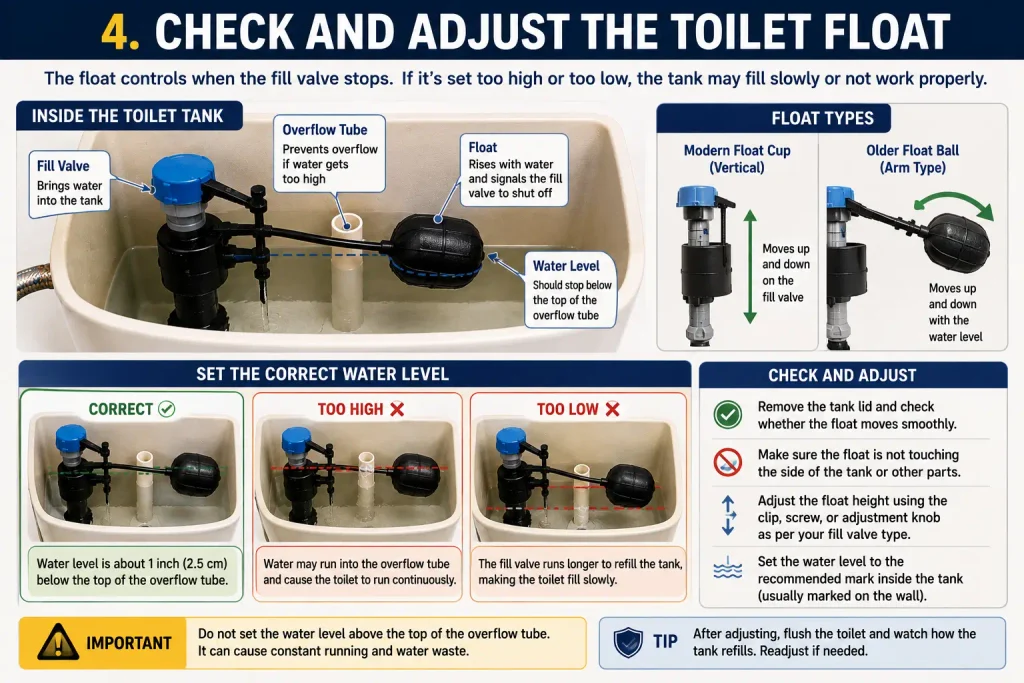
Make sure it isn’t:
- Touching the side of the tank
- Catching on another component
- Stuck in one position
- Improperly adjusted
- Damaged
Also check the tank’s recommended water level. Many toilets have a water-level mark inside the tank, and fill-valve manufacturers generally provide instructions for adjusting the float.
Avoid setting the water level so high that water continuously spills into the overflow tube.
5. Inspect the Toilet Water Supply Line
Next, inspect the flexible supply line running from the shutoff valve to the toilet.
Look for:
- Sharp bends
- Kinks
- Twisting
- Crushing
- Visible deterioration
- Moisture or leaks around connections
A severely kinked supply line can restrict the amount of water reaching the toilet, causing the tank to refill more slowly.
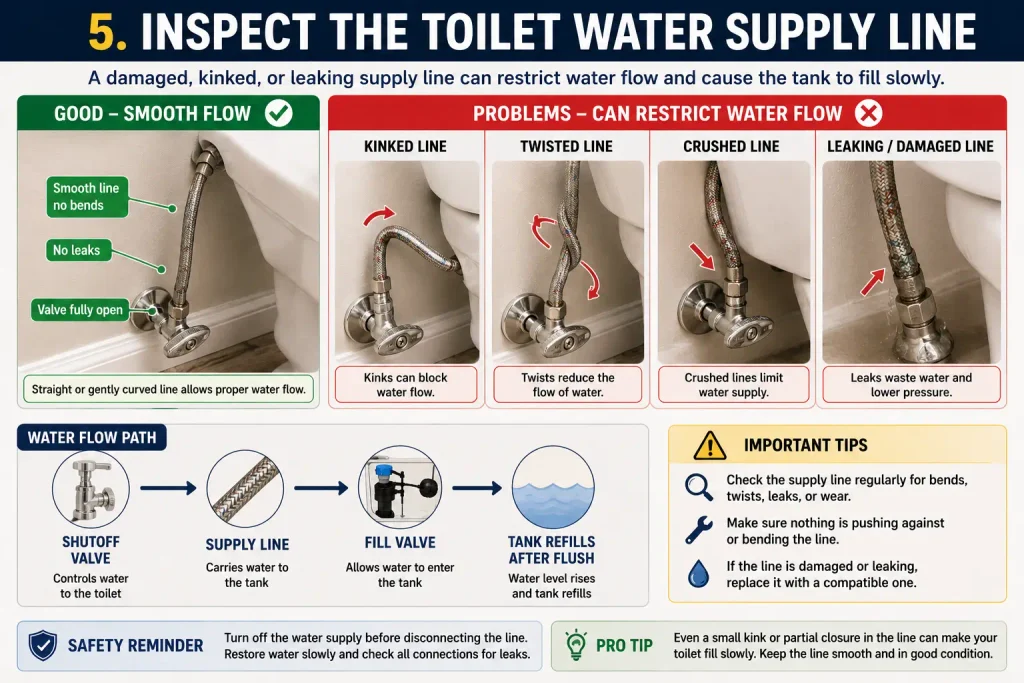
Make sure nothing is pushing against or bending the line.
If the supply line appears damaged, leaking, or badly kinked, it may need replacement. Turn off the water before disconnecting it and use a replacement that is compatible with your toilet and shutoff connection.
After reconnecting plumbing components, restore the water slowly and inspect the connections carefully for leaks.
6. Check for Mineral Buildup
Hard water can leave mineral deposits on plumbing components over time.
These deposits may accumulate around the fill valve or other areas where water passes through small openings.
Look inside the tank for obvious mineral deposits or scale around the fill valve and water-entry areas.
If buildup is present, follow the toilet or fill-valve manufacturer’s recommended cleaning procedure. Avoid aggressive chemicals or abrasive tools that could damage rubber seals, plastic components, or the toilet’s finish.
If mineral buildup repeatedly causes problems, the issue may extend beyond the toilet itself and could be related to the home’s water conditions.
7. Replace an Old or Faulty Fill Valve
Fill valves don’t last forever.
If you’ve confirmed that the water supply is adequate, the supply line isn’t restricted, the float moves correctly, and cleaning hasn’t improved the refill speed, the fill valve itself may be worn or failing.
Signs that replacement may be appropriate include:
- Consistently slow filling
- Unusual noises during refilling
- Intermittent operation
- Difficulty shutting off correctly
- Visible deterioration
- Continued problems after cleaning and adjustment
Replacement procedures vary between toilet and fill-valve designs.
Before purchasing a new valve, check your toilet manufacturer’s recommendations and make sure the replacement is compatible with your toilet.
Turn off the water supply and empty the tank before disconnecting the existing valve. After installing the replacement, restore the water gradually and inspect all connections for leaks.
If you’re unsure about removing or installing plumbing components, a plumber can handle the replacement safely.
What If the Toilet Fills Slowly but Eventually Stops?
If the toilet takes a long time to fill but eventually reaches the correct water level and stops running, a restriction is more likely than a complete component failure.
Start by checking:
- The water supply valve
- The supply line
- The fill valve
- The float
- Mineral or sediment buildup
A partially restricted fill valve can still allow enough water through to fill the tank, but the process may take much longer than normal.
If the refill time has gradually become longer, mineral buildup or an aging fill valve may be worth investigating.
What If the Toilet Fills Slowly and Keeps Running?
Slow filling combined with continuous running can indicate a different problem.
Watch what happens after the tank approaches its normal water level.
If water continues flowing into the overflow tube, the float may be incorrectly adjusted or the fill valve may not be shutting off properly.
If water is escaping from the tank into the bowl, another tank component—such as the flapper or flush valve seal—could also be involved.
If your toilet continues running after the tank fills, follow our guide on how to fix a running toilet to troubleshoot the flapper, fill valve, and other common causes.
A running toilet shouldn’t be ignored because it can waste a significant amount of water over time.
Diagnose where the water is going before replacing components unnecessarily.
What If the Toilet Tank Is Not Filling at All?
A toilet that doesn’t refill is different from one that simply fills slowly.
First, check whether the toilet’s water supply valve is open.
Then verify whether other fixtures in the home have normal water flow.
If other fixtures work normally but no water enters the toilet tank, possible causes include:
- A closed or faulty shutoff valve
- A restricted supply line
- A blocked fill valve
- A failed fill valve
If several fixtures have little or no water, the problem may involve the home’s main water supply rather than the toilet.
Toilet Fills Slowly After the Water Was Turned Back On
If the problem appeared immediately after the home’s water supply was shut off and restored, sediment or debris may have moved through the plumbing.
Small particles can sometimes become trapped inside the toilet fill valve and restrict incoming water.
Check that the toilet’s shutoff valve was completely reopened. If it is, inspect and clean the fill valve according to the manufacturer’s instructions.
If multiple fixtures developed reduced flow at the same time, investigate the home’s water supply rather than assuming the toilet is the only problem.
Toilet Fills Slowly but Other Faucets Have Normal Pressure
If sinks, showers, and other fixtures have normal water flow but the toilet fills slowly, the problem is probably localized around the toilet.
Concentrate your troubleshooting on:
- The toilet shutoff valve
- Supply line
- Fill valve
- Float
- Mineral or sediment buildup
This distinction is useful because it can prevent unnecessary troubleshooting of the home’s main plumbing system.
Toilet Fills Slowly and Makes a Hissing Noise
A hissing sound during refilling often comes from water moving through the fill valve.
Some sound during normal operation isn’t necessarily a problem. However, persistent hissing combined with unusually slow filling can indicate a restricted, dirty, improperly adjusted, or deteriorating fill valve.
Remove the tank lid and observe where the sound originates.
If the sound continues even after the tank should have finished filling, check whether water is entering the overflow tube or leaking from the tank into the bowl.
How to Prevent a Toilet From Filling Slowly
A few simple maintenance habits can help prevent future refill problems.
Periodically inspect the supply line and shutoff valve for moisture, corrosion, or deterioration. Keep the area around the toilet clear so nothing presses against the supply line.
If you have hard water, watch for mineral buildup around tank components.
Pay attention when the toilet begins taking longer than usual to refill. Addressing a gradual change early can sometimes prevent a complete fill-valve failure later.
Also avoid placing cleaning tablets or chemicals inside the tank unless your toilet manufacturer specifically says they’re compatible. Some products can damage rubber seals and other internal components.
When Should You Call a Plumber?
Many slow-filling toilet problems involve relatively accessible components, but not every plumbing repair should be handled as a DIY project.
Consider contacting a qualified plumber when:
- The shutoff valve is corroded, stuck, or leaking.
- The supply pipe appears damaged.
- Water is leaking around the toilet or wall.
- Several fixtures have low water pressure.
- The toilet repeatedly develops the same problem.
- You’re unable to identify the restriction.
- Replacing or cleaning the fill valve doesn’t solve the problem.
- You’re uncomfortable disconnecting plumbing components.
A plumber can also measure the home’s water pressure and determine whether the problem originates at the toilet or elsewhere in the plumbing system.
Frequently Asked Questions
Why does my toilet take so long to fill after flushing?
Common causes include a partially closed shutoff valve, restricted supply line, dirty fill valve, mineral buildup, improperly adjusted float, or worn fill valve. Start with the water supply and work toward the internal tank components.
How long should a toilet take to refill?
Refill time varies by toilet design, tank size, fill valve, and available water pressure. Instead of relying on one universal refill time, pay attention to a significant change from your toilet’s normal behavior.
Can a dirty fill valve make a toilet fill slowly?
Yes. Sediment, mineral deposits, or debris can restrict water moving through some fill valves. Cleaning the valve according to the manufacturer’s instructions may restore normal flow.
Can low water pressure cause a toilet to fill slowly?
Yes. If water pressure or flow is reduced throughout the home, the toilet may also take longer to refill. Check other fixtures to determine whether the problem is limited to the toilet.
Why did my toilet suddenly start filling slowly?
A sudden change may result from a partially closed shutoff valve, kinked supply line, debris entering the fill valve, plumbing work, or a fill valve beginning to fail.
Should I replace the fill valve if my toilet fills slowly?
Not immediately. First check the shutoff valve, supply line, float, and fill valve for restrictions or debris. If those checks don’t solve the problem and the valve is old or malfunctioning, replacement may be appropriate.
Can I keep using a toilet that fills slowly?
If the toilet flushes correctly, eventually stops filling, and isn’t leaking, slow refilling may not require an emergency repair. However, you should investigate the cause, particularly if the problem appeared suddenly or continues getting worse.
Final Thoughts
When your toilet fills slowly after flushing, begin with the easiest possibilities. Make sure the water supply valve is fully open, inspect the supply line, and observe how the fill valve and float operate.
If those basic checks don’t solve the problem, investigate debris or mineral buildup and consider whether an aging fill valve needs replacement.
Most importantly, check whether the problem affects only the toilet or several fixtures in your home. If multiple fixtures have reduced water flow, or you discover leaks, corrosion, or damaged plumbing, the underlying problem may require professional attention.