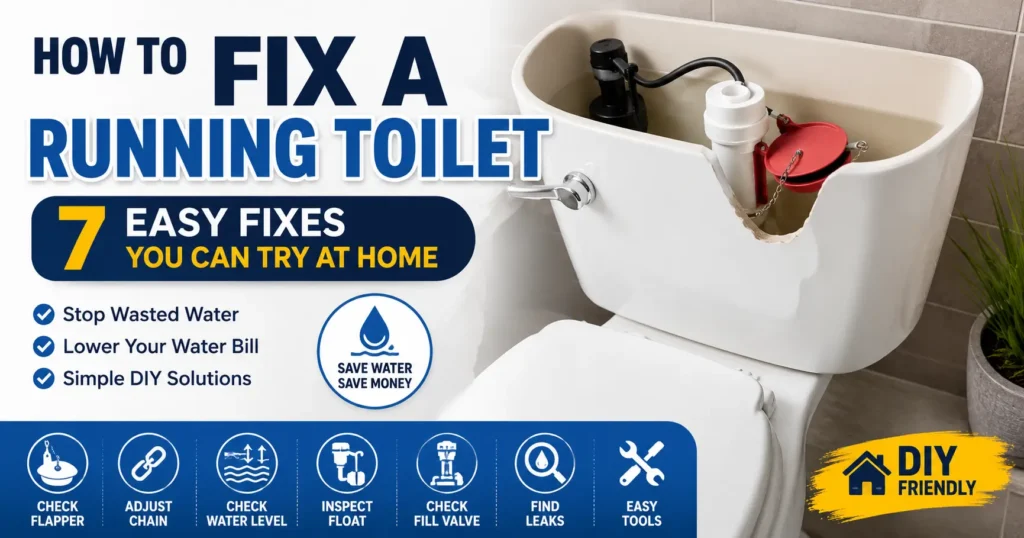
A toilet that keeps running after you flush can be annoying, waste water, and increase your water bill. The good news is that many running toilet problems are caused by simple issues inside the tank that you can diagnose and fix yourself.
If you’re wondering how to fix a running toilet, start with the easiest checks before replacing any parts. A loose flapper chain, incorrect water level, worn flapper, or faulty fill valve may be all that’s causing the problem.
In this guide, we’ll walk through 7 easy ways to fix a running toilet at home, explain what causes the problem, and show you when it’s better to call a plumber.
Why Does a Toilet Keep Running?
A standard tank-style toilet contains several parts that work together every time you flush. When one of these parts fails to seal or shut off correctly, water may continue flowing into the bowl or overflow tube.
Common causes include:
- A worn or damaged toilet flapper
- A tangled or incorrectly adjusted flapper chain
- Water level set too high
- An incorrectly adjusted float
- A dirty or faulty fill valve
- A damaged flush valve seat
- A refill tube positioned incorrectly
EPA WaterSense specifically recommends checking whether water is continuously flowing into the overflow tube and periodically checking toilet flappers for leaks.
Before You Start
Before learning how to fix a running toilet, take a minute to understand the main parts inside the toilet tank.
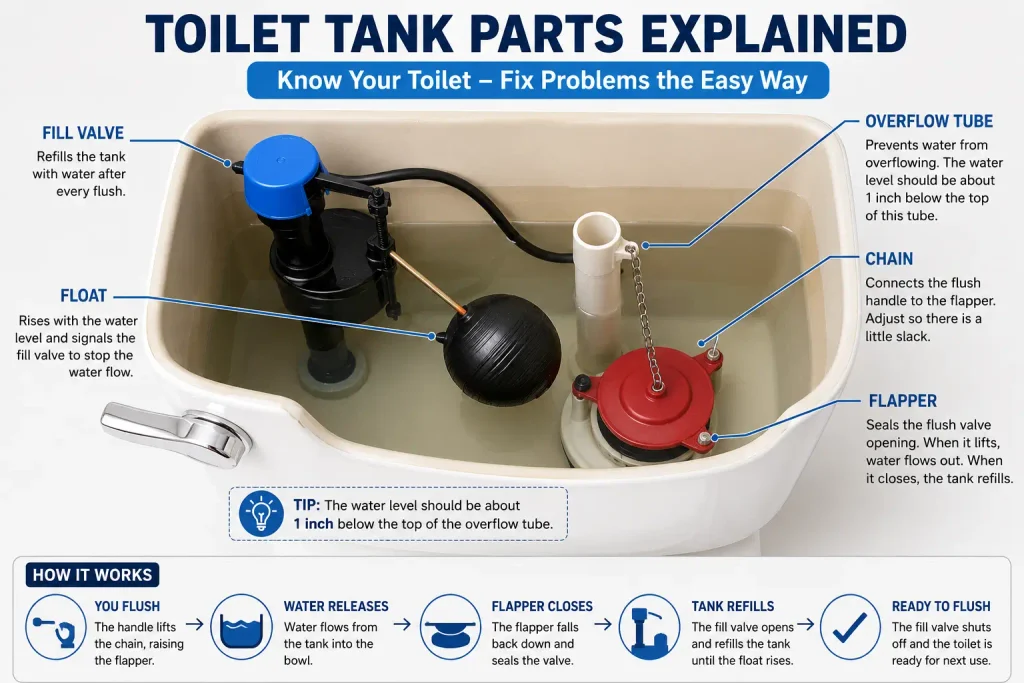
You usually won’t need many tools for these fixes. Depending on the problem, you may need an adjustable wrench, sponge or towel, replacement flapper or fill valve, and food coloring for a simple leak test.
Before replacing components, locate the toilet’s water shutoff valve, usually on the wall or floor near the toilet. If you need to remove or replace a tank component, turn off the water supply first and flush the toilet to empty most of the tank.
Safety Tip: If you notice water leaking onto the floor, cracked porcelain, a badly corroded shutoff valve, or another problem outside the tank, stop and consider contacting a plumber.
How to Fix a Running Toilet: 7 Easy Solutions
1. Check the Toilet Flapper
The flapper is the rubber or silicone seal at the bottom of the toilet tank. When you flush, it lifts to release water into the bowl and then falls back down to seal the tank.
A damaged flapper is one of the most common problems you may find when learning how to fix a running toilet.
If the flapper is worn, warped, dirty, or incorrectly seated, water can slowly leak from the tank into the bowl. The fill valve then repeatedly replaces that lost water, making the toilet appear to run continuously or periodically.
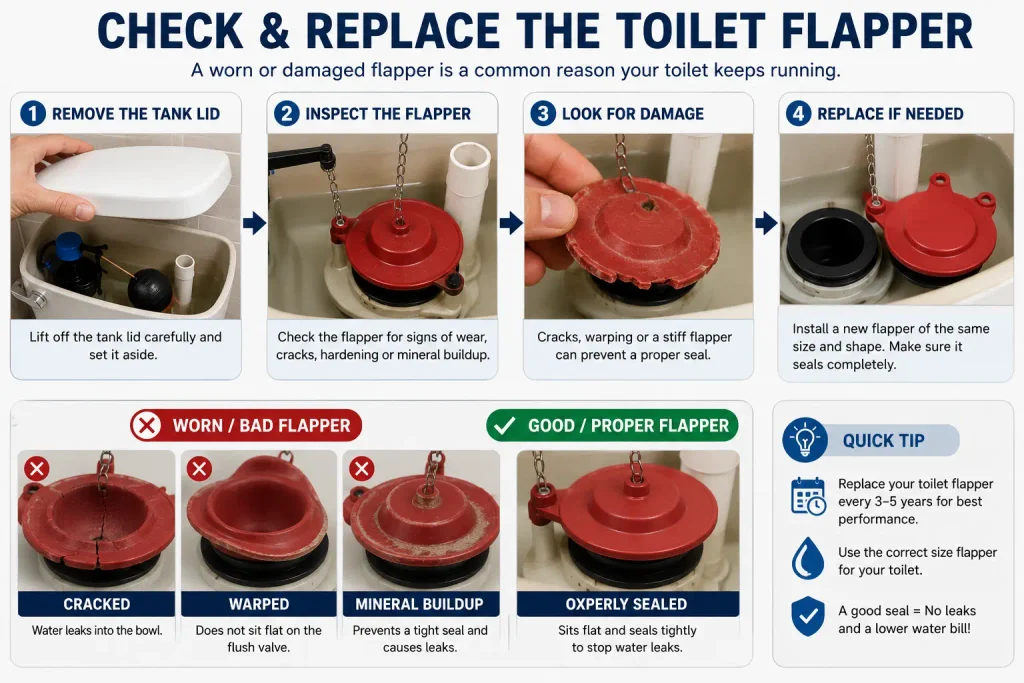
Remove the tank lid and inspect the flapper.
Look for:
- Cracks or deterioration
- Mineral buildup
- Warping
- A flapper that does not sit flat
- Damage around the sealing surface
You can gently clean minor deposits from the flapper and valve seat. If the flapper looks damaged or hardened, replacement is usually the better solution.
EPA notes that old or worn toilet flappers are a common source of toilet leaks and recommends periodic replacement.
2. Adjust the Flapper Chain
Sometimes the flapper itself is perfectly fine—the problem is the chain connecting it to the flush handle.
Open the toilet tank and inspect the chain.
If the chain is too tight, it may prevent the flapper from closing completely.
If it is too loose, the chain can become tangled or fail to lift the flapper correctly.
Adjust the chain so there is a small amount of slack when the flapper is closed. Then flush the toilet several times and watch the mechanism.
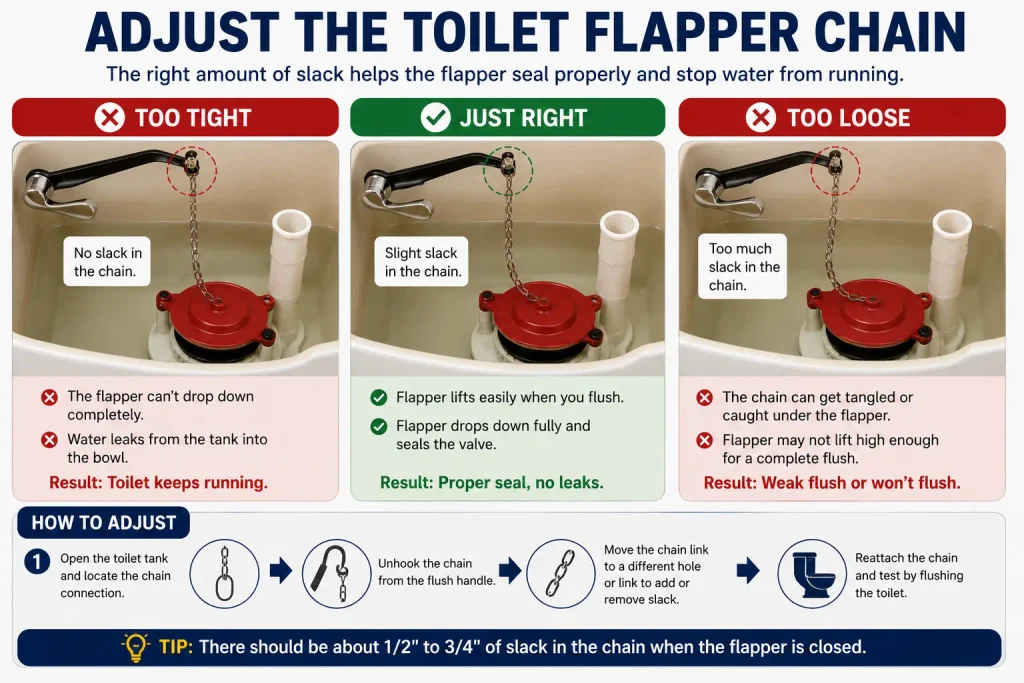
The flapper should lift easily and then fall completely back onto the valve seat.
This tiny adjustment can sometimes fix a running toilet without replacing anything.
Checking the flapper chain is another simple step when learning how to fix a running toilet without replacing the entire flush mechanism.
3. Check and Adjust the Water Level
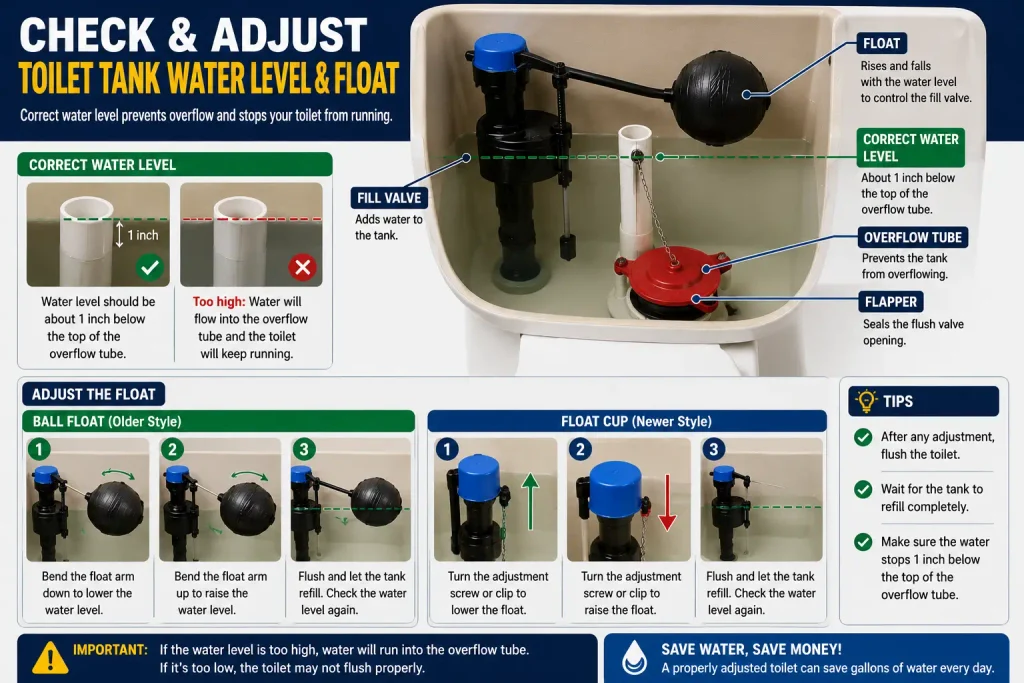
Next, look at the water level inside the tank.
If the water level is too high, water can continuously spill into the overflow tube. When that happens, the fill valve keeps adding water and the toilet never completely stops running.
Look for the tank’s water-level mark or follow the toilet/fill-valve manufacturer’s specified setting.
Adjust the float or fill-valve adjustment mechanism to lower the water level if necessary.
After making the adjustment:
- Flush the toilet.
- Allow the tank to refill.
- Watch where the water stops.
- Confirm that water is not flowing into the overflow tube.
EPA guidance likewise recommends lowering the float when the water level is too high; if the toilet continues running afterward, the fill valve may need replacement.
4. Inspect the Toilet Float
The float tells the fill valve when the tank has enough water.
Depending on your toilet, you may have an older ball-style float or a modern float cup attached to the fill valve.
Make sure the float:
- Moves freely
- Is not rubbing against the tank
- Is not stuck
- Reaches its shutoff position
- Is adjusted to the correct height
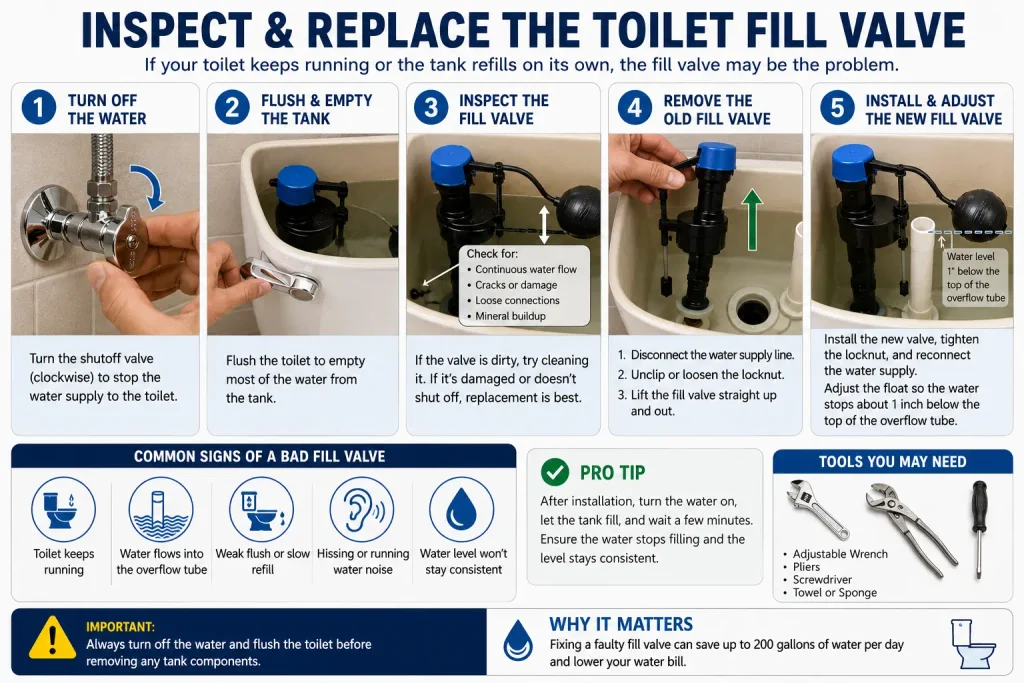
Gently lift the float while the toilet is running.
If the water immediately stops, the float adjustment may be the problem.
Adjust it according to the instructions for your particular fill valve rather than forcing the mechanism.
5. Test for a Silent Toilet Leak
Not every running toilet makes an obvious sound.
A slow leak through the flapper can cause the tank to refill periodically even when nobody has flushed the toilet.
Fortunately, there is an easy test.
Add a few drops of food coloring to the toilet tank, but do not flush.
Wait about 10 minutes.
If colored water appears in the toilet bowl, water is leaking from the tank into the bowl.
Flush immediately after the test so the coloring does not stain the toilet.
EPA WaterSense recommends this same method for detecting toilet leaks.
If the dye reaches the bowl, inspect the flapper, chain, valve seat, and related flush-valve components.
6. Inspect or Replace the Fill Valve
If the flapper and water level appear fine but the toilet continues running, the fill valve may be the problem.
A fill valve controls the flow of fresh water into the tank after every flush.
Signs of a possible fill-valve problem include:
- Water that never shuts off
- A float that fails to stop incoming water
- Unusual noises during refilling
- Water continuously entering the overflow tube
- A toilet that repeatedly refills without being flushed
Some fill valves can be cleaned or adjusted. Others are inexpensive enough that replacement is more practical.
Always turn off the toilet’s water supply before removing the fill valve and follow the replacement valve manufacturer’s installation instructions.
Checking the fill valve is another important step when learning how to fix a running toilet without replacing unnecessary parts.
7. Check the Flush Valve Seat and Overflow Tube
If you’ve tried the previous fixes and water still leaks into the bowl, inspect the area where the flapper seals against the flush valve.
Mineral deposits or damage can prevent a watertight seal.
Clean minor buildup carefully and check whether the flapper sits evenly over the opening.
Also inspect the overflow tube for visible damage.
If replacing the flapper does not stop the leak, the flush-valve seat or assembly itself may be worn. EPA guidance specifically notes that if leakage remains after flapper replacement, the flapper seat and overflow-tube assembly may need attention.
At that point, replacing the flush-valve assembly may require more disassembly than a simple flapper replacement.
How to Know Which Fix You Need
You can often identify the problem from the toilet’s behavior.
Water flowing into the overflow tube: Check the water level, float, and fill valve.
Toilet runs every few minutes: Check for a leaking flapper.
Toilet stops when you lift the float: Check or adjust the float/fill valve.
Flapper doesn’t close completely: Check the chain and flapper condition.
Food-coloring test reaches the bowl: Look for leakage around the flapper or flush-valve seal.
Starting with these observations prevents you from replacing parts unnecessarily.
When Should You Call a Plumber?
Most simple running-toilet problems can be handled without professional help. However, DIY repair isn’t always the best choice.
Consider calling a licensed plumber if the toilet has cracked porcelain, water is leaking onto the floor, the shutoff valve is damaged, internal components are heavily corroded, you’ve replaced common components but the toilet continues leaking, or you’re uncomfortable disconnecting plumbing components.
A running toilet is usually a small repair, but an external water leak can cause considerably more damage if ignored.
If you’re dealing with another common plumbing problem, our step-by-step guide to fixing a leaky faucet can also help.
How to Prevent a Toilet From Running Again
Occasionally inspect the components inside your toilet tank rather than waiting for a problem.
Pay particular attention to the flapper because it naturally deteriorates over time. EPA WaterSense recommends checking for silent leaks and says flappers should generally be replaced at least every five years to maintain a good seal.
Also watch for mineral buildup and make sure the fill valve and float continue moving freely.
Frequently Asked Questions
Why does my toilet keep running after I flush?
Common causes include a flapper that isn’t sealing, an incorrectly adjusted chain, high tank water level, float problems, or a fill valve that isn’t shutting off.
How do I fix a running toilet without replacing parts?
Start by checking the flapper position, adjusting the chain, checking the float, and correcting the tank water level. These adjustments may solve the problem without buying replacement parts.
How can I tell if my toilet flapper is leaking?
Put a few drops of food coloring in the tank and wait about 10 minutes without flushing. If the color appears in the bowl, the tank is leaking into the bowl.
Why does my toilet randomly run for a few seconds?
This often happens when water slowly leaks from the tank into the bowl. Once the tank level drops, the fill valve switches on briefly to replace the lost water.
Should I replace the flapper or the fill valve?
If water leaks from the tank into the bowl, investigate the flapper first. If water continuously enters the overflow tube or the valve won’t shut off despite proper float adjustment, investigate the fill valve.
Can a running toilet increase my water bill?
Yes. A continuous or hidden toilet leak wastes water. EPA says fixing easily corrected household leaks can save homeowners about 10% on water bills.
Final Thoughts
Learning how to fix a running toilet can save water, reduce unnecessary noise, and potentially prevent higher water bills.
Start with the simplest possibilities: inspect the flapper and chain, check the water level and float, perform a dye test, and then investigate the fill valve and flush-valve components.
Many running-toilet problems are caused by small, inexpensive components, so a few minutes of troubleshooting may be all that’s required.
For additional leak-detection guidance, the U.S. EPA WaterSense Fix a Leak guide is a useful authoritative resource.
In most cases, learning how to fix a running toilet can save water, reduce your utility bill, and help you avoid an unnecessary plumbing call.