
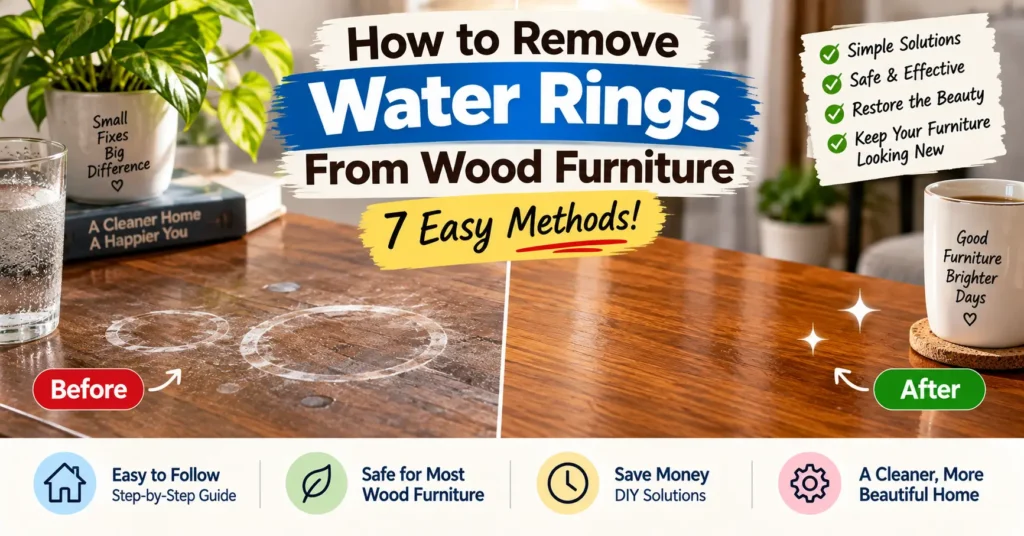
A white water ring on a wooden table can make an otherwise beautiful piece of furniture look old and damaged. These marks commonly appear after a cold glass, wet cup, vase, or damp object sits on the surface.
The good news is that many white water rings are only trapped in the furniture’s finish rather than deep inside the wood, so they can often be improved with a gentle home treatment. Dark or black stains are different and may indicate that moisture has penetrated deeper into the wood.
If you’re wondering how to remove water rings from wood furniture, start with the gentlest method and work your way up only if necessary. Always test a treatment on a hidden area first, especially on antique, veneered, painted, or valuable furniture.
Why Do Water Rings Appear on Wood Furniture?
Water rings usually form when moisture becomes trapped in or reacts with the finish on a wooden surface.
Cold drinks are a common cause because condensation can sit underneath a glass for an extended period. Hot mugs and dishes can also create cloudy marks by affecting the finish.
Most white or cloudy rings are surface-level problems. Dark brown or black stains may indicate that moisture has gone deeper into the wood and may require professional refinishing.
Before trying any method, look closely at the mark. If it is white or cloudy and the wood underneath still looks normal, you can usually start with a gentle DIY solution.
How to Remove Water Rings From Wood Furniture: 7 Easy Methods
Here are seven methods you can try, starting with relatively gentle options.
1. Use a Hair Dryer on Low Heat
A hair dryer is one of the simplest methods to try because it doesn’t require putting a liquid or abrasive directly on the furniture.
The idea is to gently warm the finish and help release trapped moisture.
How to do it:
- Wipe the furniture with a clean, dry microfiber cloth.
- Set your hair dryer to its lowest heat setting.
- Hold it several inches above the water ring.
- Keep the dryer moving rather than concentrating heat in one spot.
- Check the area every 20–30 seconds.
- Stop once the white ring begins to fade.
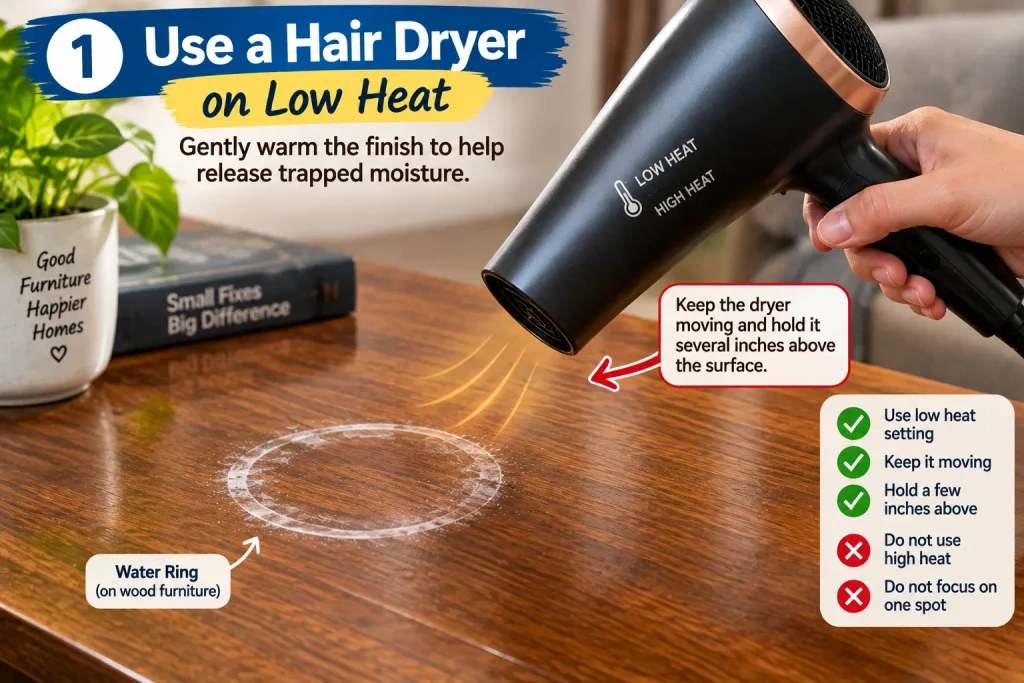
Don’t hold the hair dryer too close to the surface or use high heat. Excessive heat can damage some furniture finishes.
This method is particularly useful for fresh, white or cloudy marks.
2. Try Petroleum Jelly
Petroleum jelly can be useful for white water rings because its oily consistency may help displace moisture trapped in the finish.
How to use it:
- Make sure the surface is clean and dry.
- Apply a thin layer of petroleum jelly over the water ring.
- Leave it for several hours or overnight.
- Wipe it away with a clean, soft cloth.
- Gently buff the area.
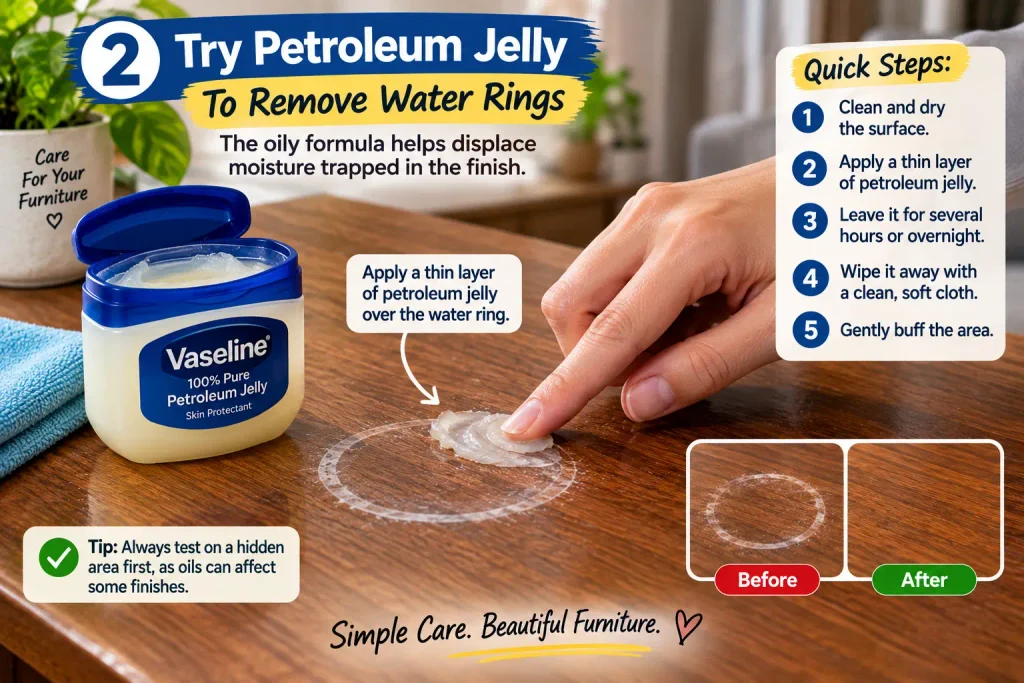
Test this method in an inconspicuous location first because oils can affect some finishes or make worn areas appear darker.
3. Use a Mixture of White Vinegar and Cooking Oil
For some finished wood surfaces, a mixture of equal parts white vinegar and cooking oil can help reduce the appearance of water rings.
Furniture-care guidance from Ashley recommends rubbing an equal-parts vinegar and cooking-oil mixture in the direction of the wood grain for water rings.
Ashley Furniture’s wood furniture care guide
How to do it:
- Mix a small amount of white vinegar and cooking oil in a container.
- Dip a soft cloth into the mixture.
- Apply a small amount to the affected area.
- Rub gently in the direction of the wood grain.
- Wipe the area clean with another dry cloth.
- Buff gently until the surface looks even.
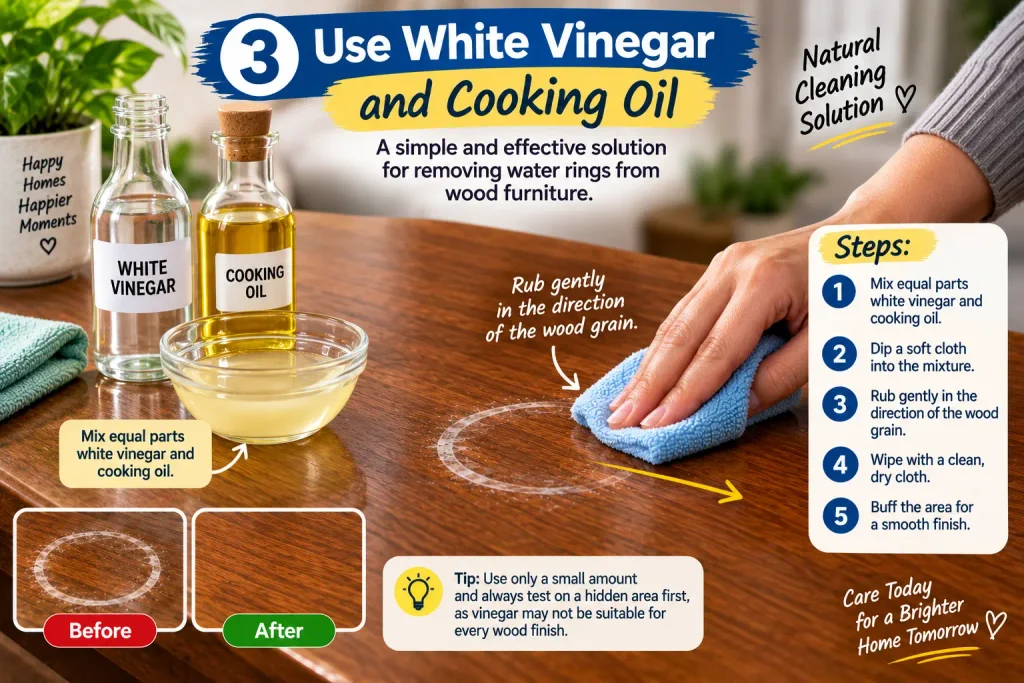
Don’t soak the wood. Use only enough solution to lightly treat the affected area.
Important: Vinegar isn’t appropriate for every furniture finish. Always test it on a hidden area first.
4. Try Mayonnaise on a White Water Ring
Mayonnaise is another commonly used home remedy for white water rings because it contains oil and other ingredients that may help improve the appearance of moisture trapped in the finish.
How to use it:
- Apply a small amount of plain mayonnaise directly to the ring.
- Spread it into a thin layer.
- Leave it for a few hours.
- Wipe it away with a soft, clean cloth.
- Buff the area gently.
This method is best reserved for light-colored, white or cloudy rings rather than dark stains.
As with any household remedy, test it somewhere hidden first.
5. Use a Dry Iron With a Cloth
A low-heat iron can sometimes help remove stubborn white water rings by gently warming the finish.
However, this method needs extra care because too much heat can damage or soften certain finishes. Some furniture-care guides recommend using a clean cotton cloth between the iron and furniture and using low heat with no steam.
How to do it safely:
- Place a clean, dry cotton cloth over the water ring.
- Set the iron to its lowest heat setting.
- Make sure steam is turned off.
- Place the iron over the cloth for only a few seconds.
- Lift the iron and check the mark.
- Repeat short passes only if necessary.
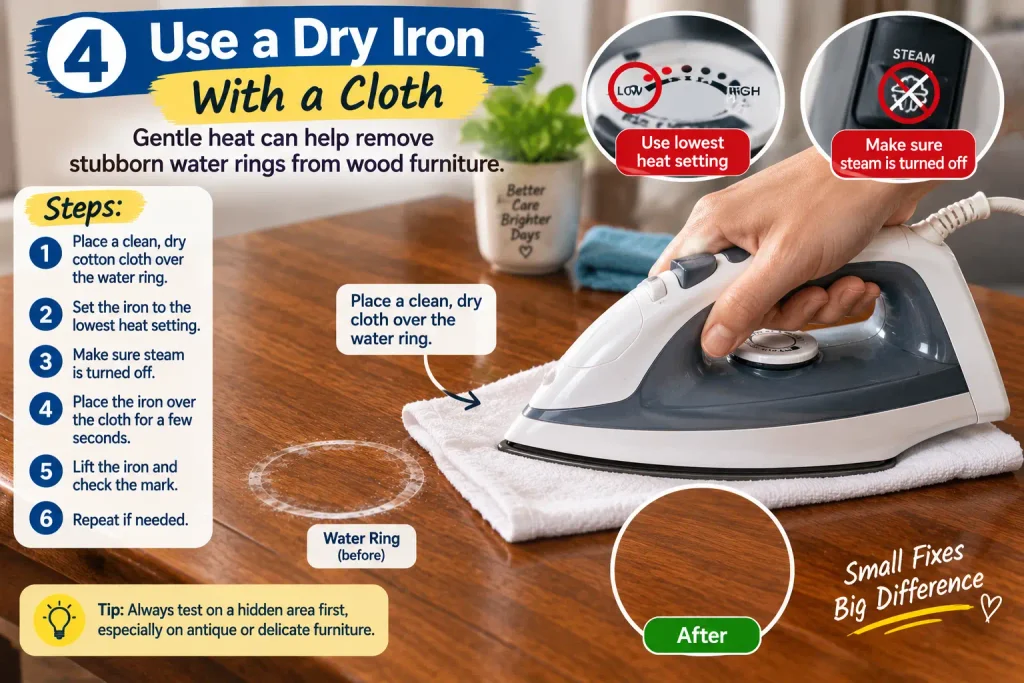
Never leave the iron sitting on the surface.
If the furniture is antique, veneered, painted, lacquered, or particularly valuable, skip this method and consider professional advice.
6. Gently Polish the Area
Sometimes a water ring isn’t severe enough to require a stronger treatment. A suitable furniture polish or finish-specific product may help restore the appearance of a lightly marked surface.
Before applying anything, check the manufacturer’s care instructions for your furniture.
Use a small amount of product on a soft cloth and gently work it into the surface following the wood grain.
Avoid aggressive rubbing. Harsh chemicals and abrasive materials can damage furniture finishes.
If you aren’t sure what type of finish your furniture has, testing the product on a hidden area is especially important.
7. Use a Commercial Water-Ring Remover
If simple household methods haven’t worked, you can consider a commercial furniture stain or water-ring remover designed for the specific type of wood and finish.
Follow the product instructions carefully rather than assuming that a product suitable for one finish is safe for another.
For example, some commercial furniture restorers are specifically formulated to remove white water and alcohol rings from finished wooden furniture.
Before using one:
- Read the label completely.
- Check whether it is suitable for your furniture finish.
- Test it in an inconspicuous area.
- Use only the recommended amount.
- Stop immediately if the finish becomes cloudy, sticky, discolored, or damaged.
White vs. Dark Water Rings: What’s the Difference?
Not every water mark should be treated the same way.
White or cloudy water rings
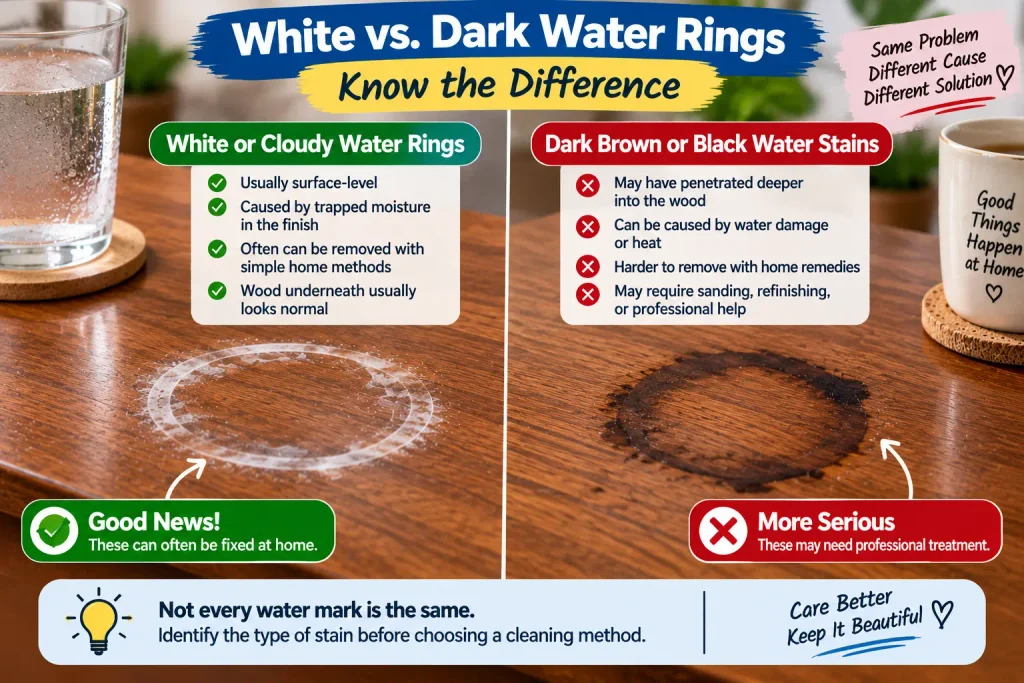
White rings are often associated with moisture trapped in the finish. These are usually the best candidates for gentle home treatments such as controlled heat or other mild methods.
Dark brown or black water stains
Dark stains are more concerning.
When water penetrates through the finish and reaches the wood, it can create a deeper discoloration. These marks may not respond to simple household treatments and can require sanding, bleaching, refinishing, or professional restoration.
Don’t immediately sand a dark stain yourself, especially if the furniture is veneered. Sanding too aggressively can remove the veneer or damage the original finish.
How to Remove Water Rings Without Damaging the Finish
The safest approach is to start with the least aggressive method.
Follow these rules:
- Test every treatment on a hidden area first.
- Start with a clean, dry microfiber cloth.
- Use minimal moisture.
- Work in the direction of the wood grain.
- Avoid excessive heat.
- Never use steam unless the furniture manufacturer specifically allows it.
- Don’t aggressively scrub the surface.
- Stop if the finish becomes sticky, cloudy, dull, or discolored.
Wood furniture should generally be cleaned gently, and furniture-care guides recommend avoiding harsh chemicals and abrasive materials.
If the piece is antique, valuable, sentimental, or has a delicate original finish, professional restoration is often safer than experimenting with multiple DIY treatments.
What Not to Use on Wood Furniture
Trying to remove a water ring too aggressively can create a bigger problem than the original stain.
Avoid:
- Steel wool
- Rough scouring pads
- Strong household cleaners
- Bleach
- Excessive water
- High heat
- Steam
- Aggressive sanding
- Sharp scraping tools
Also avoid combining different cleaning products. A furniture finish can react unexpectedly to chemicals that seem harmless individually.
If you don’t know what finish is on your furniture, less is usually better.
When Should You Stop and Call a Professional?
A professional furniture restorer may be the better choice when:
- The stain is dark brown or black.
- The mark has penetrated into the wood.
- The finish is peeling or cracking.
- The furniture is antique.
- The piece has a valuable original finish.
- The surface is veneer.
- DIY treatment has made the area worse.
- The stain covers a large section of the furniture.
Dark stains can require refinishing rather than simple cleaning, and aggressive DIY sanding can permanently damage veneer or remove more finish than necessary.
How to Prevent Water Rings on Wood Furniture
Preventing water rings is much easier than repairing them.
Use coasters
Keep coasters beside sofas, dining tables, desks, and bedside tables. Cold drinks can create condensation surprisingly quickly.
Wipe spills immediately
Don’t let water sit on wooden furniture. Wipe spills with a soft, dry cloth as soon as you notice them.
Use placemats and table runners
These provide an additional barrier against moisture, especially during meals.
Use trivets for hot items
Hot dishes and mugs can damage furniture finishes just like moisture can. Use a trivet or heat-resistant pad underneath them.
Keep vases on a protective surface
A vase can slowly leak or leave condensation underneath it. Place it on a waterproof tray or protective mat.
Keep moisture under control
Large changes in humidity can also affect solid wood furniture. Keeping furniture away from excessive moisture and heat sources can help protect it over time.
FAQs
Can toothpaste remove water rings from wood furniture?
Some guides recommend non-gel toothpaste as a mild abrasive for white water rings. However, toothpaste can be abrasive and may dull certain finishes, so it is safer to try gentler methods first and always test it in a hidden area.
Can baking soda remove water rings from wood?
Baking soda is sometimes used as a gentle abrasive, but it can scratch or dull some finishes. If you try it, use very light pressure and test the method first.
Can a hair dryer remove a white water ring?
Yes, gentle low heat may help with some white water rings because they can involve moisture trapped in the finish. Keep the dryer moving and avoid high heat.
Can you remove a black water stain from wood?
Black stains are usually more difficult because the moisture may have penetrated deeper into the wood. They may require refinishing or professional restoration rather than a simple household remedy.
Should I sand a water ring off my wooden table?
Not as a first step. Sanding can damage the finish or veneer, especially if the ring is only in the surface finish. Try a gentle method first or consult a professional for valuable furniture.
How can I stop water rings from coming back?
Use coasters, wipe spills quickly, place hot items on trivets, and avoid leaving wet glasses or containers directly on wooden furniture.
Final Thoughts
Learning how to remove water rings from wood furniture doesn’t always require expensive products or professional restoration. Many white or cloudy rings can be improved with gentle methods such as low heat, petroleum jelly, or a suitable furniture-care treatment.
The important thing is to identify the type of mark before treating it. White rings are often surface-level, while dark or black stains may indicate deeper damage.
Start with the mildest method, test it in an inconspicuous area, and never use aggressive heat, chemicals, or abrasives just to save a few minutes.
And once the ring is gone, a simple coaster can save you from doing the whole process again.
If your wooden furniture also has a stability problem, see our guide on How to Fix a Wobbly Table