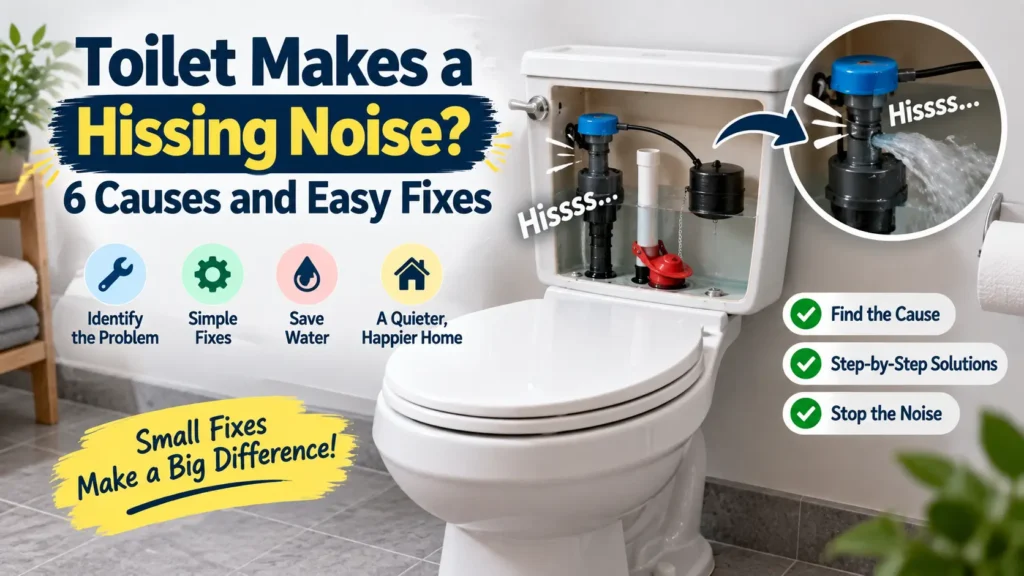
A toilet that suddenly starts making a hissing noise can be annoying, especially when the sound continues long after you flush. In many cases, the noise means water is still flowing into the tank or slowly leaking out of it.
The good news is that a hissing toilet is often caused by a relatively simple problem. A faulty fill valve, incorrect water level, worn flapper, or a small adjustment may be all it takes to stop the noise.
In this guide, we’ll explain 6 common reasons a toilet makes a hissing noise and show you what you can check and fix yourself.
Quick tip: If the toilet keeps hissing continuously, don’t ignore it. Even a small internal leak can waste water over time.
Why Does a Toilet Make a Hissing Noise?
A toilet usually makes a hissing sound when water is continuously flowing through one of its internal components.
Normally, after you flush, the tank refills and the fill valve shuts off when the water reaches the correct level. If something prevents that process from working properly, you may hear a steady hiss.
Common causes include:
- A worn or faulty fill valve
- Water level set too high
- Mineral deposits inside the fill valve
- A leaking flapper valve
- A sticking toilet handle or chain
- A problem with the water supply or another internal component
Before replacing anything, it’s worth identifying exactly where the sound is coming from.
Toilet Makes a Hissing Noise? 6 Causes and Easy Fixes
1. The Fill Valve Is Worn Out or Faulty
The fill valve controls the flow of water into the toilet tank after you flush. Once the tank reaches the correct water level, the valve should shut off.
If the fill valve is worn, damaged, or unable to close properly, water may continue flowing. This often produces the familiar hissing sound.
How to check it
Remove the toilet tank lid and listen carefully.
If the sound appears to be coming from the area where water enters the tank, the fill valve may be the problem.
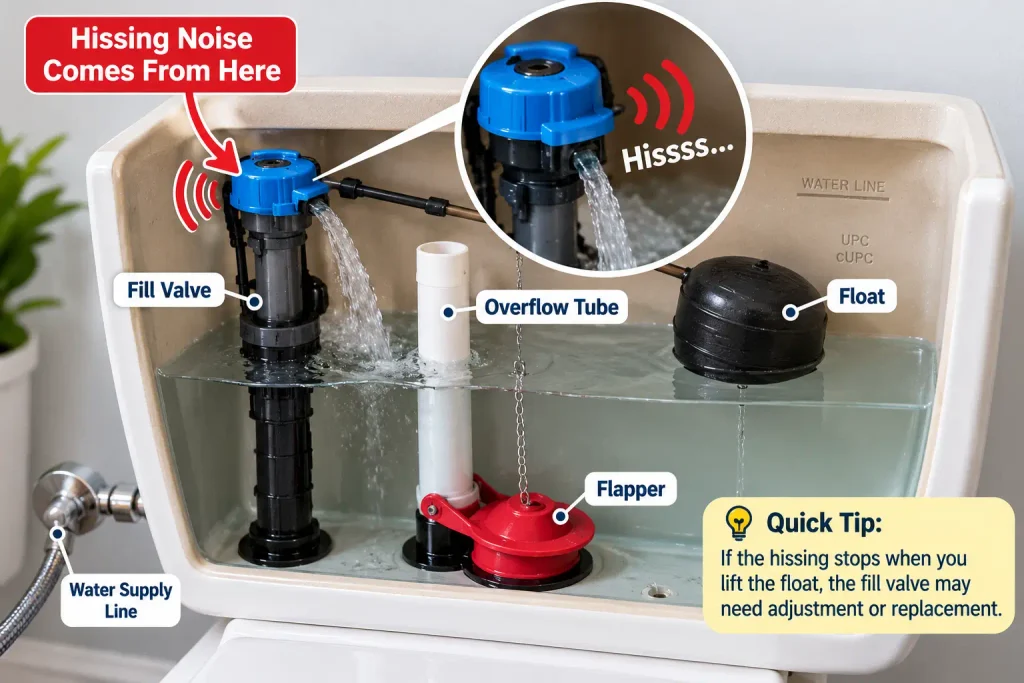
You can also gently lift the float or float arm.
- If the hissing stops when the float rises, the fill valve may need adjustment or replacement.
- If the noise continues, another component could be responsible.
How to fix it
First, check whether the float is getting stuck against the tank or another component.
If the valve is adjustable, follow the manufacturer’s instructions to lower the water level slightly.
If the fill valve is old or damaged, replacing it is often a practical solution. A replacement fill valve is generally inexpensive and many models can be installed with basic tools.
Turn off the toilet’s water supply before removing or replacing the valve.
2. The Water Level in the Tank Is Too High
A toilet tank should fill to a specific level. If the water rises too high, it may enter the overflow tube.
When that happens, water can continuously flow into the bowl, and you may hear a constant hissing or trickling sound.
How to check the water level
Remove the tank lid and look at the water level.
Many toilet tanks have a marked waterline. If yours does, the water should generally stop filling around that line.
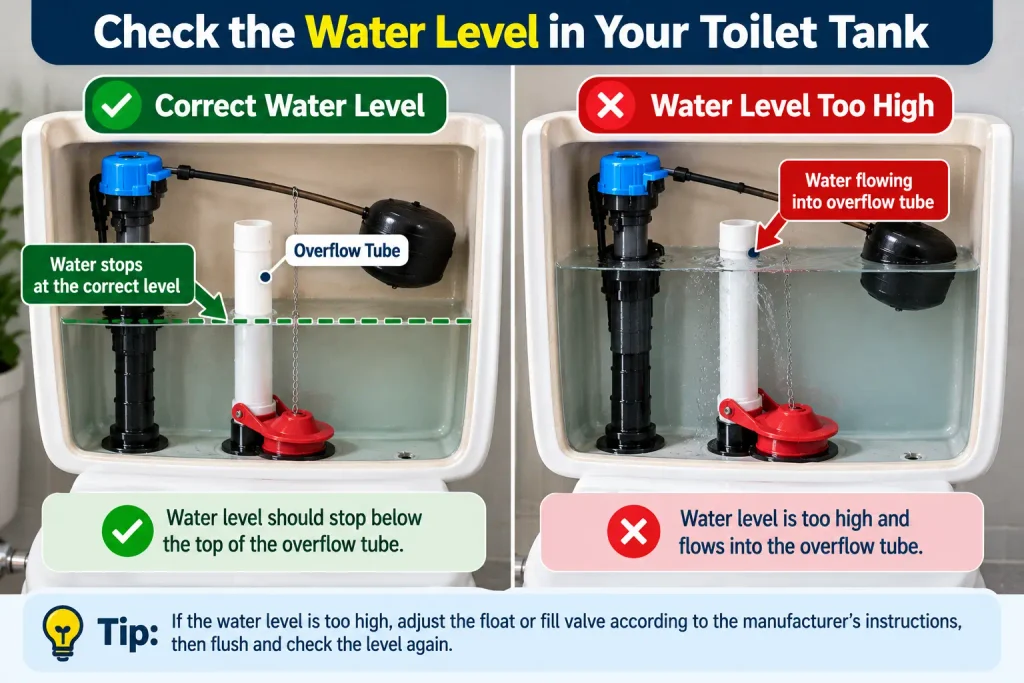
You can also look inside the overflow tube. If water is continuously running into it after the tank should have stopped filling, the water level may be too high.
How to fix it
If your toilet uses an adjustable float, you may be able to lower it slightly.
For a float-cup style fill valve, there is often an adjustment mechanism on the valve. Turn or adjust it according to the manufacturer’s instructions, then flush the toilet and allow the tank to refill.
Check the water level again.
Don’t lower the water level too much, because insufficient water in the tank can result in a weak flush.
3. Mineral Deposits Are Restricting the Fill Valve
Hard water can leave mineral deposits inside plumbing components over time.
These deposits can interfere with the fill valve’s operation and prevent it from shutting off smoothly. In some cases, the restricted water flow creates a noticeable hissing sound.
This problem is more likely if your toilet has been in use for several years or if you frequently see mineral buildup around faucets and other fixtures.
How to check for buildup
Turn off the toilet’s water supply and carefully inspect the accessible parts of the fill valve.
Look for:
- White or chalky deposits
- Rust-colored buildup
- Debris around the valve
- Signs that the valve is sticking
How to fix it
Some fill valves can be cleaned according to the manufacturer’s instructions.
However, if the valve is heavily clogged, damaged, or several years old, replacement may be easier than trying to restore it.
Always follow the instructions for your specific fill valve because internal designs vary between models.
Safety tip: Never force a stuck plumbing component. You could damage the valve or the connection.
4. The Flapper Valve Is Leaking
Not every hissing toilet problem comes from the fill valve.
A worn or poorly sealing flapper valve can allow water to slowly leak from the tank into the bowl. As the tank loses water, the fill valve periodically turns on to replace it.
This can create a cycle where you hear hissing, the tank refills, the sound stops briefly, and then starts again.
How to test the flapper
Put a few drops of food coloring into the toilet tank.
Don’t flush the toilet.
Wait about 10–15 minutes and check the bowl.
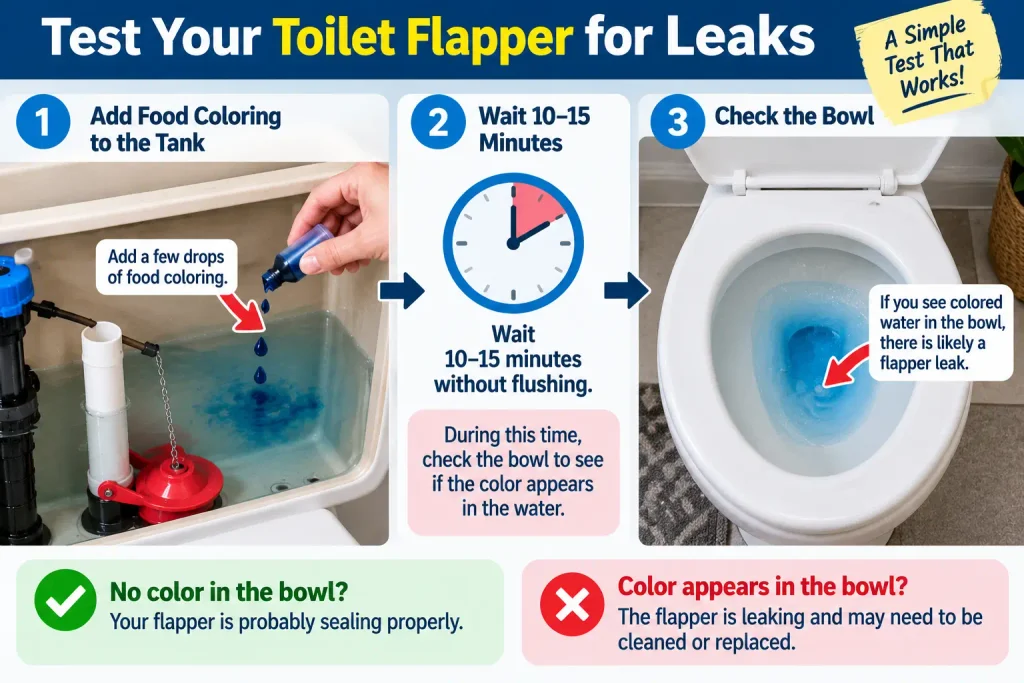
If the colored water appears in the bowl without flushing, water is likely leaking past the flapper or another tank-to-bowl seal.
How to fix it
First, check whether the flapper is sitting correctly over the flush valve opening.
Inspect it for:
- Cracks
- Warping
- Hard or brittle rubber
- Mineral buildup
- A chain that is too tight
If the flapper is worn or damaged, replacing it is usually the simplest solution.
Make sure the replacement flapper is compatible with your toilet model.
5. The Toilet Handle or Chain Is Sticking
Sometimes the cause is surprisingly simple.
A toilet handle that doesn’t return completely to its normal position can keep the flush mechanism slightly open. The same can happen if the chain inside the tank is tangled or adjusted too tightly.
That small opening can allow water to escape into the bowl and cause the fill valve to keep running.
How to check it
Remove the tank lid and flush the toilet.
Watch the handle, chain, and flapper while the tank refills.
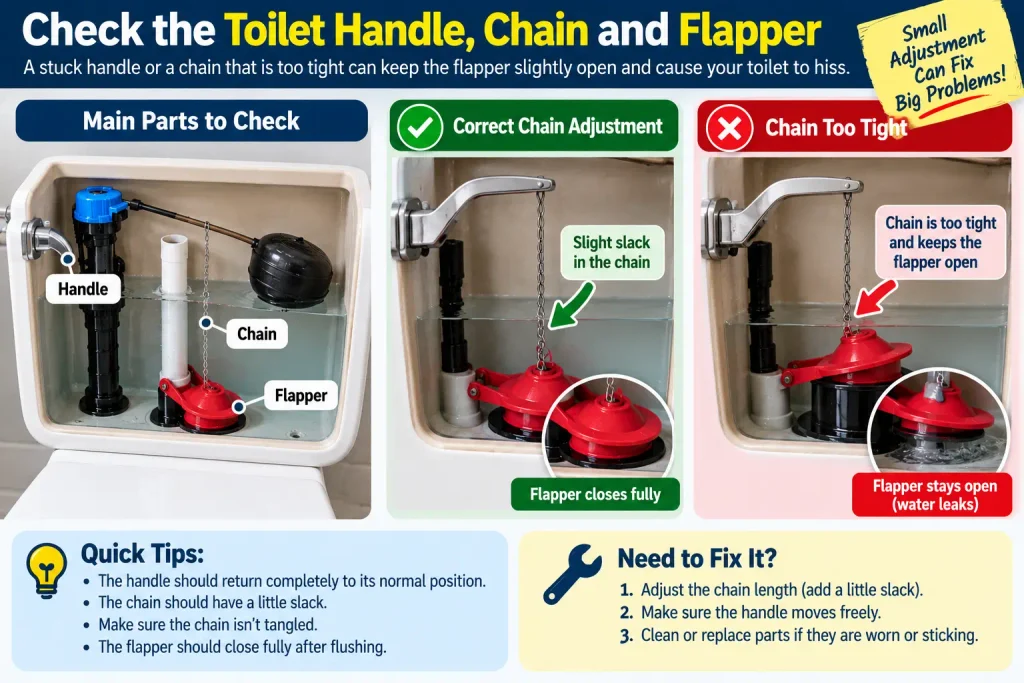
Make sure:
- The handle returns completely
- The chain isn’t tangled
- The chain isn’t pulling the flapper upward
- The flapper closes fully after flushing
How to fix it
If the chain is too tight, adjust it so the flapper can close completely while still allowing the handle to lift it during a flush.
If the handle is sticking, clean or replace it if necessary.
This is one of the easiest things to check when a toilet makes a hissing noise.
6. The Water Supply or Internal Components Need Attention
If you’ve checked the fill valve, water level, flapper, and handle but the hissing continues, the issue may be related to another internal component or the toilet’s water supply.
Start by checking the shutoff valve behind or near the toilet.
The valve should be fully open during normal operation. A partially closed or damaged valve can sometimes affect water flow and create unusual sounds.
You should also inspect the supply connection for visible leaks.
What to look for
Check around:
- The shutoff valve
- The water supply line
- The connection underneath the tank
- The base of the fill valve
- The floor around the toilet
If you see water outside the toilet or the hissing is accompanied by leaking, don’t keep adjusting components blindly.
Turn off the water supply if necessary and investigate the source before continuing.
How to Find Where the Hissing Noise Is Coming From
Finding the location of the sound can make troubleshooting much easier.
Remove the toilet tank lid and listen carefully after flushing.
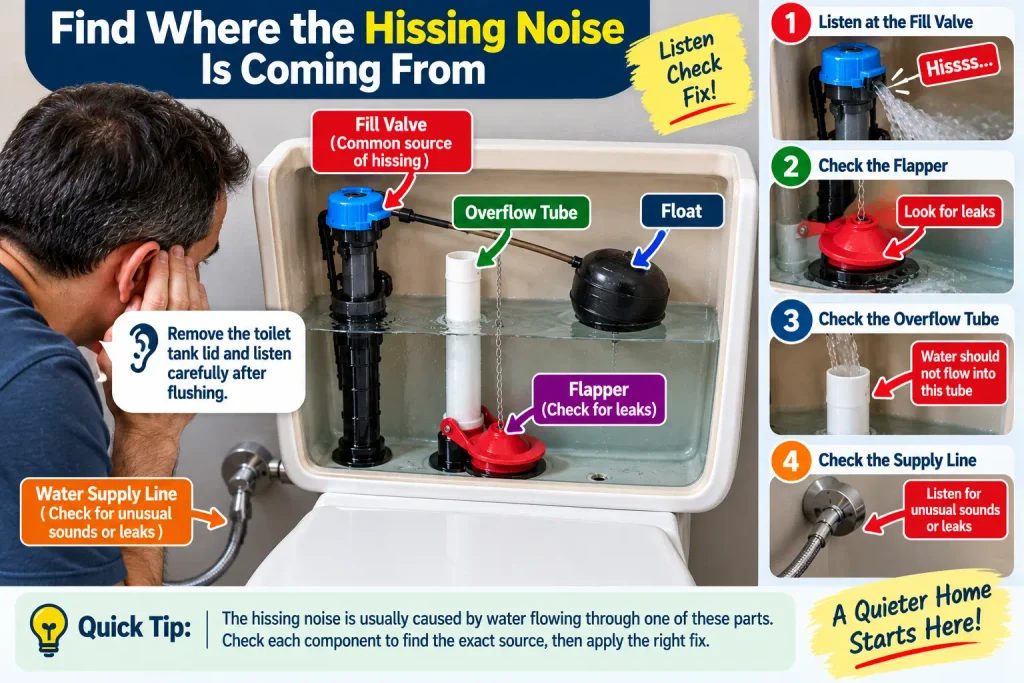
Sound coming from the fill valve
If the noise is strongest around the point where water enters the tank, the fill valve is a likely suspect.
For additional troubleshooting guidance, see KOHLER’s toilet troubleshooting guide, which covers common causes such as fill valve problems, water overflowing into the flush valve, and chain or water-level adjustments.
Sound coming from the bottom of the tank
Check the flapper and flush valve area.
A leaking flapper may allow water to escape continuously into the bowl.
Sound coming from the bowl
Look for signs that water is continuously entering the bowl.
You can also perform the food-coloring test described above to check for a tank-to-bowl leak.
Sound coming from the supply line
If the noise seems to come from the pipe or shutoff valve, the problem may be related to the water supply rather than the toilet’s internal mechanism.
How to Stop a Toilet From Hissing
If you’re trying to stop a hissing toilet, work through the simplest possibilities first.
- Remove the tank lid and locate the sound.
- Check whether the water level is too high.
- Make sure the float isn’t stuck.
- Check the toilet handle and chain.
- Inspect the flapper for damage or improper sealing.
- Clean or replace the fill valve if necessary.
- Check the water supply connection for leaks.
Don’t replace several components at once unless necessary. Identifying the actual cause first can save you time and money.
Can a Hissing Toilet Waste Water?
Yes.
A continuously hissing toilet may be wasting water even if you don’t see an obvious leak.
For example, a worn flapper can allow water to slowly enter the bowl. The fill valve then replaces that lost water, creating a repeating cycle.
The amount of water wasted depends on the size of the leak and how long it continues.
That’s why it’s a good idea to investigate a toilet that keeps making noise instead of simply ignoring it.
When Should You Call a Plumber?
Many hissing toilet problems are simple DIY repairs, but some situations are better handled by a professional.
Call a plumber if:
- You can’t identify the source of the leak
- Water is leaking onto the floor
- The shutoff valve won’t close
- The toilet is leaking from the tank or base
- The toilet continues running after replacing the obvious faulty part
- You notice damaged plumbing connections
- You’re uncomfortable working with plumbing components
If water is actively leaking onto the floor, turn off the toilet’s water supply until the problem can be addressed.
How to Prevent Toilet Hissing Problems
You can’t prevent every toilet problem, but regular checks can help catch issues early.
For another common bathroom plumbing problem, check out our guide on How to Fix a Leaky Faucet.
Check the tank occasionally
Remove the lid every few months and make sure the water stops filling normally after a flush.
Watch for running water
If your toilet starts making unusual sounds when nobody has used it recently, investigate it.
Don’t force the handle
A handle that is pushed or held down unnecessarily can put extra strain on the flushing mechanism.
Check the flapper periodically
Rubber components can become hard or deteriorated with age. Replacing a worn flapper before it fails completely can prevent unnecessary water loss.
Keep the tank components clear
Mineral deposits and debris can interfere with moving parts. If buildup becomes noticeable, clean components according to the manufacturer’s recommendations.
FAQs About a Hissing Toilet
Why does my toilet make a hissing noise after flushing?
A toilet may hiss after flushing while the tank refills. If the sound continues after the tank is full, there may be a problem with the fill valve, water level, flapper, or another component.
Why is my toilet hissing when nobody is using it?
If the toilet is hissing when nobody has flushed it, water is probably flowing when it shouldn’t. A leaking flapper or faulty fill valve is a common cause.
Is a hissing toilet an emergency?
Usually, no. However, you shouldn’t ignore continuous hissing because it can indicate a water leak. If water is leaking onto the floor or around the toilet, shut off the water supply and address the problem promptly.
How do I know if my toilet flapper is leaking?
Add a few drops of food coloring to the tank without flushing. Wait around 10–15 minutes. If colored water appears in the bowl, the flapper or another tank-to-bowl seal may be leaking.
Should I replace the fill valve or flapper?
It depends on which component is causing the problem. If water is continuously entering the tank because the fill valve won’t shut off, the fill valve may need attention. If water is leaking from the tank into the bowl, the flapper may be the more likely cause.
Can I fix a hissing toilet myself?
Often, yes. Checking the water level, handle, chain, flapper, and fill valve are reasonable DIY troubleshooting steps. If you’re unsure about the cause or discover a plumbing leak, consider calling a professional.
Final Thoughts
A toilet that makes a hissing noise is often telling you that water is still moving through the system when it shouldn’t be.
Start by listening carefully and checking the tank. A faulty fill valve, high water level, mineral buildup, leaking flapper, or sticking handle can often explain the problem.
The most important thing is not to ignore a persistent sound. Even a small internal leak can waste water over time.
For more practical DIY home repair solutions, you can also read our guide on How to Fix a Squeaky Door.
If a simple adjustment doesn’t solve the issue, replacing the faulty component may be enough. And if you find an external leak or can’t determine what’s causing the noise, getting help from a qualified plumber is the safer choice.