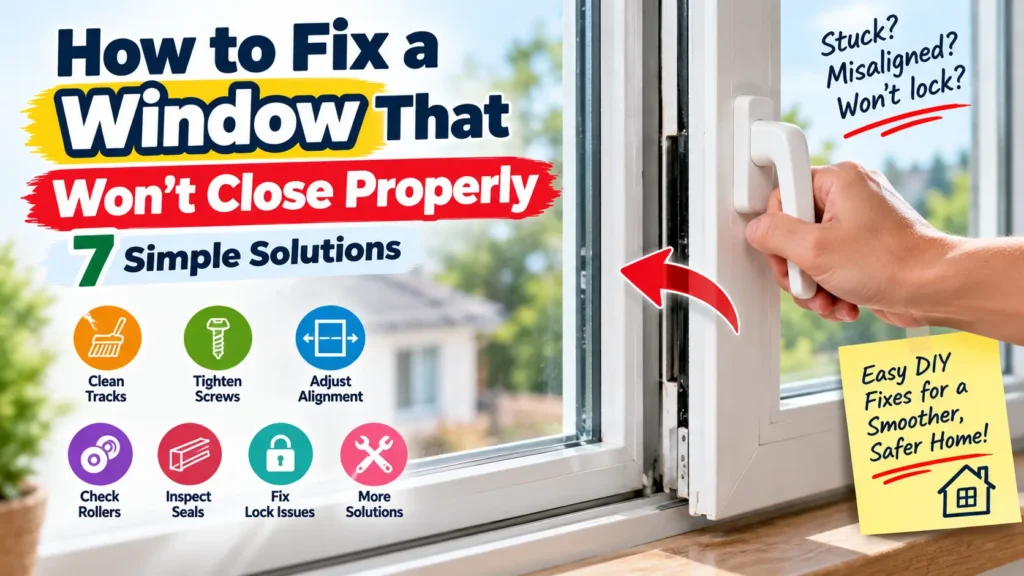
If your window leaves a gap, lets air in from outside or won’t lock then a badly closing window can be a real pain.
The good news is you may not have to replace the whole window. Common causes are dirt in the track, loose screws, misalignment, worn weatherstripping or a lock problem.
In this guide, we’ll show you how to fix a window that won’t close properly using 7 simple solutions you can try at home.
Important: Don’t slam the window or push it closed. Using too much force can damage the glass, frame, hinges, rollers or locking hardware.
Why Won’t My Window Close Properly?
If you know what the problem might be, it helps you fix it.
Common causes include:
- Dirt or debris in the window track
- Loose screws or hardware
- A misaligned window sash
- Worn or damaged rollers
- Swollen or warped wooden parts
- Old or damaged weatherstripping
- A misaligned or damaged lock
- Paint buildup around the frame
- Damaged hinges or other operating hardware
The correct answer will depend on where the window is stuck and what happens when you try to close it.
For more detailed window maintenance and troubleshooting guidance, see Origin’s guide to repairing and maintaining windows.
How to Fix a Window That Won’t Close Properly: 7 Simple Solutions
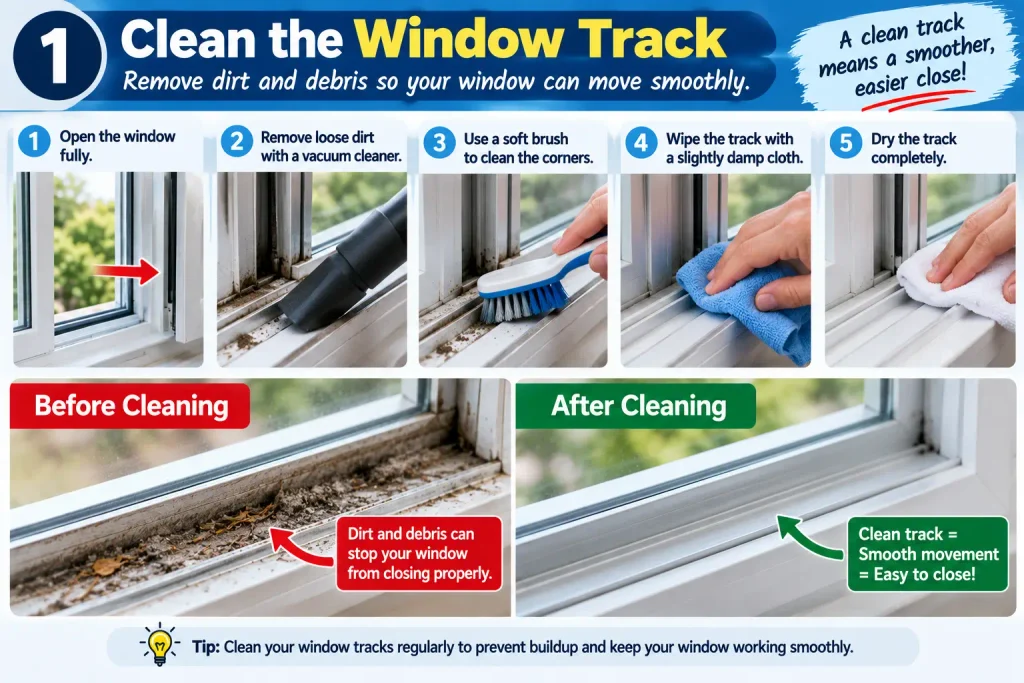
1. Clean the Window Track
If there is dirt and debris in the track a sliding window won’t slide smoothly.
Over time the track can build up dust, hair, small stones, insects and other debris.
What to do:
- Open the window as far as possible.
- Remove loose dirt with a vacuum cleaner.
- Use an old soft toothbrush to clean the corners.
- Wipe the track with a slightly damp cloth.
- Dry the track completely.
- Try closing the window again.
If it still feels stuck, don’t force it. There may be another problem with the rollers or alignment.
2. Tighten Loose Screws and Hardware
Loose screws can cause the window sash, hinges, handle or other hardware to become out of alignment.
Look for visible screws around the:
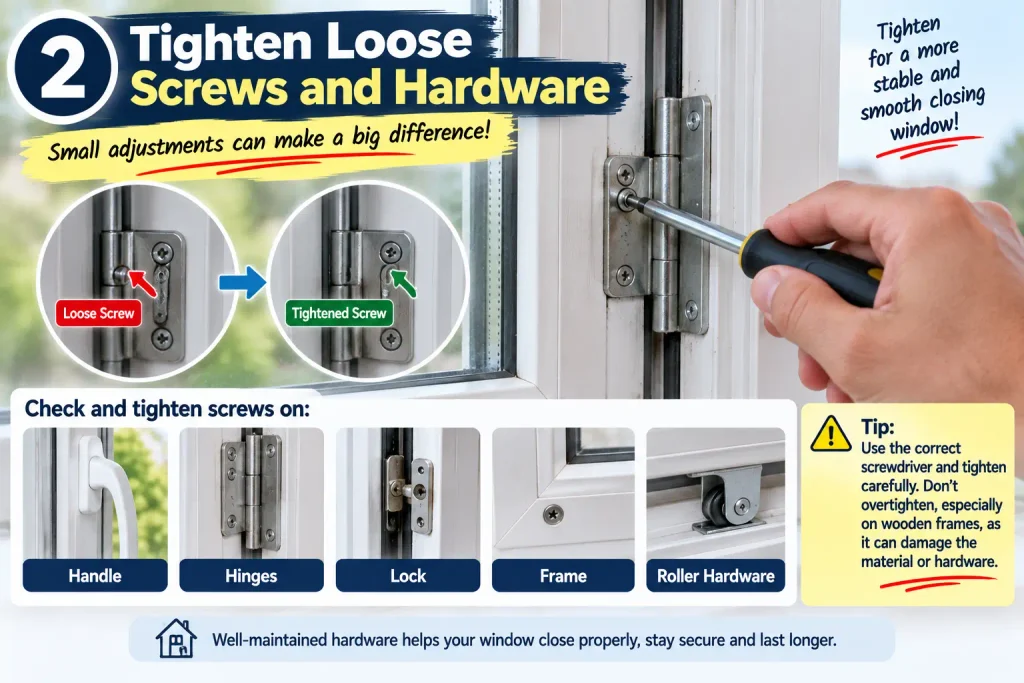
- Hinges
- Handle
- Lock
- Frame
- Roller assemblies
- Mounting brackets
Use the correct screwdriver and tighten any loose screws.
Do not overtighten, especially on wooden frames, as this can damage the material or hardware.
General furniture and home hardware maintenance IKEA’s assembly guidance also advises using the right screwdriver and not overtightening.
3. Check and Adjust the Window Alignment
Sometimes the window is physically touching the frame but just a little out of true.
You may notice:
- A larger gap on one side
- The top corner touching the frame
- The bottom corner sitting away from the frame
- The window rubbing when you close it
- The lock missing its receiving point
Close the window slowly and see where the window hits the frame.
If the sash is slightly out of true and your window has adjusting screws or rollers, make small adjustments, one at a time.
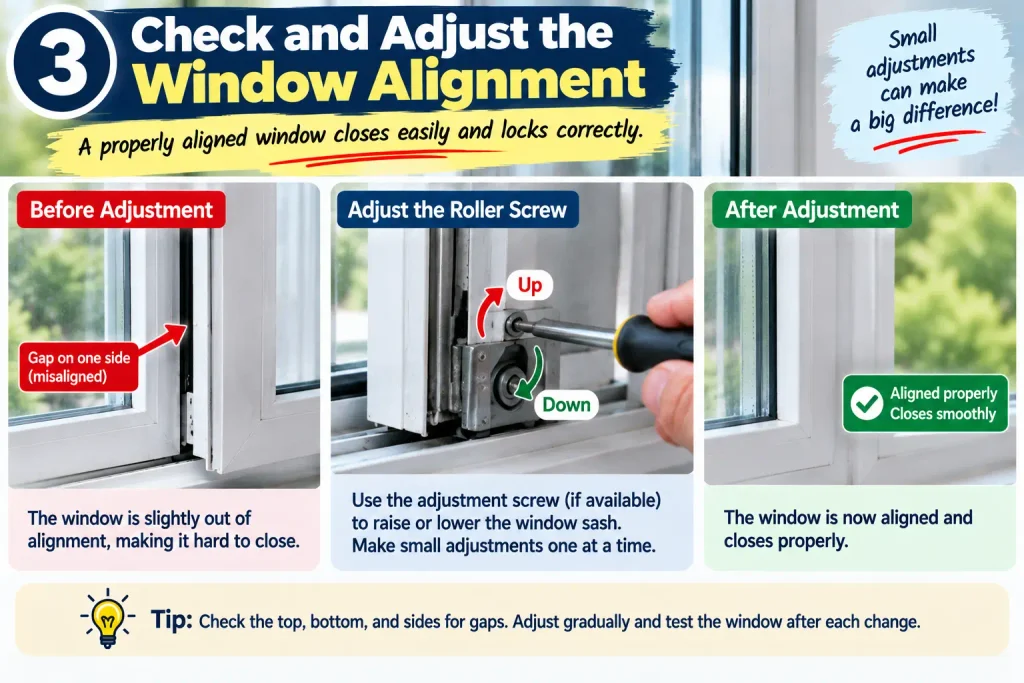
Make one change at a time and test the window after each change.
This makes it easier to see what actually fixed the problem.
4. Remove Paint or Debris Blocking the Window
Older windows may have paint built up around the frame of the window.
A thin layer of hardened paint can prevent the sash from fully seating inside the frame.
Look closely around the edges of the window for:
- Dried paint
- Caulk
- Dirt
- Debris
- Small objects
- Hardened residue
Older windows may have paint built up around the frame of the window.
A thin layer of hardened paint can prevent the sash from fully seating inside the frame.
Look closely around the edges of the window for:
5. Inspect the Rollers, Hinges, or Moving Hardware
If cleaning and aligning don’t work, look at the moving hardware on the window.
Sliding Window: Check the rollers beneath the sash. If the roller is damaged or seized the window will be hard to move.
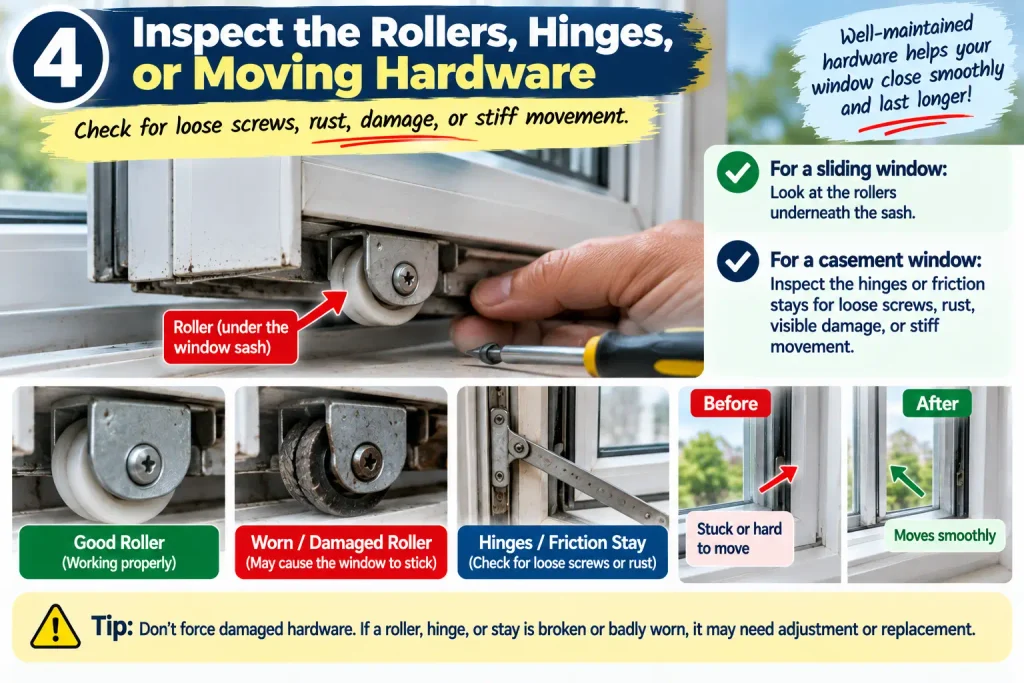
For a casement window, inspect the hinges or friction stays for:
- Loose screws
- Rust
- Visible damage
- Stiff movement
- Bent components
Don’t force any damaged looking hardware.
More pressure may not be the answer but a damaged roller, hinge or friction stay may need adjustment or replacement . Not all windows are the same design. Different designs use different hardware. The type of window you have determines how you fix it.
6. Check the Weatherstripping or Seal
Sometimes the window does close, but not tightly against the frame.
This can happen if the weather stripping or gasket:
- Hardened
- Cracked
- Flattened
- Torn
- Loose
- Misplaced
“Check the seal on the window.”
If you notice the weatherstripping is torn, replacing it can help the window close more evenly and help the seal if you see it is damaged.
A tight window does not mean it’s time to remove a seal. It’s got to be really broken or out of place.
7. Check the Window Lock and Latch
When the window closes on the frame but won’t lock, the problem may be the lock or the piece it locks with.
Close the window softly and make sure the lock is in place.
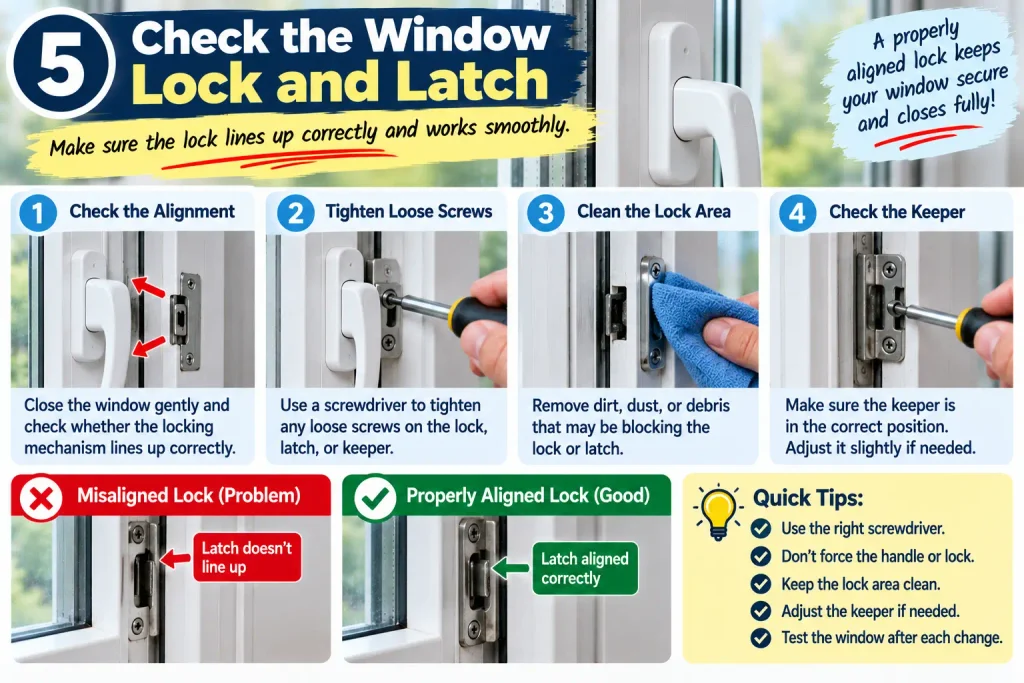
Look for:
- Loose lock screws
- A misaligned latch
- Dirt around the locking mechanism
- A damaged handle
- A keeper that has shifted out of position
Gently attempt to work the lock.
Do not force the handle or the lock. If the window is out of true, forcing the lock can damage the hardware.
How to Find the Exact Problem
Before buying replacement parts, try this simple test.
Close the window slowly and watch the first place something goes wrong.
If it stops halfway:
Check the track, rollers, hinges, or obstructions.
If one corner touches first:
Check for sash misalignment.
If the window closes but leaves a gap:
Check the weatherstripping, frame, and alignment.
If the window closes but won’t lock:
Check the lock, latch, keeper, and alignment.
If the handle becomes difficult to turn:
You don’t have to push it. You might have to do a little work on the lock or sash alignment.
This symptom based inspection can help you narrow down the problem before you start replacing parts.
What Not to Do When a Window Won’t Close
Avoid these common mistakes:
- Don’t slam the window shut.
- Don’t force a stiff handle.
- Don’t hammer the sash into the frame.
- Don’t remove hinges without understanding how the window is supported.
- Don’t overtighten adjustment screws.
- Don’t replace expensive hardware before identifying the actual problem.
- Don’t ignore a damaged or unstable window.
If the glass is cracked, the frame is badly bent or the window sash is loose, it’s best to call in a pro.
When Should You Call a Professional?
Some window issues aren’t a do-it-yourself fix.
Consider professional repair if:
- The glass is cracked or broken.
- The frame is badly warped.
- The sash is dropping or unstable.
- A hinge or friction stay is badly damaged.
- The locking mechanism is broken internally.
- The window suddenly became difficult to close after impact or strong wind.
- You need to remove a large or heavy sash.
- The window still won’t close after basic cleaning and adjustment.
If a window becomes unstable, do not try to force it. If the hinges or stays are damaged this may cause a safety hazard.
How to Prevent Window Problems in the Future
A little maintenance will prevent many closing problems.
If you’re also fixing other common problems around your home, see our guide on [How to Fix a Wobbly Table].
Keep tracks clean
Vacuum and wipe the sliding tracks frequently to remove any build-up of dust.
Check screws
Periodically check visible hardware and gently tighten any screws that are loose..
Keep moving parts clean
Dust and debris can be a problem for rollers, hinges and other hardware.
Inspect seals
Replace cracked, damaged or heavily compressed weather stripping.
Don’t force the window
If a window won’t close, don’t force it. Find out why.
Regular cleaning, lubrication where necessary, and checking and tightening of hardware fixings are normally part of window maintenance.
Marvin’s window and door maintenance guide
FAQs
Why won’t my window close all the way?
Why a window won’t close There are many reasons why a window may not close . Dirt or debris, mis-alignment, loose hardware, damaged rollers, swollen wood, worn seals or a problem with the locking mechanism.
Why does my window close but not lock?
The lock might be out of alignment with the part it locks into. Check the position of the sash, lock, goalkeeper and screws in the area.
Should I force a window that is stuck?
Nope. Forcing a jammed window can damage the frame, glass, hinges, rollers or locking mechanism.
Can I fix a window that is slightly misaligned?
Sometimes. If your window has rollers or adjustable hardware, small adjustments may correct minor alignment issues. Try the window and change one.
Why is my sliding window hard to close?
The most common reason is a dirty track, broken roller, or misaligned sash. “First clean the track and check the rollers.”
Does weather affect how a window closes?
Yes. Wooden parts have a tendency to swell when exposed to moisture . Changes in temperature or humidity may cause some windows to not fit or work properly.
Final Thoughts
A window that doesn’t close properly is not necessarily a new window.
Start with the simple checks: cleanliness, obstructions, loose hardware tightness, alignment and roller, seal and lock checks.
If the problem is broken hardware, badly warped frame, broken glass or an unstable sash, it’s better to stop and call a pro than to try to force the window.
With the right diagnosis, many common window-closing problems can be solved without replacing the entire window.