
A squeaky door can turn a small everyday movement into an annoying sound. Whether it is your bedroom door, bathroom door, front door, or cabinet door, that repeated squeak can quickly become frustrating.
The good news is that most squeaky doors are surprisingly easy to fix. In many cases, you don’t need to replace the hinges or call a professional. A little cleaning, lubrication, or adjustment may be all it takes.
In this guide, you’ll learn how to fix a squeaky door using 7 simple methods, starting with the easiest solutions first.
Why Does a Door Squeak?
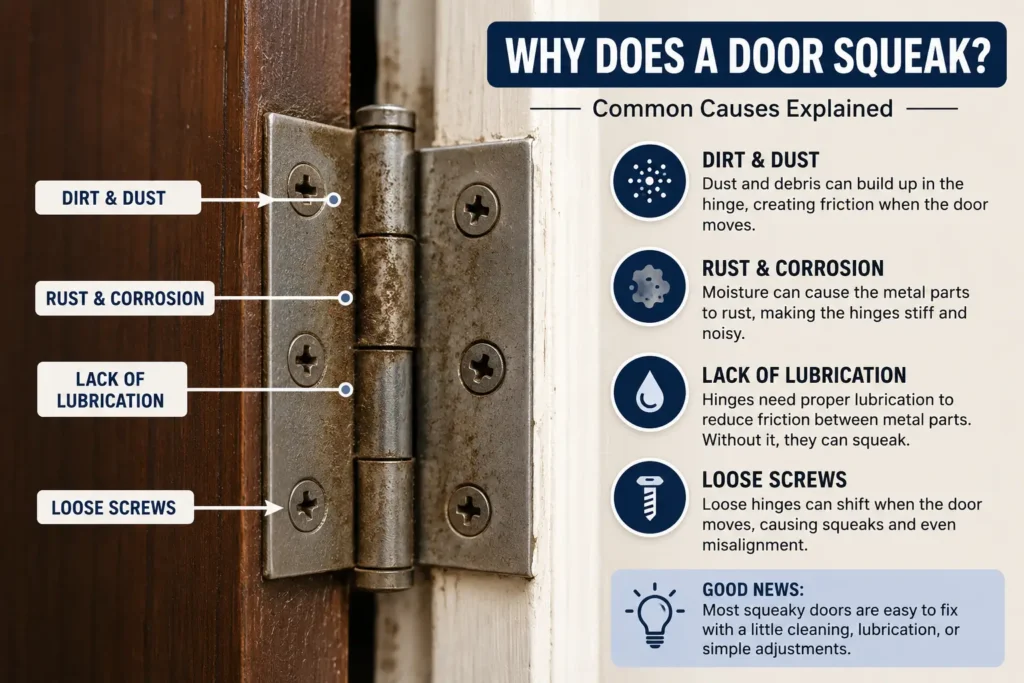
Most door squeaks come from the hinges.
Every time you open or close a door, the hinge pin moves against the hinge plates. Over time, dust, dirt, rust, or a lack of lubrication can increase friction between these metal parts.
Common causes include:
- Dry door hinges
- Dust and dirt buildup
- Rust or corrosion
- A dirty hinge pin
- Loose hinge screws
- A slightly bent hinge
- Door misalignment
Before trying complicated repairs, inspect the hinges while slowly opening and closing the door. This can help you identify exactly where the sound is coming from.
Before gathering your tools, understanding how to fix a squeaky door can help you choose the simplest solution for the actual cause.
What You May Need
You probably already have many of these items at home:
- Clean cloth or paper towel
- Screwdriver
- Household lubricant
- Silicone spray or suitable hinge lubricant
- Petroleum jelly
- Small hammer
- Pliers
- Old toothbrush or small cleaning brush
You won’t need all of them. Start with the simplest method and move to the next one only if the squeak remains.
For most ordinary door hinges, start with a lubricant designed for moving metal parts and follow the product instructions. Use only a small amount to avoid attracting dust.
1. Clean the Door Hinges
When learning how to fix a squeaky door, checking and cleaning the hinges is one of the simplest places to start.
Before applying anything to the hinge, give it a quick cleaning.
Dust and grime can accumulate around the hinge and work their way between moving metal surfaces.
How to do it
- Open the door so you can easily reach the hinges.
- Wipe each hinge with a clean, dry cloth.
- Use an old toothbrush to remove dirt from small gaps.
- If necessary, use a slightly damp cloth for stubborn grime.
- Dry the hinge thoroughly.
- Open and close the door several times.
If dirt was causing the friction, this simple cleaning may reduce or eliminate the squeak.
If the sound remains, move on to lubrication.
2. Lubricate the Hinges
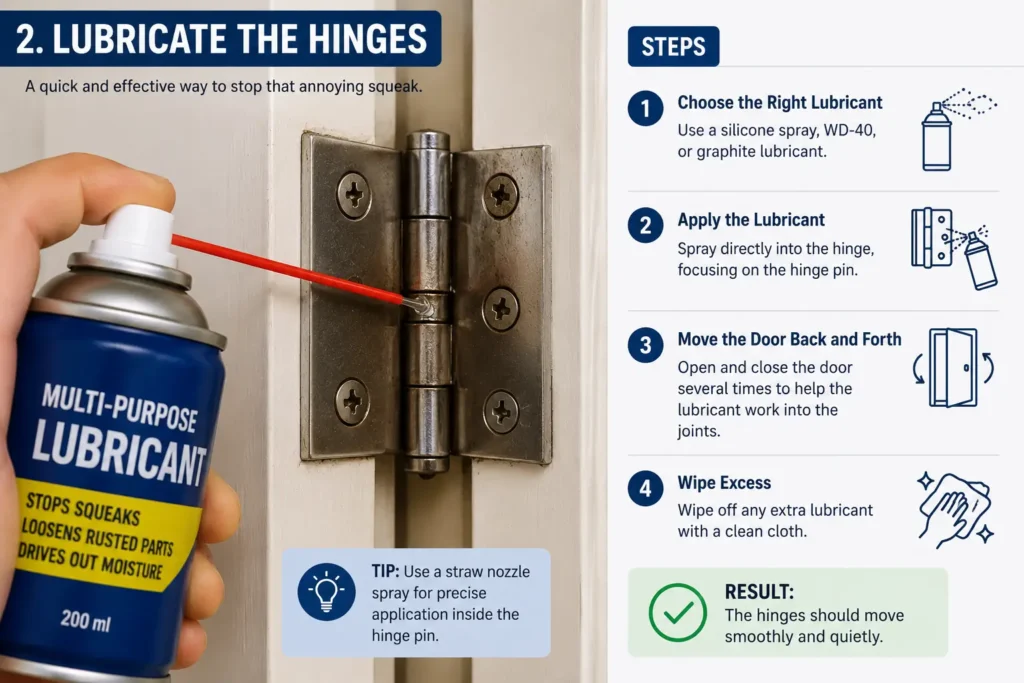
This is usually the fastest way to fix a squeaky door.
If you’re learning how to fix a squeaky door, lubricating the hinges is usually one of the quickest methods to try.
A suitable lubricant reduces friction between the hinge pin and the surrounding metal.
For best results, always follow the lubricant manufacturer’s instructions for proper application and surface compatibility.
Steps
- Place a cloth or paper towel below the hinge to catch drips.
- Apply a small amount of lubricant around the hinge pin and moving joints.
- Open and close the door several times.
- This helps distribute the lubricant throughout the hinge.
- Wipe away any excess.
Don’t assume that more lubricant will work better. A small amount is usually enough, while excessive product can drip onto the door or floor and attract dust.
Which lubricant should you use?
For a longer-lasting repair, use a lubricant specifically suitable for hinges or moving metal parts. Silicone-based and other appropriate household lubricants are common options.
Always follow the manufacturer’s directions, especially around painted, finished, or specialty surfaces.
3. Try Petroleum Jelly for a Quick Fix
Don’t have a suitable spray lubricant available?
Petroleum jelly can sometimes work as a convenient temporary solution for an interior door hinge.
Apply a very small amount around the hinge pin, then move the door back and forth several times.
It can reduce friction without creating as much runny residue as some liquids.
However, for a hinge that repeatedly starts squeaking again, clean it properly and use a lubricant designed for the job.
4. Tighten Loose Hinge Screws
Sometimes the squeak isn’t caused only by a dry hinge.
Loose screws can allow the hinge or door to move slightly out of position. That movement can create rubbing, squeaking, or even make the door difficult to close.
Inspect the screws on every hinge.
To fix them
- Keep the door in a stable position.
- Use the correct screwdriver for the screw head.
- Gently tighten any loose screws.
- Avoid overtightening them.
- Test the door again.
If a screw keeps spinning without tightening, the screw hole may be worn. That requires a different repair rather than simply tightening harder.
5. Remove and Clean the Hinge Pin
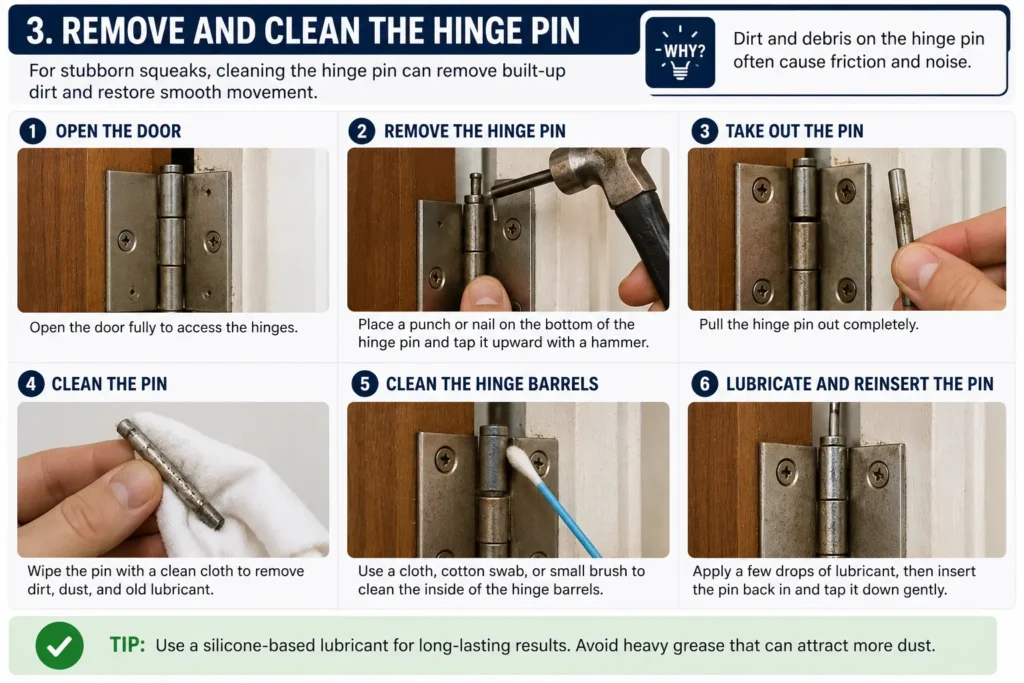
If lubrication from the outside doesn’t solve the problem, grime or corrosion may be hiding inside the hinge.
For stubborn hinge noise, understanding how to fix a squeaky door may involve cleaning the hinge pin more thoroughly.
Cleaning the hinge pin provides a more thorough fix.
How to clean a hinge pin
- Keep the door properly supported.
- Start with one hinge at a time.
- Carefully tap the hinge pin upward using an appropriate tool and light hammer taps.
- Pull the pin out with pliers if necessary.
- Wipe away old lubricant, dirt, and residue.
- Inspect the pin for rust or damage.
- Apply a small amount of suitable lubricant.
- Reinsert the pin.
- Test the door.
Safety note: Do not remove a hinge pin from a heavy or unstable door unless the door is properly supported. If you are unsure, use external lubrication or get help from someone experienced.
Important: A door can be heavy. Don’t remove several hinge pins at once or allow the door to become unsupported.
If you’re uncomfortable removing a hinge pin, stick with the external lubrication methods or ask someone experienced to help.
6. Check for Rust
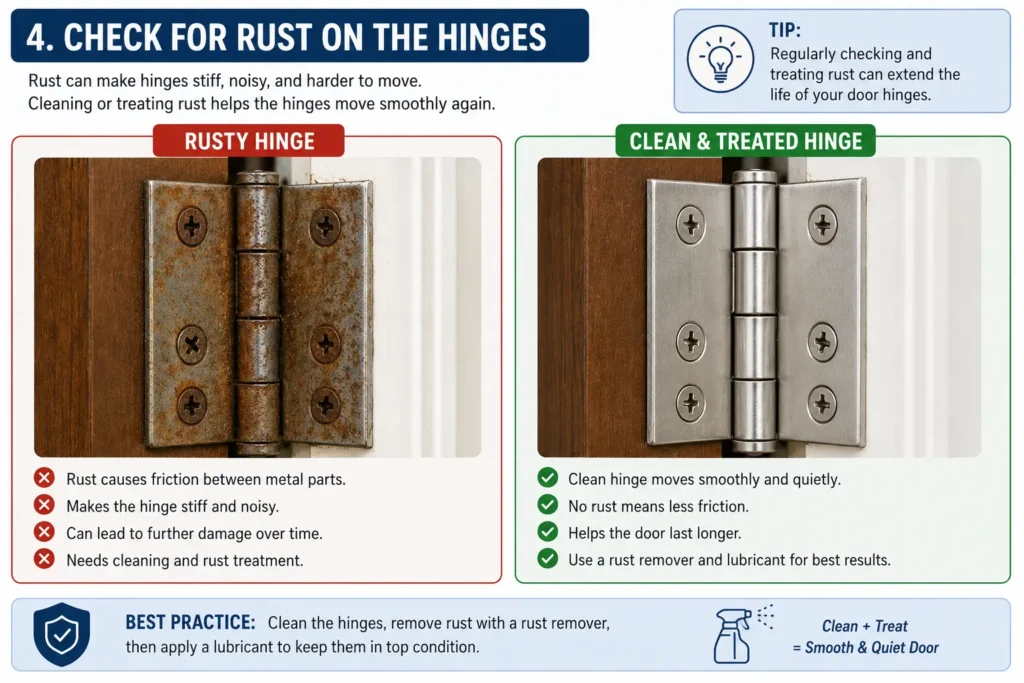
Hinges in bathrooms, kitchens, entrances, and humid environments may develop rust.
Light surface corrosion can increase friction and contribute to squeaking.
Look closely at both the hinge and hinge pin.
If there is only minor surface buildup, cleaning the affected parts and lubricating them may help.
But if the hinge is heavily rusted, weakened, cracked, or badly corroded, replacement is usually a better long-term solution than repeatedly lubricating it.
For exterior doors, choose replacement hardware appropriate for outdoor use.
For light surface rust, gently clean the affected area with a suitable brush or cloth, remove loose residue, and apply an appropriate hinge lubricant according to the product instructions.
7. Check Door Alignment and Damaged Hinges
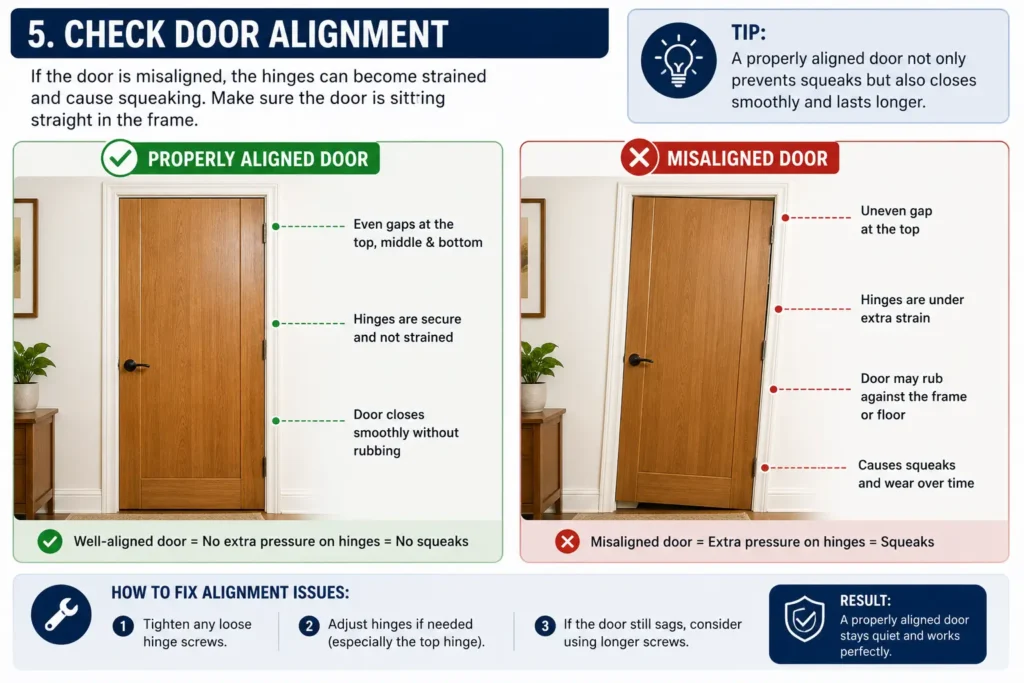
If you’ve cleaned, lubricated, and tightened everything but the squeak continues, look beyond lubrication.
Slowly close the door and check whether:
- The door rubs against the frame
- One hinge looks bent
- The gaps around the door are noticeably uneven
- The door appears to sag
- Screws repeatedly become loose
- The hinge moves away from the frame when the door moves
These signs can indicate an alignment or hardware problem.
A slightly loose hinge may be easy to correct, but a badly sagging or heavy door can require hinge adjustment, screw-hole repair, or replacement hardware.
If you’re unsure how to support and realign a heavy door safely, professional help may be worthwhile.
How to Fix a Squeaky Door: Which Method Should You Try First?
Use this simple order:
Clean → Lubricate → Tighten → Clean the hinge pin → Inspect for rust/damage → Check alignment
For an ordinary interior door, you may solve the problem within the first two or three steps.
There’s no reason to remove hardware immediately if a quick cleaning and lubrication solves the squeak.
Knowing how to fix a squeaky door also means checking the cause instead of repeatedly adding more lubricant.
Common Mistakes to Avoid
A simple repair can become messy or ineffective if you rush it.
Avoid these common mistakes:
Using too much lubricant: Excess product can drip and collect dirt.
Ignoring loose screws: Lubrication won’t fix movement caused by loose hardware.
Removing multiple hinge pins together: This can make the door unstable.
Forcing a stuck pin: Heavy corrosion or damaged hardware may require a different approach.
Ignoring a sagging door: If the door is rubbing against the frame, the hinge may not be the only problem.
Replacing hinges too quickly: Try cleaning, lubrication, and tightening first unless the hardware is visibly damaged.
How to Prevent Door Hinges From Squeaking Again
Once the door is quiet, a little maintenance can help keep it that way.
Wipe dust from the hinges when cleaning the room. If a hinge begins making a faint noise again, deal with it before the squeak becomes severe.
Also keep an eye on screws and signs of rust, especially in humid areas.
You don’t need to lubricate hinges constantly. Do it when necessary and according to the instructions for the product you’re using.
Once you know how to fix a squeaky door, occasional hinge maintenance can help prevent the same annoying noise from returning.
When Should You Replace a Door Hinge?
Consider replacement when the hinge is:
- Severely rusted
- Bent or cracked
- Physically damaged
- No longer holding the door securely
- Creating recurring problems despite cleaning and adjustment
Try to use a replacement hinge with dimensions and screw-hole positions appropriate for the existing door whenever possible.
For heavy or exterior doors, hardware strength and suitability matter more than appearance alone.
Useful Products for Fixing a Squeaky Door
The following types of products can be useful for completing the repairs described above, the most relevant product types are:
- Hinge lubricant
- Silicone lubricant
- Screwdriver set
- Replacement door hinges
- Basic household tool kit
Only recommend a product when it genuinely helps with one of the repair methods above. Avoid filling the article with unrelated products just to add affiliate links.
Affiliate Disclosure: Some links in this article may be affiliate links. If you purchase through these links, we may earn a small commission at no extra cost to you. Our recommendations are based on usefulness and relevance to the problem being solved.
Frequently Asked Questions
What is the fastest way to fix a squeaky door?
Cleaning and lubricating the noisy hinge is usually the quickest place to start. After applying a small amount of suitable lubricant, move the door back and forth several times to distribute it.
Why does my door still squeak after lubrication?
The hinge pin may be dirty or corroded, the screws may be loose, the hinge may be damaged, or the door may be misaligned. Inspect these areas if basic lubrication doesn’t work.
Can I use petroleum jelly on a squeaky door hinge?
A small amount can reduce friction and may work as a convenient temporary solution on some interior hinges. A lubricant intended for moving hardware is generally preferable for ongoing maintenance.
Do I need to remove the hinge pin?
Usually not. Start by cleaning and lubricating the assembled hinge. Remove the pin only when you need a more thorough cleaning or inspection and can support the door safely.
When should I call a professional?
Consider professional help if the door is very heavy, severely misaligned, damaged, difficult to support safely, or continues to malfunction after basic hinge maintenance.
Looking for another simple home fix? Check out our step-by-step guide on how to fix a leaky faucet for an easy solution to another common household annoyance.
Final Thoughts
Learning how to fix a squeaky door doesn’t have to involve complicated repairs.
Start simple: clean the hinge, apply an appropriate lubricant, and tighten loose screws. If the squeak remains, inspect and clean the hinge pin and check the hardware for rust, damage, or alignment problems.
A few minutes of basic maintenance can often turn an irritating squeak into a quiet, smoothly moving door.
Looking for more practical household repairs? Explore our Home Fixes guides for solutions to common problems around the home.