

A dishwasher is supposed to make cleaning dishes easier, but it can be frustrating when you open the door and find food, grease, cloudy spots, or detergent residue still left behind.
Before assuming that your dishwasher needs an expensive repair, check a few common causes first. A dirty filter, blocked spray arm, incorrect loading, unsuitable detergent, low water temperature, or wrong wash cycle can all affect cleaning performance.
In this guide, we’ll cover 8 easy fixes for a dishwasher not cleaning dishes properly and explain what you can safely check at home.
Important: Disconnect the dishwasher from power before removing parts or working near internal electrical components. If you notice burning smells, damaged wiring, leaks near electrical components, or unusual electrical behavior, stop using the appliance and contact a qualified technician.
Why Is My Dishwasher Not Cleaning Dishes Properly?
Several different problems can cause dishes to come out dirty.
Common causes include:
- A dirty or clogged filter
- Blocked spray arms
- Incorrectly loaded dishes
- Too much or too little detergent
- Old or damp detergent
- Water entering the dishwasher too cold
- Choosing the wrong wash cycle
- A dirty dishwasher interior
- Hard-water mineral buildup
- Water supply or internal component problems
The good news is that many basic problems can be checked without taking the dishwasher apart.
For additional manufacturer guidance, see [Whirlpool’s guide to troubleshooting a dishwasher that isn’t cleaning properly].
How to Fix a Dishwasher Not Cleaning Dishes Properly: 8 Easy Solutions
1. Clean the Dishwasher Filter
One of the first things to check is the dishwasher filter.
Food particles and other debris can collect in the filter and reduce cleaning performance. Whirlpool recommends checking and cleaning dishwasher filters regularly.
What to do:
- Remove the bottom dish rack.
- Locate the filter at the bottom of the dishwasher.
- Remove it according to your dishwasher’s manual.
- Rinse the filter under running water.
- Use a soft brush to remove stuck-on debris.
- Reinstall the filter securely.
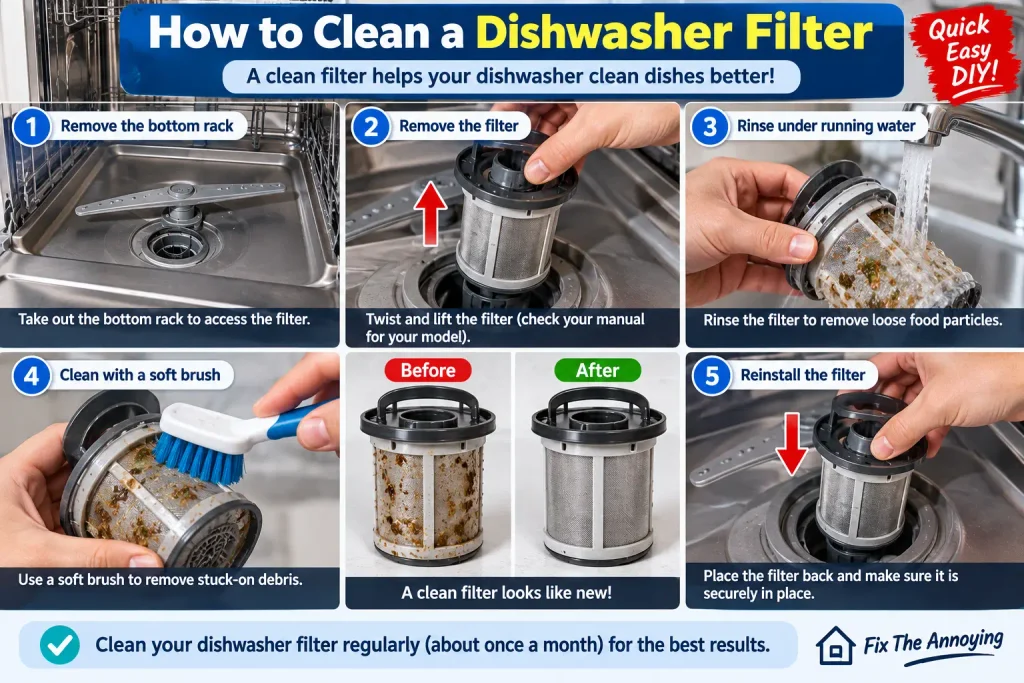
Do not force the filter if it doesn’t twist or lift easily. Different dishwasher models use different filter designs, so check your owner’s manual for the correct removal method.
A clean filter allows the dishwasher’s water circulation system to work more effectively.
2. Check the Spray Arms for Blockages
The spray arms need to rotate freely so water can reach the dishes.
Food particles, mineral deposits, or an incorrectly positioned dish can interfere with the spray arms. Whirlpool specifically recommends checking that spray arms can move freely.
Try this:
- Remove anything blocking the spray arm.
- Spin the spray arm gently by hand.
- Check the small spray holes for visible debris.
- Clean accessible holes carefully if they are blocked.
- Make sure the arm is properly positioned after cleaning.
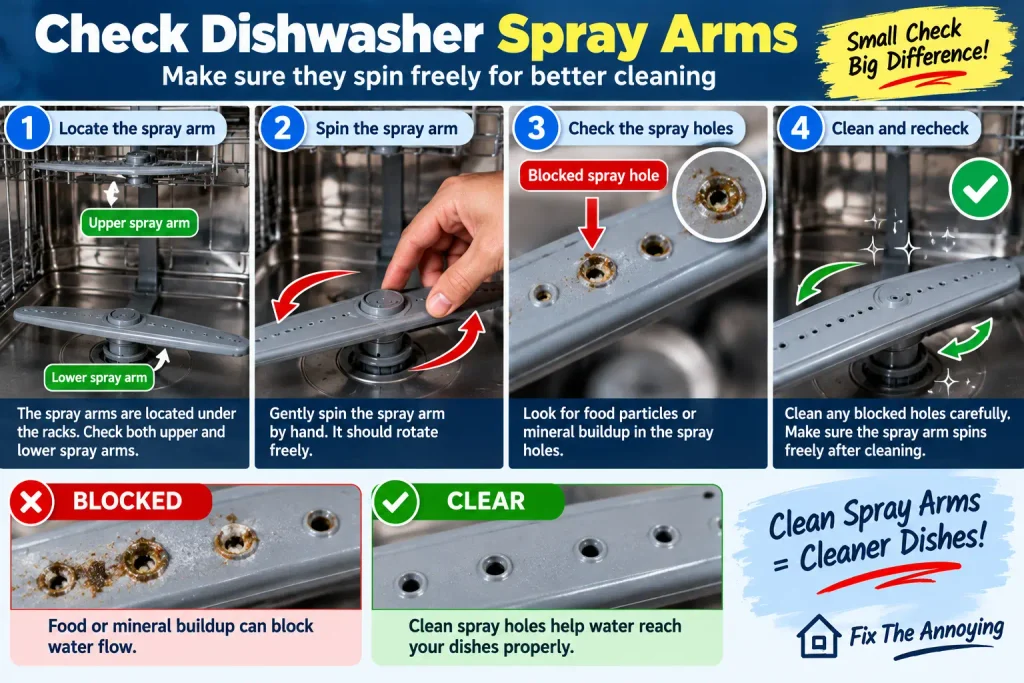
Don’t use a sharp object aggressively inside the spray holes, because you don’t want to damage the spray arm.
If the spray arm feels stuck even when the dishwasher is empty, the problem may require further inspection.
3. Load the Dishes Correctly
Sometimes the dishwasher is working normally, but the dishes are blocking the water from reaching one another.
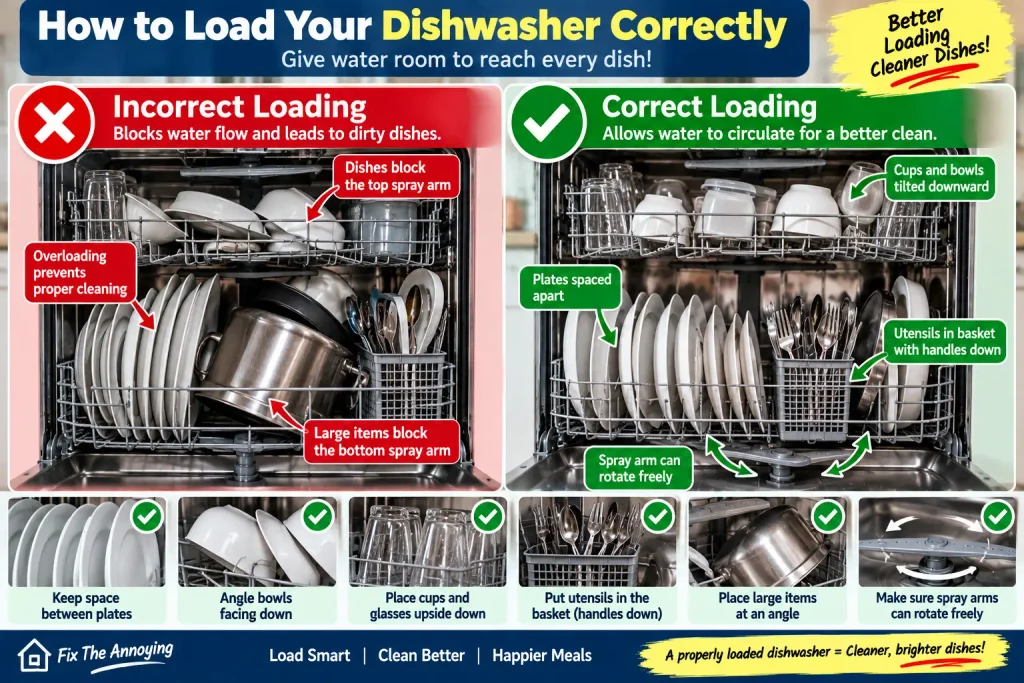
Overloading can restrict water circulation and leave food or detergent residue behind. Dishes should generally be positioned so their dirty surfaces face the spray arms.
Follow these simple loading tips:
- Don’t overcrowd the racks.
- Leave space between plates and bowls.
- Face heavily soiled surfaces toward the spray arms.
- Don’t block the detergent dispenser.
- Make sure tall items aren’t preventing spray-arm movement.
- Avoid nesting bowls or similar items together.
- Check that the spray arms can rotate freely.
After loading, spin the spray arms by hand before starting the cycle to make sure nothing is blocking them.
4. Use the Right Detergent and Amount
Using the wrong detergent or an incorrect amount can cause poor cleaning.
Use automatic dishwasher detergent, not regular hand dish soap or laundry detergent. The wrong type of soap can create excessive suds and interfere with dishwasher operation.
Also check the condition of your detergent.
Old or damp detergent can become clumpy and may not dissolve properly.
Try this:
- Use fresh dishwasher detergent.
- Follow the dosage instructions on the product.
- Keep detergent stored in a cool, dry place.
- Make sure the dispenser isn’t blocked.
- Don’t use excessive detergent just because the dishes are very dirty.
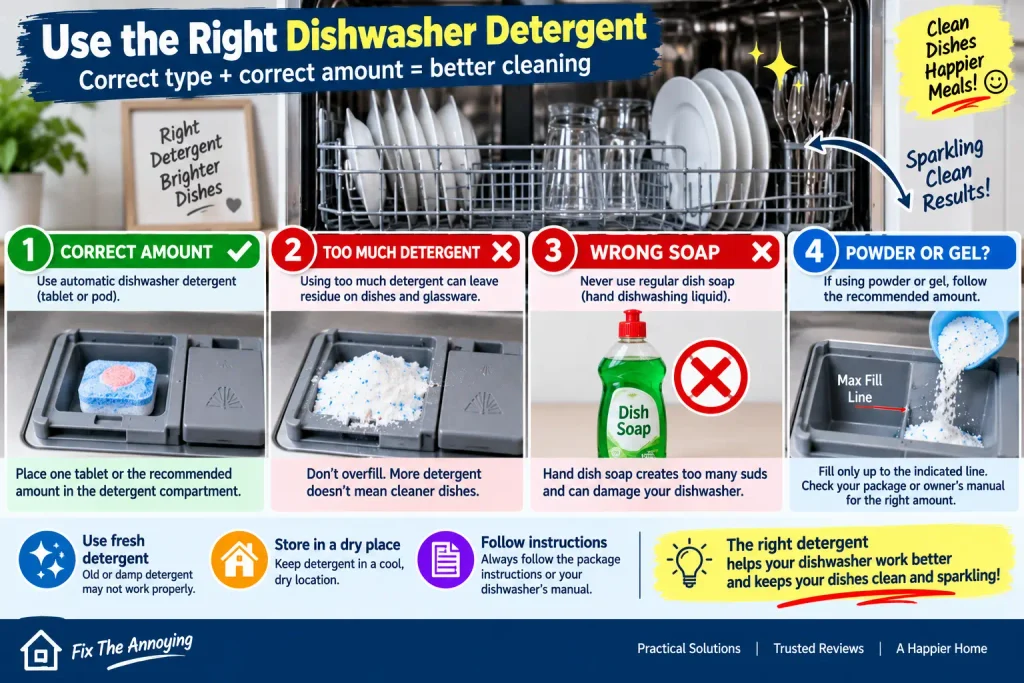
More detergent doesn’t always mean cleaner dishes. Too much can contribute to residue or filming on dishes and glassware.
5. Make Sure Hot Water Is Reaching the Dishwasher
Water temperature can make a noticeable difference in dishwasher cleaning.
If the incoming water is too cold, detergent may not work as effectively and grease or food residue can remain on dishes. Whirlpool recommends incoming water around 120°F (49°C) for best results on many models, although the exact requirements can vary by dishwasher.
An easy thing to try:
Before starting the dishwasher, turn on the kitchen faucet closest to it.
Let the water run until it becomes hot, then start the dishwasher.
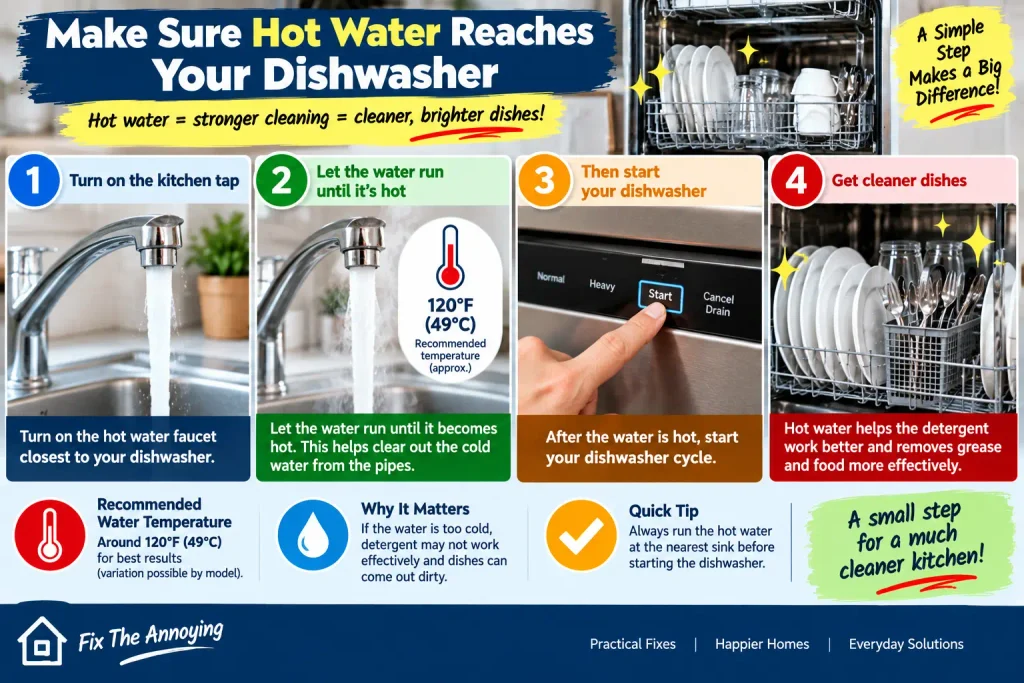
This helps flush cold water from the line before the dishwasher begins filling.
Always follow your dishwasher and water-heater manufacturer’s instructions rather than changing temperature settings blindly.
6. Choose the Correct Wash Cycle
A quick or light cycle may not be enough for heavily soiled dishes.
If you’re washing:
- Dried food
- Greasy cookware
- Baked-on residue
- Heavily soiled plates
- Pots and pans
try a stronger cycle if your dishwasher provides one.
For normally soiled dishes, a normal cycle may be sufficient.
Using the appropriate cycle for the soil level can improve cleaning results without unnecessarily running the strongest cycle every time.
7. Clean the Dishwasher Interior
Your dishwasher itself can become dirty.
Food residue, detergent buildup, and hard-water minerals can accumulate inside the tub and around internal components. This buildup can affect cleaning performance over time.
To clean the interior:
- Empty the dishwasher.
- Remove and clean the filter.
- Wipe visible residue from the door and interior surfaces.
- Check around the bottom of the tub for food debris.
- Clean accessible areas according to the manufacturer’s instructions.
- Run an appropriate dishwasher-cleaning cycle or cleaner if your manufacturer recommends one.
If you have hard water, mineral buildup may require more regular maintenance.
Don’t mix household cleaning chemicals together.
8. Check the Water Supply and Drainage
If you’ve tried the basic cleaning fixes and the dishwasher still isn’t cleaning properly, check whether it is receiving enough water and completing its cycle normally.
First, make sure the dishwasher’s water supply valve is fully open. A restricted water supply can affect washing performance.
Also pay attention to what happens after the cycle.
If dirty water remains in the bottom, there may be a drainage problem that needs separate troubleshooting.
Check for obvious issues such as:
- A kinked drain hose
- Visible food debris around the drain area
- An incomplete cycle
- An error code
Don’t disconnect water lines or dismantle pumps unless you’re familiar with appliance repair. If the dishwasher isn’t filling, circulating, or draining correctly despite basic checks, professional diagnosis may be safer.
What If Only the Top Rack Isn’t Getting Clean?
If dishes on the top rack are dirty while the bottom rack is relatively clean, check whether something is blocking the upper spray arm.
Make sure:
- Tall dishes aren’t blocking the arm.
- The spray arm can rotate freely.
- The filter is clean.
- The upper rack is loaded correctly.
- The selected cycle is appropriate.
Improper loading or a blocked spray arm can prevent water from reaching the top rack effectively.
What If Only the Bottom Rack Isn’t Getting Clean?
For a dirty bottom rack, start by checking:
- The bottom spray arm.
- The dishwasher filter.
- The loading arrangement.
- The selected cycle.
- Whether large dishes are blocking water circulation.
If the spray arm doesn’t rotate freely or the filter is heavily clogged, cleaning those areas may solve the problem.
Why Are My Dishes Still Dirty After Cleaning the Filter?
Cleaning the filter is an important first step, but it isn’t always the complete solution.
If dishes are still dirty, check:
- Spray-arm movement
- Dish placement
- Detergent amount
- Water temperature
- Wash cycle
- Dishwasher interior
- Water supply
If all of these appear normal and the dishwasher still performs poorly, there may be a problem with an internal component such as the circulation system, heating system, sensor, or another part.
At that point, professional troubleshooting may be appropriate.
How to Prevent Your Dishwasher From Cleaning Poorly Again
A few simple habits can help maintain cleaning performance.
Clean the filter regularly
Don’t wait until food buildup becomes obvious.
Keep spray arms clear
Make sure dishes aren’t blocking them.
Load dishes with space between them
Water needs access to the surfaces that need cleaning.
Use fresh dishwasher detergent
Store it somewhere dry and follow the package instructions.
Don’t overload the dishwasher
Trying to fit one more plate into an already full rack can reduce cleaning performance.
Clean the dishwasher periodically
Follow the maintenance recommendations in your owner’s manual.
Use the right cycle
Match the cycle to the amount and type of soil on your dishes.
If you regularly wash cookware with baked-on residue, our guide on [How to Remove Burnt Food From a Stainless Steel Pan] can help you clean the cookware before loading it.
Should You Pre-Rinse Dishes Before Loading?
You generally don’t need to completely wash dishes before putting them in the dishwasher.
Instead, scrape off large pieces of food and load the dishes correctly.
Some modern dishwashers use soil sensors to adjust the cycle based on how dirty the dishes are, so excessive pre-rinsing may not always be helpful.
Always follow your dishwasher manufacturer’s loading instructions.
When Should You Call a Professional?
Basic cleaning and loading problems are often easy to handle yourself, but some dishwasher problems require professional attention.
Call a qualified technician if:
- The dishwasher doesn’t fill with water.
- The dishwasher doesn’t drain.
- The spray arms don’t operate despite being unobstructed.
- You hear unusual grinding or electrical noises.
- You smell burning.
- Water is leaking from an internal component.
- An error code continues after basic troubleshooting.
- The dishwasher repeatedly fails to heat the water.
- The appliance needs electrical or internal component repair.
Don’t remove electrical components or work on live wiring yourself.
FAQs
Why is my dishwasher not cleaning dishes properly?
Common causes include a dirty filter, blocked spray arms, incorrect loading, unsuitable detergent, low water temperature, an inappropriate wash cycle, or a dirty dishwasher interior.
Why are my dishes still dirty after running the dishwasher?
Start by checking the filter, spray arms, loading arrangement, detergent, water temperature, and selected cycle.
Should I clean my dishwasher filter?
Yes. Food debris can collect in the filter and affect washing performance. Follow your model’s manual for the correct cleaning procedure.
Why does my dishwasher leave food on plates?
Blocked spray arms, poor loading, a dirty filter, insufficient water circulation, or an unsuitable cycle can leave food residue behind.
Can too much dishwasher detergent make dishes dirtier?
Yes. Excess detergent can contribute to residue and filming on dishes and glassware. Use the amount recommended for your detergent and dishwasher.
Why is my dishwasher not cleaning greasy dishes?
Grease can remain when water isn’t hot enough, the cycle isn’t strong enough, detergent isn’t working properly, or the spray arms and filter need cleaning.
Why are my glasses cloudy after washing?
Cloudiness can be related to detergent, hard-water minerals, water temperature, or the washing conditions. Rinse aid may help reduce mineral deposits and spotting in some situations.
Can I fix a dishwasher that isn’t cleaning without calling a technician?
Often, yes. Start with safe checks such as the filter, spray arms, loading, detergent, water temperature, and wash cycle. If the problem continues, professional diagnosis may be necessary.
Final Thoughts
If your dishwasher is not cleaning dishes properly, don’t immediately assume that the appliance needs an expensive repair.
Start with the basics: clean the filter, check the spray arms, load dishes correctly, use fresh dishwasher detergent, make sure hot water is reaching the appliance, and select the right wash cycle.
These simple checks can solve many everyday cleaning problems.
If the dishwasher still leaves dishes dirty after these steps, especially if it has water-flow, heating, drainage, electrical, or error-code problems, it’s better to have the appliance professionally inspected.