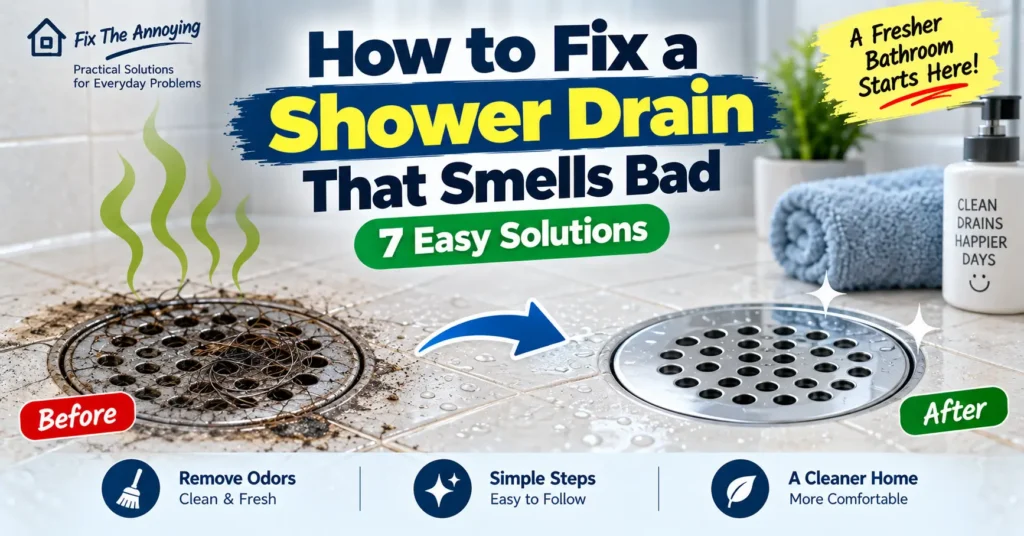
Does your shower drain smell bad even though the bathroom looks clean? A smelly shower drain can make the whole bathroom unpleasant and may be caused by hair, soap residue, organic buildup, a dry trap, or a plumbing problem.
The good news is that many shower drain odors can be addressed with simple cleaning and maintenance. However, if the smell resembles sewage and keeps returning after cleaning, the problem may be deeper in the plumbing.
In this guide, you’ll learn how to fix a shower drain that smells bad using seven practical solutions you can try at home.
Safety first: Never mix different drain cleaners or household cleaning products. Some combinations can produce dangerous fumes. The EPA specifically recommends never mixing cleaning products, including bleach with other chemicals.
How to Fix a Shower Drain That Smells Bad: Common Causes
Before trying to remove the smell, it helps to understand what may be causing it.
Common causes include:
- Hair trapped inside the drain
- Soap and shampoo residue
- Body oils and other organic material
- Slime or buildup inside the drain
- A dirty drain cover
- A dry or poorly functioning trap
- Partial blockage in the drainpipe
- Plumbing or venting problems
Biofilms can develop inside plumbing systems and may contribute to unpleasant odors and other water-quality issues.
A shower drain normally has a trap that holds water and helps prevent foul air from the drainage system from entering the building. Building guidance specifically identifies water seals in traps as a way of preventing foul air from entering indoor spaces.
7 Easy Ways to Fix a Shower Drain That Smells Bad
1. Remove Hair and Debris From the Drain
Hair is one of the first things to check when a shower drain starts smelling.
Hair can trap soap, shampoo, body oils, and other debris. Over time, this material can begin to break down and create an unpleasant odor.
What to do:
- Remove the shower drain cover if it can be removed safely.
- Put on rubber gloves.
- Pull out visible hair and debris.
- Use a small drain hook or plastic tool if necessary.
- Dispose of the debris in the trash.
- Rinse the drain area with water.
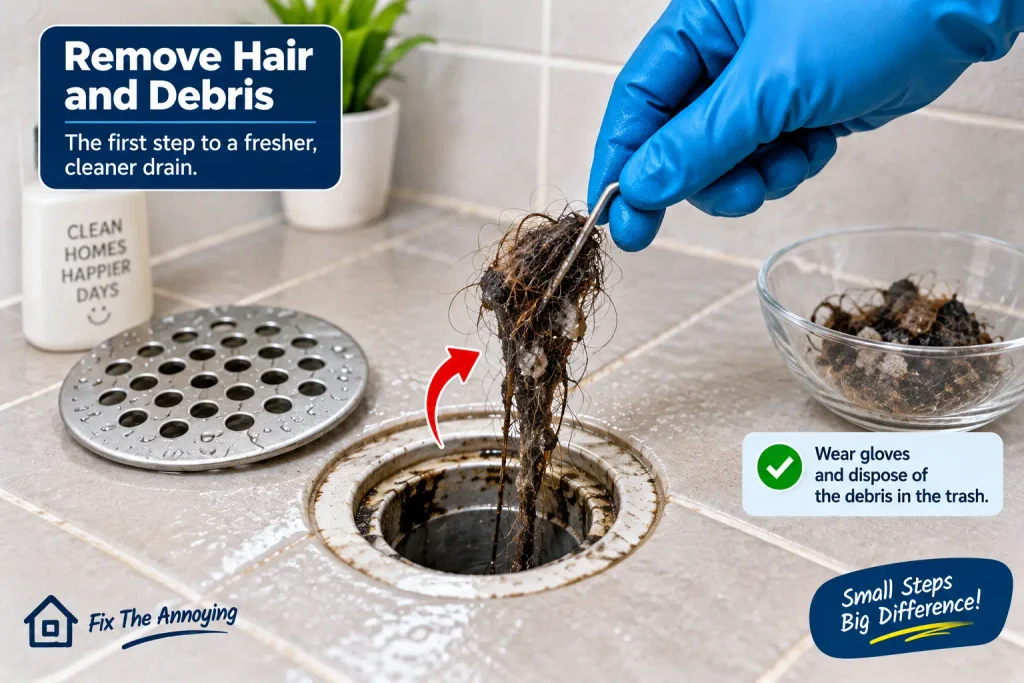
Avoid pushing hair farther down the pipe because this can make a partial blockage worse.
Tip: If your shower drain is slow as well as smelly, removing the trapped hair should be one of your first steps.
2. Clean the Drain Cover and Surrounding Area
Sometimes the smell isn’t coming from deep inside the drain. It can come from buildup around the drain cover itself.
Soap, shampoo, skin oils, and dirt can collect underneath and around the cover.
Try this:
- Remove the drain cover if possible.
- Wash it with warm water and dish soap.
- Scrub both sides with an old toothbrush or soft brush.
- Clean the area around the drain opening.
- Rinse everything thoroughly.
- Dry the area before replacing the cover.
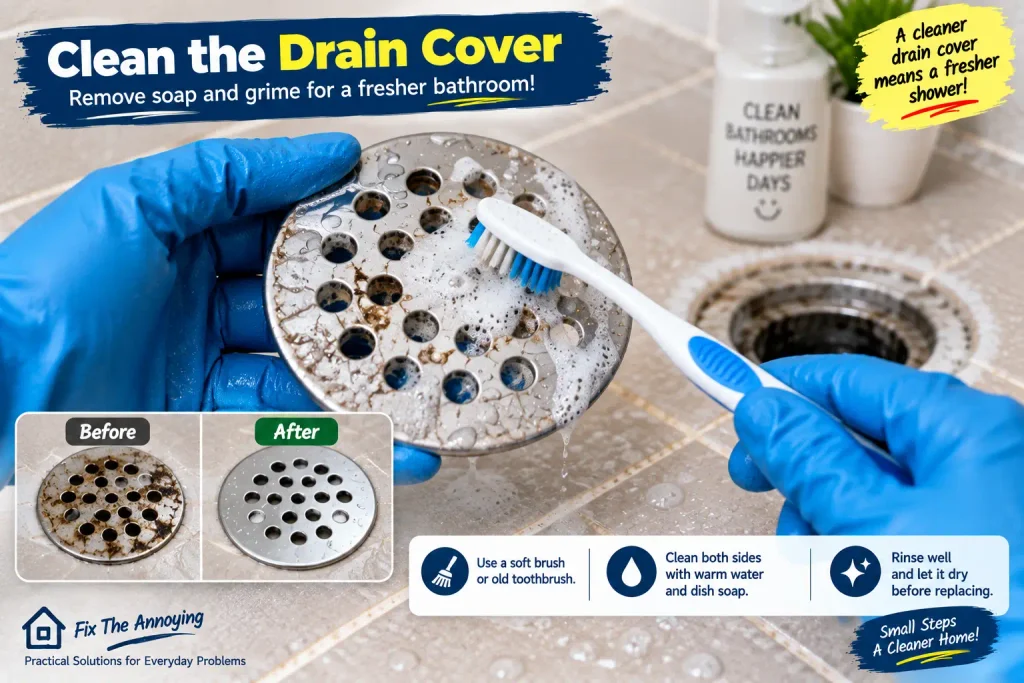
Pay particular attention to slimy or sticky residue because organic material and moisture can contribute to unpleasant smells.
Keeping bathroom fixtures clean and controlling moisture can also help reduce conditions that encourage biological growth.
3. Flush the Drain With Hot Water
A simple hot-water flush can help loosen some soap and oily residue inside the drain.
Here’s how:
- Heat some water.
- Let it cool slightly if it is extremely hot.
- Slowly pour the hot water down the drain.
- Wait a few minutes.
- Run normal water through the drain.
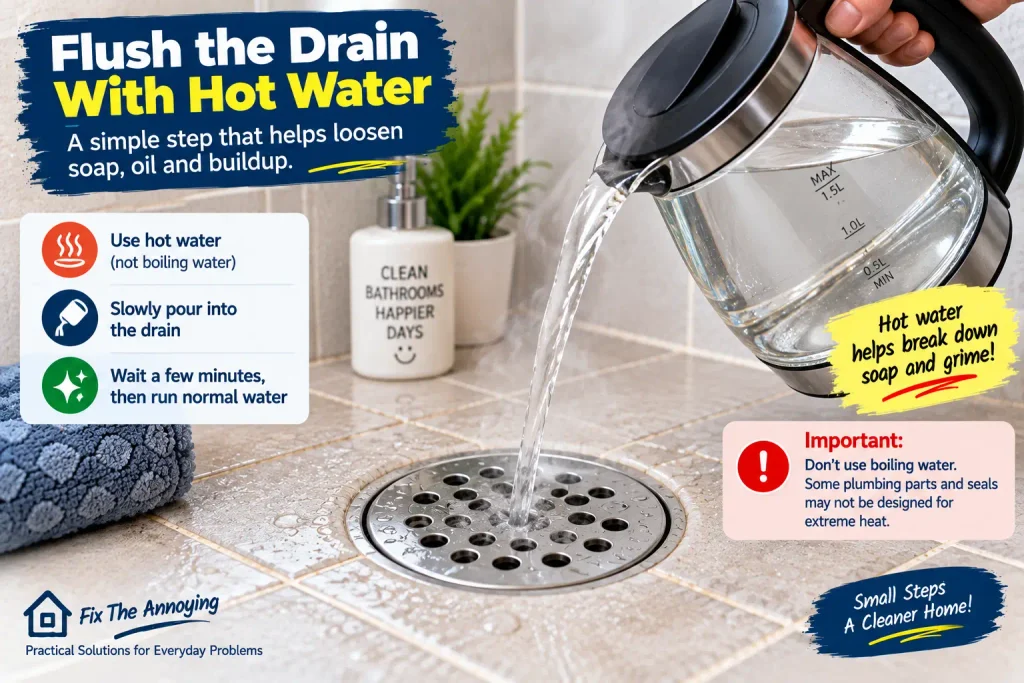
Important: Don’t use boiling water automatically. Some plumbing components, seals, drain fittings, or surrounding materials may not be designed for extreme temperatures.
If you’re unsure about the materials used in your plumbing system, use hot tap water instead.
4. Try Baking Soda and Vinegar Carefully
Baking soda and vinegar are commonly suggested for household drain cleaning. They can help loosen some surface residue and freshen a mildly dirty drain, although they aren’t a guaranteed solution for deeper blockages or plumbing faults.
How to try it:
- Remove visible hair and debris first.
- Pour about ½ cup of baking soda into the drain.
- Add about ½ cup of white vinegar.
- Let the mixture work for several minutes.
- Flush the drain with warm water.
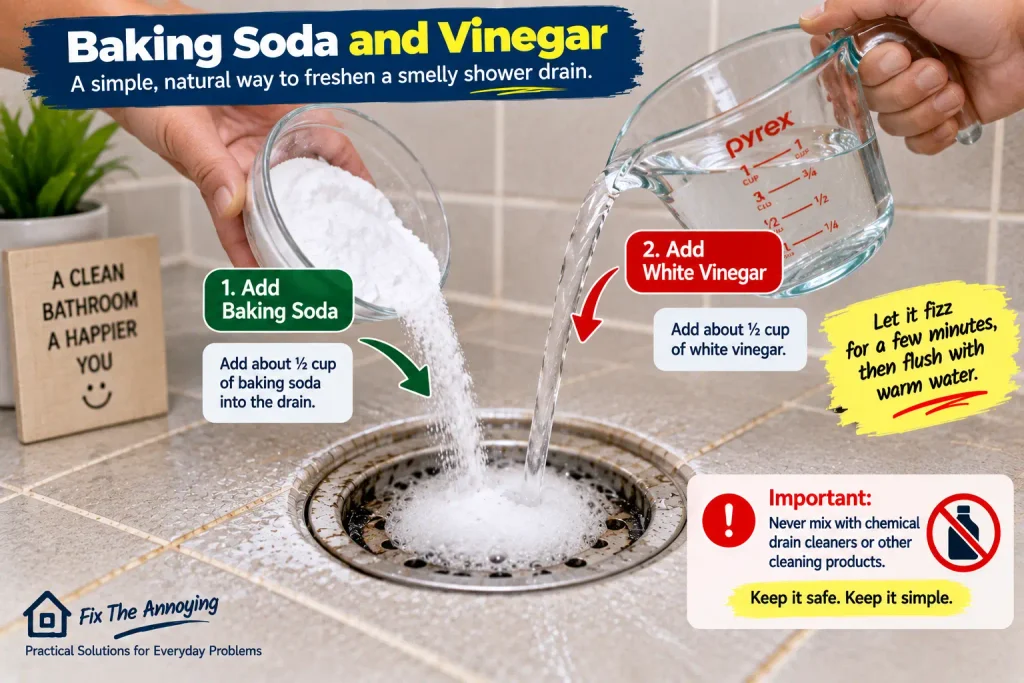
Do not combine this method with commercial drain cleaners or other cleaning chemicals.
Important
If you have already used a chemical drain cleaner, don’t add vinegar, baking soda, bleach, or another cleaning product until you know the product is completely flushed and safe to do so.
Never mix household cleaning products.
5. Clean Soap and Grime Buildup Around the Drain
If your shower has heavy soap buildup, cleaning only the inside of the drain may not solve the odor.
Soap residue can collect on:
- The drain cover
- The shower floor around the drain
- Grout near the drain
- The lower edges of the shower walls
- Hair and debris trapped underneath the cover
Use a suitable bathroom cleaner and a soft brush or cloth to clean these areas.
If your bathroom also has visible soap scum on the tiles, see our guide on How to Remove Soap Scum From Bathroom Tiles for additional cleaning methods.
After cleaning, rinse the area thoroughly and allow it to dry.
6. Check Whether the Drain Trap Has Enough Water
If your shower drain smells like sewage, the problem may not simply be dirt.
A plumbing trap normally holds a water seal that helps stop foul air from the drainage system from entering the building. If that seal becomes dry or isn’t functioning properly, unpleasant odors can enter the bathroom.
For more information about drainage traps and preventing foul air from entering a building, see the official GOV.UK guidance on drainage and waste disposal
This is more likely to happen in drains that are rarely used, although other plumbing problems can also affect the trap.
What you can do:
Run water through the shower for a short time and see whether the smell improves.
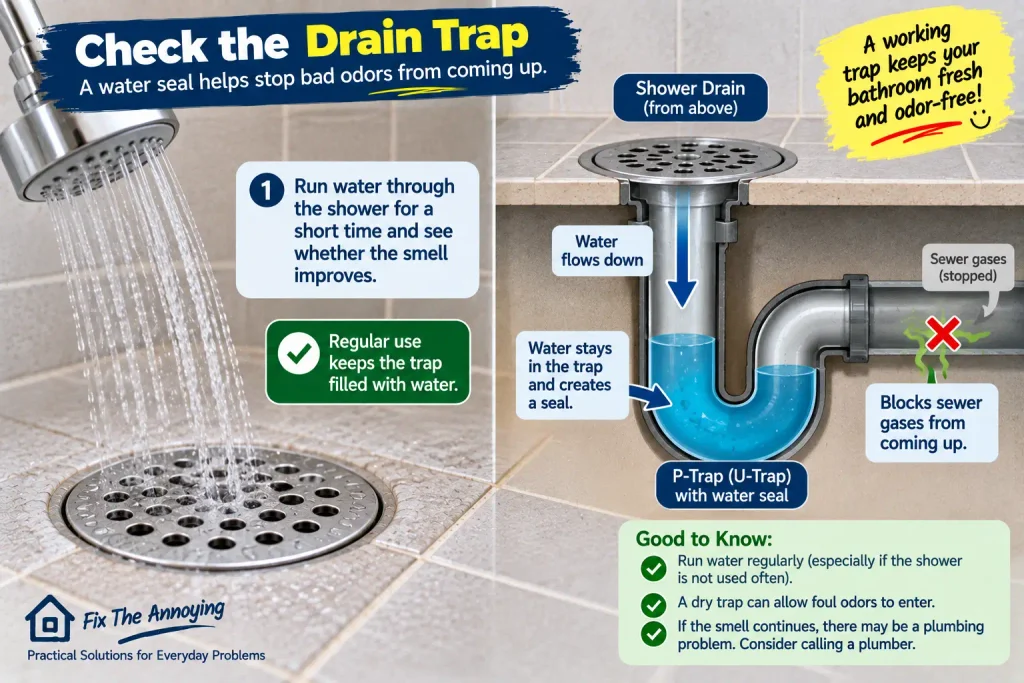
If the shower is regularly used but you still notice a strong sewage-like smell, there may be another problem with the trap, drainage system, or venting.
Don’t dismantle plumbing components unless you’re confident about what you’re doing. A plumber can inspect the trap and drainage system if the odor persists.
7. Get Professional Help if the Smell Keeps Coming Back
If you’ve cleaned the drain and removed visible buildup but the smell returns quickly, it’s time to consider a plumbing problem.
You may need professional help if you notice:
- A strong sewage smell
- Slow drainage
- Gurgling sounds
- Water backing up into the shower
- Repeated drain blockages
- Odor coming from multiple drains
- Water leaking around the drain
- The smell returning shortly after cleaning
Persistent foul odors can sometimes be associated with drainage, venting, or other plumbing problems. EPA guidance notes that odors can have several possible causes and recommends contacting a plumber or appropriate service provider when the source cannot be identified.
What If the Shower Drain Still Smells After Cleaning?
If the smell remains after you’ve cleaned the drain, don’t keep adding stronger chemicals.
Instead, check a few basic things:
Check the drain cover
Make sure there isn’t hidden hair, soap, or slime underneath it.
Check the drainage speed
A slow drain may indicate a partial blockage deeper in the pipe.
Check other drains
If the bathroom sink or another drain also smells, the problem may be larger than the shower drain.
Pay attention to the type of smell
A musty or dirty smell may point toward buildup or moisture.
A strong sewage-like smell deserves more attention because it can indicate a problem with the drain trap, venting, or drainage system.
How to Prevent a Shower Drain From Smelling Bad
Once you’ve fixed the odor, a few simple habits can help prevent it from returning.
1. Remove hair regularly
Don’t allow hair to accumulate inside the drain.
2. Clean the drain cover
Give the cover a quick cleaning whenever you notice buildup.
3. Keep the shower area clean
Soap, shampoo, and body oils can accumulate around the drain.
4. Flush the drain regularly
Running plenty of normal water through the drain can help move loose residue through the plumbing.
5. Don’t ignore slow drainage
A slow drain can be an early sign of buildup or a developing blockage.
6. Keep the bathroom ventilated
Use the bathroom exhaust fan during showers and afterward when appropriate. Controlling moisture and improving ventilation are important parts of reducing indoor biological growth.
When Should You Call a Plumber?
Call a professional if:
- The smell is strongly sewage-like.
- The odor keeps returning after cleaning.
- Water backs up into the shower.
- The drain is repeatedly blocked.
- Several drains smell at the same time.
- You hear persistent gurgling.
- You suspect a damaged trap or vent.
- You notice leaks around the drain or plumbing.
Trying another chemical cleaner isn’t always the answer. If the problem is inside the plumbing system, identifying and repairing the underlying issue is more useful than repeatedly masking the smell.
Frequently Asked Questions
Why does my shower drain smell like sewage?
A sewage-like smell can be caused by a problem with the drain trap, drainage system, or venting. A trap normally uses a water seal to help prevent foul air from entering the building.
Can hair make a shower drain smell?
Yes. Hair can trap soap, body oils, and other organic material. As this material builds up, it can contribute to unpleasant odors.
Does baking soda and vinegar remove shower drain smells?
It may help loosen some surface residue and freshen a mildly dirty drain, but it won’t fix every cause of drain odor. Persistent sewage-like smells may require plumbing inspection.
How often should I clean my shower drain?
There isn’t one schedule that works for every household. Check the drain regularly and clean it whenever you notice hair, buildup, slow drainage, or an unpleasant smell.
Should I use chemical drain cleaner for a smelly shower drain?
Not automatically. If the problem is simply hair or surface buildup, physical cleaning may be enough. Never mix drain cleaners with other household chemicals because dangerous reactions or fumes can occur.
Why does my shower drain smell bad even though it is clean?
If visible buildup isn’t the cause, the problem may involve the trap, venting, partial blockage, or another part of the plumbing system. A persistent sewage-like odor is a good reason to have the plumbing checked.
Final Thoughts
A bad-smelling shower drain doesn’t always mean you have a serious plumbing problem. Hair, soap residue, grime, and buildup are common things to check first.
Start by removing debris, cleaning the drain cover, flushing the drain, and keeping the shower area clean. If the smell is strong, sewage-like, or keeps returning despite cleaning, don’t keep masking the odor with cleaning products. The underlying plumbing may need professional attention.
A clean drain and regular maintenance can go a long way toward keeping your bathroom fresh, clean, and less annoying.