Quick Answer:
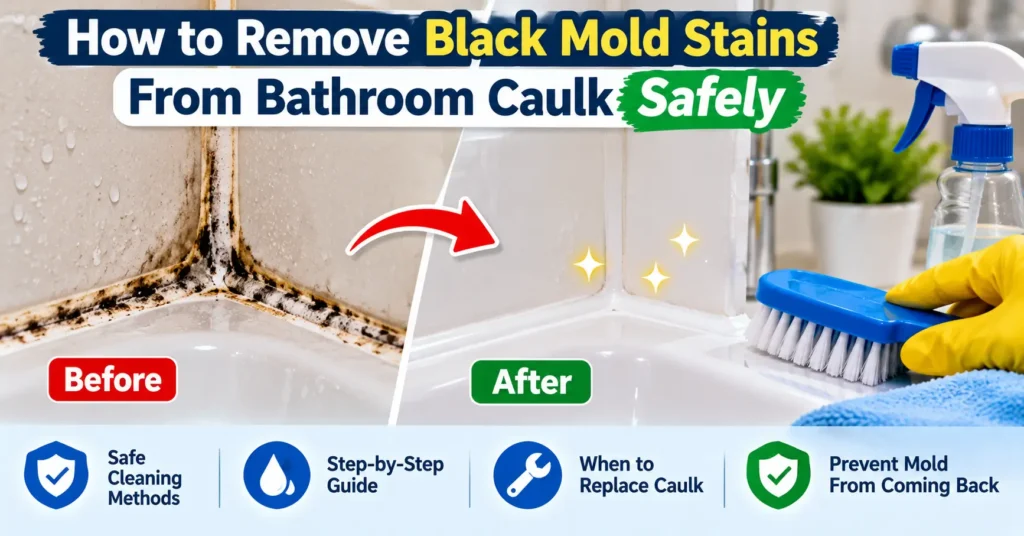
If the black marks are only on the surface, start by cleaning away soap residue and gently treating the stained caulk. If the caulk is cracked, peeling, separating, or remains deeply discolored after cleaning, replacing the old caulk may be the better solution.
Black mold stains on bathroom caulk can give a clean bathroom an appearance of dirtiness and neglect. You often see mold growing on the edges of a bathtub, shower, sink or toilet. That’s because bathroom caulk is regularly exposed to water, humidity and soap residue.
The good news is that small areas of mold on bathroom caulk can often be cleaned safely with the right approach. But if mold has grown deep into the caulk or keeps coming back, cleaning may not be enough. If that’s the case then removing the old caulk and re-caulking might be a better long term solution.
In this guide, you’ll learn how to remove black mold stains from bathroom caulk safely, what cleaning methods to use, when caulk should be replaced, and how to prevent mold from coming back.
Why Does Black Mold Grow on Bathroom Caulk?
Bathroom caulk is exposed to moisture almost daily. Water left on or around caulk creates an environment where mold can grow.
Common causes include:
- High bathroom humidity
- Poor ventilation
- Water collecting around the bathtub or shower
- Leaking plumbing fixtures
- Soap and dirt buildup
- Caulk that stays wet for long periods
- Old or damaged caulk
- Water leaking behind the caulk
The EPA explains that controlling moisture is one of the most important ways to prevent indoor mold growth. For more information, see the EPA guide to mold, moisture, and your home
How to Remove Black Mold Stains From Bathroom Caulk Safely
Prepare yourself before cleaning, and make sure the bathroom is well-ventilated. Open a window or turn on the bathroom exhaust fan if it vents to the outside.
For a small area of surface mold, follow these steps.
1. Gather Your Cleaning Supplies
You don’t need a large collection of products.
For a basic cleaning job, gather:
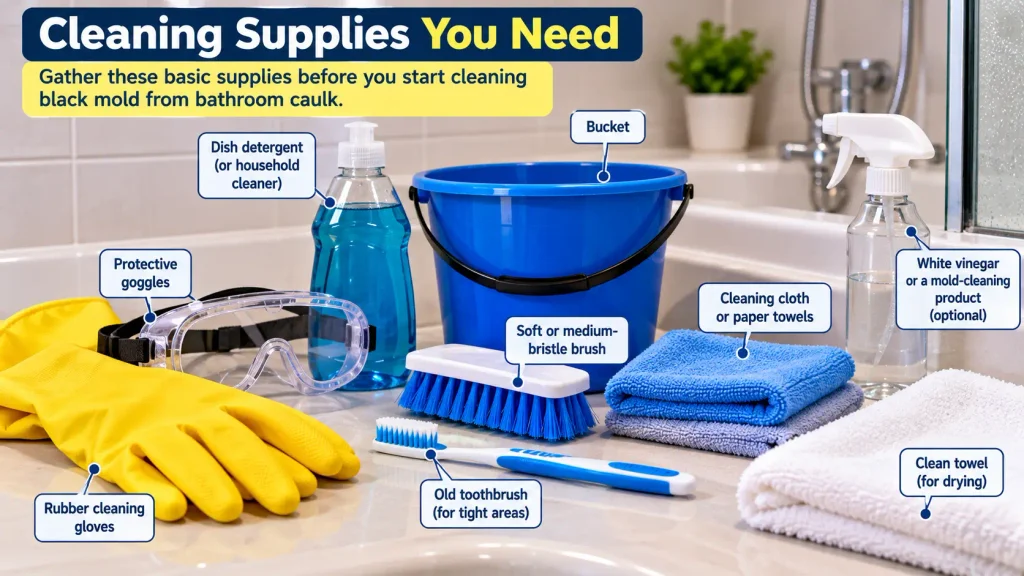
Tip: Gather your cleaning supplies and protective gear before you start.
- Rubber or nitrile cleaning gloves
- Protective goggles
- A cleaning cloth or paper towels
- A small soft or medium-bristle brush
- Dish detergent or another suitable household cleaner
- Warm water
- A small bucket
- An old toothbrush for tight areas
- A clean towel
If you use a commercial mold remover, be sure to follow the manufacturer’s directions on the product label.
When cleaning moldy areas, the CDC suggests protecting your eyes, skin, nose and mouth.
2. Improve Bathroom Ventilation
Improve airflow before applying any cleaning product.
If it is safe to do so, open the window of the bathroom and turn on the exhaust fan if it is vented to the outside.

Tip: Keep the bathroom well ventilated while cleaning mold.
Good ventilation helps reduce moisture while you clean.
Don’t clean mold in a completely closed bathroom, especially using cleaning products.
3. Remove Surface Dirt and Soap Residue
Before treating the black mold stains, clean the caulk and the surrounding area first. Soap scum, dirt, and other buildup can cover the mold and make it harder to clean the affected area properly.
Mix a small amount of dish detergent with warm water. Dip a soft brush or clean cloth into the solution and gently clean the caulk, tile, bathtub, or shower surface around the affected area.
For narrow corners and joints, an old toothbrush can make it easier to reach the buildup without putting too much pressure on the caulk.
Once the soap residue and dirt have been removed, wipe the area with clean water.
Important: The goal of this step is to clean the surface—not to aggressively remove the black mold yet.
4. Scrub the Moldy Caulk Gently
After removing the surface dirt and soap residue, you can focus on the remaining black mold stains.
Choose a suitable bathroom or mold-cleaning product and follow the manufacturer’s instructions on the label. Apply the product only as directed and make sure the bathroom has good ventilation while you work.
Use a soft or medium-bristle brush to gently work the cleaner into the stained caulk. Concentrate on the affected areas instead of aggressively scrubbing the entire joint.
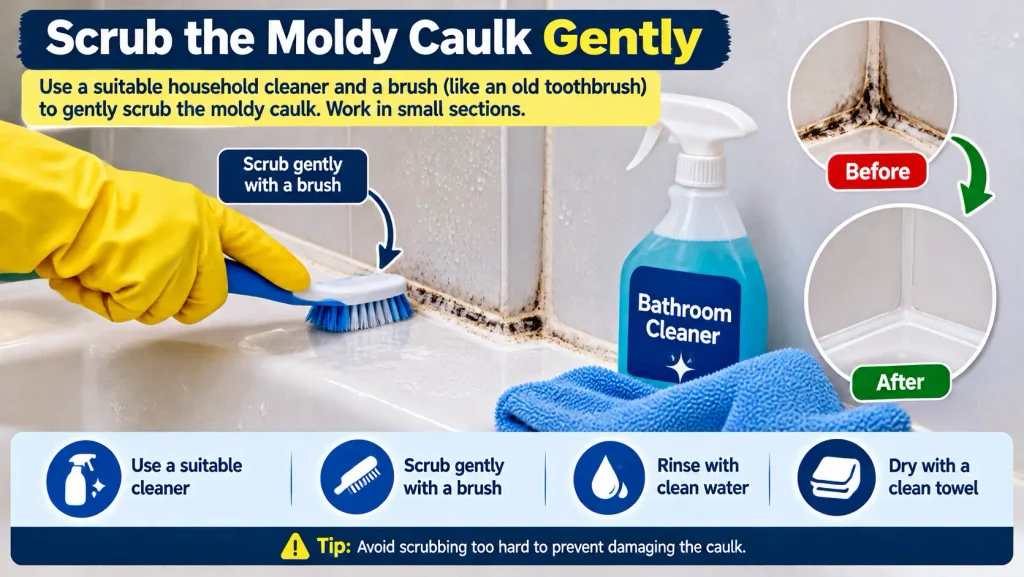
Tip: Scrub the stained caulk gently to avoid damaging the seal.
Work in small sections and avoid damaging the caulk. Cracked, peeling, or damaged caulk can allow water to get behind the joint and may need to be replaced rather than repeatedly cleaned.
After treating the affected area, follow the cleaner’s instructions for rinsing or wiping the surface. Then dry the caulk thoroughly with a clean towel.
Safety reminder: Never mix bleach with ammonia or other household cleaners. If you use a commercial mold cleaner, use it exactly as directed on the product label and do not combine it with another cleaning product.
5. Rinse and Dry the Area Completely
After cleaning, wipe off the remaining cleaning solution with clean water.
Then, dry the caulk thoroughly with a clean towel.
This is an important step because moisture is one of the major factors that allows mold to continue to grow.
Don’t just close the bathroom door and leave it wet.
Let the surface dry completely.
6. Don’t Mix Cleaning Products
This is one of the most important safety rules.
Never combine bleach with ammonia or any other household cleaners.
Some combinations of cleaning products can release harmful vapors.
For additional safety recommendations when cleaning mold, see the CDC mold cleanup guidelines
The CDC specifically warns against using bleach with ammonia or any other cleaning product.
If you choose to use a commercial mold or bathroom cleaner, use the directions on the product label and do not mix it with another cleaning product.
7. Check Whether the Mold Is Only on the Surface
Once the caulk has been cleaned and dried, look at it carefully.
If the dark staining has been removed and the caulk is still in good condition, regular cleaning and moisture control may be able to keep the area clean.
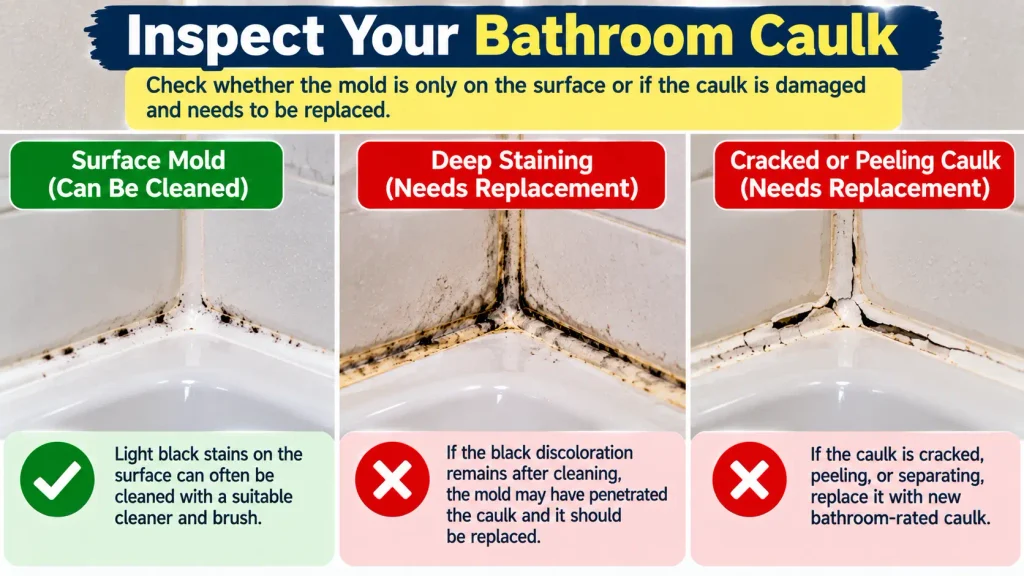
Tip: Check the entire caulk line for cracks, peeling edges, and gaps before deciding whether cleaning is enough.
But if the black discoloration is deeply set in the caulk, the caulk may need to be replaced.
Cleaning can remove surface mold, but staining or mold growth in damaged or porous materials may not be able to be completely removed.
Quick inspection: Run your eyes along the entire caulk line and look for cracks, gaps, peeling edges, or sections that have separated from the tile or tub. If the caulk looks damaged rather than simply stained, cleaning may only provide a temporary improvement.
When Should You Replace Bathroom Caulk?
Sometimes cleaning isn’t the best solution.
Consider replacing the caulk if you notice:
- Deep black discoloration that remains after cleaning
- Cracks in the caulk
- Peeling or separating caulk
- Gaps between the caulk and tub or tile
- Soft or deteriorated caulk
- Mold that repeatedly returns
- Water getting behind the caulk
If the mold has gotten into the caulk, it’s usually better to remove the old material and put on new, bathroom-rated caulk than to wipe down the same stained area repeatedly.
Important: Do not caulk over moldy caulk. Scrape away any old, moldy material, clean and dry the area, and prepare the surface before applying new caulk.
| What you see | What to do |
|---|---|
| Light surface staining | Clean and dry |
| Black marks return quickly | Check moisture/ventilation |
| Cracked caulk | Replace caulk |
| Peeling or separated caulk | Remove and replace |
| Water behind caulk | Find and fix moisture source |
| Mold behind wall/tile | Consider professional help |
How to Remove Moldy Bathroom Caulk and Replace It
If the caulk is badly stained or damaged, replacement may be necessary.
Step 1: Remove the Old Caulk
Use a caulk removal tool or suitable scraper to carefully cut and remove the old caulk.
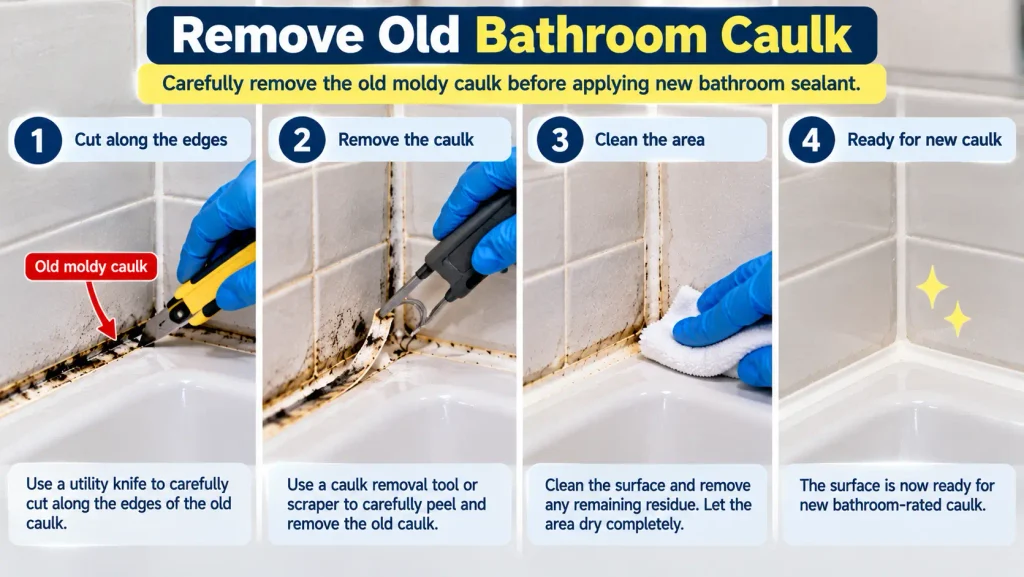
Tip: Remove all old, damaged caulk before applying fresh bathroom sealant.
Work slowly to avoid damaging the bathtub, shower tray, tile, or surrounding surface.
Step 2: Clean the Area
Remove the old caulk and clean the exposed surface and remaining residue.
If you notice any signs of moisture damage or heavy mold behind the caulk, stop and look for the moisture problem before you apply new sealant.
Step 3: Let Everything Dry
Ensure that the surface dries out completely before applying new caulk.
Any moisture trapped under the new caulk can cause mold issues down the road.
Step 4: Apply Bathroom-Suitable Caulk
Choose a caulk or sealant that is designed for bathrooms or wet areas.
Run a bead around the joint and smooth out as per the manufacturer’s instructions.
Allow product to cure for the time specified on the label before exposure to water.
How to Prevent Black Mold From Coming Back
Cleaning the mold is only part of the solution. You also need to reduce the moisture that caused it.
Improve Bathroom Ventilation
If it makes sense with your ventilation setup, use your bathroom exhaust fan when you shower and for a little while after.
You can also open a window when the weather and privacy allow it.
The EPA says that improving bathroom ventilation can help stop mold from recurring.
Keep Shower Caulk Dry
When you bathe, wipe up excess water from the tub, shower walls and caulked joints.
The less moisture that is left on the surface, the less hospitable an environment for mold to grow.
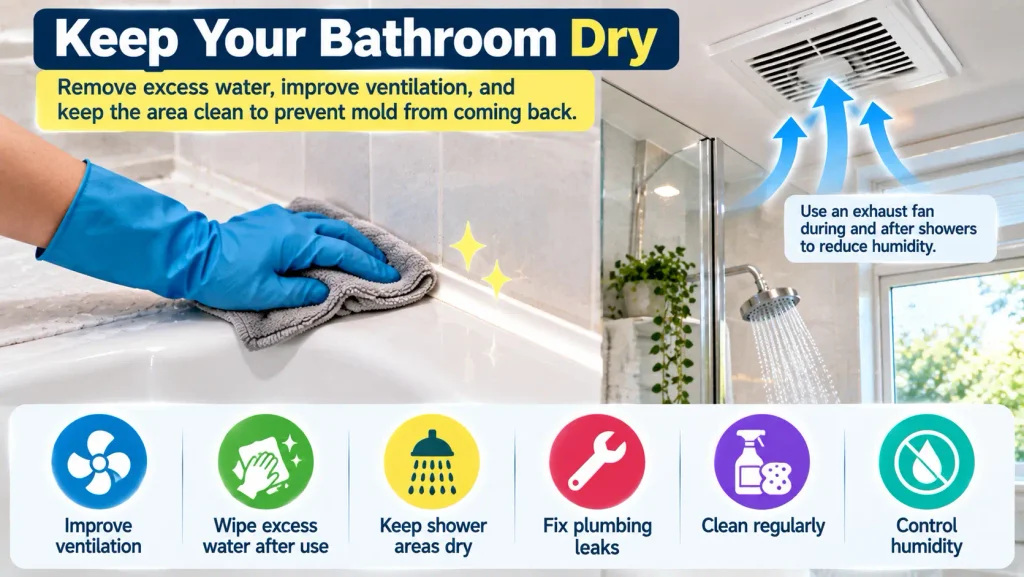
Tip: Keep bathroom surfaces dry and improve ventilation to help prevent mold from returning.
Fix Plumbing Leaks
A slow leak around a faucet, pipe, toilet or shower connection can keep an area damp.
Fix plumbing problems quickly and investigate unexplained moisture.
Clean the Bathroom Regularly
Clean soap scum, dirt and buildup from shower and bathtub areas regularly.
Do not wait until heavy black staining appears to clean the caulk.
Keep Humidity Under Control
If your bathroom has a lot of lingering humidity, you might want to improve the ventilation or use a dehumidifier where appropriate.
Removing excess moisture will help prevent the return of the mold.
Is Black Mold on Bathroom Caulk Dangerous?
The term black mold is a common name for mold that is dark in color, but the color alone will not tell you what type of mold it is.
You don’t usually have to identify the specific type of household mold when dealing with a small, visible mold problem. The CDC recommends that you don’t try to test for mold at home and instead get rid of any visible mold and fix the moisture problem.
People who are sensitive to mold may experience health effects from exposure to mold. During mold cleanup, people with allergies, some respiratory conditions or weakened immune systems may be at higher risk, the CDC says.
If you have health concerns about mold exposure, have a health care professional evaluate you before you do the cleanup.
When Should You Call a Professional?
A small area of mold around bathroom caulk may be manageable as a DIY cleaning project.
Consider professional help when:
- Mold covers a large area
- Mold keeps returning after cleaning
- There is significant water damage
- You suspect mold behind walls or tiles
- There is a persistent plumbing leak
- You notice a strong musty smell with no visible source
- The bathroom has extensive moisture damage
- The affected area is connected to contaminated water or sewage
For another common bathroom and plumbing problem, see our guide: Kitchen Faucet Is Dripping From the Spout? 7 Easy Fixes.
If you think you have a hidden mold problem or the cleanup is more than a basic household job, the EPA suggests calling an experienced professional.
Frequently Asked Questions
Can I remove black mold stains from bathroom caulk?
Yes, small amounts of surface mold can often be cleaned from bathroom caulk. However, if the staining has penetrated the caulk or the caulk is damaged, replacement may be necessary.
Does bleach permanently remove black mold from caulk?
Bleach should not be considered a guaranteed permanent solution. The EPA does not recommend bleach or other biocides as a routine mold-cleanup practice. More importantly, the moisture problem needs to be corrected and visible mold needs to be removed.
Can I put new caulk over moldy caulk?
No. Remove the old moldy caulk first. Clean and dry the surface before applying new caulk. Applying new caulk over moldy material can trap the problem underneath.
Why does mold keep coming back on my bathroom caulk?
Recurring mold usually means the area is repeatedly exposed to moisture or has poor ventilation. Check for leaks, improve bathroom airflow, and keep the caulk and surrounding surfaces as dry as possible.
Should I use vinegar to clean moldy bathroom caulk?
Vinegar is sometimes used as a household cleaning method, but it should not be mixed with bleach or other cleaning products. For mold cleanup, follow the instructions of the cleaning product you choose and prioritize ventilation, safe handling, moisture control, and thorough drying.
How can I prevent mold around my bathtub caulk?
Keep the bathroom ventilated, remove excess water after bathing, clean soap buildup regularly, fix leaks quickly, and replace damaged caulk when necessary.
How long should bathroom caulk dry after cleaning?
Allow the cleaned area to dry completely before applying any new caulk. If you’re replacing caulk, follow the curing time specified by the manufacturer’s instructions before exposing the new sealant to water.
Can mold grow behind bathroom caulk?
Yes. If caulk is cracked, separated, or water is getting behind it, moisture can become trapped in the joint. In that situation, simply cleaning the visible surface may not solve the underlying problem.
Final Takeaway
Learning how to remove black mold stains from bathroom caulk safely starts with controlling moisture and cleaning the affected area carefully.
For small surface mold, clean the area, scrub gently, rinse, and dry it completely. Always provide good ventilation and never mix bleach with ammonia or other cleaning products.
If the mold has deeply stained the caulk, the caulk is cracked or damaged, or the mold repeatedly returns, replacing the old caulk may be a better long-term solution.
If you’re troubleshooting other plumbing problems around your home, you may also find our guide: Toilet Won’t Stop Running? 8 Easy Fixes to Try helpful.
Most importantly, don’t just cover mold with new caulk. Find and fix the moisture problem first, then clean and dry the area before applying fresh sealant.