

Cloudy glass shower doors can make an otherwise clean bathroom look dull and neglected. Even after regular wiping, a white, hazy film may remain on the glass and become more noticeable over time.
That cloudy appearance is often caused by a combination of hard water minerals, soap residue, body oils, and cleaning-product buildup. The longer these deposits remain on the surface, the more difficult they may become to remove.
If you’re wondering how to remove cloudy film from glass shower doors, start with a gentle cleaning method before moving on to stronger options. In many cases, ordinary household cleaning supplies and a little patience can restore much of the glass’s clarity.
Here are seven practical methods to try.
Why Do Glass Shower Doors Become Cloudy?
Before cleaning the glass, it helps to understand what is creating the haze.
Understanding the cause makes it easier to choose the right method for how to remove cloudy film from glass shower doors without damaging the surface.
Hard Water Deposits
Hard water contains dissolved minerals such as calcium and magnesium. When water droplets dry on shower glass, some of these minerals can remain behind.
Repeated exposure can gradually create white spots or a cloudy mineral film.
Soap Scum
Soap residue can combine with minerals in the water and stick to the glass. Body oils and other shower products may contribute to the buildup.
Cleaning Product Residue
Using too much cleaner—or failing to rinse it away properly—can leave a streaky or hazy residue of its own.
Long-Term Buildup
When mineral deposits and soap scum are allowed to accumulate for weeks or months, ordinary wiping may no longer remove them easily.
In some cases, glass that remains cloudy after thorough cleaning may have surface damage or etching rather than removable residue.
Before You Start: Check the Glass and Surrounding Materials
Before trying any cleaner, determine what type of shower door and surrounding materials you have.
Some shower doors have special coatings, and certain cleaners may not be suitable for them. Always follow the shower-door manufacturer’s care instructions when available.
Also consider nearby surfaces such as:
- Natural stone
- Metal hardware
- Painted surfaces
- Grout
- Sealants
- Acrylic or plastic components
A cleaner that is suitable for ordinary uncoated glass may damage another material nearby.
Test any unfamiliar cleaning solution on a small, inconspicuous area first.
Never mix household cleaning products unless the product labels specifically state that it is safe to do so. In particular, never mix bleach with vinegar, ammonia, or other cleaners, because dangerous gases can be produced.
Once you’ve checked the materials, start with the gentlest appropriate cleaning method.
1. Start With Warm Water and Dish Soap
For light cloudiness, you may not need a strong cleaner at all.
A gentle wash is often the safest first step when deciding how to remove cloudy film from glass shower doors
Mix a small amount of mild dish soap with warm water.
Apply the solution to the glass using a soft microfiber cloth or non-abrasive sponge. Work across the cloudy areas using gentle circular motions.

Pay extra attention to areas where water droplets commonly dry, especially near the lower part of the shower door.
After cleaning:
- Rinse the glass thoroughly with clean water.
- Remove excess water with a squeegee.
- Dry the surface with a clean microfiber cloth.
Drying is important because allowing mineral-rich water to evaporate on the glass can leave new spots behind.
If the cloudy film disappears, the problem was probably light soap or surface residue.
If a white haze remains, move to the next method.
2. Try Diluted White Vinegar for Mineral Buildup
White vinegar can help dissolve some mineral deposits responsible for cloudy shower glass.
When learning how to remove cloudy film from glass shower doors, diluted vinegar is a useful option when hard water deposits are the main cause.
For ordinary uncoated glass, mix equal parts white vinegar and water in a spray bottle.
Spray the solution over the affected glass and allow it to sit briefly so it can work on the deposits.
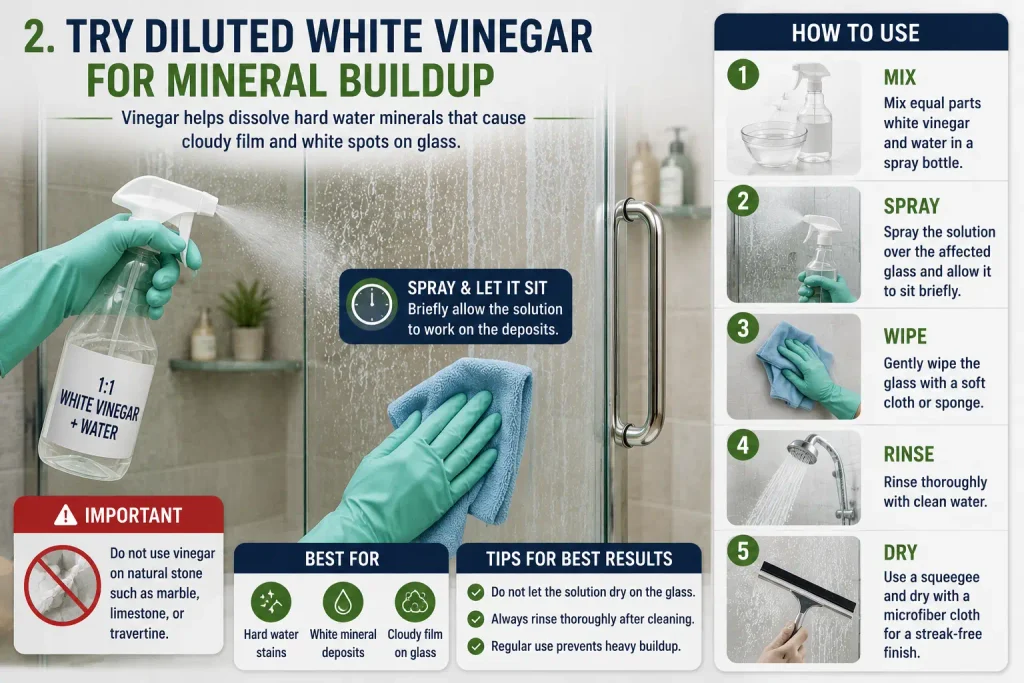
Do not allow the solution to dry completely on the surface.
Then gently wipe the glass with a microfiber cloth or non-abrasive sponge.
Rinse thoroughly with clean water and dry the glass.
Important
Do not use vinegar on natural stone such as marble, limestone, or travertine. Acidic cleaners can damage these materials.
Also check the shower-door manufacturer’s instructions before using vinegar on glass with a protective coating.
If your shower enclosure contains sensitive materials, protect them from overspray or choose a manufacturer-approved cleaner instead.
3. Use a Baking Soda Paste for Stubborn Residue
If gentle cleaning and diluted vinegar have not removed all the buildup, baking soda may help with some stubborn residue.
This method can be useful when how to remove cloudy film from glass shower doors requires a little more cleaning action without immediately turning to stronger products.
Mix a small amount of baking soda with enough water to create a soft paste.
Apply it gently to the cloudy area using a damp, non-abrasive cloth or sponge.
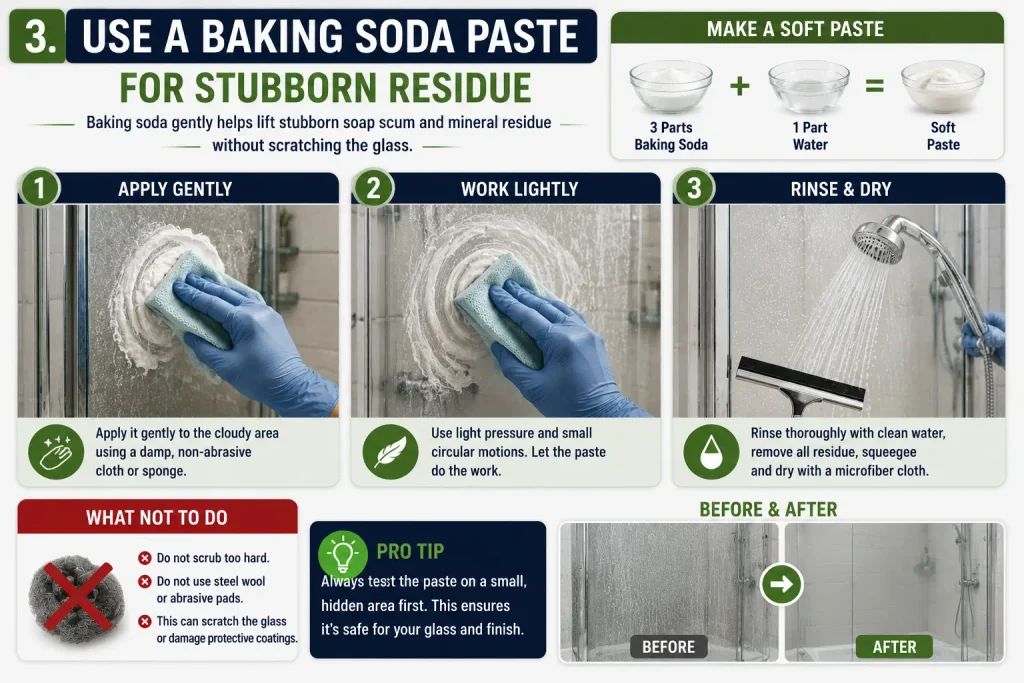
Do not scrub aggressively.
Although baking soda is commonly used for household cleaning, abrasive action can potentially affect some surfaces or coatings. Test a small area first and follow the manufacturer’s care recommendations.
After gently working on the buildup:
- Rinse the glass thoroughly
- Remove remaining residue
- Squeegee away excess water
- Dry with a microfiber cloth
Avoid leaving baking soda residue behind, as it can create its own cloudy appearance after drying.
4. Use Vinegar and Dish Soap for Soap Scum
If the cloudiness feels greasy or has a stubborn soap-scum layer, a combination of diluted vinegar and a small amount of dish soap may help.
The dish soap helps loosen oily residue, while vinegar can work on some mineral buildup.
Mix:
- Equal parts white vinegar and water
- A small amount of mild dish soap
Apply the mixture to the glass with a spray bottle or soft sponge.
Allow it to remain on the surface briefly, then gently wipe the cloudy areas.
Rinse very thoroughly afterward. Dish soap left on the glass can create streaks and haze.
Finish by drying the door with a microfiber cloth or squeegee.
Again, avoid acidic vinegar solutions around natural stone and surfaces that the manufacturer says should not be exposed to acidic cleaners.
5. Try a Cleaner Designed for Hard Water Deposits
Sometimes household methods are not enough.
If the shower door has heavy mineral buildup, consider using a commercial cleaner specifically labeled for hard water deposits or shower glass.
For stubborn buildup, this can be another practical approach to how to remove cloudy film from glass shower doors when gentler methods are not enough.
Before using it:
- Read the complete product label
- Confirm that it is suitable for your shower glass
- Check compatibility with protective coatings
- Protect surrounding sensitive materials
- Follow ventilation recommendations
- Wear gloves if directed by the label
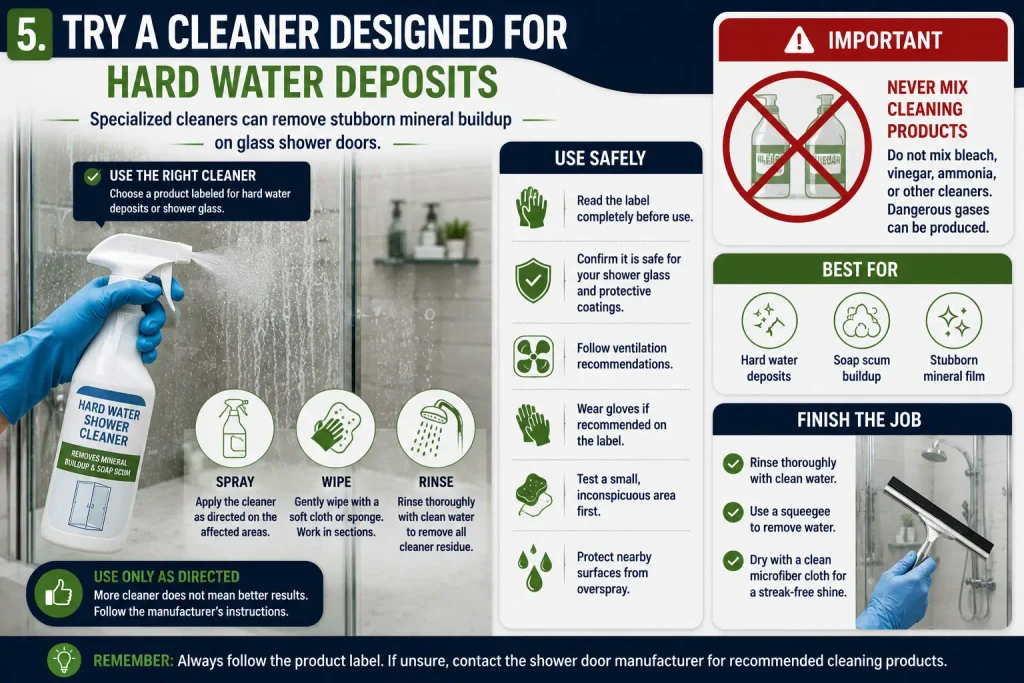
Use only the amount recommended by the manufacturer.
More cleaner does not necessarily produce better results and can make rinsing more difficult.
Never combine a commercial cleaner with vinegar, bleach, ammonia, or another cleaning product unless the manufacturer explicitly says the combination is safe.
After treatment, rinse and dry the glass according to the product instructions.
6. Carefully Clean Difficult Spots With a Non-Abrasive Tool
Some deposits remain concentrated around edges, corners, door tracks, and areas where water repeatedly collects.
For these spots, additional gentle agitation may help.
Use a non-scratch sponge, microfiber cloth, or another cleaning tool specifically approved for glass.
Work slowly rather than applying excessive pressure.
Avoid:
- Steel wool
- Rough scouring pads
- Sharp blades unless specifically approved for the glass
- Aggressive abrasive powders
- Tools that could scratch protective coatings
Scratches can permanently affect the appearance of shower glass and may make future cleaning more difficult.
If you’re uncertain whether a tool is safe, check the shower-door manufacturer’s instructions before using it.
7. Rinse, Squeegee, and Dry the Glass Completely
The final step is easy to overlook, but it can make a significant difference.
After removing the cloudy buildup, rinse the glass thoroughly so no cleaner or loosened residue remains.
Then use a clean squeegee from top to bottom.
Finish with a dry microfiber cloth around:
- Door edges
- Corners
- Handles
- Hinges
- Lower seals
Leaving water droplets on the surface gives dissolved minerals another opportunity to remain behind after the water evaporates.
A completely clean and dry surface should appear clearer and have fewer streaks.
What If Vinegar Doesn’t Remove the Cloudy Film?
If vinegar does not improve the glass, don’t immediately use a stronger chemical.
The next step in how to remove cloudy film from glass shower doors is to determine whether the remaining haze is actually removable buildup.
First determine whether you’re actually dealing with mineral deposits.
Try cleaning a small test area thoroughly with an appropriate shower-glass cleaner. Compare it with the untreated area.
If the cleaned section becomes noticeably clearer, additional buildup removal may be necessary.
If there is little or no difference, the cloudy appearance could be caused by something other than removable residue.
Possible causes include:
- Surface etching
- Scratches
- Damaged protective coating
- Long-term mineral damage
In these cases, repeated aggressive scrubbing may make the problem worse rather than better.
How Can You Tell Hard Water Stains From Soap Scum?
Hard water deposits often appear as white spots, chalky marks, or a mineral haze where droplets repeatedly dry.
Soap scum may look cloudy, streaky, or slightly greasy.
In real showers, however, both can exist at the same time.
That’s why how to remove cloudy film from glass shower doors often involves addressing both mineral buildup and soap residue rather than treating only one source.
If mineral deposits are a recurring problem throughout your home, identifying and managing hard water residue can make routine cleaning easier.
If you notice similar mineral buildup on other household surfaces, see our guide on how to remove hard water stains for more practical cleaning methods.
Can Cloudy Shower Glass Be Permanently Damaged?
Yes, sometimes.
If mineral deposits remain on glass for a long period, the surface may eventually become etched or otherwise damaged.
Etching is different from ordinary residue sitting on top of the glass.
This distinction is important when deciding how to remove cloudy film from glass shower doors, because permanent etching cannot simply be cleaned aw
If you’ve thoroughly cleaned a small test area using methods approved for your shower door and the haze remains unchanged, permanent surface damage is possible.
At that point, continuing to use increasingly abrasive methods is not a good idea.
Consider contacting the shower-door manufacturer or a professional glass-care service for advice.
How to Prevent Cloudy Film on Glass Shower Doors
Once the glass is clean, prevention is much easier than repeatedly removing heavy buildup.
After learning how to remove cloudy film from glass shower doors, a few simple preventive habits can help keep the glass clearer for longer.
Use a Squeegee After Showering
Removing water droplets before they dry reduces the amount of mineral residue left on the glass.
Keep a small shower squeegee nearby and run it over the door after use.
For additional care guidance, KOHLER recommends using a shower squeegee after showering to help prevent water spots and wiping the glass dry to reduce soap deposits and lime buildup.

Dry Problem Areas
A quick wipe with a microfiber cloth can remove water remaining around corners, handles, and lower edges.
Clean Regularly
Don’t wait until the glass becomes heavily cloudy.
Light routine cleaning generally requires less effort than removing months of buildup.
Keep the Bathroom Ventilated
Use the bathroom exhaust fan when appropriate and allow moisture to escape after showering.
Follow the Manufacturer’s Care Instructions
If your shower glass has a factory-applied protective coating, use cleaning products and tools approved for that surface.
This can help preserve the coating and avoid accidental damage.
Common Mistakes to Avoid
When learning how to remove cloudy film from glass shower doors, avoid turning a cleaning problem into permanent surface damage.
Mixing Cleaning Chemicals
Never combine cleaners casually. Some combinations can release dangerous fumes or cause harmful reactions.
Scrubbing Too Aggressively
More pressure isn’t always better. Rough pads and abrasive tools can scratch glass or damage coatings.
Ignoring Nearby Natural Stone
Vinegar and other acidic cleaners can damage acid-sensitive stone surfaces.
Letting Cleaner Dry on the Glass
Follow product instructions and rinse cleaners before they dry when required.
Skipping the Final Drying Step
Leaving water on freshly cleaned glass can quickly create new mineral spots.
How Often Should You Clean Glass Shower Doors?
There is no single schedule that works for every home.
How quickly buildup appears depends on factors such as:
- Water hardness
- How often the shower is used
- Soap and personal-care products
- Bathroom ventilation
- Whether the glass is squeegeed after use
A quick squeegee after showering and regular light cleaning can reduce the need for intensive deep cleaning.
If you notice new white spots or haze beginning to form, clean them before the deposits become heavy.
Frequently Asked Questions
What causes cloudy film on glass shower doors?
Cloudiness is commonly caused by hard water minerals, soap scum, body oils, cleaning residue, or a combination of these. Persistent haze may sometimes be caused by etched or damaged glass.
Does vinegar remove cloudy film from shower glass?
Diluted white vinegar can help dissolve some mineral deposits on ordinary glass. However, it should not be used on acid-sensitive natural stone and may not be appropriate for every coated shower door.
Can I use baking soda on glass shower doors?
Baking soda can help loosen some stubborn residue, but it should be used gently. Test a small area first and check the manufacturer’s instructions, especially if the glass has a special coating.
Why are my shower doors still cloudy after cleaning?
The remaining haze may be stubborn mineral buildup, cleaning-product residue, scratches, coating damage, or permanent etching. Test a small area before trying increasingly aggressive cleaning methods.
How do I keep shower glass clear?
Squeegee the glass after showering, dry remaining water, clean light buildup regularly, and follow the manufacturer’s recommended care instructions. Regular maintenance also means you won’t need to repeat the full process of how to remove cloudy film from glass shower doors as often.
Can hard water permanently damage shower glass?
Long-term mineral exposure can sometimes contribute to etching or other surface changes. Removing deposits regularly can help reduce prolonged contact with the glass.
Final Thoughts
Learning how to remove cloudy film from glass shower doors begins with identifying what is causing the haze.
Start with mild dish soap and water for light residue. If mineral deposits remain and the surface is suitable, diluted white vinegar may help. Baking soda or a dedicated hard-water cleaner can be considered for more stubborn buildup, provided they are compatible with your shower enclosure.
Most importantly, avoid aggressive scrubbing and unsafe chemical combinations.
Once the glass is clean, a simple routine of squeegeeing, drying, and regular light cleaning can help keep your shower doors clearer and reduce the amount of heavy buildup you need to tackle later.