
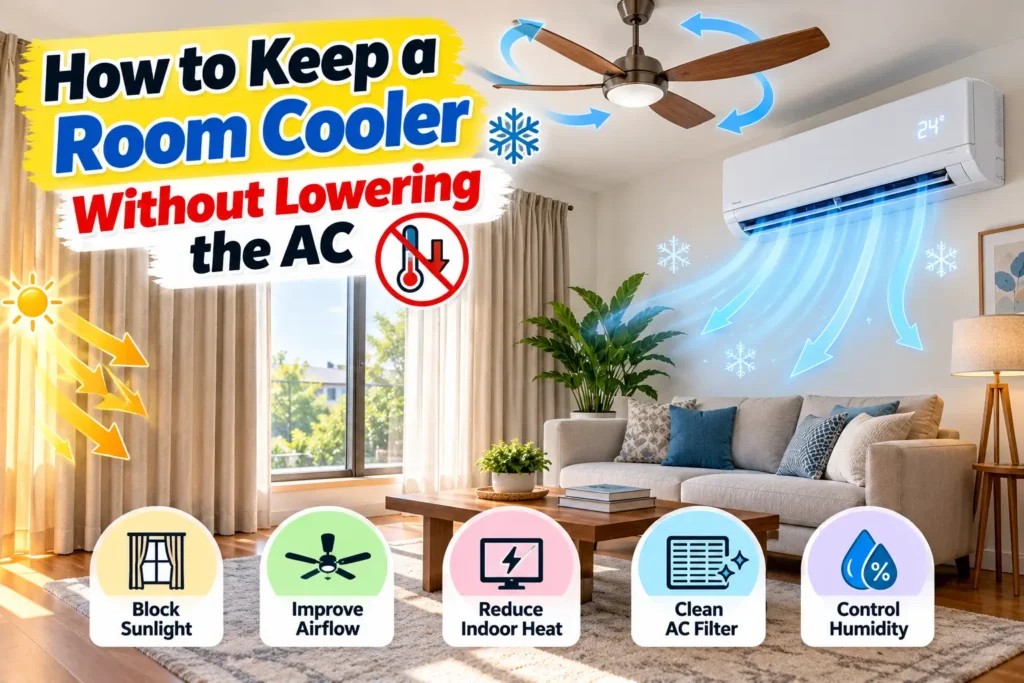
Does your room still feel warm even when the air conditioner is running? You may not need to lower the AC temperature to make the space more comfortable. Sunlight, poor airflow, indoor heat sources, dirty filters, and humidity can all affect how cool a room feels.
Learning how to keep a room cooler without lowering the AC can help you improve comfort while avoiding unnecessary changes to your thermostat setting. Simple steps such as blocking direct sunlight, improving air circulation, reducing indoor heat, and maintaining your AC can make a noticeable difference.
In this guide, you’ll discover nine practical ways to make your room feel cooler without setting the air conditioner to a lower temperature.
Why Does a Room Feel Warm Even When the AC Is Running?
Several factors can make a room feel warmer than expected:
- Direct sunlight: Sunlight entering through windows can heat floors, furniture, and other surfaces.
- Poor air circulation: Cool air may not reach every part of the room evenly.
- Heat-producing appliances: Computers, televisions, ovens, and other equipment release heat while operating.
- Dirty AC filters: A clogged filter can restrict airflow and reduce system performance.
- Blocked air vents: Furniture, curtains, or other objects may obstruct supply vents.
- High humidity: Moist air can make the room feel more uncomfortable, even when the temperature seems reasonable.
- Air leaks: Gaps around windows and doors may allow warm outdoor air to enter.
Identifying the cause helps you choose the most effective solution instead of immediately lowering the thermostat.
How to Keep a Room Cooler Without Lowering the AC: 9 Easy Tips
Fix 1: Block Direct Sunlight With Curtains or Blinds
Direct sunlight can add heat to a room, particularly through windows that receive strong afternoon sun. Blocking sunlight before it enters can help reduce heat buildup.
What to do:
- Close curtains or blinds when direct sunlight reaches the windows.
- Use light-colored or reflective window coverings where appropriate.
- Consider thermal or blackout curtains if sunlight is a major source of heat.
- If practical, use exterior shades or awnings to block sunlight before it reaches the glass.
- Open the curtains when sunlight is no longer hitting the room if outdoor conditions allow.
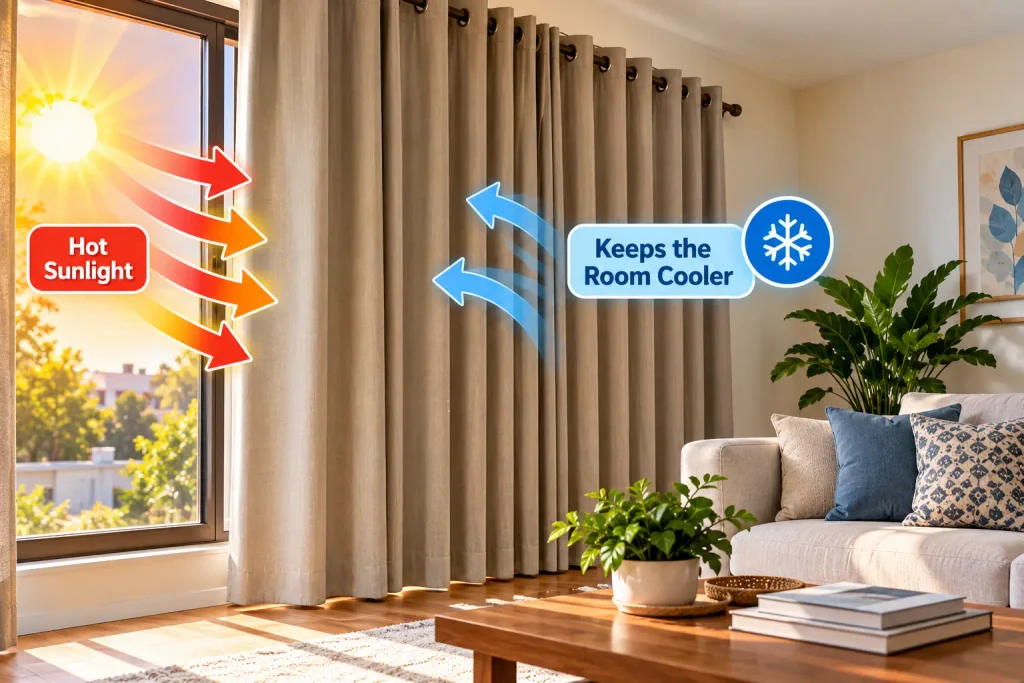
Window coverings that reduce solar heat gain can help a room stay more comfortable. The best option depends on the window’s direction, climate, and existing glazing.
For more information about reducing heat from sunlight, see the U.S. Department of Energy’s guide to energy-efficient windows and window coverings.
Fix 2: Improve Air Circulation With a Ceiling or Portable Fan
A fan can help you feel cooler by moving air across your skin. It does not usually lower the room’s actual temperature, but it can improve comfort while the AC remains at the same setting.
How to improve airflow:
- Turn on a ceiling fan or portable fan when the room is occupied.
- Adjust the fan so air circulates through the occupied area.
- Keep portable fans away from walkways where they could become a tripping hazard.
- Make sure the fan blades and air intake are clean.
- Turn the fan off when nobody is in the room.
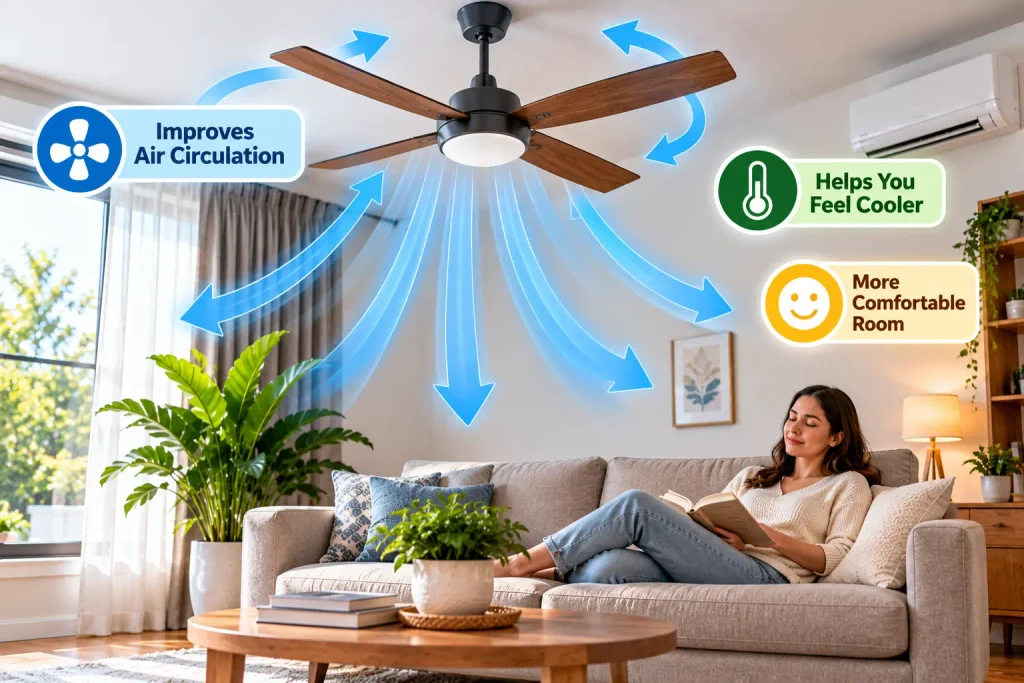
Fans cool people rather than the entire room. Avoid assuming that a fan must run continuously to keep an unoccupied room cool.
Fix 3: Keep AC Vents and Air Returns Clear
Blocked vents can interfere with airflow and make some areas of a room feel warmer than others.
Check your vents:
- Look for supply vents that blow cool air into the room.
- Move furniture, rugs, or other objects away from the vents.
- Make sure curtains do not cover wall-mounted or floor-mounted vents.
- Keep return-air grilles unobstructed.
- If airflow remains weak, check the filter and consult your AC manual.
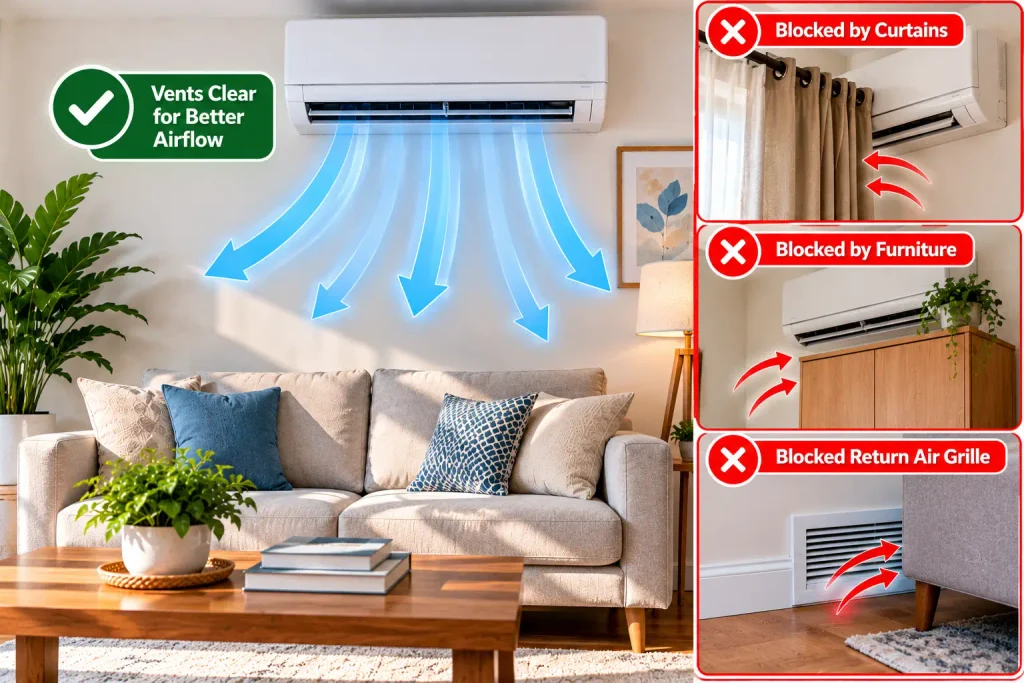
Do not close numerous supply vents in an attempt to force more air into one room. Depending on the system, this can disrupt airflow and reduce efficiency.
Fix 4: Reduce Heat From Lights and Electronics
Lights and electronic devices release heat while operating. Reducing unnecessary heat sources can help prevent additional warmth from building up indoors.
Try these changes:
- Turn off lights when they are not needed.
- Use LED bulbs instead of less efficient bulbs where suitable.
- Shut down computers, televisions, and gaming equipment when they are not in use.
- Avoid running heat-producing appliances during the hottest part of the day when practical.
- Keep electronics’ ventilation openings clear so they can release heat properly.
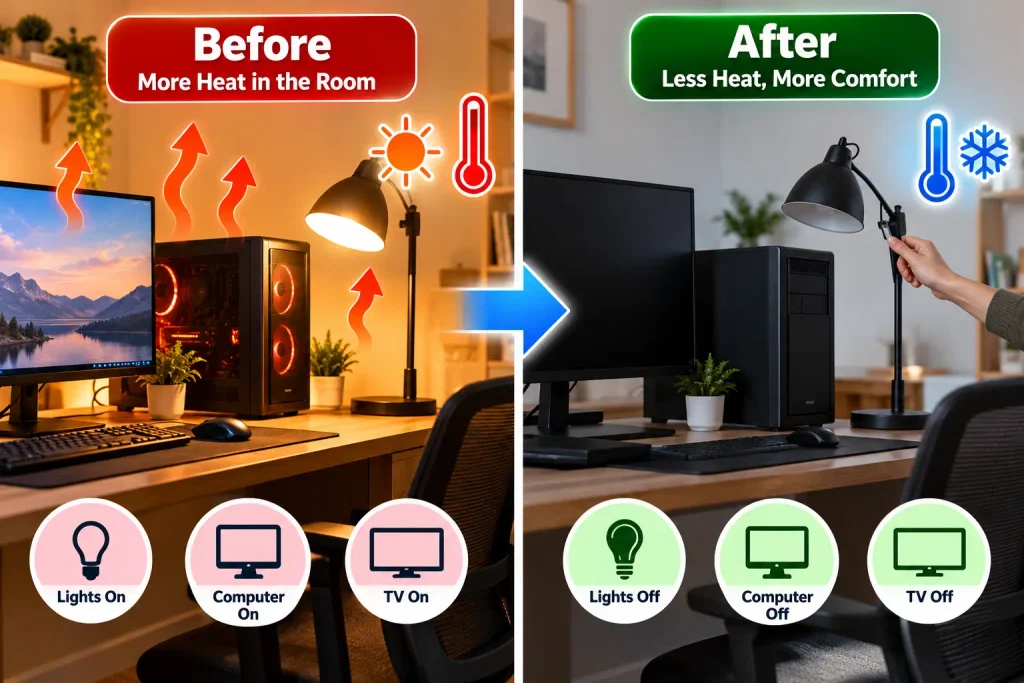
For example, if a desktop computer or gaming console operates for hours in a small room, turning it off when unused can reduce unnecessary heat.
Fix 5: Close Gaps Around Windows and Doors
Small gaps around windows and exterior doors can allow warm outdoor air to enter. Sealing suitable gaps can help maintain more consistent indoor conditions.
What to check:
- Inspect visible seals around windows and exterior doors.
- Look for cracked weatherstripping or damaged caulk.
- Replace worn weatherstripping where necessary.
- Seal appropriate stationary gaps with a compatible sealant.
- Check the door sweep if warm air enters beneath an exterior door.
Do not seal intentional ventilation openings, drainage paths, or required combustion-air openings. Follow the manufacturer’s guidance and local building requirements.
For more help with household drafts, see our guide on fixing drafts and air leaks if that article is available on our website.
Fix 6: Check and Clean the AC Air Filter
A dirty AC filter can restrict airflow, which may reduce cooling performance. Checking the filter is a useful maintenance step when a room does not feel as comfortable as expected.
How to check the filter:
- Turn off the AC as directed by the manufacturer’s instructions.
- Locate the filter using the owner’s manual.
- Remove it carefully.
- If it is a washable filter, clean it only as instructed and let it dry completely before reinstalling.
- Replace disposable filters with the correct type and size.
- Check the manual for the recommended maintenance schedule.
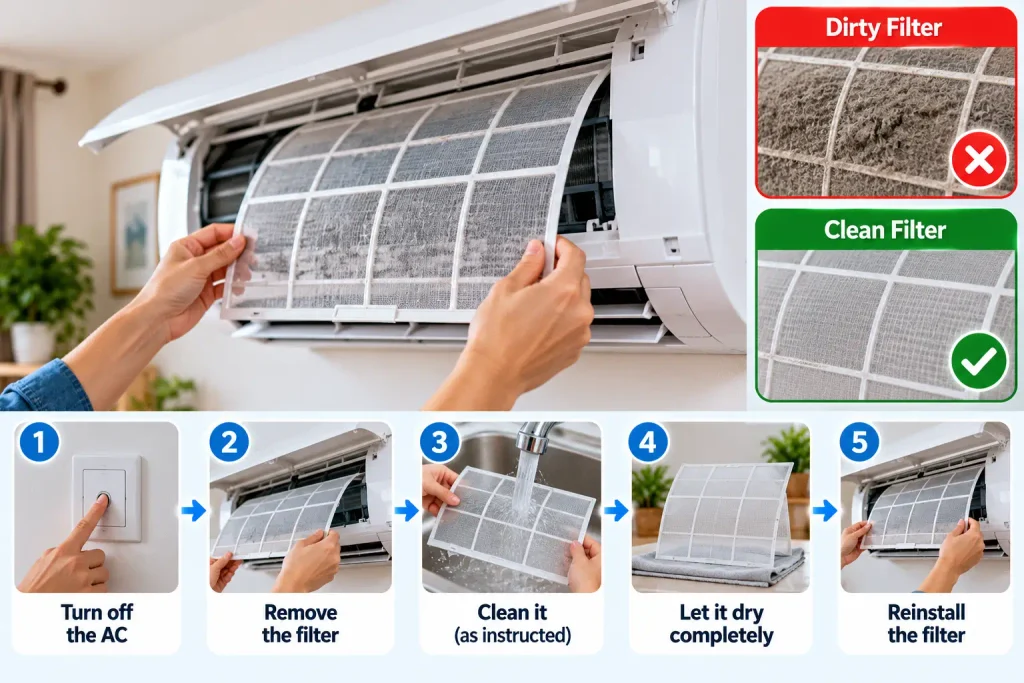
Do not operate the system without a required filter. If the filter is clean but airflow remains weak, the cause may be a blocked coil, duct problem, refrigerant issue, or another fault that needs professional assessment.
For additional maintenance advice, read ENERGY STAR’s heating and cooling maintenance checklist.
For more simple ways to keep your home in good condition, follow our Monthly Home Maintenance Checklist.
Fix 7: Reduce Indoor Humidity When Necessary
High humidity can make warm conditions feel more uncomfortable because sweat evaporates less effectively. Managing indoor moisture may improve comfort without lowering the AC temperature.
Practical steps:
- Use bathroom and kitchen exhaust fans when needed.
- Repair leaks and address persistent sources of moisture.
- Avoid drying large amounts of wet laundry indoors if it significantly raises humidity.
- Consider a suitably sized dehumidifier if indoor humidity remains high.
- Follow the AC manufacturer’s guidance on cooling and dehumidification settings.
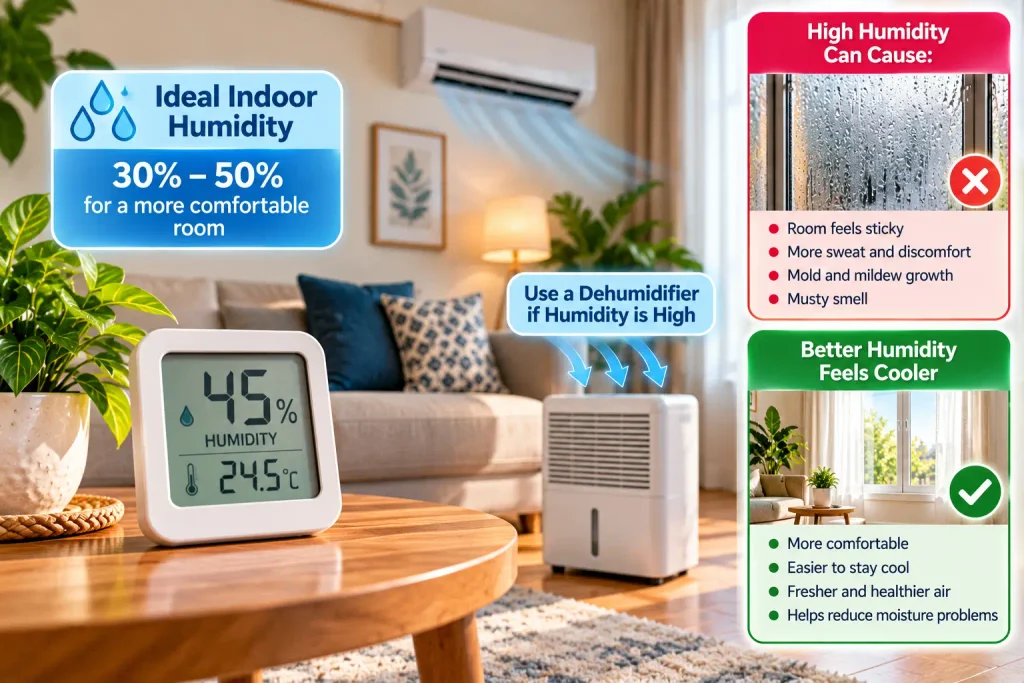
A dehumidifier also releases some heat into the room, so it may not always be helpful in a very warm space. Consider the room’s humidity, ventilation, and equipment placement before using one.
For more guidance on indoor moisture and humidity, see the U.S. EPA’s guide to improving indoor air quality.
Fix 8: Keep Warm Air From Other Rooms Under Control
Warm air from a sunny hallway, kitchen, or adjacent room can add to the heat load in a cooled space.
What to do:
- Keep the room door closed when appropriate if the room is intended to be cooled separately.
- Reduce the transfer of hot air from an uncooled space where practical.
- Use curtains or blinds to reduce heat entering from adjoining sunlit areas.
- Avoid blocking required ventilation or return-air pathways.
- If the room consistently receives too little cool air, have the system’s airflow and room layout assessed.
This approach works best when the AC system is designed to cool the room or zone with the door in that position. Some systems require open interior doors for proper air circulation.
Fix 9: Reduce Heat Buildup Before the Hottest Part of the Day
Preventing a room from heating up can be easier than trying to cool it after its surfaces have become hot.
Build a simple daily routine:
- Close blinds before direct sunlight reaches the windows.
- Turn off unused electronics and lights.
- Keep vents clear and make sure the AC filter is maintained.
- Limit unnecessary heat-producing activities during the hottest hours.
- Use fans to improve personal comfort while the room is occupied.
- Keep doors and windows in positions that suit your AC system and outdoor conditions.
If outdoor air is cooler than indoor air, opening windows may help in suitable conditions when the AC is off. Avoid opening windows while cooling with the AC, unless your system is specifically designed for that operation.
Quick Troubleshooting Guide
| Problem | Possible cause | What to try |
|---|---|---|
| Room gets hot in the afternoon | Direct sunlight | Close blinds or use suitable solar shades |
| One part of the room feels warm | Uneven airflow | Check vents and air returns |
| Room feels sticky or humid | Excess indoor moisture | Address moisture sources and assess humidity |
| AC airflow seems weak | Dirty filter or system issue | Check the filter and consult the manual |
| Room heats up when electronics run | Indoor heat from equipment | Turn off unused devices |
| Warm air enters around a door | Worn weatherstripping | Inspect and replace suitable seals |
These are possible explanations rather than guaranteed diagnoses. If the room stays warm despite basic maintenance, the AC may need professional inspection or the room may have a high cooling load.
Common Mistakes to Avoid
Avoid these mistakes when trying to keep a room cooler:
- Lowering the thermostat immediately: First check sunlight, airflow, humidity, and other sources of heat.
- Blocking AC vents with furniture: This can restrict airflow.
- Running fans in empty rooms: Fans generally cool people, not the room itself.
- Ignoring a dirty filter: Restricted airflow can affect system performance.
- Using a dehumidifier without considering its heat output: Some models add heat to the room.
- Sealing required ventilation openings: This can create safety and ventilation problems.
- Opening windows while the AC is cooling: Warm, humid outdoor air can add to the cooling load in many conditions.
How to Keep a Room Cooler Every Day
A few simple habits can help you maintain a more comfortable room:
- Close blinds when direct sunlight enters.
- Keep air vents and returns unobstructed.
- Clean or replace AC filters on schedule.
- Turn off unused heat-producing electronics.
- Check windows and exterior doors for damaged seals.
- Address indoor moisture and persistent humidity.
- Use fans when people are in the room.
- Arrange professional AC maintenance if cooling performance remains poor.
For more routine home care, see our monthly home maintenance checklist.
Frequently Asked Questions
Can a fan make a room cooler without lowering the AC?
A fan can make people feel cooler by increasing air movement across the skin, but it usually does not lower the room’s actual temperature. Use it to improve comfort while the AC stays at its current setting.
Why is my room hot even when the AC is on?
Possible causes include direct sunlight, blocked vents, a dirty filter, warm air leaks, high humidity, or an AC system that is not cooling properly. Check simple issues first and seek professional help if the problem persists.
Do blackout curtains help keep a room cool?
They can help reduce solar heat gain when they block direct sunlight effectively. Their performance depends on fabric, color, fit, window exposure, and whether the window also has exterior shading.
Should I close doors to keep a room cooler?
It depends on the AC system. Closing a door can reduce warm-air transfer from another space, but some systems need open doors or a suitable return-air path to maintain proper circulation. Follow the system’s design and manufacturer’s advice.
Does cleaning an AC filter make a room cooler?
A clean filter helps maintain the airflow the system was designed to provide. If a dirty filter is restricting airflow, cleaning or replacing it as directed may improve cooling performance. It will not fix every possible AC problem.
Can a dehumidifier make a room feel cooler?
Reducing excessive humidity may improve comfort, but most conventional dehumidifiers release heat into the room. Consider the humidity level and the device’s heat output before using one in a warm space.
What is the easiest way to keep a room cooler without changing the thermostat?
Start by blocking direct sunlight, keeping vents clear, reducing unnecessary indoor heat, and checking the AC filter. These simple steps address several common causes of discomfort.
Final Thoughts
Learning how to keep a room cooler without lowering the AC starts with reducing heat entering the room and helping the cooling system circulate air properly. Curtains, fans, clear vents, clean filters, and reduced indoor heat can all contribute to a more comfortable space.
Start with the simplest changes and observe which ones help in your room. If the room remains warm despite clear vents and routine maintenance, have the AC system and room cooling requirements checked by a qualified professional.