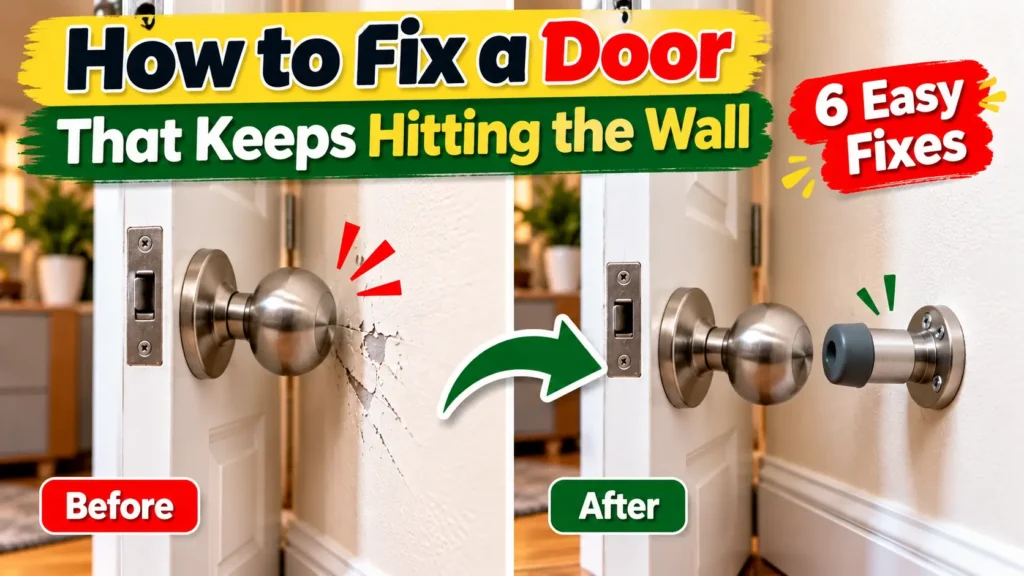
A door that keeps hitting the wall can leave dents, scratches, chipped paint, and unsightly marks behind the door handle. This problem often happens when a doorstop is missing, damaged, or installed in the wrong position. In some cases, a door may swing farther than expected because of its hinge design or loose hardware.
The good news is that you can often prevent wall damage with a simple doorstop, a rubber wall protector, or a suitable hinge-mounted stop. The right solution depends on how your door opens, where the handle hits the wall, and how much space is available.
In this guide, you’ll learn how to fix a door that keeps hitting the wall with six practical solutions, along with tips to prevent future damage.
Why Does a Door Keep Hitting the Wall?
Before choosing a fix, identify why the door is hitting the wall. Common causes include:
- Missing doorstop: Without a stop, the door may swing too far and allow the handle to strike the wall.
- Broken or loose doorstop: A damaged stop may no longer limit the door’s movement effectively.
- Incorrect doorstop placement: A stop installed too far from the door’s contact point may not prevent the handle from reaching the wall.
- Loose or damaged hinges: Worn or loose hinge hardware can affect how the door moves.
- Door swings open too far: Some doors need a hinge-mounted stop or another suitable device to limit their opening angle.
- Existing wall damage: Repeated impacts may have already chipped the paint or damaged the drywall.
Identifying the cause helps you choose a solution that protects both the wall and the door hardware.
Tools and Materials You May Need
Depending on the repair, gather these items:
- Suitable doorstop or replacement stop
- Rubber wall bumper or protective pad
- Screwdriver
- Compatible mounting screws
- Measuring tape or ruler
- Soft cloth and mild cleaner
- Wall repair filler and touch-up paint, if needed
You may not need every item. Choose the hardware based on the door, wall surface, available clearance, and manufacturer’s instructions.
How to Fix a Door That Keeps Hitting the Wall: 6 Easy Fixes
Fix 1: Install a Doorstop
Installing a doorstop is often the simplest way to stop a door handle from hitting the wall. A doorstop limits how far the door can open and helps prevent repeated impacts.
How to install a doorstop:
- Open the door slowly until it reaches the point where it would normally hit the wall.
- Identify a suitable stopping point before the handle touches the wall.
- Choose a compatible floor-mounted, skirting-mounted, or wall-mounted doorstop.
- Check that the stop will contact a suitable part of the door without damaging the handle or finish.
- Install it according to the manufacturer’s instructions.
- Open the door slowly to confirm that the stop prevents wall contact.
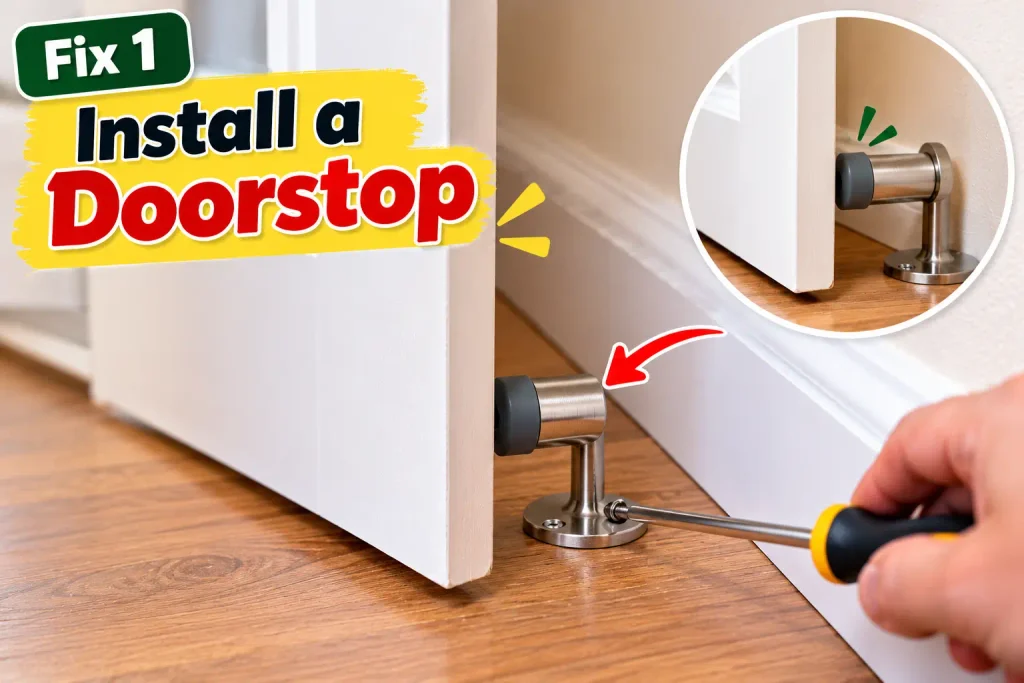
Choose a stop that is strong enough for the door and its normal use. If you are drilling into a wall or floor, check for hidden wiring and plumbing before making holes.
For a step-by-step example, see iFixit’s door stop replacement guide.
Fix 2: Use a Hinge-Pin Doorstop
A hinge-pin doorstop attaches to a compatible door hinge and limits how far the door can swing. It can be useful when you want to avoid installing a separate stop on the wall or floor.
How to use a hinge-pin doorstop:
- Check whether your door hinge is compatible with a hinge-pin stop.
- Choose a stop with an appropriate opening-angle adjustment.
- Follow the product instructions for installing it on the hinge.
- Adjust the stop so the door stops before the handle reaches the wall.
- Open the door gently and check that the stop works as intended.
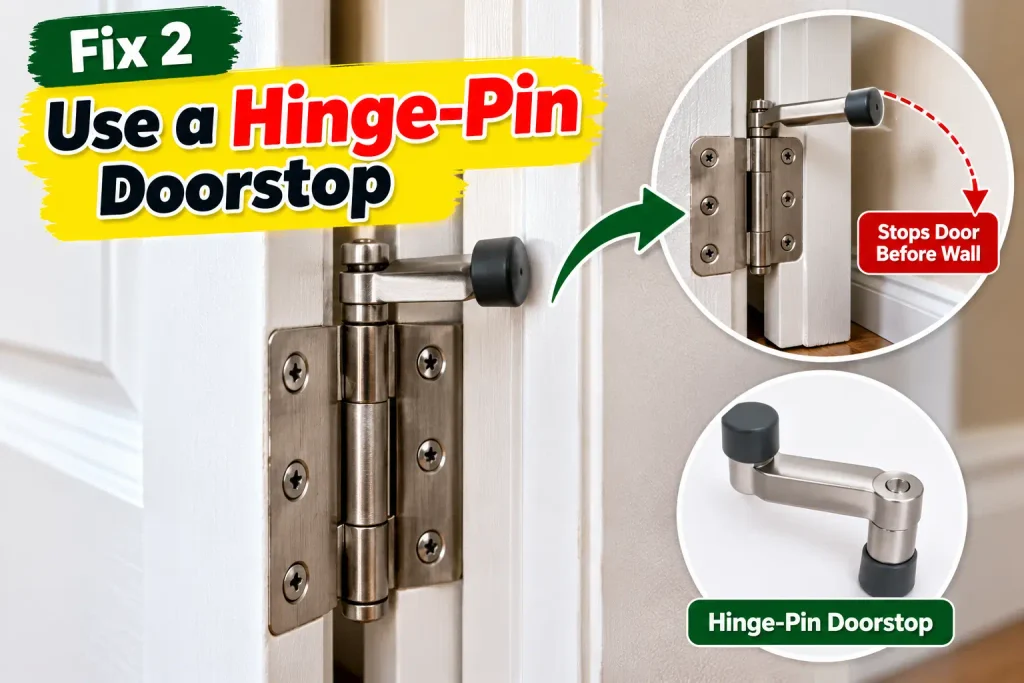
Do not force a hinge pin out if it is difficult to remove, and avoid using a stop that is incompatible with the hinge.
A hinge-mounted stop may not be suitable for every door. If the door is heavy or frequently opened with force, choose hardware designed for that application.
Fix 3: Add a Rubber Wall Bumper
A rubber wall bumper can cushion light contact and help prevent scratches or small dents. It is useful when a door comes close to the wall and you want an additional protective layer.
How to install a wall bumper:
- Identify the exact spot where the door handle or another part of the door approaches the wall.
- Clean the surface and allow it to dry.
- Select a bumper suitable for the wall finish and the expected impact.
- Attach it according to the product instructions.
- Open the door slowly to check that the bumper makes contact before the handle reaches the wall.
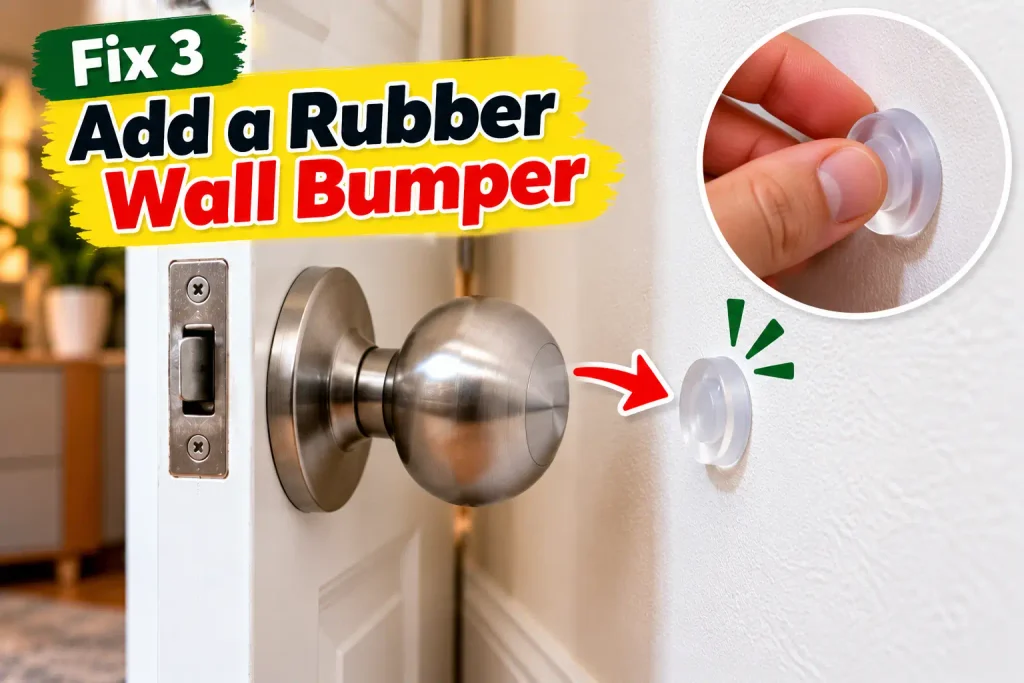
A bumper is a protective cushion, not necessarily a reliable way to limit the door’s movement. If the door strikes the wall with considerable force, install a suitable doorstop instead.
For painted drywall, check that the adhesive is compatible with the finish and will not pull off the paint when removed.
Fix 4: Check and Tighten Loose Door Hinges
Loose hinge screws can affect door alignment and may allow the door to move unpredictably. Tightening accessible loose screws can help restore normal movement, although it will not replace a missing doorstop.
How to check the hinges:
- Open the door and inspect the visible hinge screws.
- Look for screws that have backed out or hinge plates that appear loose.
- Use the correct screwdriver to tighten accessible loose screws gently.
- Stop if a screw spins without tightening or the surrounding wood is damaged.
- Open and close the door slowly to check its movement.
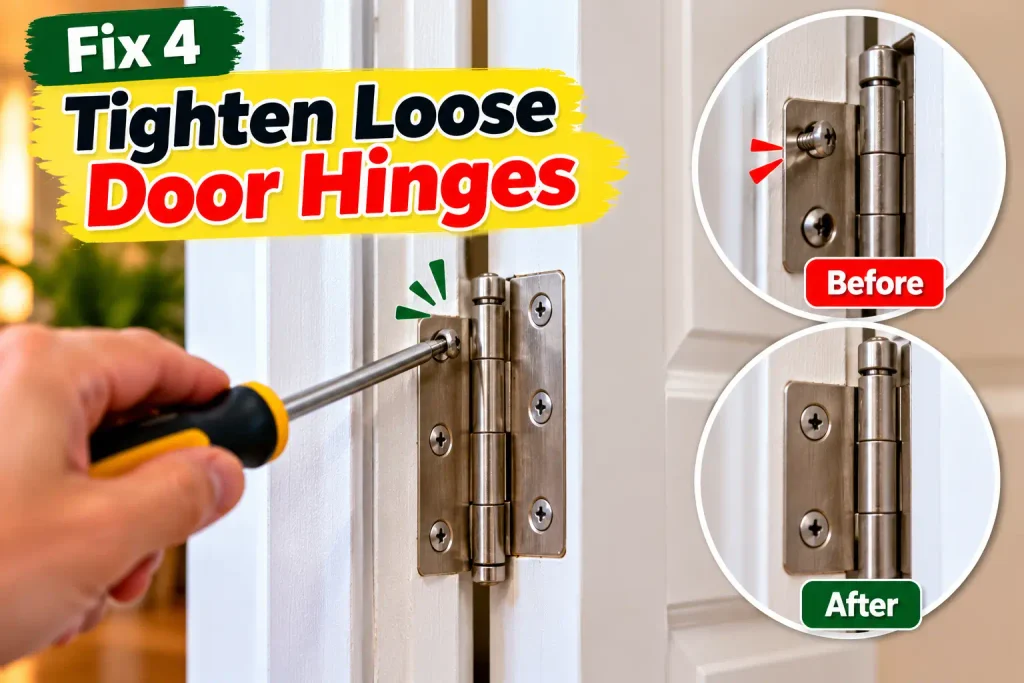
Do not overtighten the screws. If a hinge is bent, damaged, or pulling away from the door frame, it may need repair or replacement.
Remember that a properly aligned door can still hit the wall if it opens too far. Install an appropriate doorstop when limiting the opening angle is the main goal.
Fix 5: Adjust the Doorstop Position or Opening Limit
Sometimes the doorstop is present but does not stop the door early enough. The stop may be poorly positioned, incompatible with the door, or adjusted to allow too much movement.
What to do:
- Open the door slowly and observe where the existing stop makes contact.
- Check whether the handle reaches the wall before the stop can limit the movement.
- Review the manufacturer’s instructions for adjusting or repositioning the stop.
- If the stop needs to be moved, select a position that prevents wall contact without obstructing normal movement.
- Secure the stop using suitable mounting hardware.
- Test the door slowly before returning it to normal use.
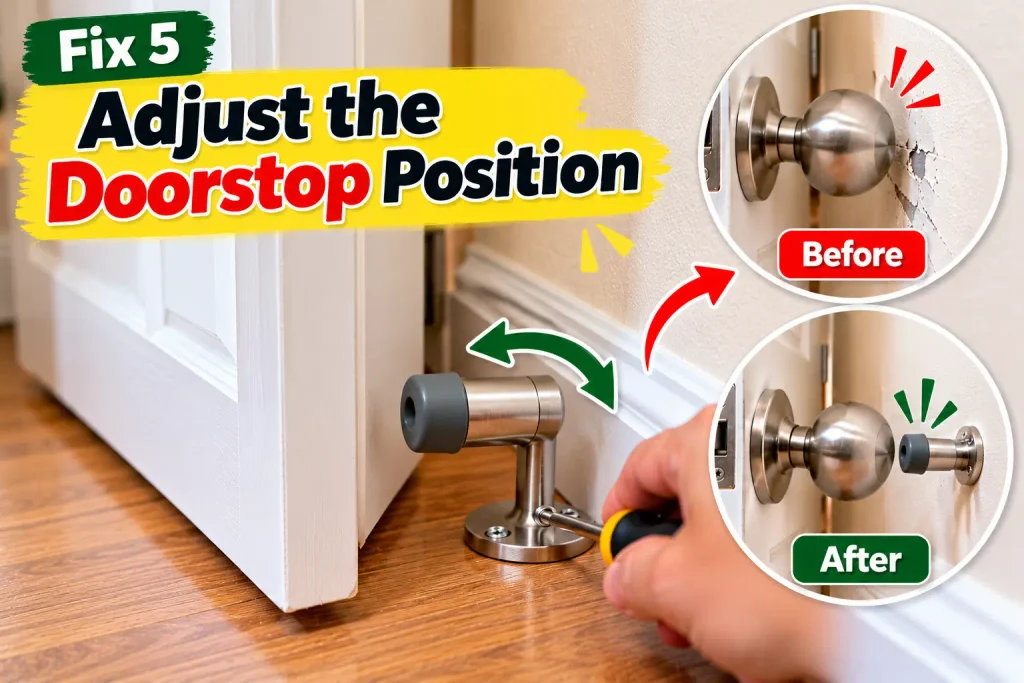
If the stop is built into a hinge, do not force the adjustment beyond the range specified by the manufacturer. Some hinge systems require specialized adjustment or replacement rather than a simple repositioning.
Fix 6: Repair Existing Wall Damage and Prevent Another Impact
If the door has already hit the wall repeatedly, you may need to repair the damaged surface after installing a suitable stop.
For minor damage to painted drywall:
- Install or repair the doorstop first so the same impact does not happen again.
- Remove loose paint or debris around the damaged area.
- Apply a suitable wall repair compound according to its instructions.
- Allow it to dry fully, then sand gently if required.
- Apply primer and matching paint when appropriate.
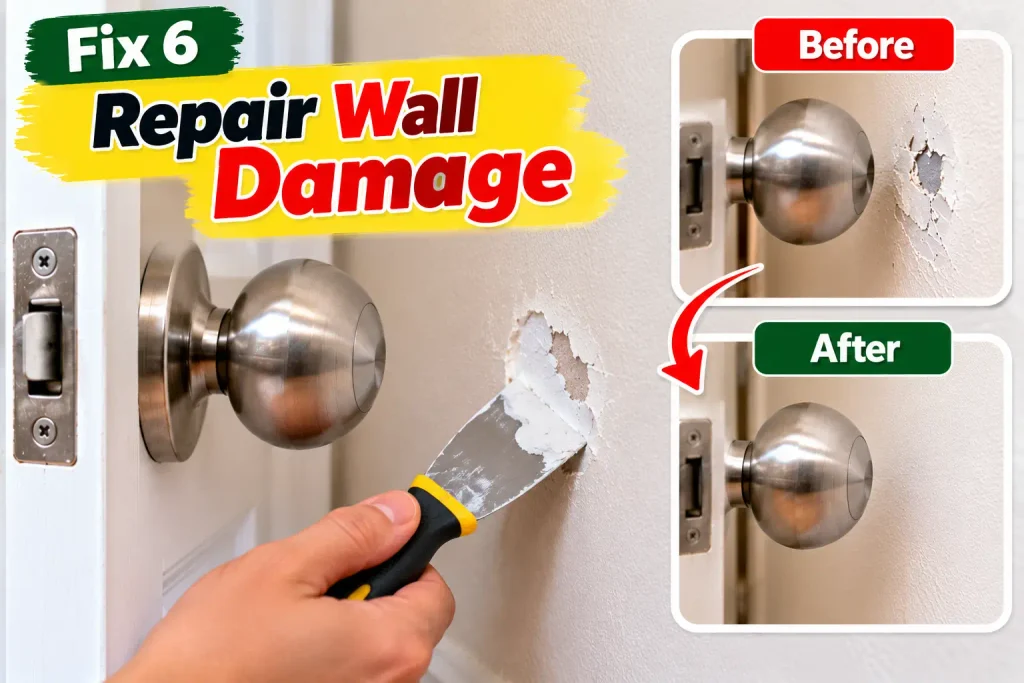
For larger holes, cracked drywall, or damaged plaster, use a repair method suitable for the size and type of damage.
Do not fill a hole and leave the door unprotected. Without a suitable stop, the handle may damage the repaired area again.
If the wall damage is extensive or the door hardware is pulling away from its mounting point, consider professional assistance.
Quick Troubleshooting Guide
| Problem | Possible cause | Recommended fix |
|---|---|---|
| Door handle hits the wall | Missing or poorly positioned doorstop | Install or reposition a suitable stop |
| Door hits the wall with force | Door opens too far | Use a compatible doorstop or hinge stop |
| Existing stop no longer works | Damaged or loose stop | Repair or replace the stop |
| Door movement seems uneven | Loose or damaged hinges | Inspect and repair the hinge hardware |
| Rubber bumper keeps falling off | Incompatible adhesive or surface | Choose a compatible bumper and prepare the surface |
| Wall has dents or chipped paint | Repeated impact | Install a stop, then repair the wall |
These are common possibilities, not guaranteed diagnoses. Inspect the door and its hardware before choosing a repair.
Common Mistakes to Avoid
Avoid these mistakes when preventing a door from hitting the wall:
- Installing a stop too late: The door may still allow the handle to strike the wall.
- Relying only on a soft bumper: A bumper may cushion contact without stopping the door’s movement.
- Using incompatible hardware: The stop must suit the door’s weight, hinges, and opening range.
- Overtightening hinge screws: Excessive force can damage the screw head or mounting material.
- Ignoring loose hinges: Damaged hardware may worsen if the problem is left unaddressed.
- Drilling without checking for utilities: Hidden wiring or plumbing may be present behind a wall or beneath a floor.
- Repairing the wall without preventing another impact: The damage may return if the underlying cause remains.
How to Prevent a Door From Hitting the Wall Again
A few simple habits can help protect your walls:
- Check doorstops periodically for loose screws or damaged parts.
- Replace worn or broken stops promptly.
- Choose hardware suitable for the door and its opening range.
- Check hinge screws if the door starts moving unusually.
- Avoid swinging doors open forcefully.
- Use a compatible wall bumper when extra cushioning is useful.
- Repair damaged paint or drywall after the cause of the impact has been addressed.
For more routine checks around your home, see our monthly home maintenance checklist.
Frequently Asked Questions
How do I stop a door handle from hitting the wall?
Install a suitable doorstop that prevents the door from opening far enough for the handle to reach the wall. Depending on the layout, you can use a floor-mounted stop, skirting-mounted stop, or compatible hinge-pin stop.
Is a wall bumper enough to stop a door from hitting the wall?
A wall bumper can cushion light contact, but it may not stop the door from swinging too far. If the handle strikes the wall forcefully, use a suitable doorstop to limit the door’s movement.
Where should a doorstop be installed?
Install it at a position where the door stops before the handle or another part of the door reaches the wall. The exact position depends on the door’s swing, handle location, and type of stop. Follow the manufacturer’s installation instructions.
Can I use a hinge-pin doorstop on any door?
No. Hinge-pin stops are compatible with certain hinge designs and may not be suitable for every door or load. Check the product specifications and hinge compatibility before installation.
Why does my door keep hitting the wall even with a doorstop?
The stop may be incorrectly positioned, damaged, loose, or unsuitable for the door. Check its contact point and mounting hardware. If the door is also sagging or moving unevenly, inspect the hinges.
How do I repair a hole caused by a door handle?
First, install a suitable doorstop so the handle does not hit the wall again. Then repair the damaged drywall or plaster using a method appropriate for the size of the hole and the wall material. Finish with primer and matching paint when needed.
Final Thoughts
Learning how to fix a door that keeps hitting the wall can help prevent dents, scratches, and costly wall repairs. Start by checking whether the door needs a new doorstop, a compatible hinge-mounted stop, or a protective bumper.
If the door moves unevenly, inspect its hinges as well. Once the underlying cause is addressed, repair any existing wall damage and test the door carefully. The right hardware and correct positioning can help protect your wall while allowing the door to open normally.