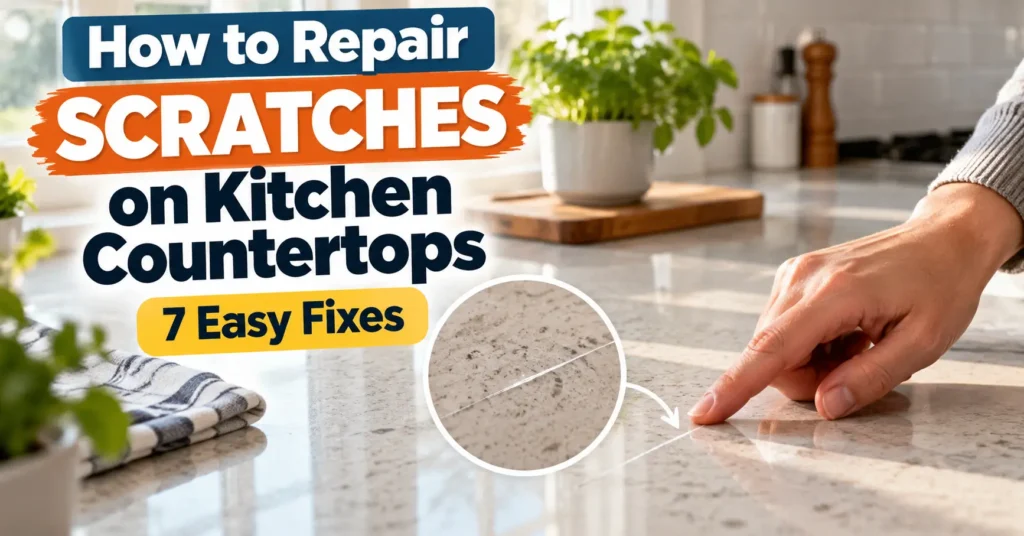
Kitchen countertops handle a lot of everyday wear and tear. Chopping vegetables, moving cookware, sliding small appliances, and cleaning up after meals can leave marks that make an otherwise beautiful kitchen look worn.
If you have a scratched kitchen countertop, the good news is that some minor marks can be improved. However, the right solution depends on the material, surface finish, and depth of the damage.
Learning how to repair scratches on kitchen countertops starts with identifying whether the mark is a genuine scratch, a stain, a metal transfer mark, or a dull patch caused by chemical etching. Each problem may require a different treatment.
For example, a laminate countertop may need a colour-matched repair product, while Some solid-surface countertops can be refinished using product-specific techniques; consult the manufacturer’s official solid-surface repair and care instructions before attempting an abrasive repair.
In this guide, you’ll learn how to inspect your countertop, choose a suitable repair method, avoid common DIY mistakes, and prevent future damage.
Can You Repair Scratches on Kitchen Countertops?
Yes, some countertop scratches can be repaired or made less noticeable, but results vary by material and damage severity.
Before attempting a repair, determine which of these problems you have:
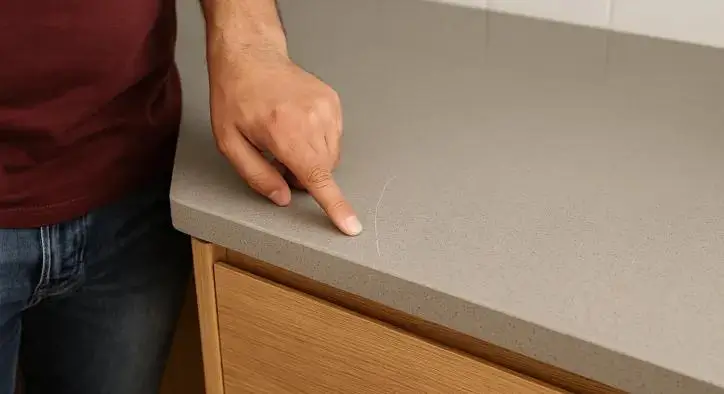
- Surface marks: Metal transfer, food residue, grease, or dried cleaning products may look like scratches but can sometimes be removed with a compatible cleaner.
- Light scratches: Small abrasions that affect the surface finish may be repairable on certain materials.
- Deep scratches: Gouges that penetrate the decorative layer or surface may require a specialised repair kit or professional restoration.
- Chips and cracks: Missing material or structural damage generally requires a different repair approach from a superficial scratch.
- Etching: A dull or cloudy patch, particularly on marble, may result from a chemical reaction rather than physical abrasion.
Do not begin sanding or polishing until you understand the material and the type of damage. An unsuitable repair technique can make a small defect more noticeable.
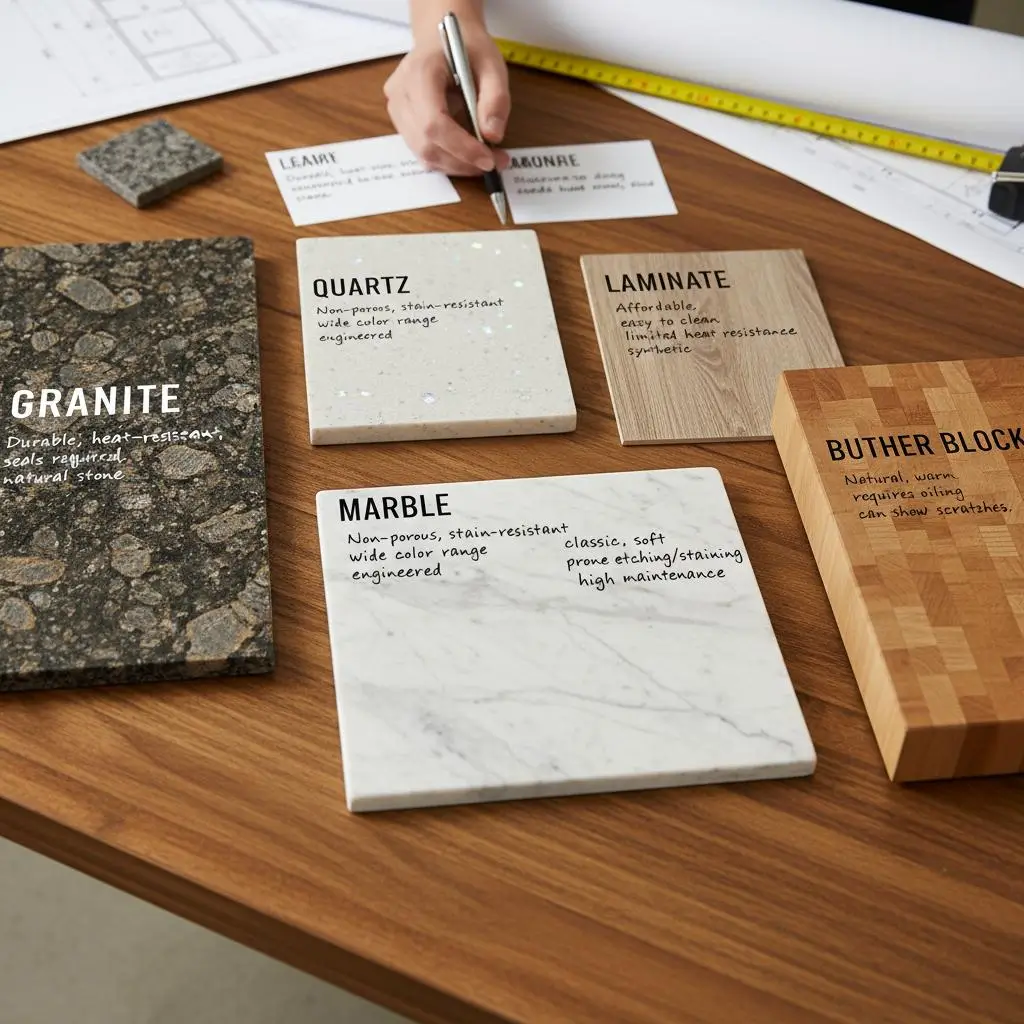
Identify Your Kitchen Countertop Material First
The safest way to plan kitchen countertop scratch repair is to identify the surface material and its finish. If you do not know what your countertop is made from, check your installation paperwork or contact the supplier.
Laminate Countertops
Laminate countertops have a decorative surface layer over a supporting core. Scratches that affect the decorative layer may expose a different colour or the underlying material.
Avoid aggressive sanding and abrasive polishing because they can damage the decorative finish. Minor cosmetic defects may be improved with a manufacturer-approved laminate repair product or a compatible colour-matched repair kit.
If a deep scratch exposes the core, consult the countertop manufacturer or a repair specialist.
Quartz Countertops
Engineered quartz countertops contain mineral material combined with binding resins. Their finishes and repair requirements vary by manufacturer.
Because cleaning and chemical restrictions vary by quartz product, review the manufacturer’s quartz care and maintenance guidance before applying a repair product.
A mark on quartz may be residue transferred from cookware or another object rather than an actual scratch. Clean the area with a compatible product and inspect it again before attempting further treatment.
Avoid unapproved abrasives, sanding, and polishing compounds. Genuine scratches may require a manufacturer-approved repair method or a qualified countertop repair specialist.
Granite Countertops
Granite is a natural stone, and its appearance depends on the particular stone and finish.
Start by cleaning the area with a stone-compatible cleaner. Inspect the mark under good lighting to determine whether it is a surface deposit, a scratch, or damage to the polished finish.
Deep scratches, chips, and noticeable damage to polished granite may require professional stone restoration. A stone sealer is intended to help manage staining where appropriate; it does not fill or remove scratches.
Marble Countertops
Marble is sensitive to acids and can develop dull patches when exposed to substances such as lemon juice or vinegar.
A physical scratch and an etched area are different problems. A scratch involves physical damage, while etching changes the surface finish through a chemical reaction.
Use a marble-compatible cleaner and avoid acidic household products. Minor finish problems may sometimes be treated with a polishing product specifically approved for the marble and its finish. Deep scratches and extensive etching may require professional refinishing.
Solid-Surface Countertops
Some solid-surface countertops are made from a consistent material throughout, allowing suitable surfaces to be refinished.
However, permitted techniques depend on the brand, finish, colour, and condition of the countertop. Follow the manufacturer’s repair instructions before using any abrasive pad or sanding product.
For example, Corian publishes specific repair guidance for certain solid-surface finishes. Its instructions should not automatically be applied to other countertop materials.
Wood and Butcher-Block Countertops
Wood countertops may be made from solid timber, butcher block, or other wood products with different protective finishes.
Minor scratches on suitable unfinished or refinishable wood may sometimes be improved by careful sanding and refinishing. However, sanding through an unknown coating can create an uneven patch or expose unprotected wood.
Identify whether the surface has an oil, varnish, lacquer, or another finish before choosing a repair method. For kitchen food-preparation areas, use an appropriate finish and allow it to cure fully according to the manufacturer’s instructions.
How to Repair Scratches on Kitchen Countertops Safely
Once you have identified the material, follow these steps in order. You may only need to clean the surface, or you may discover that a specialised repair is necessary.
1. Clean the Countertop Before Repairing It
Dirt, grease, dried food, and cleaning-product residue can make a surface look scratched even when the material itself is undamaged.
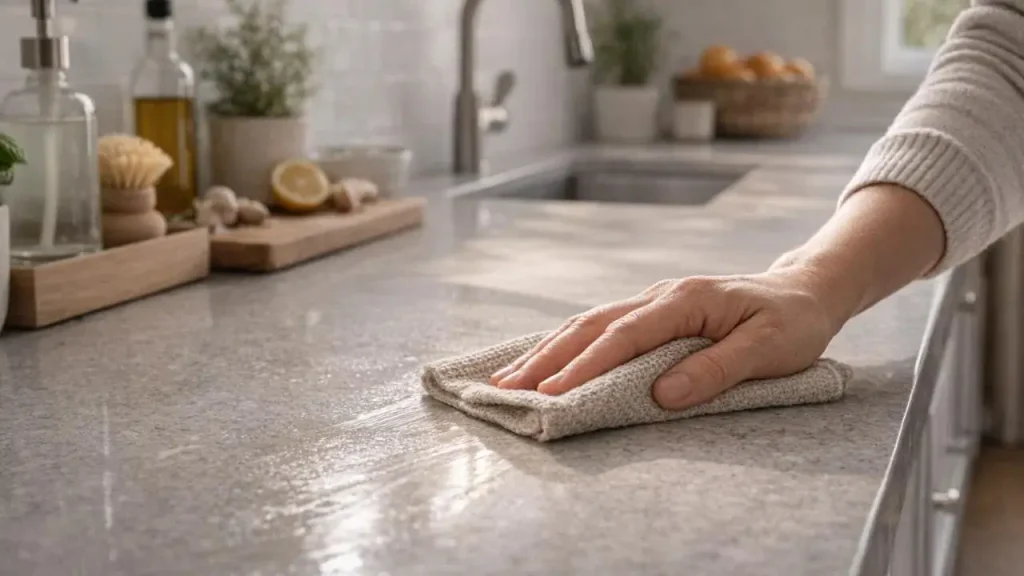
Follow these steps:
- Remove loose crumbs and debris using a soft cloth.
- Apply a cleaner approved for your countertop material.
- Wipe the area gently, following the product instructions.
- Remove any remaining cleaning residue as directed.
- Allow the surface to dry.
- Inspect the mark under good lighting.
Avoid using a rough scouring pad or an unfamiliar cleaning chemical to speed up the process.
If the mark disappears after cleaning, you may not need a repair at all. If it remains, continue by identifying the type of damage.
2. Determine Whether the Mark Is a Scratch or an Etch
Look at the mark from different angles under bright, indirect light.
A surface deposit may appear as a streak, smudge, or metallic mark. A genuine scratch may look like a line or groove in the surface. An etched area may appear dull, cloudy, or less reflective than the surrounding finish.
These visual clues are helpful, but they do not always establish the exact cause.
This distinction matters particularly for marble. An acidic spill can dull its finish without creating a conventional scratch. Abrasive polishing intended for physical damage may not be the right treatment.
If you are unsure, consult the countertop supplier before applying a repair product.
3. Repair Minor Marks on Laminate Countertops
For laminate, begin with cleaning and the manufacturer’s care recommendations.
If a scratch remains:
- Check the manufacturer’s guidance for your exact laminate product.
- Select a repair kit specifically compatible with the material and colour.
- Confirm whether the product is intended for superficial scratches or deeper damage.
- Prepare the area as directed.
- Apply the repair compound according to the instructions.
- Allow it to dry or cure for the specified period before using the surface.
A colour-matched repair product may improve the appearance of certain defects, but it may not make the repair invisible.
Do not sand the decorative laminate layer unless the manufacturer explicitly permits a particular technique. If the supporting core is exposed or the damage is extensive, professional repair or replacement may be more suitable.
4. Address Scratches on Quartz Countertops
Quartz requires a cautious approach because its finish can be affected by inappropriate abrasives and polishing techniques.
Start by cleaning the area with a compatible product. Some marks that resemble scratches are surface deposits and may come off during cleaning.
If the scratch remains:
- Identify the manufacturer and product line, if possible.
- Consult the manufacturer’s maintenance and repair guidance.
- Avoid sanding or polishing unless the manufacturer specifically approves the method.
- Contact a qualified countertop repair specialist if the mark is a genuine scratch or the finish has been damaged.
Do not assume that a quartz repair method will work on every engineered-stone product. The composition, colour, and surface finish can affect the repair process.
5. Repair or Refinish Granite Countertops
Granite scratch repair depends on the depth of the damage and the finish of the stone.
First, clean the countertop with a suitable stone-safe cleaner and dry it as directed. Inspect the mark carefully.
If the mark disappears, it may have been residue rather than a scratch. If the scratch remains, avoid experimenting with abrasive powders, sanding tools, or polishing compounds.
A trained stone restoration specialist can determine whether the surface needs local repair, polishing, or more extensive refinishing.
Do not apply a sealer expecting it to remove a scratch. Sealing and scratch repair serve different purposes.
6. Address Scratches and Etching on Marble
Marble needs particular care because both physical abrasion and acidic substances can affect its finish.
For natural stone, consult the Natural Stone Institute’s care recommendations to understand how acidic cleaners and abrasive products can affect different finishes.
Follow these steps:
- Clean the area with a marble-compatible cleaner.
- Rinse or remove residue according to the product instructions.
- Dry the surface and inspect it under good lighting.
- Determine whether the damage is a scratch, stain, or etched patch.
- If appropriate, use only a polishing product specifically approved for the marble and its finish.
- Seek professional refinishing for deep scratches, extensive etching, or noticeable damage to polished marble.
Never use vinegar or lemon juice to clean marble. Avoid abrasive powders and unapproved polishing products, as these can worsen the finish.
7. Refinish Suitable Solid-Surface Countertops
Certain solid-surface countertops can be refinished to improve minor scratches. The permitted procedure depends on the exact product and finish.
Before attempting a repair, obtain the manufacturer’s instructions.
If the manufacturer allows DIY refinishing:
- Clean the affected area as directed.
- Use only the specified sanding or abrasive products.
- Follow the recommended technique and sequence.
- Clean away residue as instructed.
- Restore the surface finish using the approved procedure.
- Inspect the result under consistent lighting.
Be careful when repairing a small spot. Even if the scratch disappears, the repaired area may look different because its sheen or texture does not match the surrounding surface.
High-gloss finishes and deep scratches may be better handled by a qualified professional.
8. Repair Scratches on Wood or Butcher Block
Wood countertop repair depends on the depth of the scratch and the existing protective finish.

For a suitable surface that can be refinished, follow this process:
- Clean the area and allow it to dry.
- Identify the existing finish.
- Confirm that the manufacturer permits sanding or refinishing.
- Use the recommended sanding technique and supplies.
- Remove all dust and residue.
- Apply a compatible finish according to the manufacturer’s directions.
- Allow the finish to cure fully before placing food or kitchen equipment on the area.
Do not sand through an unknown coating or apply an incompatible oil, varnish, or sealant. A repair that changes the finish can create a visible patch or leave the wood insufficiently protected.
9. Use a Manufacturer-Approved Repair Kit
A countertop repair kit may be suitable when the manufacturer recommends one for your particular material and type of damage.
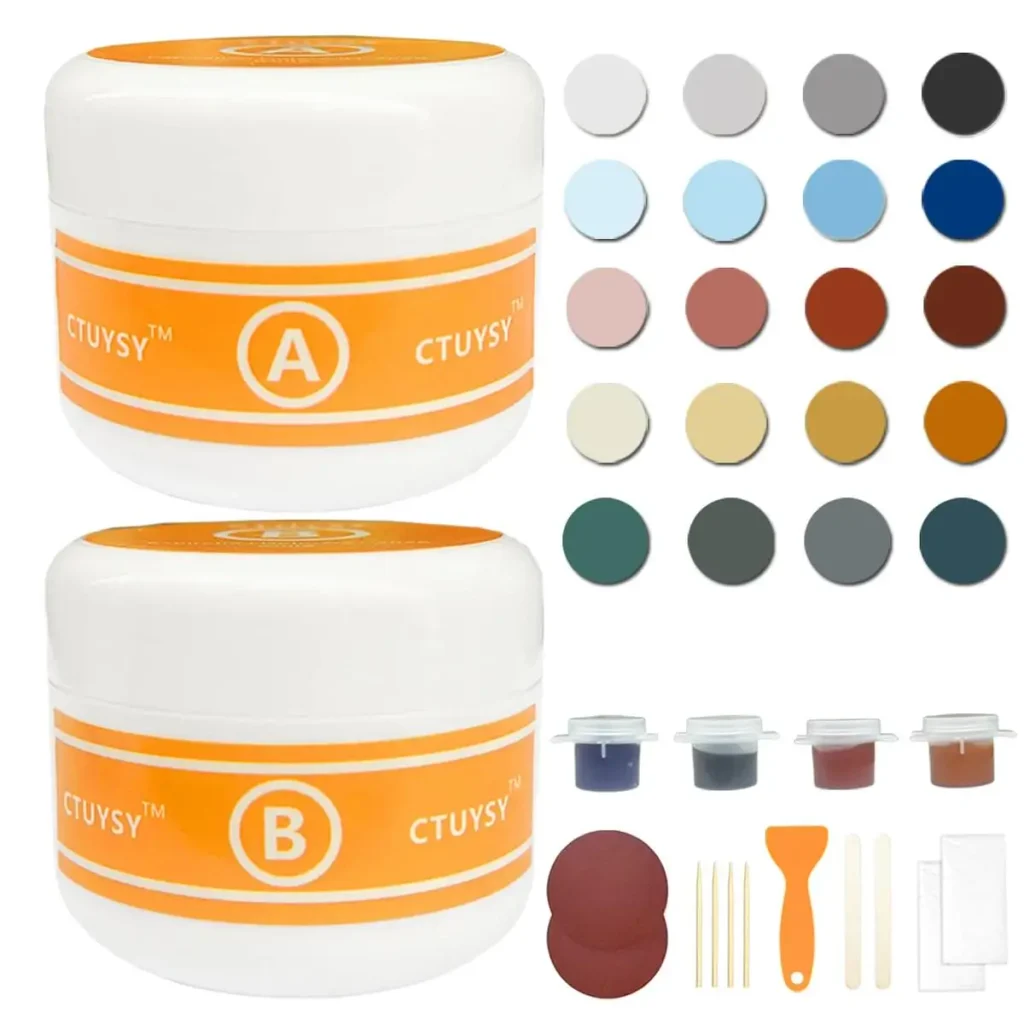
Before buying a kit, check:
- Whether it is designed for your countertop material.
- Whether the colour and finish can be matched.
- Whether it is intended for scratches, chips, or other defects.
- How the surface should be prepared.
- How long the product needs to dry or cure.
- Whether the cured product is suitable for its intended kitchen use.
Follow the instructions closely. Some products are designed for cosmetic improvements rather than complete restoration.
Avoid using a general-purpose filler or adhesive simply because its colour looks similar to the countertop.
10. Know When Professional Repair Is Necessary
DIY repairs are not appropriate for every scratch.
Contact a qualified countertop installer or repair specialist if you notice:
- Deep scratches or gouges.
- Large chips or cracks.
- Damage that exposes the countertop’s underlying layers.
- Scratches on expensive polished stone.
- Extensive etching or dullness.
- Damage near seams, edges, sinks, or cooktops.
- Uncertainty about the countertop material.
- A previous DIY repair that has worsened the finish.
Professional assessment is particularly valuable when the countertop has a reflective, polished, or patterned finish that is difficult to match.
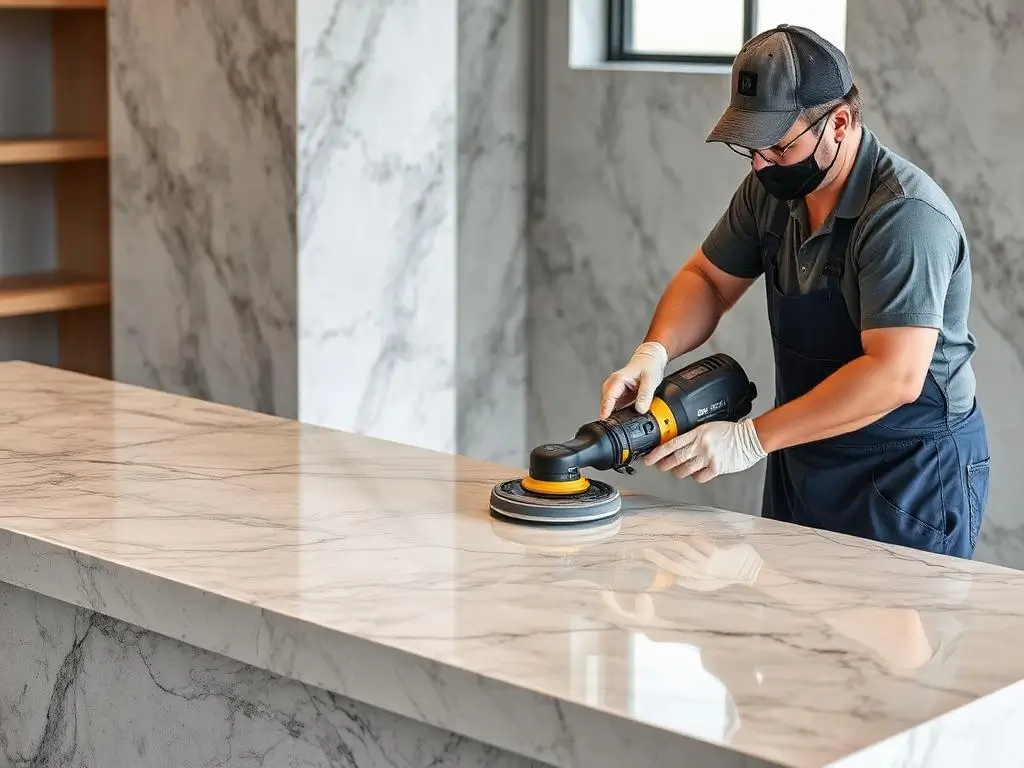
Tools and Supplies You May Need
Your requirements depend on the countertop material and the repair method recommended by its manufacturer.
Possible supplies include:
- Soft microfiber cloth.
- Compatible countertop cleaner.
- Flashlight or suitable lighting.
- Manufacturer-approved repair kit.
- Colour-matched repair compound, where appropriate.
- Approved polishing product for a compatible surface.
- Suitable sanding supplies for approved wood or solid-surface repairs.
- Compatible refinishing products for suitable wood countertops.
You do not need every item on this list. For some marks, a soft cloth and an approved cleaner may be sufficient.
Avoid universal abrasive pads, steel wool, harsh chemicals, and power sanding unless the specific manufacturer instructions explicitly permit the method.
Common Mistakes to Avoid When Repairing Countertop Scratches
Using the Same Method on Every Material
A technique suitable for one solid-surface product may damage laminate or polished stone.
Safer approach: Identify the material and follow its manufacturer’s instructions.
Sanding Laminate or Quartz Without Approval
Sanding can damage a decorative laminate layer or alter the finish of an engineered quartz countertop.
Safer approach: Use an approved repair product or consult a specialist.
Using Vinegar on Acid-Sensitive Stone
Acidic products can etch marble and other acid-sensitive stone.
Safer approach: Use a compatible stone cleaner and follow the supplier’s care guidance.
Applying Baking Soda or Toothpaste to Every Scratch
These household products are not universal scratch removers. Their abrasiveness and compatibility vary, and they may dull or damage some finishes.
Safer approach: Choose a product specifically approved for your countertop.
Using a Sealer to Hide Scratches
A stone sealer may help reduce staining when appropriate, but it does not remove physical scratches.
Safer approach: Determine whether the problem requires cleaning, polishing, repair, or refinishing.
Ignoring Deep Chips and Cracks
A deep defect may require more than a surface treatment, particularly if it affects an edge, seam, or area near a sink or cooktop.
Safer approach: Have significant damage assessed by a qualified repair specialist.
Ignoring Food-Contact Suitability
Not every filler, coating, or finishing product is suitable for a food-preparation surface.
Safer approach: Check the product’s intended use, application instructions, and curing requirements before returning the countertop to service.
How to Prevent Scratches on Kitchen Countertops
Prevention can reduce everyday wear and help your countertop maintain its appearance.
- Use a cutting board. Avoid cutting food directly on the countertop.
- Lift cookware and appliances. Dragging heavy or sharp objects can leave marks.
- Use trivets and heat protection. Follow the countertop manufacturer’s guidance for hot cookware.
- Clean spills promptly. Use compatible cleaning products, especially on natural stone.
- Avoid unapproved abrasive pads. A rough cleaning tool may damage the finish.
- Choose material-specific cleaners. Do not assume a product suitable for one surface is safe for another.
- Follow stone-sealing recommendations. Seal only when recommended for your particular stone and use an appropriate product.
- Keep sharp utensils under control. Avoid leaving knives and other sharp tools directly on delicate surfaces.
- Inspect small defects early. Identifying a problem promptly can help you choose an appropriate repair.
- Follow routine maintenance guidance. Different countertop materials have different cleaning and care requirements.
Good maintenance will not make a countertop scratch-proof, but it can reduce avoidable damage.
Frequently Asked Questions About Kitchen Countertop Scratches
1. Can scratches be removed from kitchen countertops?
Some scratches can be repaired or made less noticeable, depending on the countertop material, finish, and depth of damage. Others require professional restoration or replacement of the affected section.
2. How do I repair scratches on kitchen countertops?
First, identify the material and clean the surface with a compatible cleaner. Determine whether the mark is a scratch, stain, or etch, then follow the manufacturer’s recommended repair method. Avoid unapproved sanding or polishing.
3. Can baking soda remove countertop scratches?
Baking soda is not a universal scratch-removal solution. Its abrasive action may affect delicate finishes. Use it only if the countertop manufacturer specifically approves the application.
4. Can you repair scratches on quartz countertops?
Some marks may be removable if they are residue rather than actual scratches. Genuine scratches may need a manufacturer-approved repair method or professional assistance. Avoid unapproved abrasives and polishing compounds.
5. How do you fix scratches on granite countertops?
Clean the surface with a compatible stone cleaner and inspect the damage. Genuine scratches, chips, or damage to a polished finish may require professional stone restoration. A sealer will not remove a scratch.
6. Can scratched laminate countertops be repaired?
Some minor cosmetic defects may be improved with a compatible laminate repair kit. Deep scratches that expose the underlying core may require specialised repair or replacement. Avoid unapproved sanding.
7. How do you remove scratches from marble countertops?
First, determine whether the mark is a physical scratch or an etched patch. Use a marble-compatible cleaner and avoid acidic products. Significant scratches or etching may require professional refinishing.
8. Can toothpaste remove scratches from kitchen countertops?
Toothpaste should not be treated as a universal countertop scratch remover. Its ingredients and abrasiveness vary, and an unsuitable product may dull or damage the finish.
9. Should I sand a scratched kitchen countertop?
Only when the exact countertop material and manufacturer instructions permit sanding. Some solid-surface and wood products can be refinished using specified methods, but sanding can permanently damage laminate, quartz, and polished stone.
10. When should I call a professional to repair countertop scratches?
Seek professional help for deep scratches, large chips, cracks, extensive etching, damage near seams or edges, and scratches on delicate polished stone. A specialist can also help when the material or safe repair method is uncertain.
Conclusion
The best way to repair scratches on kitchen countertops is to identify the material, determine the type of damage, and choose a compatible repair method.
Start by cleaning the surface and inspecting it under good lighting. Minor marks may disappear with suitable cleaning, while genuine scratches may need a manufacturer-approved repair product, controlled refinishing, or professional restoration.
Avoid experimenting with household abrasives or aggressive polishing methods. A technique that works on one countertop can damage another.
With appropriate repairs and regular maintenance, you can help preserve your countertop’s appearance and avoid making a small scratch into a larger problem.
For more practical advice, explore other kitchen and home maintenance guides on Fix The Annoying.