A clogged kitchen sink can quickly turn into one of the most frustrating problems in your home. Water starts draining slowly, food particles collect in the basin, and sometimes an unpleasant smell begins coming from the drain.
The good news is that many minor kitchen sink clogs can be handled at home without complicated tools.
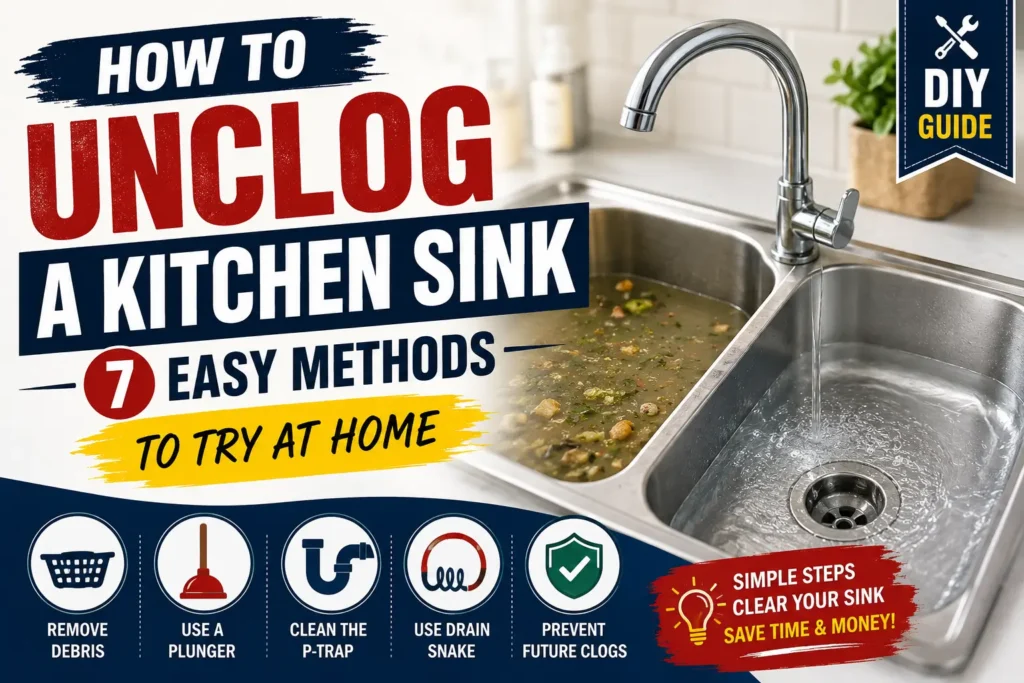
If you’re wondering how to unclog a kitchen sink, this guide walks you through seven practical methods, starting with the simplest options. You’ll also learn what causes kitchen sink clogs, what to avoid, and when it’s better to call a plumber.
Safety note: Never mix drain cleaners or other household chemicals. If a chemical drain cleaner has already been poured into the sink, don’t use a plunger or take apart the plumbing where the chemical could splash. Follow the product label and consider contacting a professional.
Why Does a Kitchen Sink Get Clogged?
Kitchen sink clogs usually develop gradually rather than appearing overnight. Understanding what causes the blockage is an important first step when learning how to unclog a kitchen sink safely and effectively.
Small amounts of grease, food residue, soap buildup, and other debris can collect inside the drainpipe. Over time, the opening becomes narrower and water begins draining more slowly.
Common causes include:
- Cooking grease and oil
- Food scraps
- Coffee grounds
- Soap residue
- Starchy food such as rice and pasta
- Small objects entering the drain
- Buildup inside the P-trap
- A blockage deeper in the drain line
Understanding the likely cause can help you choose the right solution.
Signs Your Kitchen Sink May Be Clogged
A completely blocked sink is obvious, but there are often warning signs before it reaches that stage.
Watch for:
- Water draining more slowly than usual
- Standing water in the sink
- Gurgling noises from the drain
- Unpleasant drain odors
- Water backing up into the other basin of a double sink
Addressing a slow drain early is usually easier than waiting until water stops draining completely.
If you’re learning how to unclog a kitchen sink, catching these warning signs early can make the blockage easier to clear.
How to Unclog a Kitchen Sink: 7 Methods to Try
Start with Method 1 and work your way down. There’s no reason to disassemble plumbing if a simple solution fixes the problem.
1. Remove Visible Debris From the Drain
Start with the easiest possibility: something may simply be blocking the drain opening.
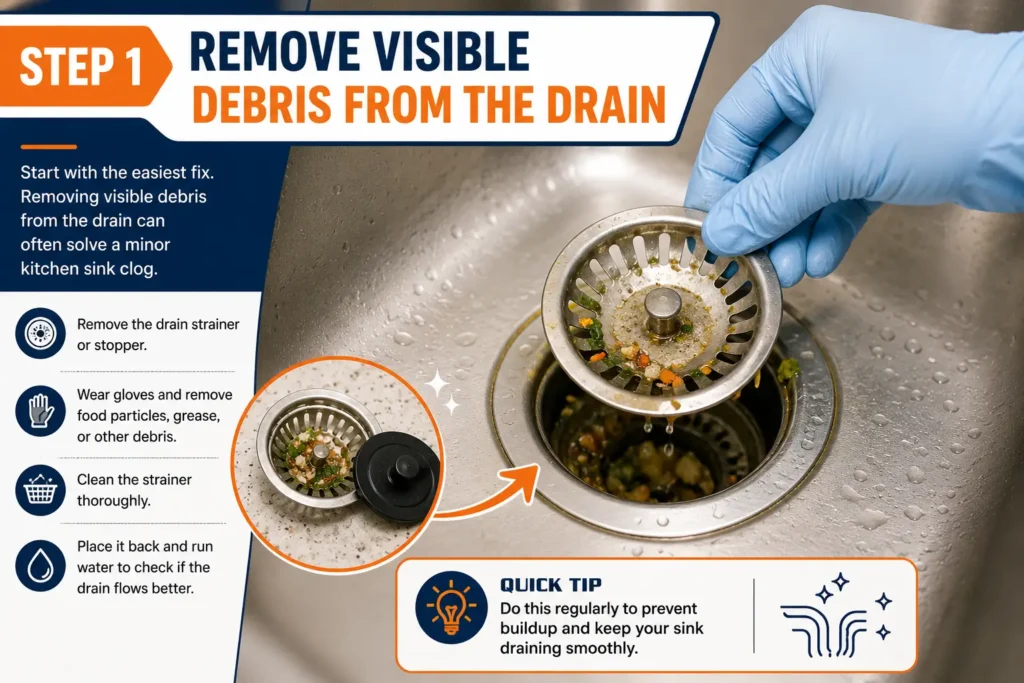
Remove the drain strainer or stopper if it can be safely lifted out.
Use gloves and remove visible:
- Food particles
- Grease buildup
- Loose debris
- Other material around the drain opening
Clean the strainer thoroughly before putting it back.
Then run a small amount of water and see whether drainage improves.
Sometimes this simple step is all that’s needed.
2. Flush the Drain With Hot Water
Hot water may help loosen some soap and greasy residue in certain kitchen drain systems.
How to do it
- Remove as much standing water as practical.
- Run hot tap water into the drain gradually.
- Give it some time to work through the buildup.
- Check whether the water begins draining faster.
Important
Avoid pouring boiling water into plumbing unless you’re certain the plumbing system and manufacturer guidance allow it. Very hot water can be inappropriate for some pipe materials or connections.
Hot water also won’t solve a solid obstruction or serious blockage.
If the sink is still clogged, move to the next method.
3. Use a Sink Plunger
A plunger can be very effective for a clog located relatively close to the drain.
When figuring out how to unclog a kitchen sink, a plunger is one of the simplest tools to try before removing any plumbing parts.
Use a sink/cup plunger rather than a toilet-style flange plunger.
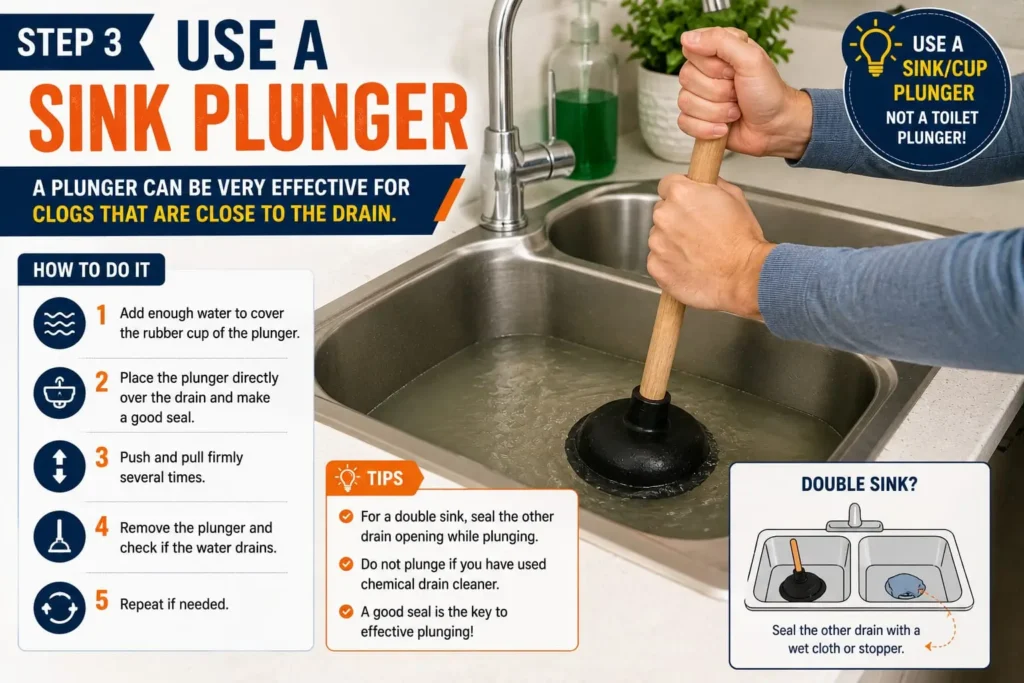
Steps
- Add enough water to cover the rubber cup of the plunger.
- Place the plunger directly over the drain.
- Make sure you have a good seal.
- Push and pull firmly several times.
- Remove the plunger.
- Check whether the water drains.
You may need to repeat the process.
For a double kitchen sink
If your sink has two basins, seal the drain in the second basin while plunging the clogged side. This helps direct pressure toward the blockage.
Do not plunge a drain containing chemical drain cleaner, because the chemical can splash onto your skin or eyes.
4. Check and Clean the P-Trap
If plunging doesn’t work, debris may be trapped in the curved pipe underneath the sink.
That curved section is commonly called the P-trap.
Food particles, grease, and other material can collect there.
Before starting
You’ll need:
- Bucket
- Gloves
- Old towels
- Pliers or an appropriate wrench if needed
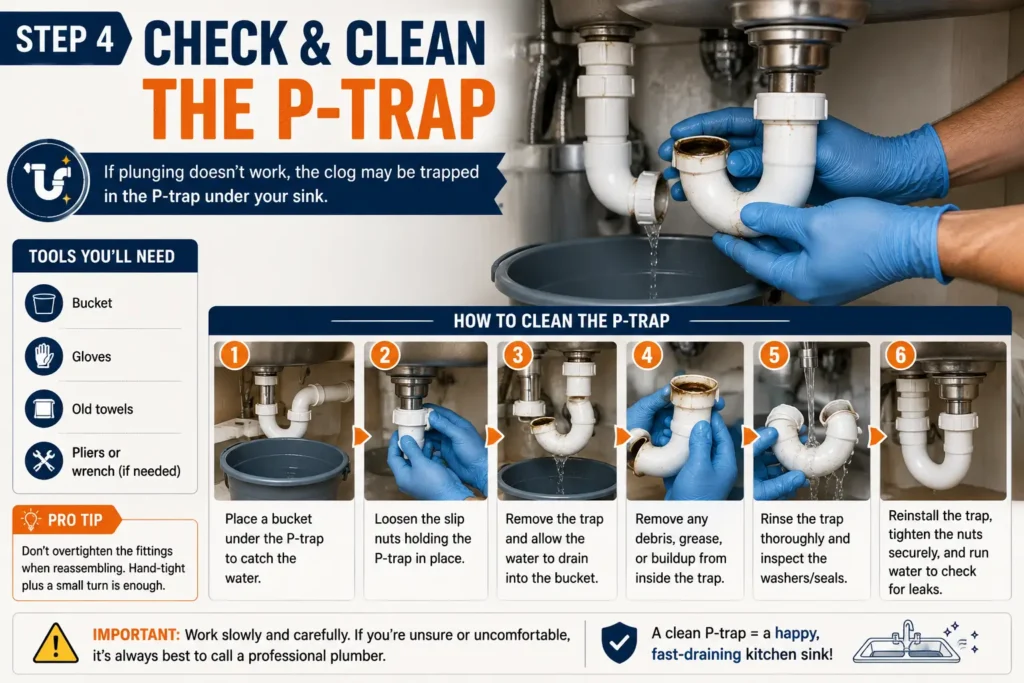
How to clean the P-trap
- Stop using the sink.
- Place a bucket directly underneath the P-trap.
- Put towels around the work area.
- Carefully loosen the slip nuts holding the trap in place.
- Remove the trap.
- Allow trapped water to drain into the bucket.
- Remove debris from inside the trap.
- Rinse and clean it.
- Inspect the washers/seals and connections.
- Reinstall the trap correctly.
- Run water slowly while checking carefully for leaks.
Don’t overtighten plastic fittings.
If you’re uncomfortable removing plumbing parts, skip this method and consider professional help.
5. Use a Drain Snake or Hand Auger
If the P-trap is clean but the sink remains clogged, the blockage may be farther down the drain line.
A hand-operated drain snake can sometimes reach debris that a plunger cannot.
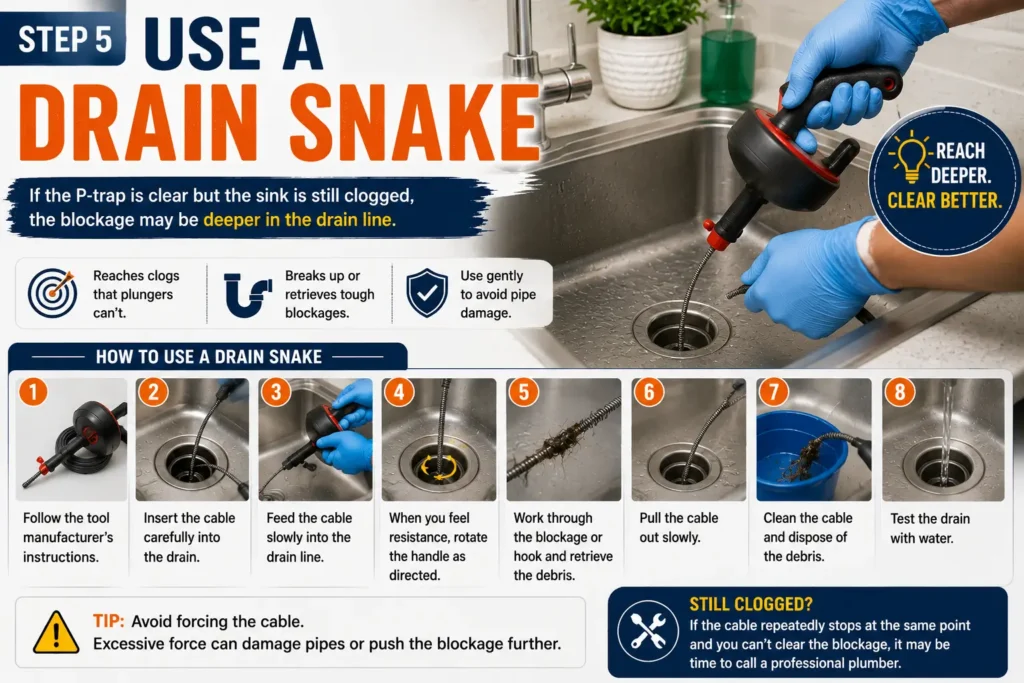
How to use it
- Follow the tool manufacturer’s instructions.
- Feed the cable carefully into the drain or accessible drain line.
- Advance it slowly.
- When you encounter resistance, rotate the tool as directed.
- Work gently through or retrieve the obstruction.
- Pull the cable out slowly.
- Clean the tool.
- Test the drain with water.
Avoid excessive force. You don’t want to damage plumbing or push an object into a more difficult position.
If the cable repeatedly stops at the same point and you can’t clear the blockage, it may be time for a plumber.
Always follow the drain snake manufacturer’s instructions for the correct cable size, operating method, and pipe compatibility.
6. Clean a Garbage Disposal Safely
If your kitchen sink has a garbage disposal, the problem may be related to the disposal rather than the drainpipe itself.
First: safety
Turn the disposal off and disconnect its power according to the manufacturer’s instructions before inspecting it.
Never put your hand inside a garbage disposal.
Look into the disposal with a flashlight. If an object is visible, follow the manufacturer’s recommended procedure and use the appropriate tool to remove it.
Some disposal units also have a reset button or a manual turning feature underneath the unit. Procedures vary by model, so use the owner’s manual rather than forcing the mechanism.
Once everything is safely restored, test the disposal and drainage.
If the unit hums but doesn’t rotate, repeatedly trips, leaks, or appears damaged, professional service may be the better choice.
7. Check for a Deeper Drain Problem
If you’ve cleaned the drain opening, tried plunging, checked the P-trap, and used an appropriate drain snake without success, the blockage may be farther inside the plumbing system.
Warning signs include:
- Multiple drains backing up
- Water returning through another fixture
- Persistent gurgling
- Recurring clogs
- Sewage-like odors
- A drain that remains completely blocked
At this point, repeatedly trying DIY fixes may not help.
A professional plumber can determine whether the problem is farther down a branch line or involves a larger drainage issue.
What About Baking Soda and Vinegar?
You’ve probably seen baking soda and vinegar recommended as a kitchen drain fix.
The bubbling reaction may help move or loosen some light residue, but it shouldn’t be treated as a reliable solution for serious grease buildup or solid blockages.
Mechanical methods—removing debris, plunging, cleaning the P-trap, or using an appropriate drain snake—are generally more direct ways to address an actual obstruction.
Most importantly, don’t combine baking soda and vinegar with commercial drain cleaners or other chemicals.
What NOT to Do With a Clogged Kitchen Sink
Trying to clear a clog the wrong way can create a bigger problem.
Don’t mix cleaning chemicals
Never mix different drain cleaners, bleach, acids, ammonia, or other household cleaning chemicals. Dangerous reactions, heat, or toxic gases can result.
Don’t keep adding drain cleaner
If one application doesn’t work, repeatedly adding chemicals can leave hazardous liquid sitting in the plumbing.
Don’t force a drain snake
More force isn’t necessarily better. Incorrect use can damage plumbing or make the obstruction harder to retrieve.
Don’t put your hand inside a garbage disposal
Even when the disposal appears off, use the manufacturer’s safe procedure and appropriate tools.
Don’t ignore leaks after reconnecting the P-trap
After reassembly, run water slowly and inspect every connection.
How to Prevent Kitchen Sink Clogs
Preventing a clog is easier than clearing one.
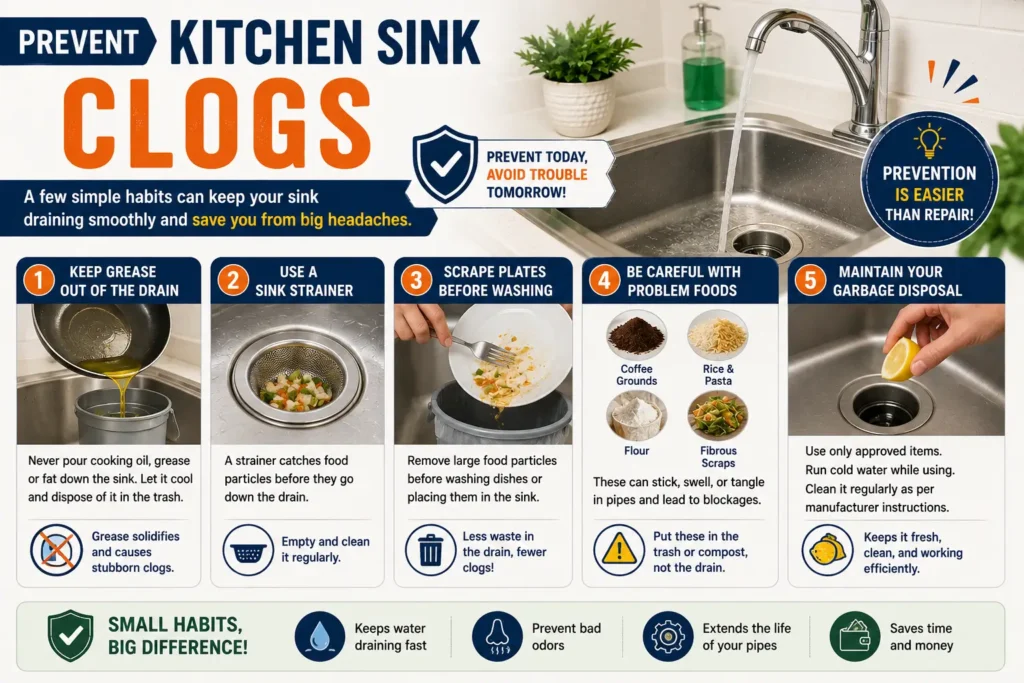
Keep grease out of the drain
Don’t intentionally pour cooking oil, grease, or fat down the kitchen sink.
Allow grease to cool and dispose of it appropriately according to local waste guidance.
Use a sink strainer
A simple strainer can catch food scraps before they enter the plumbing.
Empty and clean it regularly.
Scrape plates before washing
Remove larger food particles before placing dishes in the sink or dishwasher.
Be careful with problem foods
Coffee grounds, large amounts of flour, rice, pasta, fibrous scraps, and similar materials can contribute to drain problems.
Put appropriate food waste in the trash, compost, or disposal method recommended for your home.
Maintain your garbage disposal properly
If you have a disposal, use it only for materials permitted by its manufacturer and follow its cleaning and operating instructions.
Knowing how to unclog a kitchen sink also means knowing when a blockage is too deep or stubborn for a DIY fix.
When Should You Call a Plumber?
DIY methods are useful for minor clogs, but not every blockage should be handled at home.
Consider professional help when:
- The sink remains blocked after basic troubleshooting
- Multiple drains are backing up
- The clog keeps returning
- You suspect a blockage deep in the drain system
- Pipes are leaking
- The garbage disposal is damaged or leaking
- You smell sewage
- You’re unsure how to safely disassemble the plumbing
A recurring clog can indicate a larger issue that simple drain cleaning won’t solve.
Tools That Can Be Useful
You don’t need a large plumbing kit for basic kitchen sink troubleshooting.
Useful items include:
- Rubber gloves
- Sink plunger
- Bucket
- Old towels
- Sink strainer
- Hand drain snake
- Basic pliers or adjustable wrench
- Flashlight
For now, keep this section informational. Later, if the site is monetized, it can naturally accommodate carefully selected product recommendations.
Frequently Asked Questions
What is the easiest way to unclog a kitchen sink?
Start by removing visible debris and cleaning the drain strainer. If that doesn’t work, a sink plunger is a good next step for many minor clogs.
Can hot water unclog a kitchen sink?
Hot water may help with some light greasy or soapy residue, but it won’t reliably remove solid or severe blockages. Avoid using water hotter than your plumbing system is designed to handle.
Why is my kitchen sink draining slowly?
A slow drain often results from accumulating grease, food particles, soap residue, or other debris. It can also indicate a partial blockage farther down the drain line.
Why does my kitchen sink keep getting clogged?
Recurring clogs can be caused by ongoing grease or food buildup, improper disposal habits, or a deeper plumbing problem. If the clog keeps returning despite proper cleaning, consider having the drain inspected.
Can I plunge a kitchen sink?
Yes, a cup-style sink plunger can help with some clogs. If you have a double sink, seal the second drain while plunging. Never plunge if chemical drain cleaner is sitting in the drain.
Should I use a chemical drain cleaner?
Chemical cleaners can pose safety and plumbing risks and may not solve solid blockages. Follow product and plumbing manufacturer guidance if using one, never mix chemicals, and consider mechanical methods or professional assistance instead.
How do I know if the clog is in the P-trap?
If removing surface debris and plunging don’t work, the P-trap is one possible location. Removing it safely can allow you to inspect it directly for trapped material.
How to unclog a kitchen sink without calling a plumber?
If the blockage is minor, start by removing visible debris, then try a sink plunger. When learning how to unclog a kitchen sink, begin with the simplest method before removing the P-trap or using a drain snake.
Have another annoying kitchen or plumbing problem? Check out our step-by-step guide on how to fix a leaky faucet.
Final Thoughts
Learning how to unclog a kitchen sink can save you from unnecessary frustration when you’re dealing with a minor blockage.
Start with the simplest solution: remove visible debris. Then progress to safe flushing, plunging, checking the P-trap, and using an appropriate drain snake if necessary.
The key is knowing when to stop. If several drains are affected, the clog repeatedly returns, or basic methods don’t work, professional diagnosis is safer than repeatedly forcing the problem.
And once your sink is draining normally again, simple habits such as keeping grease and food scraps out of the drain can help prevent the next annoying clog.