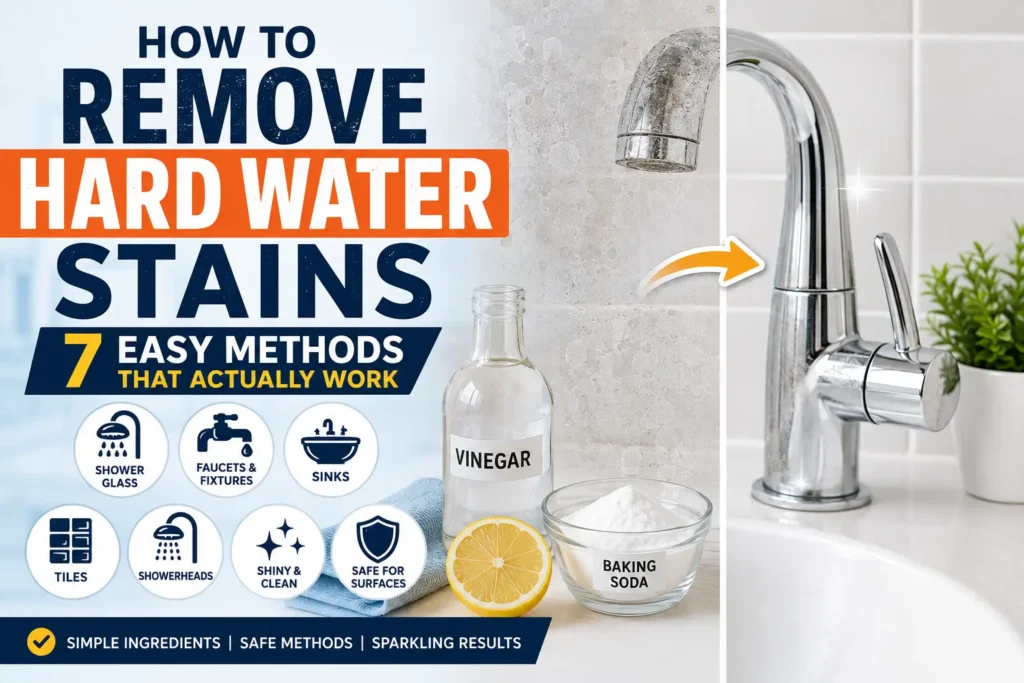
Hard water stains can make an otherwise clean bathroom or kitchen look dirty. Those cloudy white marks on faucets, shower glass, sinks, and tiles often return even after regular cleaning.
The good news is that many mineral deposits can be removed with simple cleaning methods. The right method, however, depends on the surface you’re cleaning.
If you’re wondering how to remove hard water stains, this guide covers seven practical methods you can try at home, along with important precautions to help protect glass, fixtures, tiles, and other surfaces.
Safety first: Never mix vinegar, acids, bleach, ammonia, or different household cleaners. Always check the product label and the surface manufacturer’s cleaning instructions before trying a new cleaner.
What Causes Hard Water Stains?
Hard water contains dissolved minerals, particularly calcium and magnesium.
When water droplets dry on a surface, the water evaporates but some of those minerals remain behind. Repeated exposure can gradually create cloudy spots, white deposits, or crusty buildup.
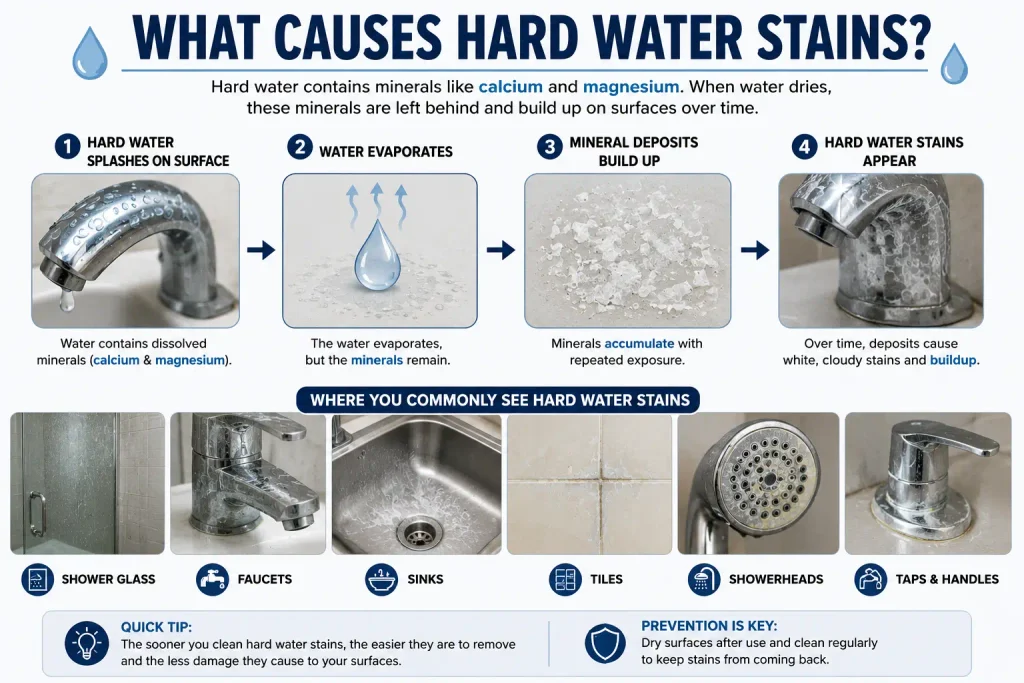
Hard water stains commonly appear on:
- Shower glass
- Chrome faucets
- Stainless-steel fixtures
- Bathroom sinks
- Kitchen sinks
- Ceramic tiles
- Showerheads
- Around taps and handles
Understanding the mineral buildup is useful when learning how to remove hard water stains without unnecessarily scrubbing or damaging the surface.
Before deciding how to remove hard water stains, it helps to understand that these marks are mineral deposits left behind when hard water dries.
What You’ll Need
You won’t need everything on this list. Choose supplies according to the cleaning method and surface.
You may need:
- Microfiber cloths
- Soft sponge
- Soft-bristle brush
- White vinegar
- Mild dish soap
- Baking soda
- Spray bottle
- Small bowl
- Rubber gloves
- Old toothbrush
- Squeegee
Avoid abrasive pads, steel wool, or harsh cleaners unless the surface manufacturer specifically says they’re safe.
How to Remove Hard Water Stains: 7 Easy Methods
Start with the gentlest appropriate method first. If it doesn’t work, move to a stronger method that is still safe for the particular surface.
1. Start With Warm Water and Dish Soap
For fresh or light water spots, you may not need an acidic cleaner at all.
A mild dish-soap solution is a good first step because it can remove soap film, oils, and surface dirt that may be sitting on top of the mineral deposits.
How to do it
- Mix a small amount of mild dish soap with warm water.
- Dip a soft microfiber cloth or sponge into the solution.
- Gently wipe the stained area.
- Allow it to sit briefly if needed.
- Rinse with clean water.
- Dry the surface completely.
If the cloudy marks remain after the surface is clean, you’re probably dealing with mineral buildup rather than ordinary dirt.
Move to the next method if the surface is suitable.
2. Try Diluted White Vinegar on Acid-Safe Surfaces
White vinegar is commonly used for mineral deposits because its acidity can help dissolve some calcium-based buildup.
However, vinegar is not appropriate for every material.
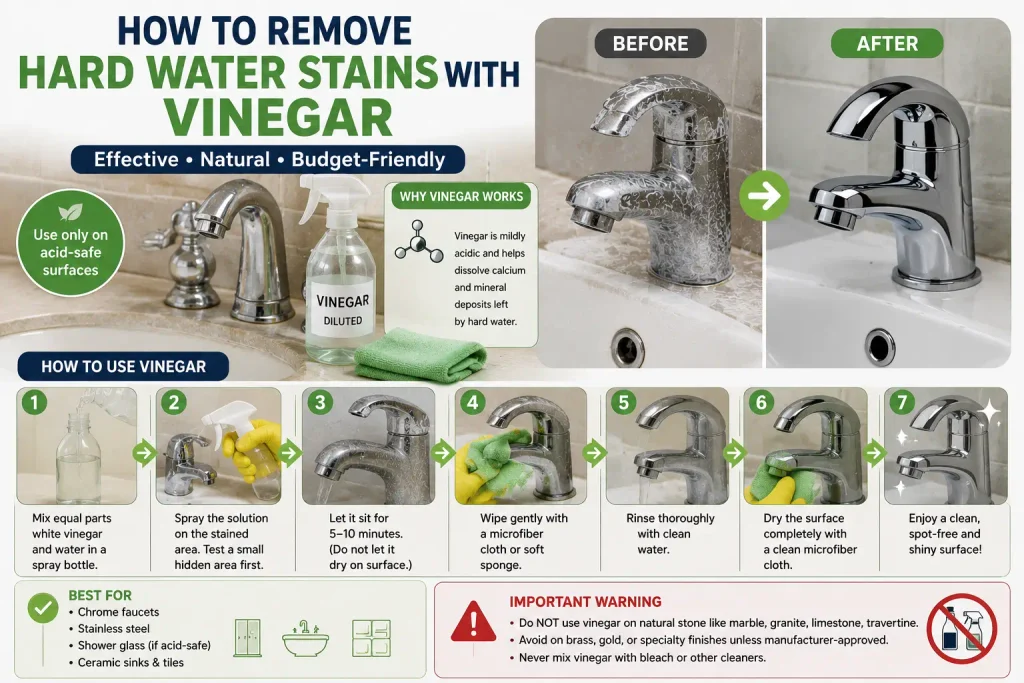
How to use it
For an acid-safe surface:
- Mix white vinegar with water in a spray bottle.
- Spray a small test area first.
- Apply it to the stained area.
- Let it sit briefly rather than allowing it to dry.
- Wipe gently with a microfiber cloth.
- Rinse thoroughly with clean water.
- Dry the surface.
For stubborn deposits, several short treatments may be safer than one prolonged treatment.
Important warning
Avoid vinegar or other acidic cleaners on surfaces that can be damaged by acids, including many types of natural stone such as marble, limestone, and travertine.
Some specialty finishes, grout, sealants, and coated fixtures may also have specific restrictions.
When in doubt, check the manufacturer’s care instructions.
3. Use a Vinegar-Soaked Cloth Around Faucets
Hard water deposits often accumulate around faucet bases, handles, and other awkward areas where spraying alone doesn’t provide enough contact.
On a vinegar-safe fixture, a soaked cloth can help keep the solution against the mineral deposit.
Steps
- Wet a small cloth or paper towel with diluted vinegar.
- Wrap it around the affected area.
- Leave it in place briefly.
- Remove the cloth.
- Gently wipe the loosened deposits.
- Rinse thoroughly.
- Dry and buff with a clean microfiber cloth.
If the faucet has a specialty finish, confirm that vinegar is permitted before using this method.
Learning how to remove hard water stains safely is as much about protecting the finish as removing the deposit.
4. Make a Baking Soda Paste for Suitable Surfaces
For deposits that need gentle mechanical cleaning, baking soda can be made into a paste.
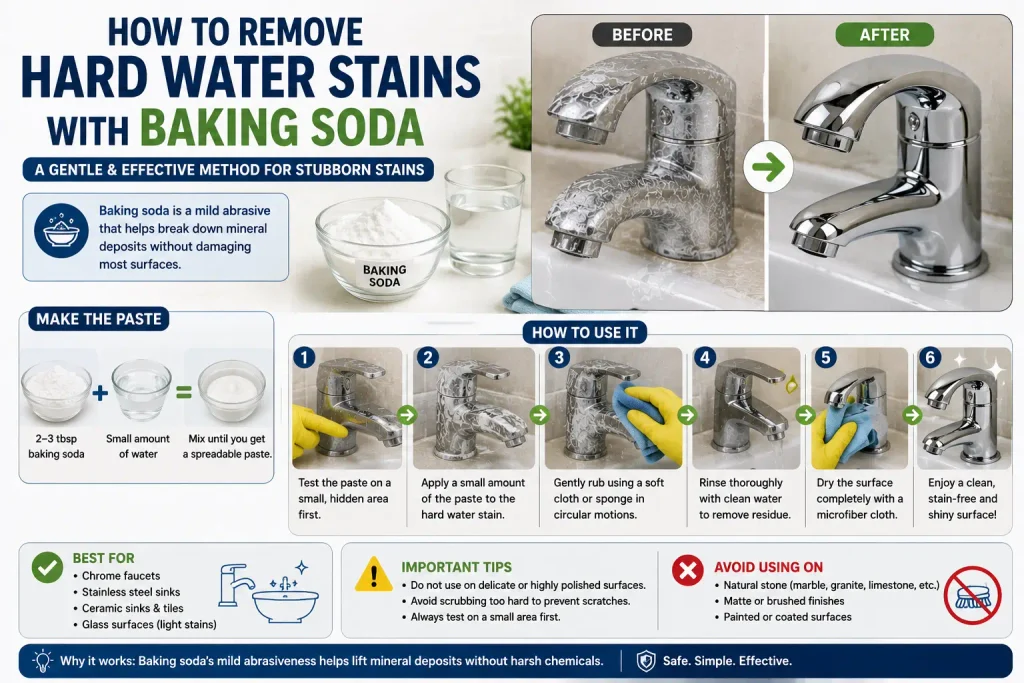
Make the paste
Mix:
- Baking soda
- A small amount of water
until you get a spreadable consistency.
How to use it
- Test the paste on an inconspicuous area.
- Apply a small amount to the stain.
- Gently rub using a soft cloth or sponge.
- Avoid aggressive scrubbing.
- Rinse thoroughly.
- Dry the surface.
Baking soda is mildly abrasive, so don’t assume it’s safe for every polished, glossy, coated, or delicate finish.
Check the manufacturer’s recommendations first.
Also, don’t combine cleaning products just because two individual ingredients are commonly used around the home.
5. Clean Hard Water Stains From Shower Glass
Shower glass is one of the most common places for visible mineral spots.
If your shower-glass manufacturer permits diluted vinegar or an appropriate mineral-deposit cleaner, start with that.
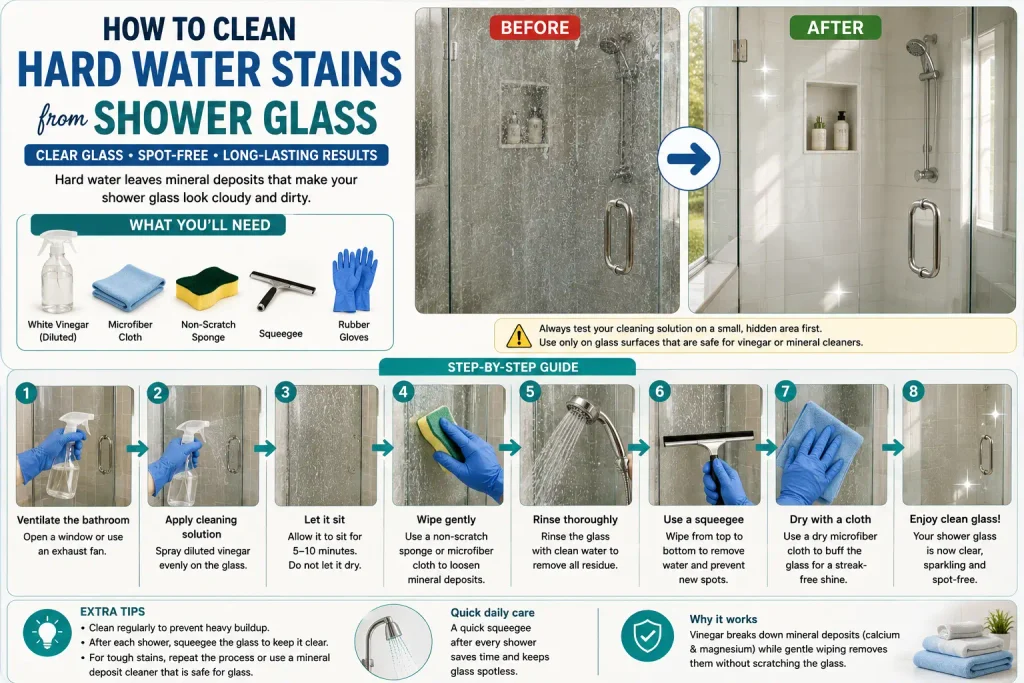
Steps
- Ventilate the bathroom.
- Test your cleaning solution on a small area.
- Apply it evenly to the affected glass.
- Allow the recommended contact time.
- Wipe with a non-scratch sponge or microfiber cloth.
- Rinse thoroughly.
- Use a squeegee to remove water.
- Finish with a dry microfiber cloth.
What if the glass stays cloudy?
Not every cloudy mark is removable mineral buildup.
Long-term mineral exposure can sometimes contribute to surface etching or permanent damage. If repeated safe cleaning doesn’t improve the appearance, aggressive scrubbing may make matters worse.
6. Remove Mineral Buildup From a Showerhead
A showerhead can develop white crust around the spray holes, which may interfere with the spray pattern.
If the manufacturer permits vinegar cleaning, soaking may help loosen deposits.
For a removable showerhead
- Remove the showerhead according to its instructions.
- Place it in a suitable container.
- Use the manufacturer-approved descaling method.
- Allow the recommended contact time.
- Gently clean loosened deposits with a soft brush.
- Rinse thoroughly.
- Reinstall it correctly.
- Run water and check for leaks.
Some finishes and showerhead materials shouldn’t be soaked in vinegar, so check the care instructions first.
If the showerhead has rubber spray nozzles, sometimes gently rubbing those nozzles is enough to loosen surface deposits.
7. Use a Cleaner Made for Mineral Deposits
If household methods don’t remove the buildup, a commercial cleaner specifically designed for mineral deposits may be appropriate.
But product selection matters.
Before using one
Check that the product is suitable for:
- The exact surface material
- The fixture finish
- Indoor use, if applicable
- The type of mineral buildup you’re treating
Then:
- Wear any protective equipment required by the label.
- Ventilate the area as directed.
- Test a hidden area first.
- Apply only as instructed.
- Don’t exceed the recommended contact time.
- Rinse if directed.
- Never combine it with another cleaning chemical.
A stronger cleaner isn’t automatically a better cleaner.
The safest effective product for the surface is the better choice.
How to Remove Hard Water Stains From Different Surfaces
The same cleaning method shouldn’t automatically be used everywhere.
The safest way to learn how to remove hard water stains is to match the cleaning method to the specific surface you are treating.
Glass
Use a non-scratch cloth or sponge and a cleaner approved for the glass. Drying with a squeegee afterward can help prevent new spots.
Chrome Fixtures
Start gently. Mild soap and water may be enough for light spots. Before using vinegar or a mineral cleaner, verify that it’s safe for the fixture’s finish.
Stainless Steel
Follow the appliance or fixture manufacturer’s instructions. Clean in the recommended direction of the finish and avoid products that can damage the surface.
Ceramic or Porcelain Tile
Many glazed tiles tolerate routine cleaning well, but grout, sealers, decorative finishes, and surrounding materials can have different requirements.
Natural Stone
Be especially careful.
Acidic cleaners such as vinegar can damage acid-sensitive stone, including marble and limestone. For natural stone surfaces, always follow the stone manufacturer’s or a recognized stone-care authority’s cleaning recommendations before using an acidic cleaner. Use a cleaner specifically approved for that stone and its sealer.
This is one situation where a popular DIY cleaning hack can cause more damage than the original stain.
Common Mistakes to Avoid
Knowing how to remove hard water stains also means knowing what not to do.
Mixing cleaning products
Never mix bleach with vinegar, ammonia, acids, drain cleaners, or other household chemicals.
Scrubbing too aggressively
Hard brushes, steel wool, razor blades, and abrasive pads can scratch or damage many surfaces.
Leaving acidic cleaner on too long
Longer contact time isn’t always better. It may damage finishes, grout, sealers, or stone.
Skipping the test spot
Always test an unfamiliar cleaner in an inconspicuous area first.
Ignoring the surface material
A cleaner that’s fine for ordinary glass may be unsuitable for stone, a coated fixture, or a specialty finish.
Letting water air-dry repeatedly
If your water leaves noticeable mineral spots, repeatedly allowing droplets to evaporate can contribute to more visible buildup.
How to Prevent Hard Water Stains
Once you’ve removed the stains, prevention can make future cleaning much easier.
Once you know how to remove hard water stains, a few simple preventive habits can reduce how often you need to deal with stubborn mineral buildup.
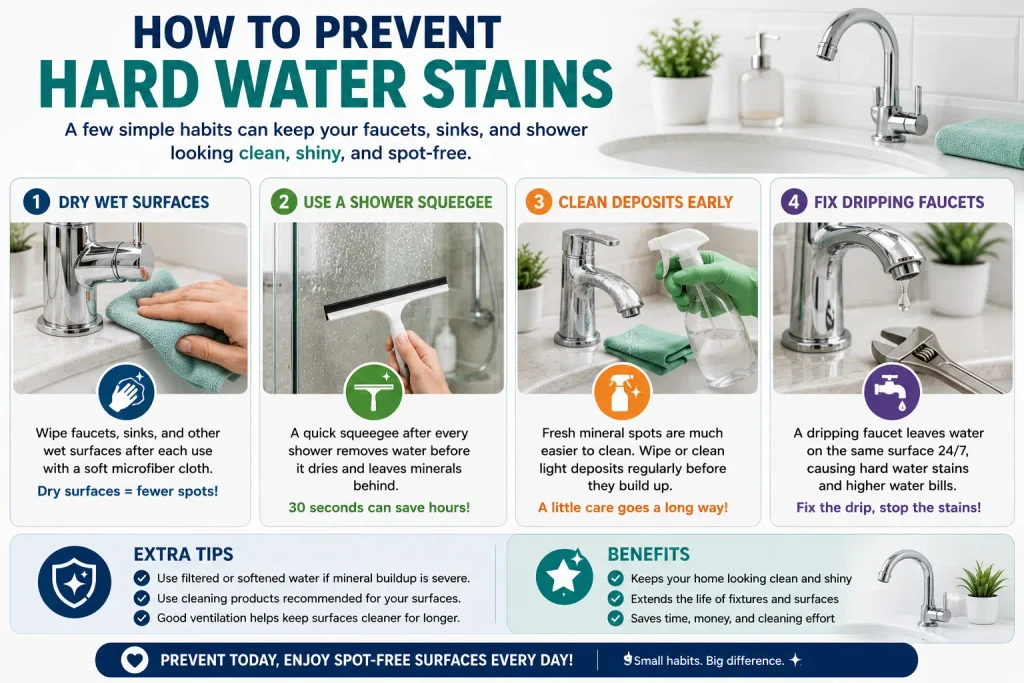
Dry Wet Surfaces
Use a microfiber cloth to dry faucets, sinks, and other frequently wet surfaces.
Use a Shower Squeegee
A quick pass over shower glass after use removes much of the water before it evaporates.
Clean Light Deposits Early
Fresh spots are generally easier to manage than thick, established buildup.
Fix Dripping Faucets
A constant drip repeatedly leaves water on the same surface, encouraging mineral buildup.
If you have a dripping faucet, read our step-by-step guide on how to fix a leaky faucet.
Consider Your Water Quality
If mineral buildup is severe throughout the home, understanding your water hardness may help explain why deposits return so quickly.
Whole-home water treatment is a separate decision and should be based on actual water conditions, equipment requirements, maintenance, and professional advice where appropriate.
When Is a Hard Water Stain Permanent?
Sometimes what looks like a stain isn’t simply residue sitting on top of the surface.
Long-term exposure may contribute to:
- Etching
- Finish deterioration
- Surface discoloration
- Corrosion
- Permanent cloudiness
If careful cleaning doesn’t change the appearance, repeatedly using stronger chemicals or abrasives may cause additional damage.
At that point, restoration or replacement may be more appropriate than more aggressive cleaning.
When Should You Call a Professional?
Most light mineral deposits can be handled with routine cleaning.
Consider professional help when:
- Expensive natural stone is heavily stained
- A delicate fixture finish is damaged
- Shower glass appears permanently etched
- Mineral deposits repeatedly affect plumbing performance
- You’re unsure which cleaner is safe
- Buildup returns unusually quickly throughout the home
Professional advice can sometimes cost less than replacing a surface damaged by the wrong cleaning method.
Frequently Asked Questions
What is the easiest way to remove hard water stains?
For light deposits, start with mild dish soap and water. If mineral spots remain, use a cleaning method approved for the specific surface, such as diluted vinegar on acid-safe materials.
Does vinegar remove hard water stains?
Vinegar can help dissolve some mineral deposits on compatible surfaces. It should not be used indiscriminately because acids can damage materials such as marble, limestone, and some specialty finishes.
Can I leave vinegar on hard water stains overnight?
It’s generally better to follow surface and product guidance rather than assuming longer contact is safer or more effective. Prolonged acid exposure can damage certain materials and finishes.
Can baking soda remove hard water stains?
Baking soda may help with some deposits through gentle abrasion, but it can scratch delicate or highly polished surfaces. Always test first.
How do I remove hard water stains from glass?
Use a glass-safe mineral-removal method, wipe with a non-scratch material, rinse thoroughly, and dry with a squeegee or microfiber cloth.
Why do hard water stains keep coming back?
They return when mineral-containing water repeatedly dries on the surface. Drying wet areas and cleaning light deposits regularly can reduce visible buildup.
Are hard water stains harmful?
The visible mineral deposits themselves are usually more of a cleaning and appearance issue, but persistent buildup can affect fixtures and some surfaces over time.
Final Thoughts
Learning how to remove hard water stains isn’t about finding one powerful cleaner that works everywhere.
The best approach is to identify the surface first, start with the gentlest suitable method, and only move to stronger products when necessary.
Mild soap, diluted vinegar on compatible materials, gentle baking soda cleaning, proper shower-glass care, showerhead descaling, and purpose-made mineral cleaners can all have a place depending on the situation.
Most importantly, never mix cleaning chemicals and don’t use acidic or abrasive products on surfaces that can be damaged by them.
Once the stains are gone, keeping surfaces dry can make the next cleaning job much easier.