

A clogged shower drain can quickly turn a relaxing shower into an annoying mess. Water starts pooling around your feet, the drain makes strange gurgling sounds, and sometimes an unpleasant smell comes from the bathroom.
Fortunately, you don’t always need to call a plumber right away.
If you’re wondering how to fix a clogged shower drain, several simple methods can help remove hair, soap buildup, and other debris at home. In this guide, we’ll walk through seven practical methods, starting with the easiest solutions before moving to stronger options.
Why Does a Shower Drain Get Clogged?
Before learning how to fix a clogged shower drain, it helps to understand what’s causing the blockage.
Most shower drain clogs develop gradually rather than happening overnight. Hair goes down the drain and combines with soap residue and other debris. Over time, this material can form a stubborn blockage inside the pipe.
Common causes include:
- Hair buildup
- Soap scum
- Dirt and dead skin
- Shampoo and conditioner residue
- Mineral deposits from hard water
- Small objects accidentally entering the drain
Hair is one of the most common causes because it can become tangled inside the drain and trap additional debris.
The good news is that many minor shower drain clogs can be handled with basic household tools.
1. Remove Visible Hair and Debris
The simplest place to start is directly at the drain opening.
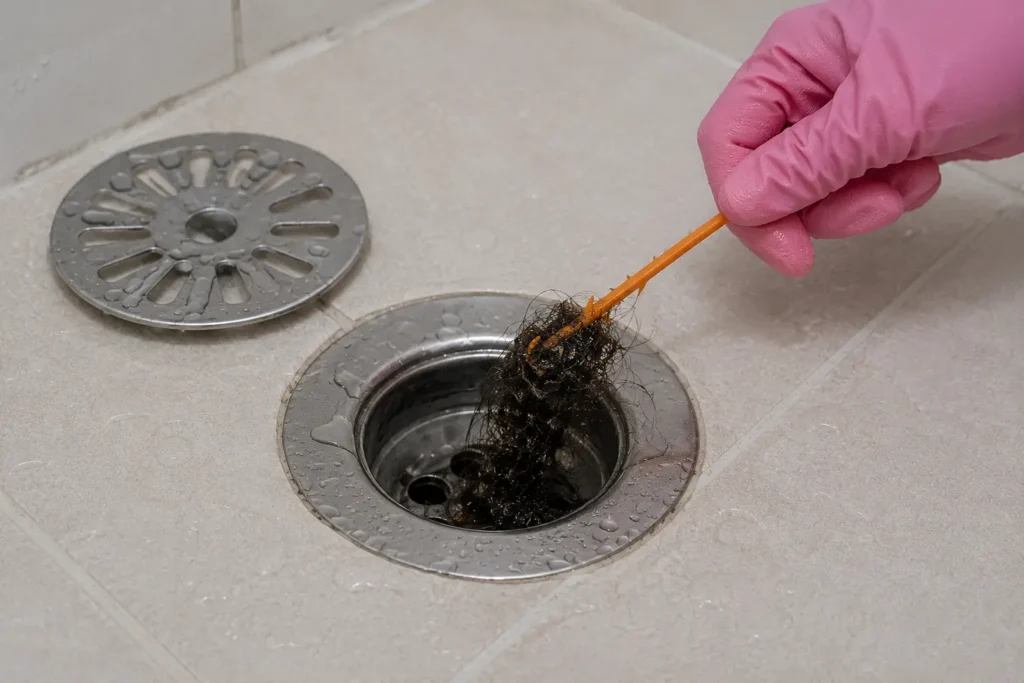
If you can see hair or debris near the surface, removing it may immediately improve drainage.
What You’ll Need
- Rubber gloves
- Flashlight
- Tweezers or needle-nose pliers
- Small drain-cleaning tool
Steps
First, remove the shower drain cover if possible.
Use a flashlight to inspect the drain. If you see hair near the opening, carefully pull it out using tweezers or pliers.
You may be surprised by how much hair is trapped just below the drain cover.
Once you’ve removed as much debris as possible, run warm water for about 30–60 seconds.
If the water drains normally again, the clog may already be solved.
Best for: Minor hair clogs located near the drain opening.
2. Flush the Drain With Hot Water
Soap residue and greasy buildup can sometimes restrict water flow inside the drain.
Hot water may help loosen some of this buildup.
How to Do It
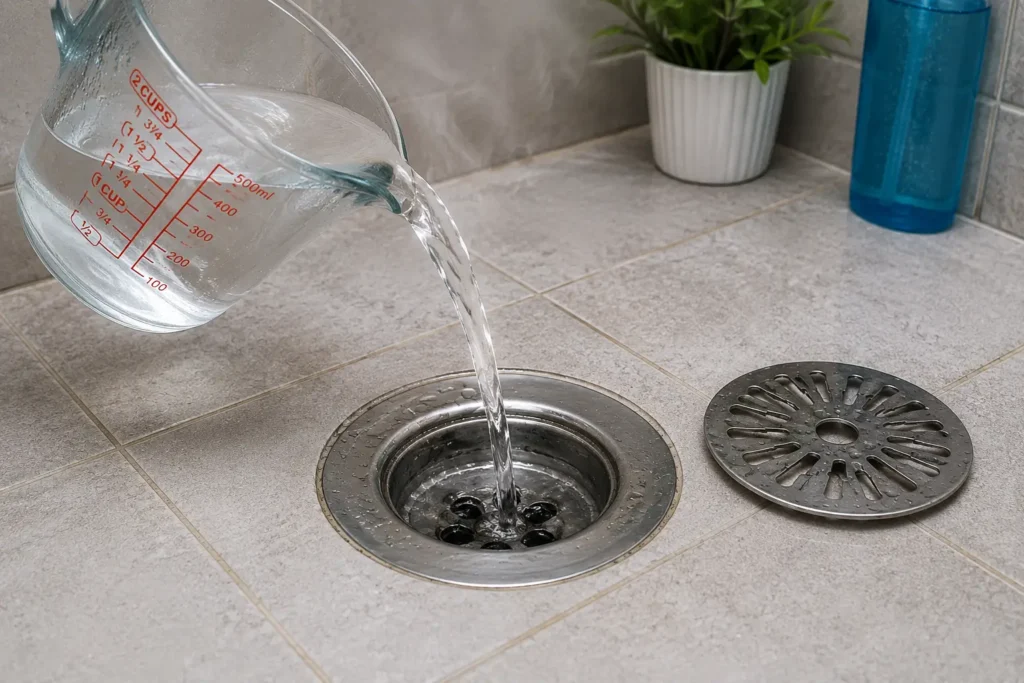
Heat some water until it is hot but not excessively boiling.
Slowly pour it into the drain in two or three stages, allowing several seconds between each pour.
Then run the shower and check whether drainage has improved.
Important Note
Be cautious with very hot or boiling water, particularly if you have PVC plumbing or are unsure about your pipe material. Extremely high temperatures can potentially damage certain plumbing components.
Hot water works better for soap buildup than for large clumps of hair.
Best for: Light soap and residue buildup.
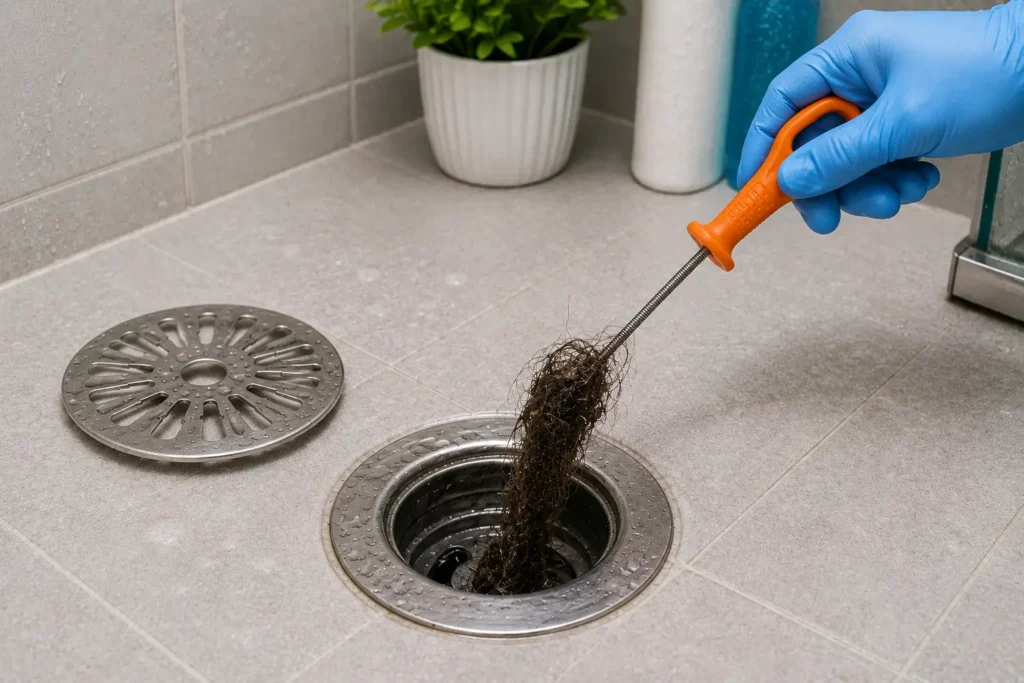
3. Use a Drain Snake or Plastic Hair Removal Tool
If the clog is deeper inside the drain, a simple drain snake can be extremely useful.
Small plastic drain-cleaning tools are inexpensive and designed specifically for pulling hair from bathroom drains.
Steps
- Remove the drain cover.
- Slowly insert the drain tool into the opening.
- Push it down carefully.
- Twist or move the tool slightly.
- Slowly pull it back out.
- Remove any hair or debris attached to it.
- Repeat if necessary.
After removing the blockage, flush the drain with warm water.
Avoid forcing the tool aggressively into the pipe. Gentle movement is usually enough for common hair clogs.
If you’re learning how to fix a clogged shower drain, a drain snake is one of the most effective tools for removing stubborn hair clogs deeper inside the pipe.
Best for: Hair clogs located deeper inside the drain.
4. Try a Plunger
A plunger isn’t only useful for toilets. It can sometimes clear a clogged shower drain as well.
The pressure created by plunging can loosen a blockage and restore water flow.
How to Plunge a Shower Drain
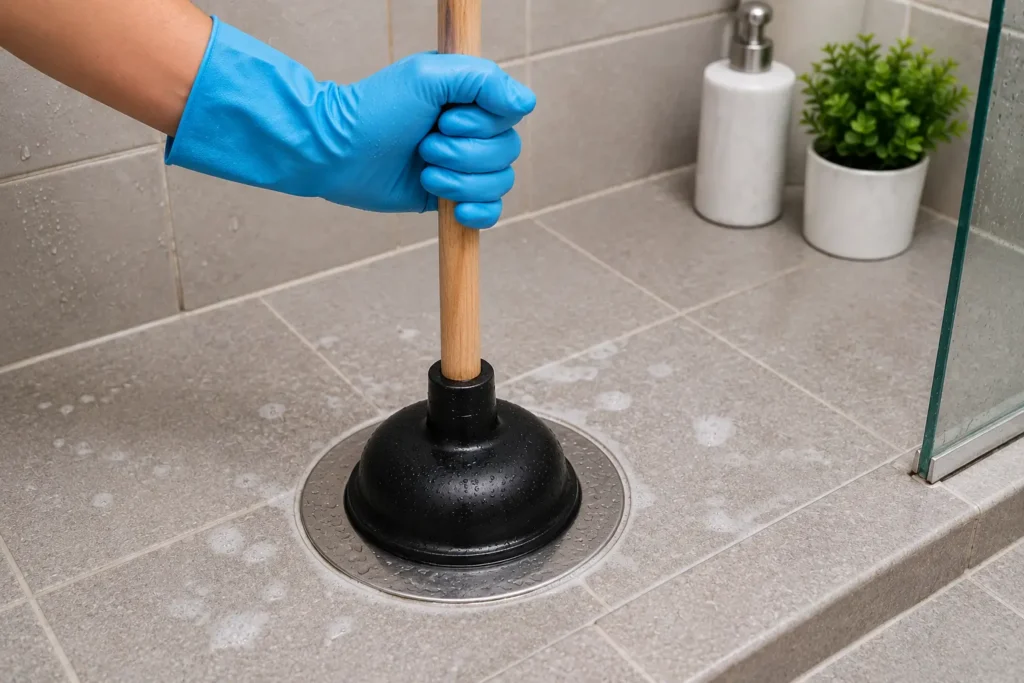
Add enough water to the shower floor to cover the bottom edge of the plunger.
Position the plunger directly over the drain so that it creates a good seal.
Push and pull firmly several times.
After approximately 15–20 seconds, remove the plunger and see whether the water begins draining faster.
You may need to repeat the process a few times.
Best for: Clogs that aren’t easily reachable from the drain opening.
5. Try Baking Soda and Vinegar for Light Buildup
For light residue and odors, baking soda and vinegar are commonly used household options.
However, this method shouldn’t be treated as a guaranteed solution for severe clogs. Mechanical removal is generally much more effective for large hair blockages.
What You’ll Need
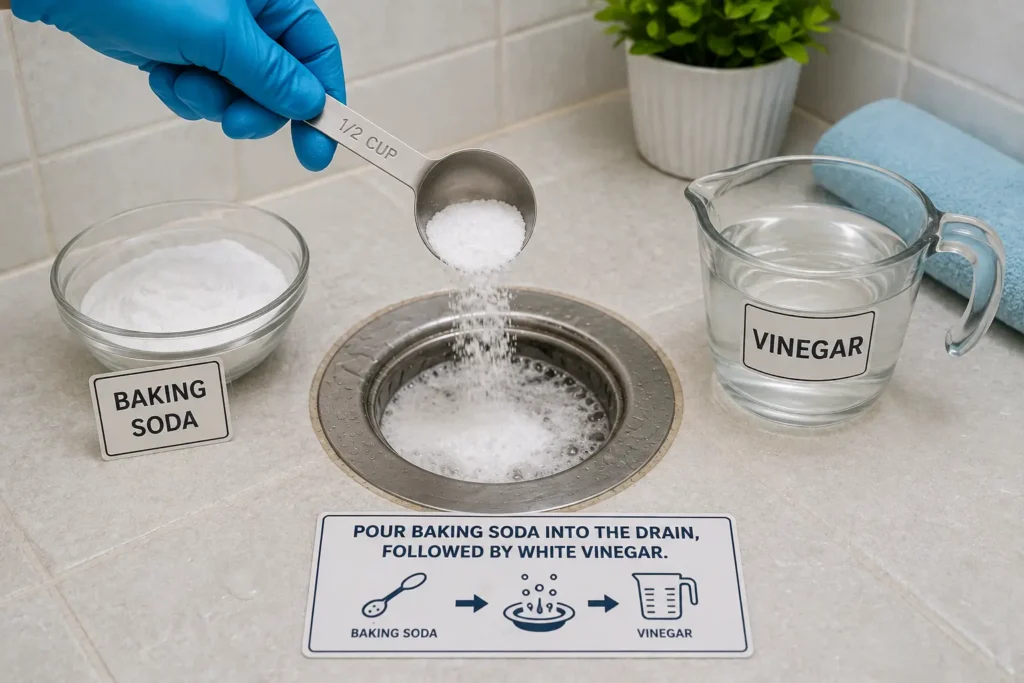
- About ½ cup baking soda
- About ½–1 cup white vinegar
- Warm water
Steps
Pour the baking soda into the drain.
Slowly add the vinegar.
The mixture will begin fizzing. Allow it to sit for approximately 15–30 minutes.
Then rinse the drain thoroughly with warm water.
This may help loosen light residue and reduce unpleasant odors.
When deciding how to fix a clogged shower drain, this method is worth trying for light soap buildup and odors, but it may not remove a severe hair clog.
Best for: Light buildup and drain odors.
6. Clean the Shower Drain Cover and Surrounding Area
Sometimes the problem isn’t entirely inside the pipe.
Hair, soap, and grime can accumulate around the drain cover itself, reducing the amount of water that can enter the drain.
Remove the cover if possible and clean both sides thoroughly.
An old toothbrush can help clean small openings and edges.
Wash away:
- Hair
- Soap residue
- Dirt
- Mineral deposits
- Shampoo buildup
Then reinstall the drain cover and test the shower.
This simple maintenance can also help prevent future clogs.
Regularly cleaning the drain cover is an important part of learning how to fix a clogged shower drain and prevent the same problem from returning.
7. Call a Plumber if the Clog Keeps Coming Back
Sometimes learning how to fix a clogged shower drain with DIY methods isn’t enough.
A recurring or severe blockage may be located much deeper in the plumbing system.
Consider contacting a qualified plumber if:
- Water doesn’t drain at all.
- Multiple drains in your home are slow.
- The clog keeps returning.
- You hear frequent gurgling from other drains.
- Sewage odors are present.
- Water backs up into another fixture.
- Basic mechanical cleaning doesn’t solve the problem.
Multiple slow drains can indicate a larger plumbing issue rather than a simple shower clog.
In that situation, repeatedly treating only the shower drain may not address the underlying problem.
If you’re dealing with other common bathroom plumbing problems, you may also want to learn how to fix a leaky faucet.
What Should You Avoid When Fixing a Clogged Shower Drain?
Trying several products at once can create unnecessary risks.
Avoid mixing different chemical drain cleaners or combining cleaning chemicals. Certain combinations can release dangerous gases or cause harmful reactions.
Also avoid repeatedly pouring aggressive chemicals down the drain.
For ordinary hair clogs, physical removal with a drain snake or hair-removal tool is often a better first approach.
If you’ve already used a chemical drain cleaner and later decide to call a plumber, tell them what product was used.
Which Method Should You Try First?
For most households, use this order:
Visible hair → drain tool → warm/hot water → plunger → light household cleaning method → professional help
Start with the least aggressive method.
For example, if a clump of hair is sitting two inches below the drain cover, there’s little reason to use strong chemicals when you can simply pull the blockage out.
How to Prevent a Shower Drain From Clogging Again
Once you know how to fix a clogged shower drain, a few simple preventive habits can help keep the same problem from coming back.
Once you’ve fixed the clog, prevention can save you from repeating the same job.
A few simple habits can make a big difference.
Use a Hair Catcher
Place a shower drain hair catcher over or inside the drain.
It traps loose hair before it enters the plumbing.
Clean the catcher regularly so water can continue flowing freely.
Remove Hair After Showering
Instead of allowing loose hair to wash down the drain, pick it up and throw it in the trash.
Clean the Drain Regularly
Check the drain opening every few weeks and remove visible buildup before it develops into a major clog.
Clean Soap Residue
Regularly cleaning the shower floor and drain cover reduces the amount of soap residue entering the drain.
Pay Attention to Slow Drainage
Don’t wait until the shower is completely blocked.
If water starts draining noticeably slower, clean the drain early. Small clogs are usually much easier to remove.
These simple habits make how to fix a clogged shower drain less of a recurring problem and help keep your shower draining properly.
Clogged Shower Drain vs. Bigger Plumbing Problem
A slow shower drain by itself usually points to a localized blockage.
However, pay attention to other fixtures.
If your shower, toilet, bathtub, and sinks are all draining slowly at the same time, the issue could be farther down the plumbing system.
Likewise, unusual gurgling or wastewater backing up into another fixture deserves professional attention.
Knowing the difference can prevent you from wasting time repeatedly treating the wrong drain.
Frequently Asked Questions
What is the easiest way to unclog a shower drain?
Start by removing visible hair and debris from underneath the drain cover. Hair is a common cause of shower clogs, and a simple plastic drain tool can often remove it quickly.
Can I use baking soda and vinegar in a shower drain?
They can be used for light residue and odors, but don’t expect them to remove every clog. A drain snake or hair-removal tool is usually more effective against compacted hair.
Why is my shower draining slowly?
Common causes include hair, soap scum, dirt, product residue, and mineral buildup. A clog may gradually become worse as additional debris collects inside the pipe.
Can I use a plunger on a shower drain?
Yes. A plunger can create pressure that helps loosen certain shower drain blockages. Make sure you create a good seal around the drain.
How often should I clean my shower drain?
Check it every few weeks, especially if several people use the shower or household members have long hair. Removing small amounts of buildup regularly can help prevent larger clogs.
Why does my shower drain keep clogging?
Recurring clogs may result from heavy hair accumulation, soap buildup, mineral deposits, or a blockage deeper in the plumbing. If the clog repeatedly returns after cleaning, professional inspection may be appropriate.
When should I call a plumber?
Consider professional help when DIY methods don’t restore drainage, several fixtures are affected, wastewater backs up, or the same clog repeatedly returns.
Final Thoughts
Knowing how to fix a clogged shower drain can save time and help you handle many minor bathroom problems without immediately calling a plumber.
Start with the simplest solution: remove visible hair and debris. If that doesn’t work, try a drain-cleaning tool, warm water, or a plunger.
Most importantly, don’t ignore slow drainage. Cleaning a small buildup early is much easier than dealing with a completely blocked shower later.
Regular cleaning and a simple hair catcher can go a long way toward keeping your shower drain flowing properly.