

A squeaky bed can turn every small movement into an annoying creak, squeal, or rubbing sound. Even worse, the noise can make it difficult to fall asleep or wake you up whenever you change position.
Fortunately, a noisy bed does not always mean you need a new frame. In many cases, loose bolts, rubbing joints, uneven flooring, or friction between different parts of the bed are responsible for the problem.
If you’re wondering how to fix a squeaky bed frame, the first step is finding exactly where the sound is coming from. Once you identify the source, many common squeaks can be fixed with basic household tools and a few simple adjustments.
Below are seven practical ways to troubleshoot a squeaky bed frame and make your bed quieter.
Why Does a Bed Frame Squeak?
Bed frames contain several parts that can move slightly when weight is applied. Over time, screws may loosen, joints can develop small gaps, and different surfaces may begin rubbing against each other.
Common causes include:
- Loose screws, bolts, or nuts
- Metal joints rubbing together
- Wooden joints moving under pressure
- Bed slats rubbing against the frame
- An uneven floor
- Loose or damaged support legs
- The headboard touching the wall
- Worn or cracked frame components
The noise may also come from the mattress or box spring rather than the bed frame itself, so it is important to locate the source before making repairs.
Before You Start: Find Where the Squeak Is Coming From
Before tightening or lubricating anything, determine whether the frame is actually causing the noise.
Remove the mattress and place it on the floor. Press down on different areas of the mattress.
If the mattress makes the same squeaking sound while it is on the floor, the mattress may be responsible.
If it stays quiet, inspect the bed frame.
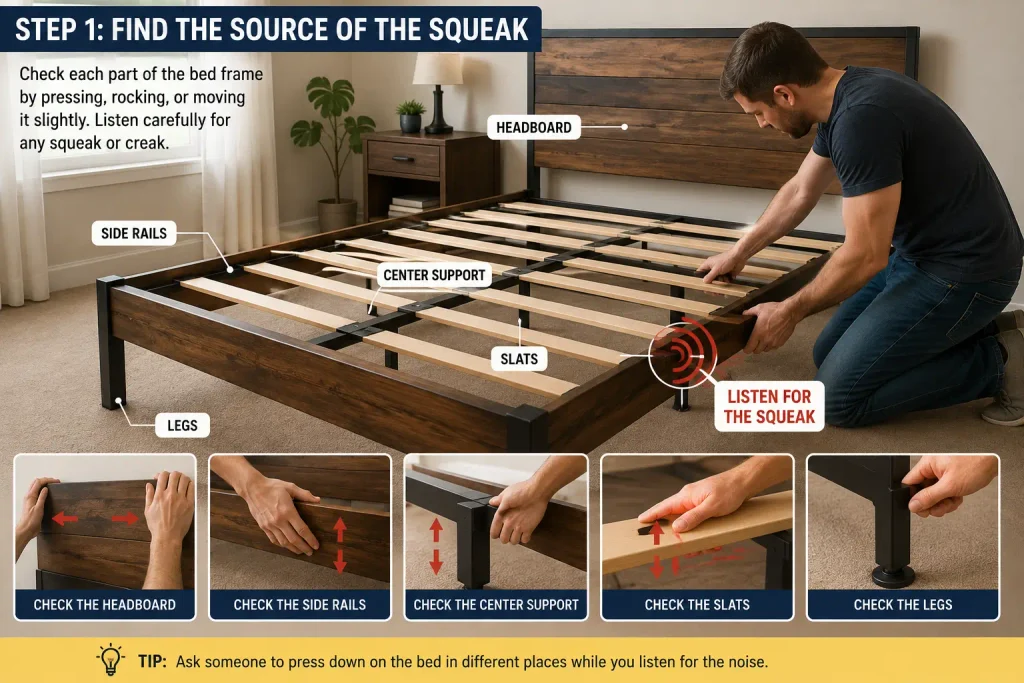
Gently push or rock different parts of the frame, including:
- Headboard
- Footboard
- Side rails
- Center support
- Slats
- Legs
- Connection points
Listen carefully while another person applies pressure to different parts of the frame if possible. Finding the exact source can save a lot of unnecessary work.
1. Tighten All Screws, Bolts, and Nuts
Loose hardware is one of the most common causes of a squeaky bed.
If you are learning how to fix a squeaky bed frame, checking and tightening the hardware is one of the best places to start.
Every time you get into bed, turn over, or get up, the frame experiences small movements. Over months or years, these movements can gradually loosen screws and bolts.
Remove the mattress so you can easily access the frame.
Check every visible connection point, especially where:
- Side rails connect to the headboard
- Side rails connect to the footboard
- Center supports attach to the frame
- Legs attach to the bed
- Metal brackets connect different sections
Use the correct screwdriver, wrench, or Allen key to tighten the hardware.
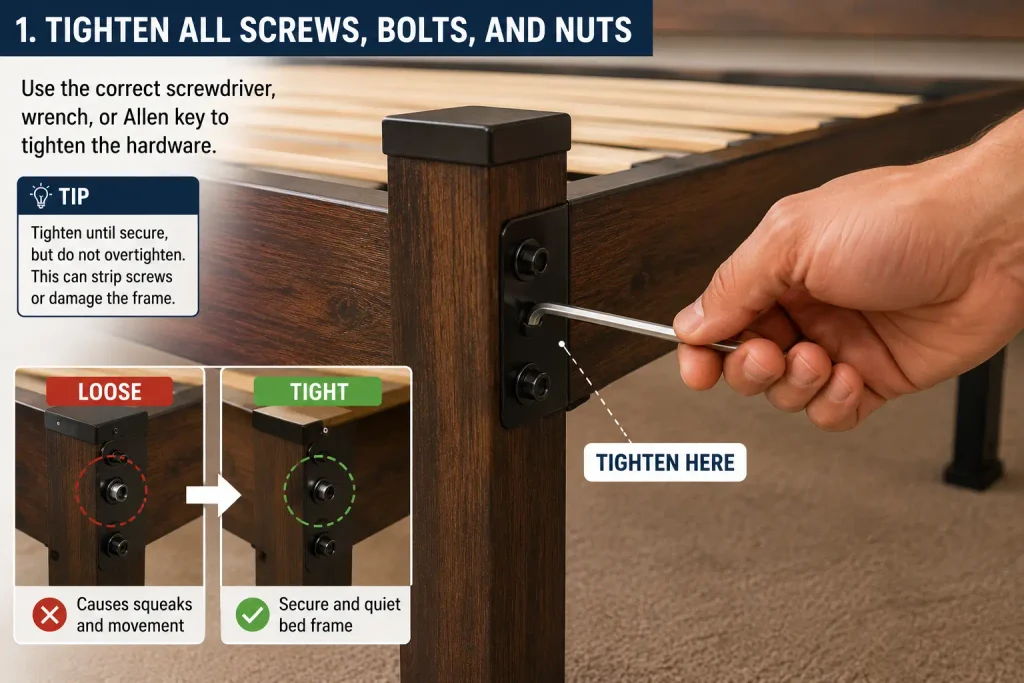
Tighten each connection until it is secure, but avoid excessive force. Overtightening can strip screws, damage threads, or crack wooden components.
Once everything is secure, test the frame again.
For many beds, this simple step is enough to stop the squeaking.
2. Lubricate Noisy Metal Joints
If you have a metal bed frame, friction between metal components can create squeaks.
After identifying the noisy joint, check whether two metal surfaces are rubbing against each other.
A suitable lubricant may help reduce this friction.
Apply a small amount only to the problem joint and move the frame slightly so the lubricant reaches the contact area.
Wipe away excess product afterward to prevent drips or stains.
Avoid spraying lubricant randomly over the entire bed frame. Identify the source first and follow the lubricant manufacturer’s instructions, especially around painted finishes, plastics, flooring, and fabrics.
If the squeak disappears after lubrication, friction between the components was likely the cause.
Similar friction can also cause noisy door hinges. If you’re dealing with that problem too, see our guide on how to fix a squeaky door.
3. Reduce Friction Between Wooden Joints
Wooden bed frames can squeak even when their hardware is properly tightened.
As wooden components move against one another, friction at the joints can create creaking sounds.
Inspect areas where wooden rails, slats, brackets, or support pieces meet.
If you identify a rubbing point, a thin cushioning material may help separate the surfaces.
For additional guidance, IKEA recommends using felt glides at contact points to help reduce friction and bed-frame noise.
Depending on the construction of the bed, suitable materials may include:
- Felt pads
- Thin fabric
- Cork
- Furniture pads

The goal is not to force thick material into structural joints. Instead, use a small amount of cushioning only where non-critical surfaces are rubbing.
After adding the padding, test the frame again.
This can be especially useful when learning how to fix a squeaky bed frame made primarily from wood.
4. Stop Bed Slats From Moving
Bed slats can be another major source of squeaking.
When figuring out how to fix a squeaky bed frame, always check whether loose slats are moving or rubbing against their supports.
When slats move against the side rails or their supports, each movement on the mattress can create noise.
Remove the mattress and inspect the slats.
Look for:
- Slats that slide from side to side
- Gaps between slats and supports
- Loose slat holders
- Cracked or warped slats
- Areas where wood rubs directly against wood or metal
If the slats are simply rubbing against the frame, placing appropriate felt or cushioning pads at the contact points may reduce noise.
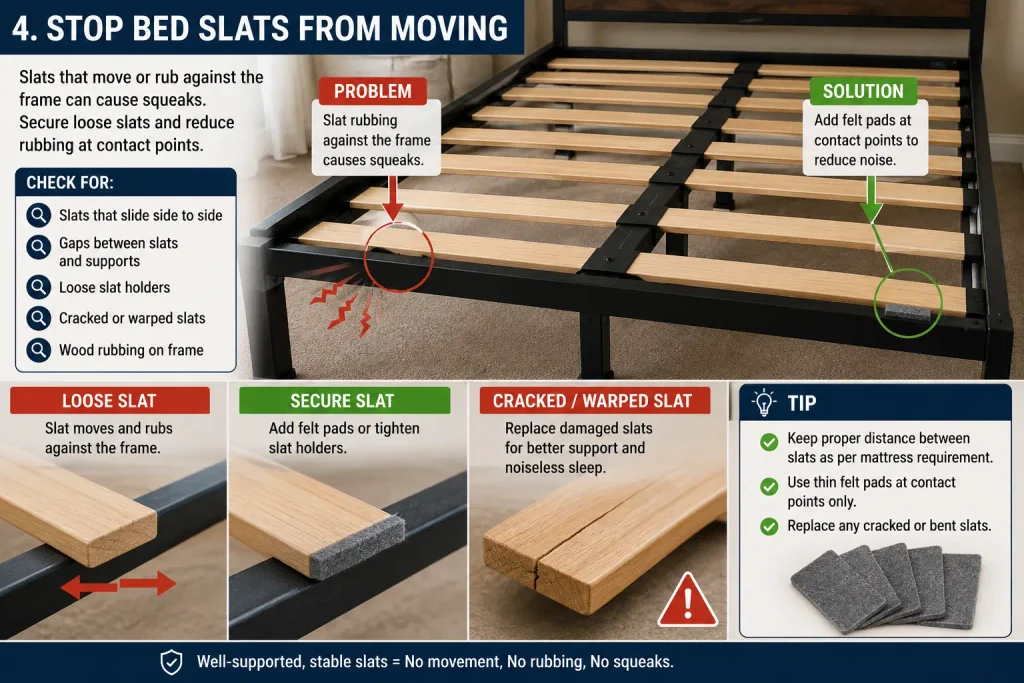
Make sure any adjustment does not interfere with the bed manufacturer’s required slat spacing or mattress support.
If a slat is cracked or badly warped, replacing it is generally better than trying to silence it with padding.
5. Check the Floor and Stabilize the Bed
Sometimes the bed frame itself is perfectly fine.
An uneven floor can cause one leg to sit slightly higher than another. This is an easy issue to overlook when trying to understand how to fix a squeaky bed frame. When weight shifts across the bed, the frame may flex and squeak.
Try gently rocking the empty bed from different corners.
If one leg lifts or moves, the frame may not be sitting evenly.
First, check whether:
- All legs are properly attached
- Adjustable feet are set correctly
- Floor protectors are damaged
- Something is trapped underneath a leg
If the floor is slightly uneven, use a proper furniture shim or suitable floor-safe support to stabilize the affected leg.
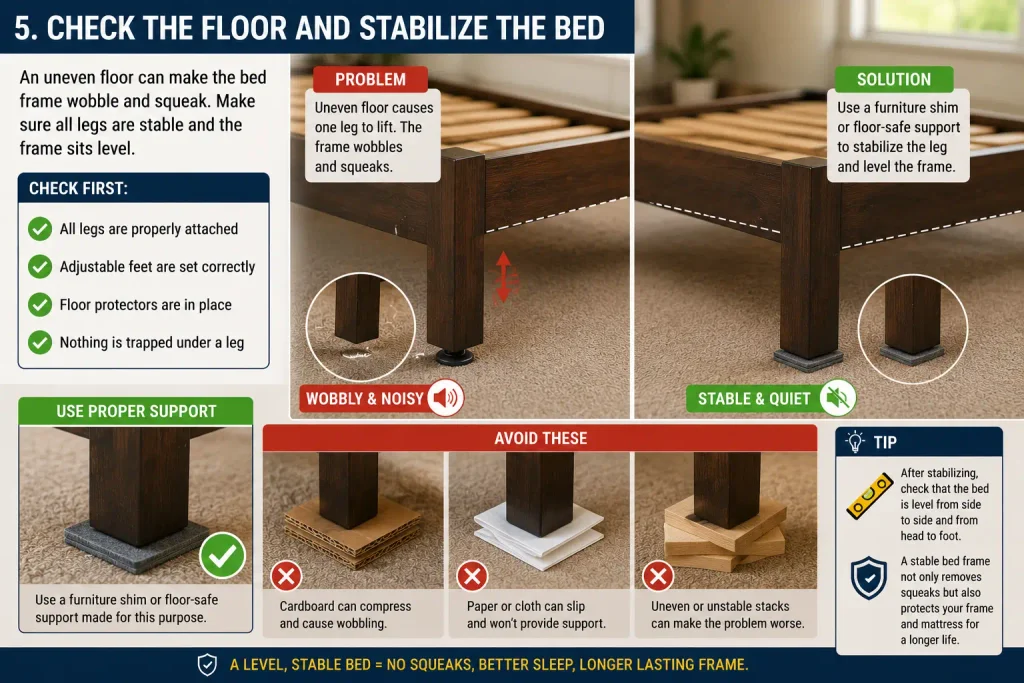
Avoid using unstable stacks of cardboard, folded paper, or other materials that can compress or slide.
Once the frame sits firmly on all its legs, test it again.
Stabilizing the bed can eliminate both squeaking and unnecessary stress on the frame.
6. Move the Headboard Away From the Wall
A squeak that sounds like it is coming from the bed frame may actually be caused by the headboard rubbing against the wall.
Sit on the bed and move around while watching the headboard.
If it touches the wall whenever the frame moves, pull the bed slightly forward and test it again.
If the sound disappears, you have found the problem.
You can maintain a small gap between the headboard and wall or use appropriate felt furniture pads where contact cannot easily be avoided.
Also check whether the headboard itself is loose.
Tighten its mounting hardware if necessary.
A loose headboard can amplify small movements and make a minor squeak sound much louder.
7. Inspect the Frame for Damage or Worn Parts
If tightening, padding, and stabilizing the bed do not solve the problem, inspect the entire frame carefully.
Look for:
- Cracked wood
- Split joints
- Bent metal brackets
- Damaged welds
- Missing fasteners
- Loose support beams
- Broken slats
- Damaged legs
Do not continue using a bed frame if an important structural component appears broken or unstable.
A squeak caused by structural damage is different from harmless friction between two surfaces.
Depending on the frame, the safest solution may be replacing the damaged component, contacting the manufacturer, or having the frame professionally repaired.
Avoid makeshift repairs that could weaken a load-bearing part of the bed.
What If the Bed Still Squeaks After Tightening Everything?
If all the hardware is tight but the noise continues, isolate each component.
At this stage, knowing how to fix a squeaky bed frame means testing the frame, mattress, and foundation separately.
Remove the mattress and test the frame.
Then test the mattress separately.
If your bed uses a box spring or foundation, test that separately as well.
This process can help determine whether the sound comes from:
Bed frame: Usually joints, hardware, slats, legs, or supports.
Mattress: Internal components may produce noise when pressure is applied.
Foundation or box spring: Internal or wooden components can develop squeaks over time.
Finding the correct component is essential before spending money on replacement parts.
How to Fix a Squeaky Bed Frame Without Taking It Apart
You may not need to completely disassemble the bed.
Start with the least invasive fixes:
Check and tighten accessible hardware, stabilize the legs, move the headboard away from the wall, inspect the slats, and identify visible friction points.
If the noise persists and appears to come from a hidden joint, partial disassembly may be necessary to inspect the connection properly.
Taking photos before removing hardware can make reassembly easier.
Can You Fix a Squeaky Wooden Bed Frame?
Yes. Many wooden bed-frame squeaks can be reduced or eliminated.
The most important step is identifying whether the noise comes from loose hardware, wood-on-wood friction, moving slats, or damaged components.
Tightening connections and cushioning appropriate rubbing points are often effective.
However, cracked wood or damaged load-bearing joints should be repaired correctly rather than simply padded to hide the sound.
Can You Fix a Squeaky Metal Bed Frame?
Metal frames commonly squeak because bolts become loose or metal components rub against each other.
Start by tightening every connection.
Then identify specific metal-on-metal contact points and use a suitable lubricant according to its instructions if appropriate.
Also inspect the frame for bent components, damaged fasteners, or cracked welds.
If you notice structural damage, stop using the frame until it has been properly repaired or replaced.
How to Prevent Your Bed Frame From Squeaking Again
Once you’ve learned how to fix a squeaky bed frame, a little maintenance can help prevent the noise from returning.
Every few months:
- Check important bolts and screws
- Make sure the bed remains level
- Inspect slats and center supports
- Keep the frame clean
- Watch for damaged furniture pads
- Check that the headboard isn’t rubbing against the wall
- Investigate new noises before they become worse
Avoid jumping on the bed or placing loads on the frame beyond the manufacturer’s recommendations.
Regular inspection can also help identify loose or damaged components before they become a larger problem.
When Should You Replace a Squeaky Bed Frame?
A squeak alone usually isn’t a reason to replace a bed frame.
Consider replacement or professional repair when you find significant structural problems such as cracked load-bearing wood, badly bent supports, broken welds, unstable legs, repeatedly failing connections, or extensive damage that cannot be safely repaired.
Safety and stability are more important than eliminating the sound.
Frequently Asked Questions
Why does my bed squeak every time I move?
Loose hardware, rubbing joints, moving slats, an uneven floor, or a noisy mattress or foundation can all cause squeaking when your weight shifts. Finding which of these parts is moving is the key to understanding how to fix a squeaky bed frame correctly.
Does tightening a bed frame stop squeaking?
Often, yes. Loose screws, nuts, and bolts are among the most common sources of bed-frame noise. Tightening them is a good first repair to try.
What can I put between bed slats to stop squeaking?
If friction is causing the noise, thin felt or suitable furniture cushioning at the contact points may help. Do not alter the required support or spacing of the slats.
Why does my wooden bed frame squeak?
Wooden frames can squeak when joints loosen or wooden surfaces rub against each other. Changes in the wood and worn connection points may also contribute to movement.
Why does my metal bed frame squeak?
Loose fasteners and metal-on-metal friction are common causes. Tightening the hardware and treating the specific friction point appropriately can often help.
Is a squeaky bed frame dangerous?
Not necessarily. Many squeaks come from harmless friction or loose hardware. However, a squeak accompanied by cracked wood, bent supports, broken welds, unstable legs, or significant movement should be inspected before continuing to use the bed.
Final Thoughts
Knowing how to fix a squeaky bed frame starts with finding the actual source of the noise rather than randomly tightening or lubricating parts.
Begin with the easiest fixes: tighten loose hardware, check the slats, stabilize the legs, and make sure the headboard isn’t rubbing against the wall. For friction-related noise, appropriate cushioning or lubrication may solve the problem.
If the squeaking continues, inspect the frame for worn or damaged structural components.
A few careful adjustments can often turn an annoying squeaky bed back into a quiet and comfortable place to sleep.