
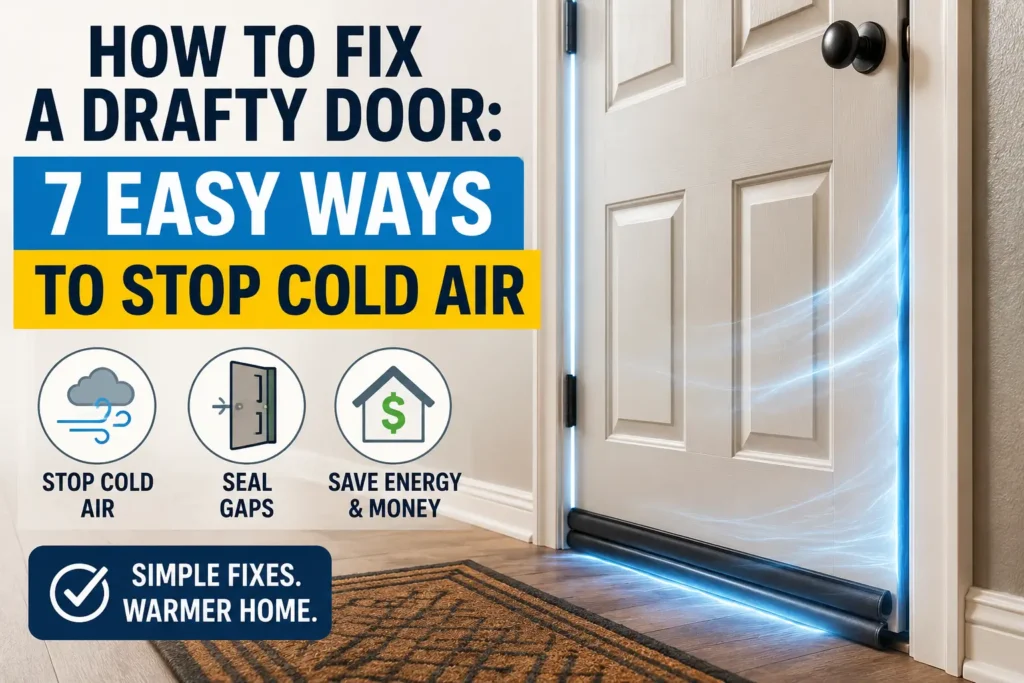
A cold draft coming through a closed door can make an otherwise comfortable room feel chilly. It can also force your heating system to work harder as warm indoor air escapes and cold outdoor air enters.
The good news is that many door drafts are caused by relatively simple problems: worn weatherstripping, a gap under the door, loose hardware, or small openings around the frame.
If you’re trying to figure out how to fix a drafty door, don’t start by replacing the entire door. First, find exactly where the air is entering. Once you identify the leak, you can choose the right fix instead of sealing areas that aren’t causing the problem.
Here are seven practical methods to try.
Why Is Cold Air Coming Through a Closed Door?
A door can look completely closed and still allow air to pass through small openings.
Common causes include:
- Worn or compressed weatherstripping
- A gap underneath the door
- A door that doesn’t sit evenly in its frame
- Loose hinges
- Gaps between the door frame and surrounding wall or trim
- A damaged or poorly adjusted threshold
- An older or damaged exterior door
ENERGY STAR identifies windows and doors as common locations for household air leaks, although significant leaks can exist elsewhere in a home as well.
Before buying anything, determine where your particular leak is located.
Before You Start: Find Where the Draft Is Coming From
Close and latch the door normally.
Slowly inspect the entire perimeter, including:
- Top of the door
- Hinge side
- Latch side
- Bottom edge
- Around the door trim
On a cold or windy day, you may be able to feel moving air with your hand.
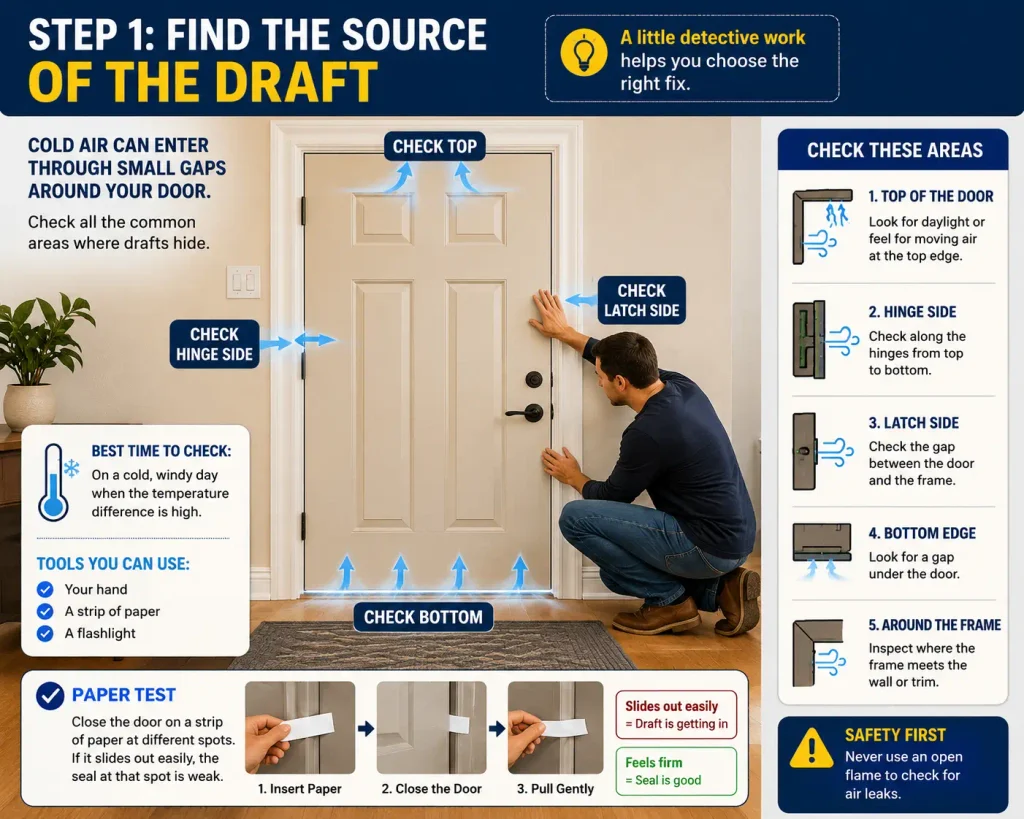
You can also look for visible daylight around the edges. ENERGY STAR suggests a simple light test for suspected leaks: light visible through an area that should be sealed can indicate an air-leak location.
Another useful check is the paper test. Close the door on a strip of paper at several points around the perimeter. If the paper slides out very easily at one location but feels firmly held elsewhere, the seal in that area may be weak.
Avoid using an open flame to locate drafts.
Once you’ve found the problem area, choose the appropriate method below.
1. Replace Worn Weatherstripping
Weatherstripping is one of the first things to inspect when a draft enters around the sides or top of a closed door.
When learning how to fix a drafty door, checking the condition of the weatherstripping is one of the best places to start.
Over time, weatherstripping can:
- Flatten
- Crack
- Tear
- Become loose
- Pull away from the frame
- Lose its ability to compress against the door
Open the door and inspect the seal around the frame.
If it is visibly damaged or no longer contacts the closed door properly, replacement may help.
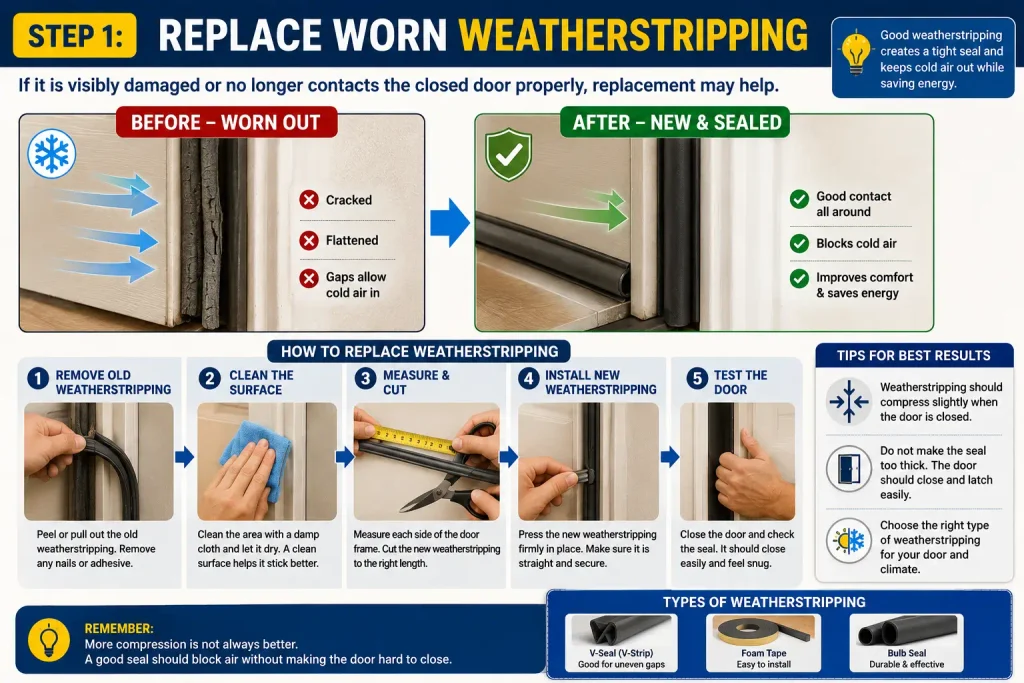
Remove the old material carefully and clean the mounting surface according to the replacement product’s instructions.
Measure each section before cutting new weatherstripping.
Install it so that the closed door compresses the seal enough to block air without making the door difficult to close or latch.
Weatherstripping is intended for moving components such as doors and operable windows, according to U.S. Department of Energy guidance.
Don’t Make the Seal Too Tight
More compression isn’t automatically better.
Weatherstripping that is too thick can make a door difficult to close, put unnecessary pressure on hardware, or prevent the latch from engaging correctly.
The goal is a consistent seal while maintaining normal door operation.
2. Install or Adjust a Door Sweep
If you can feel cold air entering underneath the door, inspect the bottom seal.
For anyone figuring out how to fix a drafty door, a worn or poorly positioned door sweep is an important problem to rule out.
Many exterior doors use a door sweep attached to the bottom edge. Its purpose is to reduce the gap between the door and threshold.
Look for:
- Torn rubber or vinyl
- Missing pieces
- A sweep sitting too high
- Uneven contact with the threshold
- A large visible gap beneath the door
If the existing sweep is adjustable, reposition it so it makes appropriate contact when the door is closed.
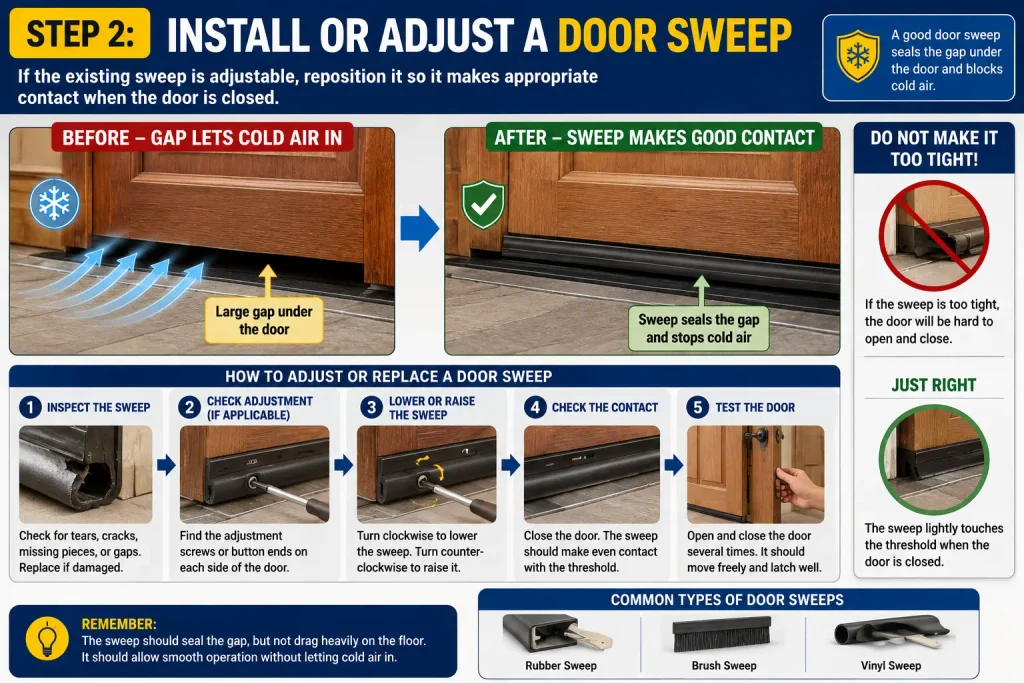
If it is damaged, replacement may be easier.
Measure the width of the door before purchasing a new sweep and follow the manufacturer’s installation instructions.
The sweep should help close the gap without dragging so heavily that the door becomes difficult to operate. U.S. Department of Energy weatherization guidance specifically includes door sweeps alongside weatherstripping as a way to reduce air infiltration while maintaining proper door operation.
3. Check and Adjust the Door Threshold
The threshold is the raised surface at the bottom of many exterior doorways.
The bottom seal or sweep should meet the threshold closely enough to limit airflow.
If there is a gap in one area but not another, inspect the threshold for:
- Loose screws
- Damage
- Uneven positioning
- Worn seals
- Incorrect height
Some thresholds are adjustable. If yours is, follow its manufacturer’s instructions and make small adjustments.
Raise it only enough to create an effective seal.
After each adjustment, open and close the door several times. Make sure it still moves freely and latches normally.
If the threshold is cracked, badly worn, or structurally damaged, replacement may be more appropriate than repeated adjustment.
4. Tighten Loose Hinges and Check Door Alignment
Sometimes the seal isn’t the real problem.
A door can sag slightly as hinge screws loosen or components wear. That can create an uneven gap between the door and frame.
With the door open, inspect the hinges.
If the hinges also make noise when the door moves, see our guide on how to fix a squeaky door for simple ways to deal with noisy hinges.
Check whether:
- Screws are visibly loose
- Hinges move when the door is lifted gently
- The gap around the door is uneven
- The door rubs against the frame
- The latch no longer lines up properly
Tighten loose hinge screws carefully using the correct screwdriver.
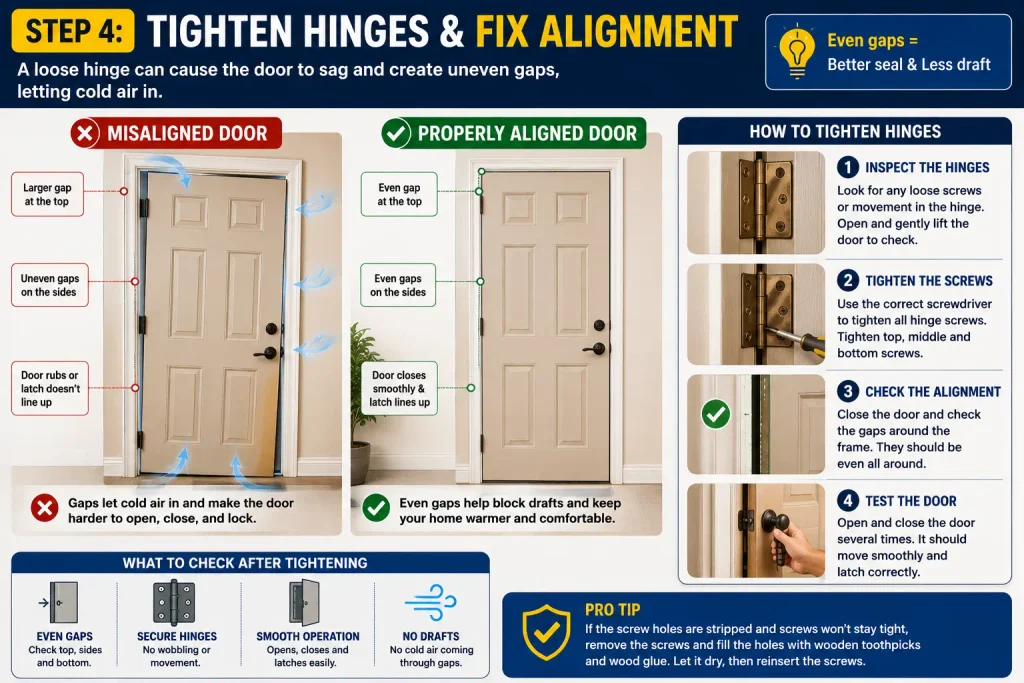
Don’t overtighten or strip the screw holes.
Then close the door and check the perimeter again.
If correcting loose hardware restores even contact with the weatherstripping, the draft may disappear without adding a thicker seal.
If the door remains significantly misaligned, the hinge, frame, or door itself may need further repair.
5. Seal Small Gaps Around the Door Frame
Cold air doesn’t always pass between the door and weatherstripping.
Sometimes it enters through stationary cracks around the door frame or trim.
Inspect where the frame and trim meet the surrounding wall.
Small cracks in appropriate stationary locations may be suitable for caulk.
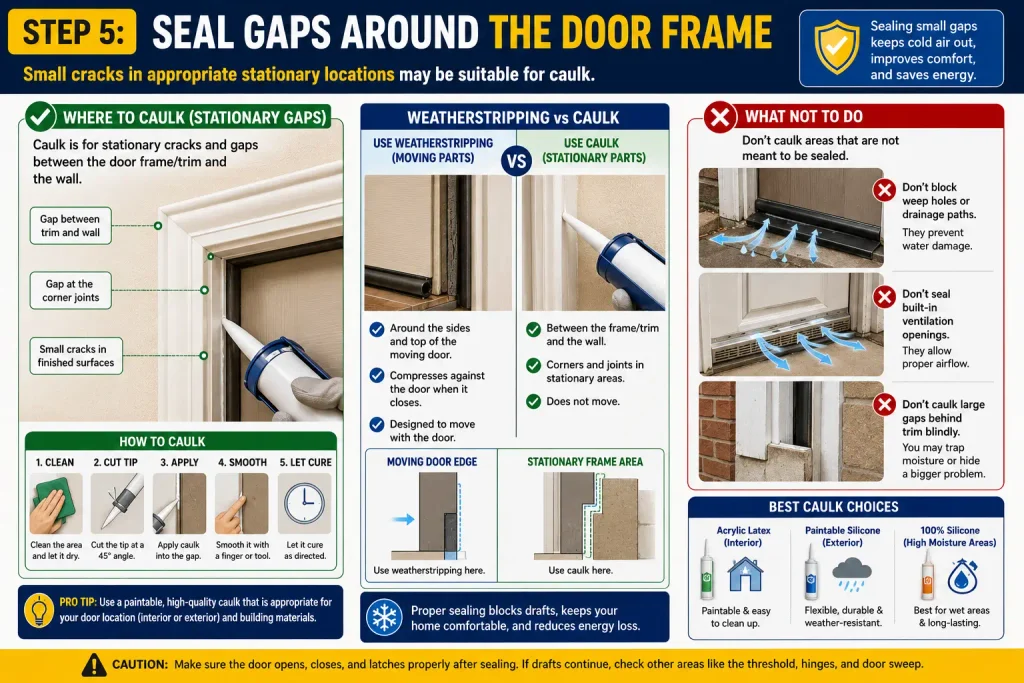
The distinction is important:
Weatherstripping is generally used where components move, while caulk is generally used for cracks and openings between stationary building components.
Choose a caulk appropriate for the specific location, materials, and indoor/outdoor exposure, and follow the manufacturer’s instructions for surface preparation, application, curing, and temperature limits.
Do not simply fill every visible opening without understanding its purpose. Some gaps may relate to drainage, ventilation, or the door assembly’s design.
If the leak appears to come from a large concealed gap behind the trim, professional assessment may be appropriate.
6. Use a Draft Stopper as a Temporary Solution
If you need an immediate or renter-friendly solution, a draft stopper can reduce airflow underneath some doors.
Draft stoppers are placed along the bottom edge of the door to help block moving air.
They can be useful when:
- You rent your home
- Permanent modifications aren’t allowed
- You’re waiting for replacement weatherstripping
- You need a temporary seasonal solution
The Department of Energy also lists draft stoppers as an option for renters dealing with air entering or escaping beneath doors.
However, a draft stopper should not be treated as a permanent repair for a damaged exterior door, deteriorated threshold, or serious installation problem.
Make sure any temporary product does not create a tripping hazard or interfere with safe door operation.
7. Repair Larger Gaps or Consider Door Replacement
If weatherstripping, a door sweep, alignment adjustments, and minor sealing don’t solve the problem, inspect the overall condition of the door assembly.
A persistent draft may indicate:
- A warped door
- A damaged frame
- Significant installation gaps
- Deteriorated components
- A poorly fitting door
- Structural movement
- An old or inefficient exterior door
At this stage, repeatedly adding thicker weatherstripping may only hide the underlying problem.
ENERGY STAR notes that air sealing around doors can improve comfort and energy efficiency, while the Department of Energy notes that older, poorly installed, uninsulated, or improperly sealed exterior doors may waste energy.
If the frame is damaged, the door is severely warped, or you cannot determine where the leak originates, consider having the assembly inspected by a qualified professional.
What If the Door Is Still Drafty After Replacing Weatherstripping?
If new weatherstripping doesn’t solve the problem, check whether the door is actually pressing against it evenly.
Close the door and inspect the entire seal.
You may discover that:
- One corner doesn’t contact the weatherstripping
- The door has sagged
- The threshold is too low
- The bottom sweep is worn
- Air is entering behind the trim rather than around the door itself
This is why identifying the source is an important part of how to fix a drafty door.
Adding another layer of weatherstripping won’t solve an air leak behind the frame.
How to Fix a Drafty Door Without Replacing It
A complete door replacement is often unnecessary when the door and frame are still in good condition.
Depending on the source of the leak, you may only need to:
- Replace damaged weatherstripping.
- Adjust or replace the door sweep.
- Adjust an appropriate threshold.
- Tighten loose hinges.
- Seal suitable stationary cracks.
- Correct minor alignment problems.
Start with the least invasive repair that addresses the actual leak.
After each change, close and latch the door and test the same area again.
This makes it easier to tell which repair actually solved the problem.
How to Fix a Drafty Door at the Bottom
A bottom draft usually points to the door sweep, bottom seal, threshold, or alignment.
First, close the door and inspect the gap from inside.
If the gap runs evenly across the bottom, the sweep may be worn or positioned too high.
If the gap is much larger on one side, check the door alignment before adjusting the threshold.
For an adjustable threshold, make only small changes and confirm that the door continues to open, close, and latch correctly.
Avoid forcing a tight seal that causes excessive rubbing.
How to Fix a Drafty Door on the Sides or Top
Air entering around the sides or top commonly indicates a problem with weatherstripping or door alignment.
Inspect the seal for flattened, torn, missing, or loose sections.
Then check whether the spacing between the door and frame is reasonably even.
If the gap changes significantly from top to bottom, correcting alignment may be necessary before installing new weatherstripping.
Otherwise, even brand-new weatherstripping may not make consistent contact.
Can a Drafty Door Increase Heating or Cooling Costs?
Air leaks allow conditioned indoor air to escape while outdoor air enters, which can make a home less comfortable and increase the heating or cooling needed to maintain the desired temperature.
ENERGY STAR says sealing and insulating can improve comfort and energy efficiency; it estimates average savings from broader air-sealing and insulation improvements, although the savings from fixing one specific door will vary and shouldn’t be assumed from whole-home estimates.
So fixing a drafty door can be worthwhile, but don’t assume that every high energy bill is caused by the door alone.
Other leaks may exist in windows, attics, basements, penetrations, and other parts of the building envelope.
How to Prevent Door Drafts From Coming Back
After you’ve fixed the leak, inspect the door periodically.
Once you understand how to fix a drafty door, regular checks can help you catch worn seals and alignment problems before cold air starts getting through again.
Check Weatherstripping
Look for flattened, torn, or loose sections and replace them when they no longer seal properly.
Keep Hinges Secure
Loose hardware can gradually affect alignment.
Inspect the Door Sweep
Bottom seals experience frequent contact and may wear over time.
Watch for New Gaps
Changes in the door, frame, threshold, or surrounding structure can create new leak paths.
Keep the Door Operating Properly
A good air seal should not prevent the door from opening, closing, or latching safely.
Routine checks can help you catch small problems before the door becomes noticeably drafty again.
When Should You Call a Professional?
Many minor drafts can be handled with straightforward DIY repairs.
Professional help is worth considering if:
- The frame is visibly damaged
- The door is badly warped
- Large gaps exist behind the frame or trim
- The door cannot be aligned properly
- There is water damage or rot
- The problem appears structural
- Air leakage continues despite appropriate sealing
Also be cautious about aggressive whole-home air sealing without considering ventilation and combustion safety. ENERGY STAR notes that tighter homes may require attention to indoor air quality and that air-sealing work can affect combustion appliances in some situations.
Frequently Asked Questions
What is the easiest way to stop a door draft?
First identify where the air is entering. Worn weatherstripping around the sides and top or a deteriorated door sweep at the bottom are common problems and may be relatively simple to correct.
How do I know if my door weatherstripping is bad?
Look for cracking, tearing, flattening, loose sections, or areas where the closed door no longer makes consistent contact with the seal.
What can I put at the bottom of a door to stop cold air?
Depending on the door, an appropriately fitted door sweep or bottom seal can reduce the gap. A draft stopper can also provide a temporary or renter-friendly solution.
Should I use caulk or weatherstripping around a door?
Use depends on where the leak is. In general, caulk is used for suitable stationary cracks and gaps, while weatherstripping is designed to seal moving components such as doors.
Why is my new door still drafty?
Possible causes include improper installation, incorrect weatherstripping, an uneven threshold, poor alignment, or gaps between the frame and surrounding structure.
Can I put two layers of weatherstripping on a drafty door?
Usually, adding more material without identifying the problem isn’t the best approach. Excessive thickness can interfere with closing and latching. Use weatherstripping sized appropriately for the gap and follow its installation instructions.
Does a door draft always mean I need a new door?
No. Many drafts result from replaceable seals, loose hardware, alignment issues, or small gaps. Replacement becomes more reasonable when the door or frame is badly damaged, warped, deteriorated, or cannot be sealed properly.
Final Thoughts
Learning how to fix a drafty door is mostly about finding the air leak before choosing the repair.
Start by inspecting the weatherstripping and bottom seal. Then check the threshold, hinges, alignment, and stationary gaps around the frame. A draft stopper can provide a temporary solution, while significant damage or installation problems may require professional repair or replacement.
Most importantly, don’t try to make the door airtight by simply adding thicker and thicker seals. The best repair is one that stops unwanted airflow while allowing the door to open, close, and latch normally.
For broader guidance, ENERGY STAR’s Seal and Insulate guide explains how weatherstripping and air sealing can help address drafts and improve home comfort.
Internal-link opportunity: Is article ko aapke existing How to Fix a Squeaky Door post se naturally connect karna chahiye. Publish karte waqt main exact sentence + placement de dunga, aur Home Fixes category link bhi add karenge.