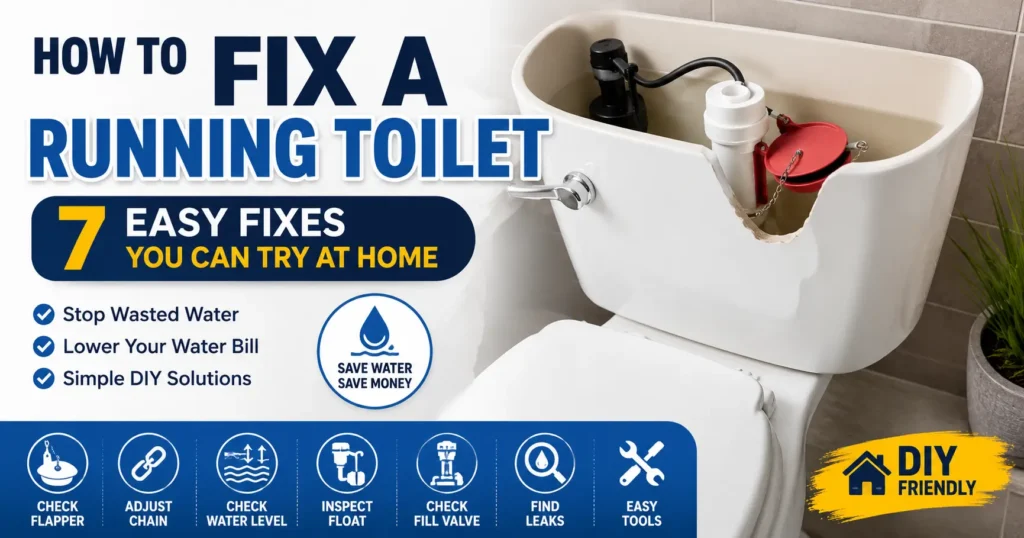
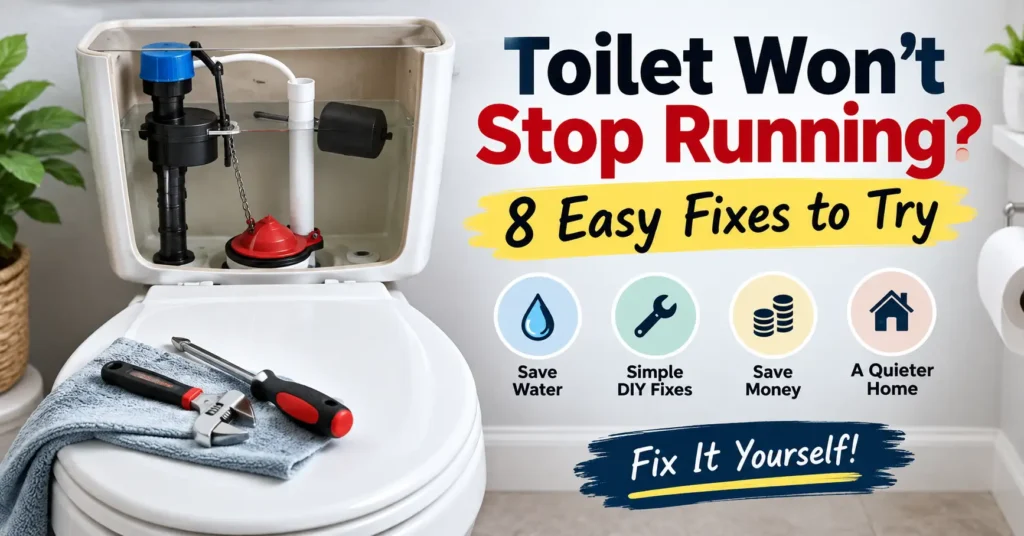
A running toilet can be annoying, noisy and waste a surprising amount of water. The good news is that in many cases you can fix the problem yourself without calling a plumber.
If you’re dealing with other bathroom plumbing problems, you may also want to read our guide on How to Fix a Leaky Faucet.
If your toilet won’t stop running, the cause is usually something simple, such as a worn-out flapper, loose chain, incorrectly adjusted float, or a faulty fill valve.
We’ll walk through 8 easy fixes you can try at home in this guide. Most of these repairs require only minutes and simple tools.
Before you start: If you notice a large leak, a cracked toilet tank, water coming out onto the floor, or a problem you can’t identify, turn off the water and consider calling a licensed plumber.
Why Won’t My Toilet Stop Running?
When you flush a toilet , the tank fills with water . Once the tank has filled to the correct level the fill valve should turn off.
If there is a problem with this process, water could continue to flow into the tank and then into the bowl.
Common causes include:
- A damaged or dirty flapper
- A loose or tangled flush chain
- A toilet handle that does not return properly
- An incorrectly adjusted float
- A faulty fill valve
- Water level set too high
- Mineral buildup around the flush valve
- Worn or damaged toilet components
For more information about toilet leaks and water-saving maintenance, see the [U.S. EPA WaterSense guide to residential toilets].
The simplest method to find the cause is to remove the lid from the tank and see what occurs as you flush.
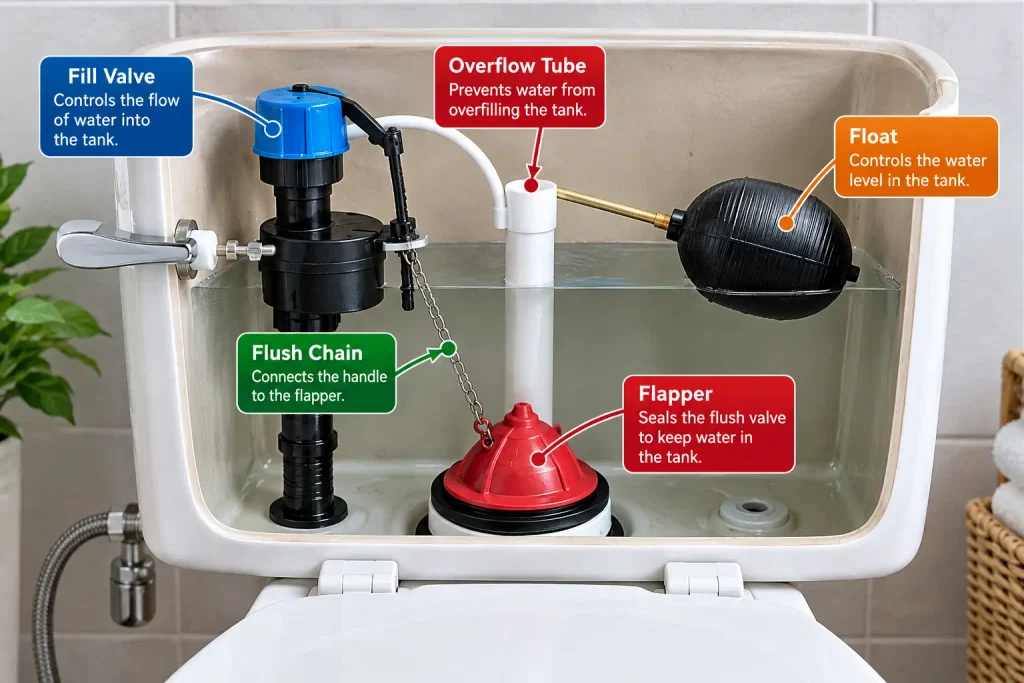
8 Easy Fixes If Your toilet won’t stop running
1. Check the Toilet Handle
Start with the most simple cause you can.
Sometimes the toilet handle is stuck or loose, or does not return all the way back after flushing. This can leave the flush mechanism slightly ajar.
What to do:
Take off the lid of the toilet tank.
Flush the bowl.
Watch the handle and the attached lever.
Check that the lever moves freely.
If the handle is loose, tighten the nut inside the tank.
Be sure the handle returns to its normal position after you flush.
If the handle is broken or difficult to move, replacing it is usually easy and inexpensive.
Tip: Do not over tighten the handle nut. If it fits too tightly it may damage the porcelain tank.
2. Inspect the Flapper
A common cause of a running toilet is a flapper.
The rubber valve at the bottom of the tank is what raises up when you flush. It should drop back down after the flush and form a watertight seal.
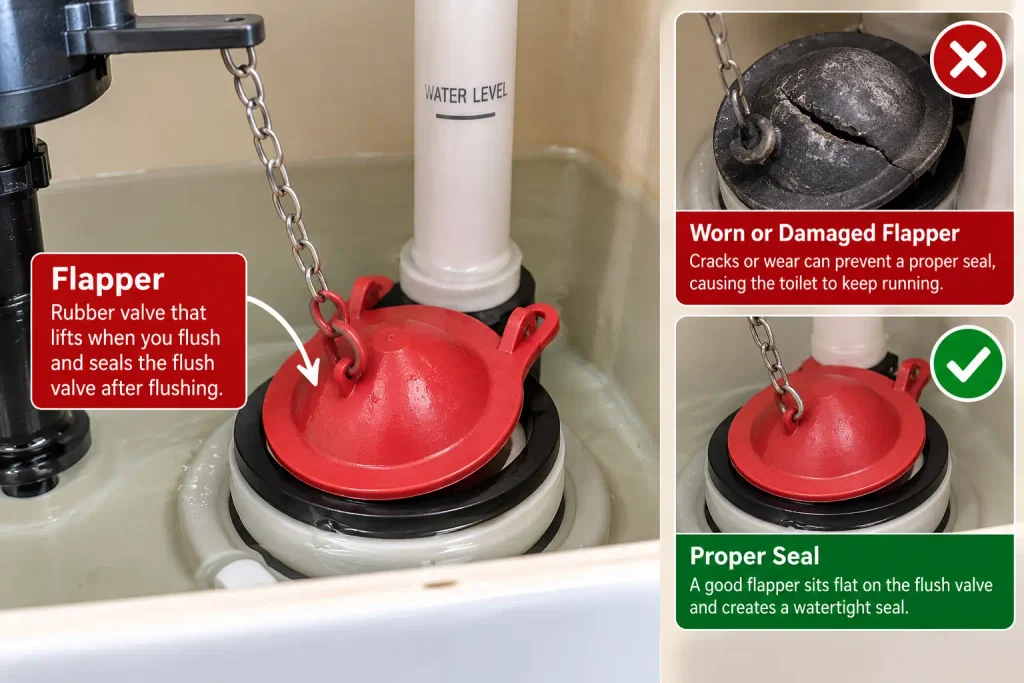
As time passes, a cracked, warped, or mineral-encrusted flapper can permit water to gradually leak from the tank and into the bowl.
How to check it:
- Remove the tank lid.
- Wait until the toilet finishes filling.
- Look at the flapper at the bottom of the tank.
- Make sure it sits flat over the flush valve.
- If you hear or see water continuously flowing into the bowl, gently press down on the flapper.
If the running stops when you push the flapper, you might need to scrub or replace the flapper.
When should you replace?
If the flapper:
Looks busted or cracked up
Feels fragile
Has become deformed
Does not create a good seal
Still leaking after cleaning.A replacement flapper is generally inexpensive and can often be installed without special plumbing skills.
3. Check the Flush Chain
The small chain that connects the toilet handle to the flapper can also be a problem.
If the chain is too short the flapper will not close completely. If it is too long it can go underneath the flapper.
Try this:
- Make sure the chain is not tangled.
- Check that it has a little slack when the flapper is closed.
- Make sure it does not get trapped under the flapper.
- Adjust the chain if necessary.
You want the flapper to open all the way when you press the handle and also to close all the way when you release it.
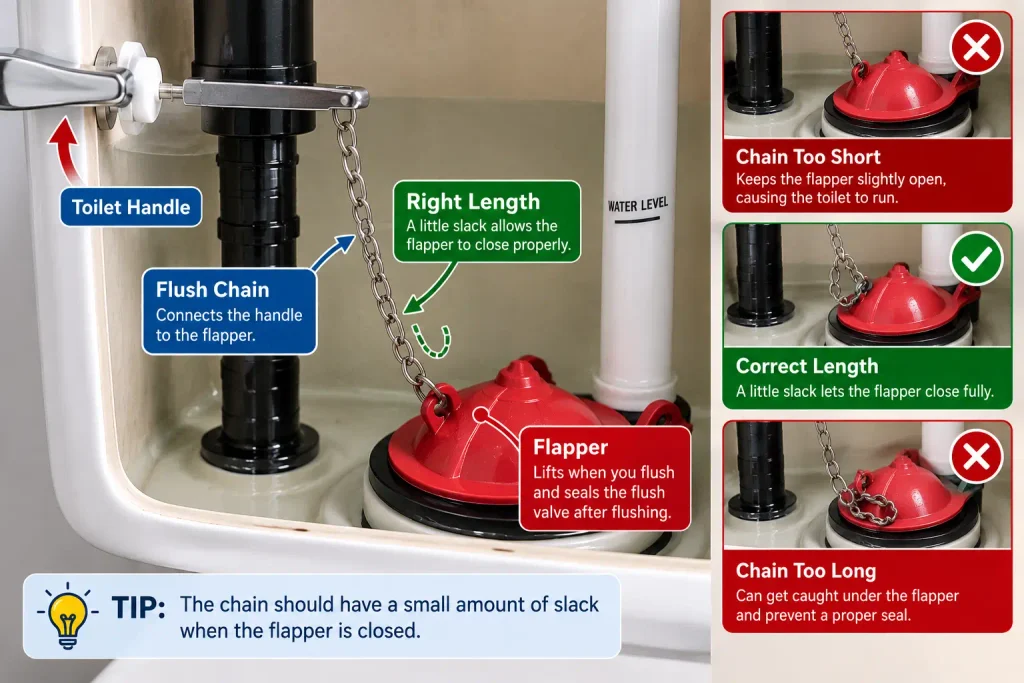
Quick tip: If adjusting the chain fixes the problem, you may not need to replace any parts.
4. Adjust the Toilet Float
The float determines how much water can get into the toilet tank.
If the float is set too high the tank could flood with water above the correct level. Any excess water then flows into the overflow tube, causing the toilet to run constantly.
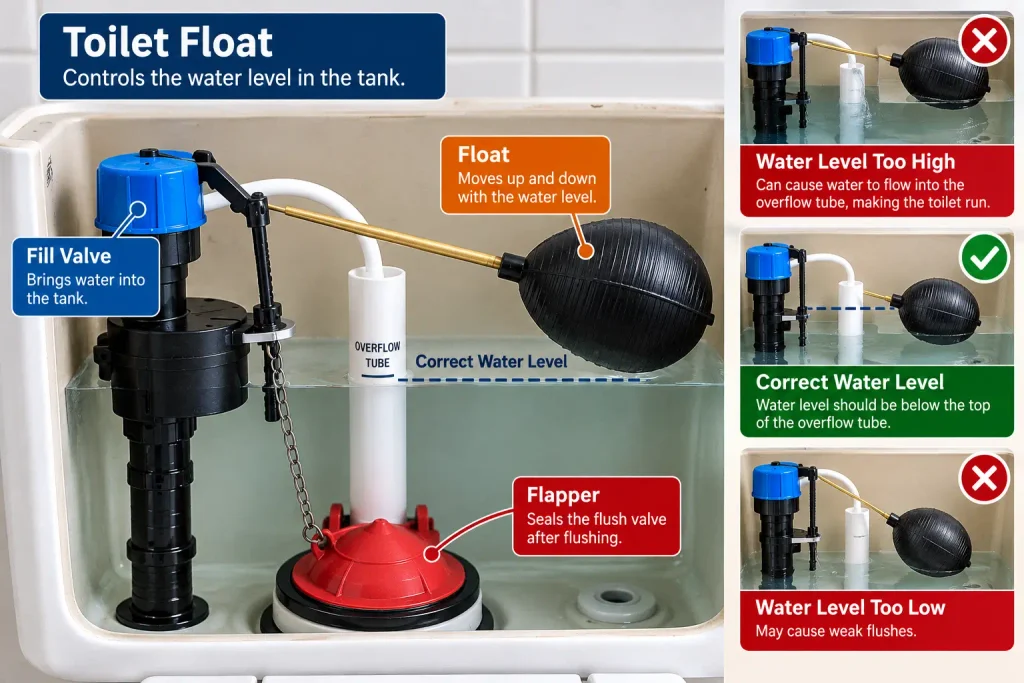
How to check the water level:
Remove the tank lid and peer inside.
The water level should be below the top of the overflow tube. Many toilet tanks also have a water line that is visible.
If the water level is too high, use the float, which differs depending on the type of toilet mechanism.
Depending on the toilet you may have:
A ball floating
Float cup styling
An adjustable fill valve.
Make a small adjustment. Flush the toilet and check the water level now.
Make small adjustments at a time.
5. Check the Fill Valve
The fill valve controls the flow of fresh water into the toilet tank after you flush.
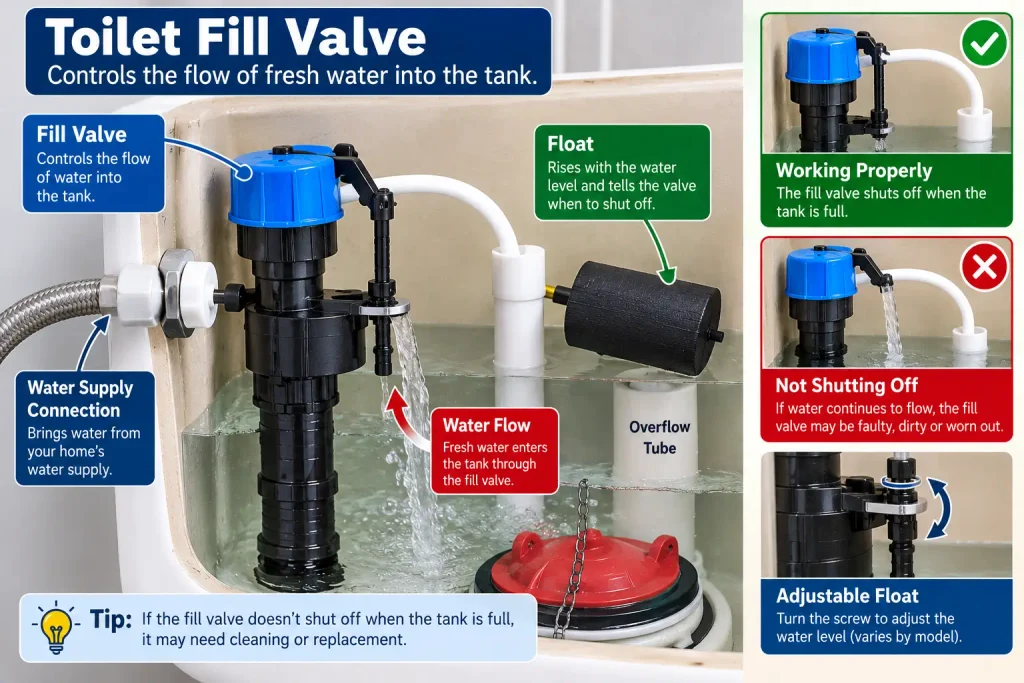
If the fill valve wears out or doesn’t shut off properly, water may continue to run even after the tank is full.
Signs of a faulty fill valve include:
- Water continues entering the tank
- The toilet makes a hissing sound
- The tank takes a long time to fill
- The fill valve does not shut off
- Water keeps flowing into the overflow tube
First check that the float is free to move and nothing is obstructing it.
If the fill valve itself is bad, then the best solution may be to replace the fill valve.
IMPORTANT: Shut off the water supply to the toilet before removing or replacing the fill valve.
6. Check the Water Level
Sometimes the toilet runs just because the water level is too high.
Look inside the tank when it is full. The tank may be overfilled ( water is running out the overflow tube ) .
To correct the water level:
- Turn off the water supply if necessary.
- Identify the float or fill valve adjustment.
- Lower the float slightly.
- Turn the water supply back on.
- Allow the tank to fill.
- Check whether the water stops below the overflow tube.
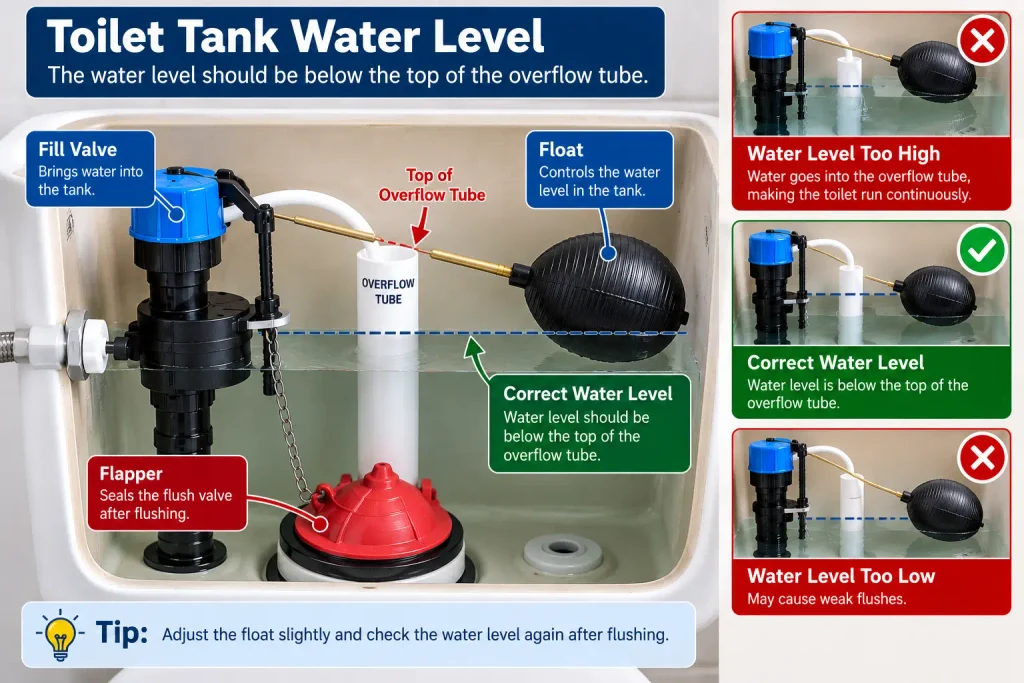
Make small adjustments until water level is at recommended level.
If the water continues to rise after you make adjustments, you may have to look at the fill valve.
7. Clean the Flush Valve and Flapper Seat
Mineral deposits, dirt or build-up can keep the flapper from sealing properly.
This is especially true in areas with hard water.
Even if the flapper looks good, a build-up of residue around the valve seat can cause a small amount of water to continuously leak into the bowl.
How to clean it:
Turn off the water to the bathroom.
Flush the toilet, which drains out most of the tank.
Check the flapper and the area under it.
Use a soft cloth or suitable cleaning method to gently clean away any buildup.
Make sure the sealing surface is clean and smooth.
Turn on the water supply again.
Let the tank fill back up and look for leaks.
Avoid the use of aggressive tools that may scratch or damage the sealing surface.
Cleaning may not help if the surface is damaged or severely corroded.
8. Replace a Worn-Out Toilet Part
If you’ve checked the handle, chain , flapper, float and fill valve and the toilet still runs, it may just be one of the components that’s worn out.
Many toilet repair parts are inexpensive and, fortunately, readily available.
Common replacement parts include:
- Toilet flapper
- Fill valve
- Flush valve
- Toilet handle
- Flush chain
- Float mechanism
If you can, check the brand and model of the toilet before purchasing a replacement. When shopping for a compatible replacement, take the old part with you to help you find one.
If you do not know what part to replace, take a picture of the inside of the tank and compare it to the replacement parts from the manufacturer.
How to Find the Cause of a Running Toilet
If you’re not sure what’s causing the problem, try this quick inspection.
Step 1: Remove the tank lid
Place it somewhere safe so it does not accidentally fall or crack.
Step 2: Flush the toilet
Watch what happens inside the tank.
Step 3: Check the flapper
Does it close completely after the flush?
Step 4: Watch the water level
Does the water stop filling at the correct level?
Step 5: Listen
A constant hissing sound may indicate that water is still entering the tank.
Step 6: Check the bowl
If water continues to run from the tank into the bowl, then you may have a problem with the flapper or flush valve not sealing properly.
This quick check can often help you figure out what’s wrong before you buy new parts.
When Should You Call a Plumber?
A lot of running toilets are easy DIY fixes. But there are some things that need a professional’s touch.
Consider calling a plumber if:
- The toilet tank is cracked
- Water is leaking onto the floor
- The toilet is leaking around its base
- You cannot identify the source of the leak
- A replacement part does not solve the problem
- The toilet has significant corrosion or damage
- You are uncomfortable working with plumbing components
If water is leaking onto the floor, turn off the water supply to the toilet until the leak can be diagnosed properly.
How to Prevent a Running Toilet
A little maintenance can help prevent future problems.
Check the toilet regularly
Pay attention to unusual sounds such as hissing, dripping, or intermittent refilling.
Don’t force the handle
A handle that is pushed or pulled too hard can damage the internal mechanism.
Inspect the flapper
If you see water moving for no apparent reason, check the flapper, as rubber parts can age.
Keep the tank mechanism clear
Never place objects or cleaning products in the tank unless they are specifically designed for that purpose.
Fix small problems early
A minor leak can become more wasteful if ignored.
Frequently Asked Questions
Why does my toilet keep running after I flush?
There can be many reasons why a toilet runs: the flapper may not be sealing correctly, the chain may be adjusted incorrectly, the float may be set too high, or the fill valve may not be shutting off correctly.
How do I stop a toilet from running?
Begin with the handle, chain, flapper and water level. These are some of the easiest things to check. If the fill valve or another component is not working correctly, it may need to be adjusted or replaced.
Is a running toilet wasting water?
Yes. Leaking toilets or constant refilling can waste water in the long run. A quick fix can stop water from being used unnecessarily.
How do I know if my toilet flapper is bad?
Once the tank has filled, water should not be flowing down from the tank into the bowl. If it is, the flapper may not be forming a proper seal. A worn, cracked, warped or damaged flapper should generally be replaced.
Can I fix a running toilet myself?
Many common problems can be fixed with simple DIY repairs. If the toilet is cracked, leaking on the floor, or has some other serious plumbing problem, you might want to call a professional.
How long does it take to fix a running toilet?
A quick tweak can take just minutes. The time it takes to replace a flapper or fill valve may differ depending on the toilet design and your experience
Final Takeaway
If your toilet won’t stop running, don’t immediately assume you need a plumber. Start with the simple checks: inspect the handle, chain, flapper, float, and water level.
Many times the problem can be solved with a simple adjustment or an inexpensive replacement part.
If the toilet continues to run after you’ve checked these parts, or if you find a cracked tank or water seeping onto the floor, it’s best to shut off the water supply and call in a professional.
A few minutes of troubleshooting today can help prevent wasted water and a more expensive repair later.