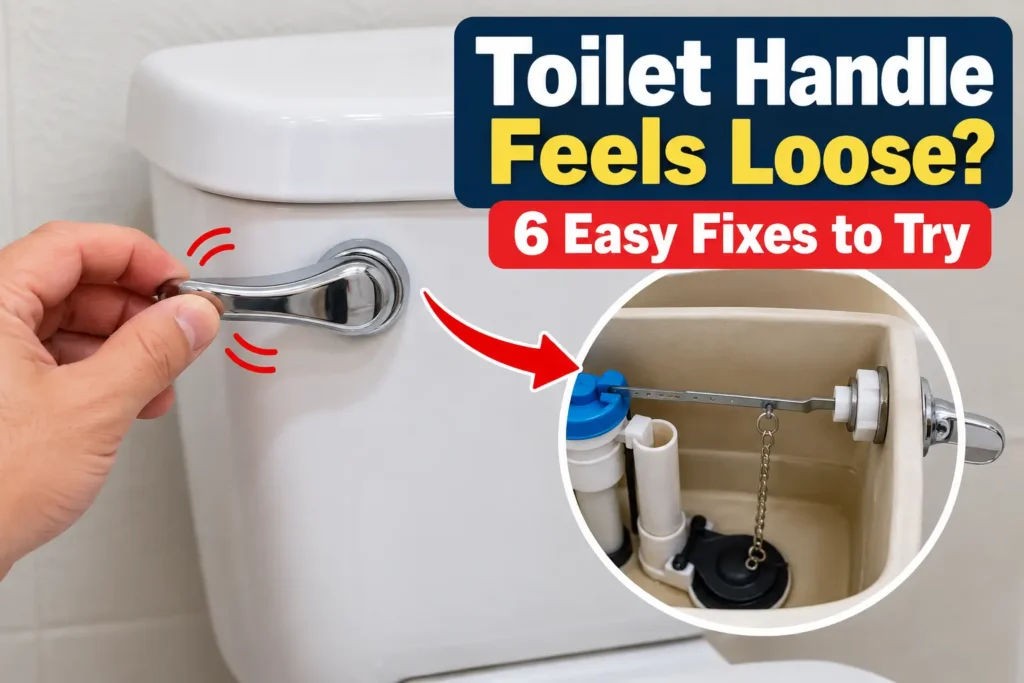
Toilet handle feels loose? A loose toilet handle can be annoying, especially when it moves too much, feels wobbly, or doesn’t flush the toilet properly. In many cases, the problem is caused by a loose mounting nut, a misaligned flush lever, a stretched chain, or a worn toilet handle.
The good news is that a loose toilet handle is often a simple DIY repair. With a few basic tools and a little troubleshooting, you can usually identify the problem and fix it without replacing the entire toilet.
In this guide, you’ll learn how to fix a loose toilet handle, how to check the flush lever and chain, when to replace the handle, and how to prevent the problem from coming back.
Why Does My Toilet Handle Feel Loose?
A toilet handle can become loose for several reasons. The most common causes include:
- A loose mounting nut inside the toilet tank
- A worn or damaged toilet handle
- A bent flush lever
- A loose or disconnected flush chain
- Incorrect chain adjustment
- Corrosion around the handle or lever
- A handle that was installed incorrectly
Before replacing the handle, check the inside of the toilet tank. You may find that a simple adjustment is all that’s needed.
Tools You May Need
Most loose toilet handle repairs don’t require many tools.
Keep these items nearby:
- Adjustable wrench
- Pliers
- Clean cloth
- Replacement toilet handle, if needed
- Replacement flush chain, if needed
- Small bucket or towel
You may not need every tool listed. Start by inspecting the handle and tank components before deciding what needs to be replaced.
Quick Diagnosis Before You Start
Before taking anything apart, flush the toilet once and watch what happens inside the tank.
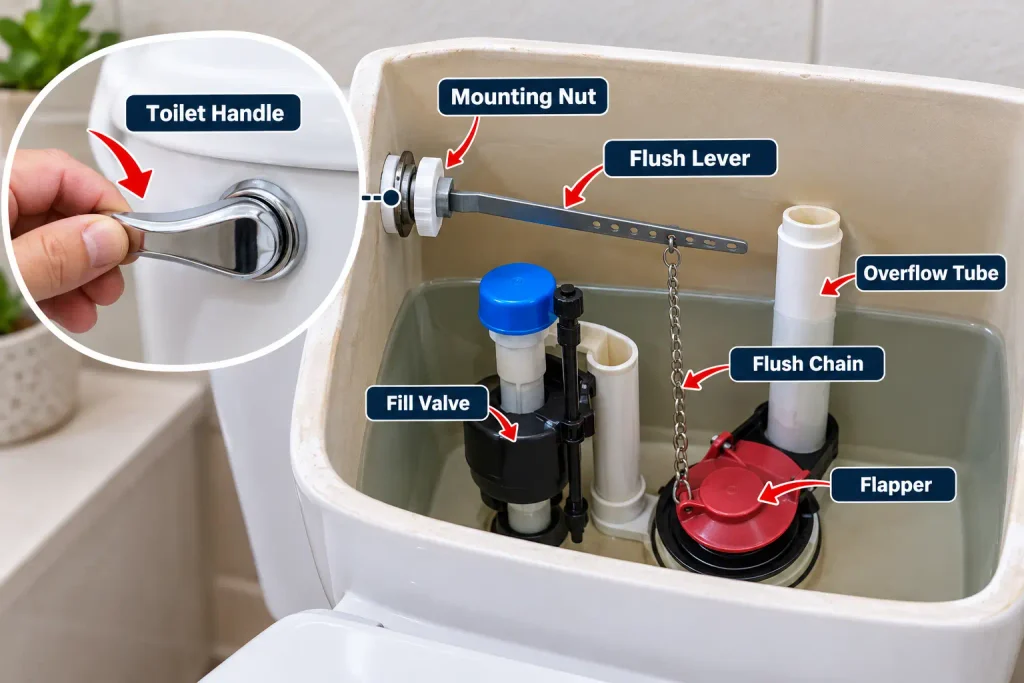
Check these things:
- Does the handle move but the toilet doesn’t flush?
- Does the handle feel loose but still flush normally?
- Does the handle stay down after flushing?
- Is the flush lever moving correctly?
- Is the chain too loose or too tight?
- Does the handle return to its normal position after flushing?
Quick tip: If the handle feels loose but the toilet still flushes normally, start by checking the mounting nut and handle assembly. If the toilet doesn’t flush correctly, inspect the lever and chain as well.
Toilet Handle Feels Loose? 6 Easy Fixes
1. Tighten the Toilet Handle Nut
The mounting nut that holds the toilet handle to the tank can loosen over time.
First, remove the toilet tank lid and look at the inside of the tank where the handle connects to the flush lever.
Hold the handle from the outside and carefully tighten the mounting nut from inside the tank.
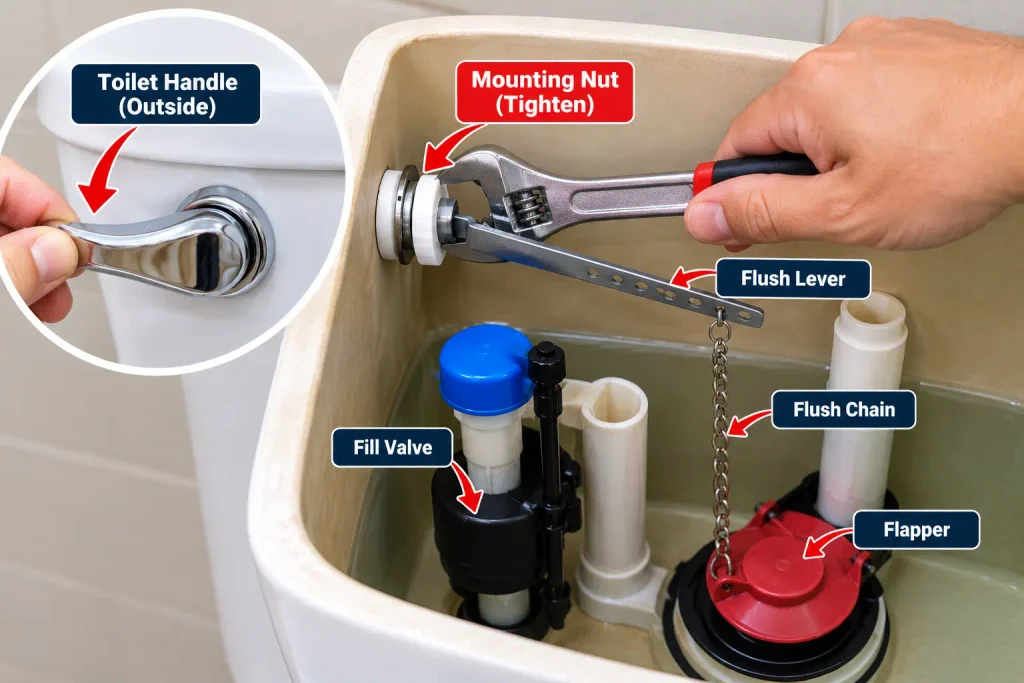
Many toilet handle assemblies use a reverse-threaded nut, so don’t automatically assume it tightens in the same direction as a standard nut.
Important: Don’t overtighten the nut. Excessive force can damage the plastic mounting parts or even crack the porcelain tank.
After tightening the nut, test the handle several times.
If the handle feels firm and the toilet flushes normally, the repair may already be complete.
2. Check the Flush Lever
If tightening the handle doesn’t solve the problem, inspect the flush lever inside the tank.
The lever connects the outside handle to the chain or flapper mechanism. If the lever is bent, loose, or damaged, the handle may feel abnormal when you push it.
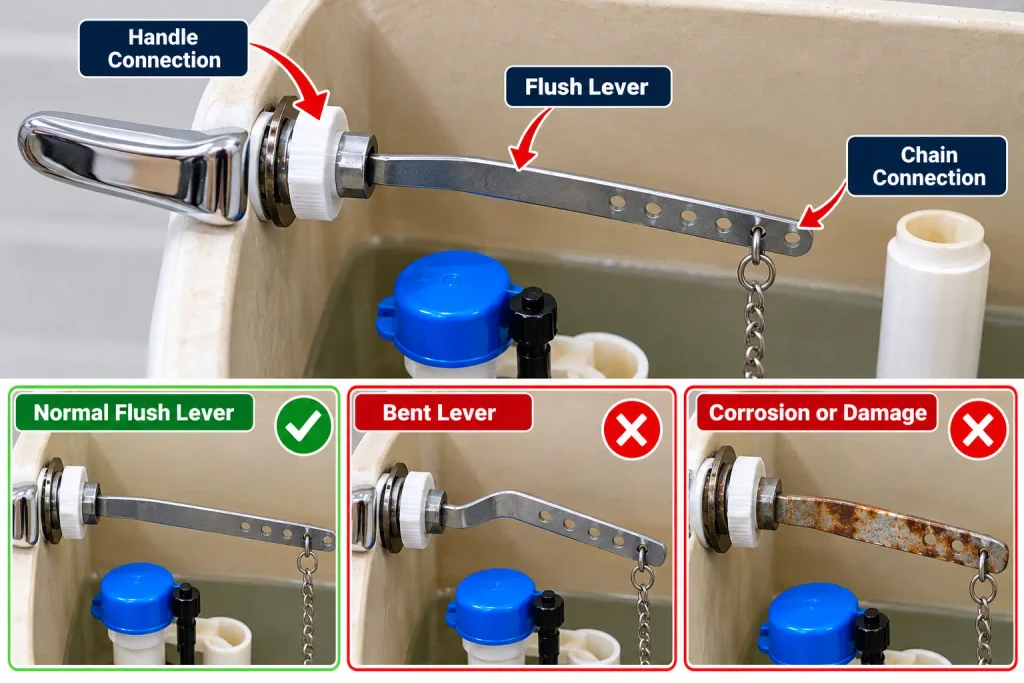
Look for:
- A bent lever
- Cracks around the handle connection
- Corrosion
- A lever that moves excessively
- A lever that doesn’t return properly
If the lever is damaged or badly corroded, replacing the toilet handle assembly may be easier than trying to repair the old part.
3. Adjust the Flush Chain
A loose toilet handle can sometimes be caused by a chain that is too loose or too tight.
The chain should have a small amount of slack when the toilet is not being flushed.
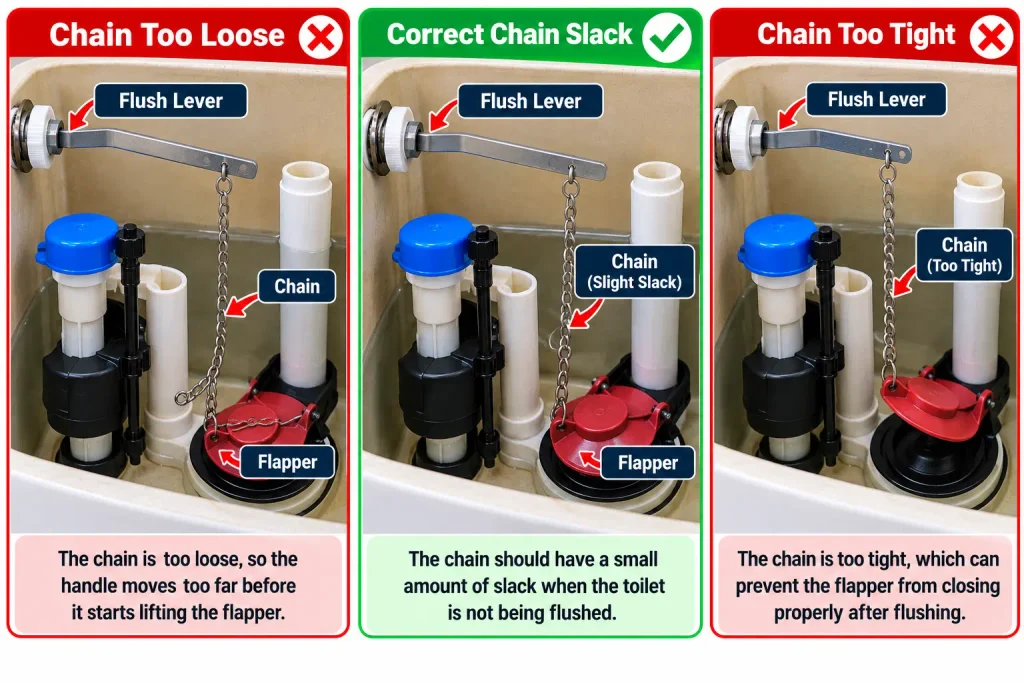
If the chain is extremely loose, the handle may move too far before it starts lifting the flapper.
If the chain is too tight, the flapper may not close properly after flushing.
To adjust it, disconnect the chain from the flush lever and move the hook to a different link. Reconnect it and test the flush.
Quick tip: After adjustment, the flapper should close completely and the handle should return to its normal position.
4. Check the Handle Position
Sometimes the handle itself is not the main problem. It may simply be positioned incorrectly or installed at an awkward angle.
Look at the handle from outside the tank and check whether it sits normally when the toilet is not being flushed.
Inside the tank, make sure the flush lever is not pressing against the tank wall or another component.
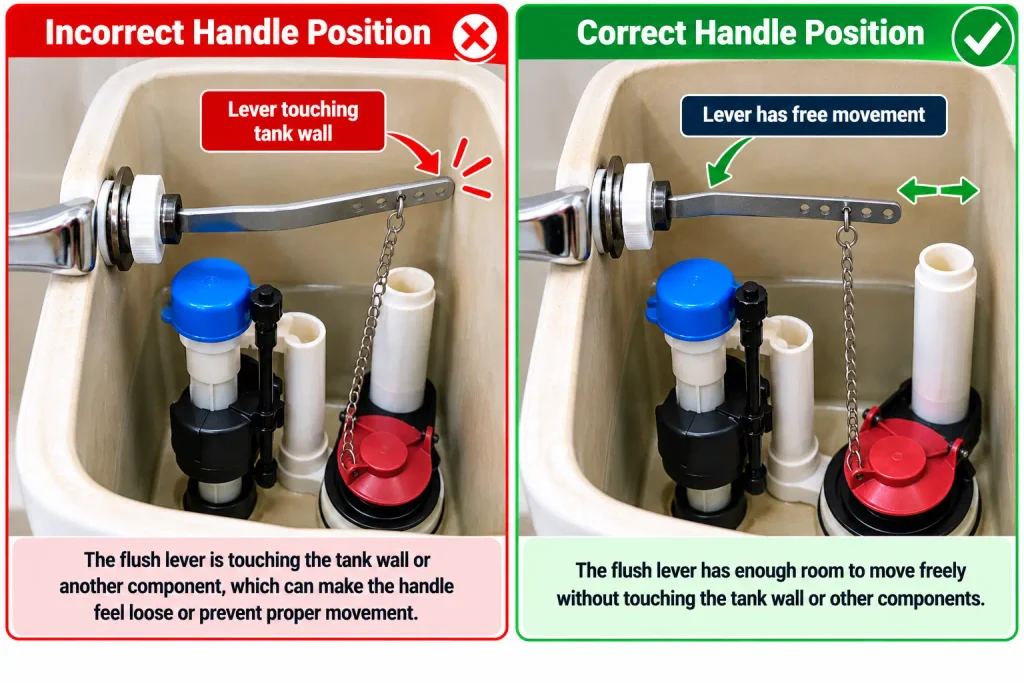
The lever should have enough room to move freely when the handle is pushed.
If the lever is touching another part of the tank, repositioning the handle or adjusting the lever may solve the problem.
5. Clean or Replace Corroded Parts
Older toilet handles and flush levers can develop corrosion, mineral buildup, or residue.
Inspect the handle connection and the lever inside the tank.
If there is only light buildup, wipe the accessible parts with a clean cloth.
However, if the metal is badly corroded, cracked, or weakened, replacing the handle assembly is usually more practical than trying to restore the damaged part.
Avoid using excessive force on old components because brittle plastic or corroded metal can break unexpectedly.
6. Replace a Damaged Toilet Handle
If the handle is cracked, badly corroded, bent, or still loose after tightening and adjustment, replacement may be the simplest solution.
Before buying a replacement, check:
- The toilet handle style
- The lever length
- How the handle mounts to the tank
- The position of the flush lever
- Whether the replacement is compatible with your toilet
Remove the old handle carefully and install the replacement according to the manufacturer’s instructions.
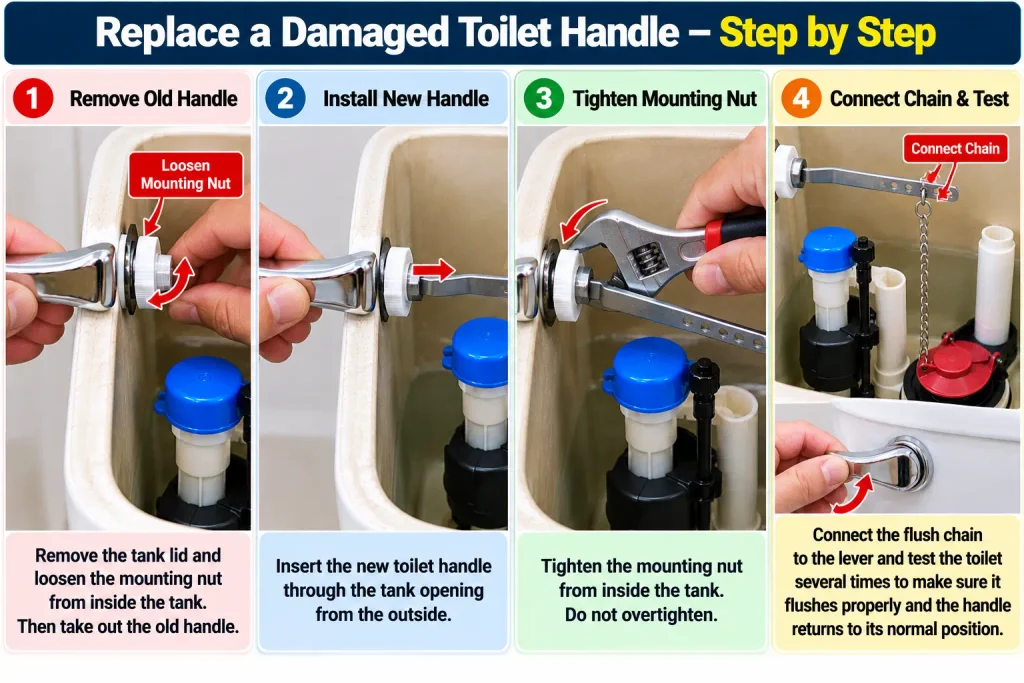
After installation, reconnect the chain and test the toilet several times.
For an example of toilet tank lever installation and chain adjustment, see the Fluidmaster Toilet Tank Lever Installation Instructions
How to Tell If the Toilet Handle Needs Replacement
Not every loose handle needs to be replaced.
A simple tightening or chain adjustment may solve the problem if the handle and lever are still in good condition.
Replacement is more likely to be necessary if you notice:
- A cracked handle
- A bent flush lever
- Severe corrosion
- Broken mounting parts
- A handle that keeps becoming loose
- A lever that doesn’t return correctly
- A handle that no longer activates the flush mechanism properly
Quick check: If tightening the mounting nut doesn’t make the handle feel firm and the lever looks damaged, replacing the complete handle assembly may save time compared with trying to repair individual parts.
Common Mistakes to Avoid
A loose toilet handle is a simple repair, but a few mistakes can make the problem worse.
Avoid these common mistakes:
- Overtightening the mounting nut: Too much force can damage plastic parts or crack the toilet tank.
- Ignoring the flush chain: A handle can feel loose because the chain is incorrectly adjusted.
- Making the chain too tight: A tight chain can prevent the flapper from closing properly.
- Forcing a corroded handle: Old components may break when excessive force is applied.
- Buying the wrong replacement handle: Check the handle and lever configuration before purchasing a replacement.
- Skipping the flush test: Always test the toilet several times after making an adjustment or replacement.
When Should You Call a Plumber?
A loose toilet handle is usually a manageable DIY repair, but professional help may be appropriate if the problem involves the toilet tank itself or another plumbing issue.
Consider calling a plumber if:
- The porcelain toilet tank is cracked
- Water is leaking from the tank
- The handle problem is connected to a larger flushing problem
- The flush valve or other internal tank components are damaged
- You cannot safely remove a severely corroded component
- The toilet continues to malfunction after replacing the handle
If you notice water leaking from the toilet tank, don’t keep tightening components aggressively. A damaged porcelain tank may require professional assessment or replacement.
How to Prevent a Toilet Handle From Becoming Loose
A little maintenance can help prevent the problem from returning.
Don’t Force the Handle
Push the handle normally instead of pressing it down with excessive force.
Check the Chain Occasionally
Make sure the chain has a small amount of slack and isn’t pulling continuously on the flapper.
Inspect the Handle During Cleaning
When cleaning the toilet, check whether the handle feels unusually loose or wobbly.
Replace Damaged Parts Early
A cracked handle or corroded lever can eventually cause flushing problems. Replacing a worn component early can prevent a more frustrating repair later.
For more toilet maintenance and leak-prevention tips, see the EPA WaterSense Home Maintenance Guide
Frequently Asked Questions
Why does my toilet handle feel loose?
A loose toilet handle is often caused by a loose mounting nut, damaged handle, bent flush lever, incorrect chain adjustment, or worn internal components.
Can I tighten a loose toilet handle myself?
In many cases, yes. Start by checking the mounting nut inside the tank. Tighten it carefully without using excessive force.
Why is my toilet handle loose but still works?
If the toilet still flushes normally, the mounting nut or handle assembly may simply be loose. Check the handle connection before replacing any parts.
Why does my toilet handle stay down after flushing?
A loose or incorrectly adjusted chain, damaged lever, or faulty handle assembly can prevent the handle from returning properly after a flush.
How much slack should a toilet chain have?
The chain should generally have a small amount of slack when the toilet is at rest. It should not be so loose that the handle moves excessively, and it should not be so tight that the flapper cannot close completely.
Can a loose toilet handle cause the toilet to keep running?
Yes, if the handle, lever, or chain is incorrectly adjusted, the flapper may not close properly after flushing. This can allow water to continue running into the bowl.
If your toilet keeps running after the handle has been repaired, see our guide Toilet Won’t Stop Running? 8 Easy Fixes to Try.
Final Takeaway
A toilet handle that feels loose is often caused by a simple problem such as a loose mounting nut, an incorrectly adjusted chain, or a worn handle assembly.
Start by inspecting the handle and flush mechanism inside the tank. Tighten the mounting nut carefully, check the flush lever, adjust the chain if necessary, and replace damaged components when needed.
Don’t force old or corroded parts, and always test the toilet several times after making a repair.
For another common home plumbing repair, check out our guide Kitchen Faucet Is Dripping From the Spout? 7 Easy Fixes.