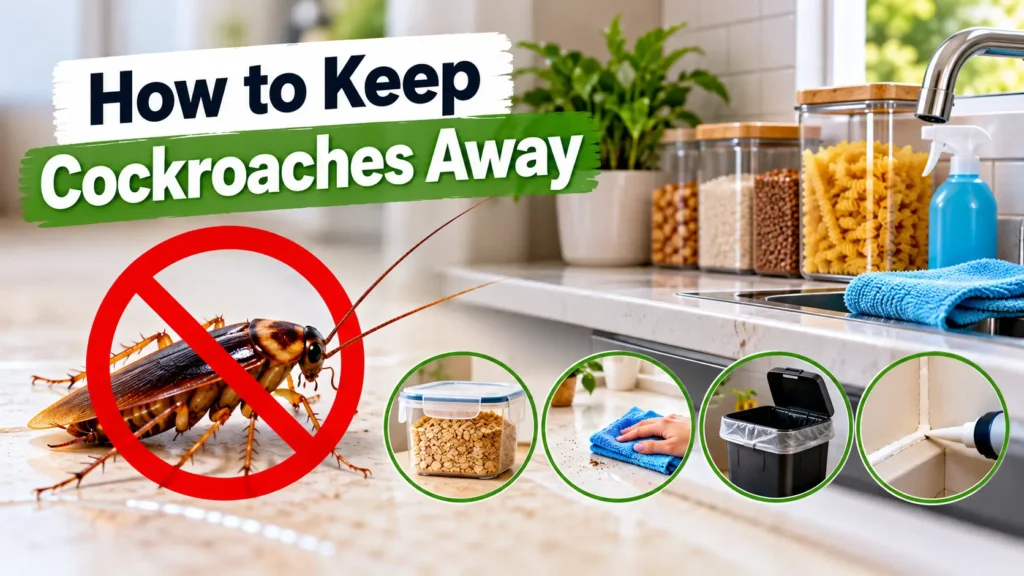
How to keep cockroaches away is a common question when you start noticing roaches in your kitchen, bathroom, or other areas of your home. Cockroaches are attracted to food, moisture, warmth, and places where they can hide.
The good news is that a few simple habits can make your home less attractive to cockroaches. Cleaning food spills, storing food properly, reducing moisture, sealing small gaps, and keeping clutter under control can all help reduce the conditions roaches need.
In this guide, you’ll learn 9 practical ways to keep cockroaches away and what to do if you keep finding them despite regular cleaning.
Why Are Cockroaches Coming Into Your Home?
Cockroaches can enter homes through small gaps, cracks, pipes, drains, doors, windows, and other openings. Once inside, they may stay where they can find food, water, warmth, and shelter.
Common things that can attract cockroaches include:
- Food crumbs and spills
- Open food packages
- Pet food left out
- Garbage and food waste
- Leaking faucets or pipes
- Damp areas
- Dirty drains
- Cardboard boxes and clutter
- Cracks around pipes and walls
- Easy access through doors and windows
Finding a cockroach does not always mean your home is dirty. Even a clean home can have conditions that provide food, water, or shelter for pests.
How to Keep Cockroaches Away: 9 Easy Ways
1. Keep Food in Sealed Containers
Cockroaches can be attracted to easily accessible food. Leaving food in open packages can make it easier for pests to find.
Store dry foods such as cereal, flour, rice, snacks, sugar, and pet food in tightly sealed containers.

Also remember to:
- Close food packages properly
- Clean crumbs from shelves
- Wipe sticky food containers
- Avoid leaving food uncovered overnight
- Keep pet food stored in sealed containers when possible
Keeping food less accessible can help make your kitchen less attractive to cockroaches.
For additional pest-prevention guidance, see the U.S. Environmental Protection Agency’s guide on pesticide use and pest prevention , which recommends sealing food and cleaning crumbs and spills to reduce access to food.
2. Clean Food Crumbs and Spills Quickly
Small crumbs and sticky spills can become food sources for cockroaches.
Wipe kitchen counters, tables, stovetops, and other food-preparation surfaces regularly. Sweep or vacuum areas where crumbs commonly collect, including underneath appliances and furniture.
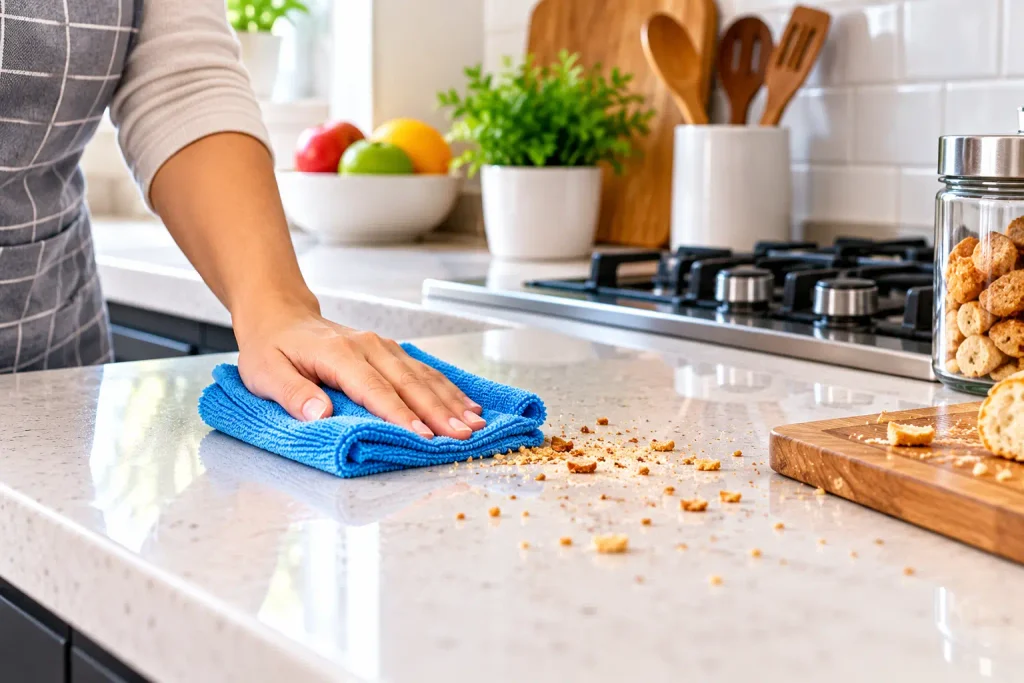
Pay particular attention to:
- Under the refrigerator
- Under the stove
- Around kitchen cabinets
- Near the dining table
- Along wall edges
- Inside drawers and cupboards
A clean surface is easier to maintain and gives pests fewer accessible food sources.
3. Take Out the Garbage Regularly
Garbage can provide food and moisture for cockroaches, especially when it contains food scraps.
Use a garbage bin with a secure lid and empty it regularly. Clean the inside of the bin if food or liquid leaks into it.
You should also:
- Avoid leaving overflowing garbage indoors
- Rinse food containers before recycling when appropriate
- Clean spills around the garbage area
- Keep outdoor garbage containers closed
Reducing food waste and keeping garbage areas clean can help discourage pest activity.
4. Keep Your Kitchen and Bathroom Dry
Moisture can be just as important as food when cockroaches are looking for a place to stay.
After washing dishes, wipe excess water from the sink and surrounding counter. Avoid leaving wet cloths or standing water around the kitchen.
For another common kitchen plumbing problem, see our guide Kitchen Faucet Is Dripping From the Spout? 7 Easy Fixes.
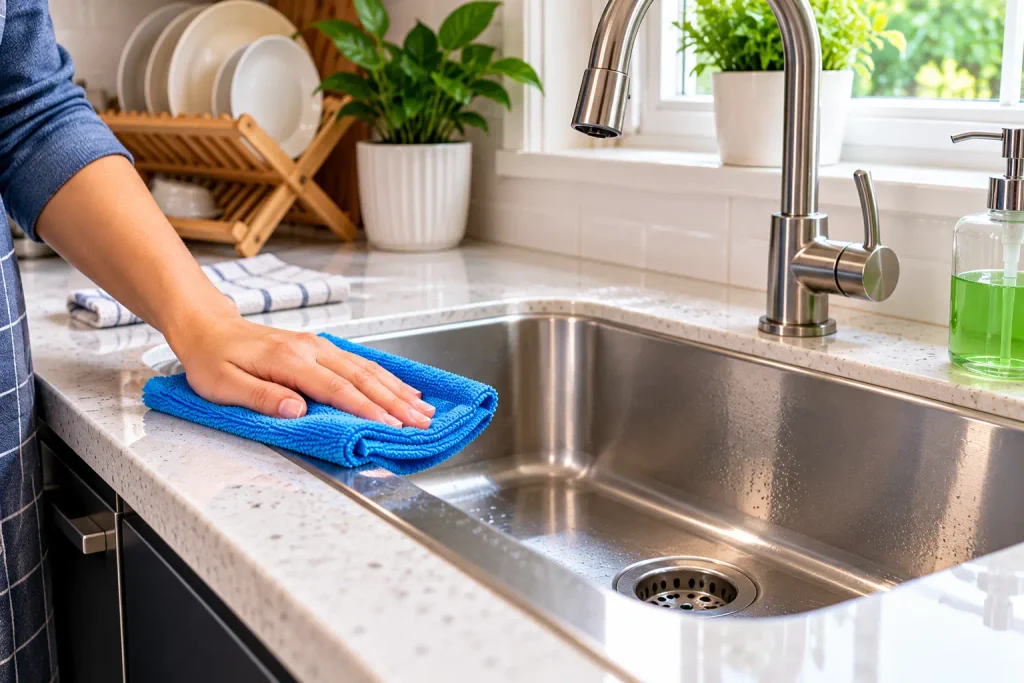
In bathrooms, check for water collecting around sinks, toilets, tubs, and showers.
Keep an eye out for:
- Wet cabinet floors
- Damp areas under sinks
- Water around faucets
- Condensation
- Standing water
- Persistent dampness
If your kitchen faucet is leaking, fixing it can help reduce unnecessary moisture.
5. Fix Leaks and Moisture Problems
A small plumbing leak can create a consistently damp area that may attract pests.
Check underneath sinks, around faucets, near toilets, and around visible plumbing connections.
Look for:
- Dripping pipes
- Wet cabinet floors
- Water stains
- Damp walls
- Loose plumbing connections
- Musty smells
Fix minor leaks when you can safely do so, and contact a qualified professional for plumbing problems that are beyond your experience.
If you notice a leaking faucet, you can also read How to Fix a Leaky Faucet: Easy Step-by-Step Guide for troubleshooting ideas.
6. Seal Cracks and Small Entry Points
Cockroaches can use small openings around walls, pipes, doors, windows, and cabinets to enter a home.
Inspect areas such as:
- Around plumbing pipes
- Under kitchen cabinets
- Around doors and windows
- Wall cracks
- Gaps around utility openings
- Areas where cabinets meet walls
For suitable small gaps, use an appropriate sealant or caulk according to the product instructions.
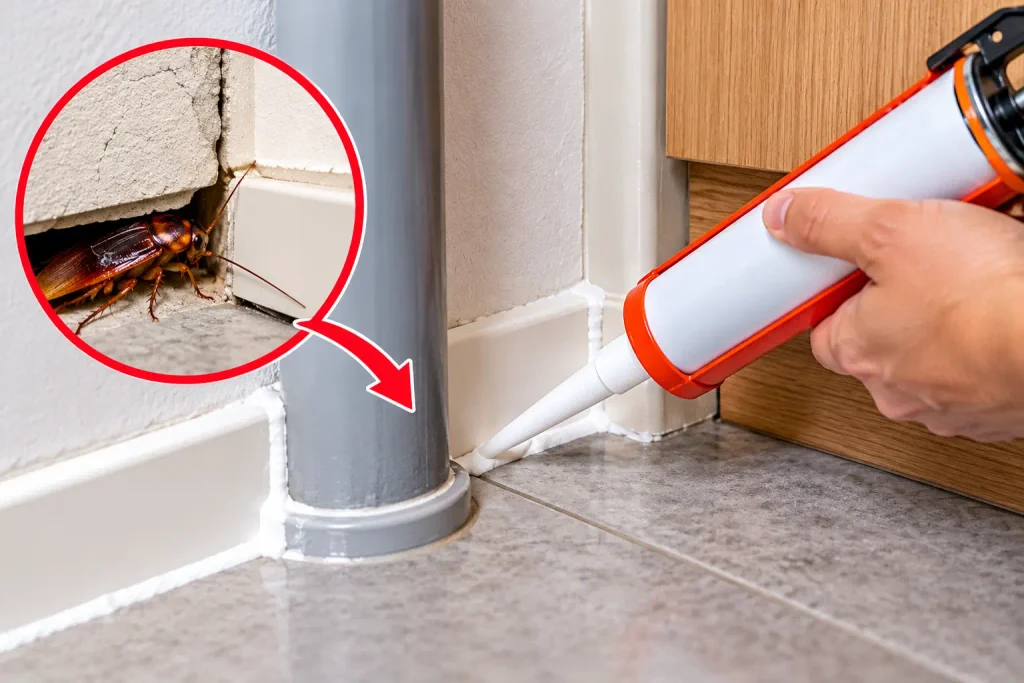
Also check door sweeps and weatherstripping for visible gaps that may allow pests to enter.
Sealing entry points is especially useful when you are trying to prevent new cockroaches from entering after cleaning and pest-control work.
7. Clean Hidden and Hard-to-Reach Areas
Cockroaches often prefer dark, undisturbed places.
Regularly clean areas that are easy to overlook, such as behind appliances, underneath cabinets, and inside storage spaces.
Move appliances or stored items when it is safe to do so and clean accumulated crumbs, grease, dust, and debris.
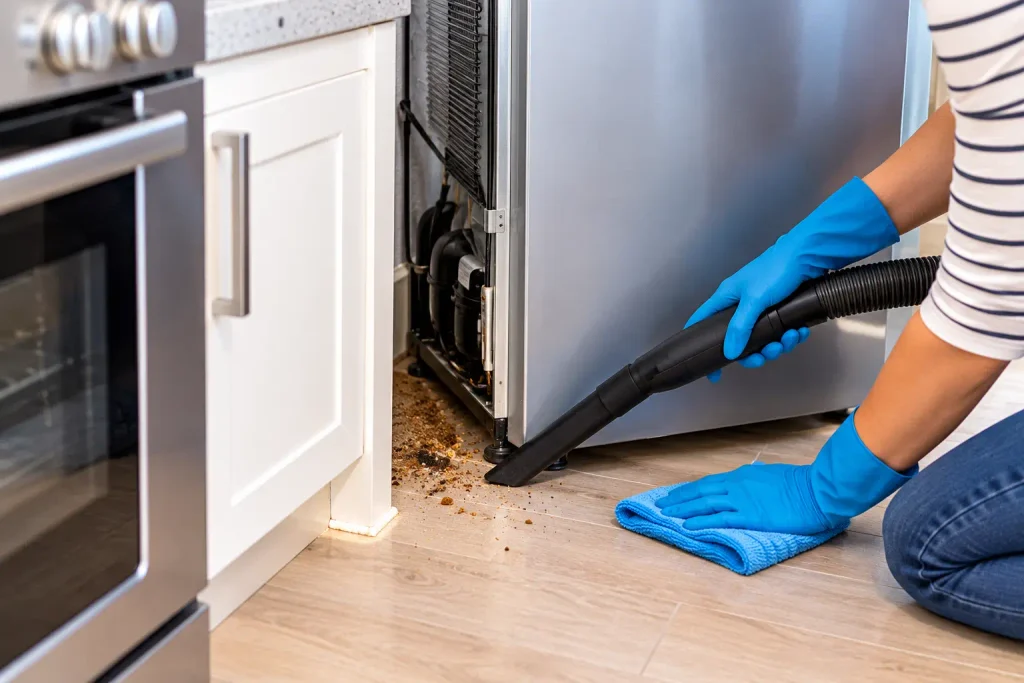
Don’t forget:
- Behind the refrigerator
- Under the stove
- Behind the microwave
- Inside lower cabinets
- Under the sink
- Around storage shelves
Cleaning these areas can help remove both food sources and hiding places.
8. Reduce Clutter and Cardboard
Clutter can create additional hiding places for cockroaches.
Avoid storing unnecessary cardboard boxes, paper piles, bags, and other materials on the floor for long periods.
Keep storage areas organized and remove items you no longer need.
If you receive packages in cardboard boxes, consider breaking down and recycling the boxes rather than allowing them to accumulate indoors.
A cleaner, more organized storage area makes it easier to spot pest activity early.
9. Use Roach Baits or Appropriate Pest-Control Products Carefully
If cockroaches are already appearing regularly, cleaning alone may not be enough.
Cockroach baits can be useful for controlling an existing problem when used according to the product label. Place products only where the label allows and keep them away from children and pets.
Place roach bait near areas where cockroach activity is noticed, such as along walls, under sinks, or near suitable cracks, but only where the product label permits. Avoid placing bait where children or pets can reach it.
Before using any pesticide:
- Read the entire product label
- Follow the application instructions
- Use only the amount recommended
- Keep products away from children and pets
- Never use a pesticide in a way that is not listed on the label
If you are using bait, avoid randomly spraying insecticide around the bait unless the product instructions specifically allow it. Sprays can interfere with some bait-based control approaches.
For a serious or recurring infestation, professional pest control may be more appropriate than repeatedly treating the problem yourself.
How to Find Where Cockroaches Are Entering
If you keep seeing cockroaches, don’t only focus on the place where you found one.
If you repeatedly see cockroaches in the same area, check nearby cracks, plumbing openings, cabinet gaps, and dark spaces first. Following the direction of repeated activity can help you narrow down where they may be hiding or entering.
Try to identify possible entry points and hiding areas.
Check:
- Under kitchen and bathroom sinks
- Around plumbing pipes
- Behind large appliances
- Around doors and windows
- Inside cabinets
- Around wall cracks
- Near drains
- Around utility openings
Look for droppings, shed skins, egg cases, or repeated activity in the same area.
If you repeatedly see cockroaches along one wall or near a particular cabinet, inspect nearby gaps and openings carefully.
Common Things That Attract Cockroaches
Even when you clean regularly, certain habits can make your home more attractive to pests.
Avoid:
- Leaving dirty dishes overnight
- Keeping food uncovered
- Allowing crumbs to accumulate
- Leaving pet food out for long periods
- Ignoring leaking faucets
- Leaving garbage uncovered
- Allowing clutter to build up
- Ignoring damp areas
- Leaving cardboard boxes stacked for long periods
The goal is not to make your home perfectly sterile. Instead, reduce easy access to food, water, and shelter.
If you’re also dealing with ants in the kitchen, see our guide How to Stop Ants From Coming Into Your Kitchen: 9 Easy Ways.
When Should You Call a Pest Control Professional?
Consider contacting a qualified pest-control professional if:
- You see cockroaches regularly
- You find cockroaches during the daytime repeatedly
- You discover multiple egg cases
- You see cockroaches in several areas of the home
- The problem continues after cleaning and prevention
- You live in a building where neighboring units may also have an infestation
- You are unsure how to safely use pest-control products
A recurring infestation may require identification of the cockroach species, inspection of hiding places, and a more comprehensive control plan.
How to Prevent Cockroaches From Coming Back
Once you reduce cockroach activity, keep the preventive habits going.
Try to make these part of your regular home-maintenance routine:
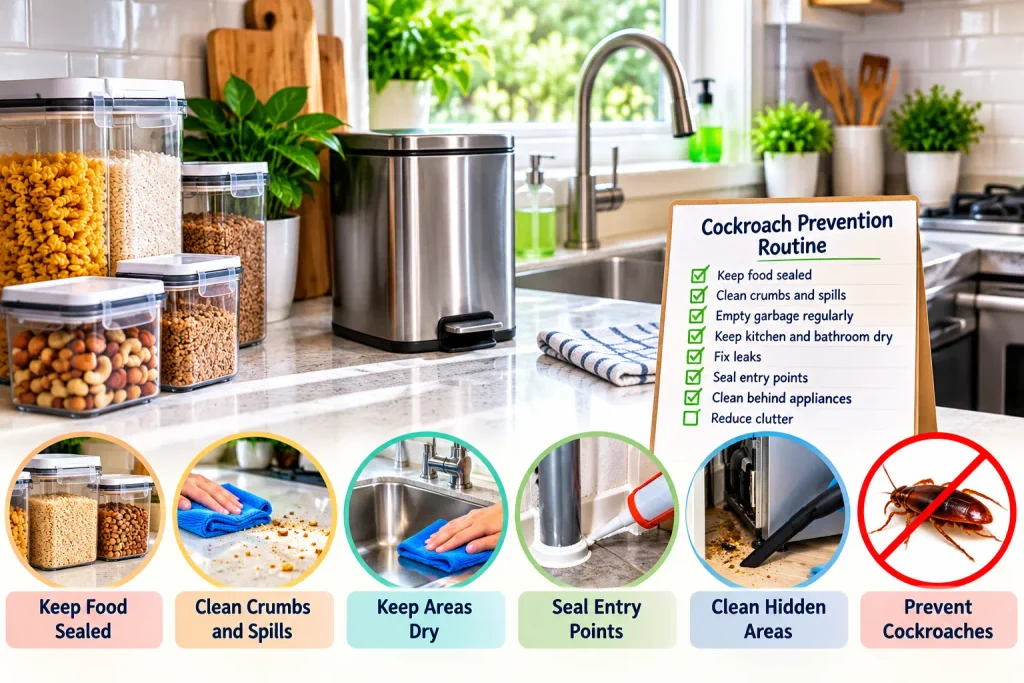
- Store food in sealed containers
- Clean crumbs and spills quickly
- Empty garbage regularly
- Keep sinks and counters dry
- Fix plumbing leaks
- Clean behind appliances
- Reduce unnecessary clutter
- Seal suitable cracks and gaps
- Monitor areas where cockroaches were previously seen
Regular prevention is often easier than dealing with a larger infestation later.
You can also include these checks in your Monthly Home Maintenance Checklist to make pest prevention part of your normal household routine.
Frequently Asked Questions
How can I keep cockroaches away without using pesticides?
Start by removing the conditions that attract them. Keep food sealed, clean crumbs and spills, reduce moisture, fix leaks, remove clutter, and seal suitable entry points. These steps can help reduce the food, water, and shelter available to cockroaches.
What attracts cockroaches the most?
Food, moisture, warmth, and shelter are common factors that can make an area attractive to cockroaches. Accessible food waste, leaks, damp areas, and clutter can all contribute.
Does keeping the kitchen clean prevent cockroaches?
Keeping the kitchen clean can reduce available food sources, but cleanliness alone may not prevent cockroaches if they can enter through gaps or find moisture and shelter elsewhere.
Why do I keep seeing cockroaches after cleaning?
Cleaning can remove food sources, but cockroaches may still be entering through cracks, plumbing openings, doors, windows, or other access points. An existing infestation may also require additional pest-control measures.
Should I use cockroach spray or bait?
Follow the product label and use pest-control products only as directed. Baits may be useful for an existing infestation, while sprays may not be appropriate in every situation. If the infestation continues, consider professional pest control.
How can I stop cockroaches from coming through gaps?
Inspect gaps around pipes, doors, windows, cabinets, and walls. Seal suitable small openings with an appropriate material, and repair damaged door sweeps or weatherstripping where necessary.
Final Takeaway
Learning how to keep cockroaches away starts with making your home less attractive to them.
Keep food sealed, clean crumbs and spills, reduce moisture, fix leaks, remove clutter, clean hidden areas, and seal suitable entry points. If cockroaches continue appearing regularly despite these steps, a professional pest-control inspection may be necessary.
The goal is not just to deal with the cockroaches you can see. It is to reduce the food, water, shelter, and access points that allow them to stay in your home.