
Why are flies coming into my house? If you suddenly notice flies around your kitchen, windows, garbage area, or other rooms, there is usually a reason they are finding your home attractive.
Food scraps, uncovered garbage, moisture, dirty drains, pet waste, decaying organic material, and easy entry points can all contribute to fly activity. Some small flies can also be associated with fermenting food or organic material around drains and plumbing. University of Minnesota Extension
The good news is that killing the flies you see is only part of the solution. Finding and removing what is attracting them can help reduce the problem at its source.
In this guide, we’ll explain why flies are coming into your house, what to check first, and how to make your home less attractive to them.
Why Are Flies Coming Into My House?
Flies may enter your home because they can find food, moisture, waste, shelter, or an easy way inside.
Common causes include:
- Food crumbs and spills
- Overripe or rotting food
- Open garbage
- Dirty garbage bins
- Food residue in drains
- Moisture or plumbing leaks
- Pet food or animal waste
- Gaps around doors and windows
- Decaying organic material outdoors
Different types of flies can have different sources. For example, house flies are commonly associated with waste and decaying organic material, while fruit flies are often found around fermenting fruits, vegetables, liquids, and trash. University of Minnesota Extension
What Type of Fly Is in Your House?
Before trying to get rid of flies, look at their size and where they gather. Large flies around garbage or waste may have a different source from tiny flies around fruit, drains, or fermenting food. Identifying the type and location can help you focus on the right source instead of treating every fly problem the same way.
1. Food Crumbs and Spills May Be Attracting Flies
Even small amounts of food can attract insects.
Check kitchen counters, floors, dining areas, and underneath appliances for:
- Food crumbs
- Sticky drink spills
- Cooking residue
- Overripe fruit
- Food scraps
- Grease buildup
Clean spills as soon as possible and don’t leave dirty dishes sitting for long periods.

Tip: Clean food crumbs and sticky spills quickly to reduce food sources that can attract flies.
Pay particular attention to areas that are easy to overlook, such as under the refrigerator, beside the stove, and around trash containers.
2. Your Garbage Can May Be the Source
A garbage bin can provide both food and odors that attract flies.
Keep food waste in a tightly closed trash can and empty it regularly. Clean the inside of the bin if food residue or liquid has collected at the bottom.
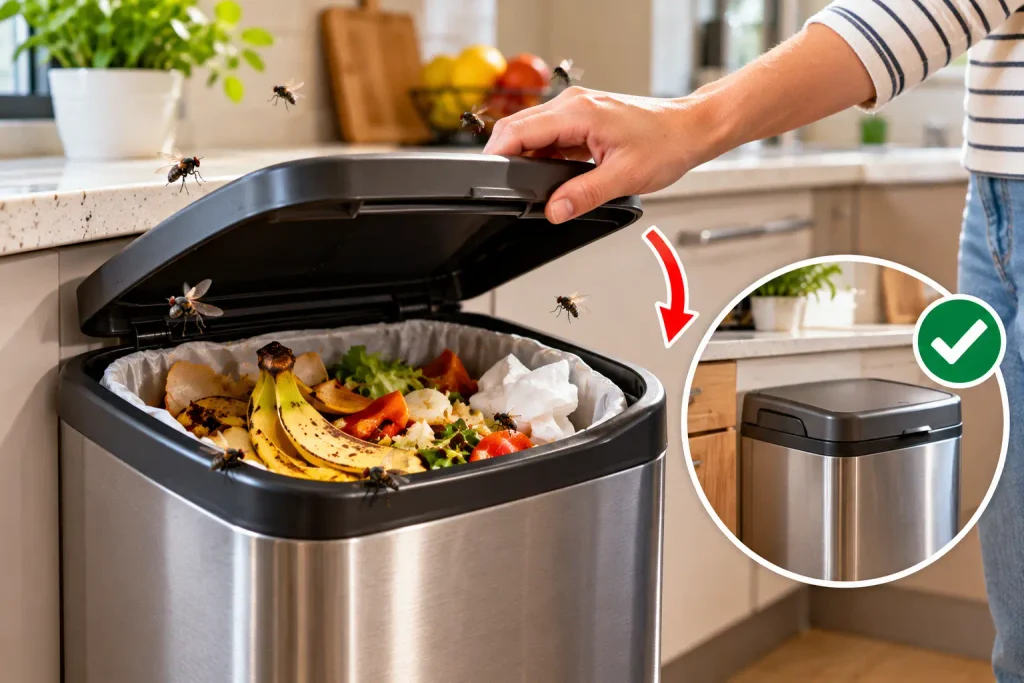
Tip: Keep food waste covered and empty kitchen garbage regularly to reduce fly attractants.
The EPA recommends removing food sources, keeping food waste in tightly covered trash cans, and removing garbage regularly as part of pest prevention. US EPA
Quick tip: If your garbage smells even after the bag has been removed, wash and dry the bin before putting in a new liner.
3. Dirty Kitchen Drains Can Attract Small Flies
If you are seeing tiny flies around your kitchen or bathroom sink, check the drains.
Organic material can accumulate inside drains, and certain small flies are associated with decaying material around drains or plumbing problems.
Start by cleaning accessible drain areas and removing visible buildup.
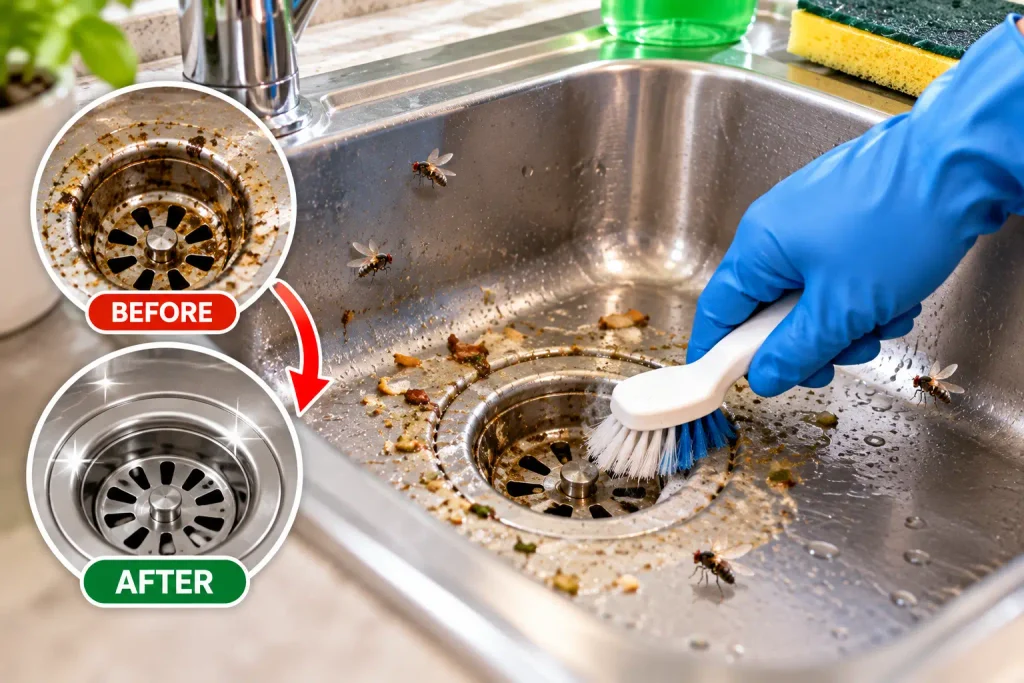
Tip: Clean accessible drain areas and remove visible buildup when small flies repeatedly appear near the sink.
Don’t simply spray the adult flies and assume the problem is solved. If the source is inside or around a drain, the underlying buildup needs attention.
4. Moisture or a Plumbing Leak May Be Contributing
Persistent moisture can create conditions that attract or support some household pests.
Check underneath:
- Kitchen sinks
- Bathroom sinks
- Dishwashers
- Washing machines
- Refrigerators
- Plumbing connections
Look for damp cabinets, water stains, leaking pipes, or standing water.
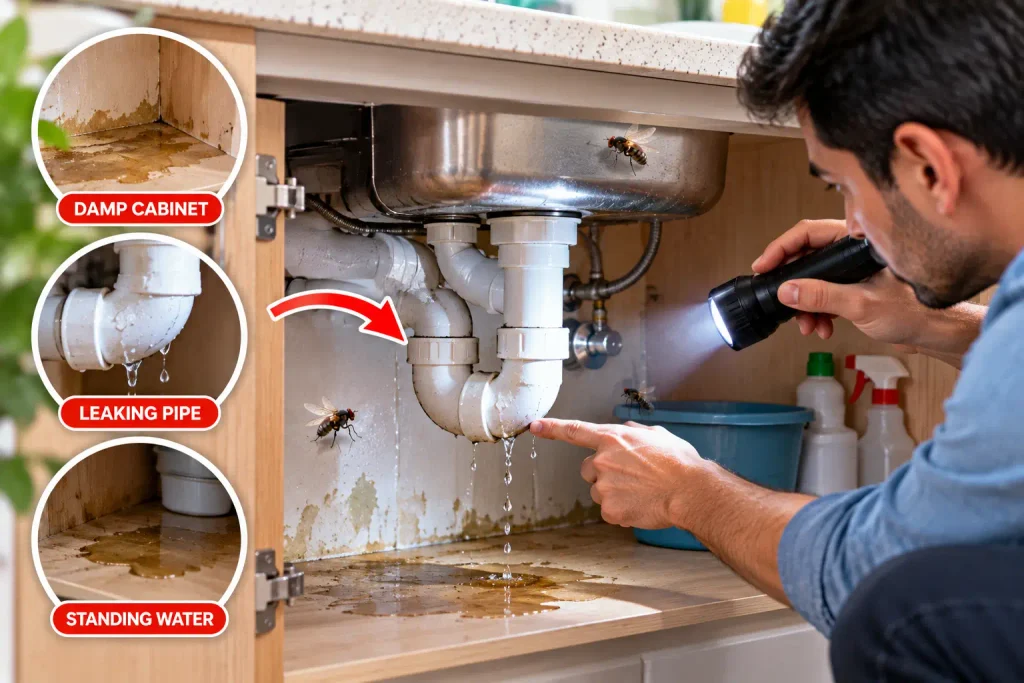
Tip: Check under sinks for leaks, dampness, or standing water that may contribute to pest problems.
If you find a leak, fix the source rather than repeatedly cleaning the water.
Related guide: If your kitchen faucet is leaking, you can read our Kitchen Faucet Is Dripping From the Spout? 7 Easy Fixes guide.
If you also notice persistent moisture or mold around bathroom caulk, see our guide How to Remove Black Mold Stains From Bathroom Caulk Safely
5. Overripe Fruit and Food Can Attract Fruit Flies
Not every small fly is a house fly.
Fruit flies are commonly found around fermenting fruits and vegetables, certain liquids, soft-drink containers, and trash.
Check your:
- Fruit bowl
- Vegetable storage
- Recycling container
- Empty drink bottles
- Juice containers
- Compost
- Kitchen garbage
Throw away spoiled produce and clean containers that have food or drink residue.
If the flies continue appearing, look for another nearby source rather than assuming the fruit bowl is the only cause.
6. Pet Food and Animal Waste May Attract Flies
Pet food left out for long periods can become an attractant, particularly in warm conditions.
Keep pet food areas clean and remove leftover food according to your pet’s normal feeding routine.
Also check outdoor areas for:
- Pet waste
- Animal droppings
- Dead insects or animals
- Rotting organic material
- Decaying vegetation
House flies are strongly associated with waste and decaying organic material.
7. Flies May Be Entering Through Doors and Windows
Sometimes the problem isn’t what is inside your house—it’s how the flies are getting inside.
Inspect:
- Window screens
- Screen doors
- Door gaps
- Torn mesh
- Gaps around frames
- Open windows near garbage or outdoor waste
Repair damaged screens and seal suitable gaps around doors and windows.
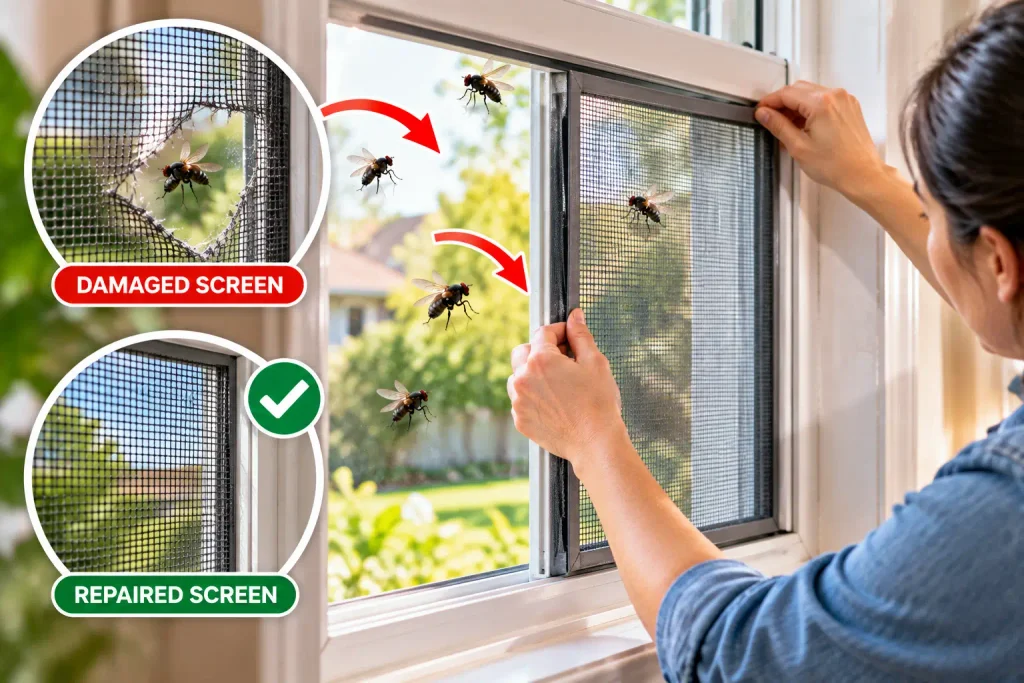
Tip: Repair torn window screens and check door gaps to reduce common entry points for flies.
University of Minnesota Extension recommends using appropriate window and door screens as part of fly prevention.
8. Outdoor Garbage or Decaying Material May Be Nearby
Look around the outside of your home.
A fly problem indoors can sometimes have an outdoor source nearby.
Check:
- Outdoor garbage bins
- Compost
- Pet waste
- Rotting vegetation
- Dead animals
- Food waste
- Dirty recycling containers
Keep outdoor garbage covered and clean containers regularly.
If you repeatedly see large numbers of flies gathering outside one particular area, investigate that location instead of focusing only on the flies inside.
9. A Sudden Large Number of Flies Can Mean There Is a Hidden Source
If you suddenly see many flies in one room, don’t immediately assume they are simply coming through an open window.
Check for a hidden source such as:
- Forgotten food
- A garbage spill
- Decaying organic material
- A plumbing or drain problem
- Animal waste
- A dead animal in an inaccessible area
Some fly species found indoors can be associated with decaying animals or organic material.
If large numbers keep appearing despite thorough cleaning, professional pest inspection may be appropriate.
How to Find Where the Flies Are Coming From
Instead of chasing individual flies, try to identify where they are most active.
A regular inspection can also help you spot leaks, moisture, pests, and other household problems early. See our Monthly Home Maintenance Checklist for a broader home inspection routine.
Step 1: Watch where they gather
Notice whether most flies are around:
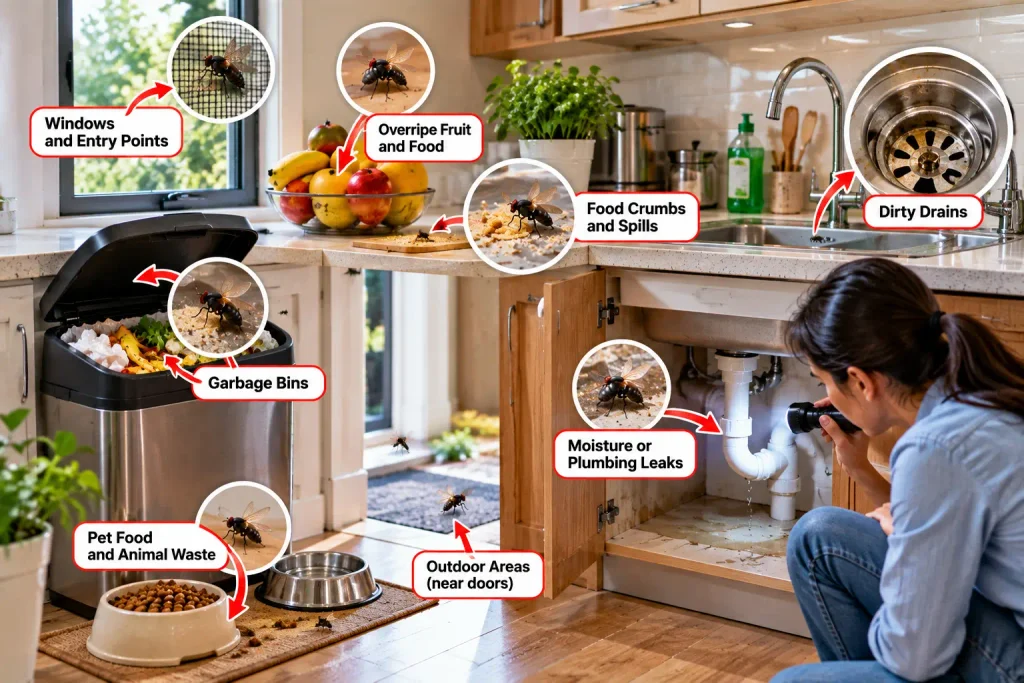
Tip: Follow where flies gather most often to identify the food, waste, moisture, or entry point causing the problem.
- Windows
- Kitchen sink
- Garbage bin
- Fruit bowl
- Pet food
- Bathroom drains
- Doors
- Outdoor-facing walls
Step 2: Check nearby food and waste
Remove or clean anything that could provide food.
Step 3: Check for moisture
Look underneath sinks and around plumbing connections.
Step 4: Check entry points
Inspect screens, doors, windows, and gaps.
Step 5: Look for repeated activity
If flies continue appearing in exactly the same location after cleaning, investigate that area more carefully.
How to Keep Flies Out of Your House
Once you’ve identified the likely source, focus on prevention.
For another practical kitchen pest-prevention guide, see How to Stop Ants From Coming Into Your Kitchen: 9 Easy Ways
Keep food covered
Store food properly and don’t leave uncovered food sitting on counters.
Empty garbage regularly
Use tightly closed garbage containers and clean them when necessary.
Clean spills quickly
Wipe up food and drink spills instead of allowing residue to remain.
Keep drains clean
Remove visible buildup and investigate persistent drain-related fly activity.
Fix leaks
Don’t allow water to accumulate under sinks or around appliances.
Repair screens
Replace torn window or door screens.
Keep outdoor areas clean
Remove pet waste, rotting organic material, and other waste that can attract flies.
These prevention measures follow the broader pest-control principle of removing food, water, shelter, and entry opportunities rather than relying only on pesticides. US EPA
Should You Use Fly Spray?
Fly spray can kill adult flies, but it may not solve the underlying problem if food, garbage, drains, moisture, or another source is still attracting them.
For that reason, find and remove the source first.
If you decide to use a pesticide, read the product label carefully and follow all directions. The EPA specifically recommends using pesticides safely and never using outdoor chemicals indoors.
When Should You Call a Pest Control Professional?
Consider professional help if:
- Large numbers of flies keep appearing
- You cannot identify the source
- Flies continue returning after thorough cleaning
- You suspect a hidden dead animal
- There is a persistent plumbing or sewage problem
- The infestation is spreading
- You are uncomfortable handling the problem yourself
A professional can help identify the type of fly and locate a source that may not be obvious.
Common Mistakes That Can Make Fly Problems Worse
Avoid these common mistakes:
- Only killing visible flies
- Leaving garbage uncovered
- Ignoring food spills
- Leaving overripe fruit on the counter
- Ignoring leaking plumbing
- Leaving pet food out for long periods
- Ignoring damaged window screens
- Spraying pesticides without identifying the source
- Using outdoor pesticides inside the house
The goal is not just to remove today’s flies. It’s to make the environment less attractive to them.
Frequently Asked Questions
Why are flies suddenly coming into my house?
A sudden increase can be related to food waste, garbage, decaying organic material, moisture, drains, pet waste, or a new entry point. If many flies appear repeatedly in one area, investigate that location for a hidden source.
Why are there flies in my kitchen but no obvious food?
Check garbage bins, drains, recycling containers, under appliances, pet-food areas, overripe produce, and plumbing leaks. Small flies can sometimes be associated with drains or fermenting food that isn’t immediately obvious.
Why do flies keep coming back after I kill them?
Killing adult flies doesn’t necessarily remove the source. If food waste, moisture, decaying material, or an entry point remains, more flies may continue to appear.
How do I stop flies from entering through windows?
Check window screens for tears and make sure they fit properly. Repair or replace damaged screens and keep doors and windows closed when practical.
Are house flies dangerous?
House flies are generally considered a nuisance, but they can potentially transfer disease-causing organisms because they are associated with waste and decaying material. University of Minnesota Extension
Final Takeaway
Why are flies coming into my house? In many cases, they are finding something they need—food, waste, moisture, shelter, or an easy way inside.
Start by checking your garbage, food storage, drains, plumbing, pet areas, outdoor waste, and window or door screens. Once you identify the likely source, remove it and improve the conditions that allowed the flies to enter.
If flies keep returning in large numbers even after cleaning and checking common sources, consider getting professional help to identify the underlying problem.