Emergencies can happen without warning. Severe storms, floods, power outages, fires, and other unexpected events can disrupt everyday life and make it difficult to access food, water, medicines, and other essential supplies.
Learning how to make a home emergency kit is a simple way to prepare your household for these situations. With the right supplies stored in one accessible place, you can respond more calmly and meet your family’s basic needs while waiting for services to return or following emergency instructions.
In this guide, you’ll learn what to include in a home emergency kit, how to store essential supplies, which items your family may need, and how to use a practical emergency preparedness checklist.
Why Do You Need a Home Emergency Kit?
An emergency kit helps you keep important supplies available when shops are closed, electricity is unavailable, or normal services are disrupted.
Without preparation, finding drinking water, lighting, first-aid supplies, or essential medication during an emergency can become difficult.
A well-prepared kit can help you:
- Keep drinking water and food available.
- Manage short-term power outages.
- Treat minor injuries with appropriate first-aid supplies.
- Maintain basic hygiene and sanitation.
- Keep important documents and emergency contacts accessible.
- Meet the needs of children, older adults, and pets.
- Prepare to leave your home quickly if evacuation becomes necessary.
The exact contents depend on your location, household size, climate, and the types of emergencies most likely to affect your area.
The American Red Cross emergency supply guide provides a useful starting point for planning a household kit.
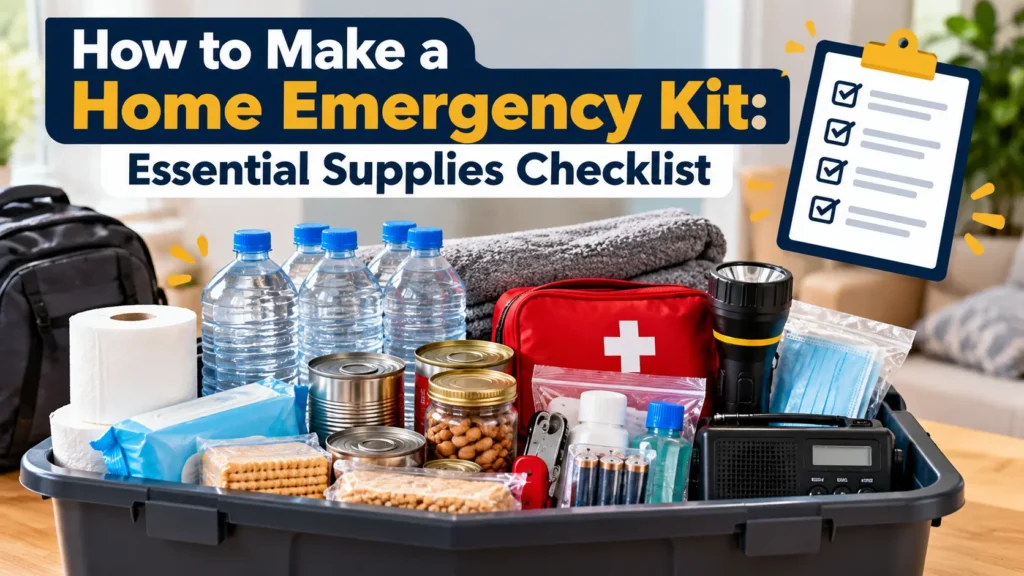
How to Make a Home Emergency Kit: Essential Supplies Checklist
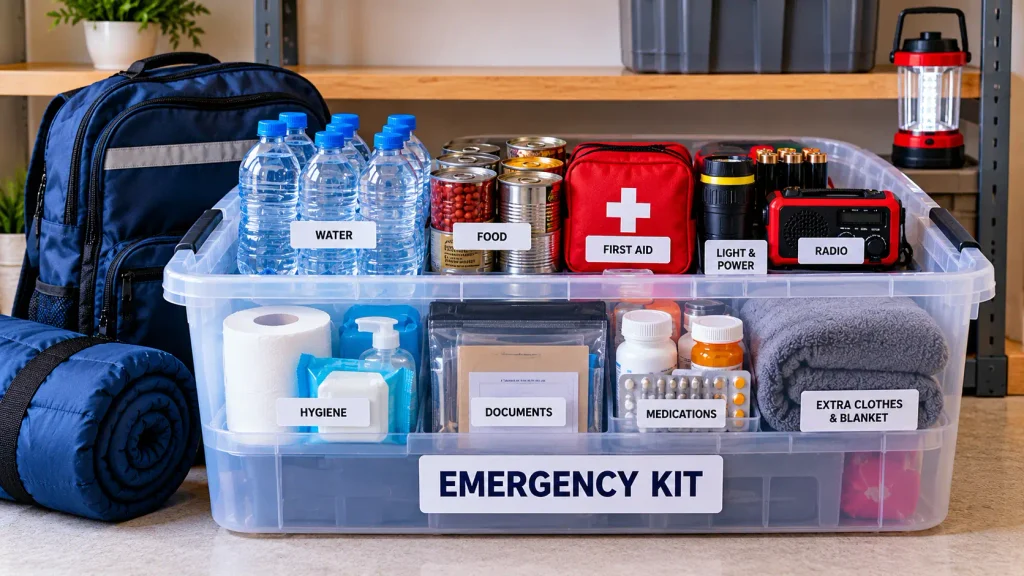
Start with a sturdy, easy-to-carry container or waterproof storage box. Divide supplies into categories so you can find essential items quickly when you need them.
1. Store Enough Drinking Water
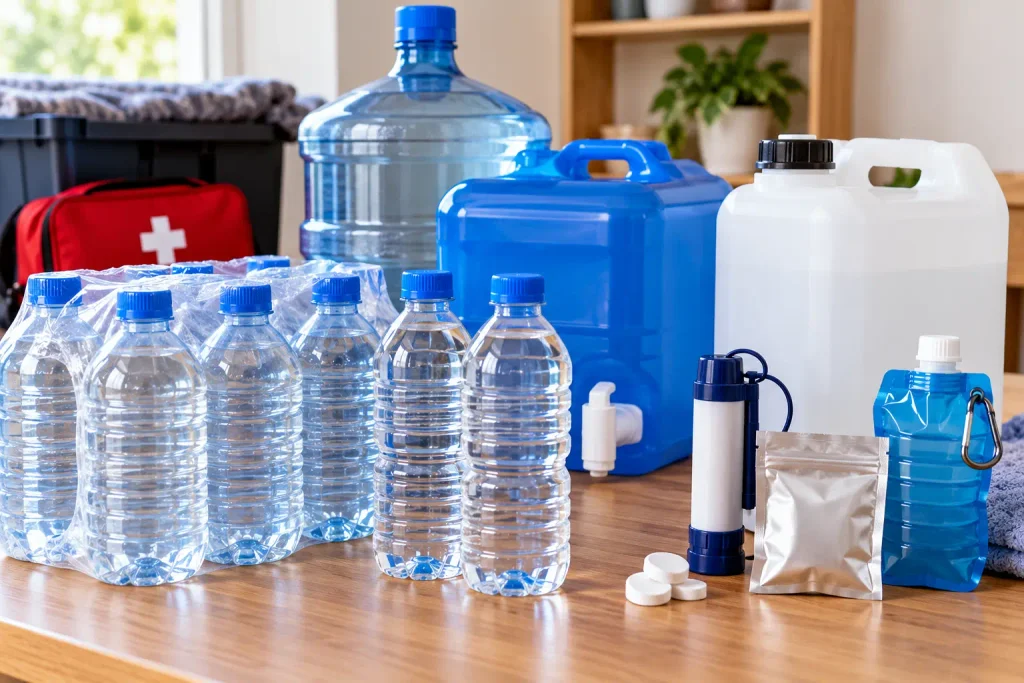
Water is one of the most important items in an emergency kit. Water supplies may become contaminated or unavailable during floods, infrastructure failures, or other emergencies.
For a general starting point, the US Ready.gov guidance recommends at least one gallon of water per person per day for several days, including drinking and sanitation. Actual needs vary with climate, activity, health, and household circumstances.
Water storage checklist:
- Store bottled or appropriately prepared drinking water.
- Plan for every household member.
- Include additional water for hot weather and special needs.
- Use food-grade containers intended for water storage.
- Follow the manufacturer’s storage and replacement instructions.
- Keep water away from chemicals, fuels, and direct sunlight where appropriate.
For a three-day supply, the basic planning quantity is three gallons per person. This is a starting point, not a universal limit on water needs.
If you live in an area prone to flooding or prolonged disruptions, consider storing additional water according to local emergency guidance.
2. Prepare Non-Perishable Emergency Food
During an emergency, refrigeration and cooking facilities may not be available. Choose foods that can be stored safely and eaten with little or no preparation.
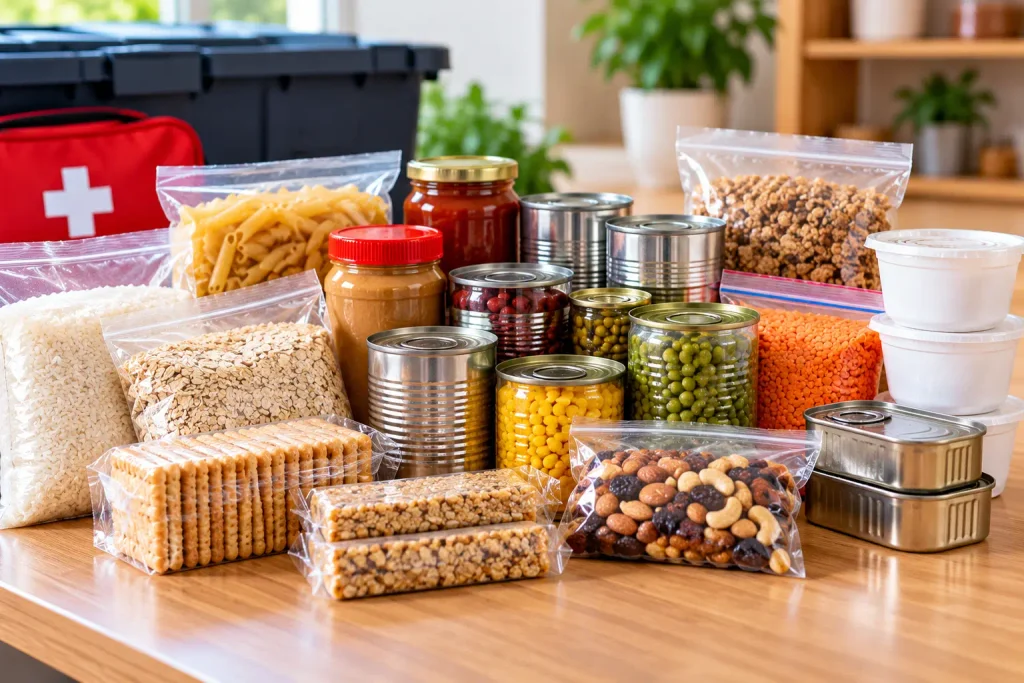
Recommended emergency food items:
- Canned beans, vegetables, and ready-to-eat meals.
- Crackers and shelf-stable bread.
- Nuts, seeds, and suitable energy bars.
- Dried fruit.
- Shelf-stable milk or alternatives.
- Ready-to-eat packaged foods.
- Special dietary foods required by household members.
Also keep a manual can opener if your supplies include canned food.
Food storage tips:
- Choose items your family already eats.
- Check expiration or best-before dates.
- Store food in a cool, dry location.
- Protect supplies from insects, moisture, and rodents.
- Replace used items and rotate stock regularly.
Avoid relying entirely on foods that require refrigeration, large amounts of water, or lengthy cooking.
3. Add a Well-Stocked First-Aid Kit
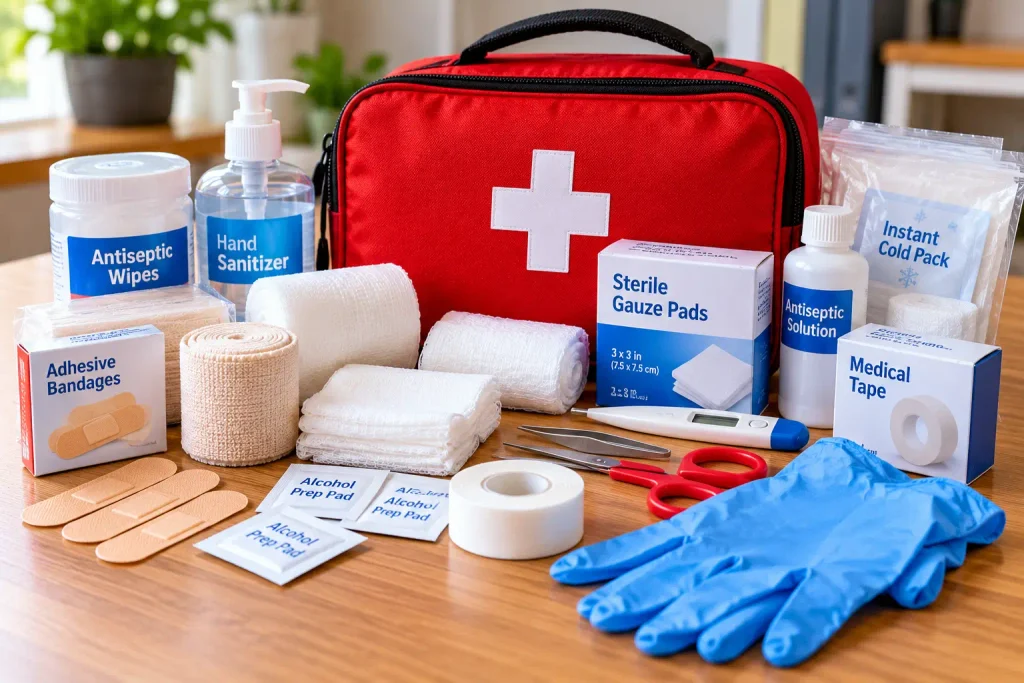
A first-aid kit can help you respond to minor injuries while waiting for professional medical assistance when necessary.
You can purchase a ready-made kit or assemble one using suitable supplies.
First-aid checklist:
- Adhesive bandages in different sizes.
- Sterile gauze pads and dressings.
- Medical adhesive tape.
- Antiseptic wipes.
- Disposable non-latex gloves.
- Tweezers and suitable scissors.
- A digital thermometer.
- Emergency first-aid instructions.
- Any additional supplies recommended by your healthcare professional.
Include personal medicines and medical supplies separately, with attention to storage requirements and expiration dates.
A first-aid kit does not replace emergency medical care. Learn basic first aid and seek professional help for serious injuries or urgent medical problems.
For further guidance, consult the American Red Cross guide to first-aid kits.
4. Keep Flashlights and Backup Power Supplies
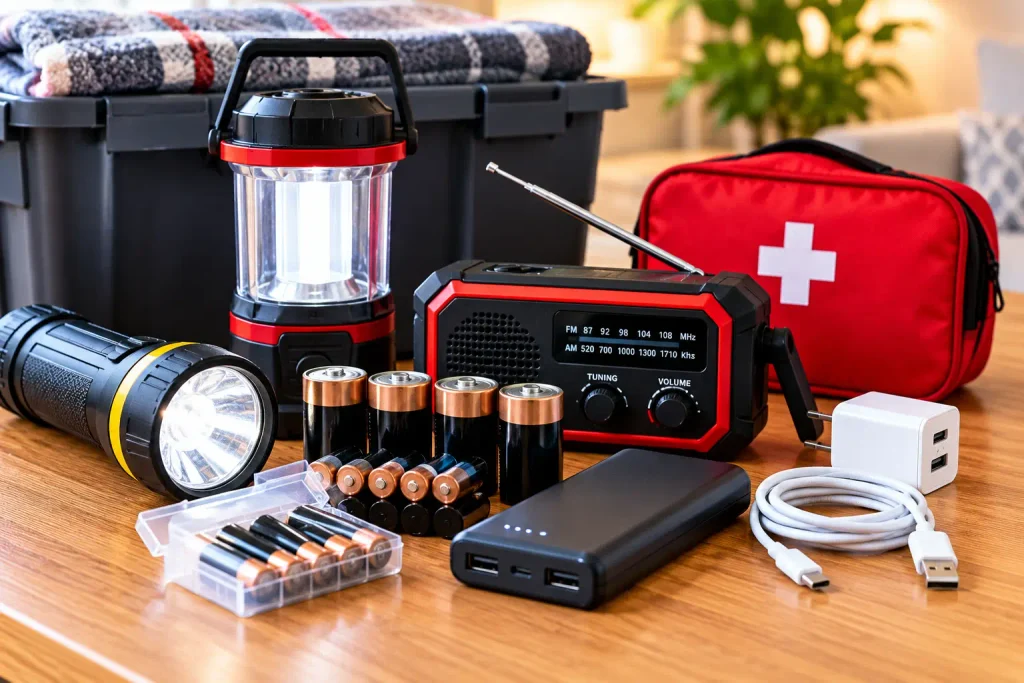
Power outages can leave rooms dark, interrupt communication, and prevent some devices from working.
Keep dependable lighting and backup charging options with your emergency supplies.
Lighting and power checklist:
- Battery-powered flashlight or lantern.
- Spare batteries in compatible sizes.
- Fully charged power bank.
- Charging cables for essential devices.
- Battery backup for medically necessary equipment, where appropriate.
- Battery-powered or hand-crank radio.
Test your flashlight and radio periodically. Recharge power banks according to their instructions, and store batteries as recommended by the manufacturer.
Never use generators, charcoal grills, or fuel-burning camping stoves indoors or in enclosed spaces because they can produce deadly carbon monoxide.
5. Pack Essential Medicines and Personal Medical Supplies
Access to pharmacies or routine medical services may be interrupted during an emergency. Prepare for the possibility that you may need essential medicines for several days.
Medical preparation checklist:
- Keep prescribed medicines in their original packaging where possible.
- Maintain an up-to-date medication list.
- Include relevant allergies and emergency medical information.
- Store necessary medical devices and accessories.
- Keep spare glasses or contact lenses if needed.
- Follow storage instructions for temperature-sensitive medicines.
- Check expiration dates and refill supplies before they run low.
Ask your healthcare professional or pharmacist how to prepare for interruptions to your regular medication supply. Do not change prescribed doses or storage requirements without appropriate guidance.
If a household member relies on powered medical equipment, discuss backup power and emergency arrangements with their healthcare team.
6. Include Hygiene and Sanitation Supplies
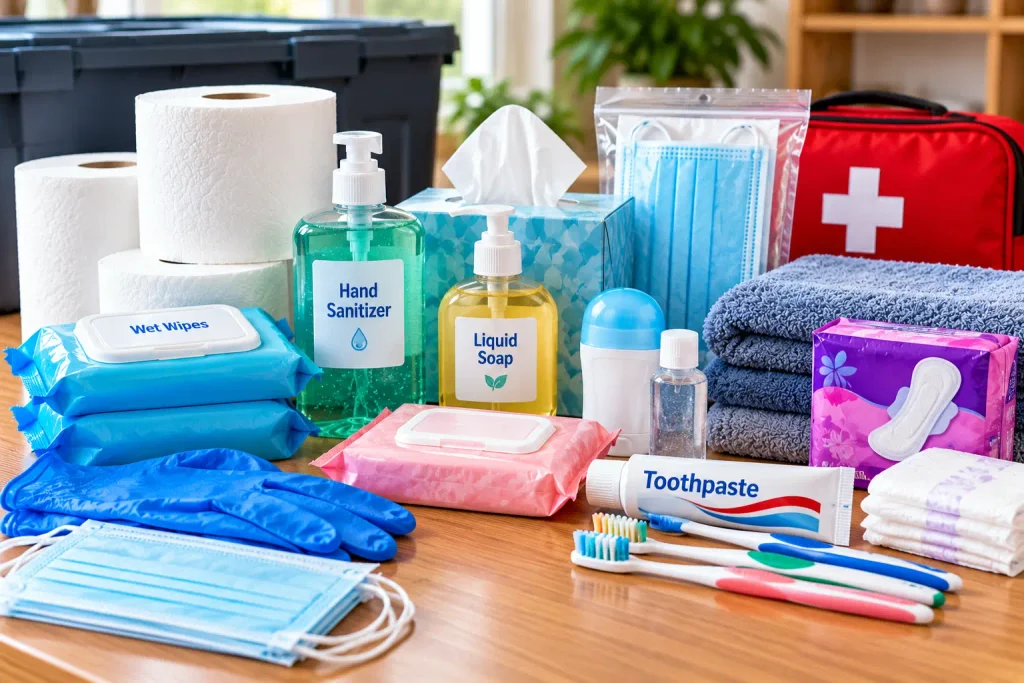
Cleanliness becomes particularly important when running water or normal sanitation services are unavailable.
Store basic hygiene supplies in a sealed bag or separate compartment to keep them clean and organised.
Hygiene checklist:
- Soap and hand sanitiser.
- Moist wipes.
- Toilet paper and tissues.
- Toothbrushes and toothpaste.
- Sanitary products.
- Diapers and baby wipes, if needed.
- Garbage bags and suitable disposal supplies.
- Household cleaning supplies appropriate for emergency use.
Include supplies for people with specific hygiene needs. Follow local guidance for waste disposal and sanitation if normal services are disrupted.
7. Prepare Important Documents and Emergency Contacts
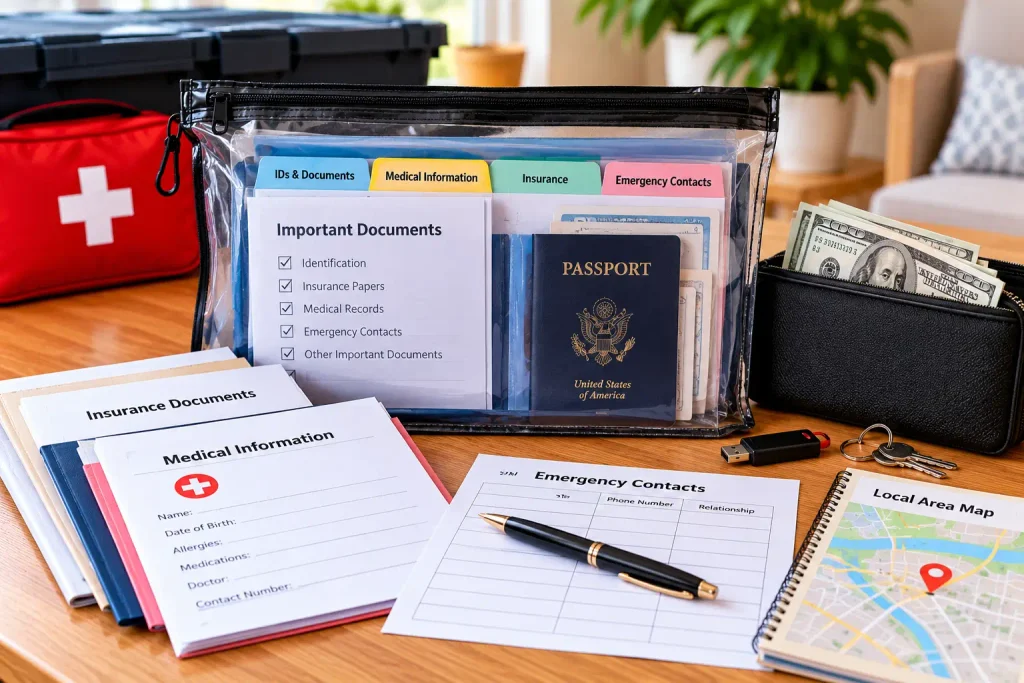
During an emergency, you may need identification, insurance details, medical information, or contact numbers. Having these available can make evacuation and recovery easier.
Documents and communication checklist:
- Copies of identification documents.
- Home insurance and relevant property records.
- Emergency contact information.
- A list of essential medications and allergies.
- Copies of important medical information.
- A small amount of cash in suitable denominations.
- A written list of important phone numbers.
- A paper map of your local area, if useful.
Store paper copies in a waterproof folder. Keep digital copies in a secure location as an additional backup, using suitable privacy and security precautions.
Do not place original documents at unnecessary risk. Keep them secure and follow local advice about what to carry during an evacuation.
8. Pack Clothing, Blankets, and Weather Protection
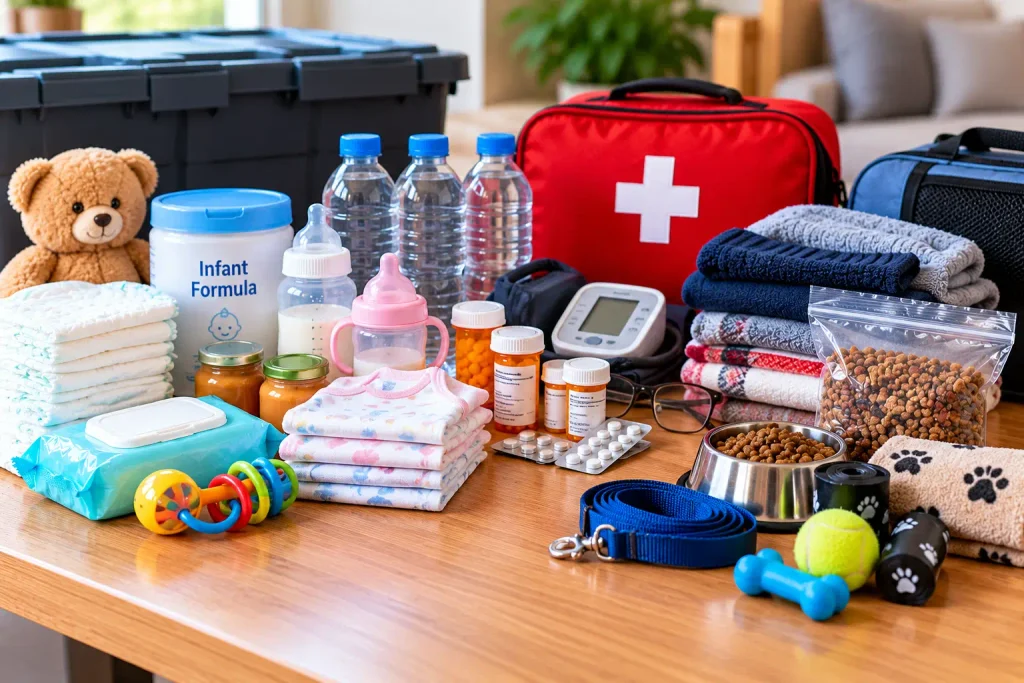
An emergency may require you to remain at home without normal heating or cooling, or leave the property at short notice.
Prepare clothing and basic comfort items suited to your local climate.
Clothing and comfort checklist:
- A change of clothes for each household member.
- Sturdy footwear.
- Warm blankets or emergency blankets.
- Raincoats or other weather-appropriate protection.
- Hats and sun protection where needed.
- Towels and basic sleeping supplies.
- Spare clothing for infants and young children.
If your region experiences cold weather, add suitable warm layers. In hot climates, consider sun protection and additional water needs.
9. Add Tools and Supplies for Common Emergencies
Some basic tools can be helpful during a power outage, minor household disruption, or evacuation. Choose items appropriate for your skills and the risks in your area.
Useful emergency tools include:
- A whistle for signalling for help.
- A multi-purpose tool.
- Work gloves.
- Duct tape.
- Scissors.
- A manual can opener.
- A battery-powered radio.
- Suitable dust masks for the hazards anticipated.
- Local emergency instructions and maps.
Only include tools you know how to use safely. Do not attempt dangerous electrical repairs, structural repairs, or hazardous utility work during an emergency.
If authorities instruct you to shut off utilities, follow their guidance and only operate equipment you can use safely.
10. Customise Your Kit for Children, Older Adults, and Pets
A basic emergency kit may not cover everyone’s needs. Review the supplies required by each person in your household, including anyone with a disability, medical condition, or special dietary requirement.
For babies and young children:
- Formula and feeding supplies, if required.
- Baby food and age-appropriate snacks.
- Diapers and wipes.
- Spare clothing.
- Comfort items and age-appropriate activities.
For older adults or people with disabilities:
- Essential medicines and medical supplies.
- Spare batteries or accessories for assistive devices.
- Hearing-aid batteries, glasses, or mobility aids.
- Written care instructions and emergency contacts.
- Supplies for specific dietary or personal-care needs.
For pets:
- Pet food and drinking water.
- Bowls and a suitable carrier.
- Leash, harness, and identification.
- Necessary medicines.
- Copies of vaccination and relevant veterinary records.
- Waste bags and other sanitation supplies.
Make sure your emergency plan accounts for everyone who may need assistance.
Home Emergency Kit Checklist
Use this checklist to review your supplies as you prepare your emergency kit.
Water and Food
- Drinking water for household members.
- Non-perishable food.
- Manual can opener.
- Special dietary foods, where needed.
First Aid and Medicines
- First-aid kit.
- Essential medicines.
- Medication and allergy list.
- Personal medical supplies.
Lighting and Communication
- Flashlight or battery-powered lantern.
- Spare batteries.
- Charged power bank.
- Charging cables.
- Battery-powered or hand-crank radio.
Hygiene and Clothing
- Soap and hand sanitiser.
- Wet wipes and toilet paper.
- Personal hygiene supplies.
- Spare clothes and sturdy footwear.
- Blankets or emergency blankets.
Documents and Tools
- Important document copies.
- Emergency contact list.
- Cash.
- Whistle.
- Appropriate tools and work gloves.
- Waterproof storage bags.
Household-Specific Supplies
- Baby supplies, if needed.
- Medical equipment accessories, if needed.
- Pet food and pet-care supplies, if needed.
- Weather-specific supplies.
- Any other essential personal items.
How to Store Your Home Emergency Kit
Collecting supplies is only the first step. Your kit should also be stored safely and remain easy to access.
Follow these simple storage practices:
Choose a suitable container: Use a sturdy, easy-to-carry box, duffel bag, or waterproof container appropriate for the supplies.
Keep essential items accessible: Store the kit where household members can find it quickly without needing to move heavy objects.
Protect supplies: Keep food, documents, batteries, and medical items in suitable packaging and conditions.
Label compartments: Group food, first aid, lighting, hygiene, and documents so they can be found quickly.
Tell your household where it is: Everyone should know where the kit is stored and what to do during an emergency.
Keep an evacuation bag ready: If you may need to leave home quickly, prepare a smaller portable bag with essential items, documents, medicines, water, and other necessities.
Do not store all emergency supplies in one location if flooding or another local hazard could make that area inaccessible.
How Often Should You Check Your Emergency Kit?
Check your emergency kit at least every six months, and whenever household needs change or supplies are used.
During each review:
- Check expiration dates on food, medicines, and other time-sensitive items.
- Replace damaged packaging and used supplies.
- Recharge power banks and test flashlights and radios.
- Check stored water and follow the container’s replacement guidance.
- Update medication lists and emergency contacts.
- Replace clothing that no longer fits growing children.
- Review seasonal needs and local emergency risks.
- Confirm that every household member knows where the kit is stored.
A regular review helps keep your supplies useful instead of leaving you with expired food, flat batteries, or missing essentials.
Common Emergency Kit Mistakes to Avoid
1. Preparing too little water: Calculate your needs for every household member and account for your climate and sanitation requirements.
2. Forgetting essential medicines: Plan for interruptions to routine pharmacy access and follow professional advice about safe storage.
3. Relying only on mobile phones: Keep backup lighting, charging supplies, emergency contacts on paper, and another suitable way to receive information.
4. Packing food that requires complicated preparation: Prioritise safe, ready-to-eat foods and include the correct tools for any packaged food.
5. Ignoring children’s or pets’ needs: Include age-appropriate supplies and essential items for every member of the household.
6. Storing supplies where they are difficult to reach: Keep your kit accessible and consider hazards that could make a storage location unsafe.
7. Never checking the kit again: Review it regularly and replace expired or used items.
8. Assuming a kit replaces an emergency plan: Learn local evacuation procedures, know how to receive official alerts, and establish a family communication plan.
Frequently Asked Questions
What should every home emergency kit contain?
Start with drinking water, non-perishable food, a first-aid kit, essential medicines, flashlights, spare batteries, a radio, hygiene supplies, important document copies, emergency contacts, and suitable clothing. Add items based on your household’s needs and local hazards.
How many days of supplies should I prepare?
A three-day supply is a useful starting point for many emergency kits. Depending on local guidance, the likelihood of prolonged disruptions, and your household’s needs, you may want to prepare for longer periods.
How much water should I store per person?
A commonly used US emergency-planning guideline is at least one gallon per person per day for several days, covering drinking and sanitation. Actual needs vary with climate, health, activity, and other circumstances. Follow local water-storage recommendations.
Should I buy a ready-made emergency kit or make my own?
Either approach can work. A ready-made kit may help you get started quickly, while a customised kit lets you include the specific food, medicines, equipment, and personal supplies your household needs. Check any ready-made kit carefully for missing or unsuitable items.
Where should I keep my emergency kit?
Choose an accessible, protected location known to everyone in your household. Keep supplies away from excessive heat, moisture, and chemicals, and avoid locations that may become inaccessible during a local hazard.
What should I include for a power outage?
Consider flashlights, spare batteries, a charged power bank, charging cables, a battery-powered or hand-crank radio, and backup arrangements for essential medical equipment. Never operate fuel-burning generators or stoves indoors.
How often should I replace emergency supplies?
Review your kit at least every six months. Replace expired food and other time-sensitive items according to their labels, check equipment, recharge power banks, and update supplies as your household needs change.
Final Thoughts
Learning how to make a home emergency kit is a practical step toward protecting your household when normal services are interrupted. You do not have to buy everything at once. Start with drinking water, food, first-aid supplies, essential medicines, lighting, and communication equipment, then add the items your household needs.
Store your supplies in a safe, accessible location and review them regularly. Pair your kit with a family emergency plan and stay informed through reliable local authorities.
Start preparing today, one category at a time. A well-organised emergency kit can help your family manage unexpected disruptions with greater confidence.
Trusted Resources
For further emergency preparedness guidance, consult these resources:
- Ready.gov: Build an Emergency Kit
- American Red Cross: Emergency Supply Kit
- British Red Cross: Prepare an Emergency Kit
Use the guidance most relevant to your country and local risks, and follow official instructions during an actual emergency.
Related Articles
Explore more practical home safety and preparedness guides on Fix The Annoying: