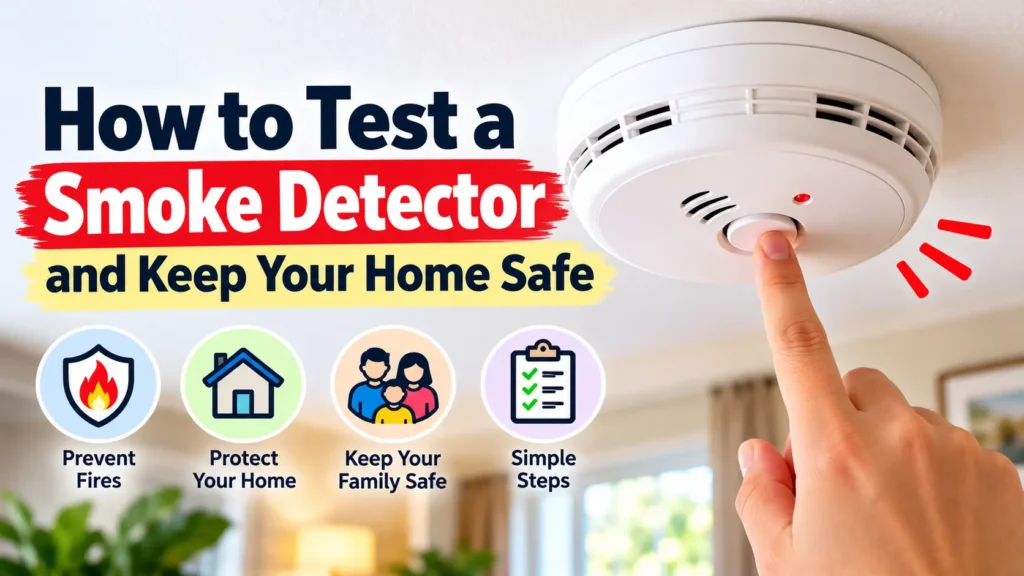
A working smoke detector can give your family an early warning when smoke or fire is detected, helping everyone respond quickly and get to safety. However, simply having a smoke detector installed is not enough. You also need to test it regularly, check its power source, and replace it when it reaches the end of its useful life.
If you want to learn how to test a smoke detector, the good news is that the basic process is simple. With a few minutes of regular maintenance, you can check whether your alarm responds to its test button and identify common problems before they become serious concerns.
In this guide, you will learn how to test a smoke detector step by step, what to do if it does not beep, how often to check it, and which fire safety precautions every household should follow.
Why Is It Important to Test a Smoke Detector?
Smoke detectors are an important part of home fire safety. A properly installed and maintained alarm can alert you to a potential fire while there is still time to escape.
Regular testing helps you:
- Confirm that the alarm’s test function works.
- Identify certain battery or power problems.
- Notice warning chirps or other fault indicators.
- Check whether the alarm needs replacement.
- Remind everyone in your household what the alarm sounds like.
Keep in mind that pressing the test button does not necessarily confirm that every part of the detector can detect smoke correctly. Follow the manufacturer’s instructions for any additional testing or maintenance.
For more practical advice, explore our other articles in the Fire & Smoke Safety section
How to Test a Smoke Detector in 7 Easy Steps
Follow these steps to check your smoke detector safely.
Step 1: Read the Manufacturer’s Instructions
Before testing your smoke detector, check the user manual or the manufacturer’s website for instructions specific to your model.
Locate the test button and learn what the alarm’s different sounds and indicator lights mean. Some alarms have a hush button, sealed batteries, or special testing requirements.
Do not remove the detector or open its electrical components just to test it.
Step 2: Tell Everyone Before Testing
Smoke alarms can be very loud. Let everyone nearby know that you are about to perform a test so they do not mistake the sound for a real emergency.
If your alarms are interconnected, testing one unit may cause other alarms in the home to sound as well. Check the instructions for your system.
Never test an alarm during an actual fire emergency.
Step 3: Press and Hold the Test Button
Find the test button on the smoke detector. Depending on the model, it may be on the front or side of the unit.
Press and hold it for the duration specified by the manufacturer.

A working alarm should produce its test sound, usually a loud series of beeps or another clearly recognizable signal. Release the button when the test is complete.
NFPA smoke alarm testing and maintenance guidelines
Important: Do not use an open flame, a lighter, a match, or burning material to test a smoke detector. Do not spray products into the unit unless the manufacturer specifically approves them.
Step 4: Listen for the Alarm
Make sure the alarm produces the expected sound when you press the test button.
If the detector is interconnected, check whether the other connected alarms respond as described in the manufacturer’s instructions.
If you cannot hear the alarm clearly from bedrooms or other occupied areas, review your home’s alarm coverage and consider whether additional alarms or suitable alerting devices are needed.
Step 5: Check the Battery or Power Supply
If the alarm does not sound, check its power source according to the manufacturer’s instructions.

- Replaceable-battery alarms: Install the correct battery type and make sure it is fitted properly.
- Sealed-battery alarms: Do not attempt to open or replace a sealed battery. Follow the instructions for the model.
- Hardwired alarms: Check the normal user-accessible indicators and backup battery, if applicable. Do not work on exposed wiring.
After correcting a battery or power issue, test the alarm again.
If a hardwired detector appears to have an electrical fault, contact a qualified electrician or the appropriate service professional.
Step 6: Check the Alarm’s Age and Condition
Look for the manufacture date or replacement information on the detector, following the manufacturer’s instructions for accessing the label.
Many smoke alarms need to be replaced when they reach 10 years from the manufacture date, but always follow the model’s stated service life.
U.S. Fire Administration smoke alarm replacement guidance
Replace an alarm sooner if the manufacturer instructs you to, if it is damaged, or if it continues to fail its test.
Do not assume that an old detector is safe just because it still beeps when tested.
Step 7: Record the Test and Set a Reminder
Once you have tested the alarm, record the date. A simple note on your phone or a home maintenance checklist can help you remember the next test.
The National Fire Protection Association (NFPA) recommends testing smoke alarms at least once a month.
Choose a regular day each month so testing becomes part of your household routine.
How Often Should You Test a Smoke Detector?
Testing frequency and battery maintenance are two different things. Use this general schedule alongside the manufacturer’s instructions.
| Maintenance task | Recommended timing |
|---|---|
| Test the smoke alarm using its test button | At least once a month |
| Replace standard replaceable batteries | At least once a year, or as instructed |
| Check for warning chirps and visible damage | Regularly |
| Clean the alarm | As directed by the manufacturer |
| Replace the entire alarm | At the end of its stated service life; many models require replacement after 10 years |
Alarms with sealed, long-life batteries generally require replacement of the entire unit according to the manufacturer’s instructions rather than routine battery changes.
What to Do If Your Smoke Detector Does Not Beep
If the alarm does not sound during a test, do not ignore the problem.
Try these troubleshooting steps:
Check the Battery
For models with replaceable batteries, install a fresh battery of the correct type. Confirm that it is fitted in the correct direction.
Some models have a backup battery even when they are connected to household electricity.
Check the Installation
If the detector is loose, damaged, or appears incorrectly installed, follow the manufacturer’s guidance. Do not attempt electrical repairs yourself.
For hardwired units, contact a qualified electrician if the problem appears to involve wiring or the power supply.
Clean the Detector Correctly
Dust and debris can affect alarm performance. Clean the unit only as recommended by the manufacturer, using the specified method.

Do not immerse the detector in water or use cleaning chemicals, compressed air, or a vacuum attachment unless the instructions permit it.
Test It Again
After carrying out the permitted maintenance, repeat the test according to the manufacturer’s instructions.
If the detector still fails, replace it with a suitable alarm or arrange professional assistance. Make sure your home has working fire detection while the faulty unit is being addressed.
Understand Warning Chirps
An occasional short chirp may indicate a low battery, a fault, or the end of the alarm’s service life. The meaning varies by model.
Check the user manual rather than guessing what a sound means.
If the alarm sounds because it detects possible smoke or fire, leave the building immediately and call your local emergency service from a safe location. Do not delay your escape to troubleshoot the detector.
Where Should You Install Smoke Detectors?
Testing is only one part of home fire safety. Smoke alarms must also be installed in suitable locations.
The NFPA recommends installing smoke alarms:
- Inside every bedroom.
- Outside each separate sleeping area.
- On every level of the home, including the basement where applicable.
Follow local building and fire safety requirements, as these can vary by country and property type. Choose locations and installation methods approved for your particular detector.
CPSC smoke and carbon monoxide alarm safety recommendations
Interconnected alarms can provide additional protection because multiple alarms may sound when one detects a problem.
If you rent your home, contact your landlord or property manager about missing, damaged, or faulty alarms.
Common Smoke Detector Testing Mistakes to Avoid
Avoid these common mistakes when maintaining your smoke alarms:
1. Testing only once a year: A yearly check is not a substitute for the recommended monthly test.
2. Ignoring repeated chirping: Check the manual to determine whether the alarm needs a new battery, maintenance, or replacement.
3. Removing the battery to stop nuisance alarms: Never leave a smoke alarm disabled. Use the approved hush function when appropriate and address the cause of repeated nuisance alarms.
4. Using an open flame for testing: Flames can create a fire hazard and may damage the detector. Use the prescribed test method.
5. Forgetting the alarm’s age: A detector may still make a sound even when it has reached the end of its service life.
6. Assuming one alarm protects the whole house: Check that your home has sufficient alarms in the recommended locations.
7. Skipping the escape plan: Every household should know how to leave the home quickly and where to meet outside.
You can also read our guide to Home Safety Tips for more ways to improve safety at home.
Create a Simple Home Fire Safety Routine
A working smoke detector is most useful when it is part of a broader fire safety plan.
Regular home maintenance can also help you identify potential problems before they become serious. See our guide to Things to Check Before Monsoon for more practical home maintenance tips

Use this checklist to get started:
- Test every smoke alarm monthly.
- Check batteries and warning indicators.
- Clean alarms according to their instructions.
- Replace expired or faulty detectors.
- Keep escape routes and exits clear.
- Plan and practise two ways out of each room where possible.
- Choose an outdoor meeting place away from the building.
- Make sure everyone knows to leave immediately when a fire alarm sounds.
- Call the local fire or emergency service from a safe location.
Practise the escape plan with everyone in the household, including children and overnight guests. Consider the needs of anyone who may require assistance or a visual or vibrating alarm.
Frequently Asked Questions
1. How do you test a smoke detector at home?
Press and hold the detector’s test button according to the manufacturer’s instructions. The alarm should produce its expected test sound. If it does not, check the permitted battery and power maintenance steps and test again.
2. How often should a smoke detector be tested?
Test smoke alarms at least once a month. Follow the manufacturer’s guidance for cleaning, batteries, and any additional maintenance.
3. Why is my smoke detector not beeping when I press the test button?
Possible causes include a depleted or incorrectly installed battery, a power supply issue, a faulty unit, or a detector that has reached the end of its service life. Follow the manual and replace a detector that continues to fail.
4. Can I test a smoke detector with a lighter or candle?
No. Never use an open flame to test a smoke detector. Use the built-in test button and only use other testing methods if the manufacturer explicitly recommends them.
5. When should I replace my smoke detector?
Check the manufacturer’s stated service life and the date on the unit. Many smoke alarms should be replaced 10 years after manufacture, or earlier if they fail, are damaged, or the manufacturer requires it.
6. What should I do if my smoke alarm keeps chirping?
Consult the user manual to identify the warning. Depending on the model, it may indicate a low battery, a fault, or the need to replace the alarm. Do not permanently disable the detector to stop the sound.
7. Where should smoke detectors be installed?
Common recommendations include inside every bedroom, outside each separate sleeping area, and on every level of the home. Follow local regulations and the manufacturer’s installation instructions.
Final Thoughts
Learning how to test a smoke detector is a simple but important part of keeping your home safe. Test your alarms monthly, maintain their batteries and power supplies, follow cleaning instructions, and replace units when they reach the end of their service life.
Most importantly, make sure everyone in your household recognises the alarm and knows how to escape quickly if a fire occurs. Regular maintenance and a clear escape plan can help your family respond more safely in an emergency.
For more practical home safety advice, explore the Home Safety Tips section on Fix The Annoying.