
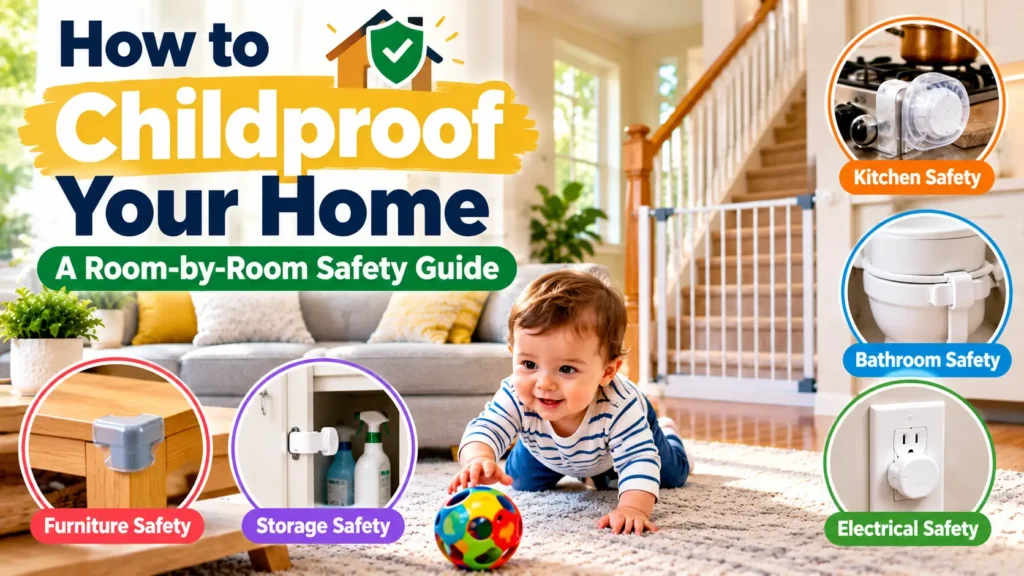
Children are naturally curious. As babies begin crawling, pulling themselves up, and taking their first steps, they start exploring everything around them. However, everyday household items such as electrical outlets, cleaning products, sharp objects, stairs, and unsecured furniture can create potential hazards.
Learning how to childproof your home is an important step toward creating a safer environment for babies and toddlers. With a few practical changes, you can reduce common household risks and give your child more opportunities to explore safely.
In this room-by-room guide, you’ll discover how to childproof your kitchen, bathroom, bedroom, living room, and other areas of your home. You’ll also find a simple childproofing checklist to help you identify hazards and decide what to fix first.
Why Is Childproofing Your Home Important?
Childproofing means identifying potential hazards and making changes to reduce the risk of injury. It includes securing furniture, locking away dangerous products, covering electrical outlets where appropriate, and installing suitable safety gates.
Young children often learn by touching, grabbing, climbing, and putting objects in their mouths. A household item that seems harmless to an adult may become a hazard when a curious toddler can reach it.
Common home safety risks include:
- Falls from stairs, furniture, and windows.
- Burns from hot drinks, cooking appliances, and hot water.
- Choking on small objects and loose toy parts.
- Poisoning from medicines, cleaning products, and chemicals.
- Electrical injuries from accessible outlets and damaged cords.
- Injuries caused by tipping furniture or televisions.
- Drowning in bathtubs, buckets, and other containers of water.
- Strangulation from accessible blind cords and other loops.
The US Consumer Product Safety Commission (CPSC) recommends using appropriate safety devices, securing furniture, and keeping hazardous products away from children. These measures work best when combined with active supervision. Read the CPSC’s childproofing guidance.
How to Childproof Your Home: Room-by-Room Safety Guide
Every room has different hazards, so it helps to inspect your home one area at a time. Start with places your child uses most frequently, then work through the remaining rooms.
1. How to Childproof the Kitchen
The kitchen contains many potential hazards, including hot surfaces, sharp utensils, cleaning products, and heavy cookware. Since children often want to watch adults cook, it is especially important to create clear boundaries around cooking areas.
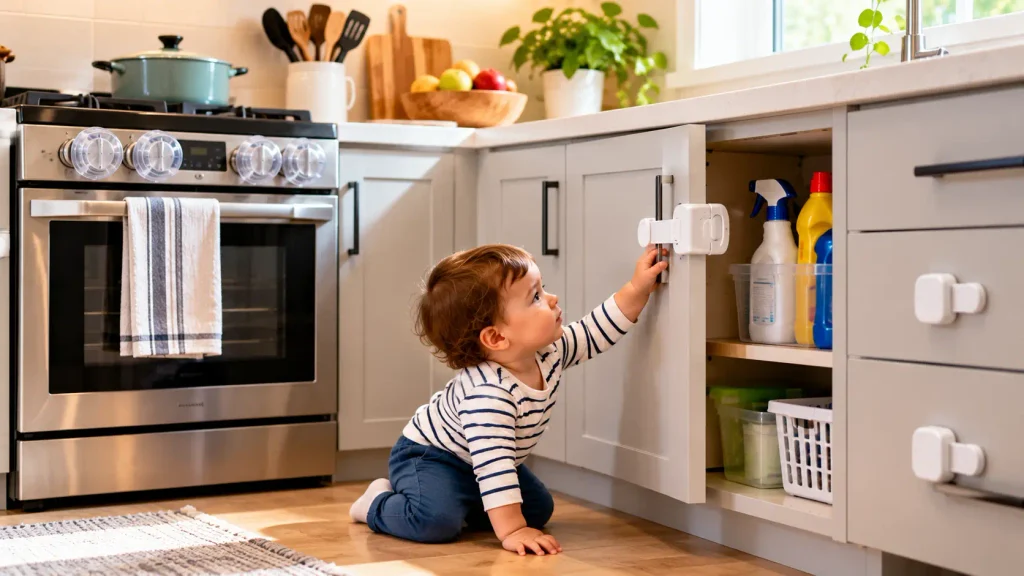
Kitchen childproofing tips:
- Lock cabinets and drawers: Store knives, scissors, cleaning products, and other dangerous items in secured cabinets.
- Use stove knob covers when appropriate: Choose compatible safety devices and keep children away from hot cooking surfaces.
- Cook on the back burners: Turn pot and pan handles inward so children cannot easily reach them.
- Keep hot food and drinks away from edges: Place mugs, kettles, and hot dishes well out of reach.
- Secure heavy appliances: Follow the manufacturer’s instructions for installing anti-tip brackets on suitable appliances.
- Store small objects safely: Keep button batteries, magnets, plastic bags, and other choking or ingestion hazards away from children.
- Keep appliance cords out of reach: Prevent children from pulling hot appliances down from counters.
Never rely on cabinet locks alone to protect a child while cooking. Keep young children away from hot surfaces and supervise them closely.
2. How to Childproof the Living Room
The living room often contains televisions, bookshelves, coffee tables, decorative items, and electrical equipment. Toddlers may pull themselves up on furniture or climb shelves to reach interesting objects.
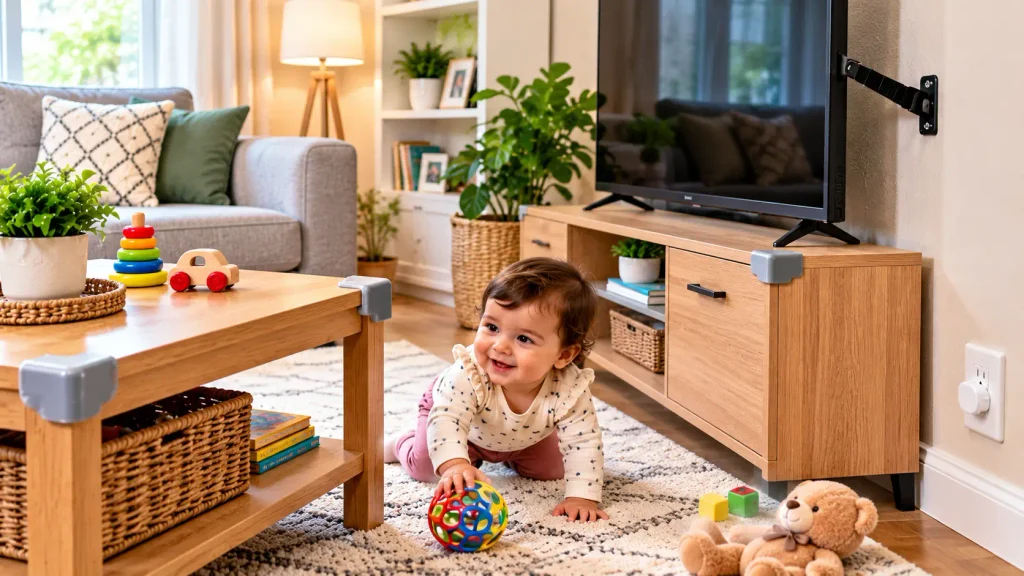
Living room childproofing tips:
- Anchor furniture to the wall: Secure bookcases, dressers, shelving units, and televisions using suitable anti-tip hardware.
- Cover sharp corners: Use securely fitted corner and edge protectors where appropriate.
- Manage electrical cords: Keep cables out of reach and prevent children from pulling on them.
- Remove small decorative objects: Keep coins, batteries, marbles, and other small items away from young children.
- Secure floor lamps: Position them where they cannot easily be pulled over.
- Use suitable outlet protection: Install compliant outlet covers where appropriate, or use tamper-resistant outlets.
- Keep windows inaccessible: Move climbable furniture away from windows and install suitable window guards or opening restrictors.
Furniture anchoring is particularly important because a child may pull on a dresser or television stand to stand up or climb. A sturdy-looking piece of furniture can still tip over.
3. How to Childproof the Bedroom and Nursery
A baby’s bedroom should support safe sleep while keeping everyday hazards out of reach. Focus on the crib, changing area, windows, electrical cords, and storage furniture.
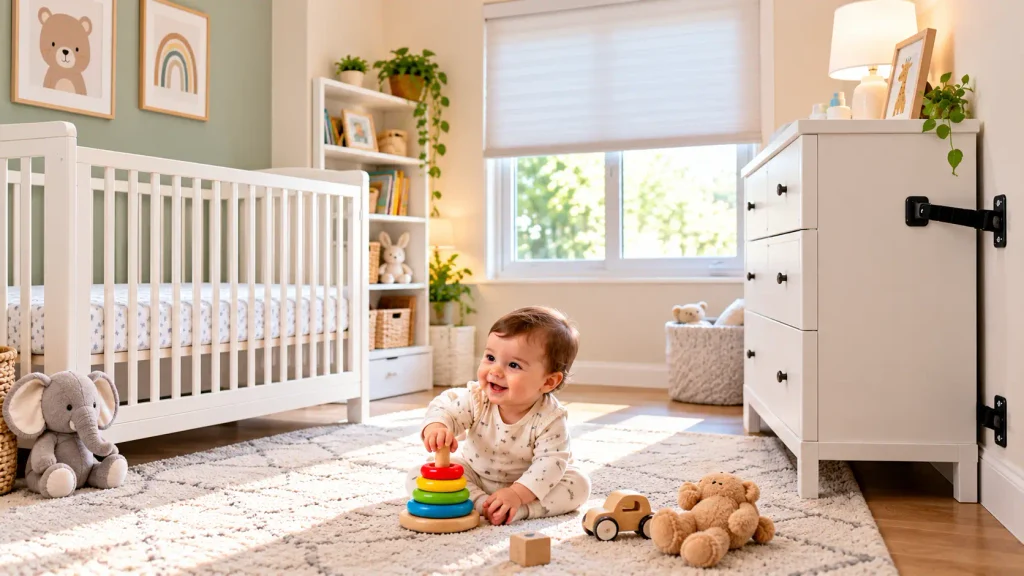
Bedroom and nursery childproofing tips:
- Use a safe crib: Choose a crib that meets applicable safety standards and follow the manufacturer’s instructions.
- Keep the sleep space clear: Place babies on their backs on a firm, flat sleep surface with only a fitted sheet. Keep pillows, loose blankets, stuffed toys, and other soft objects out of the crib.
- Secure furniture: Anchor dressers, wardrobes, and bookshelves to suitable wall supports.
- Keep blind cords inaccessible: Prefer cordless window coverings in rooms used by young children.
- Secure changing supplies: Keep creams, wipes, and other supplies organised so you can reach them without leaving your baby unattended.
- Move furniture away from windows: Avoid creating steps that allow children to climb toward a window.
- Check toys regularly: Remove broken toys and items with loose small parts that are unsuitable for your child’s age.
Important: Never leave a baby unattended on a changing table, bed, or sofa. If you need to move away, take the baby with you or place them in a safe, appropriate location.
4. How to Childproof the Bathroom
Bathrooms contain water, medicines, cleaning products, sharp grooming tools, and slippery surfaces. Even a small amount of water can create a serious hazard for a young child.
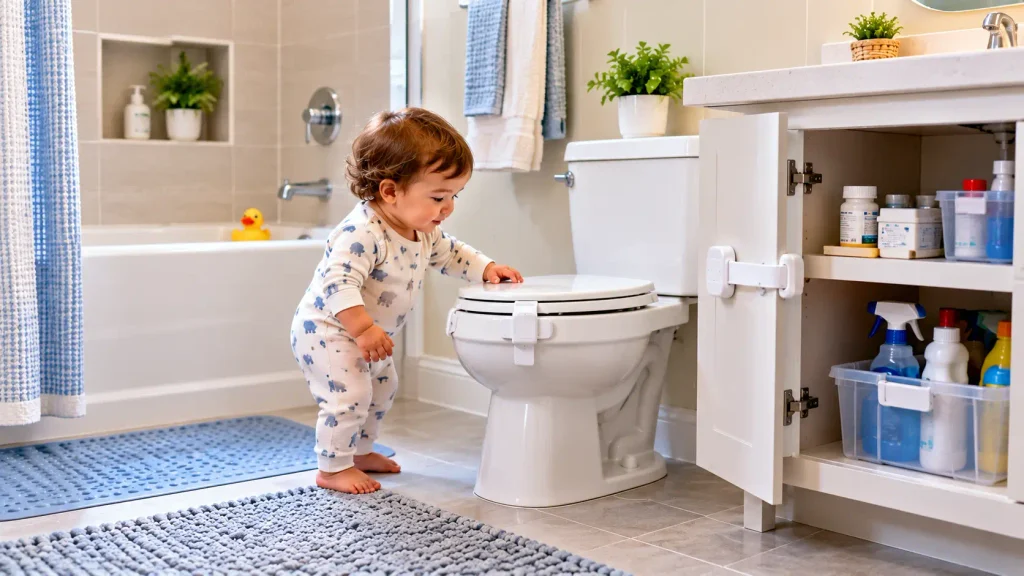
Bathroom childproofing tips:
- Lock away medicines: Store prescription medicines, vitamins, and other potentially harmful products in a secure location.
- Secure cleaning products: Keep bathroom cleaners and chemicals in locked storage, away from children.
- Use non-slip surfaces: Place suitable non-slip mats in and around bathing areas.
- Control access to water: Keep the toilet lid closed and use an appropriate toilet lock if needed.
- Check bathwater temperature: Test the water before bathing your child to reduce the risk of scalding.
- Store sharp items safely: Keep razors, scissors, nail clippers, and grooming tools out of reach.
- Remove electrical hazards: Keep electrical appliances away from water and unplug them when not in use, where appropriate.
Never leave a baby or young child unattended in a bathtub, even for a moment or when using a bath seat. A bath seat is not a substitute for adult supervision.
how to prevent slips and falls in the bathroom to make wet areas safer for your family.
5. How to Childproof Stairs and Hallways
Stairs and hallways can become hazardous as babies begin crawling and toddlers start walking. A child may lose balance, miss a step, or try to climb stairs without understanding the danger.
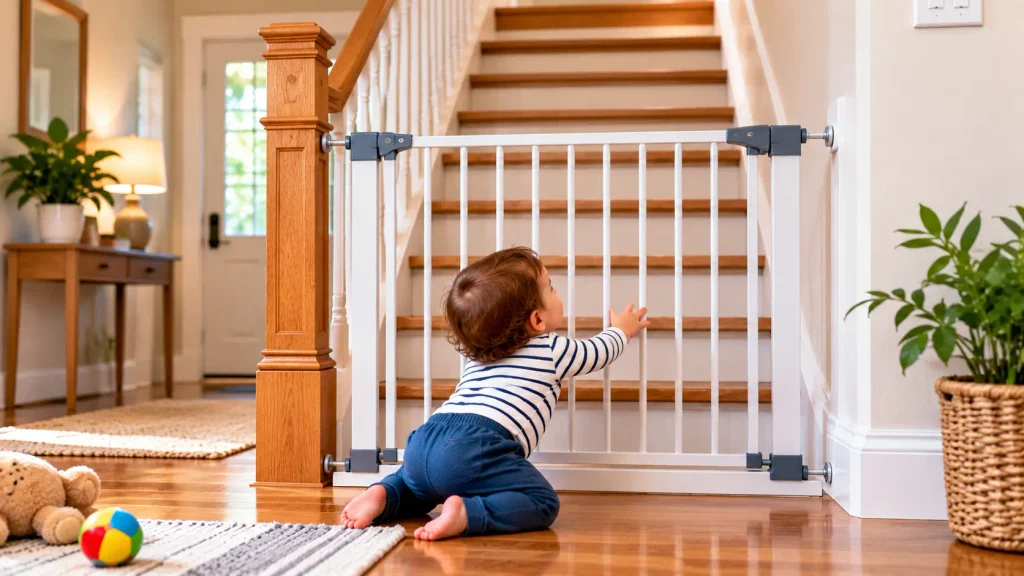
Stair and hallway childproofing tips:
- Install suitable safety gates: Use child safety gates at appropriate stair access points.
- Secure gates correctly: At the top of stairs, use a gate designed for that location and securely mounted according to its instructions.
- Keep walkways clear: Remove shoes, toys, bags, and other tripping hazards.
- Improve lighting: Make sure stairways and hallways are well lit.
- Repair damaged steps: Fix loose flooring, damaged stair edges, and loose handrails.
- Keep climbable objects away: Do not leave chairs or storage boxes next to stair railings.
Choose safety gates that meet applicable safety standards. Pet gates are not necessarily suitable for children, and pressure-mounted gates should not be used at the top of stairs unless specifically permitted by the manufacturer’s instructions and applicable safety guidance.
6. How to Childproof Windows and Balconies
Windows and balconies can pose serious fall hazards, especially for toddlers who enjoy climbing and looking outside.
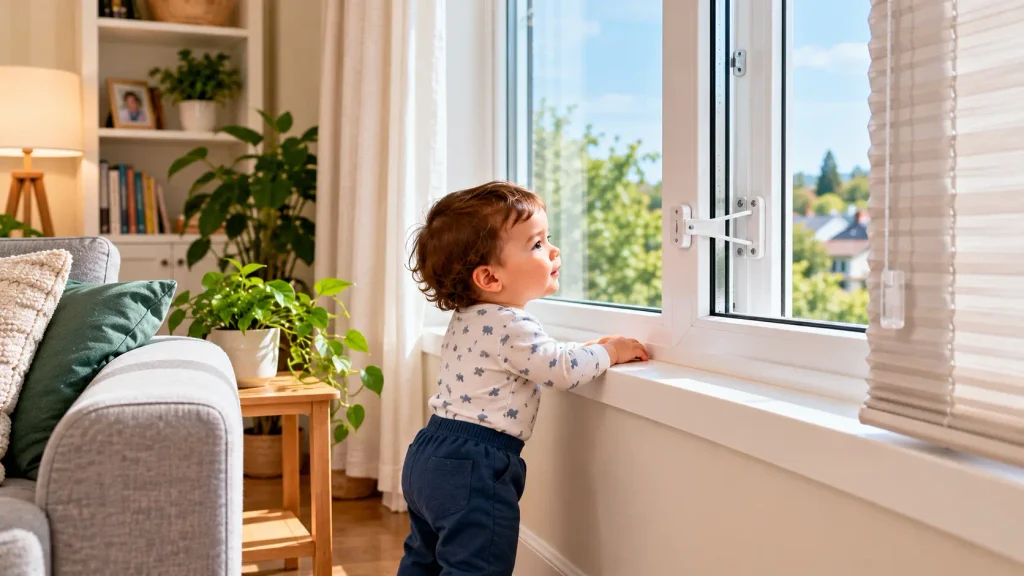
Window and balcony safety tips:
- Install suitable window guards: Use properly installed guards or opening restrictors designed to help prevent falls.
- Keep furniture away from windows: Move beds, chairs, sofas, and shelves away from accessible windows.
- Choose cordless blinds: Avoid accessible cords and loops that could cause strangulation.
- Secure balcony access: Keep balcony doors closed and secured when children are not supervised in the area.
- Check railings and barriers: Make sure balcony railings and other protective barriers are secure and comply with local requirements.
- Inspect safety devices regularly: Check that window guards and restrictors remain firmly installed.
Window screens are not designed to prevent children from falling out. Also, make sure any window safety device does not prevent emergency escape where required.
7. How to Childproof the Laundry Room
Laundry rooms contain detergents, cleaning chemicals, appliance doors, and cords that may attract curious children.
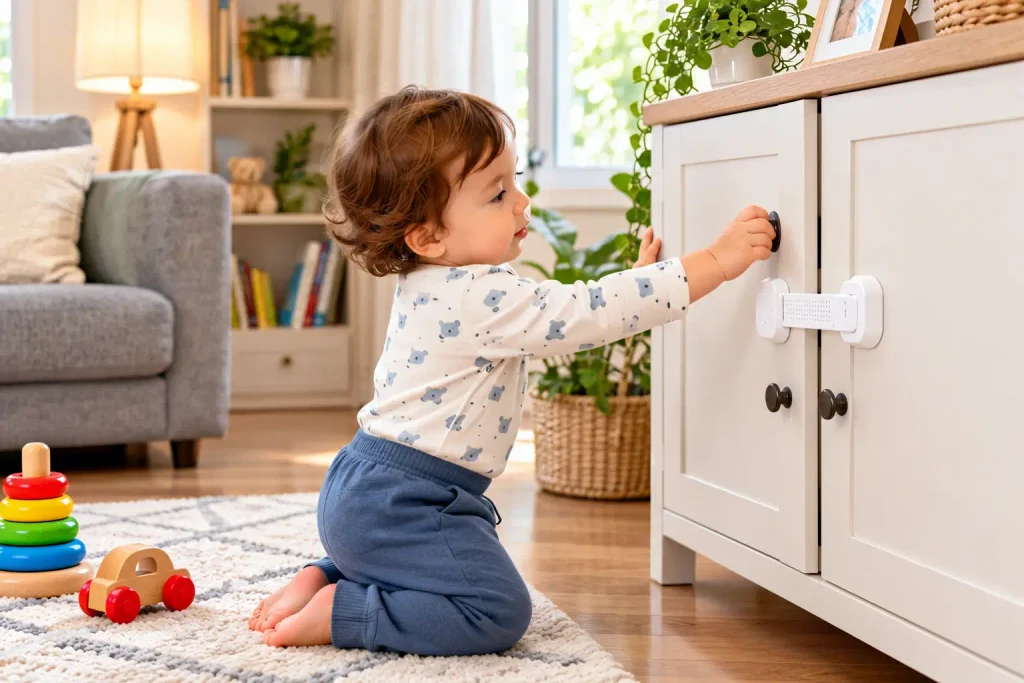
Laundry room childproofing tips:
- Lock away detergents: Store detergent bottles, laundry pods, bleach, and stain removers in secured cabinets.
- Keep products in original containers: Never transfer chemicals into drink bottles or food containers.
- Secure appliances where appropriate: Follow the manufacturer’s instructions for preventing appliances from tipping or being accessed unsafely.
- Keep cords and hoses out of reach: Check that they cannot be pulled or tripped over.
- Keep the room inaccessible when necessary: Use a suitable door lock or safety device if the laundry area contains hazards.
- Store laundry baskets safely: Keep heavy baskets and items that children might climb on out of unsafe positions.
Laundry detergent packets can be particularly dangerous if swallowed or if their contents contact a child’s eyes. Keep them locked away and follow the product’s safety instructions.
8. How to Childproof the Garage and Storage Areas
Garages, sheds, and storage rooms often contain tools, paint, fuel, pesticides, batteries, and other hazardous materials.

Garage childproofing tips:
- Lock away tools: Store saws, drills, blades, and other sharp equipment in secure storage.
- Secure chemicals: Keep paints, fuels, pesticides, and automotive products in suitable locked cabinets.
- Store heavy objects safely: Prevent boxes, toolboxes, and equipment from falling off shelves.
- Keep batteries inaccessible: Store button batteries and other hazardous battery types securely.
- Secure the garage door area: Follow the door manufacturer’s safety instructions and keep children away from moving mechanisms.
- Keep vehicles and machinery inaccessible: Never allow children to play near operating vehicles or powered equipment.
Treat the garage as a restricted area unless it has been checked and made appropriate for children. High shelves alone may not be sufficient because toddlers can climb.
9. How to Childproof Electrical Outlets and Cords
Electrical outlets and cords may attract children because they are easy to reach and often connected to interesting devices.
Electrical safety tips:
- Use suitable outlet protection: Choose compliant covers or tamper-resistant outlets appropriate for your home.
- Replace damaged cords: Stop using frayed, cracked, or damaged electrical cables.
- Keep cords out of reach: Route cables away from play areas and prevent children from pulling devices down.
- Keep electrical items away from water: Pay particular attention to bathrooms, kitchens, and laundry areas.
- Secure power strips: Position them where children cannot access or pull them.
- Avoid overloaded outlets: Follow electrical equipment instructions and consult a qualified electrician when needed.
Do not rely on small, loose outlet plugs that a child can easily remove and potentially swallow. Choose appropriate products and check them regularly.
For additional precautions, explore our guide to home electrical safety tips
10. How to Childproof Your Outdoor Areas
Outdoor areas can include gardens, patios, balconies, swimming pools, and play spaces. Children need close supervision around water, garden equipment, and outdoor structures.
Outdoor childproofing tips:
- Secure pools and water features: Use appropriate barriers and self-closing, self-latching gates where required.
- Empty standing water: Empty buckets, tubs, and other containers after use.
- Store garden chemicals safely: Lock away fertilisers, pesticides, and other hazardous products.
- Secure tools and equipment: Keep lawn equipment, sharp tools, and heavy objects inaccessible.
- Inspect play equipment: Check for loose fixings, sharp edges, and damaged parts.
- Check outdoor gates and fences: Ensure barriers are secure and suitable for their intended purpose.
Never rely on pool alarms or covers as a substitute for appropriate barriers and active adult supervision. Young children need constant, attentive supervision around water.
Childproofing Checklist: What to Check in Every Room
Use this checklist to review your home room by room.
Kitchen
- Knives and sharp utensils are secured.
- Cleaning products are locked away.
- Pot handles are turned inward during cooking.
- Hot drinks and appliances are out of reach.
- Heavy appliances are secured as required.
Living Room
- Televisions and heavy furniture are anchored.
- Sharp corners are protected where needed.
- Electrical cords are secured.
- Small choking hazards are removed.
- Windows are protected against falls.
Bedroom and Nursery
- The crib meets applicable safety standards.
- The baby’s sleep space is clear of soft objects.
- Furniture is securely anchored.
- Blind cords are inaccessible.
- Changing supplies and medicines are stored safely.
Bathroom
- Medicines and cleaning products are locked away.
- Bathing surfaces have appropriate non-slip protection.
- Water temperature is checked before bathing.
- Sharp grooming tools are secured.
- Young children are never left alone in the bath.
Stairs and Hallways
- Appropriate safety gates are installed.
- Stairways are well lit.
- Walkways are free from clutter.
- Handrails and steps are in good condition.
Windows and Balconies
- Suitable window guards or restrictors are installed where needed.
- Furniture is moved away from windows.
- Blind cords are inaccessible.
- Balcony doors and barriers are secure.
Laundry Room and Garage
- Detergents and chemicals are locked away.
- Tools and machinery are inaccessible.
- Heavy items are stored securely.
- Batteries and hazardous materials are out of reach.
Common Childproofing Mistakes to Avoid
Even careful parents can overlook hazards when children grow and become more mobile. Avoid these common mistakes:
1. Relying only on supervision: Active supervision is essential, but it should be combined with suitable safety devices and hazard removal.
2. Assuming child-resistant packaging is childproof: Medicines and chemicals still need secure storage.
3. Forgetting to anchor furniture: Heavy furniture can tip over when children pull themselves up or climb.
4. Using the wrong safety gate: A gate suitable for a doorway may not be appropriate at the top of stairs.
5. Leaving small objects within reach: Coins, button batteries, magnets, and small toy parts can cause choking or serious internal injuries.
6. Ignoring window cords: Accessible cords and loops can pose a strangulation hazard.
7. Childproofing only once: Recheck your home as your child begins crawling, standing, walking, and climbing.
8. Relying on safety products without checking installation: A safety device may not work properly if it is damaged, loose, unsuitable, or incorrectly installed.
You can also learn how to test a smoke detector to help keep your household prepared for fire emergencies.
When Should You Childproof Your Home?
It is best to begin before your baby starts crawling. Babies develop new abilities quickly, and an area that was previously out of reach may become accessible within days.
Use these general stages as a guide:
- Before birth: Secure heavy furniture, prepare a safe sleep space, and store medicines and chemicals safely.
- Before crawling: Check floor-level hazards, electrical access, cords, and cabinet storage.
- When pulling up and walking: Recheck furniture stability, sharp edges, stair gates, and reachable surfaces.
- As climbing begins: Review windows, balconies, shelves, kitchen counters, and other elevated hazards.
Every child develops at a different pace, so adapt your checks to your child’s abilities and the layout of your home.
Frequently Asked Questions
What is the most important step in childproofing a home?
Start by removing immediate hazards, securing heavy furniture, locking away medicines and chemicals, and protecting stairways and accessible windows. The highest priorities depend on your child’s age and the hazards in your home.
How much does it cost to childproof a home?
Costs vary depending on the size of your home, the safety devices required, and whether professional installation is needed. Start with high-priority hazards and choose suitable products that meet applicable safety standards.
Are baby gates enough to prevent falls?
No. Safety gates can help restrict access to stairs and other hazardous areas, but they do not replace supervision. Choose the right gate for its location and install it according to the manufacturer’s instructions.
How can I childproof a home on a budget?
Begin with low-cost actions such as moving hazardous items out of reach, securing cords, removing choking hazards, keeping floors clear, and storing medicines and cleaning products in locked locations. Prioritise proper furniture anchors and other essential safety devices.
Do I need to childproof every room?
Yes, every room should be checked for hazards, although some rooms may need more changes than others. Pay special attention to kitchens, bathrooms, bedrooms, stairways, windows, garages, and outdoor areas.
How often should I check childproofing devices?
Check them regularly and whenever your child develops a new ability, such as crawling, walking, or climbing. Inspect for loose fittings, damage, and products that no longer work as intended.
Can a childproofed home prevent every accident?
No. Childproofing reduces risks but cannot eliminate every hazard. Continue active supervision, maintain safety devices, and adjust your home as your child grows.
Final Thoughts
Learning how to childproof your home does not mean removing every object or preventing your child from exploring. It means identifying everyday hazards and making practical changes that help children explore their surroundings more safely.
Start with the kitchen, living room, bedroom, bathroom, and stairways. Secure heavy furniture, lock away dangerous products, protect windows, and keep small hazardous objects out of reach. Then use the checklist to review the remaining areas of your home.
Most importantly, remember that childproofing works best when combined with active supervision and regular safety checks.
A safer home starts with one room at a time. Walk through your home today from your child’s point of view and address the most important hazards first.
Trusted Resources
For additional child safety information, consult these reliable resources: