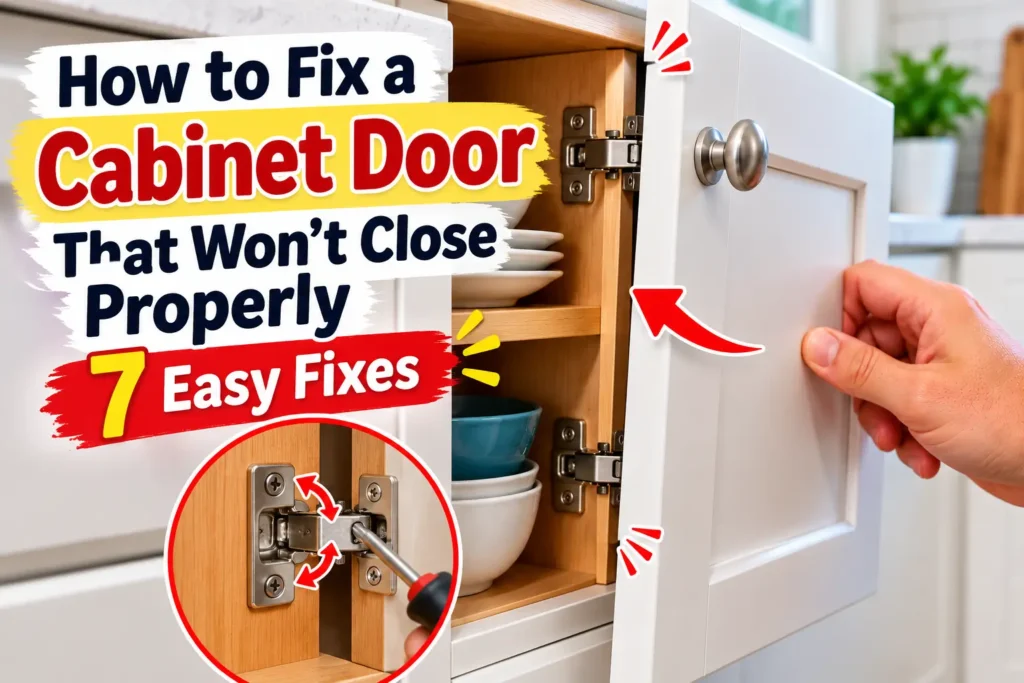
A cabinet door that won’t close properly can be frustrating, especially when it keeps sticking, rubbing against the frame, or popping open after you push it shut. Fortunately, you may not need to replace the entire door or cabinet. In many cases, a loose hinge, incorrect alignment, or a small obstruction is responsible.
Learning how to fix a cabinet door that won’t close properly starts with identifying the cause. Some doors only need their hinge screws tightened, while others require a small adjustment, a repaired screw hole, or a replacement catch.
In this guide, you’ll learn seven practical fixes, how to identify common cabinet door problems, and when replacing a damaged hinge is the better option.
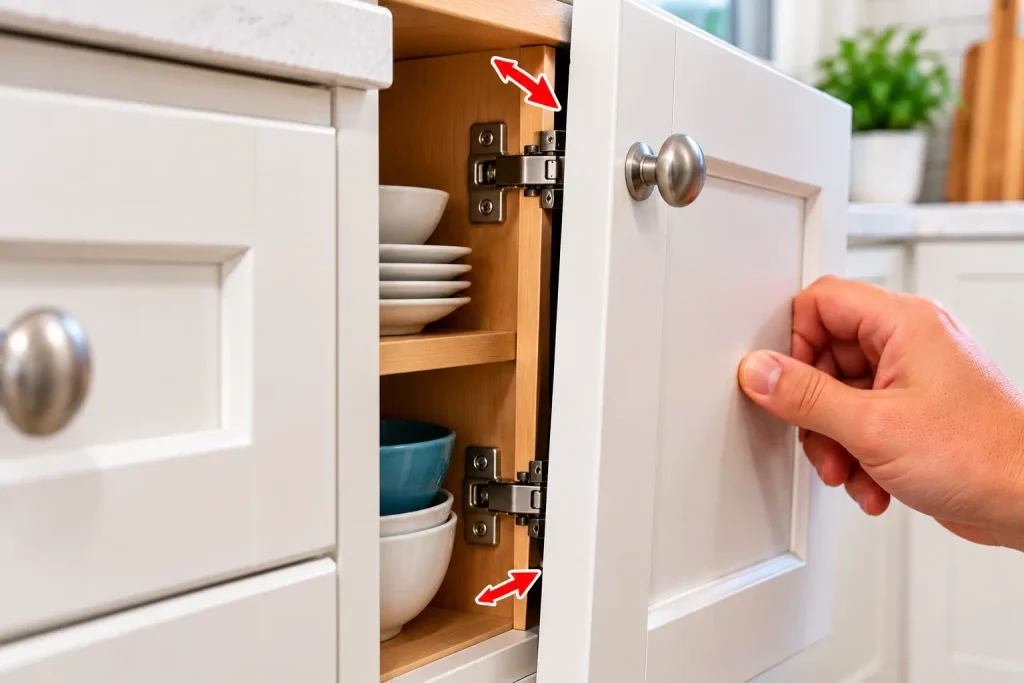
Why Won’t My Cabinet Door Close Properly?
Before making adjustments, open and close the door slowly and observe what happens. Check whether it rubs against the cabinet frame, hangs unevenly, stops before reaching the frame, or closes but immediately opens again.
Common causes include:
- Loose hinge screws: Frequent opening and closing can gradually loosen the screws that hold the hinges in place.
- Misaligned hinges: The door may sit too high, too low, too far forward, or too far to one side.
- Obstructions: Items inside the cabinet may prevent the door from closing fully.
- Damaged screw holes: Screws may no longer grip securely if the wood or particleboard around them has worn away.
- Worn or damaged hinges: Bent hinge arms, broken springs, or faulty soft-close mechanisms can interfere with closing.
- A faulty catch or latch: A door may reach the cabinet frame but fail to stay shut.
- Swelling or warping: Moisture and temperature changes can affect some wooden cabinet doors.
Identifying the problem first helps you avoid unnecessary adjustments and replacement parts.
Tools and Materials You May Need
Gather a few basic items before starting:
- Phillips or flathead screwdriver that fits your screws
- Flashlight
- Soft cloth
- Small level, if available
- Replacement screws or a compatible cabinet catch, if needed
- Suitable wood-repair product for damaged screw holes, if appropriate
You may not need everything on this list. Start with a visual inspection and use only the tools required for the repair.
Safety tip: Support a heavy or loose cabinet door while working on its hinges. If the door is cracked, made of glass, or at risk of falling, get help before attempting repairs.
How to Fix a Cabinet Door That Won’t Close Properly
Try these seven fixes in order, starting with the simplest checks. Make one change at a time and test the door before moving to the next step.
Fix 1: Check for Obstructions Inside the Cabinet
Sometimes, the problem has nothing to do with the hinges.
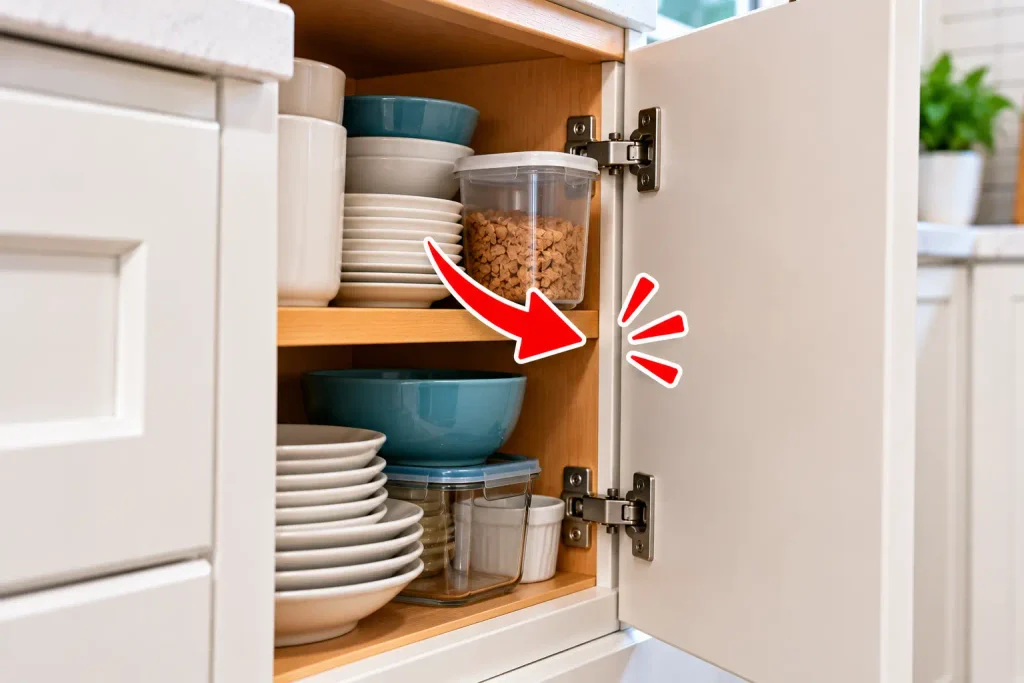
Open the door and check whether anything is sticking out too far or blocking its movement. Tall containers, stacked dishes, storage bins, loose shelf liners, and misplaced items can prevent the door from closing completely.
Try these steps:
- Move items away from the door and hinge area.
- Check that shelves and removable organizers are sitting correctly.
- Look for loose objects caught between the door and cabinet frame.
- Close the door slowly and see whether it now shuts normally.
If the door closes after removing an obstruction, no hinge adjustment is necessary.
Fix 2: Tighten Loose Cabinet Hinge Screws
Loose screws are a common reason cabinet doors sag, shift, or rub against the frame.
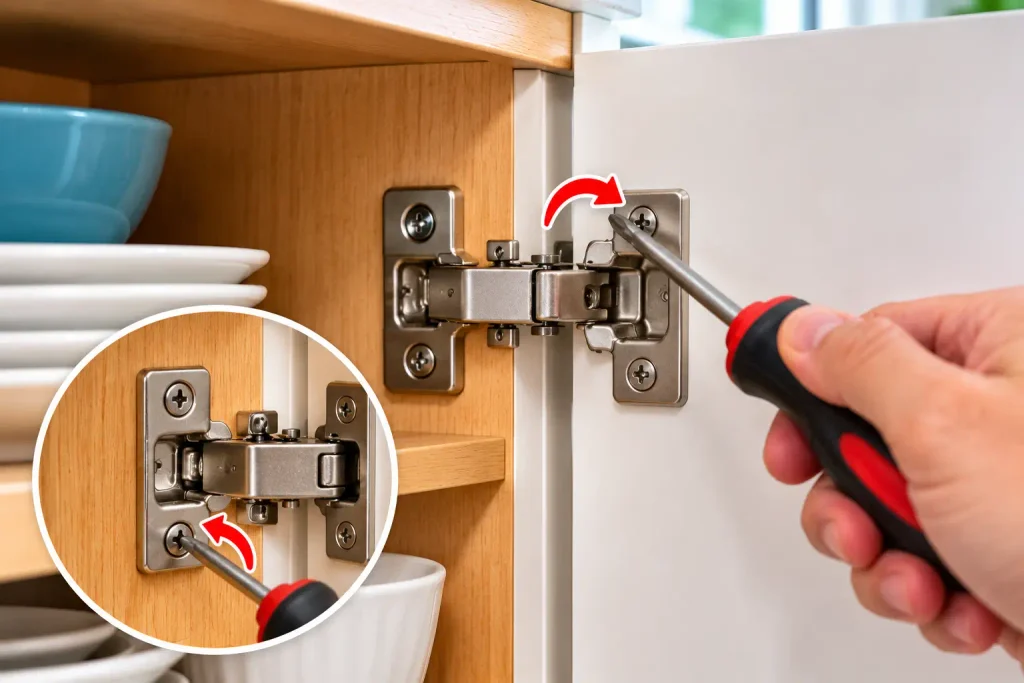
Open the cabinet door and inspect each hinge. Check the screws that attach the hinge to the door and the screws that secure the mounting plate to the cabinet.
To tighten them:
- Support the door so its weight does not pull on the hinges.
- Use a screwdriver that fits the screw head properly.
- Tighten loose screws gently until they are secure.
- Avoid overtightening, which can strip the screw hole or damage the cabinet material.
- Close the door and check whether it sits correctly.
If a screw turns without tightening, the hole may be damaged. Do not keep turning it. Move to Fix 5 to assess the screw hole.
Fix 3: Adjust the Cabinet Hinges
If the door is crooked, rubs against the frame, or leaves uneven gaps, its hinges may need adjustment.
Many modern concealed cabinet hinges provide adjustments in three directions:
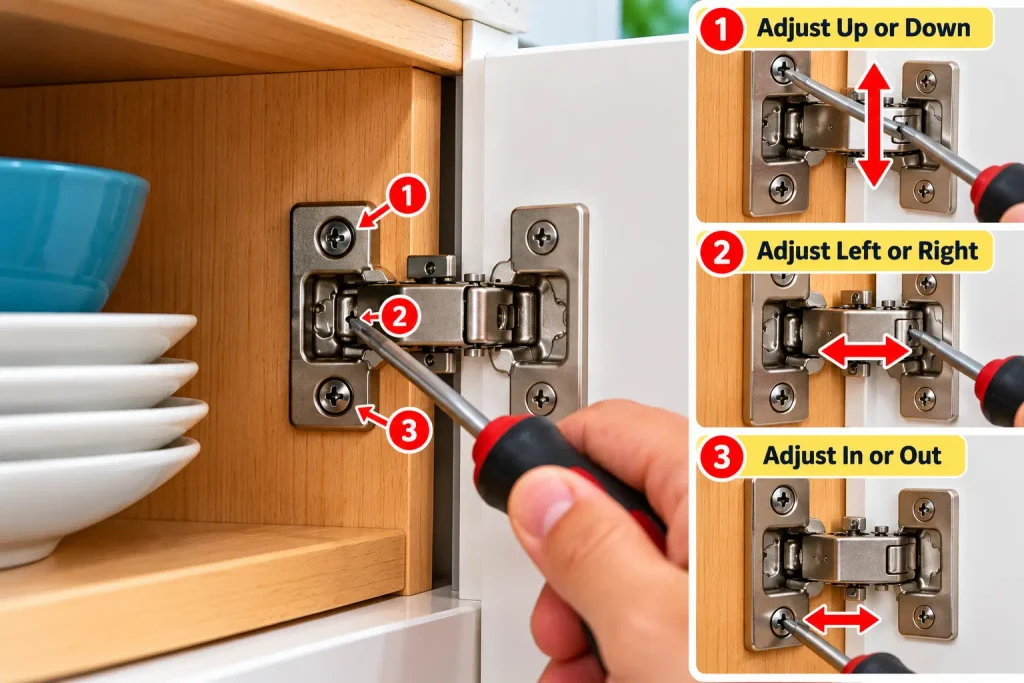
- Side to side: Moves the door left or right.
- Up and down: Changes the door’s height.
- In and out: Moves the door closer to or farther from the cabinet frame.
The exact screw positions vary by hinge model. Check the manufacturer’s instructions before turning an adjustment screw. For example, Blum’s hinge assembly and adjustment guide explains its three-dimensional adjustment system.
Follow this process:
- Open the door and examine the hinge arms and mounting plates.
- Identify which direction the door needs to move.
- Make a small adjustment to the appropriate screw.
- Close the door gently and inspect the gaps.
- Repeat in small increments until the door aligns properly.
Do not assume every hinge uses the same screw arrangement. Older surface-mounted hinges may offer limited adjustment, while some hinges require loosening mounting screws before repositioning the door.
Important: Avoid turning several screws at once. Small, controlled changes make it easier to identify which adjustment is helping.
Fix 4: Check the Door Alignment and Cabinet Frame
A cabinet door may refuse to close because it is hanging unevenly or rubbing against an adjacent door.
Look at the gaps around the door. Check whether:
- The top edge slopes noticeably.
- One side sits closer to the frame than the other.
- Two neighboring doors overlap.
- The bottom corner rubs against the cabinet.
- The door sits too far forward when closed.
If the door is slightly out of alignment, adjust the hinges as described in Fix 3.
If height adjustment is needed, some mounting plates allow the hinge to move vertically after their mounting screws are loosened. Support the door while making the adjustment, then tighten the screws securely.
Test the door after every change. If the cabinet frame itself is twisted, loose, or badly damaged, hinge adjustment alone may not solve the problem.
Fix 5: Repair a Loose or Stripped Hinge Screw Hole
If a hinge screw keeps coming loose, the screw hole may no longer hold it securely. This can happen in solid wood, plywood, or particleboard, although the appropriate repair depends on the material and the extent of the damage.
First, check whether the screw is simply the wrong size or whether the surrounding material has crumbled.
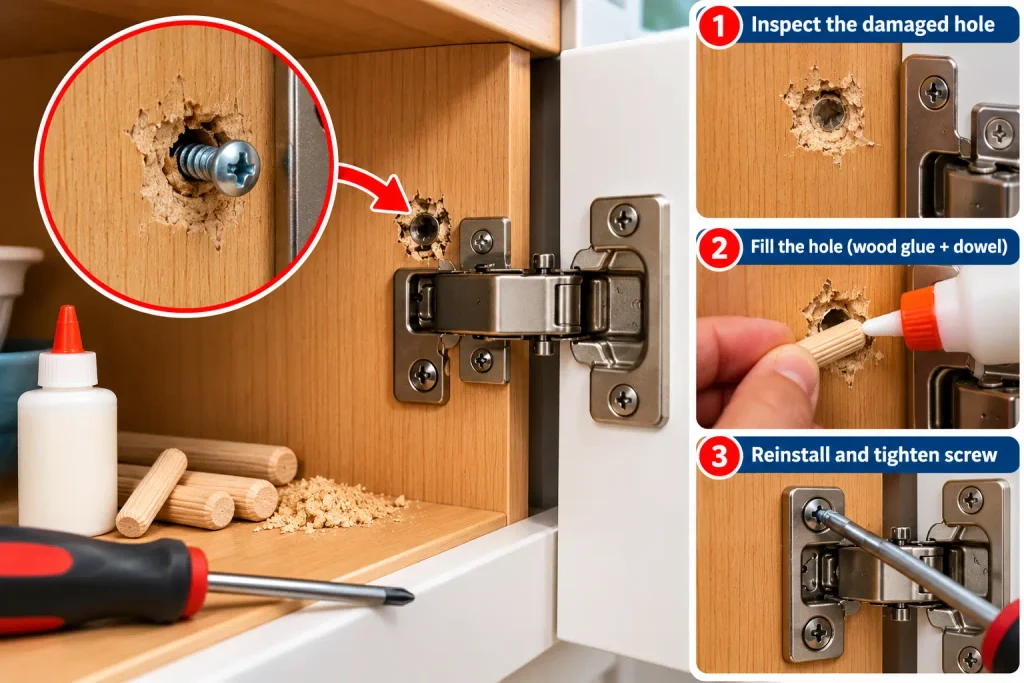
For a small, repairable hole in solid wood, a suitable wood-repair method may restore the screw’s grip. Follow the repair product’s instructions and allow it to cure fully before reinstalling the hinge.
For particleboard or heavily damaged cabinet material, a purpose-made hinge repair plate or another compatible reinforcement may be more appropriate.
Keep these points in mind:
- Do not force an oversized screw into a damaged hole.
- Avoid relying on a longer screw unless you know what is behind the cabinet panel.
- Do not reinstall the hinge until the repair is secure.
- Replace a damaged mounting plate if it is bent or cannot hold the hinge firmly.
If the cabinet side is crumbling or the hinge carries a heavy door, professional repair may be safer than a makeshift fix.
Fix 6: Inspect the Hinge, Soft-Close Mechanism, or Catch
If the door is aligned and the screws are secure but it still will not close, inspect the moving hardware.
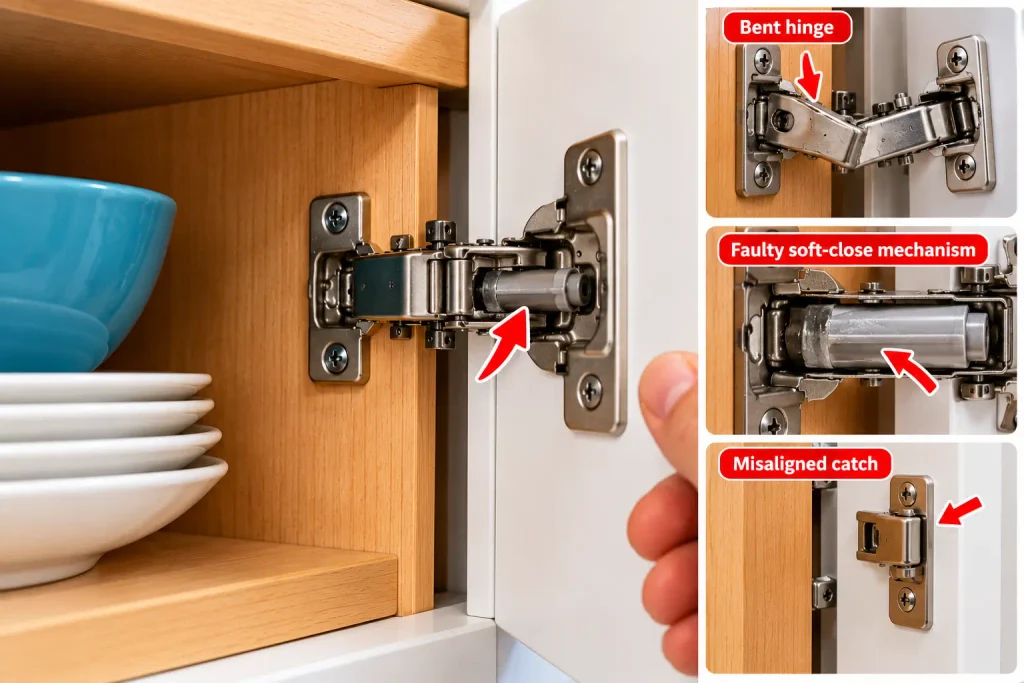
Look for a bent hinge arm, cracked plastic component, broken spring, or soft-close damper that no longer works correctly. Also check whether the door has a magnetic catch or mechanical latch that is loose, obstructed, or out of alignment.
Try these steps:
- Open and close the door slowly while watching each hinge.
- Check whether the hinge moves smoothly or catches partway through its movement.
- Look for a loose or damaged catch on the cabinet or door.
- Remove visible dirt from accessible hardware with a soft cloth.
- Check the manufacturer’s instructions for adjusting the soft-close mechanism or replacing damaged parts.
Do not force a stuck hinge or dismantle a spring-loaded mechanism unless the manufacturer provides instructions for doing so.
If the hinge is bent, broken, or no longer functions correctly, replace it with a compatible part. Check the hinge type, mounting arrangement, dimensions, and door requirements before purchasing a replacement.
Fix 7: Check for a Warped Door or Moisture Damage
If the hinges are secure and aligned but the door still rubs or refuses to sit flat, inspect the door and cabinet for physical damage.
Wood can swell or warp when exposed to moisture. This may happen near sinks, dishwashers, bathrooms, or areas with recurring leaks. Particleboard can also swell or crumble when water penetrates its surface.
Look for:
- Swollen or rough edges
- Peeling laminate or veneer
- A door that appears bowed
- Dark water marks or persistent dampness
- Soft or crumbling material around the hinges
Address the source of moisture before attempting cosmetic repairs. Allow suitable materials to dry fully, and do not force a warped door into position by overtightening the hinges.
Minor alignment issues may be adjustable, but a badly warped door or a water-damaged cabinet panel may need replacement.
Quick Troubleshooting: What Should You Fix First?
| What you notice | Likely cause | What to try |
|---|---|---|
| Door stops before closing | Obstruction or alignment issue | Clear the cabinet and inspect the gaps |
| Door hangs lower on one side | Loose or misaligned hinges | Tighten screws and adjust the hinges |
| Door rubs against the frame | Incorrect door position | Make a small hinge adjustment |
| Hinge screws will not tighten | Damaged screw holes | Repair or reinforce the mounting point |
| Door closes but springs open | Hinge, catch, or alignment problem | Inspect the hardware and door position |
| Door is swollen or bowed | Moisture damage or warping | Address moisture and assess the door |
| Soft-close action has stopped working | Faulty or misadjusted mechanism | Follow the hinge manufacturer’s guidance |
These are starting points rather than guaranteed diagnoses. A door may have more than one problem, especially if its hinges have been loose for a long time.
Common Mistakes to Avoid
Avoid these mistakes when repairing a cabinet door:
- Adjusting every screw at once: Make one small change at a time so you can see its effect.
- Overtightening screws: Excessive force can strip holes and damage the cabinet material.
- Forcing the door shut: This may worsen a misaligned hinge or damage the door edge.
- Replacing hinges too early: Check for obstructions and loose screws before buying replacement parts.
- Ignoring water damage: A new hinge will not solve a swollen or deteriorating cabinet panel.
- Using incompatible hardware: Replacement hinges and catches must suit the cabinet’s design and dimensions.
- Ignoring a heavy or unstable door: Support the door before loosening hinge screws.
When Should You Replace a Cabinet Hinge or Call a Professional?
A simple adjustment is often enough when the door is slightly crooked or a screw has loosened. However, replacement or professional help may be necessary when:
- A hinge is bent, cracked, or broken.
- Screw holes are badly damaged.
- The cabinet panel is crumbling or swollen.
- The door is warped and cannot be aligned.
- A heavy door is unstable or at risk of falling.
- Several adjustments have failed to correct the problem.
If you replace a hinge, choose one that matches the original mounting style and is suitable for the door’s size and weight. When in doubt, take the old hinge or its specifications to a hardware supplier.
How to Prevent Cabinet Doors From Having the Same Problem Again
A little routine maintenance can help cabinet doors work smoothly for longer.
- Check hinge screws occasionally and tighten them if they become loose.
- Clean visible dirt from accessible hinge parts.
- Avoid hanging heavy items from cabinet doors.
- Keep cabinet interiors arranged so objects do not obstruct the doors.
- Wipe up water around sinks and cabinets promptly.
- Investigate swelling, dampness, or recurring alignment problems early.
- Follow the manufacturer’s recommendations for hinge adjustment and care.
For more routine home-care advice, see our Monthly Home Maintenance Checklist.
Frequently Asked Questions
Why does my cabinet door keep opening by itself?
The door may be misaligned, a hinge may be damaged, or a magnetic catch or latch may not be holding it closed. Check the door position and hardware before replacing any parts.
Can I fix a cabinet door without removing it?
Yes. Many problems can be corrected by tightening screws or adjusting accessible hinges while the door remains attached. However, a badly damaged hinge or screw hole may require the door to be supported and partially or fully removed.
Why won’t my soft-close cabinet door close completely?
The hinge may be misaligned, the soft-close mechanism may be faulty, or something may be obstructing the door. Check the hinge manufacturer’s instructions before changing any soft-close settings.
How do I fix a cabinet door that rubs against the frame?
Check the gaps around the door and inspect the hinges for loose screws. If the door is otherwise in good condition, a small side-to-side or height adjustment may correct the rubbing. The correct adjustment depends on the hinge design.
Should I replace the cabinet door or just the hinges?
If the door is sound and the problem comes from loose, misaligned, or damaged hinges, repairing or replacing the hinges may be enough. A warped door, severely damaged mounting area, or swollen cabinet panel may require more extensive repair or replacement.
Final Thoughts
Learning how to fix a cabinet door that won’t close properly can help you avoid replacing a perfectly usable door. Start by checking for obstructions, tightening loose screws, and examining the alignment. Make small hinge adjustments, repair damaged mounting points when appropriate, and inspect the closing hardware if the problem continues.
Most importantly, do not force the door shut or ignore moisture damage. By identifying the cause and choosing the right repair, you can often restore smooth cabinet operation with a few basic tools and careful adjustments.