
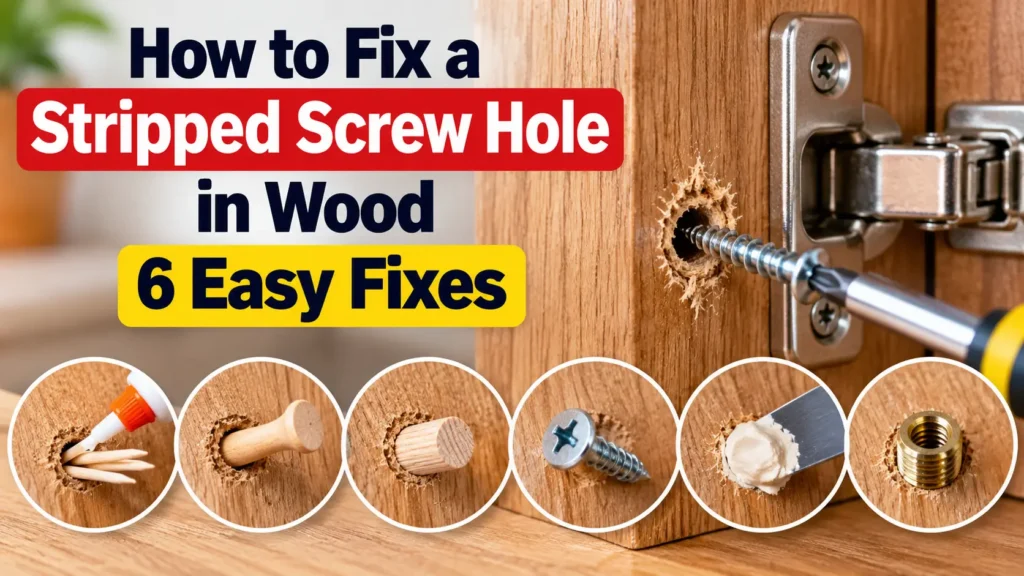
How to fix a stripped screw hole in wood is a common DIY question when a screw keeps spinning, feels loose, or refuses to hold furniture and cabinet hardware securely. The problem often happens when the wood fibers around the screw become damaged from repeated use, overtightening, or an incorrectly sized screw.
The good news is that you may not need to replace the damaged wood. Small holes can often be repaired with wooden toothpicks and wood glue, while larger holes may need a wooden dowel or a more durable repair.
In this guide, you’ll learn six practical ways to repair a stripped screw hole in wood, how to choose the right method, and how to prevent the problem from happening again.
Why Does a Screw Hole Become Stripped?
A screw holds in wood because its threads grip the surrounding wood fibers. When those fibers become crushed, torn, or worn away, the screw can no longer grip securely.
Common causes include:
- Overtightening a screw.
- Removing and reinstalling the same screw repeatedly.
- Using the wrong screw size.
- Driving a screw into wood without a suitable pilot hole.
- Using screws in soft, damaged, or crumbling wood.
- Installing cabinet hinges or hardware that puts repeated stress on the same hole.
A stripped screw hole may cause a cabinet handle to wobble, a hinge to loosen, or a shelf bracket to move away from the wood.
Important: These methods are intended for ordinary household repairs. Do not rely on a simple filler repair for structural joints, heavy wall-mounted loads, or damaged door frames that must safely support substantial weight.
How to Fix a Stripped Screw Hole in Wood: 6 Easy Fixes
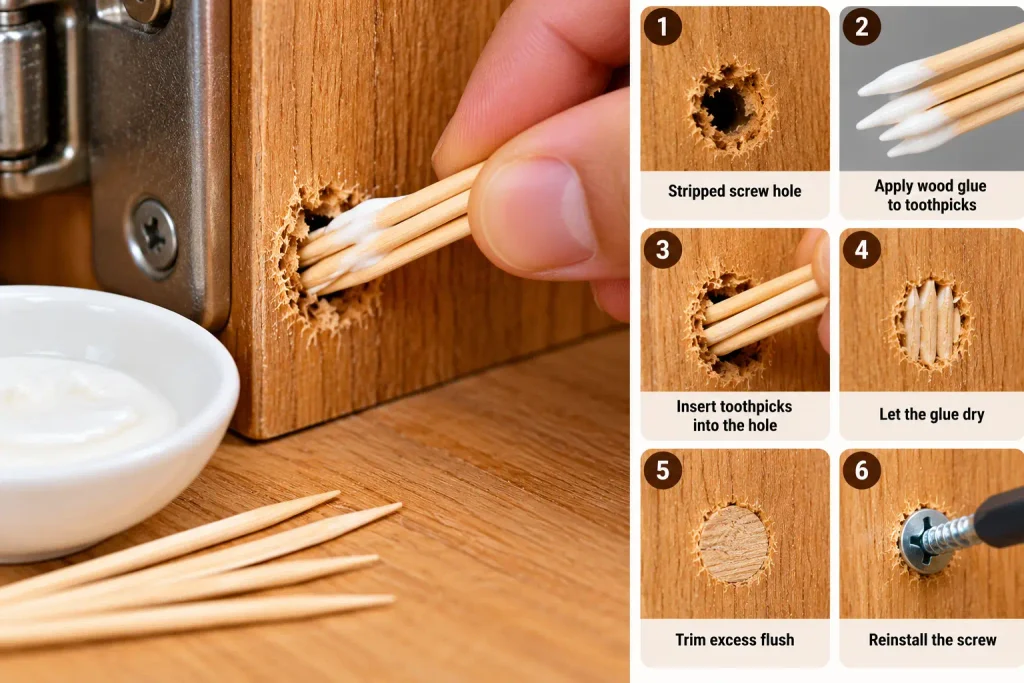
1. Fill the Hole with Wooden Toothpicks and Wood Glue
The toothpick method is a simple option for a slightly enlarged screw hole in solid wood. It works well for light-duty repairs, such as some cabinet knobs, small wooden furniture fittings, and similar hardware.
What you’ll need:
- Wooden toothpicks.
- Wood glue.
- A utility knife or flush-cutting tool.
- A screwdriver.
- A drill and suitable pilot bit, if needed.
Steps:
- Remove the loose screw and inspect the hole.
- Clean out loose wood fibers and dust.
- Apply wood glue to several wooden toothpicks.
- Push the toothpicks into the hole until the damaged space is filled snugly.
- Allow the glue to cure according to the manufacturer’s instructions. For a visual walkthrough of the toothpick-and-glue method, see iFixit’s guide to fixing a stripped screw hole.
- Trim the excess wood flush with the surface.
- If appropriate, drill a correctly sized pilot hole before reinstalling the original screw.
- Tighten the screw gently until it feels secure.
Do not force the screw into the repair or overtighten it. If the hole is large or the wood is badly damaged, use a stronger repair method.
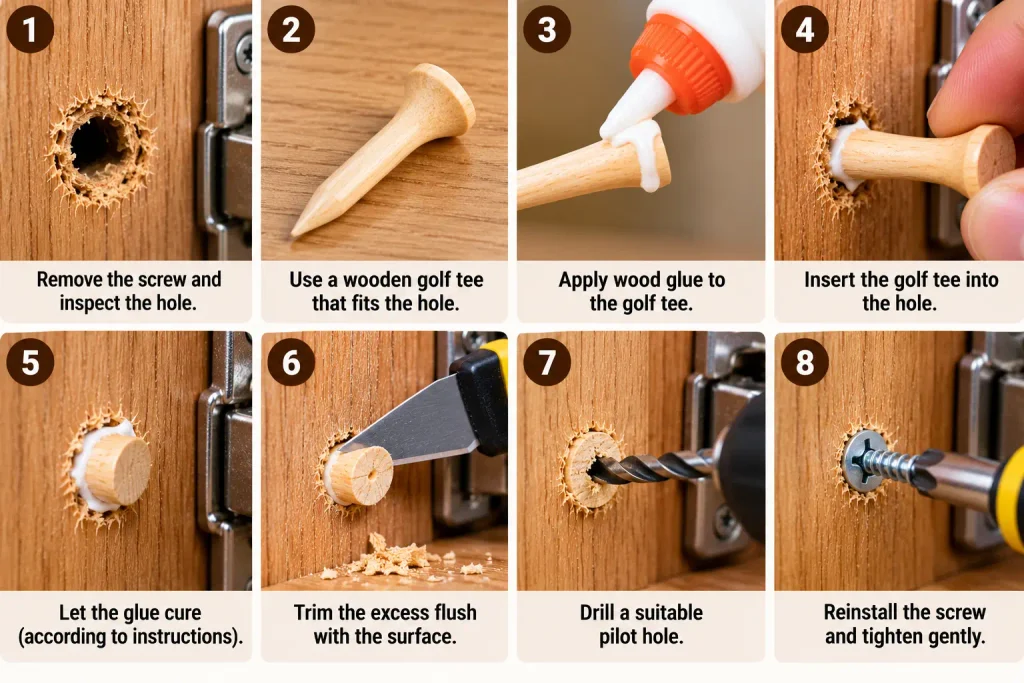
2. Use a Wooden Golf Tee for a Larger Hole
A wooden golf tee can help repair a screw hole that is too large for a few toothpicks to fill properly.
This method is best suited to compatible holes in solid wood where the tee can fit snugly without splitting the surrounding material.
Steps:
- Remove the screw and clean the hole.
- Check that a wooden tee is suitable for the hole’s diameter and depth.
- Apply wood glue to the part of the tee that will sit inside the hole.
- Carefully insert the tee until it fits snugly. Avoid hammering it in so hard that the wood splits.
- Let the glue cure according to the product instructions.
- Trim the excess tee flush with the wood.
- Drill a suitable pilot hole into the repaired area.
- Reinstall the screw and tighten it gently.
A golf tee is not a universal solution. If the hole is badly enlarged, irregular, or surrounded by crumbling material, a fitted wooden dowel or another repair may be more appropriate.
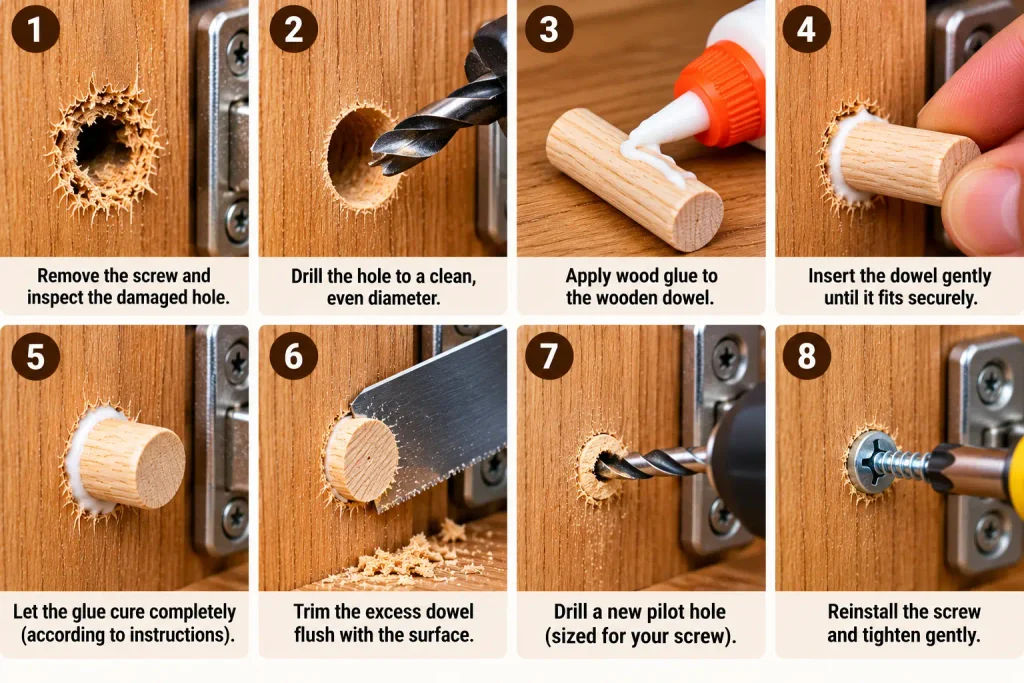
3. Repair the Hole with a Wooden Dowel
A wooden dowel is a better option when a stripped screw hole is too large for toothpicks or a golf tee. It replaces more of the damaged material with solid wood.
For a more substantial repair involving door hinge screws, see This Old House’s guide to repairing a stripped screw hole.
Consider this method for suitable solid-wood furniture, cabinet frames, and other repairs that need a more substantial repair than a small plug.
Steps:
- Remove the screw and inspect the damaged area.
- Select a suitable hardwood dowel and drill bit for the size of the repair.
- Carefully drill the damaged hole to a clean, even diameter. Avoid drilling deeper than necessary.
- Apply suitable wood glue to the dowel and the inside of the prepared hole.
- Insert the dowel gently until it fits securely.
- Wipe away excess glue and allow the repair to cure fully according to the manufacturer’s instructions.
- Trim the dowel flush with the surface.
- Mark the center and drill a new pilot hole sized for the screw.
- Reinstall the screw without overtightening it.
Take care when drilling near the edge of a board or through thin material. If the wood is split, rotten, or badly crumbled, simply plugging the hole may not restore the strength required for the repair.
4. Use a Slightly Larger or Longer Screw
Replacing the original screw can sometimes work if the hole is only slightly stripped and the surrounding wood remains sound.
However, a larger or longer screw is not always the best answer. It can split thin wood, damage nearby hardware, or fail to grip if the material is badly worn.
Steps:
- Remove the original screw.
- Inspect the wood and determine whether a replacement screw is appropriate.
- Choose a compatible screw that suits the hardware, wood thickness, and required holding strength.
- If using a longer screw, confirm that it will not emerge through the other side or strike wiring, plumbing, or other concealed components.
- Drill a suitable pilot hole if required.
- Install the replacement screw and stop when it is secure.
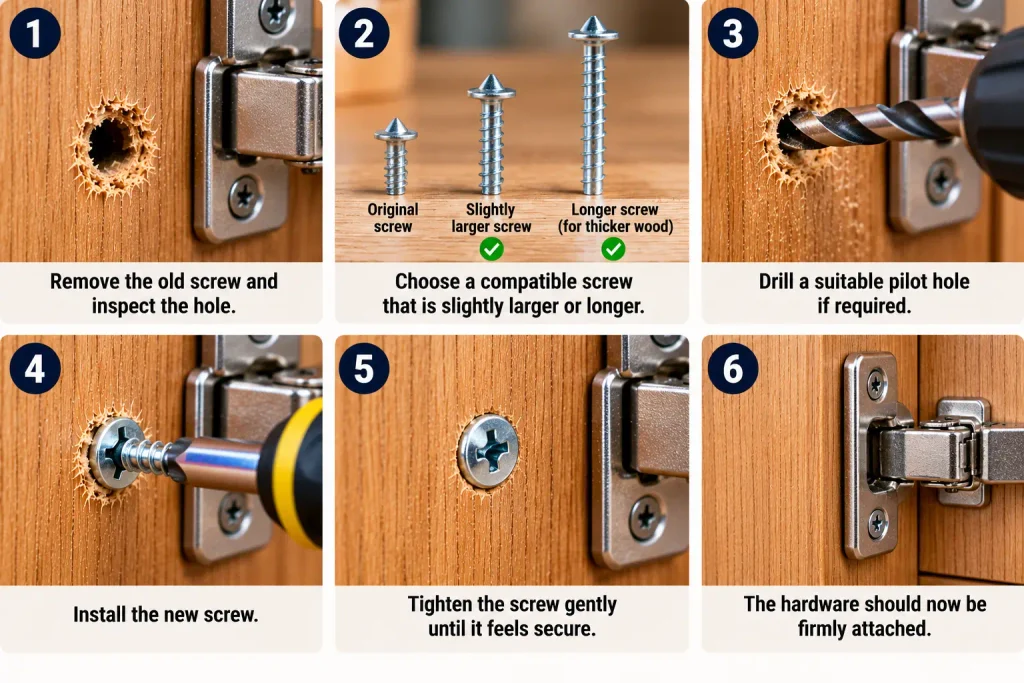
Do not keep increasing the screw size when the hole continues to spin. Repair the damaged wood instead.
5. Use a Suitable Repair Compound for Certain Damaged Holes
Some screw holes are too damaged for toothpicks but are not suitable for a simple wooden plug. A repair compound may be an option if its manufacturer specifically states that it can be used for this purpose.
Ordinary wood filler is generally intended to fill surface gaps and imperfections. It should not automatically be assumed to provide a durable threaded anchor for a screw.
Before using a repair compound:
- Identify whether the material is solid wood, MDF, or particleboard.
- Choose a repair product approved for the material and intended application. For additional wood repair guidance, consult these wood repair and stripped screw hole instructions and follow the product manufacturer’s directions for your specific material.
- Remove loose or crumbling material as directed by the product instructions.
- Apply the compound and allow it to cure completely.
- Drill a new pilot hole only if the product instructions permit it.
- Reinstall the screw only when the repair is ready to accept it.
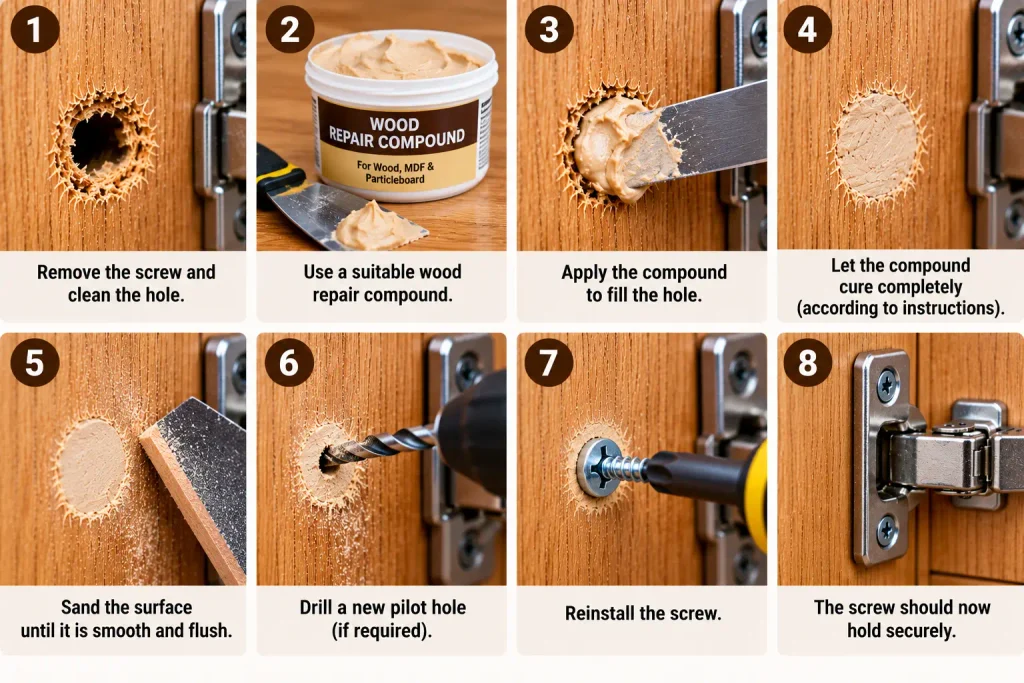
For MDF and particleboard, follow the product manufacturer’s specific instructions. These materials can crumble around screw holes, and a repair that works in solid wood may not work equally well in composite board.
For a heavily loaded fitting or a hole that has failed repeatedly, consider a suitable threaded insert, a purpose-designed repair system, or professional help instead.
6. Install a Suitable Threaded Insert for Repeated Repairs
If the same screw hole keeps stripping, a compatible threaded insert may provide a more durable solution in suitable wood.
Threaded inserts create a dedicated threaded connection, but they must be matched to the material, screw, and load. Not every insert is suitable for every type of wood or composite board.
Steps:
- Remove the screw and any loose hardware.
- Check the insert manufacturer’s instructions for the required hole size, depth, and material.
- Prepare the hole using the specified drill bit and installation method.
- Install the insert as directed.
- Allow any required adhesive or compound to cure fully.
- Install the compatible screw and test the connection carefully.
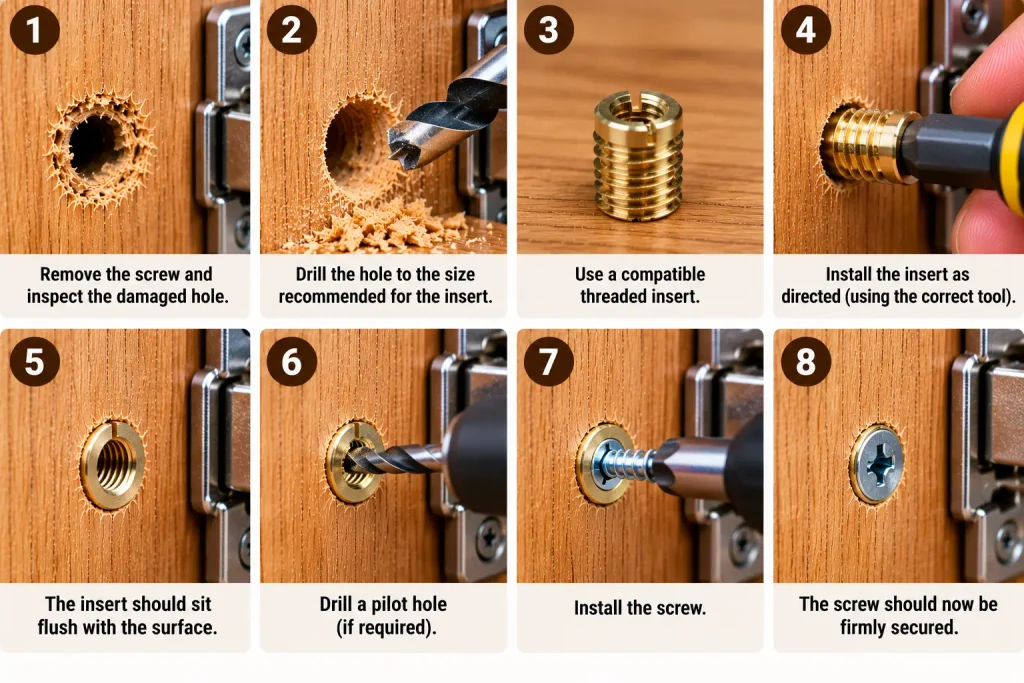
This method can be useful for fittings that are removed and reinstalled frequently. If the surrounding material is badly cracked or crumbling, the insert may not hold securely without a more extensive repair.
Which Method Should You Choose?
The best repair depends on the amount of damage and the type of material.
| Problem | Suitable method to consider |
|---|---|
| Slightly loose screw in solid wood | Toothpicks and wood glue |
| Hole too wide for toothpicks | Wooden golf tee, if it fits properly |
| Noticeably enlarged hole in solid wood | Glued wooden dowel |
| Minor damage with enough sound wood remaining | Compatible replacement screw |
| Damaged MDF or particleboard | Repair product or insert specifically suitable for the material |
| Screw hole that repeatedly fails | Suitable threaded insert or a more substantial repair |
These are starting points, not guarantees. The surrounding wood must be sound enough to support the repaired connection.
How to Prevent Screw Holes from Stripping Again
A few simple precautions can help your repairs last longer.
Use the Correct Screw
Choose a screw that matches the hardware, material, and required holding strength. A screw that is too small may not grip properly, while one that is too large may split the wood.
Drill a Suitable Pilot Hole
A pilot hole helps guide the screw and can reduce splitting, especially near the edge of a board. The correct pilot-hole size depends on the screw and the type of wood.
Avoid Overtightening
Stop tightening once the screw is secure. Excessive force can damage the wood fibers and cause the hole to strip again.
Support the Hardware Properly
Loose hinges, handles, and brackets can put repeated stress on their screws. Check that the hardware sits correctly and that all mounting points are secure.
Inspect Damaged Wood Before Reinstalling Screws
If the wood is cracked, rotten, swollen, or crumbling, tightening the screw again may only make the damage worse. Repair or replace the affected material when necessary.
Frequently Asked Questions
Can I fix a stripped screw hole in wood without wood glue?
For a small hole, wooden toothpicks or a suitable wooden plug may provide a temporary repair in some situations. However, for a more reliable repair, use an appropriate adhesive and allow it to cure fully when the chosen method requires it.
Will wood filler hold a screw?
Ordinary wood filler should not be assumed to provide the same holding strength as sound wood. Use a product specifically designed and approved for screw-hole repair if the screw needs to carry a load.
How do I fix a stripped screw hole in a wooden cabinet?
For a slightly enlarged hole in solid wood, toothpicks and wood glue may work. For a larger or repeatedly damaged hole, a fitted wooden dowel or a suitable threaded insert may be more appropriate. Choose the method based on the cabinet material and the load on the screw.
Can I use this method on MDF or particleboard?
Some repair methods can be used on composite boards, but MDF and particleboard do not behave exactly like solid wood. They can crumble around the hole, so choose a repair product or insert specifically suitable for the material.
How long should I wait before reinstalling the screw?
Follow the adhesive or repair product’s instructions for full curing time. A surface that feels dry may not yet be ready to hold a screw securely.
Why does my screw keep coming loose after repair?
The hole may still be too large, the repair may not have cured fully, or the surrounding wood may be damaged. Repeated movement, excessive load, or overtightening can also cause the problem to return.
For another common household repair, check out our step-by-step guide on how to fix a squeaky door.
Final Thoughts
Learning how to fix a stripped screw hole in wood can help you repair loose cabinet hardware, furniture fittings, and other everyday household items without replacing the entire piece.
For minor damage in solid wood, toothpicks and wood glue may be enough. Larger holes may need a fitted wooden dowel, while repeatedly damaged connections may require a suitable threaded insert or a more substantial repair.
Choose the method that matches the damage, allow adhesives to cure fully, and avoid overtightening the screw. If the wood is badly split or the fitting carries a heavy load, make sure the repair restores adequate strength before putting it back into use.