
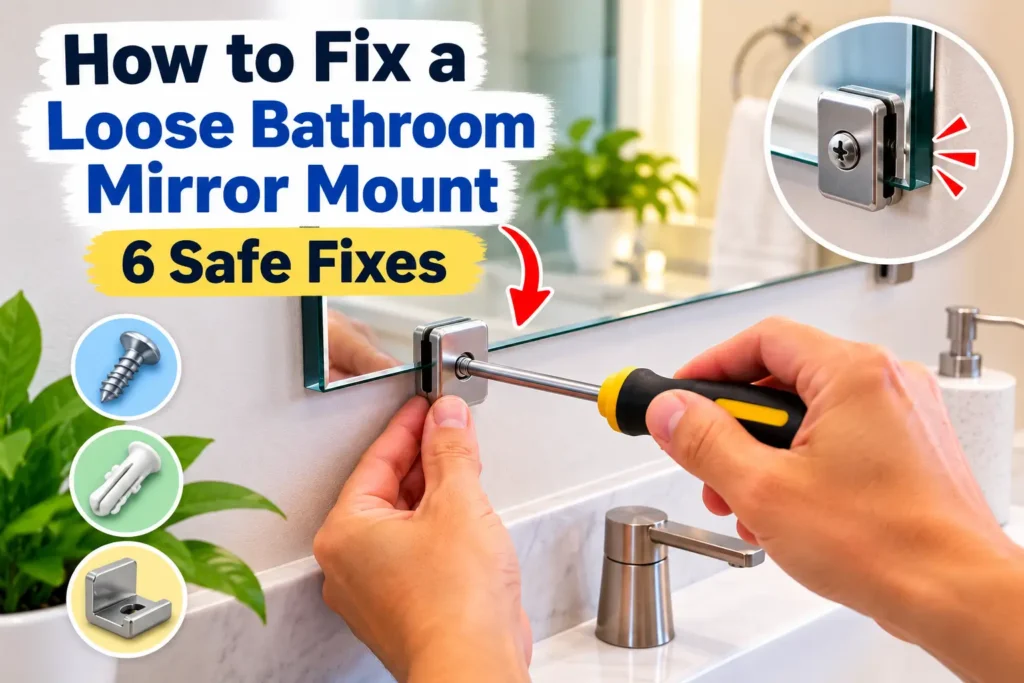
A loose bathroom mirror mount can cause the mirror to wobble, tilt, or pull away from the wall. If you’re wondering how to fix a loose bathroom mirror mount, the first step is to identify whether the problem involves a mounting screw, wall anchor, mirror clip, adhesive, or damaged wall surface.
The right repair depends on the mirror’s weight, mounting system, and wall condition. Some stable mirrors may only need an accessible screw checked, while damaged anchors or failing adhesive may require the mirror to be professionally removed and remounted.
Safety warning: If the mirror is heavy, cracked, or visibly separating from the wall, keep people away from the area. Do not pull, shake, or attempt to catch the mirror. Arrange professional assistance if it cannot be secured safely.
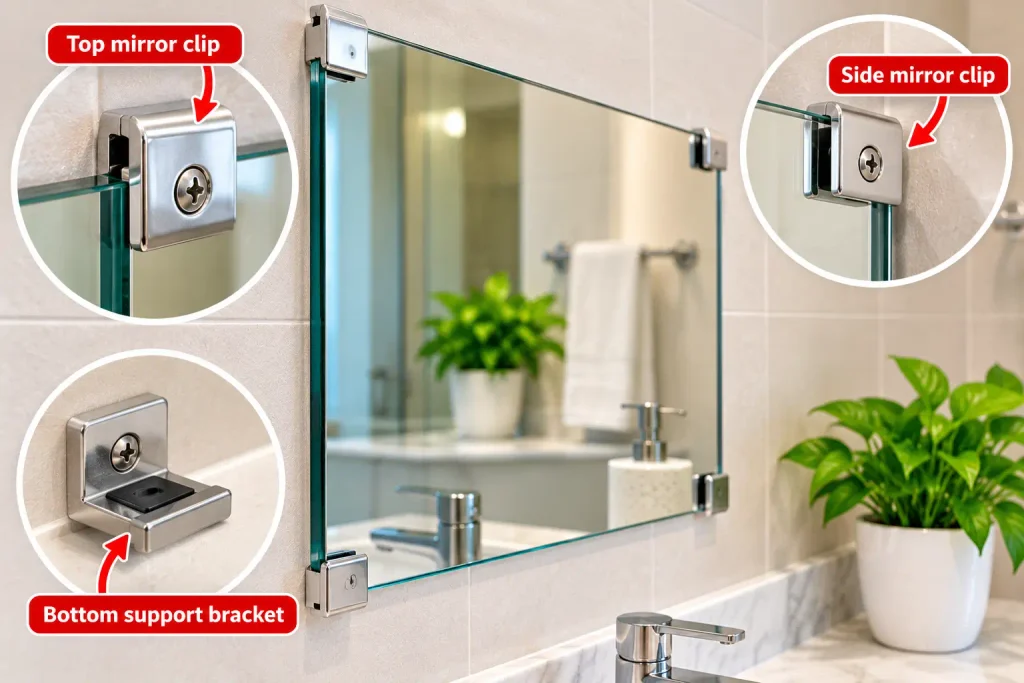
Why Does a Bathroom Mirror Mount Become Loose?
A bathroom mirror can become loose for several reasons:
- Loose mounting screws: Screws holding brackets or clips may loosen over time.
- Damaged wall anchors: An anchor may pull out of drywall or plaster if it is unsuitable for the mirror’s weight.
- Worn mirror clips: Clips may become damaged, corroded, or incorrectly positioned.
- Failing adhesive: Moisture, poor surface preparation, or unsuitable adhesive may weaken the bond between the mirror and wall.
- Damaged wall surface: Crumbling plaster, damp drywall, or cracked masonry can prevent the mounting hardware from holding securely.
- Incorrect installation: The original mounting system may not have been suitable for the mirror’s size, weight, or wall type.
Identifying the mounting system is the first step toward choosing the right repair.
Tools and Materials You May Need
Depending on the type of mount, you may need:
- A correctly sized screwdriver
- A flashlight for inspecting mounting hardware
- A spirit level
- Replacement mirror clips or brackets compatible with the mirror
- Suitable wall anchors and screws, if required
- A protective cloth or padded surface for a mirror that has been safely removed
Do not buy replacement hardware until you know how the mirror is mounted. If the mirror needs to be removed, especially if it is large or heavy, arrange professional assistance rather than attempting the job alone.
How to Fix a Loose Bathroom Mirror Mount: 6 Safe Fixes
Fix 1: Identify the Type of Mirror Mount
Start by determining how the mirror is attached to the wall. Do not test its stability by shaking it or pulling on its edges.
Common mounting systems include:
- Mirror clips: Small plastic or metal clips hold the mirror at its edges.
- Brackets or a support channel: Metal hardware supports the mirror from the bottom and may retain it at the top.
- Framed mirror hangers: Screws, wall anchors, hanging wire, or brackets support a framed mirror.
- Adhesive mounting: Special mirror adhesive or mounting tape attaches the mirror directly to the wall.
- Cleat systems: Interlocking mounting pieces support certain framed mirrors.
If the mirror is already moving away from the wall, do not try to inspect the mounting system by pulling it forward. Keep clear of the mirror and arrange professional help if it cannot be inspected safely.
Fix 2: Check Accessible Mounting Screws and Clips
This check is appropriate only when the mirror is stable, the hardware is safely accessible, and there is no risk of the mirror falling.
If your mirror uses visible clips or brackets:
- Look for screws that have backed out or hardware that appears visibly damaged.
- Check whether any clip has shifted away from its intended position.
- Inspect accessible hardware for corrosion, cracks, or missing components.
- If the mounting system is secure enough to work on safely, tighten an accessible loose screw gently with the correct screwdriver.
- Stop if the clip moves unexpectedly, the wall anchor spins, or the mirror begins to shift.
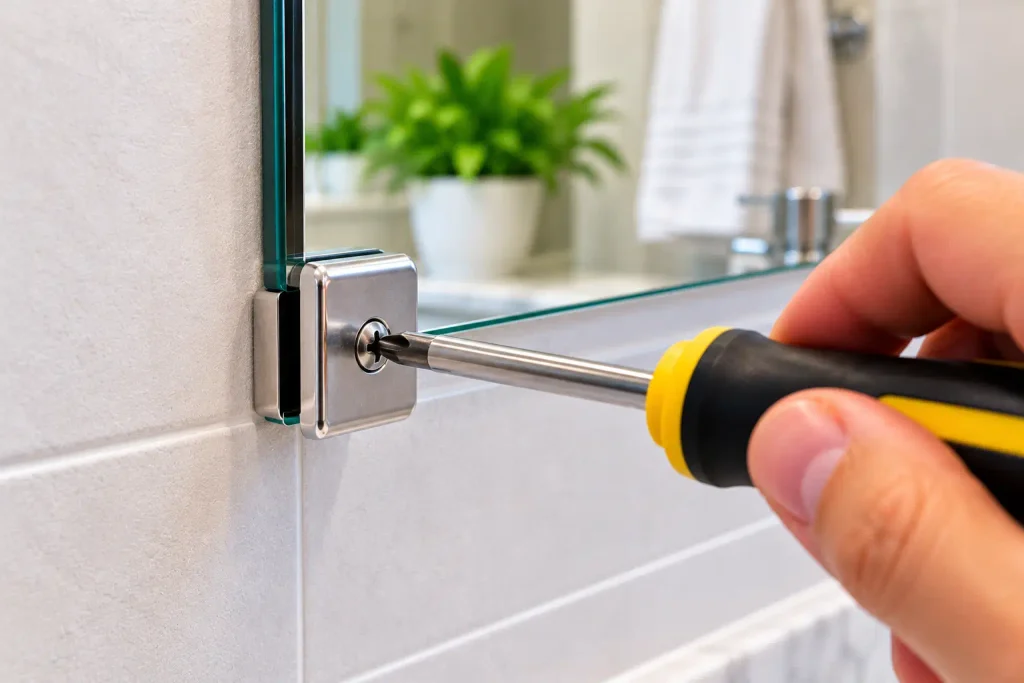
Do not overtighten screws. Excessive pressure against glass can cause chips or cracks, and tightening a screw will not repair a failed wall anchor.
If the mirror is not securely supported while you work, leave the repair to a professional.
Fix 3: Check for Damaged Wall Anchors
Wall anchors help mounting screws hold in materials such as drywall and plasterboard. If an anchor has loosened or pulled out, tightening the screw alone may not restore a secure mounting point.
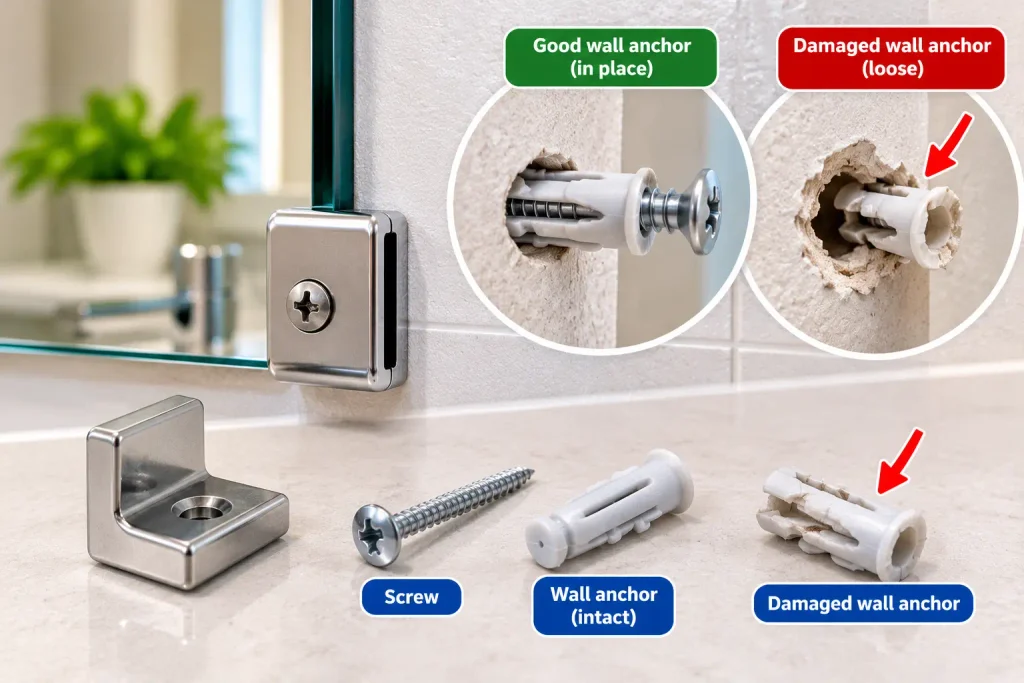
Warning signs include:
- A screw that spins without tightening
- A mounting clip that moves with the screw
- A cracked or enlarged hole around the mounting point
- Crumbling plaster or drywall
- A bracket that has separated from the wall
If you notice any of these signs, do not continue tightening the screw or rely on the damaged anchor.
A proper repair may require replacing the anchor with hardware suited to the wall material and the mirror’s weight. Depending on the installation, the mounting point may need to be relocated to sound material or secured to suitable structural support.
Because the mirror must remain supported during this work, a heavy or unstable mirror should be removed and remounted by a qualified professional.
The replacement mounting hardware must be suitable for the specific wall material, such as drywall, plaster, or masonry, and rated for the mirror’s weight. Do not assume that a larger screw or a different anchor will automatically provide a secure repair. If the wall material is crumbling or the mirror cannot be safely supported during the work, arrange professional assistance.
Fix 4: Inspect the Mirror Clips or Brackets
If the mounting screws and wall appear intact, the clips or brackets may be the problem.
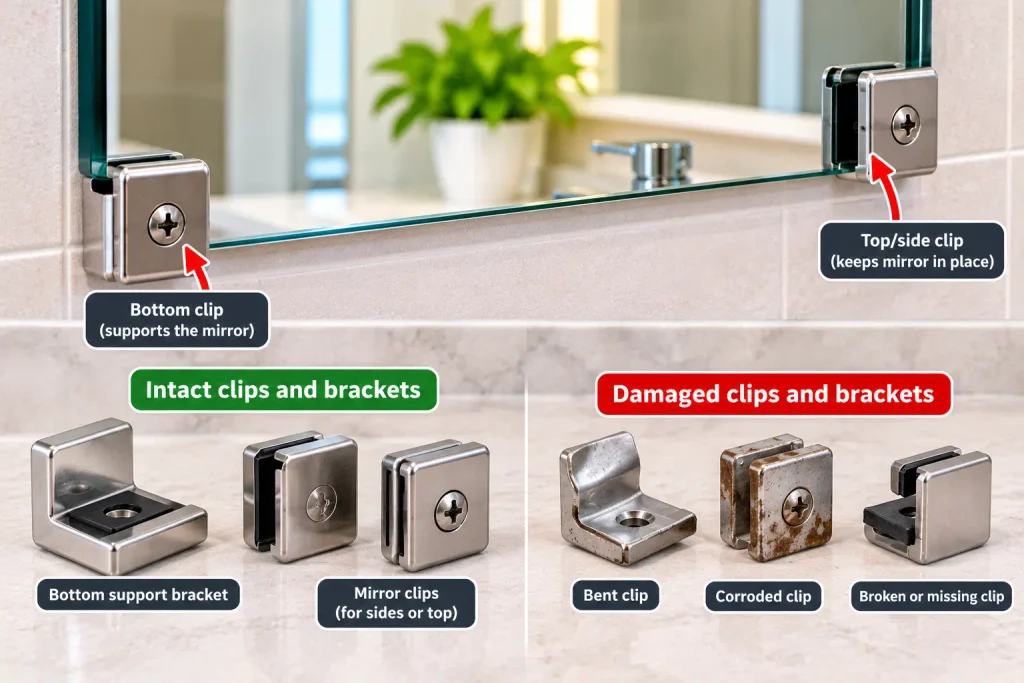
Look for:
- Bent or cracked clips
- Corrosion on metal hardware
- Missing retaining clips
- Incorrectly sized clips
- A support channel that has shifted
- Hardware that presses unevenly against the mirror
Mirror clips must fit the glass thickness and mounting design. The lower supports may carry the mirror’s weight, while upper clips may primarily prevent it from tipping forward. The exact arrangement depends on the system.
For additional guidance, read this bathroom mirror installation guide to learn about suitable mounting brackets, mirror clips, and wall anchors.
Replace damaged components with compatible mirror hardware. Do not substitute small decorative clips for hardware rated to support the mirror’s weight.
Never tighten a clip directly against the glass with excessive force. If the mirror must be lifted or removed to replace the hardware, use a professional for large, heavy, or unstable mirrors.
Fix 5: Address Failing Mirror Adhesive
If the mirror is attached directly to the wall, the problem may be failing adhesive rather than loose screws.
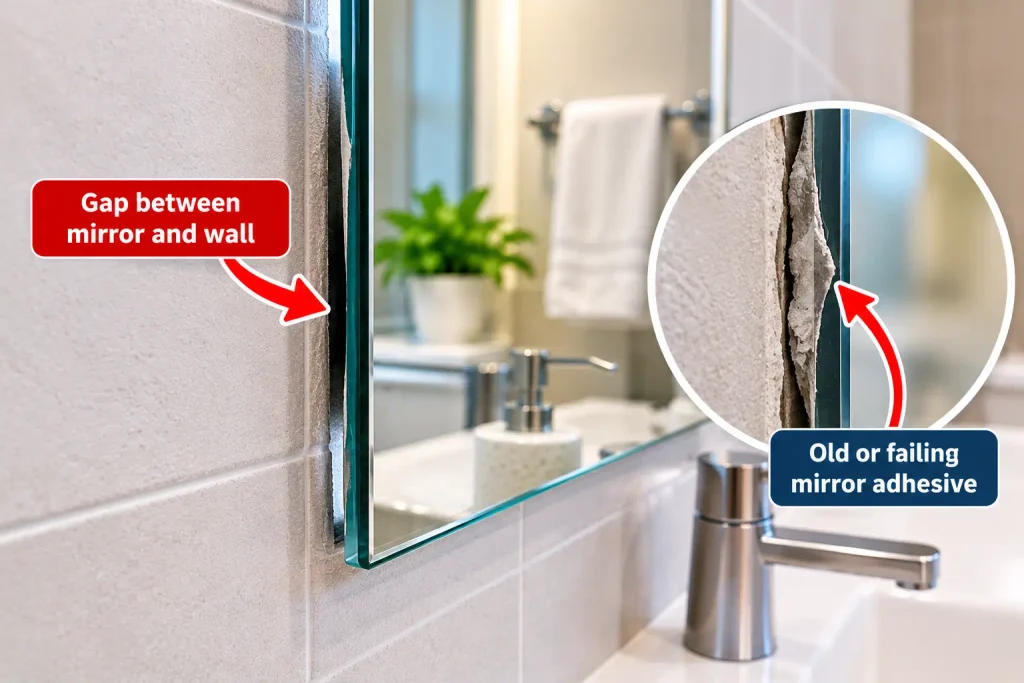
Signs can include:
- A gap appearing between the mirror and wall
- Adhesive separating at the edges
- A mirror that has begun to tilt away from the wall
- Damp or damaged wall material behind the mirror
Do not try to fix a failing adhesive bond by applying more adhesive around the exposed edges. This does not establish whether the existing bond is sound, and it may leave the mirror inadequately supported.
If adhesive is failing, the mirror generally needs to be removed safely, the wall and mirror backing inspected, and the old adhesive handled according to the product and mirror manufacturer’s instructions.
Use only adhesive specifically approved for the mirror and the intended wall surface. Some ordinary construction adhesives can damage the mirror’s reflective backing. The wall must also meet the adhesive manufacturer’s requirements for cleanliness, dryness, and suitability.
Do not remove an unstable mirror yourself. Arrange professional assistance if the mirror is large, heavy, bonded over a wide area, or already separating from the wall.
Fix 6: Repair the Wall and Remount the Mirror Properly
Sometimes the mounting hardware is not the only problem. Moisture damage, loose plaster, or a weakened wall can prevent even suitable hardware from holding securely.
Before remounting, the damaged area must be assessed and repaired.
A proper installation should account for:
- The mirror’s dimensions and weight
- The wall material and its condition
- The correct screws, anchors, brackets, or cleats
- The mirror’s required support points
- The manufacturer’s installation instructions
- The bathroom’s humidity and moisture conditions
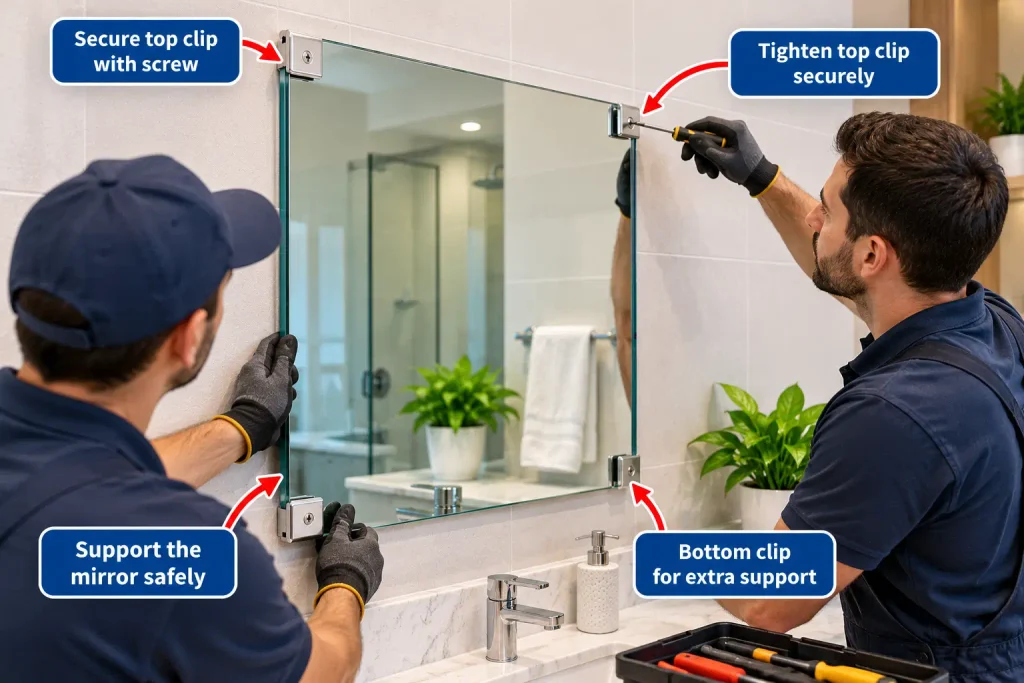
For example, a mounting system suitable for a lightweight decorative mirror may not be appropriate for a large frameless bathroom mirror.
If the wall is damp, soft, cracked, or crumbling, fix the underlying problem before reinstalling the mirror. If moisture or mold is present, see our guide on how to remove black mold stains from bathroom caulk safely.
After the wall and mounting system have been repaired, the mirror should be installed and checked according to the manufacturer’s instructions. Do not rely on a simple tug test to prove that a heavy mirror is safely mounted.
Quick Troubleshooting Guide
| Problem | Possible cause | Recommended action |
|---|---|---|
| Accessible clip screw is loose | Screw has backed out | Tighten gently only if the mirror is stable |
| Screw spins without tightening | Damaged or unsuitable wall anchor | Stop and repair the mounting point |
| Mirror clip is bent or cracked | Damaged hardware | Replace with compatible mirror-rated hardware |
| Mirror is pulling away from the wall | Failing adhesive or mounting hardware | Keep clear and arrange professional help |
| Wall is damp or crumbling | Moisture damage or weak substrate | Repair the wall before remounting |
| Mirror has cracks or chipped edges | Glass damage | Avoid handling it and seek professional assistance |
These are possible causes, not guaranteed diagnoses. The mounting system and wall condition need to be assessed before a repair is selected.
Common Mistakes to Avoid
Avoid these mistakes when dealing with a loose bathroom mirror mount:
- Pulling or shaking the mirror to test it: This can cause an unstable mirror to fall.
- Tightening screws excessively: Excessive pressure can damage the clips or glass.
- Using unsuitable wall anchors: Anchors must be compatible with the wall material and the required load.
- Adding adhesive over the existing bond: This does not reliably repair a failing adhesive installation.
- Using ordinary construction glue: Some adhesives can damage the mirror’s reflective backing.
- Ignoring damp or crumbling walls: New hardware will not solve an underlying wall problem.
- Working alone on a heavy mirror: Removing or lifting a large mirror can be dangerous.
- Assuming every mirror uses the same mounting system: Different systems require different installation methods.
When Should You Call a Professional?
Contact a qualified mirror installer or handyman if:
- The mirror is large, heavy, or visibly separating from the wall.
- The glass is cracked, chipped, or broken.
- The wall anchors have pulled out or the wall is crumbling.
- The mirror is bonded directly to the wall and the adhesive is failing.
- The mounting hardware is corroded or badly damaged.
- You need to drill into a wall where hidden wiring or plumbing may be present.
- You cannot determine how the mirror is supported.
If the mirror has already fallen and broken, keep people away from the area and avoid picking up broken glass with bare hands.
How to Prevent a Bathroom Mirror Mount From Becoming Loose
A few maintenance habits can help reduce mounting problems:
- Inspect visible mounting clips and brackets periodically.
- Look for new gaps between the mirror and the wall.
- Address leaks and persistent moisture around the mirror.
- Use bathroom-appropriate mounting products when installing a mirror.
- Follow the manufacturer’s instructions for the mirror, hardware, and adhesive.
- Avoid hanging extra items from the mirror or its mounting hardware.
- Arrange repairs promptly if you notice corrosion, cracks, or wall damage.
For more routine checks around your home, use our monthly home maintenance checklist.
Frequently Asked Questions
Why is my bathroom mirror loose?
A bathroom mirror may become loose because of backed-out screws, damaged wall anchors, broken clips, failing adhesive, or a weakened wall surface. The correct fix depends on the mounting system and the condition of the wall.
Can I tighten a loose bathroom mirror myself?
You may be able to tighten an accessible screw if the mirror is stable, the hardware is in good condition, and the repair does not require lifting or supporting the glass. If the mirror is heavy, unstable, cracked, or pulling away from the wall, get professional help.
Can I use silicone to secure a loose bathroom mirror?
Do not assume ordinary silicone is suitable for remounting a mirror. Use only a product specifically approved for mirrors and compatible with the mirror backing and wall surface. A failing bond must be assessed and repaired properly rather than covered with additional adhesive.
How do I fix a bathroom mirror with loose wall anchors?
A damaged anchor usually needs to be replaced with a suitable mounting solution for the wall material and mirror weight. Do not keep tightening a screw in an anchor that spins or pulls out. Have a heavy or unstable mirror safely supported during the repair.
Is double-sided mounting tape suitable for a bathroom mirror?
Only if the specific tape is designed for mirrors, suitable for the wall surface and bathroom conditions, and rated for the mirror’s size and weight. Follow the product’s limits and installation instructions. Tape should not be used as an improvised fix for a mirror that is already coming loose.
When should a bathroom mirror be replaced?
Consider replacement if the mirror is cracked, has damaged edges, or cannot be mounted securely because of damage to its backing or mounting arrangement. A professional can assess whether the existing mirror can be safely reused.
Final Thoughts
Learning how to fix a loose bathroom mirror mount starts with identifying the mounting system and determining why it has become loose. Accessible screws, damaged clips, failed anchors, adhesive problems, and weakened walls require different solutions.
Never force an unstable mirror back into place or rely on extra adhesive as a quick fix. If the mirror is heavy, cracked, or pulling away from the wall, keep clear and arrange professional help. A properly assessed mounting system and sound wall are essential for a secure repair.