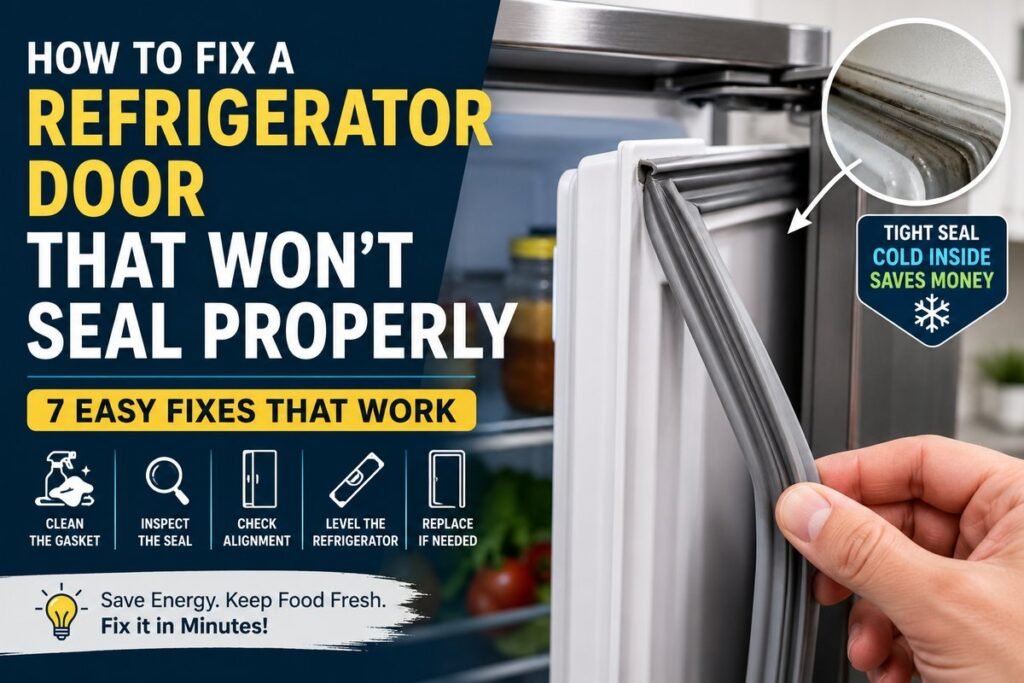
A refrigerator door that won’t seal properly is more than an annoying inconvenience. A small gap around the door can allow cold air to escape, make the refrigerator work harder, and contribute to temperature and moisture problems.
Fortunately, the problem is often caused by something simple. A dirty or damaged door gasket, an overloaded shelf, a misaligned door, or an unlevel refrigerator can all interfere with a proper seal.
In this guide, you’ll learn how to fix a refrigerator door that won’t seal properly using seven practical solutions. We’ll start with simple checks and cleaning before moving on to gasket inspection, alignment, and replacement.
If you are dealing with a refrigerator door seal problem, the good news is that most causes are simple to check and fix at home.
Why Won’t My Refrigerator Door Seal Properly?
Before replacing anything, inspect the door carefully. A damaged or dirty refrigerator door seal can allow warm air to enter and cold air to escape.
Common causes include:
- A dirty or sticky door gasket
- Food containers or shelves blocking the door
- A damaged, folded, or deformed gasket
- A door that is slightly misaligned
- Loose or damaged hinge hardware
- An uneven or improperly leveled refrigerator
- A gasket that has become hard or worn with age
Manufacturers commonly recommend checking the gasket, door clearance, and refrigerator level when a refrigerator door does not close or seal properly.
Start with the easiest checks first. You may be able to solve the problem without buying any replacement parts.
How to Fix a Refrigerator Door That Won’t Seal Properly
1. Clean the Door Gasket
The first thing to check is the rubber gasket around the refrigerator door.
Food residue, grease, dust, and other debris can collect on the gasket and the surface it touches. This buildup can prevent the gasket from making consistent contact with the refrigerator frame. Whirlpool recommends cleaning the gasket with warm water and mild detergent, then rinsing and drying it thoroughly.
Start by opening the refrigerator door and inspecting the entire gasket.
Pay special attention to:
- Corners
- Folds in the gasket
- The bottom section
- Areas with visible food residue
- Spots that feel sticky
Use a clean sponge or soft cloth with warm water and a small amount of mild detergent.
Gently clean the gasket and the surface where it meets the cabinet.
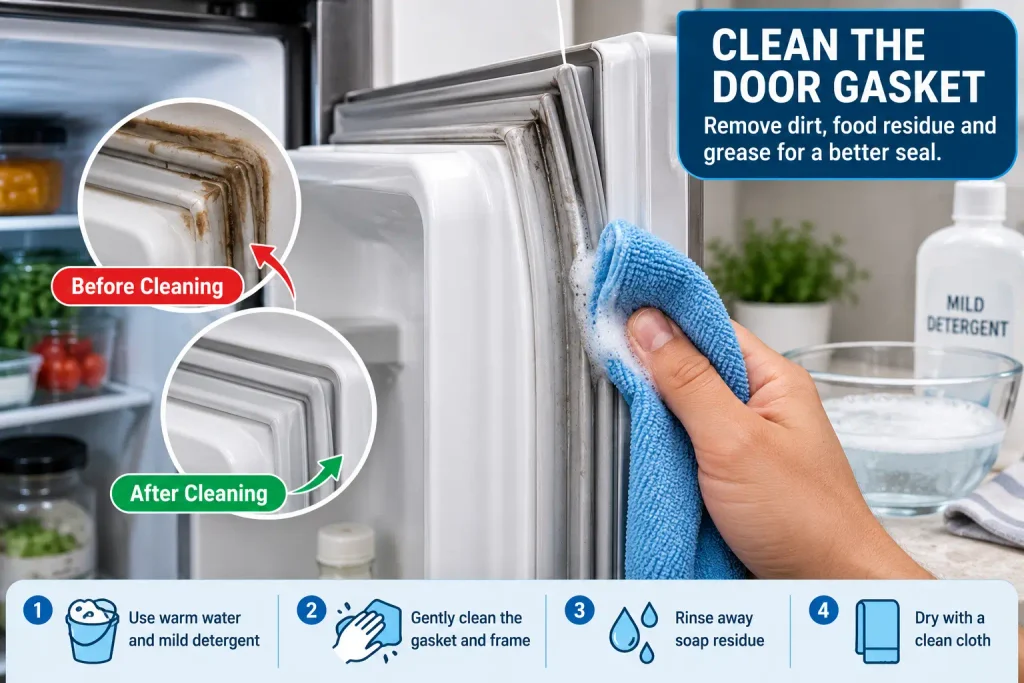
Rinse away any soap residue and dry everything thoroughly with a clean cloth.
Close the door and check the seal again.
If the door seals properly after cleaning, you may not need to make any other repair.
2. Check for Food or Shelves Blocking the Door
Sometimes the gasket isn’t the problem at all.
A large container, overloaded door bin, drawer, or shelf that has shifted forward can prevent the refrigerator door from closing completely.
Open the door and inspect the area carefully.
Check whether:
- Containers are sticking out too far
- Door bins are overloaded
- A shelf is not fully inserted
- A drawer is positioned incorrectly
- Food packages are pressing against the door
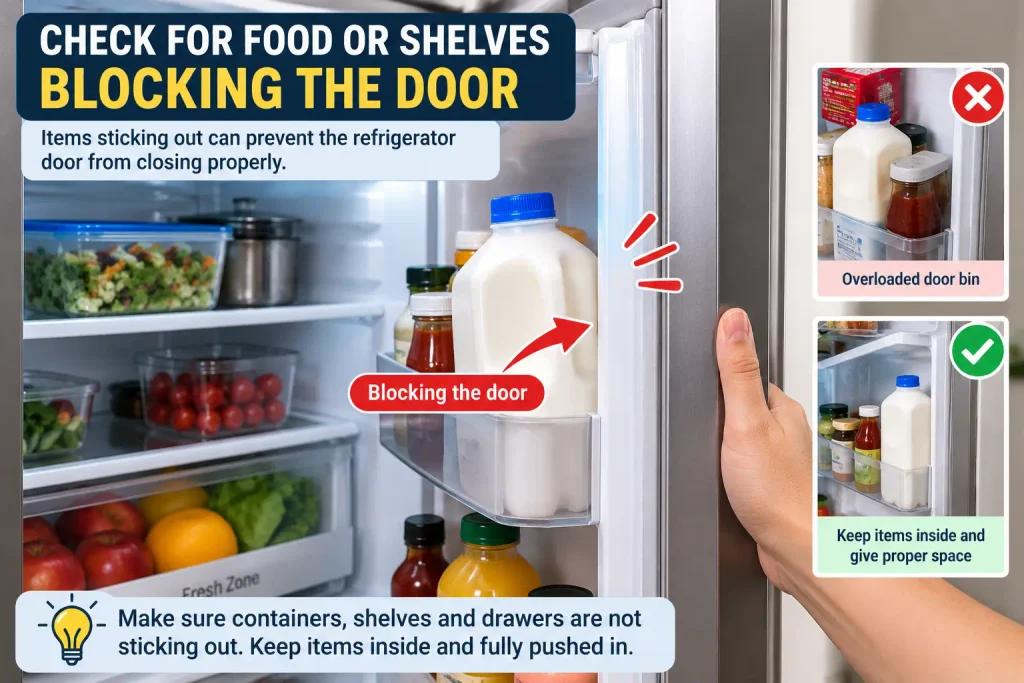
Move anything that interferes with the door.
Make sure shelves and drawers are fully seated in their intended positions.
Then close the door slowly and watch whether the gasket makes continuous contact with the refrigerator cabinet.
Don’t force the door closed against an obstruction. Moving the item causing the problem is safer than putting unnecessary pressure on the door, hinges, or gasket.
3. Inspect the Refrigerator Door Gasket
If cleaning and removing obstructions don’t solve the problem, inspect the gasket itself.
Run your fingers gently along the gasket and look for signs of damage.
Watch for:
- Tears or cracks
- Flattened sections
- Warped corners
- Loose areas
- Hard or brittle sections
- Gaps between the gasket and refrigerator cabinet
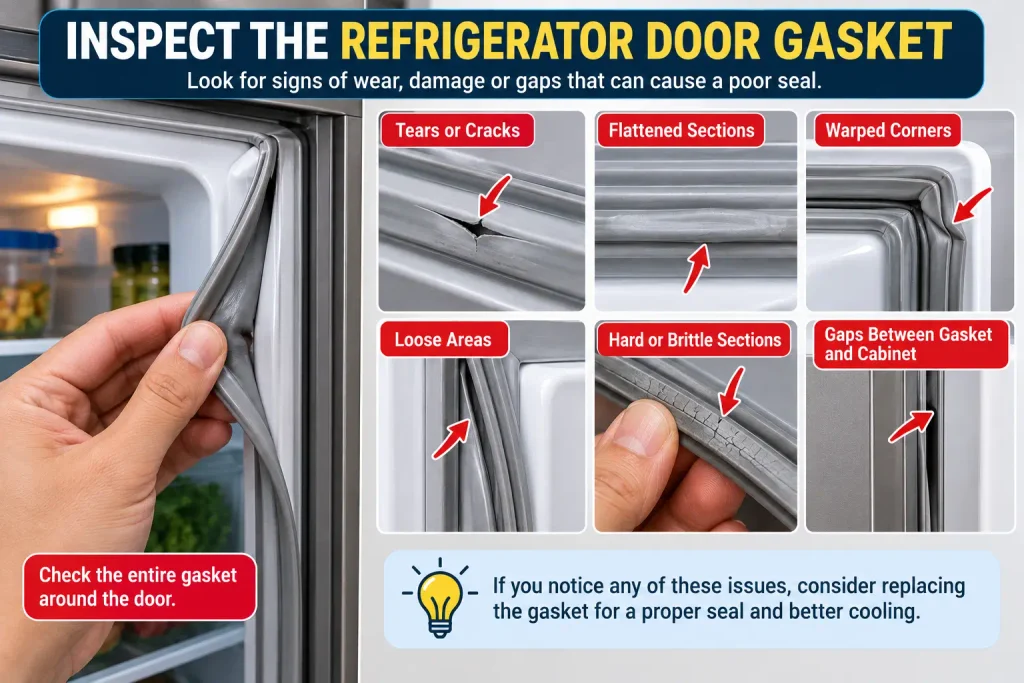
A gasket that no longer sits flat may fail to create a consistent seal.
Close the door and inspect the gap around its perimeter. If one section remains visibly separated while the rest of the gasket is touching the cabinet, the gasket may be damaged or deformed.
Some gasket problems can be corrected by carefully reshaping the material, but don’t use excessive heat or aggressive tools unless the refrigerator manufacturer specifically recommends that method for your model.
For a severely damaged gasket, replacement is usually the more dependable solution.
4. Check the Refrigerator Door Alignment
A door can have a perfectly good gasket and still fail to seal if the door is misaligned.
If you’re dealing with other door alignment problems at home, our guide on How to Fix a Squeaky Door covers common hinge, screw, and alignment issues in more detail.
Stand in front of the refrigerator and look at the door from top to bottom.
Check whether:
- The door appears tilted
- The gap is noticeably uneven
- One corner sits higher than the other
- The gasket contacts one area but leaves a gap elsewhere
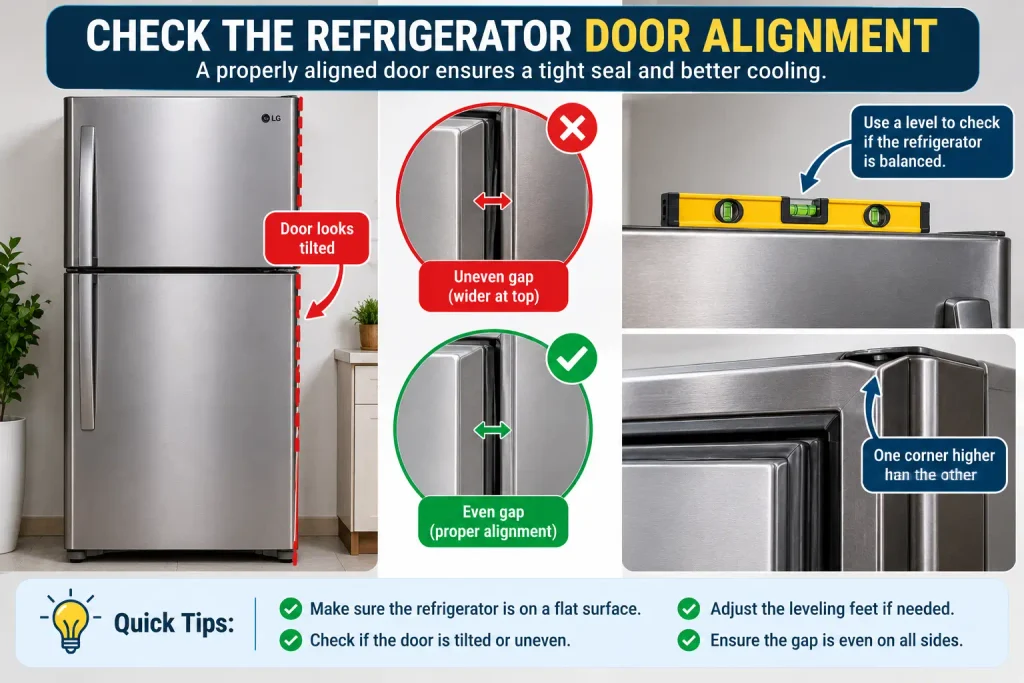
Also inspect the hinges for visible movement or damage.
If your refrigerator has adjustable hinges or leveling instructions, follow the instructions in the owner’s manual for your specific model. Refrigerator designs vary, so avoid loosening hinge hardware without understanding how the adjustment works.
Make small adjustments only, then close the door and check the seal again.
5. Level the Refrigerator
An improperly leveled refrigerator can affect how the door opens, closes, and seals.
Check whether the refrigerator is sitting evenly on the floor.
Some refrigerator models use adjustable leveling feet or rollers. Whirlpool advises checking that the refrigerator is level and referring to the owner’s manual for model-specific leveling instructions.
You can use a small level to check the appliance.
If adjustment is needed, follow the manufacturer’s instructions rather than guessing which feet or rollers to turn.
After leveling, open the door and allow it to move normally. Then close it gently and inspect the gasket around the entire perimeter.
A properly positioned refrigerator can help the door operate and close correctly, but leveling alone will not repair a torn or badly deformed gasket.
6. Check the Door Seal With a Simple Paper Test
A simple paper test can help you identify sections where the gasket may not be making strong contact.
Place a small piece of paper between the gasket and the refrigerator cabinet.
Close the door over the paper.
Gently pull the paper.
Repeat this at several locations around the door rather than testing only one spot.
A significant difference in resistance from one section to another may help you identify an area that deserves closer inspection.
This test is only a basic diagnostic check. It does not measure the actual airtightness of the refrigerator.
If you find one section that consistently has poor contact, inspect the gasket, door alignment, and nearby hinges before deciding what to replace.
7. Replace a Damaged Refrigerator Door Gasket
If the gasket is torn, badly deformed, brittle, or no longer seals after cleaning and basic adjustments, replacement may be necessary.
Before ordering a replacement, find the exact refrigerator model number.
The gasket must be compatible with your specific refrigerator. Different models can use different gasket sizes, shapes, and attachment methods.
Before removing the old gasket:
- Confirm the replacement part matches your refrigerator model.
- Read the manufacturer’s replacement instructions.
- Check how the existing gasket is attached.
- Keep the work area clean.
- Compare the new gasket with the old one before installation.
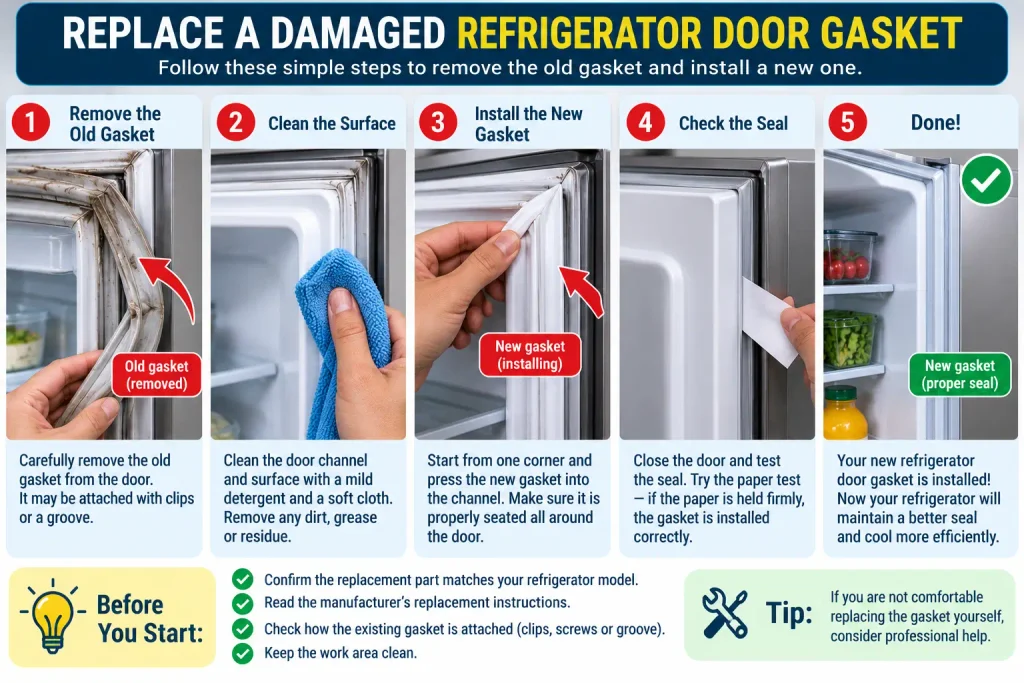
Follow the instructions supplied with the replacement part or refrigerator.
After installation, close the door and inspect the entire gasket. Make sure it isn’t twisted, folded, or pulled away from the cabinet.
Open and close the door several times to confirm that the new gasket stays in position.
If the replacement gasket does not sit correctly or the door remains misaligned, stop and consult the manufacturer’s service information or a qualified appliance technician.
How to Test Whether Your Refrigerator Door Is Sealing
After making a repair, don’t judge the result only by how the door feels.
Look around the entire perimeter of the gasket.
You want to see consistent contact between the gasket and refrigerator cabinet when the door is closed.
Also check for:
- Visible gaps
- Condensation around the door
- Unusual frost near the seal
- A gasket that folds inward
- A door that needs extra force to close
For food safety, use an appliance thermometer to confirm the refrigerator maintains 40°F (4.4°C) or below. USDA guidance recommends keeping the refrigerator at or below this temperature.
The USDA recommends keeping your refrigerator at 40°F (4.4°C) or below to help keep perishable food safe. You can read the USDA refrigerator temperature guidance for more information.
Fixing the gasket is useful, but it is still important to confirm that the refrigerator is maintaining a safe temperature.
Common Mistakes to Avoid
Trying to fix a refrigerator door seal is usually straightforward, but a few mistakes can create additional problems.
Don’t force the door shut.
If something is blocking the door, remove the obstruction instead of pushing harder.
Don’t cut or trim the gasket.
The gasket needs to fit the refrigerator correctly. Cutting away material can make the sealing problem worse.
Don’t use random adhesive.
Some refrigerator gaskets are designed to fit into a specific channel or mounting system. Follow the manufacturer’s installation method.
Don’t ignore a damaged hinge.
A worn or damaged hinge can cause the door to sit incorrectly even when the gasket itself is in good condition.
Don’t guess when adjusting the door.
Follow the refrigerator manufacturer’s instructions because hinge and leveling designs vary between models.
When Should You Call a Professional?
A refrigerator door seal problem doesn’t always require professional service, but some situations are better handled by a qualified appliance technician.
Consider professional help when:
- The door is badly sagging
- A hinge is bent or damaged
- The cabinet or door appears physically damaged
- The gasket replacement does not solve the problem
- The refrigerator cannot maintain a safe temperature
- There is significant frost or moisture buildup
- You suspect an electrical or refrigeration-system problem
- You need to remove or service components that require specialized knowledge
Don’t attempt to repair sealed refrigeration-system components yourself. A door-gasket problem is very different from a cooling-system or refrigerant problem.
How to Prevent Refrigerator Door Seal Problems
Regular maintenance can help you catch small problems before they become bigger ones.
Keep the Gasket Clean
Wipe the gasket periodically and remove food residue before it builds up.
Avoid Overloading the Door
Heavy or crowded door bins can make it harder for the door to close correctly.
Check Shelves and Drawers
Make sure interior components are fully seated and aren’t preventing the door from closing.
Inspect the Gasket Regularly
Look for tears, cracks, flattened areas, or sections pulling away from the cabinet.
Avoid Slamming the Door
Repeatedly slamming the door can put unnecessary stress on the hinges and gasket.
Check Your Refrigerator Temperature
Use an appliance thermometer to verify that the refrigerator remains at or below 40°F (4.4°C).
Frequently Asked Questions
Why won’t my refrigerator door seal properly?
Common causes include a dirty gasket, an obstruction inside the refrigerator, a damaged gasket, door misalignment, hinge problems, or an improperly leveled refrigerator.
How do I fix a refrigerator door seal?
Start by cleaning the gasket and checking for anything blocking the door. Then inspect the gasket for damage, check door alignment, and make sure the refrigerator is properly leveled. If the gasket is badly damaged, it may need replacement.
How do I know if my refrigerator gasket is bad?
Look for tears, cracks, flattened sections, hardened rubber, warped corners, or areas that don’t make consistent contact with the refrigerator cabinet when the door is closed.
Can I clean a refrigerator door gasket?
Yes. A soft cloth or sponge with warm water and mild detergent can be used to clean many refrigerator gaskets. Rinse away residue and dry the gasket afterward. Always follow the cleaning instructions for your refrigerator model.
Why is my refrigerator door hard to close?
A container, shelf, or door bin may be blocking it. A dirty gasket, misalignment, or another door-hardware problem can also contribute.
Does leveling a refrigerator help the door seal?
Proper leveling can help the door open and close correctly, but it won’t repair a torn or damaged gasket. Follow the manufacturer’s leveling instructions for your model.
Can a bad door seal make a refrigerator run more?
A poor seal can allow conditioned air to escape, which can make it harder for the appliance to maintain its temperature. If the refrigerator is struggling to stay at or below 40°F (4.4°C), check the door seal along with other possible causes.
When should I replace the refrigerator gasket?
Consider replacement when the gasket is torn, brittle, badly deformed, or still fails to seal after cleaning and correcting simple alignment or obstruction problems.
Final Thoughts
Learning how to fix a refrigerator door that won’t seal properly starts with the simplest checks.
Clean the gasket, remove anything blocking the door, inspect the seal for damage, and check the door’s alignment and refrigerator leveling. A simple paper test can also help you identify areas that deserve a closer look.
If the gasket is damaged beyond repair, replacing it with the correct model-specific part may solve the problem.
After any repair, check the entire door seal and confirm that the refrigerator is maintaining a safe temperature. USDA recommends keeping refrigerators at 40°F (4.4°C) or below for food safety.