
Kitchen cabinets can collect a surprising amount of grease over time. Cooking oils, steam, food splatters, and everyday fingerprints can combine to create a sticky film that is difficult to remove with ordinary dusting.
The challenge is that using a cleaner that is too strong—or scrubbing too aggressively—can damage paint, dull a protective finish, discolor wood, or cause laminate edges to swell.
Fortunately, you usually do not need harsh chemicals to deal with everyday kitchen grease. In this guide, you’ll learn how to remove grease from kitchen cabinets using gentle cleaning methods, starting with the mildest option and increasing cleaning strength only when necessary.
Why Do Kitchen Cabinets Get So Greasy?
Grease does not always land on cabinets as visible oil splashes. Tiny droplets of cooking oil can become airborne while frying, sautéing, or cooking at high temperatures.
These particles eventually settle on nearby cabinet doors, handles, range hood surfaces, and countertops. Dust then sticks to the oily film, creating the dark or sticky buildup commonly found around cooking areas.
Cabinets near the stove are usually affected the most, but grease can gradually spread throughout the kitchen.
Other common contributors include:
- Greasy or wet hands touching cabinet doors
- Food splashes
- Cooking steam
- Infrequent cleaning
- Poor kitchen ventilation
- Oil residue around cabinet handles
The longer this buildup remains, the harder it can become to remove.
Before You Start: Identify Your Cabinet Finish
Before applying any cleaning solution, determine what type of cabinet surface you have.
Kitchen cabinets may be made from or finished with:
- Painted wood
- Sealed or finished wood
- Laminate
- Thermofoil
- Melamine
- Veneer
- High-gloss finishes
Different surfaces can react differently to water and cleaning products.
Always check the cabinet manufacturer’s cleaning instructions when available. If you are unsure whether a cleaner is suitable, test it on a small, hidden area first and allow the area to dry before continuing.
This is particularly important for painted, stained, antique, or custom-finished cabinets.
What You’ll Need
For most everyday grease buildup, you only need a few basic cleaning supplies:
- Microfiber cloths
- Warm water
- Mild dish soap
- Small bowl or bucket
- Soft sponge
- Soft toothbrush for corners and hardware
- Clean, dry towel
For stubborn grease, you may also use a small amount of baking soda only when appropriate for the cabinet finish and after spot-testing it.
Avoid starting with abrasive scrubbers or aggressive cleaners.
How to Remove Grease From Kitchen Cabinets: Step by Step
Start with the gentlest cleaning method. If the grease remains, gradually move to a stronger approach rather than immediately using a harsh product.
1. Remove Loose Dust and Dirt
Before wet cleaning the cabinets, wipe away loose dust, crumbs, and surface debris with a clean, dry microfiber cloth.
Pay particular attention to:
- Cabinet tops
- Door edges
- Corners
- Areas around handles
- Cabinet surfaces near the stove
Removing loose debris first helps prevent dirt from being rubbed across the cabinet finish during cleaning.
Do not scrub aggressively. A gentle wipe is usually enough at this stage.
2. Make a Mild Dish Soap Solution
For ordinary kitchen grease, mild dish soap and warm water are a good place to start.
Fill a bowl with warm—not excessively hot—water and add a small amount of mild dish soap. Mix gently.
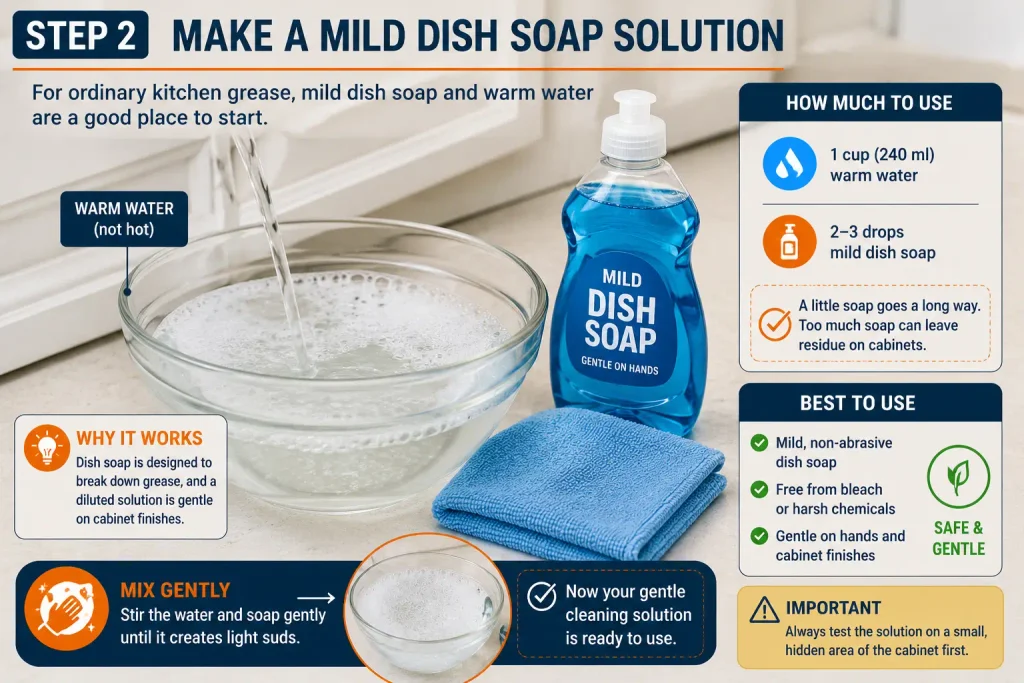
Dish soap is designed to break down grease, while a diluted solution is generally less aggressive than many heavy-duty household cleaners.
However, always follow the cabinet manufacturer’s recommendations where available.
3. Wipe the Greasy Areas Gently
Dip a microfiber cloth into the soapy water and wring it out thoroughly.
The cloth should be damp rather than dripping wet.
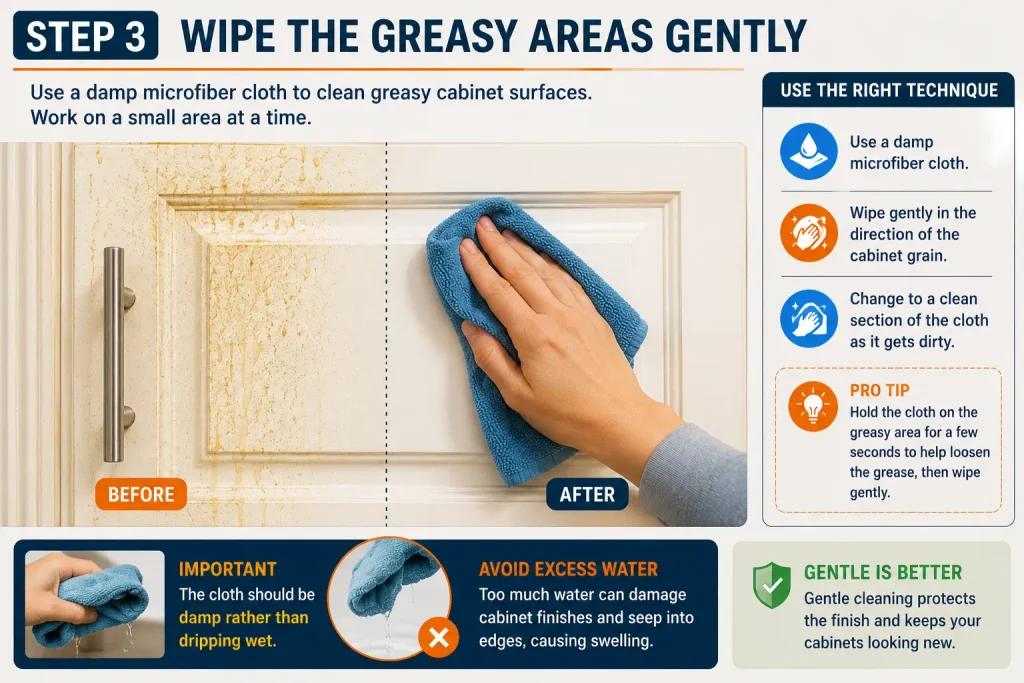
Gently wipe the greasy cabinet surface. Work on a small area at a time rather than soaking an entire cabinet door.
For heavier buildup, hold the damp cloth against the greasy area briefly to help soften the residue before wiping.
Avoid allowing water to collect around:
- Cabinet seams
- Door edges
- Hinges
- Veneer edges
- Laminate joints
Too much moisture can damage some cabinet materials.
4. Pay Extra Attention to Handles and Corners
Cabinet handles and the areas immediately around them often accumulate the heaviest grease because they are touched frequently.
Use your damp microfiber cloth to clean around each handle.
For tight corners or detailed hardware, a soft toothbrush can help loosen grime. Apply very light pressure so you do not scratch the cabinet or hardware.
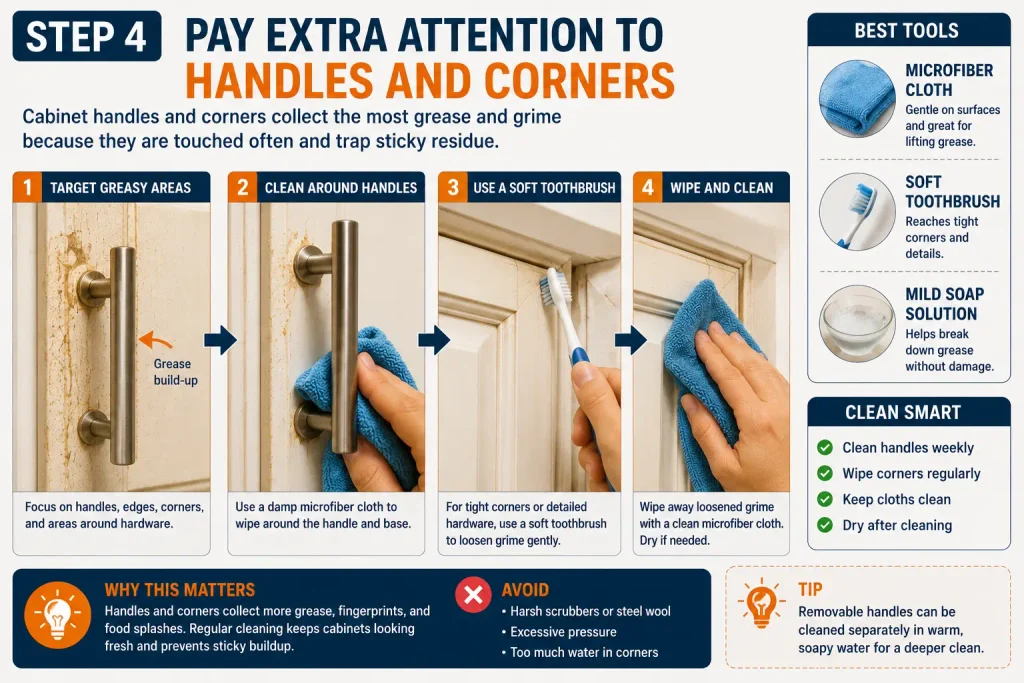
If possible and practical, removable handles can sometimes be cleaned separately, but check how the hardware is installed before removing anything.
5. Remove Stubborn Grease Carefully
If dish soap does not completely remove an old sticky patch, avoid immediately reaching for a harsh degreaser.
First, apply the mild soapy solution again and give it a little more contact time before gently wiping.
For a surface that can safely tolerate it, a small amount of baking soda mixed with water into a soft paste may help with stubborn residue. Test it in an inconspicuous area first, because baking soda is mildly abrasive and may dull or scratch certain painted, glossy, or delicate finishes.
Apply it gently with a soft cloth rather than aggressively scrubbing.
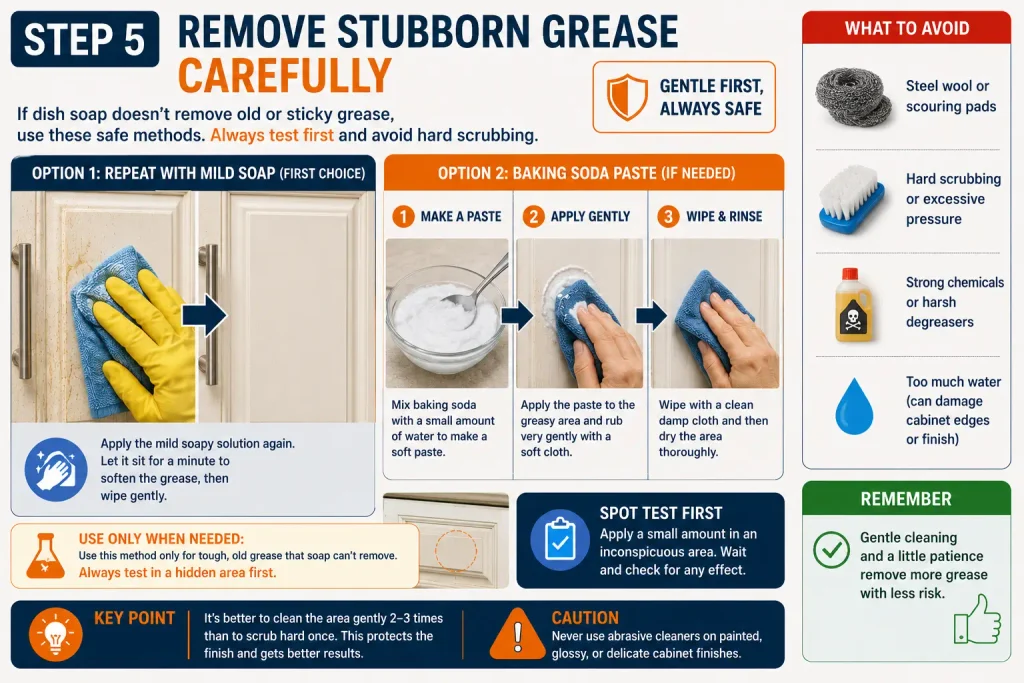
If you are uncertain about the cabinet finish, skip the abrasive method and use a cleaner specifically approved by the cabinet manufacturer instead.
6. Wipe Away Cleaning Residue
After the grease has been removed, use a second clean microfiber cloth lightly dampened with plain water to wipe away remaining soap or cleaning residue.
Again, wring the cloth thoroughly.
Leaving soap behind can create streaks or a dull-looking film, especially on darker or glossy cabinet surfaces.
Work from the top of the cabinet door downward to reduce streaking.
7. Dry the Cabinets Immediately
Do not leave kitchen cabinets wet after cleaning.
Use a clean, dry microfiber towel to dry the surface immediately.
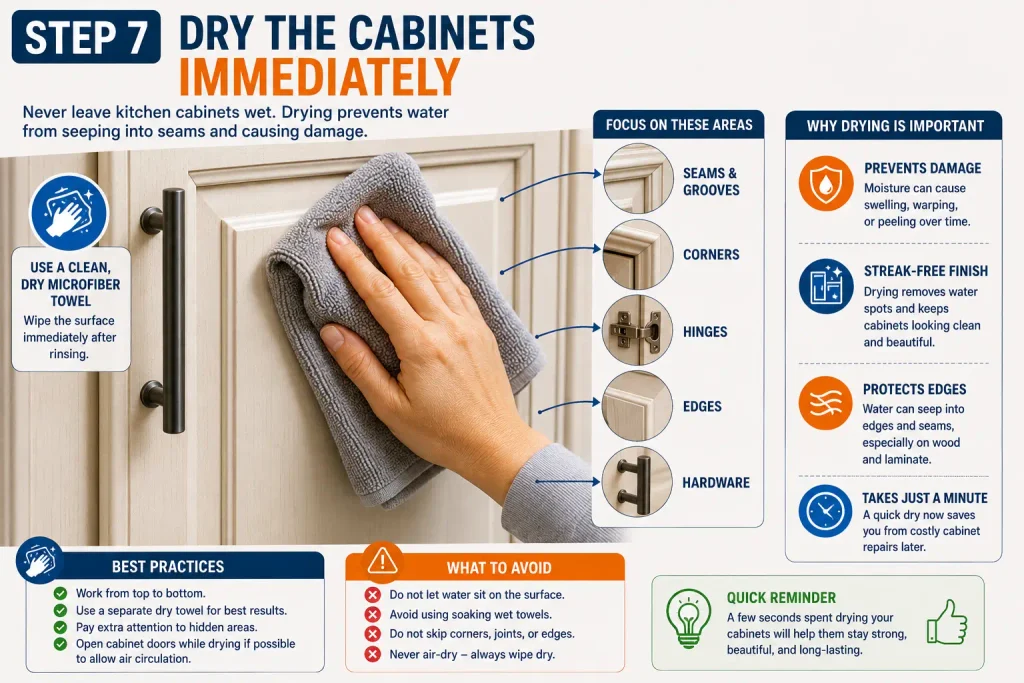
Pay special attention to seams, corners, joints, edges, and areas around hardware where moisture can collect.
This step is particularly important for wood, veneer, MDF-based cabinetry, and laminate edges because prolonged moisture exposure may cause swelling, warping, peeling, or finish damage.
How to Clean Heavy Grease Buildup on Kitchen Cabinets
Old grease can become much more difficult to remove because dust and cooking residue have had time to bond with it.
The safest strategy is usually repeated gentle cleaning rather than one aggressive cleaning session.
Start with warm water and mild dish soap. Clean a small section, wipe away the residue, dry it, and inspect the surface.
If grease remains, repeat the process.
You may find that two or three gentle passes remove more grease with less risk than heavy scrubbing.
For extremely old or hardened buildup, use a product specifically recommended for your cabinet material and finish.
How to Remove Grease From Wood Kitchen Cabinets
Wood cabinets require extra care because their protective finishes vary considerably.
For sealed or finished wood, begin with a barely damp microfiber cloth and a small amount of mild dish soap diluted in water.
Never saturate the wood.
Wipe in small sections and dry each section promptly.
Avoid experimenting with strong solvents, abrasive powders, or large amounts of water on wood cabinets. If the finish is cracked, worn, peeling, or otherwise damaged, moisture may penetrate the wood more easily.
For expensive, antique, or specialty-finished cabinets, follow the manufacturer’s or finish professional’s cleaning recommendations.
For additional care advice, see the Kitchen Cabinet Manufacturers Association’s cabinet care and cleaning guidance before using cleaning products on finished cabinetry.
How to Remove Grease From Painted Kitchen Cabinets
Painted cabinets can look durable while still being vulnerable to aggressive cleaning.
Abrasive pads and strong cleaners may create shiny spots, remove paint, or alter the finish.
Start with:
- Warm water
- A small amount of mild dish soap
- A soft microfiber cloth
Use light pressure and dry the surface afterward.
If the paint begins transferring onto your cloth, stop cleaning that area. The finish may already be deteriorating or the cleaning method may be too aggressive.
How to Clean Grease From Laminate Cabinets
Laminate is often relatively easy to wipe clean, but the edges and seams still require care.
Use mild dish soap diluted in warm water and a soft cloth.
Avoid soaking the surface, especially around exposed seams. Water entering damaged laminate edges can affect the material underneath.
Dry the cabinet thoroughly after cleaning.
What Should You Avoid When Cleaning Kitchen Cabinets?
Removing grease is important, but protecting the cabinet finish is more important than making the surface perfectly clean in a single attempt.
Unless specifically approved by your cabinet manufacturer, be cautious with:
- Steel wool
- Rough scouring pads
- Abrasive cleaning powders
- Strong solvents
- Undiluted aggressive cleaners
- Excessive amounts of water
- Steam cleaners
- Hard scraping tools
Do not assume that a cleaning method is safe simply because it uses a common household ingredient.
If mineral deposits are another problem in your kitchen, our guide on how to remove hard water stains explains several methods for tackling stubborn buildup on suitable surfaces.Even vinegar, baking soda, alcohol, or other DIY cleaners can affect certain finishes.
Spot-testing is one of the easiest ways to reduce the risk of accidental damage.
How Often Should You Degrease Kitchen Cabinets?
You do not necessarily need to deep-clean your cabinets every week.
Instead, wipe fresh grease and food splashes as soon as practical. Areas around the stove and frequently touched handles may benefit from a light cleaning every week or two, depending on how often you cook.
A more thorough cabinet cleaning can be performed periodically as buildup becomes noticeable.
Regular light cleaning helps prevent grease from developing into the thick, sticky layer that requires more effort later.
How to Prevent Grease Buildup on Kitchen Cabinets
Once your cabinets are clean, a few habits can help keep them that way.
Use your range hood or kitchen exhaust system while cooking when appropriate. This can help capture some airborne grease, steam, and cooking particles before they settle on surrounding surfaces.
You can also:
- Wipe cooking splashes promptly
- Clean cabinet handles regularly
- Wash greasy hands before touching cabinet doors
- Keep the range hood filter clean according to its instructions
- Wipe cabinets near the stove more frequently
- Avoid letting sticky residue sit for months
A quick maintenance wipe is much easier than removing layers of old grease.
Frequently Asked Questions
What is the safest way to remove grease from kitchen cabinets?
For many washable cabinet finishes, a soft microfiber cloth lightly dampened with warm water and a small amount of mild dish soap is a sensible starting point. Check the manufacturer’s care instructions and spot-test first.
Can I use baking soda on kitchen cabinets?
It depends on the cabinet finish. Baking soda is mildly abrasive and may dull or scratch some glossy, painted, or delicate surfaces. Test it in a hidden area before using it, or avoid it if the manufacturer does not recommend abrasive cleaners.
Can vinegar remove grease from cabinets?
Vinegar is often suggested as a household cleaner, but acidic cleaners are not appropriate for every cabinet finish. Do not assume vinegar is safe for your particular cabinets. Check the manufacturer’s cleaning recommendations first.
Why are my kitchen cabinets sticky after cleaning?
Sticky cabinets may still contain grease or leftover cleaning-product residue. Try wiping the area again with a clean cloth lightly dampened with plain water, then dry it thoroughly.
Can I use a kitchen degreaser on cabinets?
Only if the product is suitable for your specific cabinet material and finish. Some strong degreasers can discolor paint or affect protective coatings. Read the product instructions and cabinet manufacturer’s recommendations before use.
How do I remove old sticky grease from kitchen cabinets?
Start by softening the buildup with a lightly dampened cloth and diluted mild dish soap. Wipe gently, dry the surface, and repeat if necessary. Multiple gentle cleaning passes are often safer than aggressive scrubbing.
Final Thoughts
Learning how to remove grease from kitchen cabinets does not require starting with the strongest cleaner available.
For most everyday grease, begin with a soft microfiber cloth, warm water, and a small amount of mild dish soap. Clean small areas at a time, use as little moisture as practical, and dry the cabinets immediately.
Most importantly, consider the cabinet material and finish before trying stronger cleaning methods. Gentle cleaning and regular maintenance can remove kitchen grime while helping your cabinets stay attractive for years.