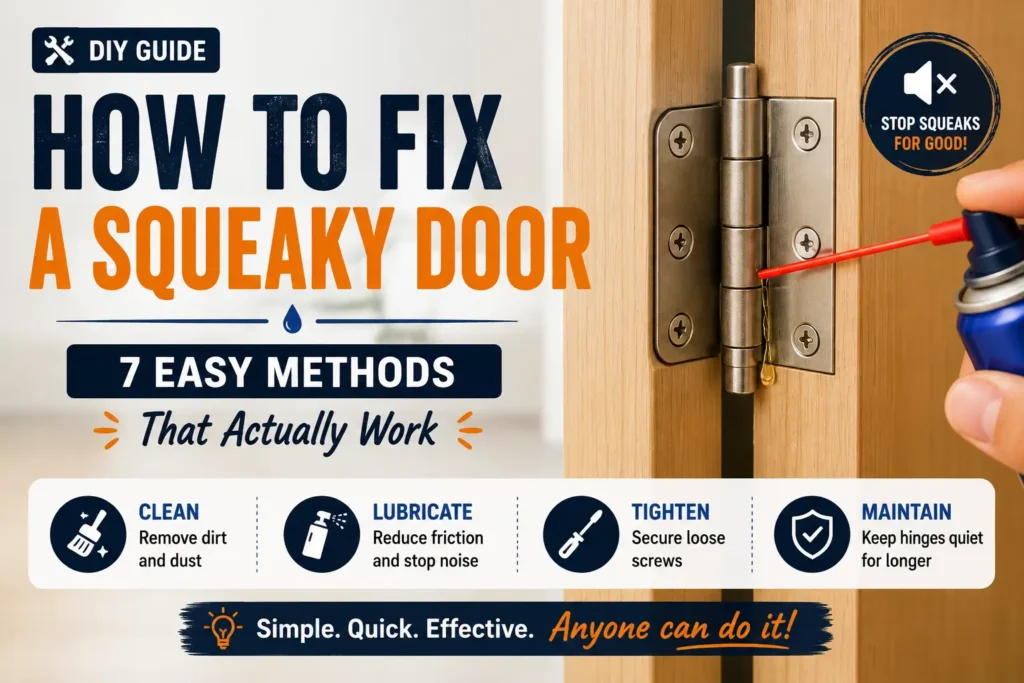

A door that sticks can turn a simple everyday task into an annoying struggle. You push harder, pull the handle, or lift the door slightly just to get it open or closed.
The good news is that a sticking door is often caused by something simple, such as loose hinges, dirt around the frame, humidity, or a small alignment problem. In many cases, you can fix it yourself with basic tools and a little patience.
If you’re dealing with other common household problems, you can also explore our Home Fixes for more practical DIY solutions.
In this guide, you’ll learn how to fix a door that sticks using seven practical DIY solutions, starting with the easiest fixes before moving on to sanding or planing.
How to Fix a Door That Sticks: Start With the Basics
Before trying to fix the problem, it helps to understand why the door is sticking.
Common causes include:
- Loose hinge screws
- Dirt or paint buildup around the frame
- Changes in humidity
- Wood swelling
- Misaligned hinges
- A shifted strike plate
- A door or frame that has moved slightly over time
The location of the rubbing can often give you a clue about what’s wrong.
Open and close the door slowly and watch where it touches the frame. You can also look for scuff marks, worn paint, or shiny areas along the edge of the door.
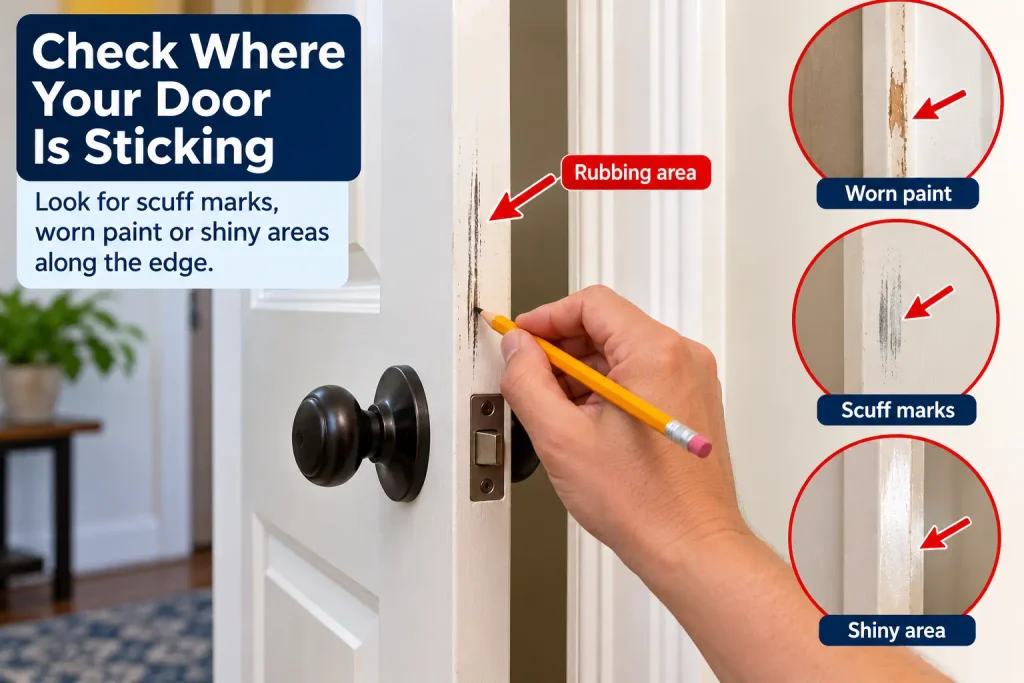
Once you identify the problem area, start with the least invasive solution below.
1. Clean the Door and Frame
Sometimes the door isn’t actually out of alignment. Dirt, grime, layers of paint, or debris around the frame can create enough friction to make it feel stuck.
Open the door and inspect the edges carefully.
Use a soft cloth to remove dust and dirt from:
- The top and sides of the door
- The door jamb
- Around the hinges
- The threshold
For stubborn grime, use a slightly damp cloth with a small amount of mild soap, if appropriate for the door’s finish.
Dry the surfaces afterward.
Also check for thick or peeling paint around the area where the door rubs. Don’t aggressively scrape a painted surface, especially in an older home where the existing coating may require special precautions.
Close the door again and see whether it moves more freely.
If it still sticks, continue to the next solution.
2. Tighten Loose Hinge Screws
Loose hinges are one of the easiest problems to check.
Over time, repeated opening and closing can loosen hinge screws. Even a small amount of movement can allow the door to sag and rub against the frame.
What You’ll Need
- Screwdriver
- Flashlight, if necessary
Open the door and inspect every hinge.
Look for screws that appear loose or hinges that move when you gently lift the door.
Tighten the screws carefully with the appropriate screwdriver.
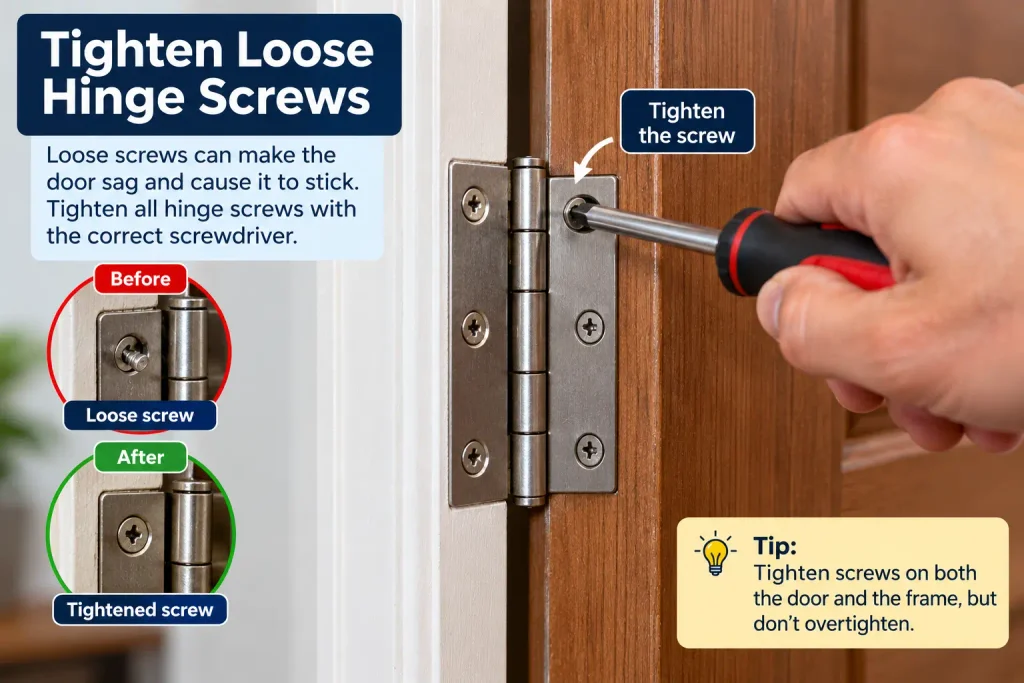
Start with the screws connecting the hinge to the door, followed by those securing the hinge to the frame.
Avoid overtightening. Excessive force can strip the screw hole or damage the hinge.
After tightening everything, slowly open and close the door.
If the door no longer rubs against the frame, you may have solved the problem without making any permanent changes.
3. Check and Adjust the Hinges
If tightening the screws doesn’t solve the problem, look more closely at the hinge alignment.
A hinge that is bent, loose, or sitting incorrectly can change the position of the entire door.
Stand back and look at the gaps around the closed door.
Ideally, the spacing between the door and frame should look reasonably consistent. A noticeably smaller gap in one area can indicate where the door has shifted.
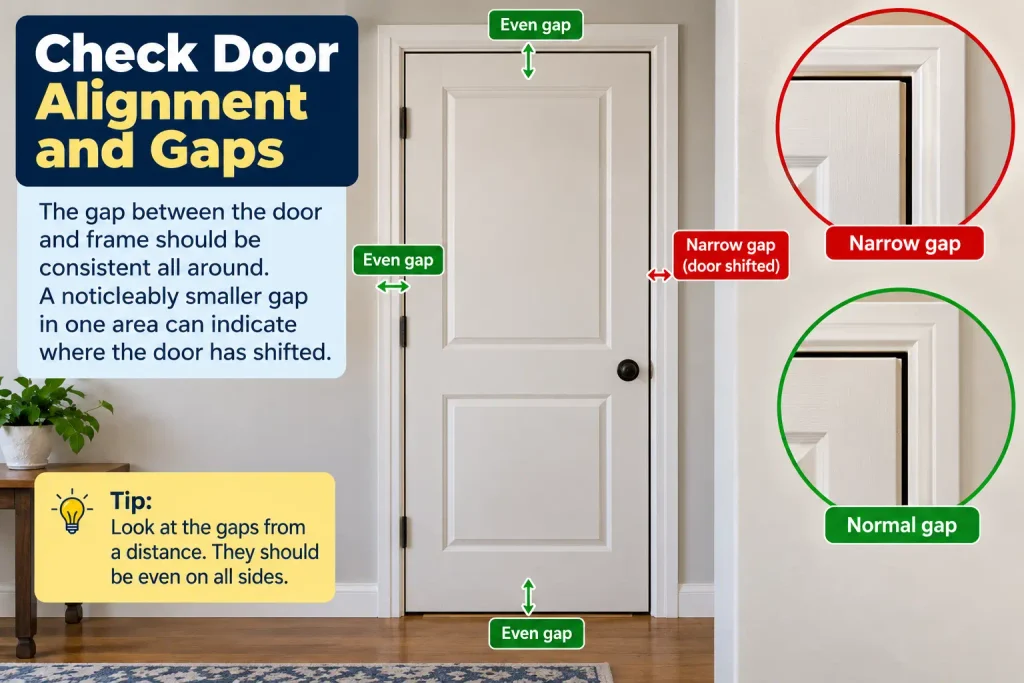
Inspect each hinge for:
- Bent hinge leaves
- Loose screws
- A hinge pulling away from the frame
- Visible movement
- Damage around the screw holes
If a screw spins without tightening, the screw hole may be stripped and may require repair.
Minor hinge problems can sometimes be corrected without removing material from the door.
Because hinge adjustments affect the door’s alignment, make small changes and test the door after each adjustment rather than trying to correct everything at once.
4. Fix Humidity-Related Door Swelling
Does your door stick more during humid or rainy weather?
Moisture can cause some wooden doors and frames to expand. As the wood swells, the clearance between the door and frame becomes smaller.
This can cause a door that normally works perfectly to suddenly start rubbing.
Look for signs such as:
- The problem appearing during humid weather
- Tightness along a wooden edge
- Swelling near an unfinished area
- The door improving when conditions become drier
Improving ventilation and controlling indoor humidity may help if excess moisture is contributing to the problem.
However, don’t immediately sand a large amount off the door simply because it sticks during a particularly humid period. The wood may shrink again when conditions become drier.
First make sure the hinges are secure and there isn’t another obvious alignment issue.
If the same area continues to rub consistently, a small amount of sanding may be appropriate.
Improving ventilation and controlling indoor humidity may help if excess moisture is contributing to the problem. The U.S. Environmental Protection Agency recommends keeping indoor relative humidity below 60%, ideally between 30% and 50%, when possible. EPA’s guide to mold, moisture, and your home
5. Sand the Area Where the Door Rubs
If you’ve tightened the hinges and identified a small area that consistently rubs against the frame, light sanding can provide additional clearance.
What You’ll Need
- Pencil
- Fine- or medium-grit sandpaper
- Sanding block
- Dust mask
- Eye protection
First, identify the exact point of contact.
Mark the rubbing area lightly with a pencil.
If practical, open the door far enough to work on the edge safely. Depending on where the problem is located, removing the door may make the job easier and safer.
Sand only the problem area.
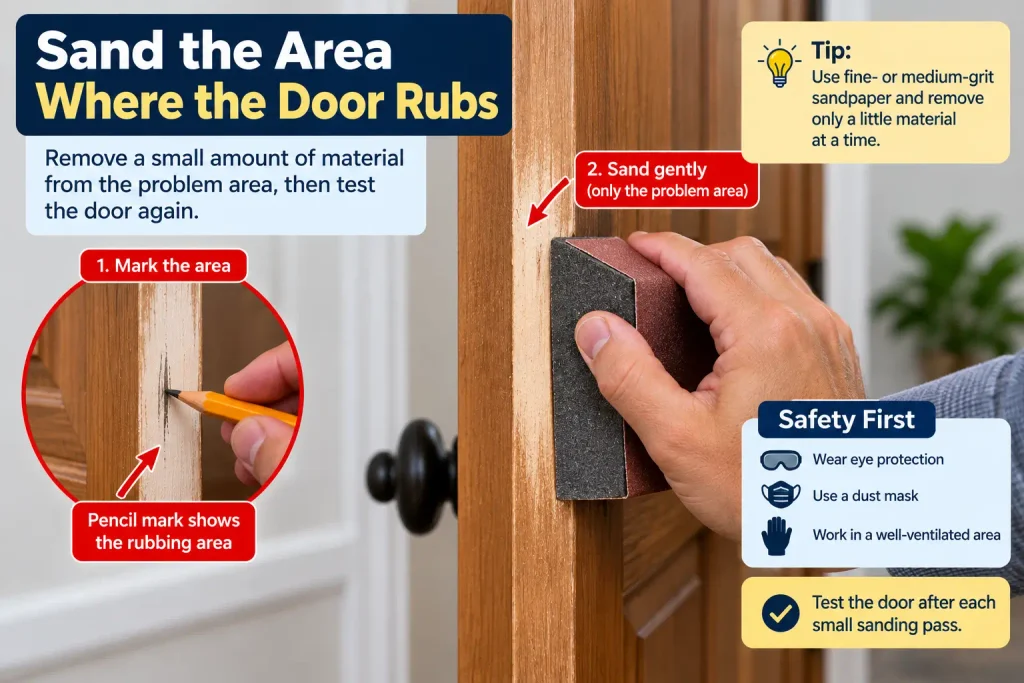
Remove a very small amount of material at a time, then test the door again.
This is important because removing too much wood can leave an unnecessarily large gap around the door.
Once the door opens and closes smoothly, stop sanding.
Smooth the worked area as needed and consider resealing or refinishing exposed wood to help protect it from moisture.
Safety Tip
Sanding creates dust, and older painted surfaces can present additional hazards. Use appropriate eye and respiratory protection, keep the area ventilated, and avoid sanding coatings that may contain hazardous materials unless you know how to handle them safely.
If you’re working on an older painted door, take extra care before sanding. Homes built before 1978 may contain lead-based paint, and disturbing old painted surfaces can create hazardous dust. See the EPA’s lead-safe renovation guidance for DIYers for precautions before starting this type of work.
6. Adjust the Strike Plate
Sometimes the door itself moves freely but becomes difficult to close or latch.
In this situation, the problem may be the strike plate rather than the door rubbing against the frame.
The strike plate is the metal plate attached to the door frame where the latch enters.
Close the door slowly and watch how the latch lines up with the opening in the strike plate.
Signs of misalignment include:
- The latch hitting the edge of the plate
- Having to lift the door to latch it
- Having to push hard before the latch engages
- Scrape marks around the strike plate
First, check whether the strike plate screws are loose.
Tightening them may solve the problem.
If the latch is still slightly misaligned, the strike plate may need a minor adjustment.
Loosen the screws, reposition the plate only as much as necessary, and retighten it securely.
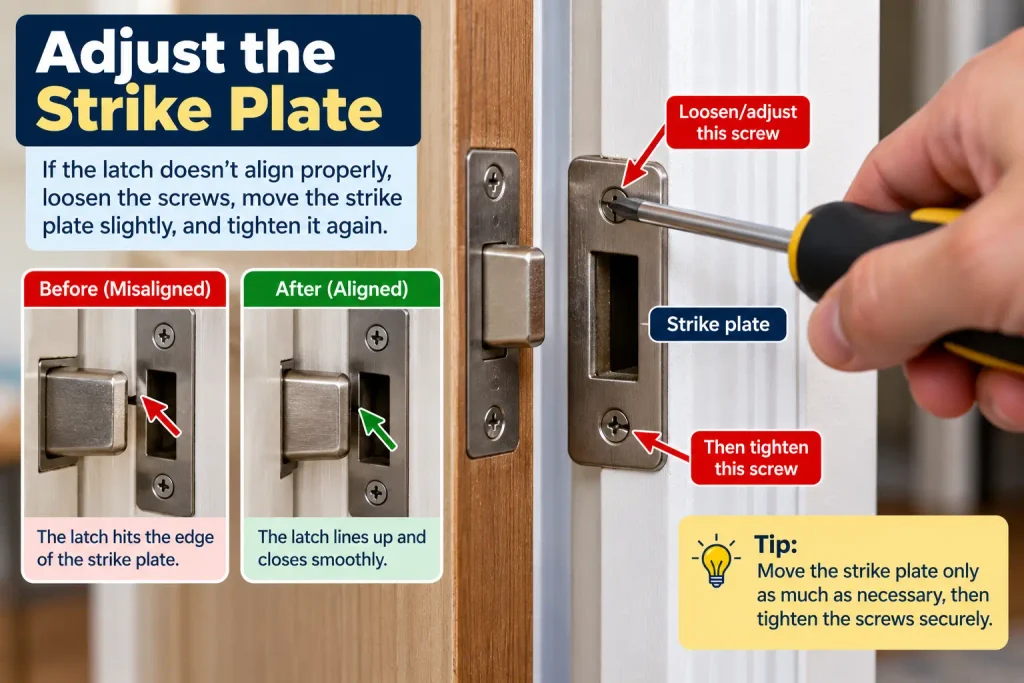
Test the door several times.
For a major alignment problem, investigate the hinges and frame before making large modifications to the strike plate.
7. Plane the Door Edge for a Persistent Problem
If the door continues to stick after you’ve checked the hinges, humidity, alignment, and other simpler causes, the final option may be removing a small amount of wood with a hand plane.
This is a more permanent fix, so it should not be your first step.
What You’ll Need
- Pencil
- Hand plane
- Eye protection
- Dust mask
- Suitable support for the door
Mark exactly where the door is rubbing.
If necessary, remove the door from its hinges and place it securely on a stable work surface.
Plane the problem area gradually.
Take very thin passes and check your progress frequently.
The goal is to create just enough clearance for smooth operation—not to significantly change the shape of the door.
After achieving the correct fit, smooth the edge and reseal or refinish any exposed wood as appropriate.
If you’re uncomfortable removing or planing a door, consider getting help from a carpenter or other qualified professional.
What Not to Do When Fixing a Sticking Door
A small door problem can become a bigger repair if too much material is removed or the wrong component is adjusted.
If you’re troubleshooting another frustrating household problem, check out our guide on How to Fix a Leaky Faucet for another step-by-step home repair.
Avoid these common mistakes:
Don’t force the door repeatedly.
Force can damage the latch, hinges, frame, or finish.
Don’t start by aggressively sanding the door.
Check the hinges and alignment first.
Don’t remove too much wood at once.
Sand or plane gradually and test frequently.
Don’t ignore moisture problems.
Persistent swelling may indicate a humidity or water-intrusion issue that needs attention.
Don’t overtighten screws.
You can strip the hole or damage the hardware.
Don’t make major structural adjustments without understanding the cause.
A significantly uneven frame or rapidly changing door gap can point to a larger issue.
When Should You Call a Professional?
Most minor sticking-door problems are manageable DIY repairs, but some situations deserve professional attention.
Consider contacting a carpenter, contractor, or other appropriate professional if:
- The frame appears significantly warped
- Several doors suddenly start sticking
- You notice substantial cracks around the door or nearby walls
- The floor or frame appears uneven
- There are signs of water damage or rot
- The door is unusually heavy or difficult to handle safely
- The problem keeps returning after basic repairs
- You’re unsure about removing, sanding, or planing the door
Multiple doors changing alignment at the same time can sometimes indicate movement elsewhere in the building, so it’s worth investigating rather than repeatedly trimming the doors.
How to Prevent a Door From Sticking Again
Once the door is working properly, a few simple maintenance habits can help prevent the problem from returning.
Check Hinges Periodically
If the door begins to sag or move differently, check the hinge screws before the problem becomes worse.
Manage Excess Humidity
Good ventilation and appropriate indoor humidity control can reduce moisture-related movement in wooden doors.
Protect Exposed Wood
If sanding or planing exposes unfinished wood, reseal or refinish it as appropriate. Unprotected wood can absorb moisture more readily.
Keep the Frame Clean
Dust, grime, and paint buildup can increase friction around tight-fitting doors.
Don’t Ignore Small Changes
If you suddenly need more force to close a door, inspect it early. A minor adjustment is often easier than repairing damage caused by repeatedly forcing it.
Frequently Asked Questions
Why is my door suddenly sticking?
A door can suddenly start sticking because of humidity, loose hinges, swelling wood, paint buildup, or changes in alignment. Start by identifying exactly where the door contacts the frame.
How do I know where my door is sticking?
Open and close the door slowly while watching the gaps around it. Look for scuff marks, worn paint, or areas where the gap becomes particularly narrow. Lightly marking the suspected area with a pencil can help when making adjustments.
Should I sand a door that sticks?
Only after checking simpler causes such as loose hinges, debris, and alignment. If one small area consistently rubs against the frame, careful sanding may help. Remove as little material as possible.
Why does my wooden door stick when it rains?
Wood can absorb moisture and expand when humidity increases. That expansion reduces the clearance between the door and frame, causing rubbing or sticking.
Can I fix a sticking door without removing it?
Often, yes. Cleaning the frame, tightening hinge screws, checking alignment, and making some minor adjustments can usually be done with the door installed. More extensive sanding or planing may require removing it.
Why does my door close but not latch?
The latch and strike plate may be slightly misaligned. Check the hinge screws first, then inspect where the latch contacts the strike plate before adjusting anything.
Is a sticking door a serious problem?
Usually it is a minor maintenance issue. However, significant changes in the frame, multiple doors beginning to stick, cracks, uneven floors, rot, or water damage can justify professional inspection.
Final Thoughts
Learning how to fix a door that sticks doesn’t necessarily mean reaching for sandpaper immediately.
Start with the simplest possibilities: clean the contact surfaces, tighten the hinges, and identify exactly where the door is rubbing. If necessary, move on to humidity control, careful sanding, strike-plate adjustment, or light planing.
The key is to make one small adjustment at a time and test the door after each change.
For more practical solutions to everyday household problems, browse our latest Home Fixes and Guides.
That approach can help you solve an annoying sticking door while avoiding unnecessary damage to the door or frame.