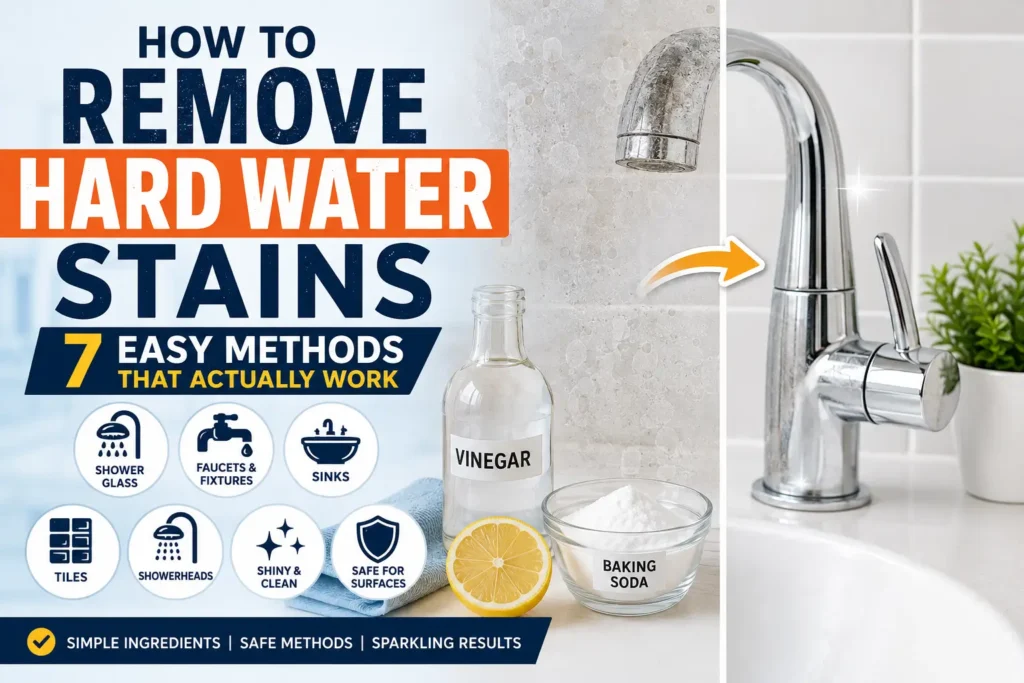

Cloudy shower doors can make an otherwise clean bathroom look dirty. Over time, soap residue, shampoo, body wash, skin oils, and minerals from hard water collect on glass surfaces, leaving behind a white film that can become difficult to remove.
If you are wondering how to remove soap scum from shower doors, the good news is that many everyday deposits can be cleaned using mild household products, soft cleaning tools, and a consistent maintenance routine.
However, not every shower door is made or treated in the same way. Some glass panels have protective coatings, while others have textured surfaces, metal frames, or special finishes that require extra care.
In this guide, you will learn how to identify soap scum, remove stubborn buildup, clean shower door tracks and frames, choose suitable cleaning products, and prevent cloudy deposits from returning.
Let’s get started.
What Is Soap Scum and Why Does It Build Up on Shower Doors?
Soap scum is a residue that develops when soap ingredients interact with minerals in water and combine with other bathroom substances.
Traditional bar soaps contain fatty ingredients that can react with minerals such as calcium and magnesium found in hard water. This reaction can leave behind an insoluble residue that sticks to shower glass, tiles, faucets, and other bathroom surfaces.
Several factors contribute to soap scum buildup.
Common Causes of Soap Scum
- Traditional soap: Certain bar soaps leave behind residue that can combine with hard water minerals.
- Shampoo and conditioner: Hair products can leave a film on glass surfaces.
- Body wash: Some bathing products contain ingredients that contribute to surface residue.
- Skin oils: Natural body oils combine with soap residue and dirt.
- Hard water: Calcium and magnesium deposits can accumulate as water dries.
- Poor ventilation: Moisture can remain on bathroom surfaces for longer.
- Infrequent cleaning: Small deposits gradually combine into thicker buildup.
Over time, these substances can create a cloudy or whitish layer that makes transparent shower doors look dull.
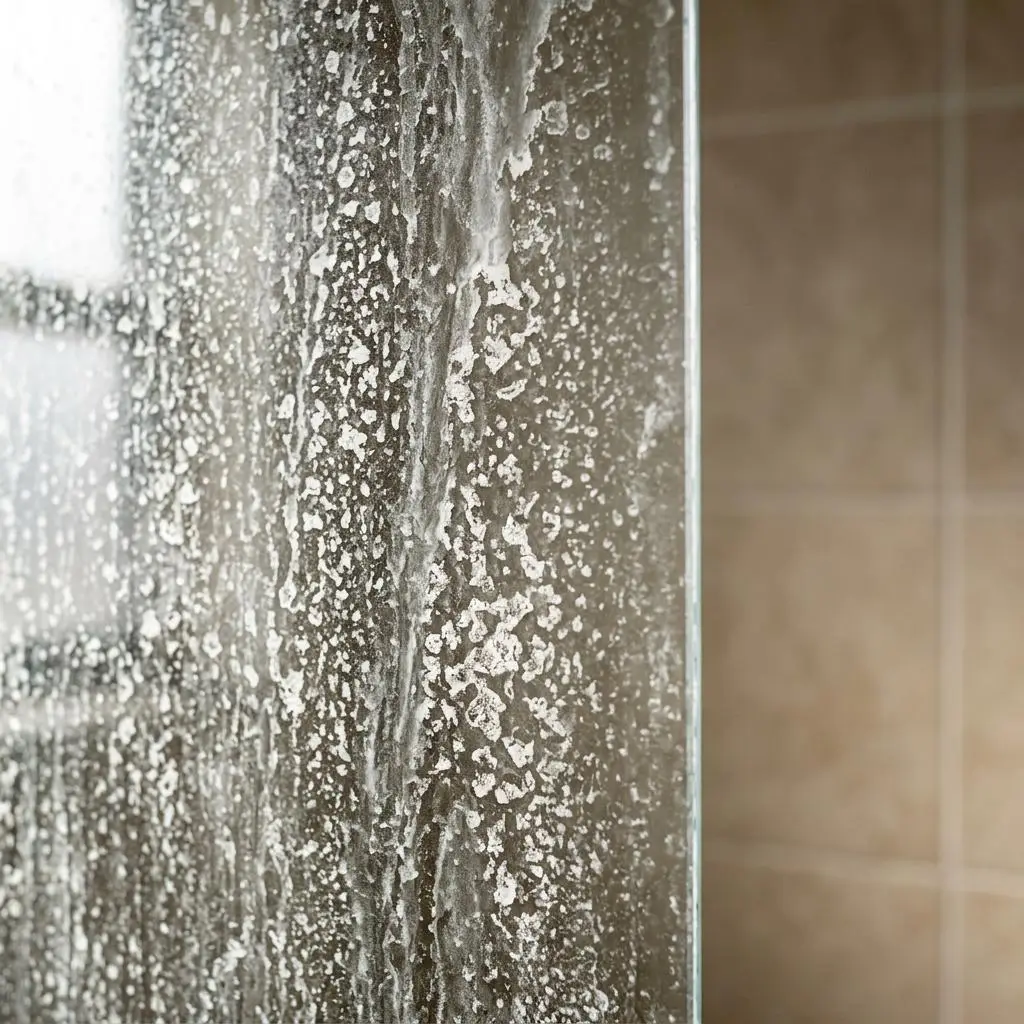
Regular cleaning is important because fresh residue is generally easier to remove than deposits that have accumulated over several weeks or months.
How to Identify Soap Scum vs. Hard Water Stains
Soap scum and hard water stains can look similar, but they are different types of deposits.
Understanding the difference helps you select an appropriate cleaning method.

Soap Scum
Soap scum commonly appears as:
- A cloudy or whitish film.
- Greasy or slippery residue.
- Dull patches on frequently used shower glass.
- Buildup around areas exposed to soap and shampoo.
It is usually associated with soap residue, body products, skin oils, and minerals.
Hard Water Stains
Hard water stains are caused by mineral deposits left behind when water evaporates.
Common signs include:
- White circular water spots.
- Chalky mineral deposits.
- Cloudy patches.
- Dried water marks.
- Persistent mineral rings.
These deposits can become more noticeable in bathrooms with hard water.
Mixed Soap Scum and Mineral Deposits
Sometimes both problems occur together.
Soap residue can combine with mineral deposits and other bathroom grime, creating a stubborn layer that is more difficult to remove.
Appearance alone cannot always identify the exact deposit. If ordinary cleaning does not work, the glass may also have etching, scratches, or coating damage.
Different Types of Shower Doors and Their Cleaning Requirements
Before choosing a cleaning solution, identify your shower door material and check the manufacturer’s care instructions.
Using an unsuitable product can damage protective treatments, metal finishes, seals, or hardware.
Clear Tempered Glass Shower Doors
Clear tempered glass is commonly used in modern bathrooms.
Before choosing a cleaning product, check the manufacturer’s shower door care and cleaning instructions to make sure the product is suitable for your glass surface and finish.
For ordinary soap residue, start with:
- Warm water.
- Mild dish soap.
- A soft microfiber cloth.
- A non-abrasive sponge.
Avoid steel wool, rough scouring pads, and abrasive cleaning powders.
Coated or Treated Glass Shower Doors
Some shower doors have factory-applied protective coatings designed to repel water and make cleaning easier.
For example, Kohler CleanCoat glass treatment is a protective glass treatment with specific care requirements that homeowners should understand before cleaning.
Examples include water-repellent glass treatments.
These coatings may require specific cleaning products and maintenance procedures.
Always:
- Check the manufacturer’s cleaning instructions.
- Use recommended mild cleaners.
- Avoid abrasive scrubbers.
- Avoid unapproved acidic or alkaline products.
- Dry the glass with a soft microfiber towel.
Do not assume that vinegar, baking soda, or a commercial bathroom cleaner is suitable for treated glass.
Frosted or Textured Glass Shower Doors
Frosted and textured glass can collect residue in small grooves and uneven areas.
Use a soft microfiber cloth or a manufacturer-approved soft brush to clean these areas gently.
Avoid aggressive scrubbing because textured finishes and decorative treatments may be damaged.
Framed Shower Doors
Framed shower doors contain additional materials, including:
- Aluminum frames.
- Metal tracks.
- Rubber seals.
- Silicone joints.
- Glass panels.
Choose cleaning products that are compatible with each material.
A cleaner suitable for glass may not be suitable for aluminum, chrome, or rubber components.
Frameless Shower Doors
Frameless shower doors usually have exposed glass edges, hinges, handles, and wall connections.
Pay attention to these areas because soap residue and moisture can accumulate around hardware and joints.
Use a soft cloth and an appropriate cleaner for each surface.
What You Need to Remove Soap Scum from Shower Doors
Gather the necessary cleaning supplies before starting.
| Cleaning supply | Purpose |
|---|---|
| Microfiber cloth | Wiping and drying glass |
| Soft sponge | Removing everyday residue |
| Soft-bristled brush | Cleaning corners and suitable tracks |
| Mild dish soap | Removing light greasy residue |
| Warm water | Loosening surface dirt |
| Glass-safe cleaner | Cleaning compatible glass |
| Soap scum remover | Treating compatible stubborn deposits |
| Spray bottle | Applying diluted solutions |
| Rubber gloves | Protecting hands |
| Clean towel | Drying the surface |
| Shower squeegee | Removing water after showers |
Not every item is necessary for every shower door.
Before using household cleaning products, read their labels, wear appropriate protective equipment, and follow safe handling practices for cleaning products.
Avoid abrasive tools, steel wool, rough pads, and sharp objects.
How to Remove Soap Scum from Shower Doors Step by Step
For ordinary soap scum, begin with the mildest suitable cleaning method.
Step 1: Remove Bathroom Products and Accessories
Take shampoo bottles, soap dispensers, razors, and other accessories away from the shower door.
This gives you better access to the entire glass surface.
It also prevents cleaning solution from collecting around bottles and accessories.
Step 2: Rinse the Shower Door
Rinse the glass with comfortably warm water.
This helps remove loose dirt, shampoo residue, and other surface particles.
Avoid sudden temperature changes, such as applying very hot water to cold glass.
Step 3: Apply a Suitable Cleaning Solution
Prepare a mild dish soap solution using warm water and a small amount of dishwashing liquid.
Alternatively, use a glass-safe soap scum cleaner according to its product instructions.
Check that the cleaner is compatible with your glass coating and nearby metal components.
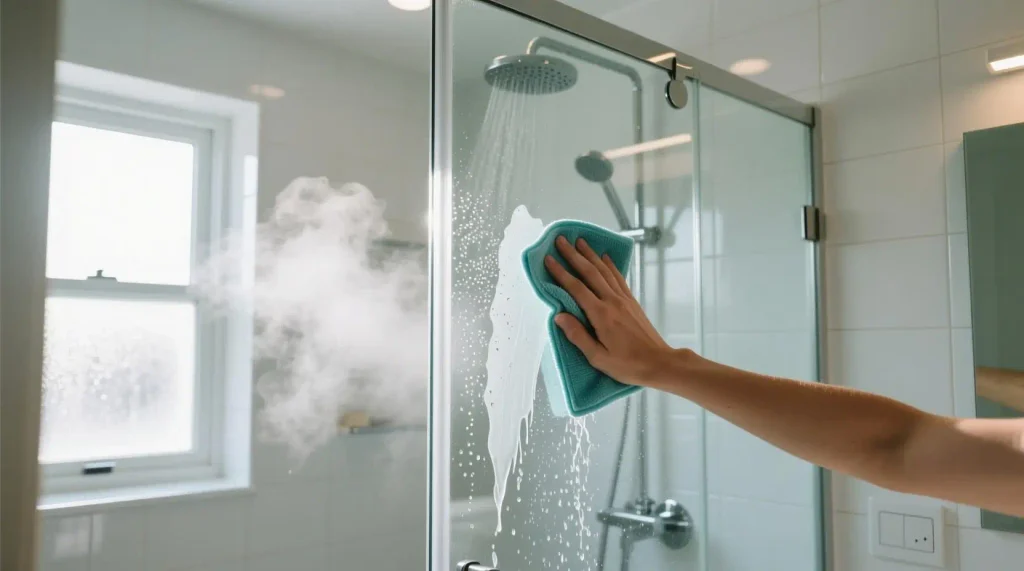
Step 4: Gently Clean the Glass Surface
Dip a soft microfiber cloth or non-abrasive sponge into the cleaning solution.
Work from the top of the shower door toward the bottom.
Use gentle circular or straight wiping movements.
Pay attention to cloudy areas where soap residue is visible.
Avoid applying excessive pressure.
Step 5: Clean Corners and Glass Edges
Soap scum frequently collects near:
- Glass corners.
- Door edges.
- Hinges.
- Handles.
- Silicone joints.
- Seals.
Use a soft cloth or suitable soft-bristled brush to reach narrow spaces.
Do not insert sharp tools underneath rubber seals or silicone joints.
Step 6: Clean Shower Door Tracks and Frames
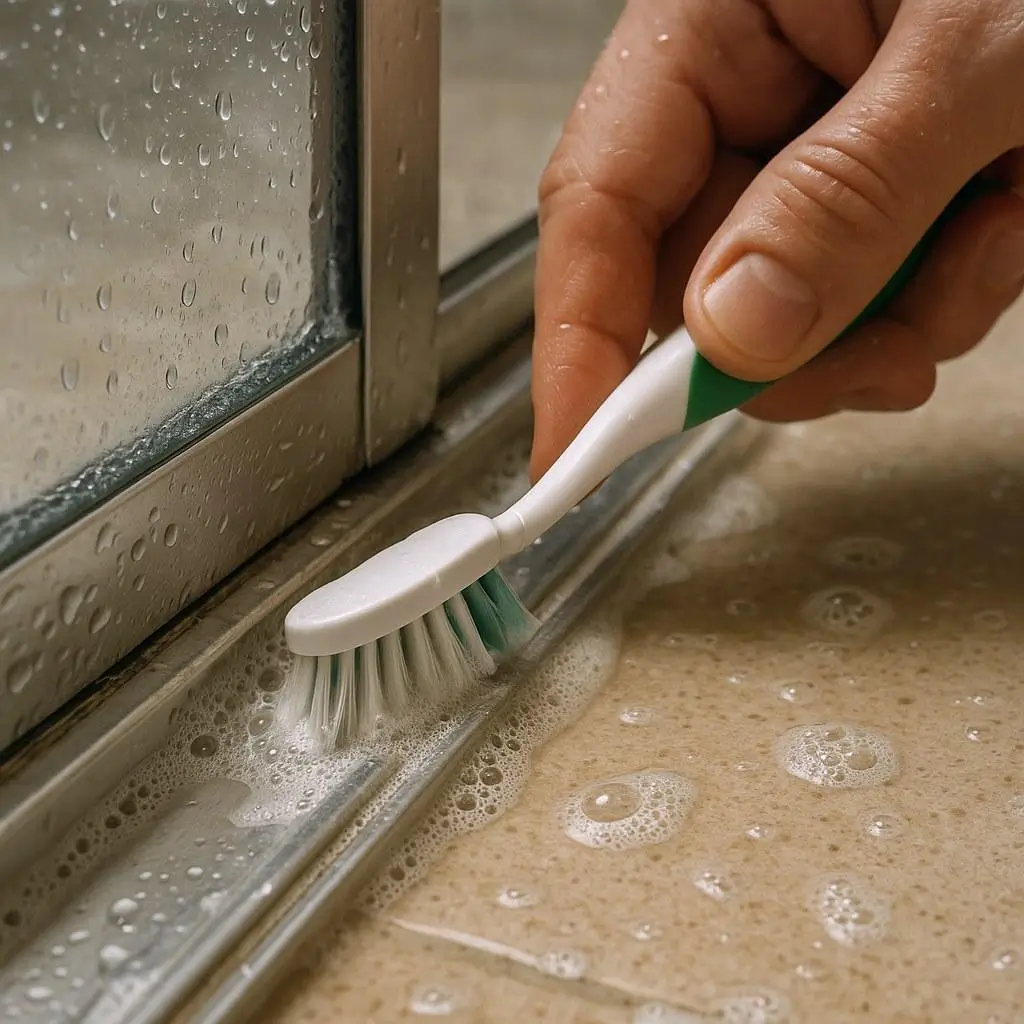
If your shower door has tracks, inspect them for soap residue and dirt.
Use a damp microfiber cloth to wipe accessible surfaces.
For narrow areas, use a soft brush that is compatible with the track material.
Avoid allowing cleaner to remain on metal finishes or rubber seals longer than the manufacturer permits.
Step 7: Rinse the Shower Door Thoroughly
Rinse the entire glass surface with clean water.
Remove all remaining cleaning solution and loosened residue.
Incomplete rinsing can leave behind streaks and cleaning-product deposits.
Step 8: Dry and Polish the Glass
Use a clean, dry microfiber towel to wipe the glass.
Work from top to bottom.
Check the glass from different angles to identify remaining streaks or deposits.
Drying helps reduce water spots and keeps the shower door looking clearer.
Best Ways to Remove Stubborn Soap Scum from Shower Doors
If ordinary cleaning does not remove the buildup, the next step is to identify what is causing the deposit.
Do not immediately switch to stronger chemicals or abrasive tools.
1. Mild Dish Soap and Warm Water
Mild dish soap is a useful starting point for everyday soap residue.
It helps loosen oily films and product residue without requiring aggressive scrubbing.
Apply the solution with a soft cloth, gently wipe the affected area, rinse thoroughly, and dry.
This method is suitable for many ordinary glass surfaces, subject to manufacturer instructions.
2. White Vinegar for Compatible Glass Surfaces
White vinegar is acidic and can help dissolve certain mineral deposits.
However, it should not be treated as a universal shower glass cleaner.
Before using it, check whether your glass manufacturer permits acidic cleaners.
Vinegar may be unsuitable for:
- Certain protective glass coatings.
- Natural stone surfaces.
- Sensitive metal finishes.
- Some seals and surrounding materials.
If approved, follow an appropriate diluted-use method and rinse thoroughly.
Never mix vinegar with bleach or other cleaning products.
3. Baking Soda for Suitable Surfaces
Baking soda has mild abrasive properties and is sometimes used for household cleaning.
However, abrasive particles may scratch delicate surfaces or damage certain finishes.
Avoid rubbing baking soda directly onto coated glass, decorative finishes, or surfaces with unclear care requirements.
When in doubt, choose a non-abrasive cleaner instead.
4. Commercial Soap Scum Removers
Commercial soap scum removers are formulated for particular bathroom surfaces.
Before purchasing one, check:
- Whether the product is suitable for glass.
- Whether it is compatible with treated glass.
- Whether it is safe for surrounding metal finishes.
- Recommended application time.
- Required protective equipment.
- Rinsing instructions.
Follow the manufacturer’s instructions exactly.
Do not leave a product on the glass longer than recommended.
5. When Stubborn Soap Scum Does Not Come Off
Sometimes persistent cloudy patches are not ordinary soap scum.
Possible causes include:
- Heavy mineral deposits.
- Permanent glass etching.
- Scratches.
- Damaged protective coatings.
- Chemical damage.
Repeated aggressive scrubbing may make the problem worse.
If compatible cleaning products do not improve the appearance, consider professional glass restoration advice.
How to Remove Hard Water Stains from Shower Doors
Hard water contains dissolved minerals, particularly calcium and magnesium.
When water evaporates from shower glass, these minerals may remain behind as white spots or chalky deposits.
For light deposits, begin with a mild glass-compatible cleaning product.
If the manufacturer permits acidic mineral deposit removers, follow the product instructions carefully.
Remember these precautions:
- Do not assume vinegar is safe for treated glass.
- Avoid acidic products on nearby natural stone.
- Protect sensitive metal finishes.
- Never use abrasive scrubbers.
- Rinse and dry the surface thoroughly.
If deposits remain after appropriate cleaning, the glass may have permanent etching or surface damage.
Professional inspection may be necessary.
How to Clean Shower Door Tracks, Frames, and Handles
Glass is only one part of the shower door.
Tracks, handles, and frames also collect moisture, dirt, and soap residue.
While maintaining your shower, it is also important to keep the drain clear of hair, soap residue, and other debris. If you notice slow drainage or standing water, read our guide on how to fix a clogged shower drain to learn how to deal with common blockages.
Aluminum Frames
Use a soft damp cloth and a cleaner approved for the frame finish.
Avoid harsh chemicals and abrasive pads that may damage the protective finish.
Stainless Steel Hardware
Wipe with a soft microfiber cloth and a suitable cleaner.
Follow the manufacturer’s grain-direction and finish-care recommendations where applicable.
Chrome Handles
Use mild cleaning products and a soft cloth.
Rinse and dry after cleaning to reduce water marks and residue.
Rubber Seals
Wipe rubber seals gently with a damp cloth.
Avoid sharp tools, aggressive chemicals, or excessive pulling.
Silicone Joints
Clean visible surface residue using a suitable mild cleaner.
If silicone has persistent mold growth, deterioration, or separation, cleaning alone may not solve the problem.
Damaged silicone may require replacement.
How to Remove Soap Scum from Shower Doors Naturally
If you prefer simple household cleaning methods, several options may help with light buildup.
Mild Dish Soap and Warm Water
This is a practical first choice for everyday soap residue.
Use a small amount of mild dish soap in warm water and wipe the glass with a soft cloth.
Rinse and dry thoroughly.
Diluted White Vinegar
Vinegar may help with certain mineral deposits on compatible, uncoated surfaces.
However, it is not appropriate for every shower door.
Always check manufacturer instructions first.
Baking Soda
Baking soda may help with some cleaning tasks, but its abrasive properties make it unsuitable for many delicate or treated surfaces.
Do not use it for aggressive scrubbing on glass.
When Natural Cleaning Methods Are Not Enough
Natural ingredients cannot remove every type of deposit.
For stubborn buildup, a commercially formulated cleaner that is specifically approved for your shower door may be more appropriate.
The safest approach is to match the cleaning method to the surface.
Common Shower Door Cleaning Mistakes to Avoid
Even a simple cleaning task can damage glass or hardware if the wrong products are used.
Avoid these mistakes:
- Using steel wool or rough scouring pads.
- Scrubbing protective glass coatings.
- Using unapproved acidic cleaners.
- Applying harsh chemicals to metal frames.
- Ignoring manufacturer instructions.
- Leaving cleaners on the glass too long.
- Mixing different cleaning chemicals.
- Applying excessive pressure.
- Ignoring tracks and seals.
- Failing to rinse away cleaning residue.
- Leaving the glass wet after cleaning.
- Using sharp tools around glass edges and seals.
Important Chemical Safety Warning
Never mix bleach with vinegar, ammonia, acidic cleaners, toilet cleaners, or other household cleaning products.
Mixing bleach with acidic products can release dangerous chlorine gas. Read Poison Control’s guidance on the dangers of chlorine gas to understand the risks of accidental chemical mixing.
These combinations can release dangerous gases or create harmful chemical reactions.
Always use one cleaning product at a time.
Health Canada also advises consumers to never mix bleach with other cleaning products because dangerous gases may be released.
Read product labels, wear suitable gloves, maintain good ventilation, and keep cleaning products away from children and pets.
If you accidentally mix chemicals and notice strong fumes or breathing irritation, leave the area immediately and get fresh air. Seek appropriate emergency or poison-control advice.
How to Prevent Soap Scum from Building Up on Shower Doors
Preventing soap scum is generally easier than removing thick deposits.

A few simple habits can help maintain clean shower glass.
1. Use a Shower Squeegee After Every Shower
A squeegee removes water droplets before they dry on the glass.
Start at the top and move downward using overlapping strokes.
2. Wipe the Glass with a Microfiber Cloth
After using the squeegee, wipe remaining moisture from the edges and corners.
3. Rinse Away Soap Residue
Rinse visible shampoo, conditioner, and body wash residue from the glass.
4. Improve Bathroom Ventilation
Use an exhaust fan or open a suitable window to help reduce lingering moisture.
5. Clean Shower Doors Regularly
Do not wait until the entire glass surface becomes cloudy.
Regular mild cleaning helps prevent deposits from accumulating.
6. Use Suitable Glass Protectants
Some shower glass treatments are designed to repel water and make maintenance easier.
Use only products approved for your glass type and existing coating.
7. Maintain Tracks and Frames
Clean accessible tracks, handles, and frames regularly.
This prevents dirt and soap residue from accumulating in less visible areas.
How Often Should You Clean Shower Doors?
The ideal cleaning frequency depends on household size, shower usage, water hardness, and bathroom ventilation.
Here is a practical suggested cleaning schedule.
| Frequency | Cleaning task |
|---|---|
| After every shower | Use a squeegee on the glass |
| Daily | Remove visible soap residue |
| Every few days | Wipe handles and edges |
| Weekly | Clean shower doors thoroughly |
| Monthly | Inspect tracks, frames, seals, and coatings |
This is a suggested household routine, not a universal requirement.
Households with hard water or frequent shower use may need more frequent cleaning.
When Should You Consider Professional Shower Glass Cleaning or Repair?
Some shower door problems cannot be solved through ordinary household cleaning.
Consider professional assistance if you notice:
- Persistent cloudy patches.
- Permanent glass etching.
- Deep scratches.
- Damaged protective coatings.
- Severe mineral buildup.
- Corroded metal frames.
- Damaged rubber seals.
- Loose hinges or handles.
- Cracked or damaged glass.
A qualified glass restoration professional can help determine whether the problem is removable buildup or permanent surface damage.
Do not attempt to repair damaged tempered glass yourself.
Frequently Asked Questions About Removing Soap Scum from Shower Doors
1. What Is the Easiest Way to Remove Soap Scum from Shower Doors?
Start with warm water and mild dish soap. Apply the solution with a soft microfiber cloth, gently clean the glass, rinse thoroughly, and dry with a clean towel.
2. What Is the Best Cleaner for Soap Scum on Glass Shower Doors?
A mild, non-abrasive cleaner approved for your specific glass is a good starting point. For stubborn deposits, use a compatible commercial soap scum remover according to its label.
3. How Do You Remove Stubborn Soap Scum from Shower Glass?
Identify whether the deposit is soap scum, mineral buildup, or surface damage. Try repeated gentle cleaning with a compatible product rather than using aggressive scrubbing.
4. Does Vinegar Remove Soap Scum from Shower Doors?
Vinegar can help dissolve certain mineral deposits, but it is not suitable for every shower door. Check the manufacturer’s instructions before using it on coated glass or nearby finishes.
5. Can Baking Soda Remove Soap Scum from Glass?
Baking soda has mild abrasive properties, but it may scratch or damage delicate glass treatments. Avoid using it on coated glass unless the manufacturer specifically approves it.
6. How Do You Remove Thick White Buildup from Shower Doors?
Thick white buildup may contain hard water minerals, soap residue, or both. Use a compatible cleaner and follow its instructions. Persistent deposits may require professional assessment.
7. What Is the Difference Between Soap Scum and Hard Water Stains?
Soap scum forms from soap residue interacting with minerals and other substances. Hard water stains are mineral deposits left behind when water evaporates.
8. How Do You Remove Cloudy Film from Shower Doors?
Start with mild soap and warm water. If the cloudy film remains, check whether it is mineral buildup or permanent glass damage before choosing another cleaner.
9. How Often Should Shower Doors Be Cleaned?
Use a squeegee after every shower and perform a more thorough cleaning approximately once a week. Adjust the schedule according to water hardness and shower usage.
10. Can Dish Soap Remove Soap Scum from Shower Glass?
Mild dish soap can help remove everyday oily residue and light soap buildup. It may not be sufficient for thick mineral deposits.
11. How Do You Clean Glass Shower Doors Without Streaks?
Rinse the glass thoroughly and dry it using a clean microfiber cloth. Avoid leaving cleaning-product residue or water droplets on the surface.
12. How Do You Prevent Soap Scum from Returning?
Use a squeegee after every shower, rinse away bathing products, improve ventilation, and clean the glass regularly.
13. Are Commercial Soap Scum Removers Safe for Coated Glass?
Not necessarily. Some products may damage protective treatments. Check the glass manufacturer’s recommendations and the cleaner’s compatibility information.
14. How Do You Clean Shower Door Tracks?
Remove loose dirt and debris, then wipe accessible areas with a damp cloth and a suitable cleaner. Use a soft brush for narrow areas and avoid damaging seals.
15. Can Soap Scum Permanently Damage Shower Glass?
Ordinary soap scum is generally a removable surface deposit. However, long-term mineral exposure, aggressive chemicals, scratches, and damaged coatings may cause permanent appearance changes.
16. What Should You Avoid Using on Glass Shower Doors?
Avoid steel wool, rough scouring pads, sharp tools, abrasive powders, and cleaning chemicals that are not approved for your glass.
17. How Do You Clean Frameless Shower Doors?
Use a suitable mild glass cleaner and a soft microfiber cloth. Carefully clean exposed edges, hinges, handles, and wall joints using products appropriate for each material.
18. How Do You Maintain Water-Repellent Shower Glass Coatings?
Follow the manufacturer’s maintenance instructions, use approved cleaning products, avoid abrasive tools, and dry the glass after use.
Conclusion
Knowing how to remove soap scum from shower doors makes bathroom maintenance easier and helps keep glass surfaces looking clear and clean.
Start with mild cleaning solutions, use non-abrasive tools, and identify whether you are dealing with soap residue or hard water deposits.
Always check the manufacturer’s instructions before applying vinegar, baking soda, commercial cleaners, or other cleaning products to treated glass.
Regular squeegee use, proper ventilation, and weekly cleaning can help prevent stubborn buildup from returning.
With the right cleaning approach and consistent maintenance, you can keep your shower doors looking cleaner without unnecessarily damaging the glass or protective coatings.
For more practical bathroom cleaning and home maintenance advice, explore the helpful guides on Fix The Annoying.