
A kitchen is one of the busiest areas in any home. From preparing meals and washing dishes to using appliances every day, kitchen surfaces, plumbing fixtures, and equipment experience regular wear and tear.
Over time, grease can accumulate on stovetops, food particles can clog drains, refrigerator seals can become dirty, and small plumbing leaks can damage kitchen cabinets. Without regular attention, these minor problems may turn into inconvenient and expensive repairs.
Following a kitchen maintenance checklist makes it easier to keep your kitchen clean, safe, hygienic, and functional. Regular maintenance also helps you identify potential problems before they become more serious.
Whether you own your home or rent an apartment, these 15 practical kitchen maintenance tasks can help you take better care of your kitchen.
Why Is Regular Kitchen Maintenance Important?
Regular kitchen maintenance is about more than keeping countertops and appliances clean. It also helps protect the equipment and fixtures you depend on every day.
Here are some important benefits:
- Prevents common kitchen problems: Regular inspections can help identify clogged drains, loose handles, and small leaks before they become bigger issues.
- Improves kitchen hygiene: Cleaning food preparation surfaces and appliances helps reduce food residue and unwanted buildup.
- Protects kitchen appliances: Following manufacturer maintenance instructions helps keep appliances in suitable working condition.
- Reduces water damage risks: Checking faucets, pipes, and connections can help identify leaks early.
- Improves kitchen safety: Inspecting visible electrical cords, ventilation areas, and cooking equipment helps identify potential hazards.
- Maintains kitchen appearance: Regular cleaning helps protect countertops, cabinets, tiles, and fixtures from unnecessary deterioration.
- Helps avoid preventable repair expenses: Finding small problems early may reduce the need for more extensive repairs.
Maintenance requirements vary depending on how frequently you use your kitchen, the type of appliances installed, and the manufacturer’s recommendations.
Kitchen Maintenance Checklist: 15 Essential Tasks
Use the following kitchen maintenance checklist to organize your regular cleaning and inspection routine.
1. Clean the Kitchen Countertops and Surfaces
Kitchen countertops come into contact with food, cooking ingredients, oils, and other everyday materials. Food residue and grease can accumulate when surfaces are not cleaned regularly.
How to maintain kitchen countertops:
- Remove dishes, utensils, and other items from the countertop.
- Wipe away loose food particles and crumbs.
- Clean the surface using a suitable cleaning product.
- Pay attention to corners, edges, and areas around appliances.
- Dry the surface with a clean cloth when appropriate.
Choose cleaning products suitable for your countertop material. Natural stone, laminate, quartz, and wooden surfaces may require different cleaning methods.
Avoid abrasive scrubbers or unsuitable chemicals that could damage the finish.
Recommended frequency: Daily, particularly after food preparation.
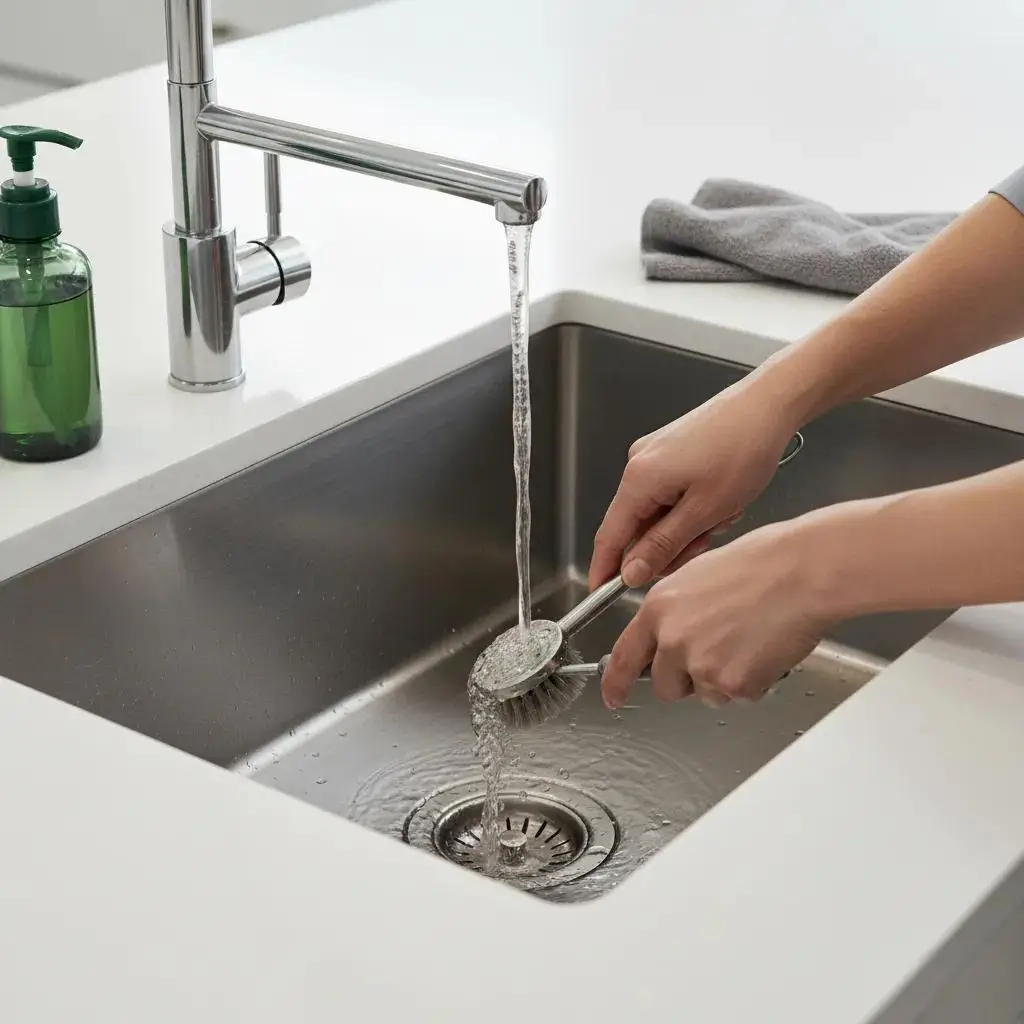
2. Clean the Kitchen Sink and Drain
Kitchen sinks collect food particles, grease, soap residue, and other debris. Over time, this buildup can contribute to slow drainage and unpleasant odors.
How to maintain your kitchen sink:
- Remove visible food particles from the sink.
- Clean the basin using an appropriate kitchen cleaner.
- Remove and wash the drain strainer.
- Wipe around the faucet and sink edges.
- Check whether water drains normally.
- Look for unusual odors or recurring drainage problems.
Avoid pouring cooking oil, grease, and food scraps into the drain. A sink strainer can help prevent larger food particles from entering the plumbing.
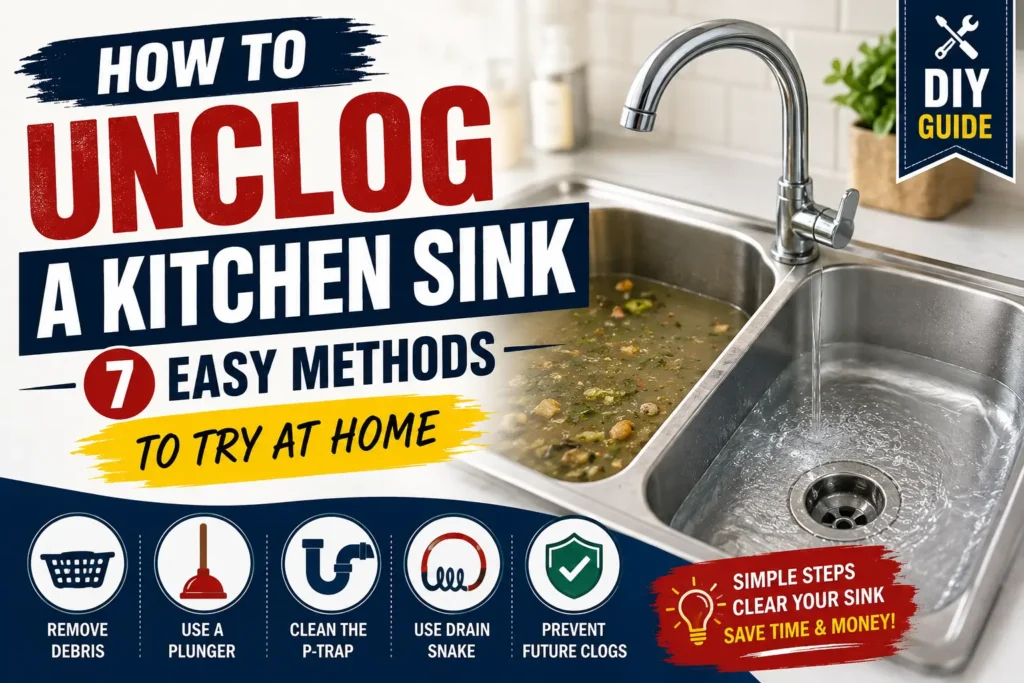
If your sink is draining slowly, read our guide on how to unclog a kitchen sink.
Recommended frequency: Wipe the sink daily and clean the drain strainer regularly.
3. Inspect Kitchen Faucets and Plumbing Connections
A dripping faucet or leaking pipe connection may seem like a small problem, but continued moisture can damage nearby cabinets and flooring.
What to inspect:
- Check whether the faucet continues dripping after being turned off.
- Inspect visible pipe connections underneath the sink.
- Look for water stains or damp areas.
- Check the cabinet floor for signs of moisture.
- Notice any unusual musty smells around plumbing fixtures.
If you discover a persistent leak, contact a qualified plumber rather than dismantling unfamiliar plumbing connections.
For additional guidance, see our article on how to fix a leaky faucet.
Recommended frequency: Perform a quick visual inspection weekly and whenever you notice unusual moisture.
4. Clean the Gas Stove or Cooktop
Cooking spills, oil splashes, and grease can accumulate on gas stoves and cooktops. If left unattended, this buildup can become difficult to remove and may create additional cleaning and fire-safety concerns.

How to clean your gas stove:
- Turn off the stove and allow all components to cool completely.
- Remove loose food particles from the surface.
- Remove suitable detachable components according to the manufacturer’s instructions.
- Clean the cooktop with an appropriate cleaning product.
- Wipe away remaining residue using a soft cloth.
- Allow all cleaned components to dry before reassembly.
- Check for visible damage or deterioration.
Never attempt to repair gas connections, burners, or internal gas components yourself.
If you notice a gas smell, leave the area immediately. Do not operate electrical switches or use flames. Contact your local gas emergency service from a safe location.
For detailed instructions, visit our guide on how to clean a gas stove.
Recommended frequency: Wipe spills after cooking and perform a more thorough cleaning weekly or as needed.
5. Clean the Oven and Inspect Its Interior
Ovens can collect burnt food, oil splashes, grease, and cooking residue. Regular cleaning helps maintain a hygienic cooking environment and reduces accumulated grease.
Oven maintenance steps:
- Turn off the oven and allow it to cool completely.
- Remove loose food particles.
- Clean removable racks according to the manufacturer’s instructions.
- Use an oven-approved cleaning product.
- Wipe accessible interior surfaces carefully.
- Inspect the door gasket for visible damage.
- Check for unusual smoke, smells, or operating problems.
Avoid using cleaning chemicals that are unsuitable for your oven’s interior coating. Follow the owner’s manual, especially when using a self-cleaning function.
Recommended frequency: Clean spills when they occur and perform a deeper clean according to appliance use and manufacturer instructions.
6. Clean the Refrigerator Shelves and Door Seals
Refrigerators store perishable food, leftovers, vegetables, dairy products, and other ingredients. Food spills and spoiled items can create unpleasant odors and hygiene problems.
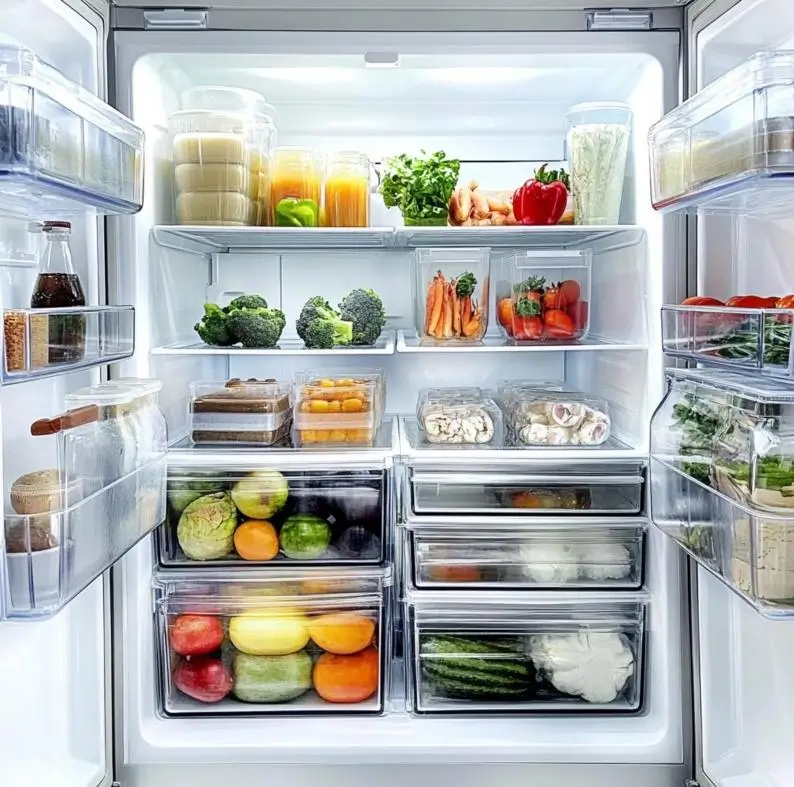
How to maintain your refrigerator:
- Remove expired and spoiled food.
- Take out removable shelves and drawers where permitted.
- Clean spills using an appropriate cleaning solution.
- Wash removable components according to the manual.
- Wipe the refrigerator door seals gently.
- Inspect seals for cracks or visible damage.
- Store food in covered containers.
Pay particular attention to the door gasket because food residue can collect around its folds.
Avoid using unsuitable chemicals near food storage areas.
Recommended frequency: Check food regularly and clean spills immediately. Perform a more thorough cleaning periodically.
7. Inspect the Refrigerator Temperature and Airflow
A refrigerator must maintain an appropriate temperature to keep perishable food safe.
The USDA recommends keeping a refrigerator at 40°F (4.4°C) or below. An appliance thermometer can help verify the actual temperature.
What to check:
- Check the refrigerator’s temperature setting.
- Use an appliance thermometer when necessary.
- Make sure internal air vents are not blocked.
- Avoid overcrowding shelves.
- Check whether the refrigerator door closes properly.
- Look for signs that the appliance is not cooling consistently.
Cold air needs space to circulate around stored food. Overloading the refrigerator can interfere with airflow.
If your refrigerator cannot maintain its recommended temperature, arrange an inspection by a qualified appliance technician.
You can read the USDA refrigerator temperature guidance for additional information.
Recommended frequency: Monitor temperature regularly and check airflow whenever reorganizing food.
8. Clean the Dishwasher Filter and Interior
Dishwasher filters collect food particles and other debris during washing. When filters become dirty, they may contribute to unpleasant smells and poor cleaning performance.
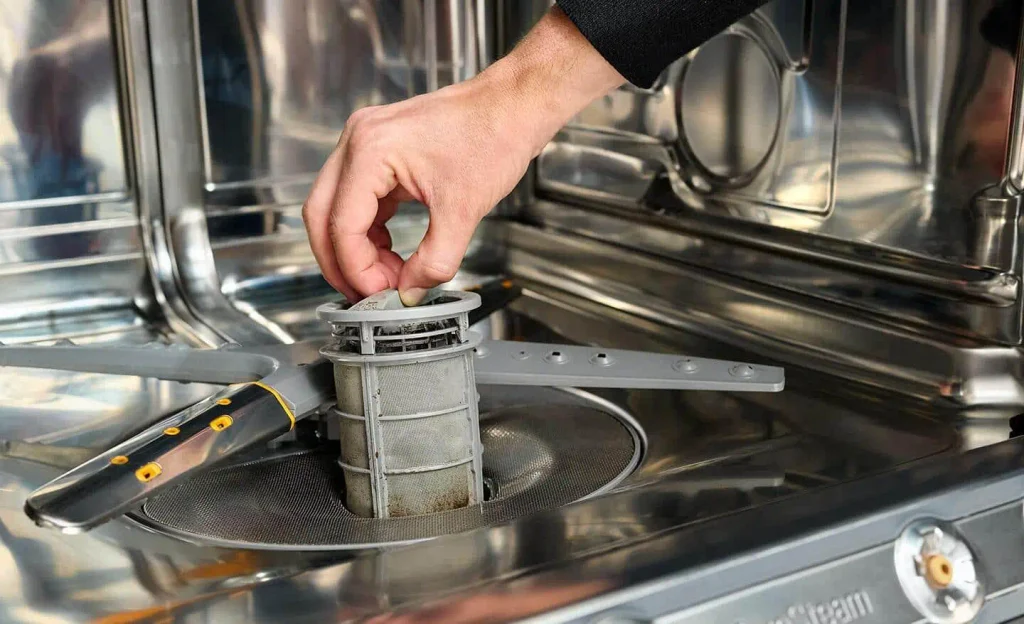
How to maintain your dishwasher:
- Check the owner’s manual for filter removal instructions.
- Remove the filter if it is designed to be user-accessible.
- Wash it according to manufacturer guidance.
- Inspect the accessible interior for food debris.
- Wipe the door gasket gently.
- Check the spray arms for visible obstructions.
- Reinstall the filter correctly.
Use dishwasher-approved cleaning products and avoid harsh chemicals that could damage internal components.
If the dishwasher repeatedly fails to drain or clean properly, consider professional servicing.
Recommended frequency: Inspect the filter regularly and clean it according to the manufacturer’s recommended interval and actual usage.
9. Inspect and Clean the Range Hood or Extractor Fan
A range hood or extractor fan helps remove cooking fumes, airborne grease, and odors from the kitchen.
Over time, grease and dust can accumulate on its filters and external surfaces.
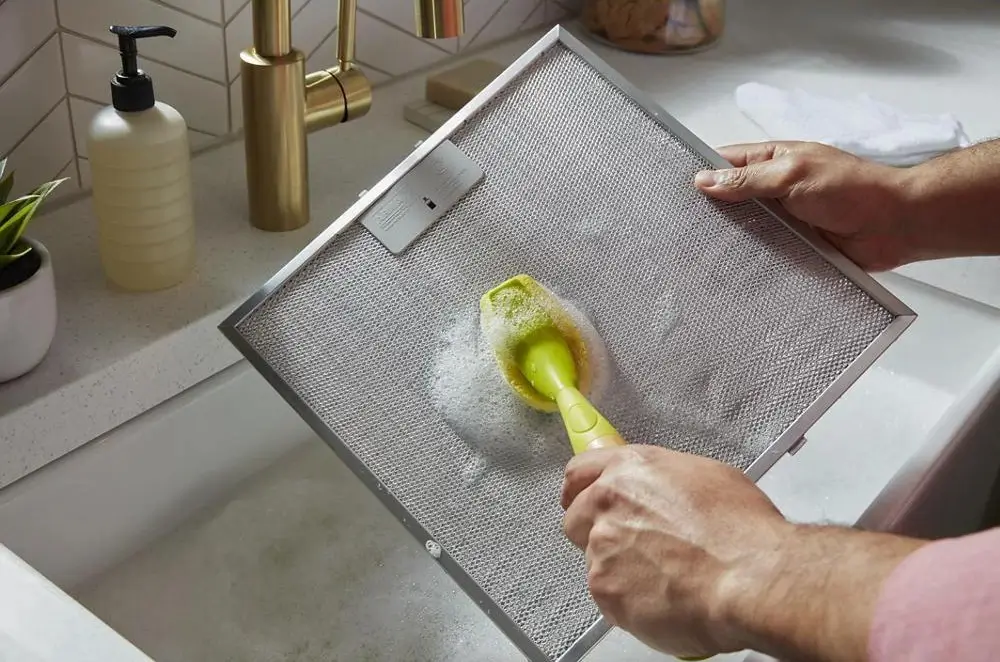
Range hood maintenance steps:
- Switch off the appliance.
- Allow hot surfaces to cool.
- Inspect accessible filters.
- Remove filters only as instructed in the manual.
- Clean reusable filters using an approved method.
- Wipe accessible external surfaces.
- Check whether the ventilation system is operating normally.
Some range hood filters are washable, while others need replacement. Follow the manufacturer’s recommendations.
Arrange professional servicing if the fan is unusually noisy, ventilation is weak, or internal components appear damaged.
Recommended frequency: Inspect monthly and clean filters according to cooking frequency and manufacturer instructions.
10. Clean Kitchen Cabinets and Handles
Kitchen cabinets are exposed to cooking grease, dust, moisture, and food splashes. Cabinet handles can also collect dirt because they are touched frequently.
How to maintain kitchen cabinets:
- Remove dust and loose dirt.
- Wipe cabinet doors with a suitable cleaner.
- Clean handles and frequently touched areas.
- Dry surfaces where necessary.
- Check hinges and handles for looseness.
- Inspect cabinet interiors for moisture damage.
- Look for swelling, peeling, or discoloration.
Different cabinet materials require different cleaning methods. Always test a suitable cleaner in an inconspicuous area first.
Recommended frequency: Wipe visible dirt weekly and perform a more thorough cleaning monthly or when needed.
11. Inspect Kitchen Electrical Outlets and Appliances
Kitchens contain electrical appliances near sinks, water sources, and cooking areas. Damaged cords, faulty outlets, and unsuitable electrical use can create serious hazards.
What to inspect:
- Look for visible damage to outlet covers.
- Check appliance power cords for cracks or exposed wiring.
- Keep electrical appliances away from water.
- Avoid overloading electrical outlets.
- Notice burning smells, sparks, unusual buzzing, or excessive heat.
- Stop using an appliance if you suspect electrical damage.
Never open electrical outlets, repair wiring, or handle live electrical components yourself.
Contact a qualified electrician when electrical problems are suspected.
For additional safety advice, read Electrical Safety First’s kitchen safety guidance.
Recommended frequency: Perform a visual inspection monthly and whenever an appliance behaves unusually.
12. Check Under the Kitchen Sink for Leaks and Moisture
The cabinet underneath the kitchen sink is an important area to inspect because leaks can remain unnoticed for long periods.
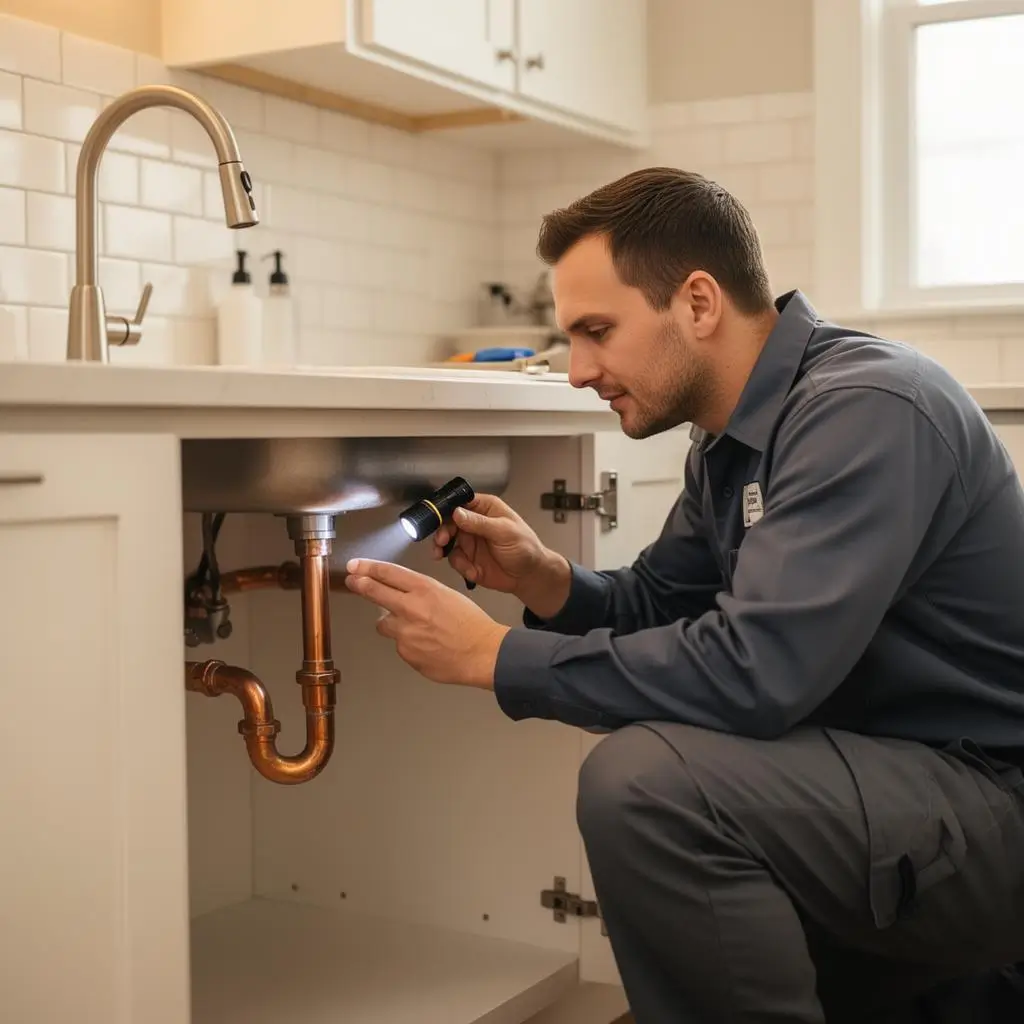
Even a small leak may damage wooden cabinets and contribute to persistent dampness.
What to check:
- Remove stored cleaning supplies temporarily.
- Inspect visible pipes and connections.
- Look for water stains on the cabinet floor.
- Check for dampness or standing water.
- Notice unusual musty odors.
- Inspect the surrounding cabinet material for swelling or deterioration.
If you discover a leak, avoid storing items in the affected area until the problem is addressed.
Persistent moisture, damaged pipes, or recurring leaks should be assessed by a qualified professional.
Recommended frequency: Inspect monthly and whenever you notice unusual smells or dampness.
13. Inspect Kitchen Tiles, Grout, and Sealant
Kitchen tiles, grout, and sealant protect surfaces around sinks, backsplashes, and other areas exposed to moisture.
Cracked grout or deteriorating sealant can allow water to enter unwanted spaces.
How to inspect these areas:
- Examine visible grout lines.
- Look for cracks or missing sections.
- Check the sealant around sinks and countertops.
- Clean suitable tiled surfaces.
- Look for recurring damp patches.
- Arrange repairs if water repeatedly enters damaged areas.
Use cleaning products suitable for your tile and grout material. Do not ignore recurring moisture or water penetration.
Recommended frequency: Inspect monthly and whenever cleaning the kitchen.
14. Clean Kitchen Garbage Bins and Prevent Pest Problems
Food scraps, packaging, and other waste can collect inside kitchen garbage bins. If bins are not cleaned regularly, residue and unpleasant smells may attract insects and pests.
How to maintain kitchen garbage bins:
- Empty garbage bins regularly.
- Remove any food residue.
- Wash the bin using a suitable cleaning product.
- Rinse if required and allow it to dry.
- Clean the surrounding floor and cabinet area.
- Use suitable bin liners.
- Store food waste appropriately.
- Check for signs of pest activity.
Keep garbage bins covered and avoid leaving food scraps exposed.
If you notice a persistent pest problem, consider contacting a qualified pest-control professional.
Recommended frequency: Empty bins daily or as needed and wash them regularly.
15. Check Kitchen Ventilation, Lighting, and General Safety
Good ventilation, adequate lighting, and clear working areas help make a kitchen safer and more comfortable.
Poor airflow can allow cooking fumes, heat, and odors to remain inside the kitchen.
What to inspect:
- Check that ventilation openings are unobstructed.
- Confirm that the range hood operates normally.
- Inspect accessible light fixtures for visible damage.
- Replace faulty bulbs using the correct type and safe procedure.
- Keep floors dry and free from obstacles.
- Check that smoke alarms are installed and functioning where required.
- Keep access to emergency exits clear.
Do not attempt electrical repairs yourself. Contact a qualified electrician if fixtures or wiring appear damaged.
Recommended frequency: Check general kitchen safety weekly and test smoke alarms according to their manufacturer’s instructions and local guidance.
Kitchen Maintenance Schedule: Daily, Weekly, Monthly, and Yearly
A maintenance schedule makes it easier to remember important cleaning and inspection tasks.
You do not need to complete every task in one day. Divide them into smaller routines according to your household’s needs.
| Frequency | Kitchen maintenance tasks |
|---|---|
| Daily | Wipe countertops, clean food preparation surfaces, wash dirty dishes, remove food waste, wipe sink surfaces and clean cooking spills. |
| Weekly | Clean stovetop surfaces, check refrigerator food, clean garbage bins when needed, wash kitchen towels and inspect visible plumbing areas. |
| Monthly | Inspect refrigerator door seals, clean dishwasher filters according to the manual, inspect range hood filters, check cabinet interiors and inspect grout and sealant. |
| Yearly or manufacturer-scheduled | Arrange recommended appliance servicing, inspect plumbing where necessary, check ventilation systems, review appliance maintenance requirements and arrange repairs for recurring problems. |
Important: This is a general planning guide, not a replacement for manufacturer instructions. Some appliances need more frequent maintenance, depending on usage and their specific design.
Common Kitchen Maintenance Mistakes to Avoid
Even when homeowners clean regularly, some maintenance mistakes can lead to avoidable problems.
Here are common mistakes to watch out for:
- Ignoring small plumbing leaks: Minor leaks can gradually damage cabinets and surrounding materials.
- Using abrasive cleaners: Unsuitable cleaning products may scratch or damage delicate countertops and finishes.
- Neglecting dishwasher filters: Food particles can accumulate and affect dishwasher performance.
- Allowing grease to accumulate: Grease buildup on cooking surfaces and range hood filters should not be ignored.
- Blocking ventilation areas: Obstructed vents can interfere with proper airflow.
- Overloading refrigerator shelves: Excessive storage can restrict the movement of cold air.
- Ignoring unusual appliance noises: New or persistent noises may indicate an appliance problem.
- Attempting unsafe gas repairs: Gas connections and internal components should be handled by qualified professionals.
- Attempting electrical repairs: Opening outlets or handling live wiring creates serious safety risks.
- Mixing cleaning chemicals: Combining bleach with vinegar, ammonia, acids, or other cleaning products can release dangerous substances.
- Ignoring manufacturer instructions: Different appliances and materials have different maintenance requirements.
Avoiding these mistakes can help you maintain a cleaner and safer kitchen.
When Should You Call a Professional?
Not every kitchen maintenance problem should be handled through DIY methods.
Some issues require specialist knowledge, appropriate tools, and safety procedures.
Consider professional assistance if you notice:
- Persistent plumbing leaks or damaged pipes.
- A suspected gas leak.
- Burning smells or sparks from electrical equipment.
- Damaged electrical outlets or wiring.
- Repeated appliance failures.
- Extensive or recurring mold growth.
- Persistent drainage problems.
- Damaged ventilation systems.
- Serious water damage to cabinets or flooring.
Contact a qualified plumber for plumbing problems, an electrician for electrical faults, and an appliance technician for repeated equipment failures.
Important gas safety advice: If you suspect a gas leak, leave the building immediately. Do not operate electrical switches, use phones inside the affected area, or light flames. Contact your local gas emergency service from a safe location. Do not re-enter until the appropriate authorities say it is safe.
Knowing when to stop a DIY repair is an important part of responsible home maintenance.
Tips to Keep Your Kitchen in Good Condition
Small everyday habits can make kitchen maintenance easier.
Try incorporating these simple habits into your routine:
- Clean as you cook instead of leaving everything until later.
- Wipe food and liquid spills immediately.
- Store food in suitable covered containers.
- Keep cooking grease out of kitchen drains.
- Clean appliances according to their maintenance requirements.
- Follow appliance owner’s manuals.
- Inspect visible plumbing connections regularly.
- Keep ventilation openings clear.
- Replace damaged cleaning materials.
- Create reminders for monthly maintenance tasks.
- Keep kitchen floors dry.
- Address unusual odors, noises, or moisture promptly.
Consistent care is generally easier than waiting until several maintenance problems appear together.
Frequently Asked Questions About Kitchen Maintenance
1. How often should you perform kitchen maintenance?
Basic kitchen cleaning should be done daily, while deeper cleaning and inspections can be performed weekly or monthly. Appliance maintenance should follow the manufacturer’s recommended schedule.
2. What should be included in a kitchen maintenance checklist?
A kitchen maintenance checklist should include countertop cleaning, sink and drain maintenance, plumbing inspections, stove and oven cleaning, refrigerator care, dishwasher filter cleaning, ventilation checks, cabinet inspections, and electrical safety checks.
3. What kitchen appliances need regular maintenance?
Common appliances that need regular attention include refrigerators, ovens, gas stoves, dishwashers, range hoods, microwaves, and other frequently used kitchen equipment.
4. How often should you clean kitchen cabinets?
Wipe visible dirt and spills as needed. A more thorough cleaning can be performed monthly or whenever grease and dust accumulate. Always use products suitable for the cabinet material.
5. How do you maintain a kitchen sink and drain?
Remove food debris, clean the sink basin and strainer, and check for slow drainage or unusual odors. Avoid putting cooking grease and food scraps into the drain.
6. How often should you clean a refrigerator?
Remove spoiled food and wipe spills immediately. Perform a more thorough refrigerator cleaning periodically, including shelves, drawers, and door seals.
7. Why is range hood maintenance important?
Range hood maintenance helps prevent excessive grease and dust accumulation in accessible filters and surfaces. It also helps you identify ventilation problems that may require servicing.
8. What should you check under the kitchen sink?
Inspect visible pipes, plumbing connections, cabinet floors, water stains, dampness, and unusual odors. Contact a plumber if you discover persistent leaks.
9. Can regular kitchen maintenance prevent expensive repairs?
Regular maintenance can help identify certain problems early and reduce avoidable deterioration. However, it cannot prevent every appliance failure, plumbing problem, or repair expense.
10. When should you call a professional for kitchen maintenance?
Contact a qualified professional for persistent leaks, suspected gas problems, electrical faults, recurring appliance failures, extensive mold, serious water damage, or drainage problems that do not improve with safe basic maintenance.
Conclusion
Keeping your kitchen in good condition does not require complicated maintenance procedures. A few consistent cleaning habits and regular inspections can help you identify problems before they become more disruptive.
This kitchen maintenance checklist covers 15 essential tasks, from cleaning countertops and maintaining drains to inspecting appliances, plumbing connections, ventilation, and electrical safety.
Start with the daily tasks, organize weekly and monthly inspections, and follow the manufacturer’s recommendations for your appliances.
Remember that routine cleaning is suitable for many everyday maintenance activities, but gas, electrical, and complicated plumbing repairs should be handled by qualified professionals.
Follow these practical kitchen maintenance tips to keep your kitchen cleaner, safer, and more functional.
For more helpful DIY solutions and home maintenance guides, explore Fix The Annoying and discover simple ways to solve everyday household problems.