
A shower should provide a continuous stream of water that feels good. But even a quick shower can be frustrating when suddenly your shower head has weak or low water pressure.
The good news is that a weak shower is not always a sign that you have a serious plumbing problem. There could be mineral buildup, a clogged shower head, dirty filter, partially closed valve or a problem with the water supply that can all reduce the flow.
If you’re dealing with shower head low water pressure, you can often identify the cause and improve the flow with a few simple checks.
In this guide, we’ll cover 7 easy fixes you can try before calling a plumber.
Safety note: If you want to remove the shower head, be careful not to use too much force. If you see leaking pipes, broken plumbing or a sudden major loss of water pressure throughout your home, you might want to contact a qualified plumber.
Shower Head Low Water Pressure: Why Does It Happen?
A shower head can have low water pressure for several reasons.
Before replacing your shower head, it’s also worth checking whether the fixture is designed for efficient water use. The EPA WaterSense showerhead guidance explains how certified showerheads are designed to provide an efficient shower while meeting performance requirements.
Common causes include:
- Mineral deposits blocking the spray holes
- Dirt or debris inside the shower head
- A clogged flow restrictor or filter
- A partially closed water supply valve
- A kinked or restricted shower hose
- Low water pressure throughout the home
- Problems with the building’s plumbing or water supply
First, you want to determine if the problem is with your shower or the entire house.
If your shower is weak but the other faucets have normal pressure , the shower head is a good place to start .
How to Fix a Shower Head With Low Water Pressure
1. Clean the Shower Head Spray Holes
One of the most common causes of a low shower flow is mineral buildup.
Over time, minerals in the water can build up around the tiny spray holes. This can partially block openings and the water stream can be weaker or uneven.
Take a close look at the shower head.
If you notice white, chalky or crusty deposits around the spray nozzles, a cleaning may help improve flow.
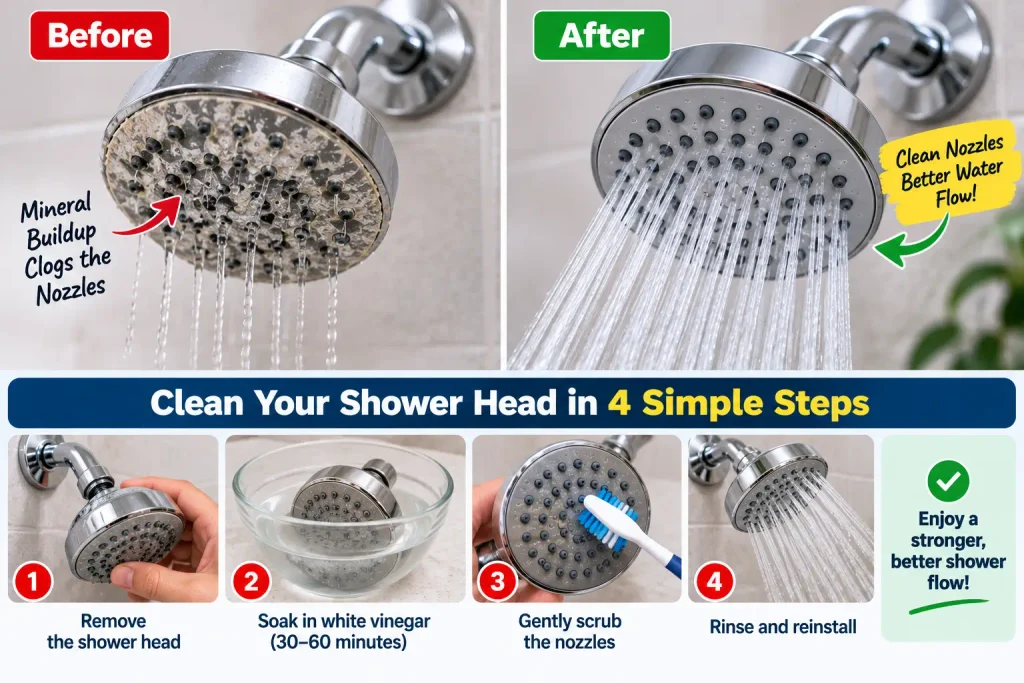
For a removable shower head, follow these basic steps:
- Remove the shower head carefully.
- Rinse it with clean water.
- Place it in a suitable container.
- Descale with a suitable descaling solution, following the manufacturer’s instructions.
- Rinse the shower head thoroughly.
- Reinstall it and check the water flow.
If you are using rubber spray nozzles, rubbing the nozzles lightly with your fingers can also help loosen surface build up.
Do not use a sharp object to enlarge or scrape the spray holes as this may damage the shower head.
2. Check for a Clogged Filter or Flow Restrictor
Some shower heads come with a little filter or flow restrictor. This part is used to restrict the flow of water and catch debris.
If this bit gets blocked, the shower can feel strangely underpowered.
Before you remove anything, check the instructions for your specific shower head.
If the filter is accessible, inspect it for:
- Sand or grit
- Mineral deposits
- Small pieces of debris
- Rust particles
- Other buildup
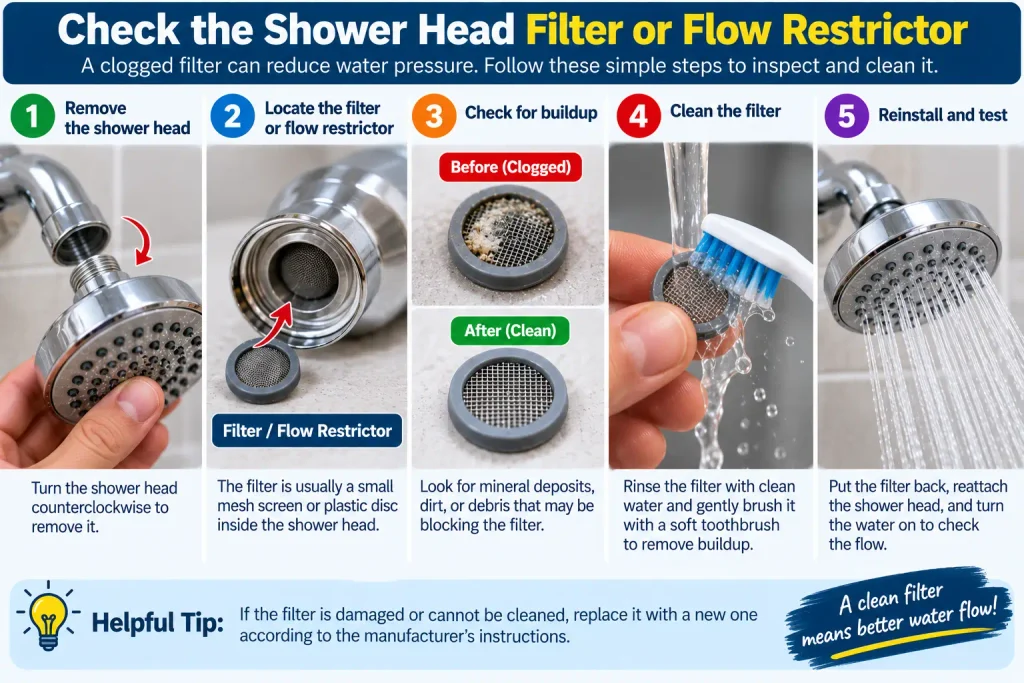
Clean or replace the filter only as recommended by the manufacturer.
Don’t break, drill or permanently remove a flow-control component in an attempt to increase water pressure. These parts could be included for water efficiency and proper operation.
3. Check the Shower Arm and Connection
A partially blocked or incorrectly installed connection can also influence the water flow.
Turn off the shower and check the connection between the shower head and the shower arm.
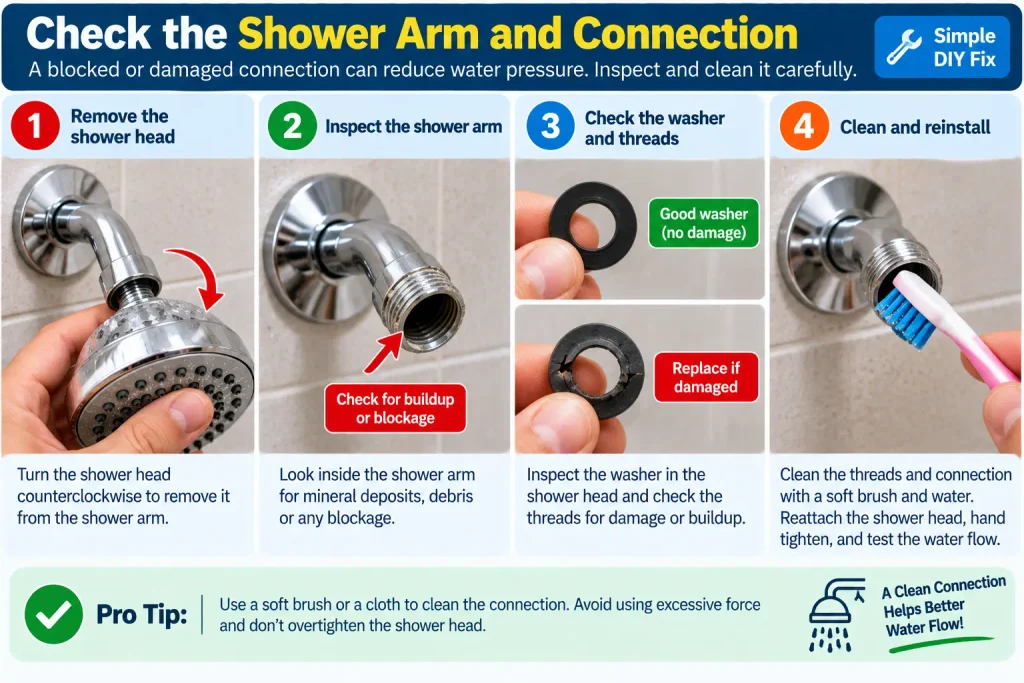
Look for:
- Visible debris
- Mineral buildup
- Damaged threads
- A damaged washer
- Excessive sealant or tape blocking the opening
- Water leaking around the connection
Remove the shower head and clean the connection well before reinstalling.
Ensure the washer is correctly positioned and that the shower head is firmly attached.
Do not over tighten the connection. Over-tightening could damage the threads or plumbing components.
4. Check the Shower Hose for Restrictions
If you have a handheld showerhead, the hose can sometimes cut down on the flow of water itself.
If the hose is bent, twisted or damaged, it can restrict the amount of water that reaches the shower head.
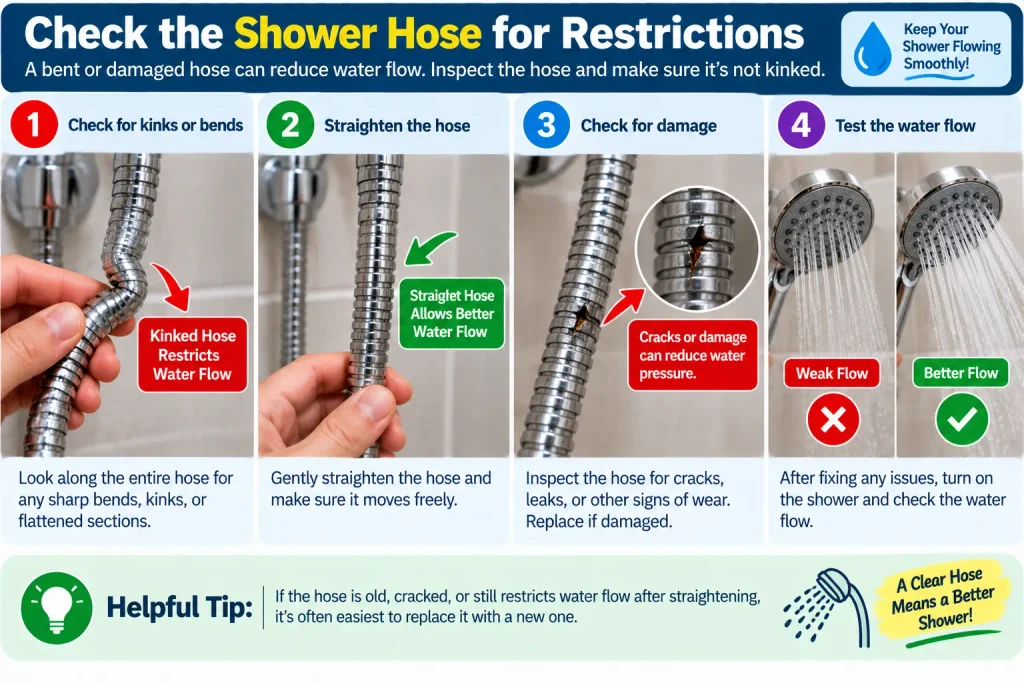
Run your hand along the hose and check for:
- Sharp bends
- Kinks
- Flattened sections
- Cracks
- Damage around the connections
Straighten the hose and try the shower again.
If the hose is damaged, or restricted internally, it may be easier to replace it than to try to repair it.
This is particularly useful when the water pressure was normal prior to damaging or twisting the hose.
5. Make Sure the Water Supply Valve Is Fully Open
If a valve is only partially closed it can restrict the flow of water.
Depending on your plumbing setup there may be a local shutoff feeding the bathroom or shower.
Make sure the valve is fully open.
Multi-turn valves are generally opened by turning them counter-clockwise, although plumbing configurations vary.
If you are not sure which valve controls the shower, do not start turning unknown valves without reason.
If the shower has been recently repaired, renovated or serviced, a valve might have been left partially closed.
Make sure that the valve is open and test the shower again.
6. Check Whether Other Faucets Have Low Pressure
This is a good starting point for troubleshooting.
Turn on a nearby bathroom faucet or other fixture and compare the flow to the shower.
If the other fixtures have normal pressure, but the shower is weak, then it is likely a problem specific to the shower.
But if several faucets in your home suddenly have low water pressure, then the problem could be elsewhere.
Possible causes can include:
- A problem with the main water supply
- A partially closed main valve
- A plumbing restriction
- A pressure regulator problem
- Building-wide water pressure changes
- A leak
If you live in an apartment or shared building, the problem could also affect your neighbors.
If you have more than one fixture with low pressure at once, it’s probably not going to be a question of cleaning out the shower head.
7. Replace the Shower Head if It’s Heavily Blocked or Damaged
Sometimes cleaning just doesn’t do it.
If the shower head has significant mineral build up, broken spray nozzles, internal corrosion or a blocked internal part, it might be easier to replace it.
Before buying a replacement, check:
- Connection size
- Shower type
- Handheld or fixed design
- Manufacturer specifications
- Water-efficiency requirements
- Compatibility with your existing setup
Select a good quality shower head that fits your plumbing connection and the type of spray you like.
When the existing shower head is old and has gradually become weaker in its flow, a replacement can be particularly helpful.
How to Tell Whether the Shower Head Is the Problem
The cause can be reduced in an easy way.
If you’re comfortable removing the shower head, remove it carefully and test the water flow from the shower arm.
Don’t run the water when you don’t need it. Don’t spray water on electrical fixtures.
If you see the water flow from the shower arm is much more than the flow from the shower head then the shower head is most likely limiting the water.
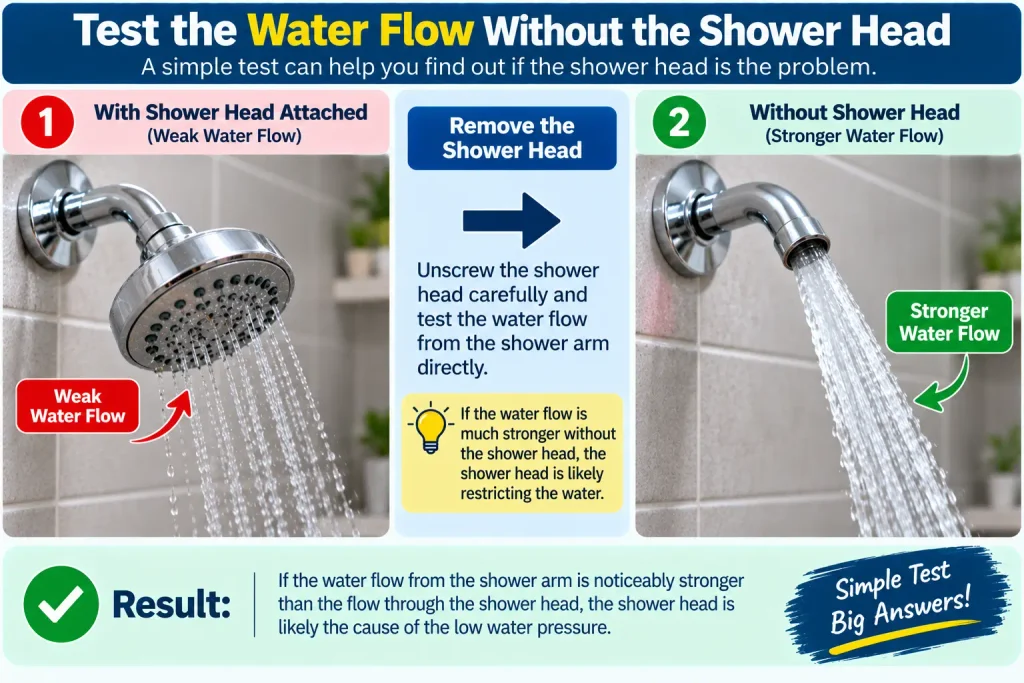
If the flow is still weak with the shower head off, the problem may be with the plumbing, the valve or the water supply.
If you are not comfortable removing the shower head you can skip this test and start with cleaning and inspection.
What Not to Do When Shower Water Pressure Is Low
Trying to increase water pressure too aggressively can create more problems.
Don’t Drill the Shower Head
Don’t drill bigger holes in the spray nozzles to increase the flow of water.
This can result in permanent damage to the shower head and alter the desired spray pattern.
Don’t Force Stuck Plumbing Connections
If the shower head doesn’t come off easily, you risk damaging the shower arm or the plumbing behind the wall.
If connection doesn’t come free normally, don’t risk hidden pipe problem, stop.
Don’t Remove Safety or Water-Control Components Without Checking the Manual
Some shower heads have flow control components to create water efficiency.
Before removing or altering anything, check the manufacturer’s instructions and local requirements.
Don’t Ignore a Sudden Whole-House Pressure Drop
If multiple fixtures suddenly have poor water flow, the shower head is probably not the only issue.
Check the wider water supply or call a plumber if required.
When Should You Call a Plumber?
A professional inspection is a good idea if:
- Multiple fixtures have low water pressure.
- The pressure suddenly dropped throughout the house.
- You notice leaking pipes.
- Water is leaking from inside the wall.
- The shower arm is loose or damaged.
- You suspect a blocked or damaged supply pipe.
- Cleaning or replacing the shower head doesn’t improve the problem.
- The water pressure changes dramatically when another fixture is used.
- You live in a building where the water supply is shared.
Don’t keep testing the system unnecessarily if you suspect a hidden plumbing leak. A professional can find the cause before the problem causes water damage.
How to Prevent Low Shower Water Pressure
A little maintenance can help keep your shower working properly.
Clean the Shower Head Regularly
Over time minerals can build up, particularly in hard water areas.
Periodically check the holes in the spray and clean the shower head if you notice any build-up.
Don’t Use Excessive Force During Installation
Do not overtighten the shower head this can damage the connection and make future maintenance more difficult
Check for Leaks
A leaking joint is wasting water and could indicate a damaged fitting or washer.
Stop small leaks from turning into big plumbing headaches.
For another common bathroom plumbing problem, see our guide on How to Fix a Leaky Faucet.
Keep Shower Hoses Straight
If you use a handheld shower, avoid sharply bending or crushing the hose.
Pay Attention to Changes in Water Pressure
If your shower starts to weaken slowly, check what’s wrong early and don’t wait until the flow is unusable.
Frequently Asked Questions
Why is my shower head pressure suddenly low?
Debris, mineral buildup, a partially closed valve, a clogged filter, or a larger problem with the water supply can cause a sudden drop. First, make sure the other faucets are running at normal pressure.
Can a dirty shower head reduce water pressure?
Yeah. Mineral deposits and debris can partially clog the small openings inside the shower head, reducing or disrupting the water flow.
How do I increase water pressure in my shower?
First, clean the shower head, check the filter or flow-control part, inspect the connection and be sure the proper supply valve is fully open. If the pressure remains low, the problem could be the plumbing or water supply .
Should I remove the flow restrictor from my shower head?
It is best not to remove or change a flow-control component without referring to the manufacturer’s instructions and applicable requirements. If the shower head is clogged or not suitable for your needs, replacing it with a compatible model could be a better solution.
Why is my shower pressure low but the sink is fine?
If the sink has good pressure but the shower is weak, the problem is probably local to the shower head, shower hose, connection, filter or valve.
Why is my shower pressure low throughout the house?
If multiple fixtures are affected by low pressure, the issue may lie with the main water supply, a partially closed main valve, a plumbing restriction, a pressure regulator, or some other issue with the whole system.
Can replacing the shower head improve water pressure?
If the old shower head is clogged , damaged or has internal restrictions it can improve the perceived flow . But a new shower head won’t solve a low pressure problem that stems from the home’s plumbing or water supply.
Final Thoughts
When you’re dealing with shower head low water pressure, don’t assume that you need major plumbing work immediately.
Start with the easy stuff: Clean the spray holes, check the filter and connection, check the shower hose, and make sure the proper water supply valve is open.
Then, compare your shower to other taps in your home. If the problem is limited to one shower, the shower head or the local plumbing is the place to look. If several fixtures have weak flow, the problem could be somewhere in the larger water-supply system.
If you’re working through other common household problems, our guide on How to Fix a Squeaky Door offers another practical step-by-step solution.
A step-by-step approach to troubleshooting the problem often uncovers the issue and restores better shower flow without unnecessary repairs.