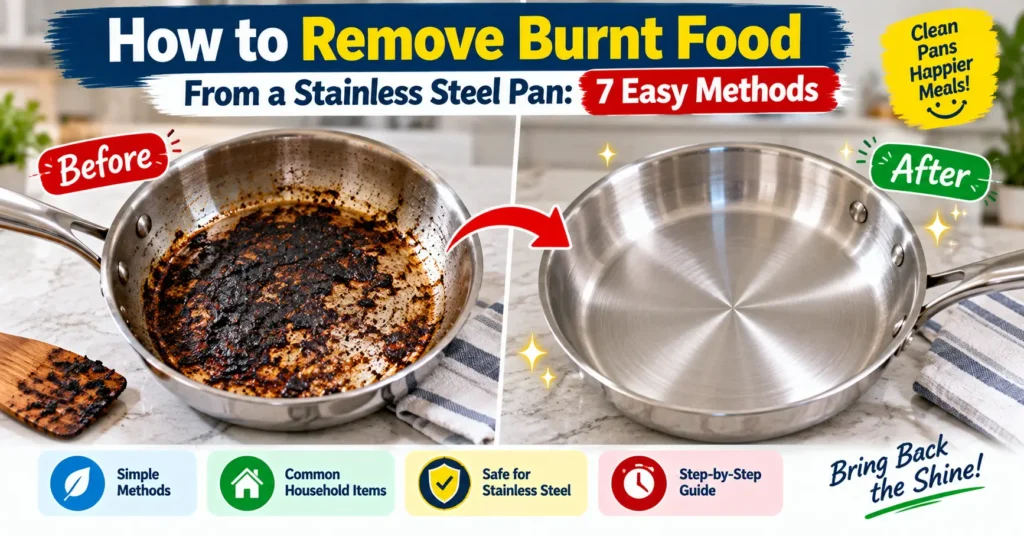
Burned food attached to the bottom of a stainless steel pan can appear impossible to clean off. Scrubbing harder is not always the answer and aggressive cleaning can scratch or damage the surface.
Luckily, burned food can usually be dissolved with some simple household ingredients and a little patience.
If you’re wondering how to remove burnt food from a stainless steel pan, the best approach is usually to soften the burnt layer first and then gently remove it.
In this guide, you’ll learn 7 simple ways to get burned food out of stainless steel cookware, what not to do, and how to avoid stubborn burnt-on residue in the future.
Safety note: Never clean a hot pan. Cool it first. Never pour cold water onto a very hot pan, as the temperature change can cause it to warp or become damaged.
Why Does Burnt Food Stick to Stainless Steel Pans?
Food residue dries out and adheres strongly to the cooking surface at high heat, making burned food difficult to clean.
Common causes include:
- Cooking food at excessively high temperatures
- Leaving a pan unattended
- Allowing sauces to cook down too far
- Not adding enough liquid while cooking
- Cooking sugary or starchy foods at high heat
- Leaving the pan unwashed for a long time
The good news is that burned residue doesn’t mean your stainless steel pan is done for.
The trick is to soften the residue before scrubbing
Cookware manufacturers may have specific cleaning recommendations for stainless steel. For example, All-Clad’s stainless steel care guide recommends letting the pan cool before cleaning and using warm, soapy water and a sponge or soft cloth for routine cleaning.
If you’re wondering how to remove burnt food from a stainless steel pan without damaging the surface, the key is to soften the burnt residue before gently scrubbing it away.
How to Remove Burnt Food From a Stainless Steel Pan
1. Simmer Water and Dish Soap
The easiest way to loosen the burned food is with hot water and dish soap.
Let the pan cool all the way down first.
Then:
- Add enough water to cover the burnt area.
- Add a few drops of regular dish soap.
- Place the pan on the stove.
- Bring the water to a gentle simmer.
- Let it simmer for approximately 10–15 minutes.
- Turn off the heat and allow the water to cool slightly.
- Use a non-abrasive sponge or soft scrubber to loosen the residue.
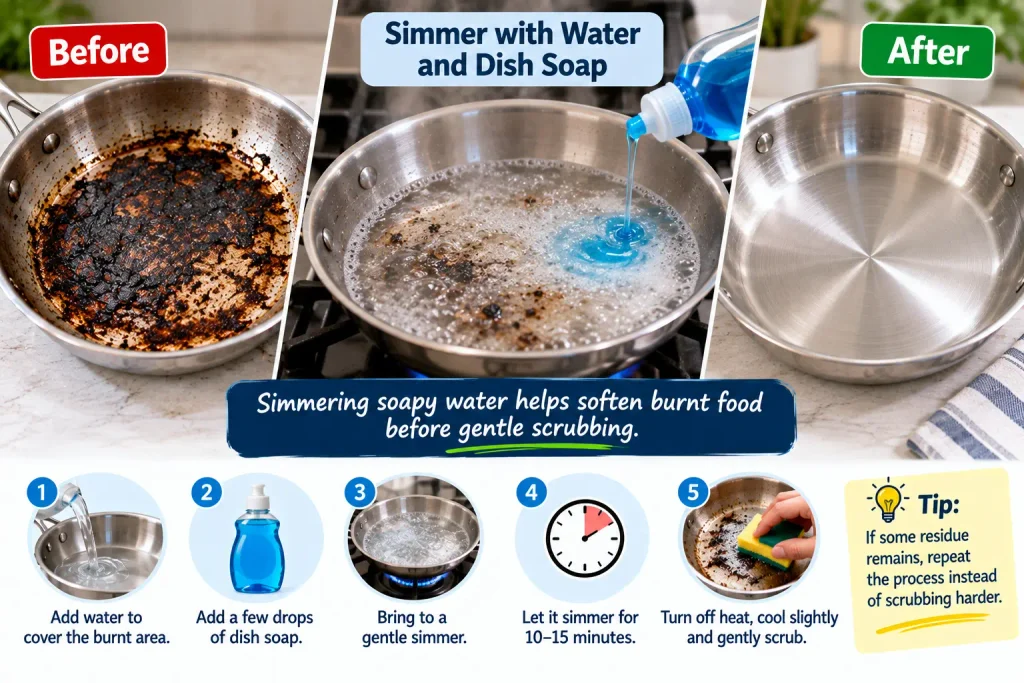
The heat and water loosen the burned food so it’s easier to remove without aggressive scrubbing.
If there’s still some left over, repeat the process instead of brute forcing it.
2. Use Baking Soda for Stubborn Burnt Food
If plain soapy water is not enough, baking soda can help.
When the pan has cooled, sprinkle some baking soda on the affected area.
Add sufficient water to make a loose paste.
Let the paste sit for a few minutes, then scrub the pan gently with a non-abrasive sponge.
For heavier buildup you can add water to the pan and simmer a small amount of the baking soda solution gently. Allow to cool and scrub.
Don’t use too much power.
The aim is to break up the burned layer, not to scratch the stainless steel.
3. Try a Baking Soda and Water Paste
If the burn marks are small, it is easier to control a thicker paste of baking soda.
Make a paste, with a little water and baking soda, that you can spread.
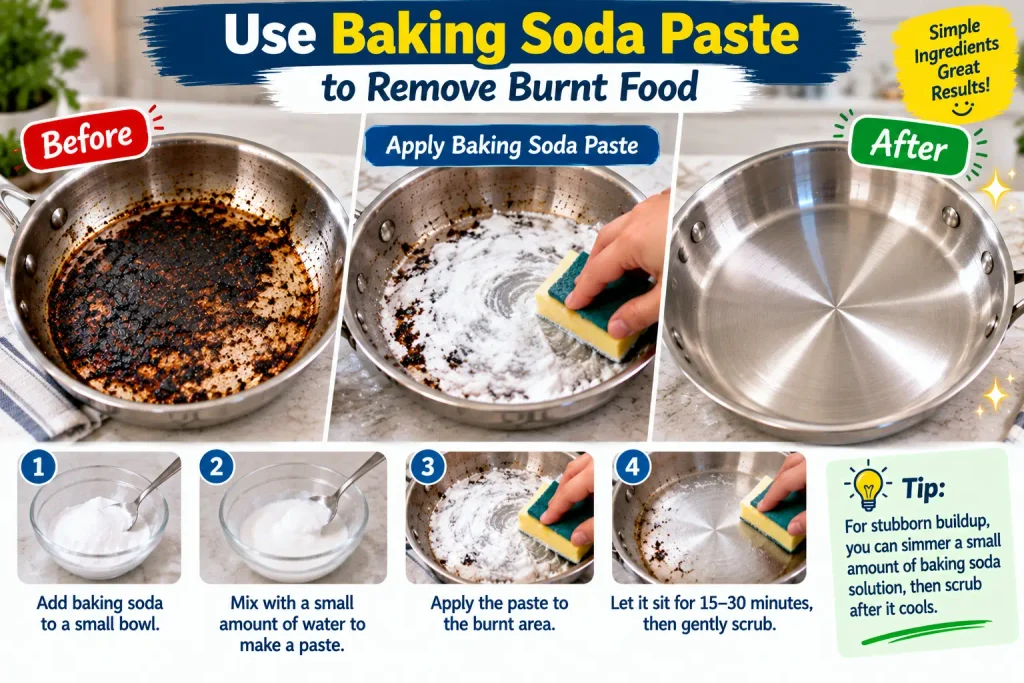
Rub it directly on the burned area and leave it for about 15-30 minutes.
Then scrub lightly with a soft sponge or non-abrasive scrubber.
Clean the pan thoroughly, and dry it.
This method works best if you have a patch of burned residue rather than it spread all over the cooking surface.
If the stain persists, try the treatment again instead of scrubbing with a harsh abrasive.
4. Use White Vinegar to Help Loosen Residue
White vinegar may help to dissolve some mineral deposits and food residue, but it must be used correctly.
Add enough water to cover the affected area, and then add a small amount of white vinegar.
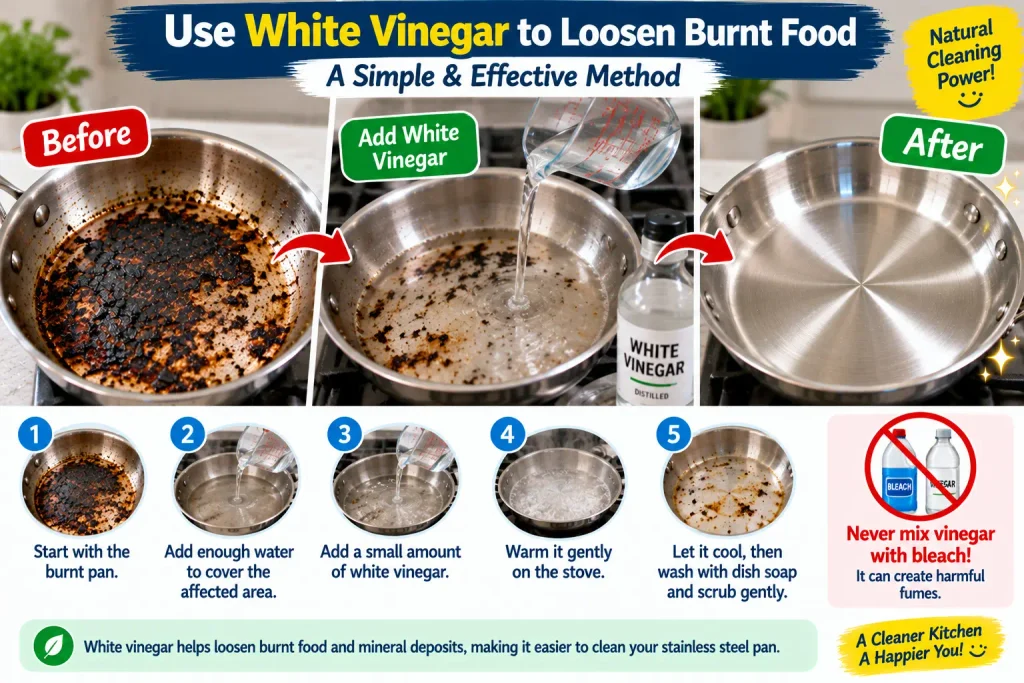
Gently heat the mixture on the stove.
Do not leave the pan while it is heating.
Allow it to stand for several minutes then turn off the heat and let the solution cool to a safe handling temperature.
Pour it out, then wash the pan with dish soap and a soft sponge.
If you have stubborn burned food, after rinsing the vinegar solution completely, you can follow with a baking soda paste.
Warning: Do not mix vinegar with bleach or any product containing chlorine.
5. Scrape Gently With a Suitable Tool
If the food is burned, but softened, and there is a layer stuck to the pan, gentle scraping can help.
Use a wooden spatula, silicone utensil or something that will not aggressively scratch the cooking surface.
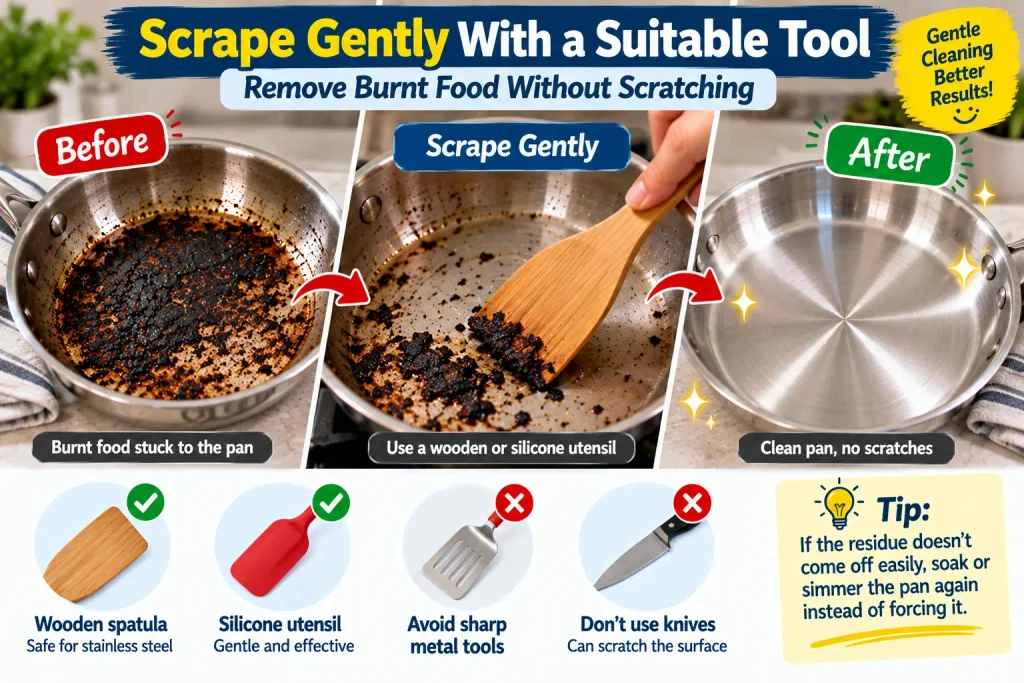
Keep the tool at a low angle and gently work under the softened material.
Don’t scrape sharp metal objects into the stainless steel.
If the residue is stubborn, it is better to soak or simmer the pan again, rather than forcing it.
This method is especially good after the water and soap or baking soda methods.
6. Use a Non-Abrasive Scrubber
When you lift up the burned food, a non-abrasive scrubber can help lift the remaining residue.
Work in small areas and use moderate pressure.
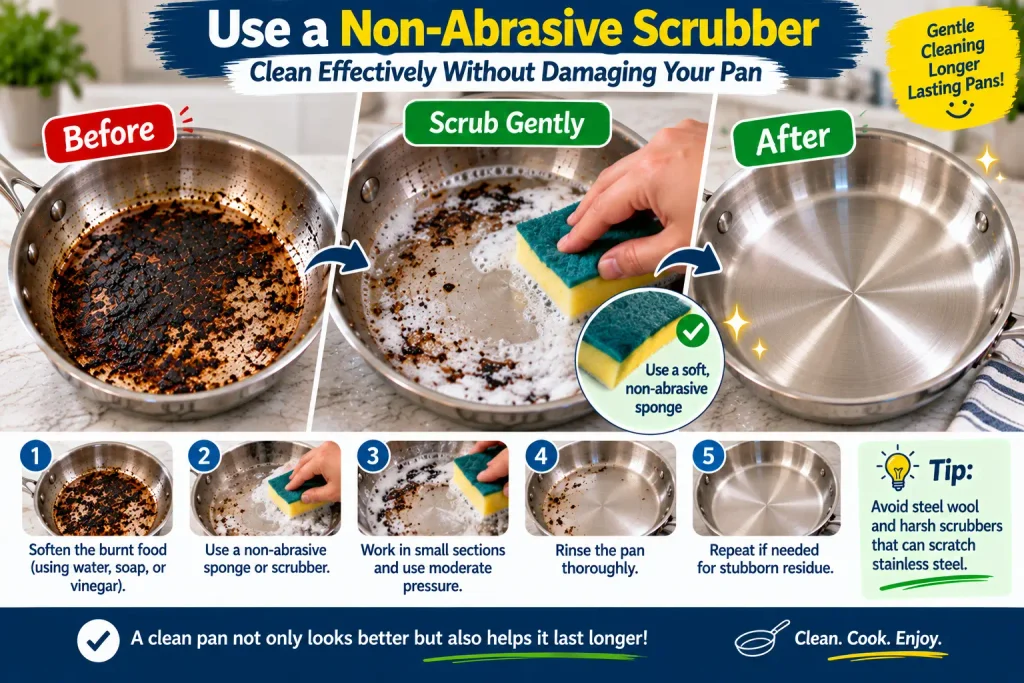
If the stainless steel cookware manufacturer’s care instructions say not to use very aggressive scouring pads, don’t.
Where practical, scrub in the direction of the existing grain or finish.
Wash the pan clean after use, and see if any burned residue remains.
If it does, repeat the soaking or baking soda treatment.
Several gentle cleaning cycles are usually better than one rough scrubbing session.
7. Repeat the Soak-and-Scrub Method for Severe Buildup
When learning how to remove burnt food from a stainless steel pan, remember that severe buildup may need more than one gentle cleaning cycle.
One treatment just isn’t getting rid of a little burned food.
So if you see a thick layer of burned residue, don’t think the pan is ruined.
Instead, repeat a gentle process:
- Cover the affected area with water.
- Add a small amount of dish soap.
- Warm the water gently.
- Allow the residue to soften.
- Let the pan cool enough to handle safely.
- Apply baking soda if needed.
- Gently scrub with a non-abrasive sponge.
- Rinse and inspect the surface.
A heavy buildup may require more than one round.
The trick is to not force the issue with too much force or sharp tools.
How to Remove Burnt Food From a Stainless Steel Pan Without Scratching It
Focus on softening first and scrubbing second to protect the finish of your cookware.
Keep these tips in mind:
- Let the pan cool before cleaning.
- Use warm water to soften burnt food.
- Start with dish soap before stronger cleaning methods.
- Use baking soda for stubborn residue.
- Choose a non-abrasive sponge or scrubber.
- Use wooden or silicone tools for gentle scraping.
- Avoid sharp metal objects.
- Don’t scrub aggressively for long periods.
- Follow the manufacturer’s care instructions.
Stainless steel is durable but you could get scratches if you use the wrong cleaning tools.
What Not to Use on a Stainless Steel Pan
Knowing what to avoid is just as important as knowing what works.
Avoid Steel Wool When the Manufacturer Advises Against It
Extra abrasive scrubbers and steel wool can scratch stainless steel.
If your cookware manufacturer discourages them, pick a softer option.
Don’t Use Sharp Knives to Scrape Burnt Food
A knife can scratch the cooking surface and leave permanent marks.
Instead use a wooden or silicone utensil.
Don’t Pour Cold Water Into a Very Hot Pan
A sudden change in temperature may cause thermal shock and warp the pan.
Let cookware cool down. Add water.
Don’t Mix Cleaning Chemicals
Never mix household cleaning products unless the label on the product specifically says it is safe to do so.
Particularly do not mix bleach with vinegar or other acidic cleaners.
Don’t Keep Scrubbing Harder
If the residue won’t budge, applying more pressure isn’t always the answer.
Soak the pan again, and give the burned-on layer some more time to soften.
How to Clean Discolored Stainless Steel After Removing Burnt Food
Sometimes the food is burned off but the pan remains stained brown, blue, rainbow-colored or cloudy.
These discolorations don’t mean the pan is necessarily dirty or damaged.
High cooking temperatures can cause heat discoloration on stainless steel.
First, wash the pan thoroughly with dish soap and warm water.
If discoloration persists, use the cleaning method recommended by the cookware manufacturer.
Don’t reach for aggressive abrasives just because the pan isn’t perfectly shiny.
You want to clean your cookware without damaging the finish any more than necessary.
When Should You Replace a Stainless Steel Pan?
In general, burned food alone isn’t a reason to throw away a stainless steel pan.
However, consider replacing cookware if you notice:
- Severe warping
- Cracks or structural damage
- A loose or unsafe handle
- Deep damage to the cooking surface
- Other damage that makes the pan unsafe to use
If the pan is in good condition, careful cleaning can often get rid of stubborn burned food.
How to Prevent Burnt Food From Sticking
Prevention is easier than removing a thick layer of burnt food.
Control the Heat
Don’t use excessively high heat, especially when cooking foods containing sugar or starch.
Don’t Leave Food Unattended
Many pans get burned because food is left cooking for too long unattended.
Use high heat only in the immediate area.
Add Liquid When Needed
Moisture evaporates quickly from sauces and other foods, which can then burn quickly.
Follow the recipe and add the liquid when it says to.
Clean the Pan Soon After Cooking
Cool enough to handle. Wash the pan; don’t let residue harden for days
Use the Right Utensils
Use wooden, silicone or manufacturer approved utensils when cooking and cleaning to avoid unnecessary scratches.
For another practical kitchen maintenance guide, check out our guide on How to Fix a Leaky Faucet.
Frequently Asked Questions
What is the easiest way to remove burnt food from a stainless steel pan?
Begin by boiling a bit of dish soap in a small amount of water for about 10-15 minutes. Allow the pan to cool a little bit and then scrub gently with a non-abrasive sponge. Baking soda can help with tough residue.
Can baking soda remove burnt food from stainless steel?
Yes. Baking soda can loosen up stubborn burned on residue. Make a paste out of baking soda and water, let it sit for a little, then scrub gently.
Does vinegar remove burnt food from stainless steel?
Vinegar can help soften certain types of residue and mineral deposits. It can be used as a mild cleaning solution with water and then rinsed off thoroughly.
Can I use steel wool on stainless steel cookware?
Steel wool will scratch stainless steel. Always check your cookware manufacturer’s care instructions before using any abrasive scrubber.
Why is my stainless steel pan still brown after cleaning?
Brown or rainbow colored marks can be a result of heat discoloration, not leftover food. Discoloration should be permanent . Clean pan normally first and follow manufacturers recommended care instructions
How long should I soak a burnt stainless steel pan?
Depends on how much build up there is how long it takes. Begin with 15–30 minutes, and repeat as needed. With thick burned residue, you may have to repeat the soaking and gentle scrubbing a few times.
Is it safe to cook in a stainless steel pan after removing burnt food?
Provided the pan is in good structural condition with no cracks, significant warping or other safety-related damage, it can usually be used again after a thorough cleaning. Care instructions from the manufacturer.
Final Thoughts
Learning how to remove burnt food from a stainless steel pan doesn’t require aggressive scrubbing.
Begin with the easiest solution: using warm water and dish soap, soften the charred remains. If this isn’t enough, try baking soda, a light solution of vinegar and water, gentle scraping or a non-abrasive scrubber.
If there is heavy buildup, repeat the process rather than trying to scrape off the residue in a single pass.
Most importantly, don’t use sharp tools or excessive force, don’t expose the stainless steel surface to sudden temperature changes, and don’t mix cleaning chemicals that shouldn’t be mixed.
If you are working through other common household problems, our guide on How to Fix a Squeaky Door offers another simple step-by-step solution.
With a little patience, you can often take even a badly burned stainless steel pan and clean it up and put it back to work.