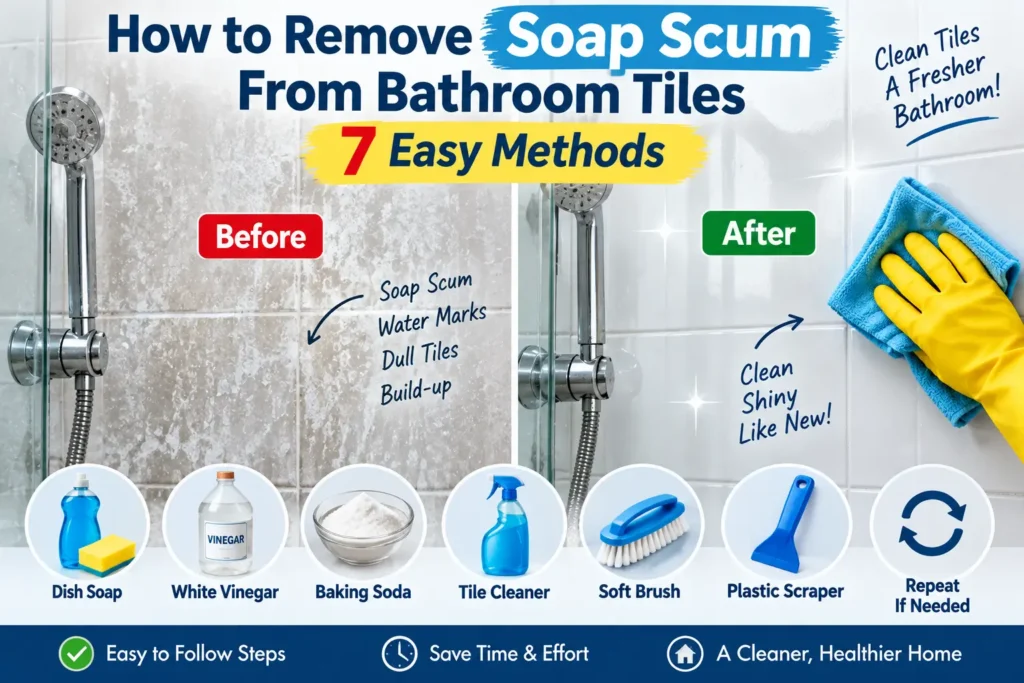
Soap scum can make clean bathroom tiles look dull, cloudy and dirty. Soap scum, minerals in water, body oils and moisture can accumulate on tile surfaces and grout over time.
The good news is, you don’t usually need harsh chemicals to get it out. Depending on how thick the buildup is, simple methods with dish soap, white vinegar, baking soda, or appropriate bathroom cleaner can help restore the tiles.
In this guide, you’ll learn how to remove soap scum from bathroom tiles using seven easy methods, along with tips for grout, stubborn buildup, and preventing soap scum from coming back.
Quick tip: Always test any cleaning solution on an inconspicuous area first, especially if you are unsure of the type of tile or grout you have.
Why Does Soap Scum Build Up on Bathroom Tiles?
Soap scum is simply soap ingredients reacting with minerals in the water and other residues left from bathing.
Bathrooms are great for buildup because they are often exposed to:
- Water
- Soap and body wash
- Shampoo
- Body oils
- Hard-water minerals
- Humidity
- Poor ventilation
If tiles are not cleaned and dried regularly, this residue can slowly build up into a cloudy or sticky layer.
The type of tile is important too. Ceramic and porcelain tiles are usually easier to clean, but natural stone such as marble, travertine and limestone require more careful product selection.
How to Remove Soap Scum From Bathroom Tiles: 7 Easy Methods
Choose the mildest method you think your tiles can take. If the buildup does not come off easily, try the next method.
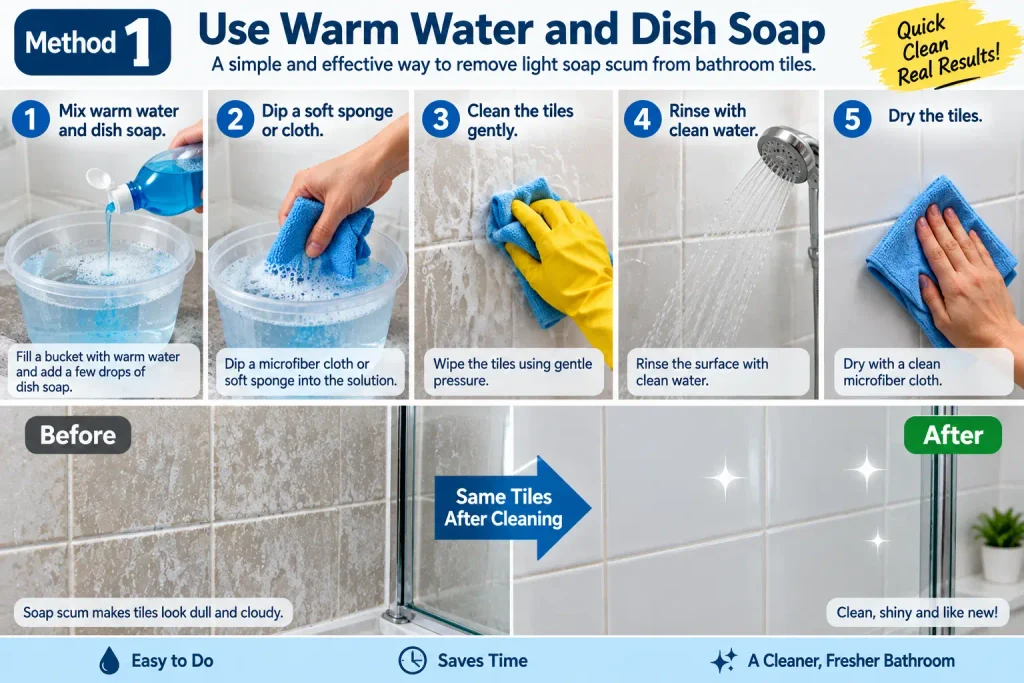
1. Use Warm Water and Dish Soap
If you have just a bit of soap scum, you may not need a special cleaner.
Fresh soap residue can be loosened with warm water and a little dish soap.
Steps:
- Fill a bucket or container with warm water.
- Add a small amount of mild dish soap.
- Dip a microfiber cloth or soft sponge into the solution.
- Wring out excess water.
- Wipe the affected tiles.
- Rinse the surface with clean water.
- Dry the tiles with a clean microfiber cloth.
This works best on pretty fresh soap scum.
If the tiles still feel sticky or look cloudy after cleaning, you can try any of the methods below.
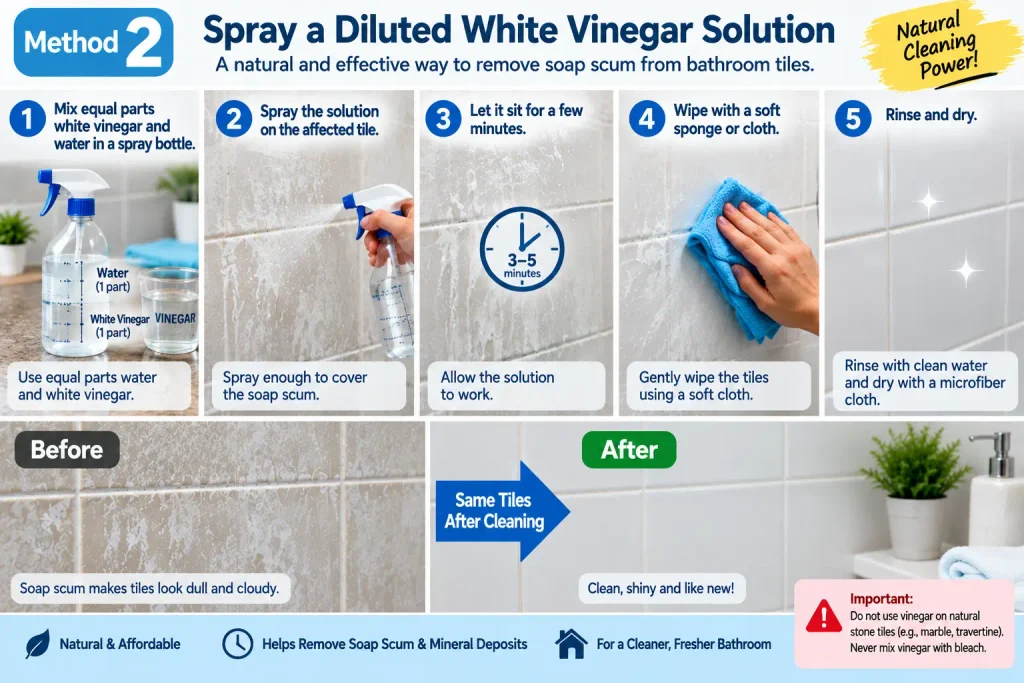
2. Spray a Diluted White Vinegar Solution
White vinegar can help dissolve some mineral deposits and soap scum.
But, not all kinds of tiles are suitable for vinegar. Natural stone surfaces such as marble, limestone, and travertine can be damaged by acidic cleaners.
If you have ceramic or porcelain tiles and the manufacturer’s care instructions permit, you can try a diluted vinegar solution.
Steps:
- Mix equal parts white vinegar and water in a spray bottle.
- Spray a small amount onto the affected tile.
- Let it sit for several minutes.
- Gently wipe with a soft sponge or microfiber cloth.
- Rinse the tiles thoroughly with clean water.
- Dry the surface.
Don’t let the vinegar solution sit on the surface any longer than it needs to.
Important: Do not mix vinegar with bleach or chlorine-based cleaners. The mixture can give off dangerous fumes.
3. Make a Baking Soda Paste
Baking soda is a mild abrasive that helps to clean tough soap scum.
Combine the baking soda and a small amount of water to make a thick paste.
Then:
- Use a soft sponge or microfiber cloth.
- Gently work the paste over the soap scum.
- Avoid aggressive scrubbing.
- Rinse the area thoroughly.
- Dry the tiles.
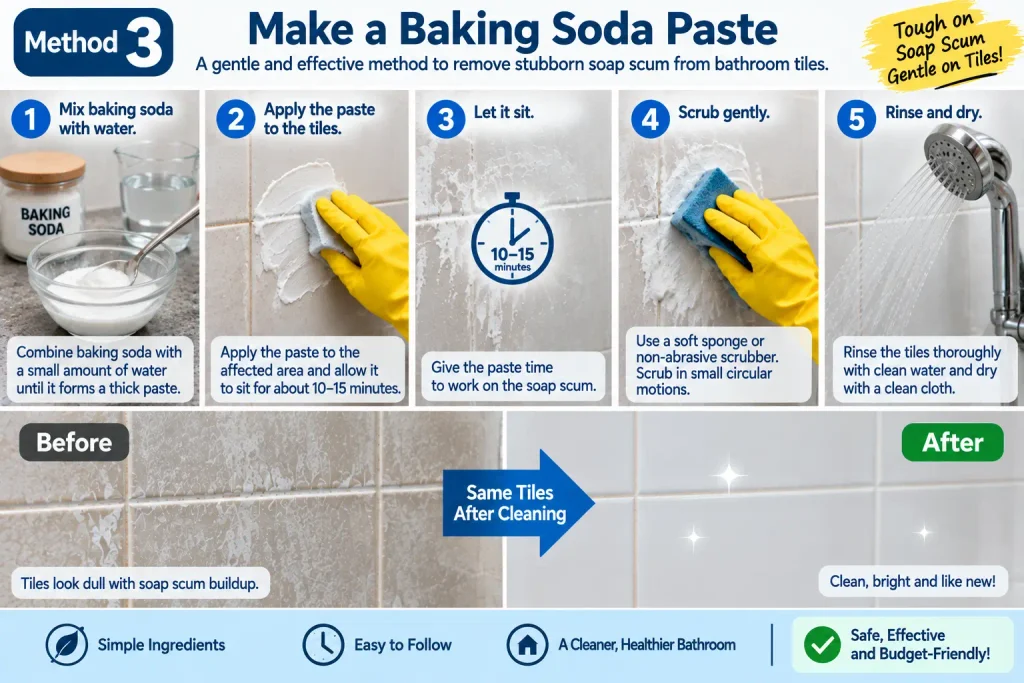
Baking soda can be helpful on textured areas, where it’s harder to wipe away the residue.
Refer to the tile manufacturer’s cleaning recommendations before using on delicate or specialty surfaces.
4. Use a Commercial Bathroom Tile Cleaner
If the buildup is thick or stubborn, a commercial bathroom cleaner designed for soap scum may be more convenient.
Pick a product that is specifically designated for use with your tile and grout.
How to use it safely:
- Read the product label completely.
- Check whether it is compatible with your tile.
- Open a window or turn on the bathroom exhaust fan.
- Apply the recommended amount.
- Allow it to work for the time specified on the label.
- Wipe or scrub gently as directed.
- Rinse thoroughly if required.
Don’t assume that a stronger cleaner is a better cleaner. Avoid using a product that’s too harsh for your tile.
5. Use a Soft Scrub Brush for Textured Tiles
While smooth tiles are relatively simple to clean, textured tiles can hold on to soap residue in the small bumps.
A soft-bristled brush might help get in these places.
Steps:
- Apply warm soapy water or a suitable tile cleaner.
- Let the solution sit according to its instructions.
- Use a soft-bristle brush.
- Work in small sections.
- Rinse thoroughly.
- Dry the surface.
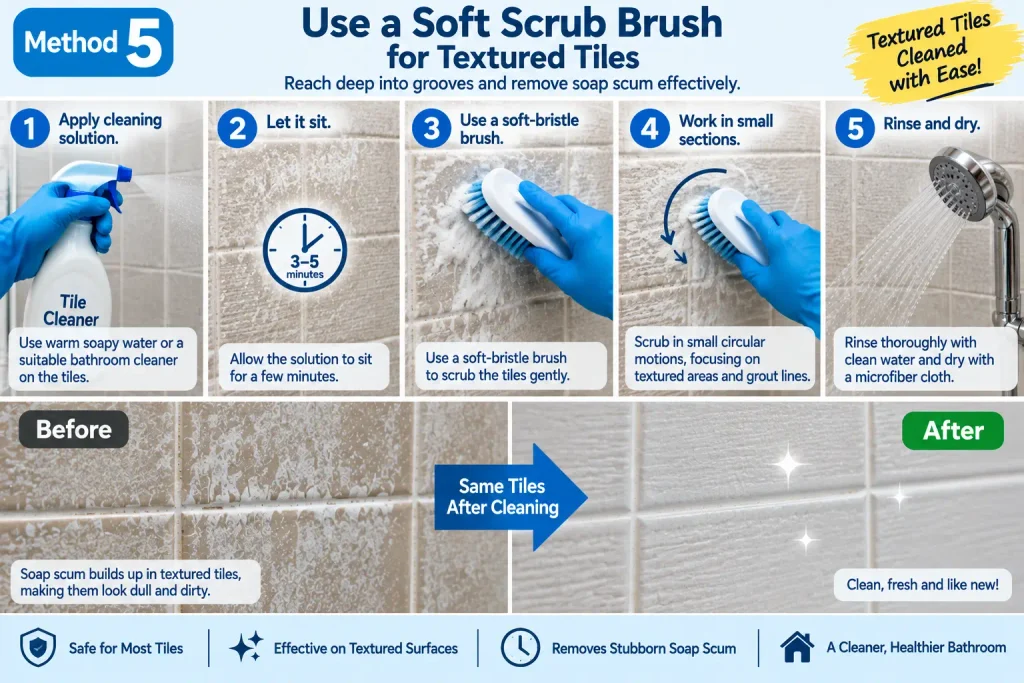
Don’t use stiff, abrasive brushes on surfaces that scratch easily.
6. Use a Plastic Scraper for Thick Buildup
When soap scum gets thick and hard to remove, wiping alone may not do the trick.
A plastic scraper will assist in lifting softened buildup without a sharp metal object.
How to do it:
- Soften the soap scum with warm water or an appropriate cleaner.
- Hold the plastic scraper at a shallow angle.
- Gently work underneath the buildup.
- Remove loosened residue.
- Wipe the surface with a soft cloth.
- Rinse and dry the tile.
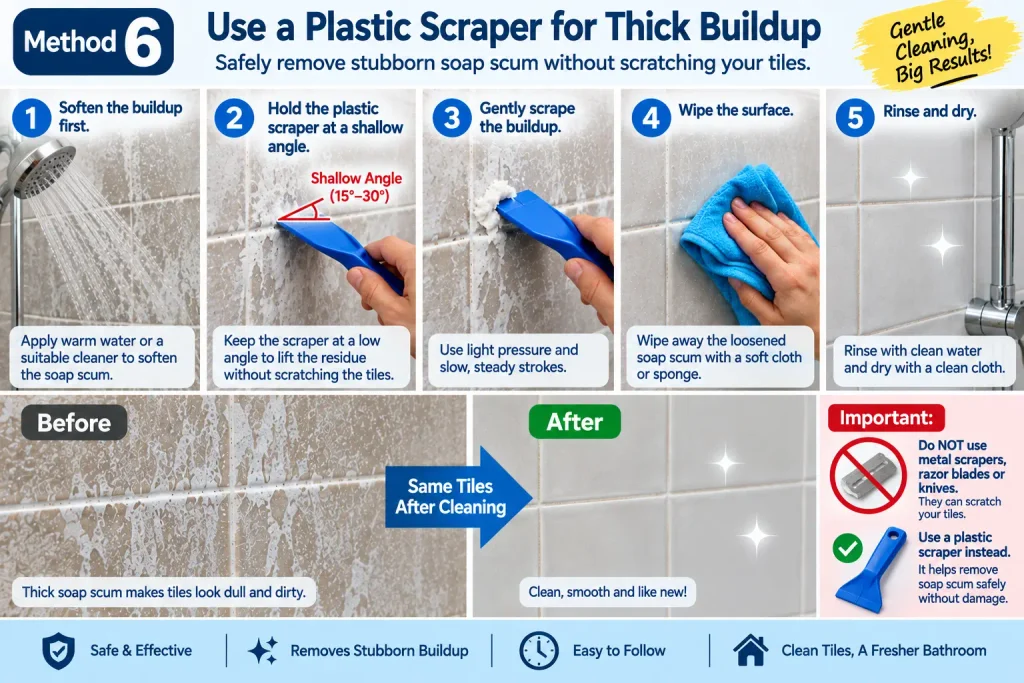
Do not use a razor blade, knife or other sharp metal object unless the tile manufacturer states it is safe for that surface.
The goal is to clean the residue, not to scratch the tile.
7. Repeat the Cleaning Process for Heavy Soap Scum
Removing stubborn soap scum may take more than one cleaning session.
Repeat the same type of cleaning over and over again . Instead of turning to a stronger chemical or aggressive scrubbing .
A simple approach:
- Remove loose dirt and residue.
- Apply an appropriate cleaning solution.
- Allow it to work for the recommended amount of time.
- Gently scrub with a suitable sponge or brush.
- Rinse thoroughly.
- Dry the tiles.
- Repeat if necessary.
If you have heavy buildup, a few gentle cleaning cycles can be safer than one aggressive treatment.
How to Remove Soap Scum From Bathroom Tiles Without Damaging Them
The best way to clean will depend a lot on what type of tile it is.
For guidance on choosing safer cleaning products, you can also check the EPA’s Safer Choice program, which helps consumers identify products that meet specific safety criteria.
Ceramic and porcelain tiles
They generally last a long time and can be cleaned with a number of household cleaners, as long as the cleaner’s label says it is suitable.
Natural stone tiles
Take much greater care with marble, travertine, limestone and other natural stone surfaces.
Vinegar and other acidic products can etch or damage some natural stone.
Instead, use a cleaner specifically designed for the type of stone.
Glass tiles
Use a soft cloth or non-abrasive sponge • Do not use abrasive cleaners that may scratch the surface.
Grout
Grout can be a place for soap and moisture to linger. Choose an appropriate grout cleaning method and avoid aggressive scrubbing that can damage the surface of the grout.
If you’re not sure what your tile is made of, check the manufacturer’s care instructions before using vinegar, acids or strong bathroom cleaners.
How to Remove Soap Scum From Bathroom Tiles and Grout
Soap scum tends to build up along grout lines, corners and around fixtures.
Begin with warm water and a mild cleaner.
For ceramic or porcelain tiles, use a suitable soap-scum cleaner and a soft grout brush.
Work in small sections instead of trying to do the whole bathroom at one time.
After cleaning, rinse away all remaining cleaner and let the grout dry.
If the grout remains dark, cracked, loose or stained after cleaning, there may be more to the problem than ordinary soap scum.
What Not to Use on Bathroom Tiles
Using the wrong cleaning method can damage tile, grout, or surrounding surfaces.
Avoid:
Steel wool
Steel wool can scratch tile surfaces and damage finishes.
Sharp metal scrapers
Knives and razor blades can leave scratches or chips.
Harsh abrasive powders
These may dull or scratch certain surfaces.
Vinegar on natural stone
Acidic cleaners can damage some natural stone tiles.
Mixing cleaning products
Never combine bleach with vinegar, ammonia or other cleaners. You can have dangerous chemical reactions.
Excessive scrubbing
If buildup isn’t coming off, soften it first rather than applying more force.
How to Prevent Soap Scum From Coming Back
Once you’ve cleaned the tiles, a few simple habits can reduce future buildup.
Rinse the tiles after showering
A quick rinse can remove some soap and product residue before it dries.
Use a shower squeegee
Run a squeegee over the tiles and glass after showering to remove excess water.
Improve bathroom ventilation
Use the exhaust fan during and after showers to reduce humidity.
Wipe problem areas regularly
Corners, lower walls, and areas around shower fixtures often collect more residue.
Clean frequently
Usually it is easier to clean on a weekly basis than to try to clean away months of built up accumulation.
When Should You Call a Professional?
Most common soap scum can be removed using household cleaning methods.
However if you are considering:
Cracked or damaged tiles
Natural stone has cut
Grout is falling apart or loosening
You see persistent mold or water damage
The wall or floor is soft
Moisture, however, shows up behind or under the tile
You have no idea which cleaner will be safe for the surface
FAQs
What is the easiest way to remove soap scum from bathroom tiles?
Warm water and a little bit of dish soap to start. For heavier buildup, an appropriate tile cleaner, baking soda paste, or another suitable method might be better.
Does vinegar remove soap scum from bathroom tiles?
Some soap-related residue and mineral deposits on appropriate surfaces can be cleaned with diluted white vinegar. However, do not use on acid-sensitive natural stones such as marble, limestone or travertine.
Can baking soda remove soap scum?
Yes, baking soda is a mild abrasive and may help to loosen up stubborn soap scum. Mix some with water to form a paste and rub gently into the affected area.
How do I remove thick soap scum from shower tiles?
First soften the build-up with the right cleaner or warm water. Then scrub gently with a soft brush or sponge. For thick deposits, a plastic scraper may help lift off softened deposits.
Can I use a magic eraser on bathroom tiles?
The melamine foam sponge can be abrasive . Check the tile manufacturer’s recommendations before using one and test it on an inconspicuous spot.
How often should I clean bathroom tiles?
A quick clean once a week can help prevent heavy soap-scum building up. Rinsing and drying the tiles after a shower can also help with regular cleaning.
Why does soap scum keep coming back?
Showers are constantly hitting tiles with soap, body products, water minerals and moisture and soap scum can return. Poor ventilation and not cleaning often can speed up the buildup.
Final Thoughts
Soap scum can make bathroom tiles look dull and dirty, but you don’t always need a strong chemical cleaner to remove it.
Start with something mild, like warm water and dish soap. If this does not help, try a baking soda treatment, diluted vinegar on compatible tile, a commercial tile cleaner, or a soft brush.
The first and most important step is to identify your tile type before choosing a cleaning product. Natural stone needs more care than many ceramic or porcelain surfaces.
Once the soap scum is gone, regular rinsing, squeegeeing, ventilation and cleaning can help prevent the buildup from returning.
For another practical bathroom maintenance solution, check out our guide on How to Fix a Leaky Faucet.
For another practical bathroom maintenance guide, check out our article on .