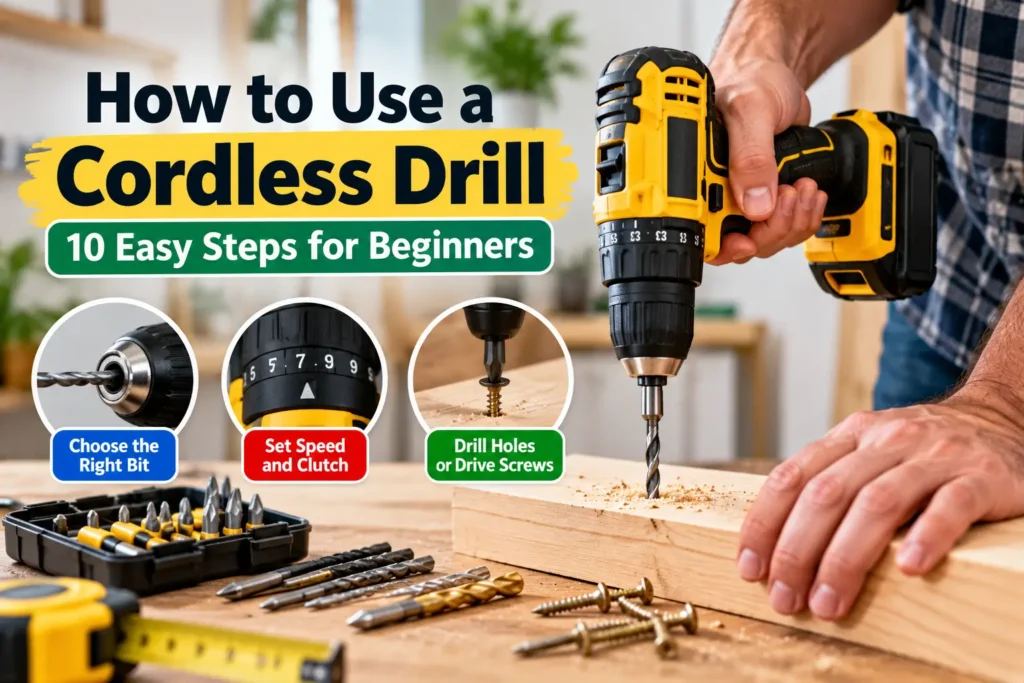
Choosing the right drill bit can make a big difference in how cleanly and safely you drill a hole. Using the wrong bit can lead to poor results, damaged materials, overheating, or premature bit wear.
There are many drill bit types, and each one is designed for particular materials and applications. Some are made for wood, some for metal, and others for masonry, tile, or larger holes.
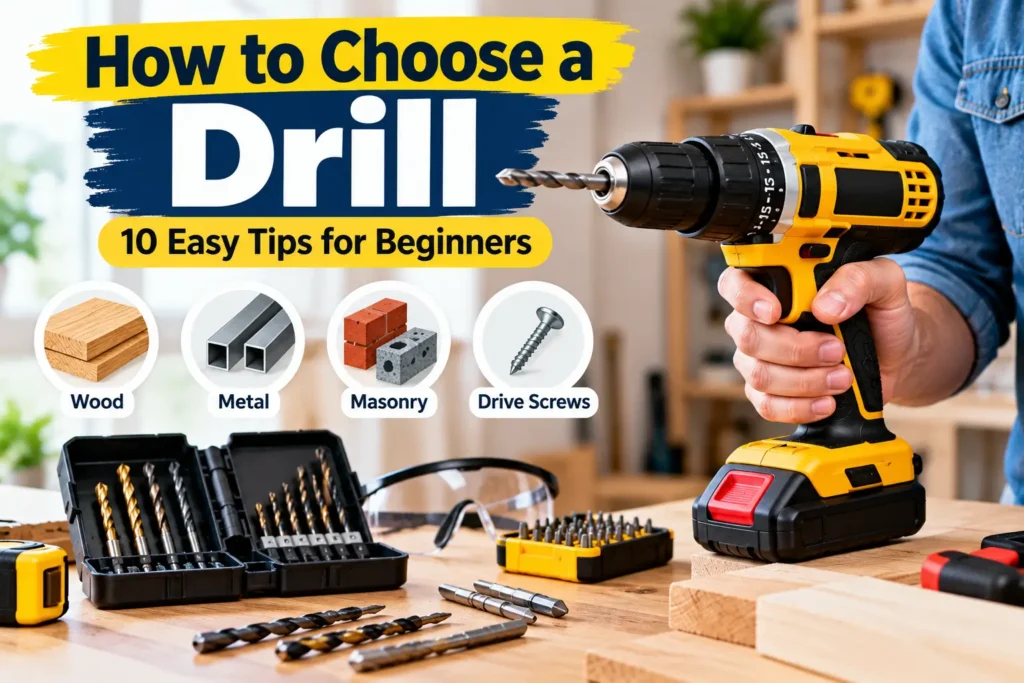
If you’re also choosing a drill for your DIY projects, see our guide on How to Choose a Drill: 10 Easy Tips for Beginners
If you’re new to DIY, you don’t need every type of drill bit available. Understanding the most common bits and knowing when to use them can help you choose the right one for your project.
In this guide, we’ll explain the most common drill bit types, what each one is designed for, and how to choose the right bit for wood, metal, masonry, tile, and other common materials.
Internal link: Since you have already written How to Choose a Drill, we can link to that article naturally in the introduction.
What Is a Drill Bit?
A drill bit is a cutting tool designed to create holes in materials when used with a compatible drill or drilling tool.
Different drill bits have different shapes, cutting edges, materials, and coatings. These differences determine what materials they can drill and what type of hole they are designed to make.
For example, a wood bit is designed differently from a masonry bit because wood and masonry require different cutting characteristics.
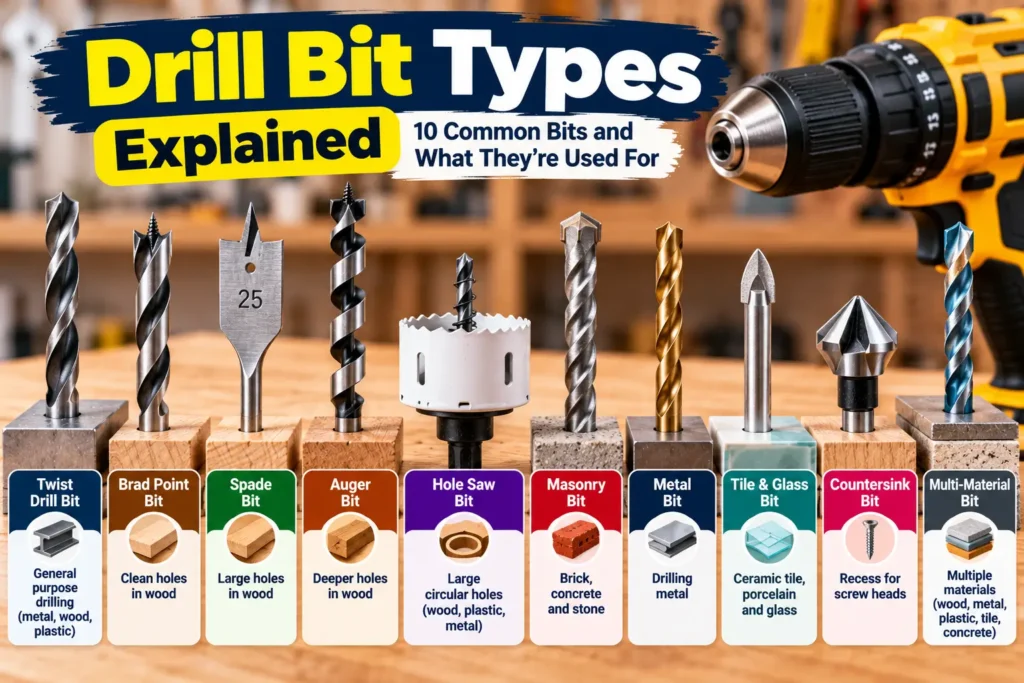
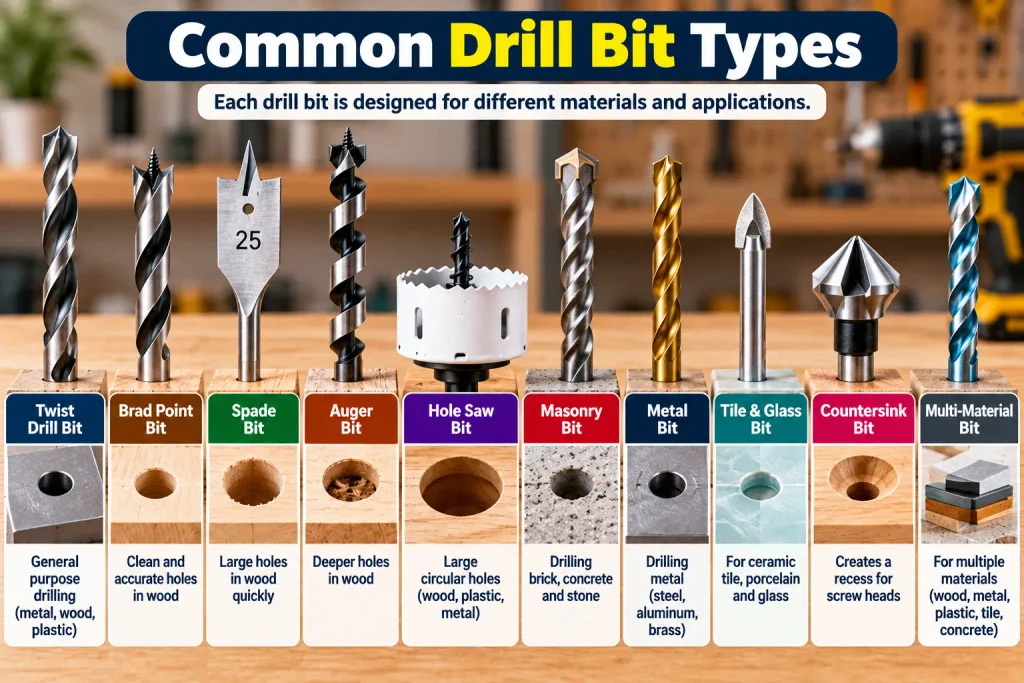
10 Common Drill Bit Types
Here are some of the most useful drill bit types for home DIY projects:
- Twist Drill Bits
- Brad Point Drill Bits
- Spade Drill Bits
- Auger Bits
- Hole Saw Bits
- Masonry Drill Bits
- Metal Drill Bits
- Tile and Glass Drill Bits
- Countersink Bits
- Multi-Material Drill Bits
Let’s look at each one.
1. Twist Drill Bits
Twist drill bits are among the most common and versatile drill bits.
They have a spiral shape, or flutes, that help remove material as the bit rotates.
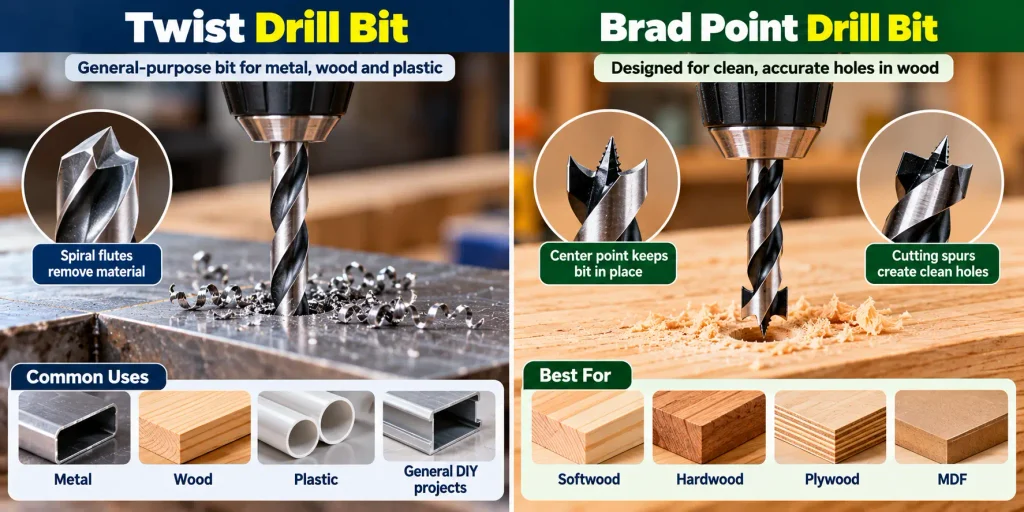
Twist bits can be used for a range of applications, depending on their material, coating, and manufacturer’s specifications. They are commonly available for metal and can also be used for some wood and plastic applications.
Best for:
- Metal
- Wood
- Plastic
- General-purpose drilling
Good to know
For metal drilling, the correct speed and bit type matter. Harder materials generally require slower drilling speeds, and cutting lubricant may be recommended depending on the material and bit. ocsmedia.boschtools.com
2. Brad Point Drill Bits
Brad point bits are specifically designed for drilling wood.
They have a pointed tip that helps the bit stay centered when starting the hole. Cutting spurs around the outside help produce a cleaner hole in wood.
Best for:
- Softwood
- Hardwood
- Plywood
- MDF
- Other wood-based materials
Why use them?
If you’re drilling clean, accurately positioned holes in wood, a brad point bit can be a better choice than a standard twist bit.
Bosch lists wood-specific bits for materials including hardwood, softwood, MDF and other wood products. boschtools.com
3. Spade Drill Bits
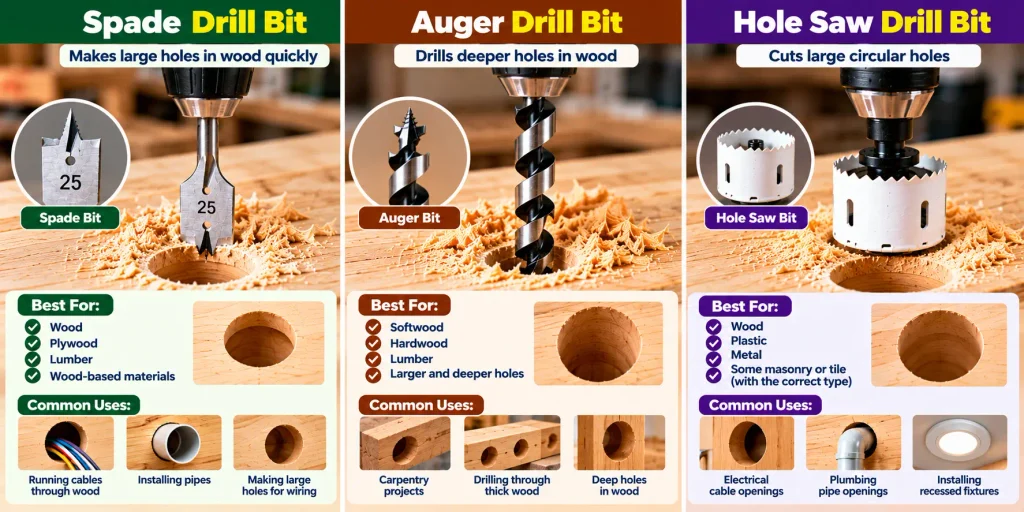
Spade bits have a wide, flat cutting head with a pointed center.
They are commonly used when you need to make relatively large holes in wood quickly.
Best for:
- Wood
- Plywood
- Lumber
- Some wood-based materials
Common uses:
- Running cables through wood
- Installing pipes
- Making holes for wiring
- DIY woodworking projects
Spade bits are useful when the appearance of the hole does not need to be as clean as it would be with some specialized wood bits.
4. Auger Bits
Auger bits have a long spiral body and a screw-like point that helps pull the bit into the wood.
They are useful for drilling deeper holes in wood and removing wood chips efficiently.
Best for:
- Softwood
- Hardwood
- Lumber
- Larger/deeper wood holes
Common uses:
- Carpentry
- Timber projects
- Drilling through thick wood
- Larger holes
For larger wood holes, manufacturers also list auger, paddle, self-feed and hole-saw options depending on the application and drill capacity. Dewalt Support
5. Hole Saw Bits
A hole saw is designed to cut a larger circular hole rather than simply drilling a small hole.
It consists of a cylindrical cutting edge, usually used with an arbor.
Best for:
- Wood
- Plastic
- Metal
- Some masonry or tile applications when using the correct specialized hole saw
Common uses:
- Electrical cable openings
- Plumbing pipe openings
- Door hardware
- Larger holes in cabinets
- Installing recessed fixtures
Always make sure the hole saw is designed for the material you’re cutting.
6. Masonry Drill Bits
Masonry bits are designed for materials such as:
- Brick
- Block
- Concrete
- Mortar
- Some stone and other masonry materials
Many masonry bits use a carbide tip designed for hard mineral materials. Bosch specifically identifies carbide-tipped bits for stone, concrete, plaster, cement and other hard nonmetals.
Important
Not every masonry bit should be used with every drill.
Some are designed for rotary drilling, while others are rated for hammer or percussion drilling. Always check the bit and drill manufacturer’s specifications before use.
7. Metal Drill Bits
Metal drill bits are designed specifically for drilling suitable metals.
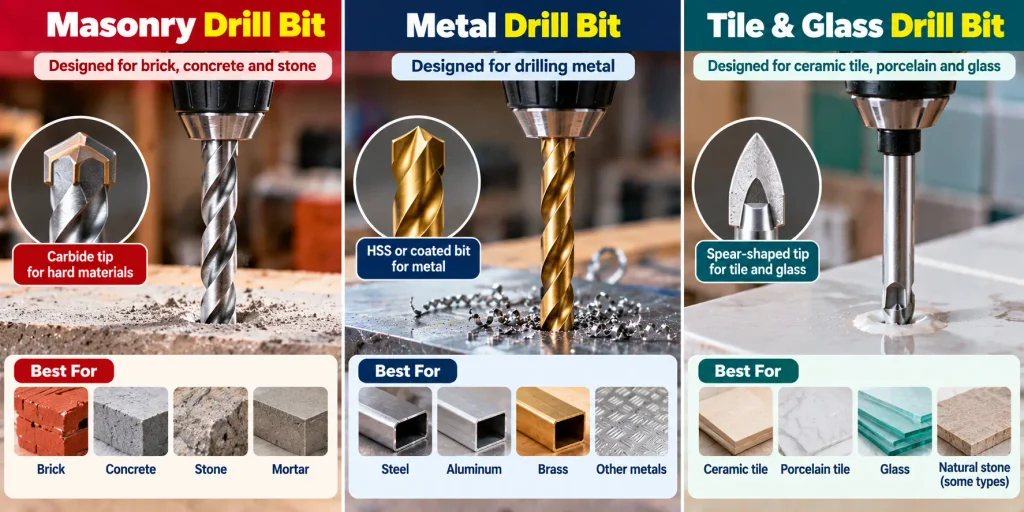
Common metal-drilling bits include high-speed steel (HSS) twist bits and specialized coated versions.
Best for:
- Steel
- Aluminum
- Brass
- Other suitable metals
Tips for drilling metal:
- Use the correct bit for the metal.
- Start at an appropriate speed.
- Avoid excessive pressure.
- Use cutting lubricant when recommended.
- For larger holes, consider drilling a smaller pilot hole first.
DEWALT recommends starting metal drilling at a slower speed and increasing speed appropriately while maintaining firm pressure; cutting lubricant can also be useful for many metals. dewalt.com
8. Tile and Glass Drill Bits
Tile and glass require specialized bits because these materials can crack or break if drilled incorrectly.
Depending on the material and application, specialized carbide or diamond-type bits may be used.
Best for:
- Ceramic tile
- Porcelain tile
- Glass
- Some stone or similar materials with the appropriate bit
Important safety tip
Don’t assume a regular metal or wood drill bit is suitable for tile or glass.
Check the bit manufacturer’s instructions and the material you’re drilling before starting.
9. Countersink Bits
Countersink bits are used to create a tapered recess around a drilled hole.
Unlike standard drill bits, a countersink bit is primarily used to create a tapered recess around an existing or newly drilled hole.
This allows the head of a countersunk screw to sit flush with, or slightly below, the surrounding surface.
Best for:
- Woodworking
- Furniture projects
- Cabinet work
- Screw installation
A countersink can give a cleaner finish when installing suitable countersunk screws.
10. Multi-Material Drill Bits
Multi-material bits are designed to work across several materials with one bit.
Depending on the specific product, these bits may be suitable for combinations of:
- Wood
- Plastic
- Metal
- Brick
- Tile
- Concrete or other masonry
However, multi-material does not mean every bit works on every material. Always check the manufacturer’s specifications.
Bosch, for example, offers multi-material bits designed for combinations including steel, plastic, concrete, soft wood and tile.
Drill Bit Types by Material
One of the easiest ways to choose a drill bit is to start with the material you’re drilling.
| Material | Common Drill Bit Type |
|---|---|
| Wood | Brad point, twist, spade, auger |
| Metal | HSS/twist metal bit |
| Brick | Masonry bit |
| Concrete | Suitable carbide-tipped masonry bit |
| Tile | Tile/glass-specific bit |
| Glass | Specialized glass bit |
| Plastic | Twist or suitable multi-material bit |
| Large holes | Hole saw |
| Screw recess | Countersink bit |
Always check the manufacturer’s specifications because the appropriate bit can vary depending on the exact material, thickness, hole size, and drill being used.
How to Choose the Right Drill Bit
Before picking a drill bit, ask these questions:
1. What material am I drilling?
This is the most important question.
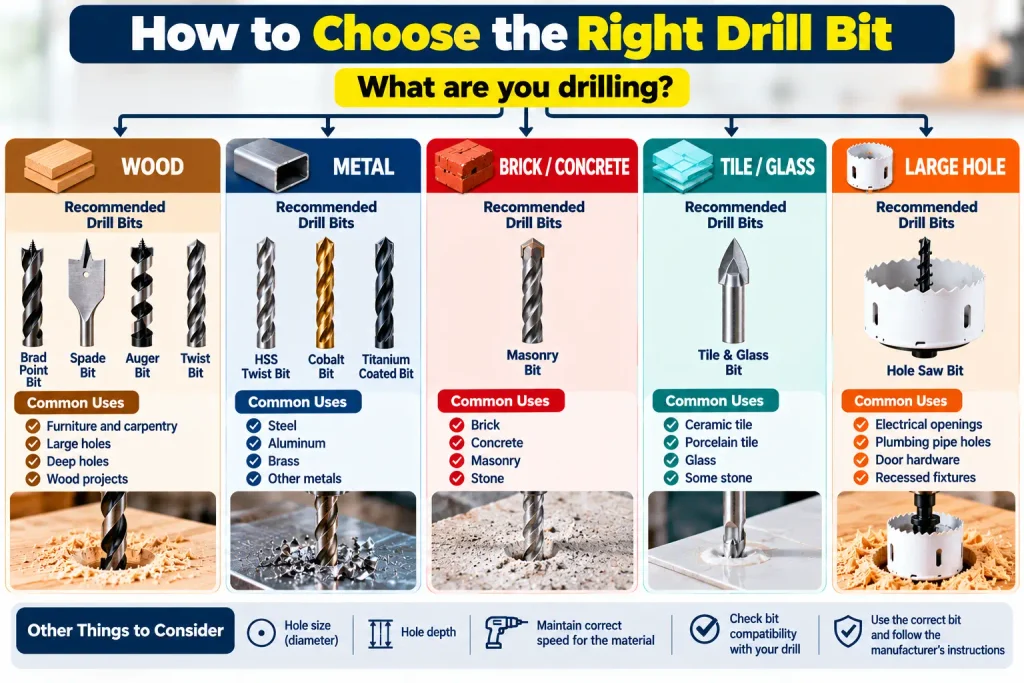
Wood, metal, masonry, tile and glass generally require different bit types.
Before choosing your drill bit, it also helps to understand the different drill features and specifications. Read our guide on How to Choose a Drill: 10 Easy Tips for Beginners
2. What size hole do I need?
Choose the correct bit diameter for the hole.
For very large holes, a hole saw, spade bit, auger or another specialized bit may be more appropriate depending on the material.
3. How deep does the hole need to be?
For deeper holes in wood, an auger bit may be useful.
4. What type of drill am I using?
Check whether the bit is compatible with your drill’s chuck and operating mode.
5. Does the bit need to be impact-rated?
Some drill bits are designed for hammer drilling, while certain hex-shank bits are specifically rated for impact-driver applications. Do not assume that a standard drill bit is suitable for either use. Always check the manufacturer’s specifications.
Drill Bit Shank Types
The part of the bit that fits into the drill is called the shank.
Common shank designs include:
Round/Cylindrical Shank
Common on traditional drill bits and designed to fit standard drill chucks.
Hex Shank
Hex shanks can provide compatibility with certain quick-change systems and some impact-rated applications, depending on the bit.
Always check the drill and bit specifications before buying.
SDS Shank
SDS shanks are commonly used with compatible rotary hammers and masonry drilling systems. They are designed for specific SDS-compatible tools, so check the drill or rotary hammer specification before buying.
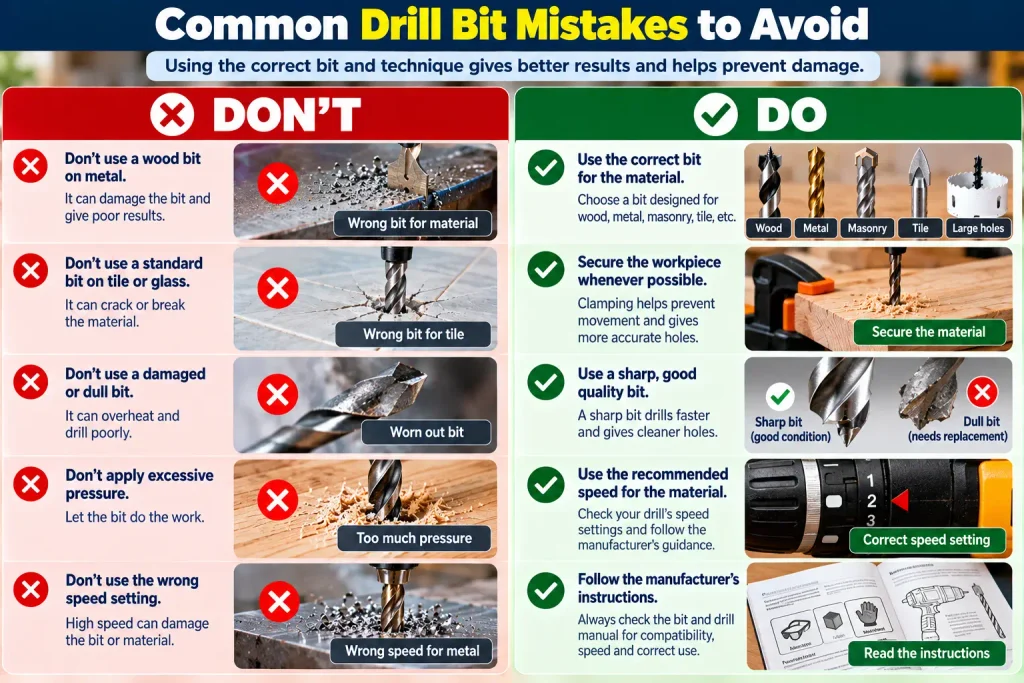
Common Drill Bit Mistakes to Avoid
Avoid these common mistakes:
- Using a wood bit on metal
- Using a standard bit on masonry
- Using the wrong bit for tile or glass
- Using a damaged or dull bit
- Choosing the wrong diameter
- Running the bit at an unsuitable speed
- Applying excessive pressure
- Using a non-impact-rated bit in an impact application
- Ignoring the manufacturer’s instructions
- Failing to secure the material before drilling
Using the correct bit and operating it according to the manufacturer’s recommendations can improve drilling performance and help reduce unnecessary wear.
How to Know When a Drill Bit Needs Replacing
A drill bit may need replacement when you notice:
- Visible damage
- A badly worn cutting edge
- Excessive overheating
- Poor drilling performance
- Unusual vibration
- The bit repeatedly wanders or struggles to cut properly
Don’t continue using a bit that is damaged or unsuitable for the job.
Basic Drill Bit Safety Tips
Before drilling:
- Wear appropriate eye protection.
- Secure the material whenever possible.
- Use the correct bit for the material.
- Make sure the bit is properly secured.
- Follow the recommended speed for the bit and material.
- Don’t force the drill.
- Keep hands away from the rotating bit.
- Inspect the bit for damage before use.
- Follow the drill and bit manufacturer’s instructions.
For example, Bosch recommends inspecting bits for excessive wear and using sharp bits in good condition.
Disconnect the drill from its power source according to the manufacturer’s instructions before changing bits or performing adjustments.
Drill Bit Buying Checklist
Before buying a drill bit, check:
- Material: What will you drill?
- Bit type: Is it designed for that material?
- Diameter: What size hole do you need?
- Length: Is it long enough?
- Shank: Will it fit your drill?
- Speed: Does your drill support the recommended speed?
- Drill mode: Is it suitable for rotary or hammer drilling?
- Quality: Is the bit durable and appropriate for your project?
- Quantity: Do you need one bit or a complete set?
Frequently Asked Questions
What is the most common type of drill bit?
Twist drill bits are among the most common general-purpose drill bits, particularly for suitable metal and general drilling applications. However, the best bit depends on the material and job.
Which drill bit is best for wood?
For clean, accurate holes in wood, brad point bits are a useful choice. Spade and auger bits are better suited to certain larger or deeper holes.
Which drill bit is best for metal?
Suitable HSS or other metal-rated twist drill bits are commonly used for metal. The correct bit and speed depend on the type and thickness of the metal.
Can I use a wood drill bit on metal?
Generally, you should use a bit specifically designed for the metal you’re drilling rather than assuming a wood bit is suitable.
What drill bit should I use for concrete?
Use a masonry bit designed for the type of concrete or masonry and compatible with your drill’s operating mode. Harder concrete may require a hammer drill or rotary hammer and an appropriate bit.
Can I use one drill bit for everything?
Some multi-material bits are designed for several materials, but no single bit should automatically be assumed suitable for every application. Check the manufacturer’s specifications.
How do I know what size drill bit to use?
Choose a diameter that matches the hole size required by your project. When drilling for a screw, the appropriate hole size depends on the screw and material.
Final Takeaway
Understanding drill bit types makes DIY projects much easier.
You don’t need to buy every type of drill bit. Start by considering the materials you work with most often and choose bits designed specifically for those materials.
For basic home DIY, a small selection of quality wood, metal, masonry and driver-related bits can cover many common tasks. For larger holes, tile, glass or specialized projects, choose a bit specifically designed for the application.
The right drill bit is just as important as choosing the right drill.