A cordless drill is one of the most useful tools for everyday home repairs and DIY projects. You can use it to drill holes, drive screws, assemble furniture, install hardware, and complete many small repairs around the house.
If you have never used one before, the controls can seem confusing. What does the clutch do? Which drill bit should you use? How fast should the drill spin? And how much pressure should you apply?
The good news is that learning how to use a cordless drill is fairly simple once you understand the basic controls and follow a few safety rules.
This guide walks you through the process step by step, from installing the battery and bit to drilling a clean hole or driving a screw.
Safety first: Always read the instructions for your specific drill before using it. Wear appropriate eye protection, secure the workpiece, and avoid drilling into areas where hidden electrical wires or pipes may be present. Manufacturer safety guidance also recommends removing the battery before changing accessories or making adjustments. Bosch Tools OCS Media
What Is a Cordless Drill?
A cordless drill is a battery-powered tool used primarily for drilling holes and driving screws or other fasteners.
Unlike a corded drill, it does not need to be connected to an electrical outlet while you work. Most cordless drills have several controls that allow you to adjust how the tool operates.
Common parts include:
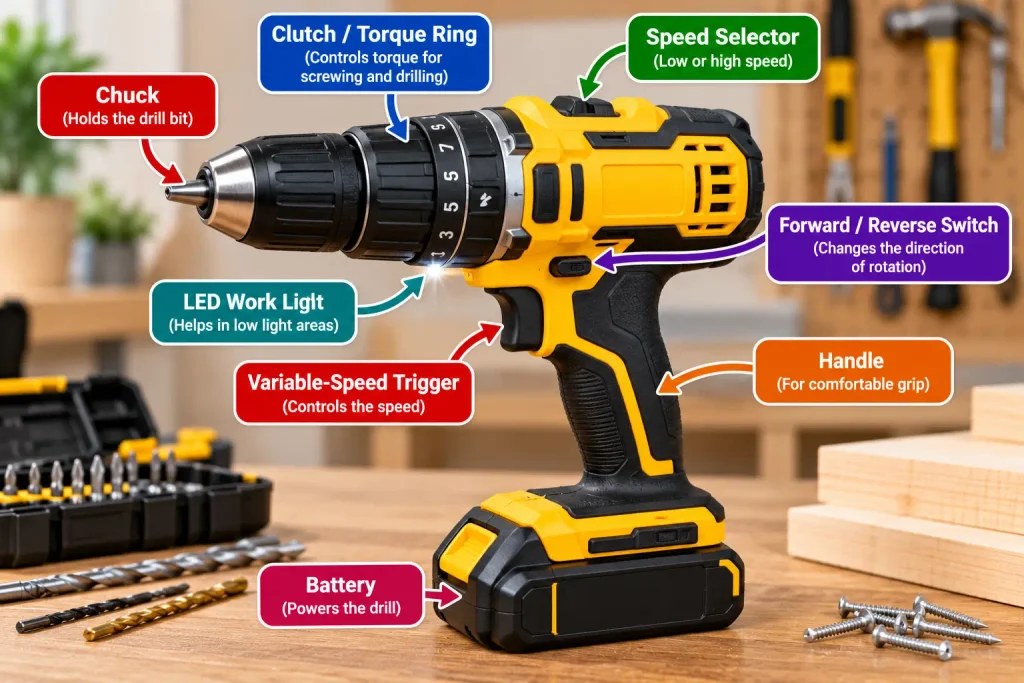
- Battery
- Trigger
- Chuck
- Direction switch
- Speed selector
- Clutch or torque ring
- Drill/driver mode selector
- Handle
- LED work light
Different models have different features, so the exact controls may vary.
What Do You Need to Use a Cordless Drill?
Before starting, gather:
- Cordless drill
- Fully charged compatible battery
- Correct drill bit or screwdriver bit
- Safety glasses
- Screws or fasteners, if needed
- Tape measure or pencil for marking
- Clamp for securing loose workpieces when necessary
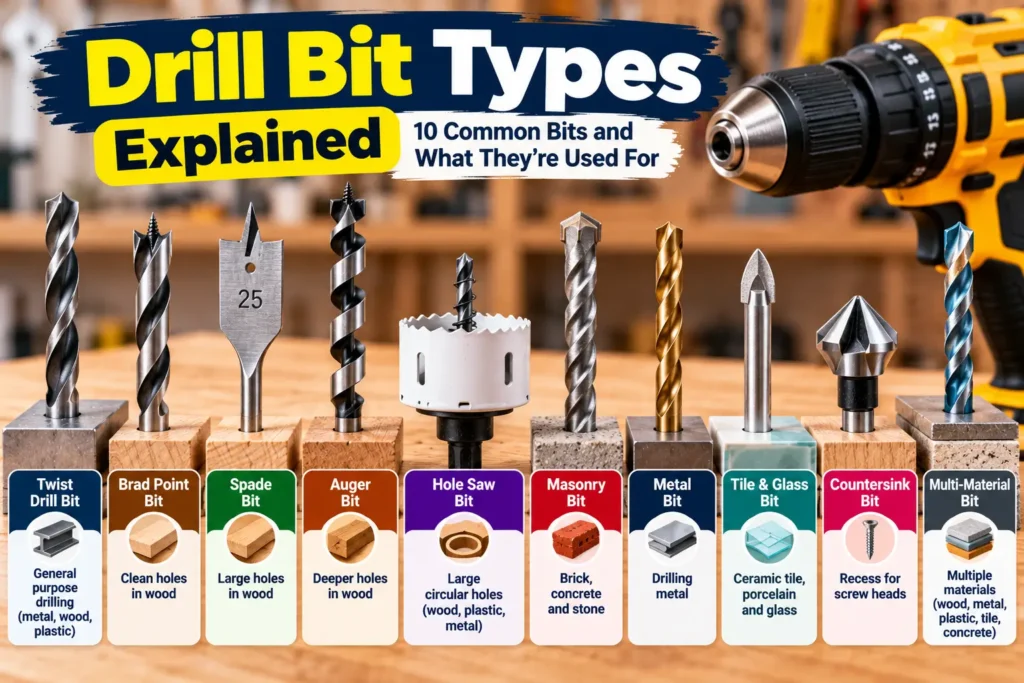
Choose a bit designed for the material you are working with. A wood bit, metal bit, masonry bit, and screwdriver bit are not interchangeable for every application.
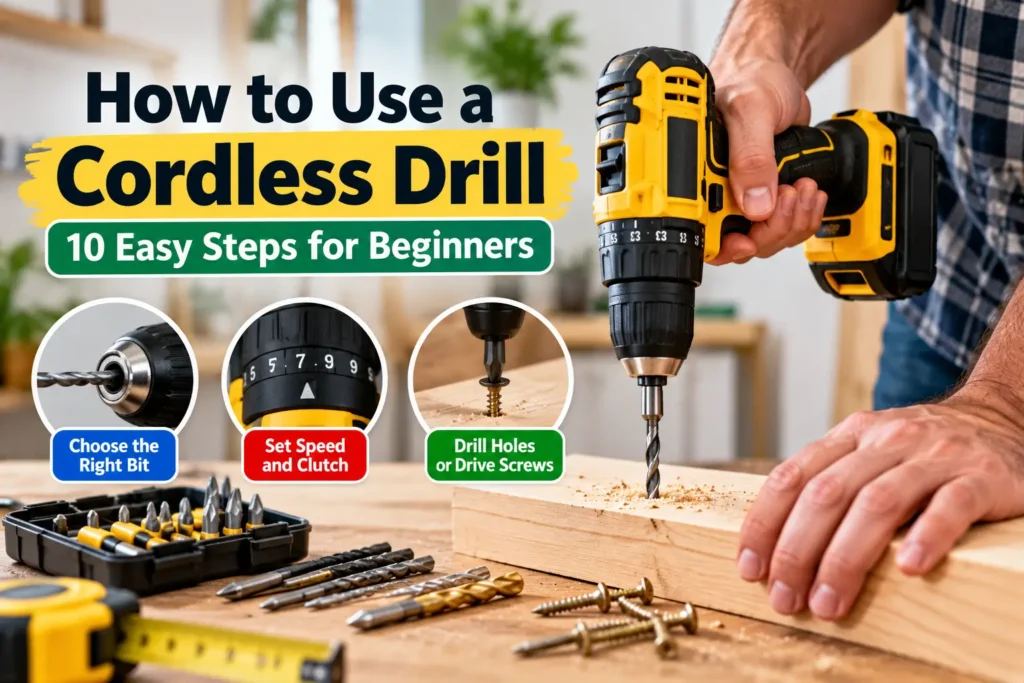
How to Use a Cordless Drill: 10 Easy Steps
1. Charge and Install the Battery
Start with a properly charged battery that is compatible with your drill.
Slide the battery into the tool until it locks securely in place. Check that it is seated properly before using the drill.
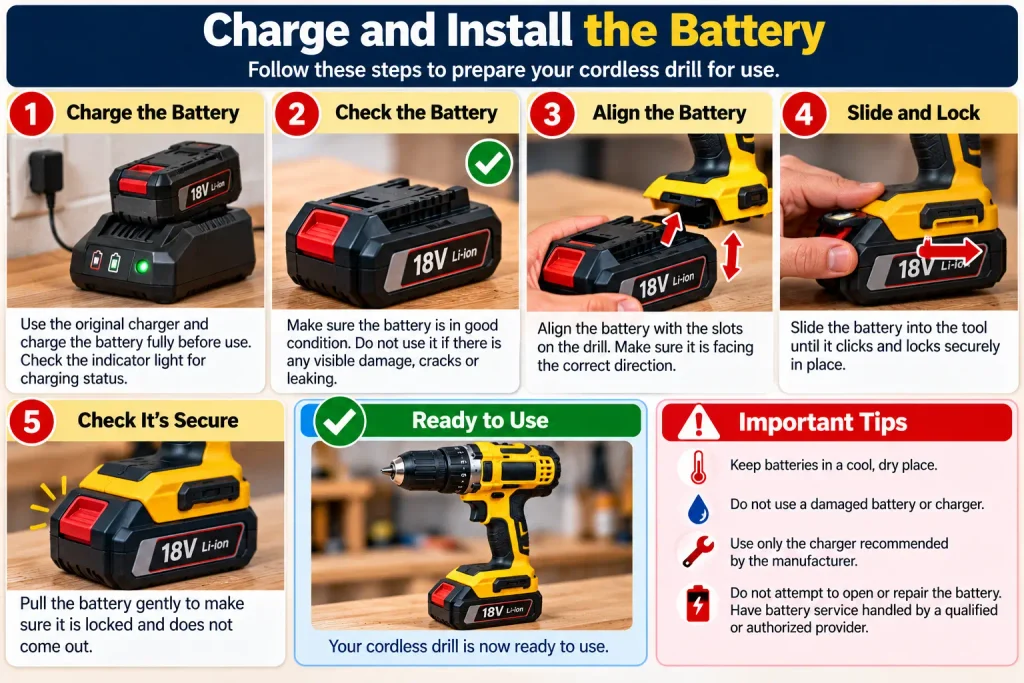
If the battery, tool, or charger shows visible damage, don’t use it. Damaged battery packs should not be repaired by the user; manufacturer safety guidance recommends having battery service handled by qualified or authorized providers.
Tip: Keep batteries in a cool, dry location and follow the charging instructions supplied with your particular tool.
2. Choose the Correct Drill Bit
The correct bit depends on what you are doing and what material you are working with.
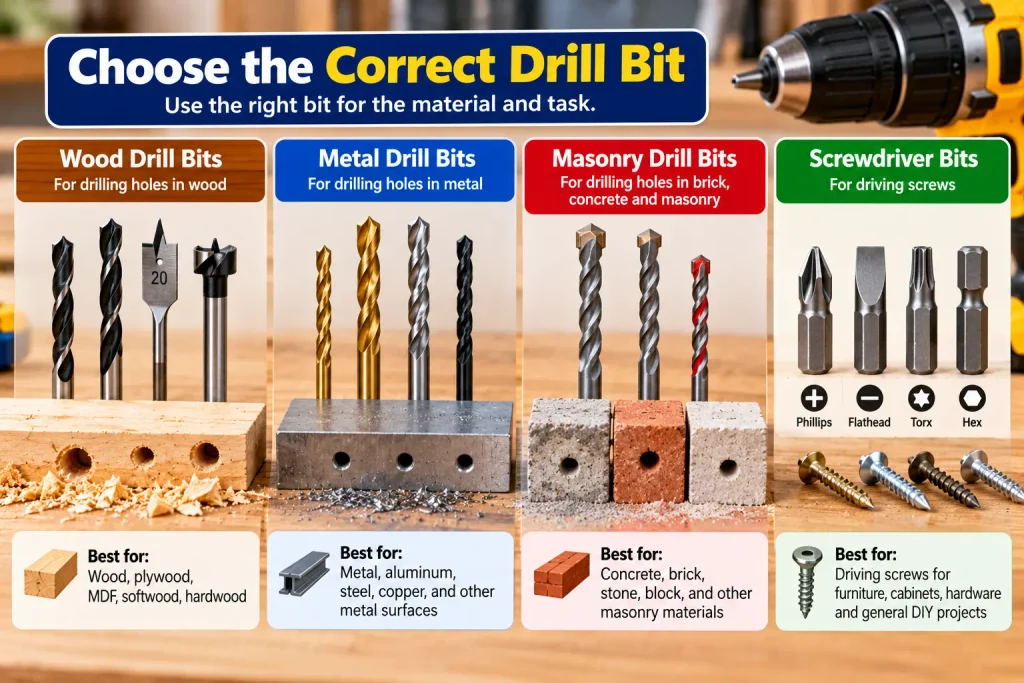
For example:
- Wood: Use a wood drill bit.
- Metal: Use a drill bit designed for metal.
- Masonry: Use a masonry bit and a drill suitable for the material. For harder masonry or concrete, check whether your tool is designed for the job. A standard drill/driver may not be suitable for every masonry application; a hammer drill may be more appropriate.
- Screws: Use the correct screwdriver bit for the screw head.
Avoid using dull, damaged, or unsuitable bits. A damaged bit can increase the chance of binding or losing control of the tool.
3. Insert the Bit Into the Chuck
The chuck is the part at the front of the drill that holds the bit.
For a keyless chuck:
- Hold the drill securely.
- Rotate the chuck to open its jaws.
- Insert the bit straight into the chuck.
- Keep enough of the bit inside the chuck for a secure grip.
- Tighten the chuck firmly by hand.
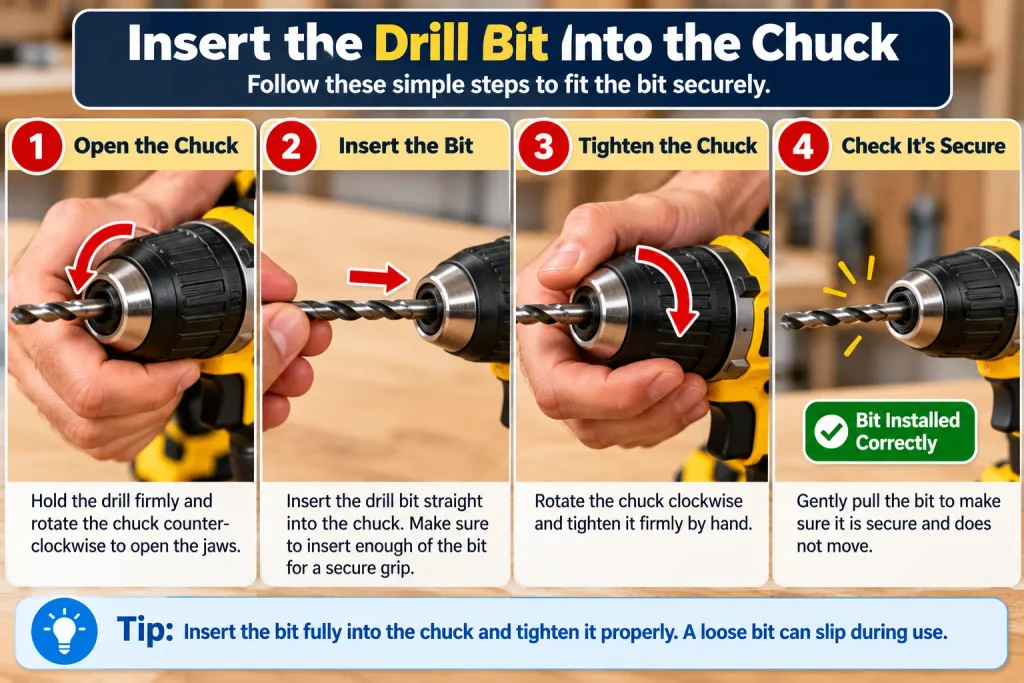
After tightening, gently check that the bit is secure.
Do not put your fingers near a spinning chuck or bit. Manufacturer safety instructions also warn against using damaged accessories and recommend inserting the bit sufficiently into the chuck jaws. Bosch Tools OCS Media
4. Set the Drill Direction
Look for the small forward/reverse switch near the trigger.
Usually:
- Forward: drives screws in or drills normally.
- Reverse: removes screws or backs a bit out of a hole.
Make sure the direction is correct before squeezing the trigger.
If you need to change direction, release the trigger and allow the drill to stop completely before switching.
5. Choose the Speed and Clutch Setting
Many cordless drills include a two-speed selector, although the controls and speed ranges vary by model.
A lower speed generally gives you more control and is useful for driving screws or starting holes. A higher speed can be useful for drilling when the bit and material allow it.
The clutch ring controls how much torque the drill applies when driving screws.
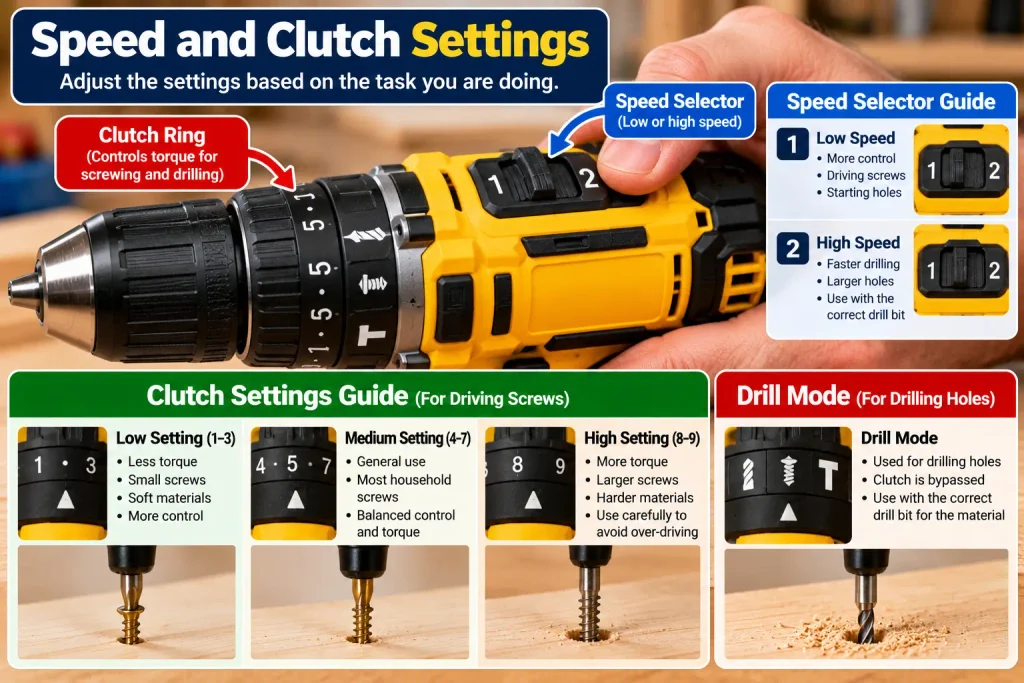
For example:
- Lower clutch setting → less torque
- Higher clutch setting → more torque
- Drill setting → intended for drilling rather than normal clutch-controlled screw driving
Start with a lower clutch setting when driving screws into a material and increase it gradually if necessary.
Different drills have different speed ranges and clutch systems, so always follow your model’s manual. For example, Bosch drill/drivers commonly use variable-speed controls and multiple clutch settings. Bosch Tools
6. Mark Where You Want to Drill
Before pulling the trigger, measure and mark the exact location.
Use a pencil or another suitable marking method.
If you are drilling into a board or other loose material, secure it with a clamp or another appropriate method instead of holding it in your hand.
For more simple home maintenance checks, see our Monthly Home Maintenance Checklist: 20 Easy Things to Check Every Month.
A stable workpiece helps you maintain control and reduces the chance of the bit catching unexpectedly. Bosch Tools OCS Media
7. Hold the Drill Correctly
Hold the drill firmly with your dominant hand around the handle.
Keep the drill aligned with the bit and the surface you are working on.
For larger or higher-torque drills equipped with an auxiliary handle, use it as instructed by the manufacturer.
Keep your hands away from the rotating chuck and bit.
Good control is especially important if the bit suddenly binds. A stalled drill can twist unexpectedly, so maintain a stable stance and grip. DEWALT also advises releasing the trigger immediately if a drill stalls rather than repeatedly switching the trigger on and off. DEWALT Support
8. Start Slowly and Drill the Hole
Place the tip of the bit exactly on your mark.
Press the trigger gently to start the drill at a low speed.
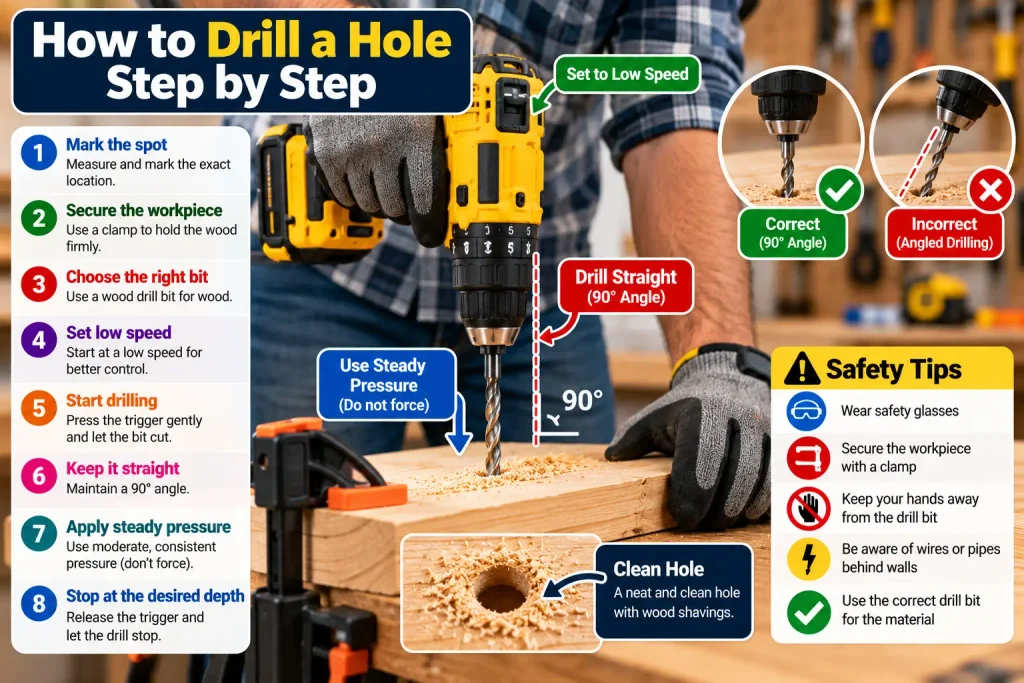
Once the bit is properly engaged with the material, you can increase speed if appropriate for the bit and application.
Keep the drill reasonably straight and apply steady, controlled pressure.
Don’t force the drill.
For longer drill bits, manufacturer safety guidance specifically recommends starting at low speed with the bit touching the workpiece and applying pressure in line with the bit rather than using excessive force.
When the hole reaches the required depth, release the trigger and allow the drill to stop.
9. Use the Drill to Drive a Screw
A cordless drill can also work as a screwdriver.
To drive a screw:
- Install the correct screwdriver bit.
- Set the drill to forward.
- Choose a low or moderate speed.
- Set the clutch to a suitable low setting to start.
- Position the screw straight against the material.
- Apply gentle pressure.
- Slowly squeeze the trigger.
- Stop when the screw reaches the desired depth.
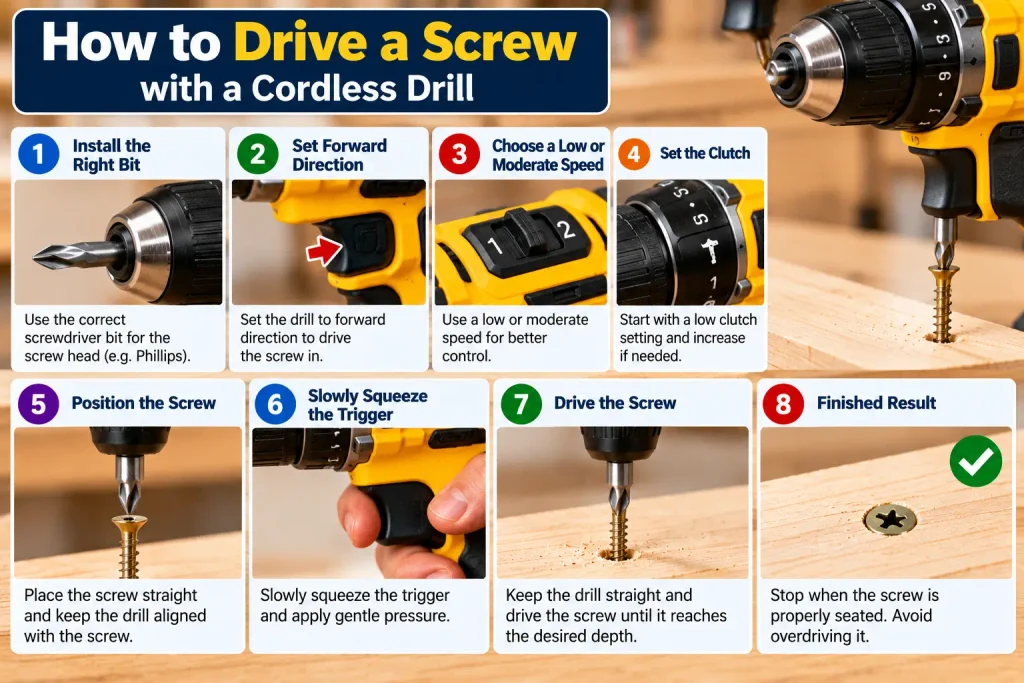
Avoid pushing the screw too far into the material.
If the screw head starts to strip, stop and check that you are using the correct bit and applying enough downward pressure to keep the bit seated.
10. Remove the Bit and Store the Drill Safely
When you finish working:
- Release the trigger.
- Wait until the drill and bit stop completely.
- Remove the battery when appropriate for storage or according to the manufacturer’s instructions.
- Remove the bit if required.
- Wipe away dust and debris.
- Store the drill and accessories in a dry, safe location.
Removing the battery when the tool is not being used can help prevent accidental activation. DEWALT recommends removing the rechargeable battery from the tool where possible after use. DEWALT Support
How to Drill a Clean Hole With a Cordless Drill
For a cleaner result, follow this simple sequence:
Mark → Secure → Choose the correct bit → Set low speed → Start slowly → Keep the drill straight → Increase speed if appropriate → Stop at the required depth.
For thin materials, avoid pushing too aggressively as the bit approaches the other side. Reducing pressure near breakthrough can help prevent sudden grabbing or damage.
How to Drive Screws Without Stripping Them
Stripped screw heads are a common beginner problem.
Try these tips:
- Use the correct screwdriver bit.
- Make sure the bit fits the screw head properly.
- Keep the drill aligned with the screw.
- Start at a controlled speed.
- Don’t use excessive pressure.
- Use the clutch instead of maximum torque for every screw.
- Stop when the screw is properly seated.
If the drill repeatedly slips out of the screw head, stop and check the bit and screw rather than continuing to apply more pressure.
Common Cordless Drill Mistakes to Avoid
Using the Wrong Bit
A drill bit designed for wood isn’t automatically suitable for metal or masonry.
Starting at Full Speed
Starting slowly gives you better control and helps the bit stay on the mark.
Using Too Much Pressure
Let the correct bit and drill setting do the work. Excessive pressure can bend or break bits.
Holding the Material in Your Hand
Secure loose material with a clamp or another suitable method.
Ignoring the Clutch
Maximum torque isn’t always better when driving screws. A suitable clutch setting can help prevent overdriving and damage.
Drilling Without Checking Behind a Wall
Never blindly drill into a wall where electrical wiring or plumbing may be hidden.
Using a Damaged Battery or Bit
Stop using damaged components and replace or service them according to the manufacturer’s instructions.
Using a Power Tool in Wet Conditions
Don’t use a cordless drill in wet conditions unless the specific tool is expressly designed and approved for that environment. DEWALT states that power tools should not be used in wet conditions.
Cordless Drill Safety Tips
Before using your drill, remember these basic precautions:
- Wear safety glasses.
- Keep loose clothing and hair away from rotating parts.
- Secure the workpiece.
- Use the correct bit for the material.
- Inspect bits before use.
- Keep both hands available for control when the tool or application requires it.
- Remove the battery before changing accessories or making adjustments.
- Don’t drill blindly into walls.
- Keep the drill away from water and wet conditions.
- Stop immediately if the tool behaves unexpectedly.
- Follow your drill manufacturer’s manual.
For detailed power-tool safety information, DEWALT provides dedicated drill/driver safety guidance, while Bosch manuals include specific precautions for cordless drill/drivers. DeWalt
What Can You Use a Cordless Drill For?
A cordless drill can be useful for many everyday DIY tasks, including:
- Assembling furniture
- Installing shelves
- Mounting hardware
- Drilling pilot holes
- Installing cabinet handles
- Driving screws
- Installing curtain brackets
- Making holes in suitable wood or metal
- Small home repair projects
If you’re working through common household repairs, our Home Fixes guides cover practical solutions for everyday problems around the house.
Always choose the drill, bit, speed, and technique based on the specific material and job.
When Should You Not Use a Cordless Drill Yourself?
Consider getting professional help when the job involves:
- Unknown electrical wiring
- Gas lines
- Hidden plumbing
- Structural components
- Difficult masonry or concrete work
- High-risk work at height
- Damaged electrical or battery components
- A tool that is malfunctioning or damaged
A cordless drill is useful, but it isn’t the right tool for every repair.
FAQs About Using a Cordless Drill
Can a beginner use a cordless drill?
Yes. A cordless drill can be relatively easy for beginners to learn when you start with simple projects, use the correct bit, begin at a controlled speed, and follow the manufacturer’s safety instructions.
What speed should I use on a cordless drill?
Use a lower speed when you need more control, such as starting a hole or driving screws. The appropriate speed depends on the drill, bit, material, and application.
Should I use the clutch when drilling?
For normal drilling, many drill/drivers have a dedicated drill setting rather than using the numbered clutch settings. Check your specific model’s instructions.
Why does my cordless drill stop while drilling?
The drill may be overloaded, the bit may be binding, or the application may require a different bit or setting. Release the trigger and inspect the situation rather than repeatedly forcing the drill.
Can I use a cordless drill as a screwdriver?
Yes. Many cordless drill/drivers are designed for both drilling and screwdriving. Use an appropriate screwdriver bit and a suitable clutch setting.
How do I know which drill bit to use?
Choose a bit specifically designed for the material and task. Wood, metal, masonry, and screwdriving applications generally require different accessories.
Final Takeaway
Learning how to use a cordless drill doesn’t have to be complicated. Start by choosing the correct bit, securing your workpiece, checking the drill direction, selecting a suitable speed and clutch setting, and beginning slowly.
The most important rule is don’t rush. Keep the drill under control, use the right accessory, and stop if something doesn’t feel or look right.
With a little practice, a cordless drill can become one of the most useful tools in your DIY toolkit.