
Carpet stains are one of the most common household cleaning problems. A spilled cup of coffee, a glass of red wine, muddy shoes, food crumbs, grease, or pet accidents can quickly leave unwanted marks on an otherwise clean carpet.
Removing these stains is not always as simple as applying a cleaning product and scrubbing. Different carpet materials react differently to moisture, detergents, household ingredients, and stain removers. Using the wrong cleaning technique can cause colour fading, damaged fibres, permanent watermarks, or unpleasant odours.
Learning how to remove stains from carpet without damaging it starts with understanding the type of stain, identifying the carpet material, and choosing a suitable cleaning method.
In this guide, you will learn how to treat common carpet stains, remove old marks, clean delicate fibres, choose appropriate cleaning solutions, and dry your carpet properly. These practical carpet stain removal tips will help you maintain a cleaner home while reducing the risk of unnecessary carpet damage.
Why Do Carpet Stains Become Difficult to Remove?
Carpet stains can become stubborn when spills are not treated correctly or remain untreated for a long time. Liquids may travel through the carpet pile and reach the backing or underlay, making complete removal more difficult.
Here are some common reasons carpet stains become difficult to remove.
1. Spills Penetrate Deep into Carpet Fibres
Coffee, juice, sauces, and other liquids can move between carpet fibres. If they reach the backing or underlay, surface cleaning may not remove all the residue.
2. Delayed Stain Treatment
Fresh stains are generally easier to address than dried stains. As a spill dries, its residue can become harder to remove.
3. Dirt and Dust Buildup
Dust and everyday dirt can combine with spilled liquids, creating darker marks that are difficult to clean.
4. Incorrect Cleaning Products
A cleaning solution designed for one material may be unsuitable for another. Strong chemicals can cause fading, discolouration, or fibre damage.
5. Excessive Scrubbing
Rubbing a stain aggressively can spread the substance, distort carpet fibres, and push residue deeper into the pile.
6. Using Too Much Water
Excessive moisture can reach the carpet backing and underlay. This may contribute to watermarks, unpleasant smells, and other moisture-related problems.
7. Heat and Previous Cleaning Attempts
Heat can make certain stains more difficult to remove, particularly protein-based stains. Previous unsuccessful cleaning attempts may also leave detergent residue or make the original stain harder to identify.
Important: Different stains require different treatments. Always identify the carpet material and check its care instructions before applying a cleaning solution.
Identify Your Carpet Type Before Removing Stains
Before cleaning a carpet, identify the material. Carpet fibres differ in their tolerance to moisture, cleaning chemicals, and friction.

Nylon Carpet
Nylon is a common synthetic carpet fibre. It is generally durable and suitable for everyday household use.
- Use a carpet-compatible spot cleaner.
- Blot spills with a clean, white cloth.
- Avoid excessive detergent and aggressive scrubbing.
- Check whether the carpet has a stain-resistant treatment.
Polyester Carpet
Polyester carpet is commonly used in bedrooms and living areas. It can have good resistance to some water-based stains, but oily substances may be more difficult to remove.
- Use a cleaning product approved for polyester carpet.
- Treat grease and oil with a compatible carpet stain remover.
- Avoid excessive moisture.
- Follow the carpet manufacturer’s maintenance instructions.
Polypropylene Carpet
Polypropylene, also called olefin, is a synthetic fibre used in residential and commercial carpets.
- Use a compatible cleaning solution.
- Avoid excessive heat.
- Blot stains rather than rubbing them.
- Check the manufacturer’s instructions before using solvents or strong cleaners.
Wool Carpet
Wool is a natural fibre that requires more careful cleaning.
- Use a WoolSafe-approved carpet cleaning product where appropriate.
- Avoid strong alkaline cleaners and unsuitable chemicals.
- Do not soak the carpet.
- Avoid aggressive scrubbing.
- Contact a professional cleaner for stubborn stains.
Natural and Delicate Carpet Fibres
Some carpets are made from natural or delicate materials such as silk, jute, sisal, and other speciality fibres.
These materials may be sensitive to water, friction, and certain cleaning chemicals.
Always check the manufacturer’s instructions and perform a colourfastness test where the care instructions permit it. Professional cleaning is preferable when the material or dye compatibility is uncertain.
Important: Never assume a product labelled suitable for all carpets is automatically safe for every fibre. For wool, look for the WoolSafe mark and follow the product instructions. The WoolSafe Organisation+1
What to Do Immediately When Something Spills on Your Carpet
Quick action can help prevent a small spill from becoming a stubborn stain.
Follow these steps as soon as possible.
- Remove solid debris: Carefully pick up food pieces, mud clumps, or other solid material using a spoon or blunt utensil.
- Blot liquid spills: Use a clean, white absorbent cloth or plain white paper towel.
- Work from the outside inward: This helps prevent the stain from spreading.
- Avoid rubbing: Rubbing can damage carpet fibres and push the stain deeper.
- Absorb excess moisture: Continue blotting with a fresh section of cloth.
- Identify the stain: Determine whether it is coffee, grease, wine, food, ink, blood, or pet urine.
- Check carpet instructions: Confirm that your intended cleaning method is suitable.
- Test the cleaning product: Test it in an inconspicuous area before treating the visible stain.
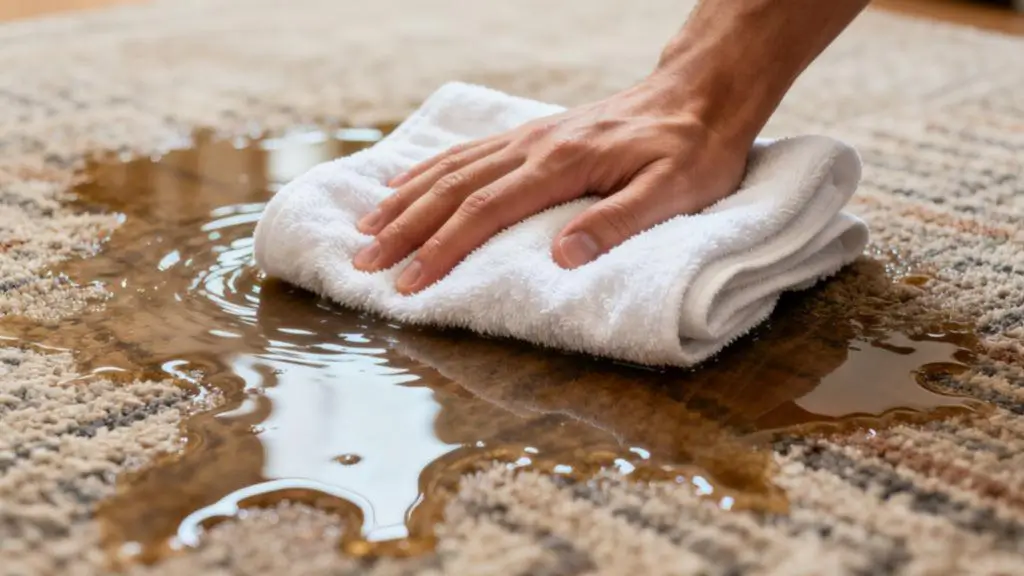
The Carpet and Rug Institute recommends absorbing spills with a clean white cloth and avoiding scrubbing because it can damage carpet texture and fibres. The Carpet and Rug Institute+1
The Carpet and Rug Institute recommends absorbing liquid spills with a clean white cloth and avoiding aggressive scrubbing to protect carpet fibres.
How to Remove Stains from Carpet Without Damaging It – Step-by-Step Method
Use this general method for suitable carpet types. Always follow the carpet manufacturer’s care instructions and the cleaning product label.
Step 1. Identify the Type of Stain
First, determine what caused the stain.
A coffee spill, oily food mark, mud stain, and pet urine stain require different treatments.
Choosing the wrong cleaning method can make the stain harder to remove.
Step 2. Check the Carpet Material
Check whether your carpet is nylon, polyester, polypropylene, wool, or another delicate material.
If you cannot identify the fibre, contact the carpet manufacturer or a professional cleaner before using a chemical stain remover.
Step 3. Remove Loose Dirt and Solid Debris
Carefully remove solid particles using a spoon or blunt utensil.
For dry mud and dirt, allow the material to dry when appropriate, then vacuum gently.
Do not push debris further into the carpet.
Step 4. Blot the Stain Gently
Place a clean white cloth over the affected area and press gently.
Continue using a clean section of the cloth as the stain transfers.
Avoid rubbing, brushing, or scrubbing.
Step 5. Choose a Suitable Carpet Cleaning Solution
Select a cleaning product specifically designed for your carpet type and stain.
A mild carpet detergent or an appropriate commercial spot remover may be suitable.
Do not assume that household ingredients work safely on every carpet.
Step 6. Perform a Colourfastness Test
Apply a small amount of the cleaning solution to an inconspicuous area according to its label.
Blot with a clean white cloth and check whether any colour transfers or the carpet changes appearance.
Allow the test area to dry before assessing the result.
If you notice colour transfer, fading, or texture changes, stop using that product.
Step 7. Apply the Cleaning Solution Carefully
Apply the product in the amount recommended by its manufacturer.
Where appropriate, apply it to a clean cloth instead of pouring it directly onto the carpet.
Avoid soaking the carpet because excessive moisture can reach the backing and underlay.
Step 8. Blot and Remove Cleaning Residue
Follow the product’s instructions for removing the remaining cleaning solution.
If rinsing is permitted, use a small amount of clean water and blot it away with a fresh cloth.
Excessive detergent can leave residue that attracts dirt and causes the area to become dirty again.
Step 9. Dry the Carpet Properly
Press a dry absorbent towel against the cleaned area to remove excess moisture.
Improve ventilation by opening windows where conditions allow. Use a fan to encourage air circulation.
Avoid excessive heat and keep children and pets away from the wet area.
Step 10. Inspect the Carpet After Drying
Wait until the carpet is completely dry before evaluating the result.
Check for:
- Remaining stain marks.
- Sticky cleaning residue.
- Unpleasant smells.
- Colour changes.
- Changes in carpet texture.
If the stain remains, do not repeatedly apply stronger chemicals. Consider a suitable professional cleaning service.
How to Remove Different Types of Stains from Carpet
Different spills need different approaches. Here are practical techniques for common household stains.
How to Remove Coffee Stains from Carpet

Coffee can leave brown marks, especially when sugar, milk, or cream is present.
Cleaning method:
- Blot fresh coffee using a clean white cloth.
- Remove as much liquid as possible.
- Check your carpet’s cleaning instructions.
- Apply a compatible carpet spot cleaner.
- Blot gently without rubbing.
- Remove residue according to the product instructions.
- Dry the area thoroughly.
For coffee containing milk or cream, use a cleaner appropriate for the additional organic residue.
Do not use hot water or aggressive scrubbing as a substitute for identifying the correct cleaning method.
How to Remove Tea Stains from Carpet
Tea can leave brown or yellowish marks because it contains natural colouring compounds.
Cleaning method:
- Blot fresh tea with a white absorbent cloth.
- Remove excess liquid.
- Apply a carpet-compatible spot cleaner.
- Blot gently from the outside toward the centre.
- Remove any remaining product as directed.
- Allow the carpet to dry completely.
Older tea stains may require a suitable specialised stain remover or professional treatment.
How to Remove Red Wine Stains from Carpet
Red wine can leave noticeable coloured marks on light-coloured carpets.
Cleaning method:
- Immediately absorb excess wine using a clean white cloth.
- Avoid rubbing the affected area.
- Continue blotting with fresh sections of the cloth.
- Choose a carpet-safe product designed for the stain and fibre.
- Test the product in an inconspicuous location.
- Apply it according to the label.
- Remove residue as instructed.
- Allow the carpet to dry.
Avoid pouring large amounts of water, salt, or untested household mixtures onto the carpet. These approaches can spread the stain or create additional cleaning problems.
For large spills, expensive rugs, or stubborn red wine marks, consider professional treatment.
How to Remove Juice and Soft Drink Stains
Fruit juice and soft drinks may leave sticky residue, coloured marks, or both.
Cleaning method:
- Blot the liquid immediately.
- Remove as much moisture as possible.
- Use a carpet-compatible cleaner suitable for the stain.
- Blot gently.
- Remove sticky residue according to the cleaner’s instructions.
- Dry thoroughly.
Avoid excessive detergent because remaining soap can attract dirt.
How to Remove Food and Sauce Stains
Food stains can contain oils, proteins, spices, and coloured ingredients.
Cleaning method:
- Remove solid food using a spoon.
- Avoid spreading the material across the carpet.
- Blot any remaining liquid.
- Identify whether the stain is oily, coloured, or protein-based.
- Select a compatible carpet stain remover.
- Follow the product’s application and removal instructions.
- Allow the carpet to dry.
For curry, tomato sauce, and similar strongly coloured foods, avoid aggressive scrubbing because it may spread the colouring.
How to Remove Grease and Oil Stains
Grease and oil can cling to carpet fibres and attract additional dirt.
Cleaning method:
- Carefully remove excess grease using a spoon.
- Place a clean absorbent cloth over the affected area.
- Blot without spreading the oily material.
- Choose a carpet-safe cleaner specifically suitable for grease.
- Test it on an inconspicuous area.
- Apply according to the product label.
- Blot and remove residue as instructed.
Avoid using large amounts of dishwashing liquid directly on the carpet. Excess soap can be difficult to remove.
How to Remove Mud and Dirt Stains
Mud is easier to manage when you avoid spreading it while wet.
Cleaning method:
- Allow wet mud to dry when appropriate.
- Break up loose dried material carefully.
- Vacuum the dirt using a suitable vacuum attachment.
- Treat remaining marks with a compatible carpet cleaner.
- Blot gently.
- Remove residue as instructed.
- Allow the area to dry completely.
Avoid brushing wet mud into the carpet.
How to Remove Ink and Marker Stains
Ink and marker stains can be difficult because different inks contain different dyes and solvents.
Cleaning method:
- Identify the type of ink if possible.
- Blot fresh ink gently without spreading it.
- Choose a stain remover specifically compatible with the ink and carpet material.
- Test the product for colourfastness.
- Apply a small amount according to the label.
- Blot with a clean white cloth.
- Stop if the carpet colour begins transferring.
Avoid using rubbing alcohol, acetone, or other solvents without confirming compatibility. They can damage carpet dyes, backing, or fibres.
For large ink stains or delicate carpets, professional cleaning is preferable.
How to Remove Blood Stains from Carpet
Blood is a protein-based stain that requires careful treatment.
Cleaning method:
- Wear disposable gloves.
- Absorb fresh blood using a clean disposable cloth.
- Use cool water on a white cloth only if the carpet’s care instructions permit it.
- Blot gently rather than rubbing.
- Use a carpet-compatible product labelled for blood or protein stains.
- Follow its application and removal instructions.
- Dispose of contaminated materials safely.
Avoid hot water because heat can make protein stains more difficult to remove.
For large amounts of blood or delicate carpet materials, seek professional assistance.
How to Remove Pet Urine Stains from Carpet
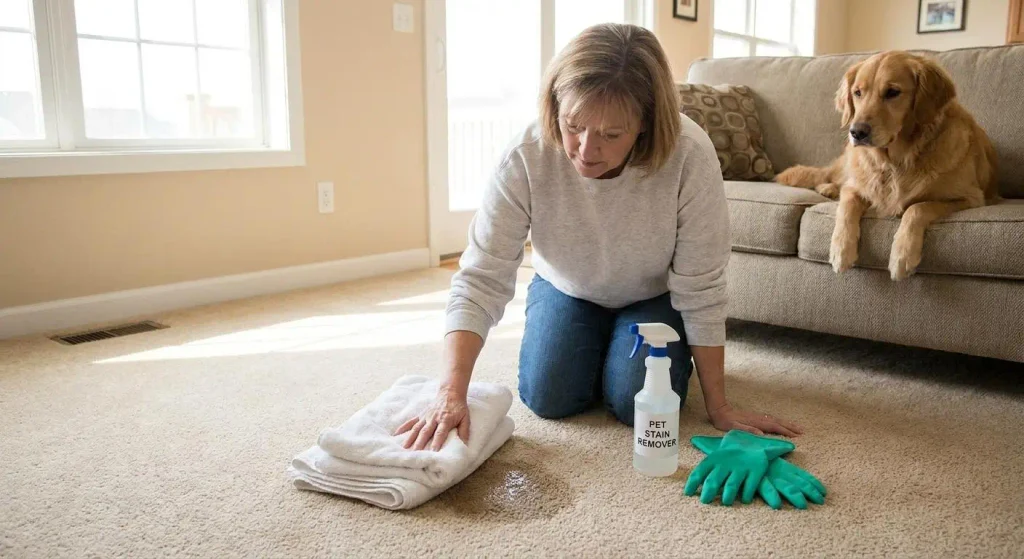
Pet urine can leave yellowish marks and unpleasant odours. If it reaches the carpet padding, surface cleaning alone may not resolve the smell.
Cleaning method:
- Blot fresh urine using absorbent paper towels.
- Remove as much liquid as possible.
- Choose an enzymatic carpet cleaner specifically labelled for pet urine.
- Check that it is compatible with your carpet material.
- Test it in an inconspicuous area.
- Apply according to the manufacturer’s directions.
- Allow the recommended contact time.
- Remove residue if the instructions require it.
- Dry the carpet thoroughly.
Do not combine an enzymatic cleaner with bleach, vinegar, or other cleaning chemicals. Mixing products can interfere with treatment and may create safety hazards.
Keep pets and children away until the area is dry and safe for normal use.
If the smell returns after cleaning, urine may have reached the underlay. Professional assessment may be necessary.
If unpleasant smells remain after cleaning, explore our guide on how to remove bad smells from your home naturally for additional household odour prevention tips.
How to Remove Old and Dried Carpet Stains
Old carpet stains are more challenging because the spilled substance may have dried, bonded with fibres, or penetrated into the carpet backing.
Follow these steps:
- Identify the original stain if possible.
- Vacuum loose dirt and dried surface debris.
- Check the carpet material and care instructions.
- Choose a stain remover designed for the specific stain.
- Test the product in an inconspicuous area.
- Apply it according to the manufacturer’s instructions.
- Blot gently using a clean white cloth.
- Remove product residue as directed.
- Allow the area to dry completely.
- Check whether the stain has improved.
Some older stains may need professional treatment.
It is also important to distinguish between a remaining stain and permanent discolouration. If the carpet dye has been chemically damaged or the fibres have changed colour, cleaning may not restore the original appearance.
Best Carpet Cleaning Solutions and Their Limitations
Choosing the right carpet cleaning product is just as important as using the correct cleaning technique.
Mild Carpet Cleaning Detergent
A mild carpet cleaning detergent may be suitable for certain everyday stains.
Advantages:
- Designed for carpet cleaning when used as directed.
- Can help remove some everyday dirt and spills.
- Available in different formulations.
Limitations:
- Not every detergent is suitable for every fibre.
- Excessive use may leave sticky residue.
- Some formulations may affect carpet dyes.
Always use the recommended concentration.
Commercial Carpet Stain Removers
Commercial carpet stain removers are formulated for specific cleaning applications.
Before purchasing one, check:
- Compatible carpet materials.
- Types of stains it treats.
- Application instructions.
- Whether rinsing is required.
- Safety precautions.
- Manufacturer recommendations.
For wool carpets, look for an appropriately WoolSafe-approved product. The WoolSafe Organisation

Baking Soda
Baking soda is commonly used in household cleaning.
It may help absorb some surface moisture and reduce certain odours when used appropriately.
However, baking soda is not a universal carpet stain remover.
Limitations:
- It may not remove deep or coloured stains.
- Powder can become trapped in carpet fibres.
- Excessive application can make vacuuming difficult.
- It should not be used as a substitute for appropriate pet urine treatment.
White Vinegar
White vinegar is sometimes used in household cleaning, but it is not suitable for every carpet.
Some carpet dyes, backings, and natural fibres may react poorly to acidic solutions.
Avoid applying vinegar without checking carpet compatibility.
Never mix vinegar with bleach or other cleaning chemicals.
Dish Soap
Dish soap may help with certain greasy residues, but ordinary dishwashing products are not necessarily designed for carpet fibres.
Excessive soap can leave residue that attracts dirt.
If a carpet-compatible product is available, it is generally a better choice than experimenting with concentrated dish soap.
Enzyme-Based Carpet Cleaners
Enzyme-based cleaners are designed to target certain organic residues.
They are particularly useful for some pet urine stains when the product is specifically formulated and labelled for that purpose.
Limitations:
- Not every enzyme cleaner works on every stain.
- Product contact time matters.
- Some formulations are unsuitable for particular fibres.
- Mixing products can interfere with cleaning.
Always follow the manufacturer’s instructions.
Common Carpet Cleaning Mistakes That Can Damage Carpets
Avoid these common mistakes when cleaning carpet stains.
- Rubbing aggressively: Can spread stains and damage carpet fibres.
- Using excessive water: Can wet the backing and underlay.
- Applying bleach: Can cause permanent colour loss and damage.
- Using too much detergent: May leave residue that attracts dirt.
- Ignoring carpet instructions: Can lead to incompatible cleaning methods.
- Skipping colourfastness testing: May result in dye transfer or fading.
- Using excessive heat: Can worsen certain stains and damage sensitive materials.
- Using harsh chemicals: Can affect dyes and fibres.
- Mixing cleaning products: Can create dangerous chemical reactions.
- Walking on wet carpets: Can transfer dirt and flatten damp fibres.
- Leaving cleaning residue: May attract fresh dirt.
- Using unsuitable equipment: Can damage delicate carpet materials.
Important safety warning
Never mix bleach with vinegar, ammonia, acids, or other cleaning products. Dangerous gases and chemical reactions can occur. Always use cleaning products separately according to their labels, maintain good ventilation, and store them away from children and pets. Poison Control+2
How to Dry Carpet Properly After Cleaning
Proper drying is essential because moisture left inside a carpet can contribute to unpleasant odours and mould problems.

Follow these tips:
- Remove excess moisture: Blot the cleaned area using dry absorbent towels.
- Improve ventilation: Open windows when outdoor conditions allow.
- Use a fan: Direct airflow across the carpet.
- Avoid excessive heat: High heat can damage some carpet fibres.
- Protect wet areas: Keep children and pets away.
- Check the underlay: Large spills may penetrate below the carpet surface.
- Inspect for odours: A persistent musty smell may indicate trapped moisture.
If you notice recurring moisture or mould elsewhere in your home, read our guide on how to remove mold from bathroom walls safely for additional cleaning guidance.
The US Environmental Protection Agency recommends drying water-damaged materials promptly. Its guidance discusses drying carpet and backing within 24–48 hours where possible and notes that carpet padding may also need to be dried. This guidance concerns water damage, not a guaranteed drying time for every spot-cleaning job. US EPA+2
If a carpet has been extensively soaked, arrange appropriate water extraction and professional drying rather than relying on surface ventilation alone.
The US EPA recommends prompt drying of water-damaged materials to reduce the risk of mould growth.
How to Prevent Carpet Stains in the Future
Preventing spills and dirt buildup is easier than repeatedly treating stubborn stains.
Here are some useful carpet maintenance habits:
- Clean spills as soon as possible.
- Use doormats at entrances.
- Remove outdoor footwear where practical.
- Vacuum regularly.
- Keep food and drinks away from vulnerable carpet areas.
- Use suitable pet-care routines.
- Treat small stains before they become stubborn.
- Follow carpet manufacturer maintenance instructions.
- Clean high-traffic areas regularly.
- Arrange professional cleaning when necessary.
Regular care can help preserve carpet appearance and reduce the buildup of dirt.
For more practical advice on removing stubborn household marks from suitable surfaces, read our guide on how to remove hard water stains.
When Should You Hire a Professional Carpet Cleaner?
DIY carpet cleaning is useful for many small household spills, but some situations require professional attention.
Consider professional cleaning when:
- The stain is large or deeply embedded.
- Pet urine odours keep returning.
- You have an expensive wool or natural-fibre carpet.
- The carpet has experienced extensive water damage.
- There are recurring musty smells or signs of mould.
- The carpet has permanent colour changes.
- Previous chemicals have damaged the carpet.
- The backing or underlay may be affected.
- You are unsure which cleaning solution is safe.
Professional carpet cleaners can assess the fibre, stain, and carpet construction before selecting an appropriate cleaning method.
For valuable or delicate carpets, professional assessment can help prevent further damage.
Frequently Asked Questions About Removing Carpet Stains
1. How do you remove stains from carpet without damaging it?
Identify the stain and carpet material first. Blot the affected area with a clean white cloth, use a compatible carpet cleaner, test it in an inconspicuous area, and remove residue according to the product instructions.
2. What is the safest way to clean carpet stains?
The safest approach is to follow the carpet manufacturer’s instructions, blot rather than scrub, use a compatible cleaning product, test for colourfastness, and avoid excessive moisture.
3. How do you remove old stains from carpet?
Vacuum loose dirt, identify the stain, and choose an appropriate carpet stain remover. Follow the product instructions and avoid aggressive scrubbing. Some old stains may require professional cleaning.
4. Can baking soda remove carpet stains?
Baking soda may help with certain odours and surface moisture, but it does not reliably remove every type of carpet stain. It should not replace a suitable stain-specific cleaner.
5. Is white vinegar safe for cleaning carpets?
Not always. Vinegar is acidic and may affect certain dyes, backings, or delicate fibres. Check the manufacturer’s instructions before using it.
6. How do you remove coffee stains from carpet?
Blot the spill immediately with a clean white cloth, apply a compatible carpet stain remover, and follow its instructions. Avoid rubbing the stain.
7. How do you remove red wine stains from carpet?
Absorb the wine using a clean white cloth. Use a compatible stain remover after testing it in an inconspicuous area. For difficult or large stains, contact a professional cleaner.
8. How do you remove pet urine stains from carpet?
Blot fresh urine, then use an enzymatic carpet cleaner specifically labelled for pet urine. Follow its instructions and dry the carpet thoroughly.
9. How do you remove grease stains from carpet?
Remove excess grease carefully, blot with an absorbent cloth, and use a compatible carpet cleaner designed for oily stains.
10. How do you remove dried mud from carpet?
Allow the mud to dry when appropriate, vacuum loose dirt, and treat remaining marks with a suitable carpet cleaning product.
11. Can dish soap be used to clean carpet stains?
Some dish soaps may help with certain greasy marks, but excessive soap can leave residue. A carpet-specific cleaning product is generally preferable.
12. Why should you blot carpet stains instead of rubbing them?
Blotting absorbs liquid without aggressively disturbing carpet fibres. Rubbing may spread the stain, distort fibres, and push residue deeper into the carpet.
13. How do you prevent watermarks after carpet cleaning?
Avoid excessive moisture, remove cleaning residue as instructed, blot the area evenly, and dry it thoroughly. Follow the carpet manufacturer’s recommendations.
14. How long does carpet take to dry after spot cleaning?
Drying time depends on carpet material, moisture quantity, room temperature, humidity, and ventilation. Use airflow and avoid walking on the area until completely dry.
15. When should you call a professional carpet cleaner?
Contact a professional for stubborn stains, persistent pet urine odours, valuable wool carpets, extensive water damage, recurring mould concerns, or suspected fibre and backing damage.
Conclusion
Learning how to remove stains from carpet without damaging it is mainly about choosing the correct cleaning method and avoiding unnecessary damage.
Start by identifying the carpet material and the type of stain. Blot spills instead of rubbing, choose a compatible cleaning solution, test it before use, and avoid excessive water and harsh chemicals.
Remember that baking soda, vinegar, and ordinary household detergents are not universal carpet cleaning solutions. Always follow manufacturer instructions and allow the carpet to dry completely.
Some stains can be removed with simple DIY methods, while others require professional attention. Knowing when to stop cleaning is just as important as knowing how to clean.
For more practical cleaning advice, explore the Cleaning Fixes guides on Fix The Annoying and discover simple ways to keep your home cleaner, fresher, and easier to maintain.