A bathroom sink is one of the most frequently used fixtures in any home. From brushing your teeth and washing your hands to shaving and applying skincare products, it is exposed to everyday dirt, soap residue, toothpaste splashes, and water deposits.
Over time, these substances can leave your bathroom sink looking dull, stained, and unhygienic. White mineral deposits, yellow discoloration, soap scum, and dark marks around the drain can also make ordinary cleaning more difficult.
Learning how to clean a bathroom sink properly does not require expensive equipment or harsh chemicals. With the right cleaning products, gentle tools, and a suitable cleaning technique, you can remove everyday buildup and maintain a fresh-looking sink.
However, not every bathroom sink is made from the same material. Porcelain, ceramic, stainless steel, glass, natural stone, and composite sinks may require different cleaning methods.
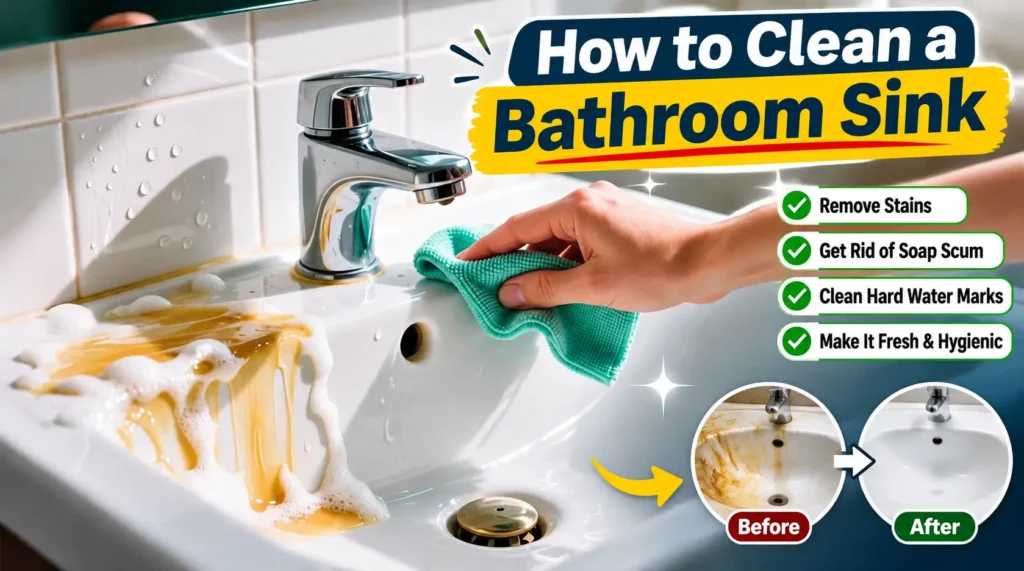
In this guide, you will learn how to clean a bathroom sink step by step, remove common stains, clean faucets and drains, prevent scratches, and maintain your bathroom sink for longer.
Why Does a Bathroom Sink Get Dirty?
Bathroom sinks are regularly exposed to water, soap, toothpaste, skincare products, and everyday household dirt. When these substances are not removed regularly, they can accumulate and create stubborn stains.
Here are some common reasons bathroom sinks become dirty.
- Toothpaste residue: Toothpaste splashes can dry around the basin and leave white marks.
- Soap scum: Soap residue combines with minerals and other deposits to form a cloudy film.
- Hard water deposits: Minerals in water can leave white spots, chalky marks, and cloudy patches.
- Makeup and skincare products: Foundation, creams, shaving products, and cosmetics can leave greasy residue.
- Water spots: Water droplets evaporate and leave mineral deposits behind.
- Hair and dirt: Loose hair, dust, and everyday debris collect around the drain.
- Drain buildup: Organic debris and residue can accumulate around the drain opening.
- Poor maintenance: Infrequent cleaning allows small deposits to become more difficult to remove.
Understanding the type of dirt or staining helps you choose an appropriate cleaning method.

Different Types of Bathroom Sinks and Their Cleaning Requirements
Before cleaning your sink, identify its material. Using an unsuitable cleaner or abrasive scrubber can scratch, discolor, or permanently damage the surface.
1. Porcelain and Ceramic Bathroom Sinks
Porcelain and ceramic sinks are popular because they have smooth, glazed surfaces that are relatively easy to maintain.
Recommended cleaning method:
- Use warm water and mild dish soap.
- Wipe with a soft sponge or microfiber cloth.
- Use a compatible non-abrasive bathroom cleaner for stubborn deposits.
- Rinse thoroughly and dry with a clean towel.

Avoid steel wool, rough scouring pads, and aggressive scrubbing that could damage the glaze.
2. Stainless Steel Bathroom Sinks
Stainless steel sinks are durable but can show fingerprints, water spots, and mineral deposits.
Recommended cleaning method:
- Use warm water and mild dish soap.
- Wipe using a soft microfiber cloth.
- Follow the direction of the metal grain where applicable.
- Rinse away soap residue.
- Dry the sink to reduce water spots.
Avoid steel wool, wire brushes, and abrasive pads.
3. Glass Bathroom Sinks
Glass sinks offer a modern appearance but can easily show water spots, fingerprints, and soap residue.
Recommended cleaning method:
- Use a glass-safe cleaner or mild soapy water.
- Clean with a soft microfiber cloth.
- Rinse away remaining residue.
- Dry carefully to reduce streaks.
Avoid abrasive powders, rough sponges, and unsuitable chemical cleaners.
4. Natural Stone Bathroom Sinks
Natural stone sinks may be made from marble, granite, travertine, or limestone.
These materials require additional care because some stones are sensitive to acidic cleaners.
Recommended cleaning method:
- Use a pH-neutral cleaner specifically approved for your stone.
- Clean with a soft cloth.
- Rinse if required by the cleaner’s instructions.
- Dry the surface.
- Maintain any protective sealer according to the manufacturer’s recommendations.
Important: Never assume vinegar, lemon juice, or acidic bathroom cleaners are safe for natural stone. They can etch acid-sensitive surfaces and leave permanent dull marks.
5. Resin and Composite Bathroom Sinks
Resin and composite sinks are manufactured using different materials and surface finishes. Their cleaning requirements can vary by product.
Recommended cleaning method:
- Use warm water and mild soap when permitted.
- Clean with a soft sponge.
- Follow the manufacturer’s approved cleaning instructions.
- Rinse and dry the surface.
Avoid abrasive cleaners, harsh chemicals, and strong solvents unless specifically approved.
For additional material-care guidance, consult KOHLER’s care and cleaning guidance.
What You Need to Clean a Bathroom Sink
Gather the following supplies before starting.
| Cleaning supply | Purpose |
|---|---|
| Mild dish soap | Removes everyday dirt and light grease |
| Warm water | Helps loosen surface residue |
| Microfiber cloth | Gentle wiping and drying |
| Soft sponge | Cleans the basin without harsh abrasion |
| Soft-bristled brush | Reaches corners and narrow spaces |
| Compatible bathroom cleaner | Treats suitable stubborn deposits |
| Glass-safe cleaner | Cleans compatible glass surfaces |
| pH-neutral stone cleaner | Protects natural stone |
| Rubber gloves | Protects hands |
| Dry towel | Removes remaining moisture |
| Small cleaning brush | Cleans around the drain and faucet base |
You do not need every product for every sink. Choose supplies according to the surface material and manufacturer’s recommendations.
How to Clean a Bathroom Sink Step by Step
Follow these eight steps to clean your bathroom sink safely and effectively.
Step 1: Remove Items from the Sink Area
Start by removing everything around the basin.
Move soap dispensers, toothbrush holders, cosmetics, razors, and other bathroom accessories to a separate location.
This makes it easier to reach the entire sink surface and prevents cleaning products from getting onto personal items.
Step 2: Remove Loose Dirt and Debris
Remove visible hair, dust, toothpaste residue, and other loose debris.
Use a dry microfiber cloth or tissue to collect loose material.
Pay particular attention to the drain opening, faucet base, and corners of the basin.
Removing loose debris first helps prevent particles from scratching delicate surfaces during cleaning.
Step 3: Apply a Suitable Cleaning Solution
Choose a cleaning product that is compatible with your sink material.
For everyday cleaning on suitable surfaces, warm water and a small amount of mild dish soap are a practical starting point.
For stubborn buildup, choose a specialist bathroom sink cleaner that specifically identifies your sink material as suitable.
Follow the product’s application instructions and recommended contact time.
Step 4: Clean the Sink Basin
Use a soft sponge or microfiber cloth to wipe the entire basin.
Pay attention to:
- The bottom of the sink.
- The sides of the basin.
- Areas around the drain.
- Corners where dirt accumulates.
- Areas with visible soap residue.
Use gentle circular movements without applying excessive pressure.
For stubborn deposits, repeat the compatible cleaning process rather than scrubbing aggressively.
Step 5: Clean the Faucet and Handles
Faucets and handles frequently collect fingerprints, water spots, soap residue, and mineral deposits.
Dampen a microfiber cloth with a suitable cleaning solution and gently wipe the faucet.
Use a soft detail brush to clean around the faucet base and narrow gaps if the finish allows it.
Always check the manufacturer’s recommendations, particularly for brushed nickel, matte black, gold, and other decorative finishes.
Step 6: Clean Around the Sink Edges
Dirt and soap residue can accumulate around the edges where the sink meets the countertop or wall.
Use a damp microfiber cloth or soft-bristled brush to clean these areas.
Avoid pulling, scraping, or damaging the sealant around the sink.
If the caulk has persistent dark marks, consult our guide on how to remove mold from bathroom caulk.
Step 7: Clean the Sink Drain Area
Remove visible hair and debris around the drain opening.
If the stopper is removable, follow the manufacturer’s instructions to remove and clean it.
Use a soft brush and compatible cleaning solution to clean the accessible surfaces.
Remember that cleaning the visible drain opening is different from removing a blockage deeper inside the plumbing.
If your sink drains slowly, you may need a separate drain-unclogging procedure.
Step 8: Rinse and Dry the Sink
Rinse the basin with clean water if the cleaning product requires rinsing.
Remove all remaining cleaning residue.
Finally, wipe the entire sink using a clean, dry microfiber cloth.
Drying helps reduce water spots and mineral deposits, particularly in areas with hard water.
How to Remove Common Bathroom Sink Stains
Different stains require different cleaning approaches. Always identify your sink material before selecting a stain remover.
How to Remove Toothpaste Stains
Toothpaste can dry on the basin and leave white marks or a chalky-looking residue.
Cleaning method:
- Wet the affected area with warm water.
- Apply a small amount of mild dish soap.
- Wipe gently using a soft microfiber cloth.
- Use a non-abrasive sponge if residue remains.
- Rinse thoroughly.
- Dry with a clean towel.
For stubborn residue, use a compatible bathroom sink cleaner.
How to Remove Soap Scum from a Bathroom Sink
Soap scum can leave a cloudy or slightly greasy film.
Cleaning method:
- Wet the sink with warm water.
- Apply mild dish soap to a soft sponge.
- Gently wipe the affected areas.
- Use a compatible soap scum remover if necessary.
- Follow the product’s recommended contact time.
- Rinse and dry thoroughly.
For more detailed advice, read our guide on How to Remove Soap Scum.
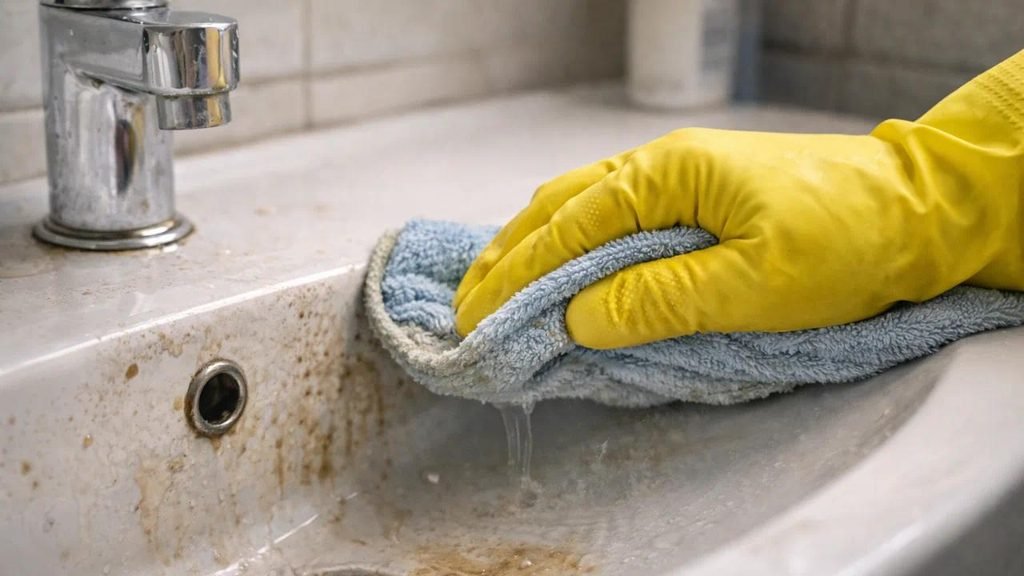
How to Remove Hard Water Stains from a Bathroom Sink
Hard water contains dissolved minerals that can remain on surfaces after water evaporates.
These deposits may appear as white spots, cloudy patches, or chalky marks.
Cleaning method:
- Identify the sink material.
- Start with mild soap and warm water.
- If deposits remain, choose a material-compatible mineral deposit remover.
- Test the product in an inconspicuous area.
- Apply it according to the instructions.
- Rinse thoroughly and dry.
A suitable acidic cleaner may be appropriate for certain non-stone surfaces, but never use it on marble, limestone, travertine, or other acid-sensitive stone.
For related cleaning advice, see How to Remove Hard Water Stains from Shower Glass.
How to Remove Yellow Stains from a Bathroom Sink
Yellow discoloration can have several possible causes, including:
- Mineral deposits.
- Soap and skincare residue.
- Rust-containing water deposits.
- Surface discoloration.
- Aging or damaged protective finishes.
Cleaning method:
- Wash the area with mild dish soap and warm water.
- Wipe gently with a soft sponge.
- Check whether the discoloration is surface residue or permanent staining.
- Use a compatible specialist cleaner if necessary.
- Rinse and dry.
If the yellow color remains, avoid repeatedly applying stronger chemicals. The surface may be permanently discolored or damaged.
How to Remove Rust Stains from a Bathroom Sink
Rust-colored marks may result from iron-containing water, corroding metal accessories, or nearby plumbing components.
Cleaning method:
- Identify the sink material.
- Remove any loose surface dirt.
- Select a rust remover approved for the specific sink material.
- Test it in a hidden area.
- Follow the product instructions.
- Rinse thoroughly.
Avoid using an aggressive rust remover without checking its compatibility with the sink finish.
If rust repeatedly returns, investigate the source rather than treating the stain repeatedly.
How to Remove Black Stains Around a Bathroom Sink Drain
Black marks around the drain may result from dirt, soap residue, mold growth, mineral deposits, or deterioration of surrounding materials.
Their appearance alone cannot confirm the exact cause.
Cleaning method:
- Remove visible hair and debris.
- Apply mild soap and warm water to compatible surfaces.
- Gently clean the drain edge using a soft brush.
- Rinse away residue.
- Dry the area.
- Inspect the drain fitting and surrounding sealant.
If the staining persists or the drain fitting is deteriorating, consider professional inspection.
How to Clean a Bathroom Sink Faucet and Handles
A clean sink can still look dirty when the faucet is covered with fingerprints and mineral deposits.
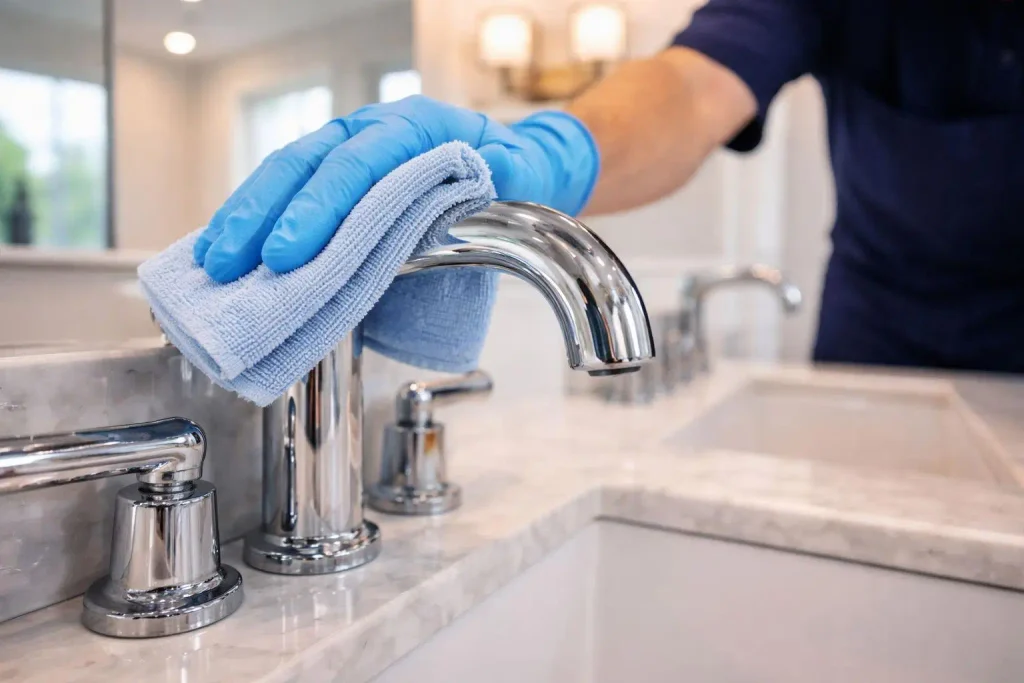
Different faucet finishes require different cleaning products.
| Faucet finish | Recommended approach |
|---|---|
| Chrome | Mild soap and a soft cloth |
| Stainless steel | Compatible stainless steel cleaner |
| Brushed nickel | Manufacturer-approved mild cleaner |
| Matte black | Gentle cleaning with a soft damp cloth |
| Gold or decorative finishes | Manufacturer-approved care instructions |
Steps for Cleaning a Bathroom Faucet
- Dampen a soft microfiber cloth.
- Apply a compatible mild cleaning solution.
- Gently wipe the faucet body and handles.
- Use a soft detail brush around the base if permitted.
- Rinse or wipe away residue as directed.
- Dry with a clean microfiber cloth.
Do not leave acidic cleaners or strong chemicals on decorative finishes unless specifically approved by the manufacturer.
How to Clean a Bathroom Sink Drain
Bathroom sink drains can collect hair, toothpaste residue, soap deposits, and everyday dirt.
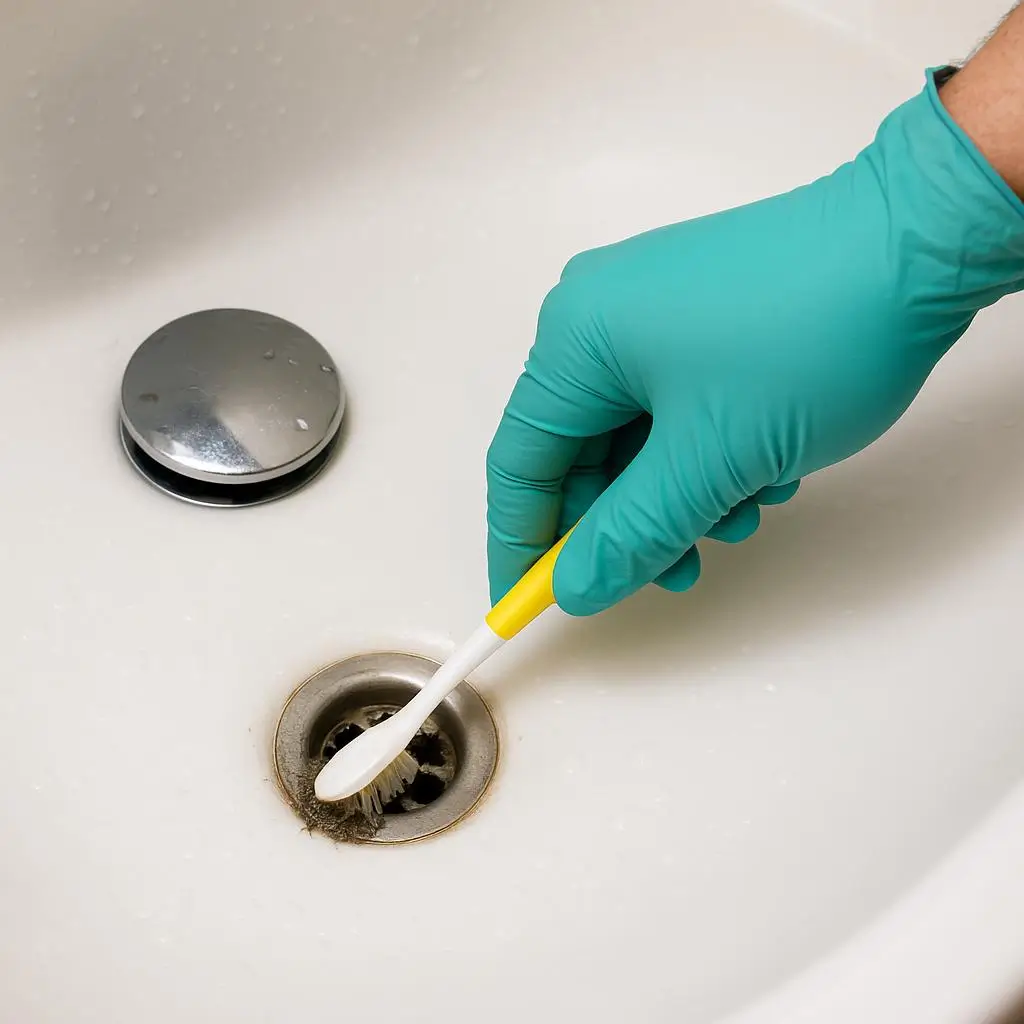
Cleaning the visible drain area regularly can help maintain a cleaner sink.
Step-by-Step Drain Cleaning
- Remove visible hair and loose debris.
- Remove the stopper if it is designed to be removable.
- Clean accessible stopper surfaces using mild soap and water.
- Use a soft brush around the drain opening.
- Wipe away loosened residue.
- Rinse with clean water.
- Reinstall the stopper according to its instructions.
Important: Do not pour different drain cleaners into the sink or combine chemical products. If a chemical drain cleaner has already been used, follow its safety instructions and do not add another product.
If the sink remains blocked or drains slowly, consider a suitable mechanical cleaning method or contact a plumber.
Natural Ways to Clean a Bathroom Sink
Some everyday household ingredients can help clean compatible sink surfaces. However, natural ingredients are not automatically safe for every material.
1. Mild Dish Soap and Warm Water
This is a practical starting point for everyday cleaning.
- Add a small amount of mild dish soap to warm water.
- Dampen a microfiber cloth.
- Wipe the sink gently.
- Rinse thoroughly.
- Dry with a clean towel.
It can help remove everyday dirt, light grease, and soap residue.
2. Baking Soda for Suitable Sink Surfaces
Baking soda can provide mild abrasive action, but it may scratch delicate finishes.
For compatible surfaces:
- Mix a small amount of baking soda with water.
- Test the paste in an inconspicuous area.
- Apply gently to the affected spot.
- Avoid vigorous scrubbing.
- Rinse thoroughly.
- Dry the surface.
Do not use it as a universal cleaner for glass, polished stone, or delicate decorative finishes.
3. White Vinegar for Suitable Non-Stone Surfaces
White vinegar is acidic and may help loosen certain mineral deposits on compatible surfaces.
Before using it, confirm that the sink manufacturer permits acidic cleaners.
Never use vinegar on marble, limestone, travertine, or other acid-sensitive stone.
Also, never combine vinegar with bleach or other cleaning products.
4. When Household Cleaning Methods Are Not Enough
Natural cleaning ingredients may not remove deep staining, permanent discoloration, or damaged surface finishes.
For these problems, select a specialist commercial cleaner specifically designed for your sink material.
Always follow the label instructions.
How to Clean a Bathroom Sink Without Scratching It
Scratches can make a sink look dull and provide places where dirt may accumulate.
Follow these precautions:
- Identify the sink material before cleaning.
- Use a non-abrasive sponge.
- Choose compatible cleaning products.
- Avoid steel wool and wire brushes.
- Do not scrub delicate finishes aggressively.
- Test unfamiliar products in a hidden area.
- Follow manufacturer instructions.
- Rinse away cleaning residue.
- Dry the sink with a soft towel.
Glass, polished natural stone, and decorative surfaces deserve particular attention.
Common Bathroom Sink Cleaning Mistakes to Avoid
Avoid these common mistakes when cleaning your bathroom sink.
- Using abrasive scrubbers: They can scratch or dull delicate surfaces.
- Using vinegar on natural stone: Acid can permanently etch marble and limestone.
- Mixing cleaning chemicals: Combining cleaners can produce hazardous reactions.
- Leaving products on too long: Excessive contact time may damage surfaces.
- Ignoring manufacturer instructions: Not all products are compatible with every sink.
- Scrubbing decorative finishes: Aggressive cleaning can remove or damage protective coatings.
- Ignoring the faucet base: Dirt and residue can accumulate around narrow joints.
- Forgetting the drain: Visible buildup can make the sink look dirty.
- Failing to rinse: Cleaning residue may leave streaks or a sticky film.
- Not drying the sink: Remaining water can leave mineral deposits.
Important Cleaning Chemical Safety Warning
Never mix household bleach with vinegar, ammonia, acids, toilet cleaners, or other cleaning products. Dangerous gases and chemical reactions can occur.
- Use one cleaning product at a time.
- Follow the product label.
- Keep the bathroom ventilated.
- Wear the protective equipment recommended by the manufacturer.
- Keep cleaning chemicals away from children and pets.
- Store products in their original containers.
If you suspect exposure to dangerous fumes, leave the area and seek appropriate emergency or poison-control advice.
For additional guidance, consult Poison Control’s chemical safety information and Health Canada’s household chemical safety guidance.
How to Prevent Your Bathroom Sink from Getting Dirty
Regular maintenance is easier than removing months of accumulated stains.
Here are practical habits that can help:
- Wipe toothpaste residue after brushing.
- Rinse away soap after washing your hands.
- Dry the basin with a microfiber cloth.
- Clean faucet handles regularly.
- Remove visible hair from the drain.
- Avoid leaving wet cosmetic products around the sink.
- Repair leaking faucets promptly.
- Clean the sink edges regularly.
- Use suitable cleaning products.
- Maintain good bathroom ventilation.
These small habits can help reduce mineral buildup, water spots, and stubborn residue.
How Often Should You Clean a Bathroom Sink?
Cleaning frequency depends on household size, bathroom usage, water hardness, and the sink material.
Here is a suggested household cleaning schedule.
| Frequency | Cleaning task |
|---|---|
| Daily | Remove toothpaste and soap residue |
| Every few days | Wipe the basin and faucet |
| Weekly | Clean the complete sink thoroughly |
| Monthly | Inspect the drain, faucet base, edges, and sealant |
This is a practical suggested routine rather than a universal requirement. Busy bathrooms may need more frequent cleaning.
When Should You Consider Professional Sink Repair or Replacement?
Sometimes, cleaning cannot restore the appearance or condition of a bathroom sink.
Consider professional inspection if you notice:
- Deep cracks in the basin.
- Chipped porcelain or ceramic.
- Permanent surface discoloration.
- Corrosion or deteriorating metal fittings.
- Damaged protective finishes.
- Persistent leaks.
- Loose or damaged drain fittings.
- Water damage around the sink.
- Repeated staining caused by plumbing problems.
A qualified plumber or bathroom repair professional can identify whether the problem requires repair, replacement, or further investigation.
Frequently Asked Questions About Cleaning a Bathroom Sink
1. What is the best way to clean a bathroom sink?
Use warm water and mild dish soap with a soft sponge or microfiber cloth. Rinse away residue and dry the sink. For stubborn stains, choose a compatible specialist cleaner.
2. How often should you clean a bathroom sink?
Remove toothpaste and soap residue daily, wipe the basin regularly, and perform a thorough cleaning approximately once a week. Adjust the routine according to usage.
3. How do you remove hard water stains from a bathroom sink?
Start with mild soap and water. If mineral deposits remain, use a suitable mineral deposit remover approved for your sink material. Avoid acidic cleaners on natural stone.
4. How do you remove yellow stains from a bathroom sink?
Clean the area using mild dish soap and warm water. If discoloration remains, identify its possible cause and use a compatible specialist cleaner. Permanent staining may require professional assessment.
5. How do you remove toothpaste stains from a sink?
Wet the residue with warm water, apply mild dish soap, and wipe gently with a soft cloth. Rinse and dry the basin.
6. Can you use baking soda to clean a bathroom sink?
Baking soda can help with some stains on compatible surfaces. However, its mild abrasive action may scratch delicate finishes. Always check material compatibility first.
7. Can you use vinegar to clean a bathroom sink?
Vinegar may help remove mineral deposits from certain compatible non-stone surfaces. Never use it on acid-sensitive natural stone or combine it with bleach.
8. Is bleach safe for cleaning bathroom sinks?
It depends on the sink material, product formulation, and manufacturer’s instructions. Do not assume bleach is suitable for every sink. Never mix it with other cleaners.
9. How do you clean a porcelain bathroom sink?
Use warm water, mild dish soap, and a soft sponge. For stubborn stains, use a non-abrasive porcelain cleaner approved for the surface.
10. How do you clean a stainless steel bathroom sink?
Use mild dish soap, warm water, and a soft microfiber cloth. Wipe in the direction of the grain where applicable, rinse, and dry.
11. How do you clean a glass bathroom sink?
Use a glass-safe cleaner or mild soapy water with a soft microfiber cloth. Rinse and dry to prevent streaks and water spots.
12. How do you remove soap scum from a bathroom sink?
Apply mild dish soap and warm water, gently wipe the affected area, rinse, and dry. Use a suitable commercial soap scum remover for stubborn deposits.
13. How do you clean a bathroom sink drain?
Remove visible debris, clean the accessible drain opening and stopper with a soft brush, and rinse away residue. Persistent blockages may require a separate unclogging method.
14. How do you clean a bathroom sink faucet?
Wipe the faucet with a soft microfiber cloth and a compatible mild cleaner. Follow the manufacturer’s recommendations for decorative finishes.
15. How do you prevent water spots on a bathroom sink?
Wipe the sink dry after use with a clean microfiber cloth. Regular drying helps reduce mineral deposits left behind by evaporating water.
16. Why does my bathroom sink turn yellow?
Possible causes include mineral deposits, rust-containing water, soap residue, aging, and surface deterioration. The correct treatment depends on the cause and sink material.
17. How do you remove black stains around a bathroom sink drain?
Clean visible residue with mild soap and a soft brush. Persistent black marks may indicate mold, mineral staining, damaged sealant, or deteriorating fittings.
18. What cleaning products should you avoid on natural stone sinks?
Avoid vinegar, lemon juice, acidic bathroom cleaners, and abrasive products unless specifically approved by the stone manufacturer. Use a suitable pH-neutral stone cleaner.
Conclusion
Keeping your bathroom sink clean does not require expensive equipment or complicated cleaning methods. The most important step is understanding the sink material and choosing compatible cleaning products.
Regularly removing toothpaste, soap scum, water spots, and everyday dirt can help prevent stubborn buildup. Remember to clean the faucet, handles, drain opening, and sink edges rather than focusing only on the basin.
Use soft cleaning tools, rinse away cleaning residue, and dry the surface after cleaning. Avoid aggressive scrubbing and never mix household cleaning chemicals.
By following these practical methods for how to clean a bathroom sink, you can maintain a cleaner, fresher bathroom and protect your sink from unnecessary surface damage.

For more practical cleaning solutions, explore the Bathroom Fixes and Cleaning Fixes guides on Fix The Annoying.