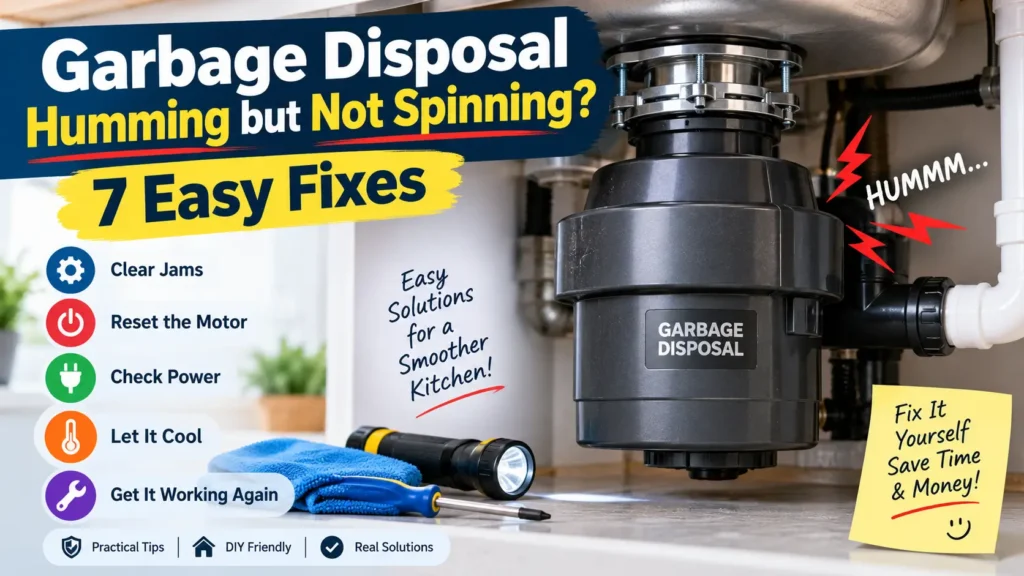
If your garbage disposal is humming but not spinning, don’t panic. A humming sound usually means the motor is receiving power, but the grinding components are unable to turn properly.
In many cases, the problem is caused by a jam, an overloaded disposal, or a motor that needs to be reset. Fortunately, some of these problems can be checked and fixed at home with a few simple steps.
Important safety warning: Never put your hand inside a garbage disposal, even if it appears to be turned off. Before checking or attempting to free a jam, switch off the disposal and disconnect its power source whenever possible.
In this guide, you’ll learn 7 easy ways to troubleshoot a garbage disposal that hums but doesn’t spin, plus when it’s better to stop DIY repairs and call a professional.
Why Is My Garbage Disposal Humming but Not Spinning?
When a garbage disposal hums without spinning, the motor is usually trying to operate but something is preventing the grinding mechanism from turning.
Common causes include:
- A jammed grinding mechanism
- Food debris stuck inside the disposal
- Too much food added at once
- The motor overheating
- A tripped overload protector
- A problem with the flywheel or grinding components
- A failing motor
The good news is that a simple jam or overload is often easier to resolve than a motor failure.
Garbage Disposal Humming but Not Spinning: 7 Easy Fixes
If your disposal is still humming after these basic checks, it’s worth reviewing the manufacturer’s troubleshooting instructions for your specific unit. InSinkErator’s garbage disposal troubleshooting guide provides additional guidance for dealing with jams, resetting the overload protector, and safely checking the unit.
1. Turn Off the Power First
Before doing anything else, turn off the garbage disposal.
If the disposal is connected to a wall outlet underneath the sink, unplug it. If it is hardwired, switch off the appropriate circuit breaker.
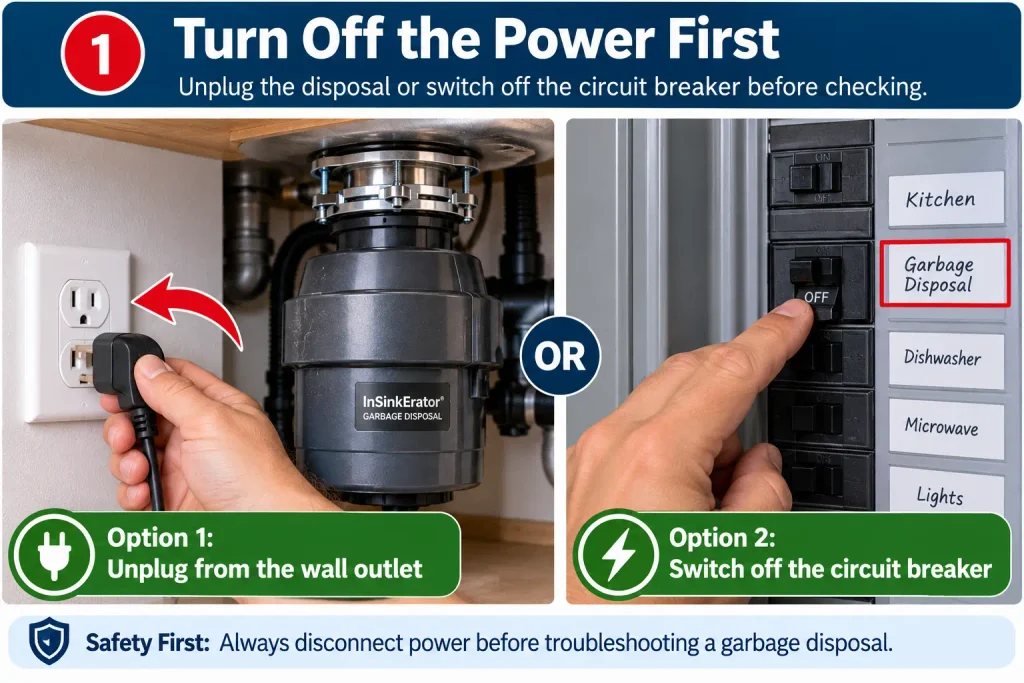
Do not rely only on the wall switch.
A disposal can start unexpectedly if power is still connected, creating a serious injury risk.
Once the power is disconnected, wait a few minutes before continuing.
Never put your hand inside the disposal to check for an obstruction.
2. Let an Overheated Disposal Cool Down
If you have been running the disposal for a while and it suddenly starts humming, the motor may have overheated.
Garbage disposals typically have an overload protection feature that can shut the motor down when it becomes too hot.
Turn off the disposal and allow it to cool for approximately 10–20 minutes.
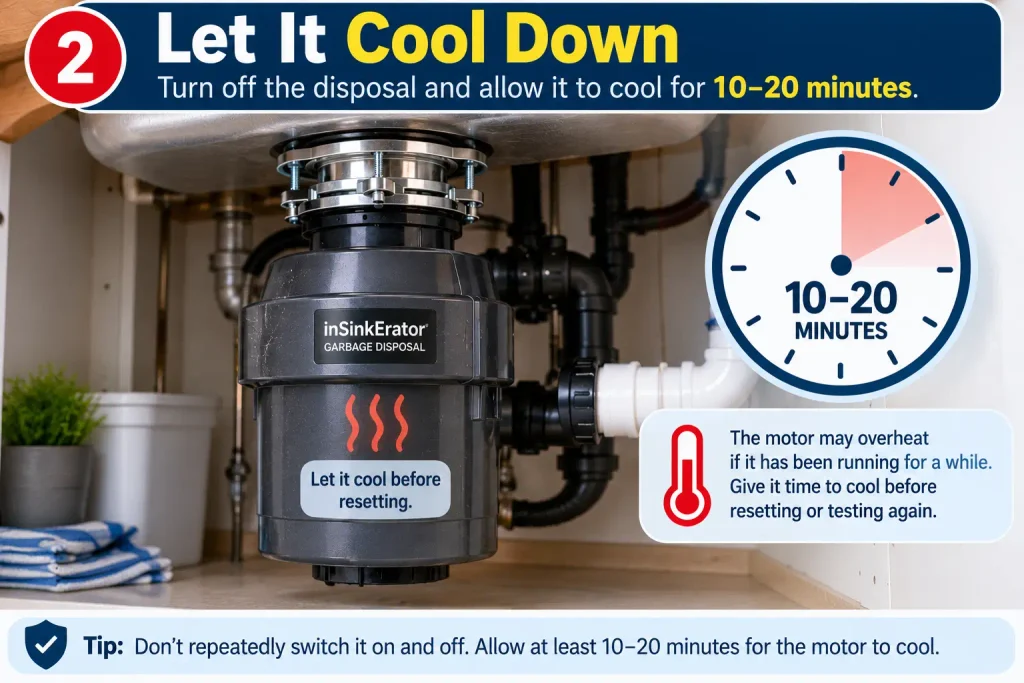
While you’re waiting, don’t repeatedly switch the disposal on and off. Give the motor enough time to cool before trying again.
After it has cooled, you can check whether the reset button has tripped.
3. Press the Reset Button
Many garbage disposals have a small reset button on the bottom of the unit.
After making sure the disposal has cooled down, look underneath the sink for the reset button.
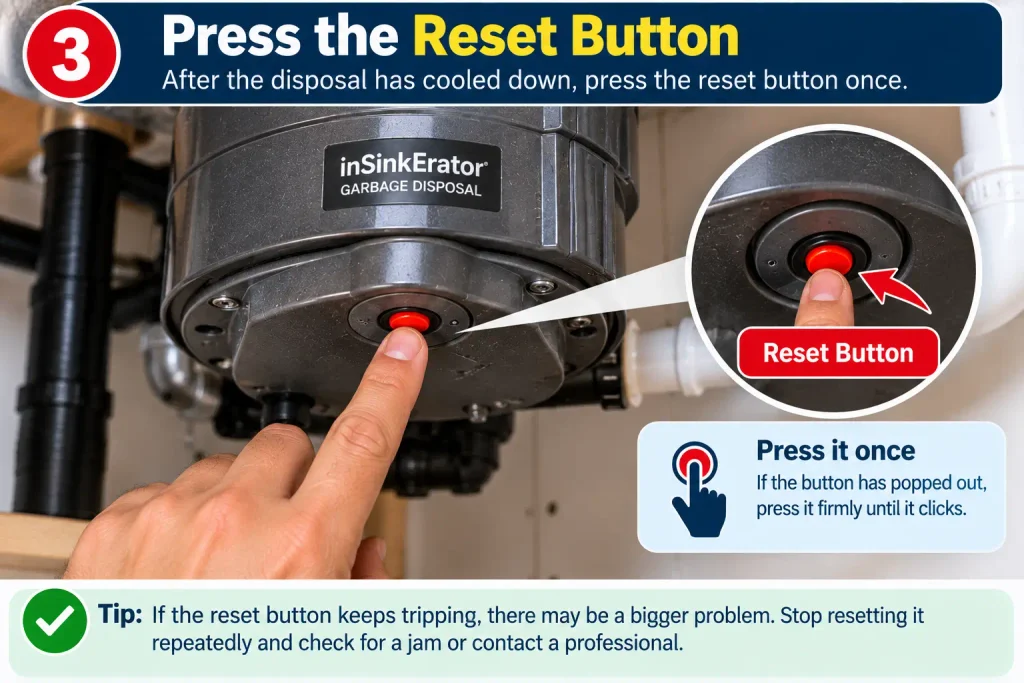
If it has popped out, press it firmly once.
Then restore power and briefly test the disposal.
If it starts working normally, the problem may have been caused by an overload or temporary motor shutdown.
However, if the reset button keeps tripping, don’t continue resetting it repeatedly. Repeated trips can indicate a jam, electrical problem, or motor issue that needs further inspection.
4. Check for a Jam Without Putting Your Hand Inside
A jam is one of the most common reasons a garbage disposal may hum without spinning.
With the power completely disconnected, look down into the disposal using a flashlight.
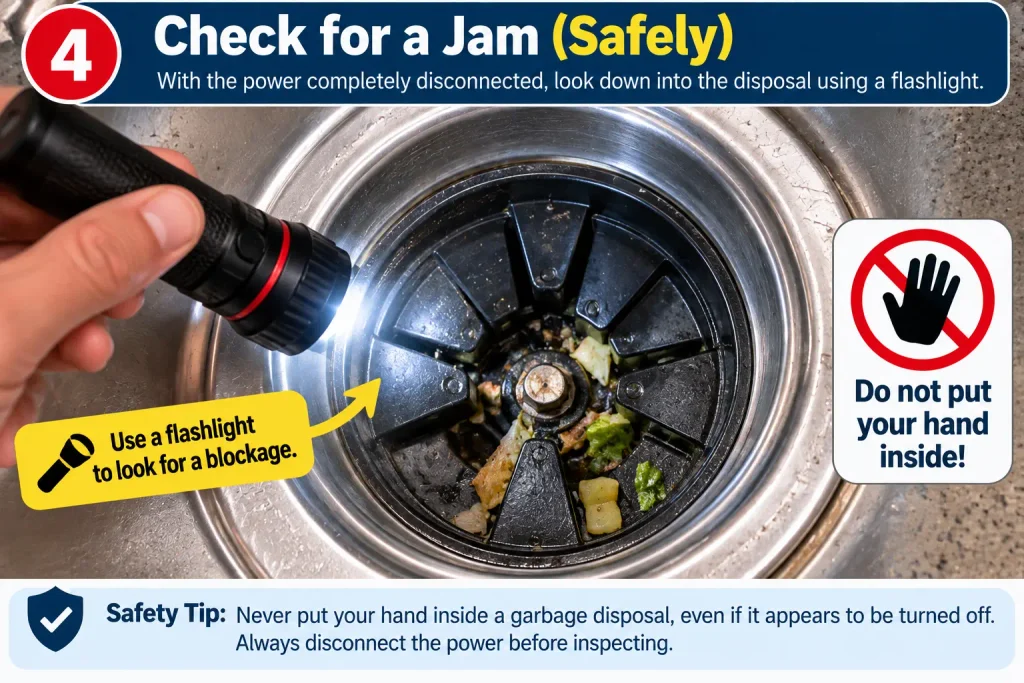
You may be able to see an obvious object or piece of food that is preventing the grinding components from moving.
Do not reach inside with your hand.
Instead, use a suitable long-handled tool designed for safely working around the disposal opening, while following the instructions for your specific model.
Some disposals also have a manual turning mechanism underneath the unit. If your model includes one, use the correct tool according to the manufacturer’s instructions.
The goal is to free the mechanism—not force it.
If the mechanism will not move or something appears firmly stuck, stop and call a professional.
5. Remove Excess Food and Debris
Sometimes the disposal isn’t dealing with one large object. It may simply be overloaded with food scraps.
Turn off and disconnect the power before inspecting the opening.
Remove only loose debris that can be safely reached without putting your hand inside the disposal.
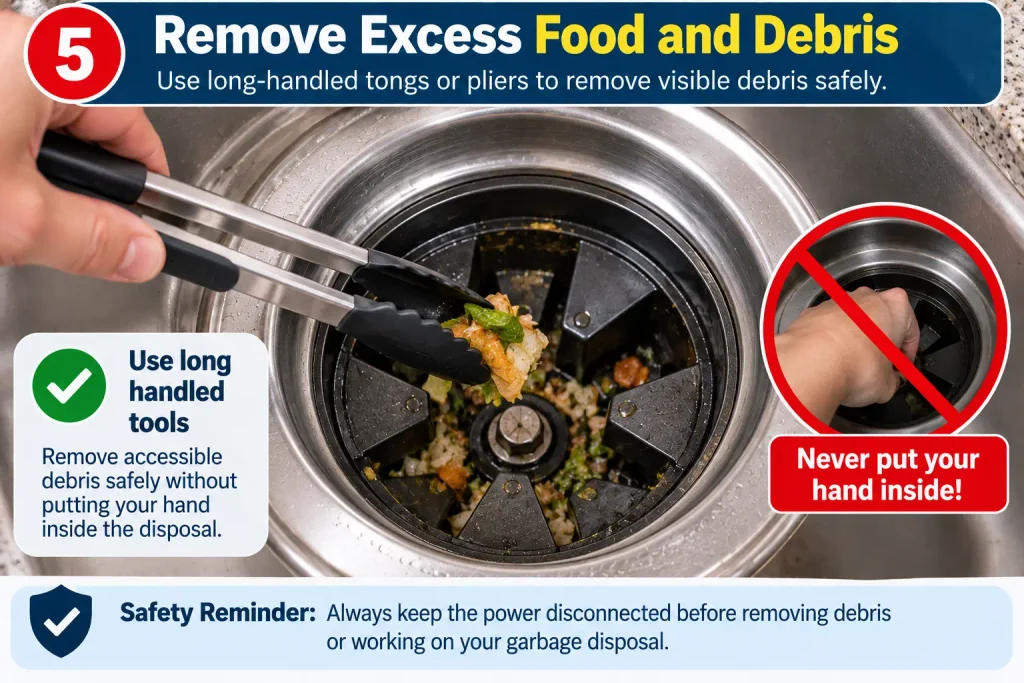
Then allow the unit to sit for a few minutes.
Once the obstruction has been safely cleared and the disposal is ready to test, restore power and run cold water before briefly switching it on.
Avoid adding a large amount of food at once.
For future use, feed scraps gradually and allow the disposal to process each portion before adding more.
6. Check the Disposal’s Power Supply
If your garbage disposal is still humming but not spinning, the problem may not be the grinding mechanism itself.
Check the simple power-related possibilities:
- Is the wall switch turned on?
- Is the disposal plugged in securely?
- Has the circuit breaker tripped?
- Has the disposal’s reset button popped out?
- Is another appliance on the same circuit causing an overload?
If the circuit breaker repeatedly trips when the disposal is used, stop testing it.
Repeated breaker trips can indicate an electrical fault or an overloaded circuit. Electrical repairs are better handled by a qualified professional.
7. Consider a Failing Motor or Internal Component
If you’ve safely cleared a possible jam, allowed the unit to cool, checked the reset button, and confirmed the power supply, but the disposal still hums without spinning, the motor or another internal component may be failing.
A humming motor that cannot turn can eventually overheat or suffer additional damage if you repeatedly try to run it.
At this point, avoid repeatedly switching it on.
A professional can determine whether the disposal can be repaired or whether replacing the unit makes more sense.
How to Tell if Your Garbage Disposal Is Jammed
A jam is more likely when:
- The disposal suddenly stopped while grinding food.
- You hear a humming sound but the grinding action doesn’t start.
- The unit worked normally before the problem occurred.
- The reset button has tripped.
- You recently put hard or bulky food scraps into the disposal.
Bones, metal objects, glass, large fruit pits, and other hard objects can cause serious problems and should not be placed in a garbage disposal.
If you suspect a hard object is stuck inside, don’t try to force the mechanism to turn.
What Not to Do When a Garbage Disposal Hums
When dealing with a humming disposal, avoid these common mistakes.
Don’t Put Your Hand Inside
This is the most important rule.
Even when the disposal appears to be off, make sure the power is disconnected before inspecting or working around it.
Don’t Keep Running It
Repeatedly turning on a humming disposal can put additional strain on the motor.
If it doesn’t spin normally, turn it off and troubleshoot the problem safely.
Don’t Force a Jammed Mechanism
Forcing the grinding mechanism can damage internal components.
If it won’t move using the method recommended for your specific model, stop.
Don’t Pour Harsh Chemicals Into the Disposal
Chemical drain cleaners aren’t a substitute for safely clearing a mechanical blockage and may create additional hazards.
When Should You Call a Professional?
A professional repair may be the safest choice if:
- The disposal continues humming after basic troubleshooting.
- The reset button repeatedly trips.
- The circuit breaker keeps tripping.
- You smell burning or see smoke.
- The unit leaks.
- The motor makes unusual grinding or electrical noises.
- You cannot safely identify or remove the obstruction.
- The disposal has a serious internal mechanical problem.
If the disposal is hardwired or you suspect an electrical fault, avoid opening electrical connections yourself unless you are qualified to work on them.
For more practical home repair solutions, check out our guide on How to Fix a Squeaky Door.
For additional safety and operating guidance, you can also review the manufacturer’s garbage disposal safety and troubleshooting instruction
How to Prevent Garbage Disposal Problems
A few simple habits can help your disposal work more reliably.
Run Cold Water
Run cold water while using the disposal and continue briefly afterward to help move ground-up food through the drain.
Add Food Gradually
Don’t overload the disposal with a large amount of food at once.
Feed smaller amounts and give the unit time to process them.
Avoid Hard Objects
Don’t put items such as metal, glass, bones, or other objects that aren’t suitable for your particular disposal into it.
Clean It Regularly
Regular cleaning can help reduce food buildup and unpleasant odors.
Follow the cleaning instructions provided by the manufacturer of your disposal.
Use Your Disposal According to the Manual
Different garbage disposal models have different features and recommendations.
If you’re unsure about the reset button, manual turning mechanism, acceptable food waste, or maintenance procedure, check your model’s instructions before attempting a repair.
Frequently Asked Questions
Why is my garbage disposal humming but not spinning?
The most common cause is a jam that prevents the grinding mechanism from turning. An overheated motor, overload protection, power issue, or failing motor can also cause the problem.
Can I fix a humming garbage disposal myself?
Some basic problems, such as an overload or minor jam, may be possible to troubleshoot safely. Always disconnect power before inspecting the unit and never put your hand inside the disposal.
How long should I wait before resetting a garbage disposal?
If the disposal has overheated, allow it to cool for around 10–20 minutes before checking the reset button. Follow your manufacturer’s instructions if they specify a different procedure.
Why does my garbage disposal hum and then stop?
The motor may be struggling to turn because of a jam, overload, or internal mechanical problem. If the unit repeatedly stops or trips its reset protection, professional inspection may be necessary.
Should I replace my garbage disposal if it hums but doesn’t spin?
Not necessarily. A simple jam or overload may be the cause. However, if the motor or internal components have failed and the unit is older, replacement may be more practical than repair.
Is it safe to put my hand inside a garbage disposal when it’s off?
No. Never put your hand inside a garbage disposal. Disconnect its power before troubleshooting and use a safe tool or manufacturer-approved method to address obstructions.
Final Thoughts
A garbage disposal that is humming but not spinning is often dealing with a jam, overload, or temporary motor issue. Start with the safest and simplest checks: disconnect the power, let the unit cool, check the reset button, and look for an obvious obstruction without putting your hand inside.
If the disposal continues humming, repeatedly trips the reset button or circuit breaker, smells like it is burning, or shows signs of internal damage, stop troubleshooting and contact a qualified professional.
If you’re dealing with other common kitchen or household problems, our guide on How to Fix a Leaky Faucet provides another simple step-by-step solution.
Taking a few minutes to diagnose the problem safely can help you avoid unnecessary damage—and sometimes save you from replacing a disposal that only needed a simple fix.