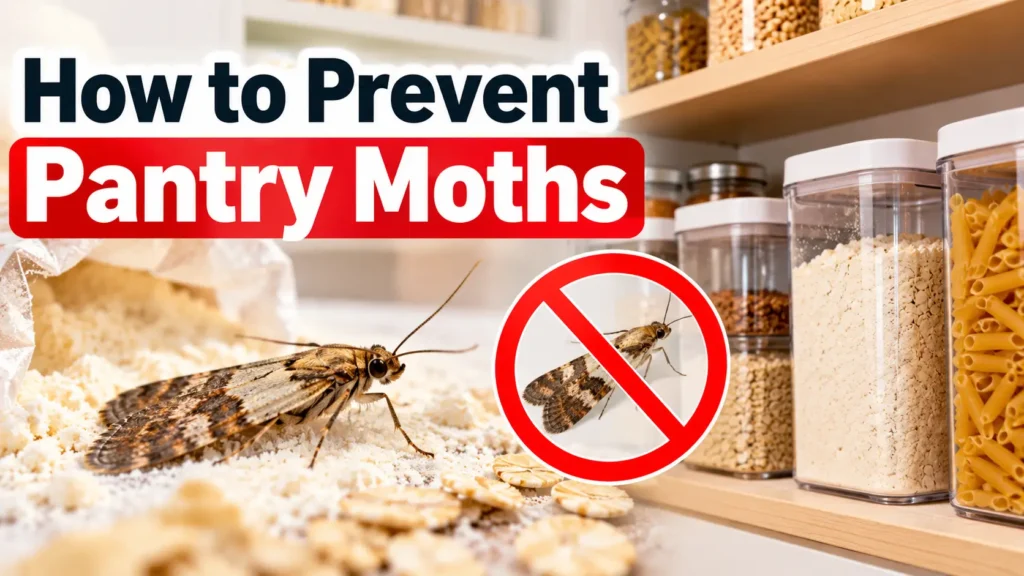
How to prevent pantry moths is an important question if you have noticed small moths, larvae, webbing, or damaged packages around your kitchen cupboards.Pantry moths can get into dry foods such as flour, cereal, rice, grains, nuts, pet food, and other stored products.
Simply killing the adult moths may not solve the problem. Eggs or larvae can remain hidden in food packages or pantry corners, so finding the source and cleaning the affected area are important steps.
In this guide, you’ll learn how to prevent pantry moths, what to check when you find them, and how to make your pantry less likely to develop another infestation.
What Are Pantry Moths?
Pantry moths are small stored-food pests that can infest dry food products kept in kitchens and cupboards.
You may notice:
- Small moths flying around the kitchen
- Tiny larvae or caterpillar-like insects
- Fine webbing inside food packaging
- Clumped or damaged dry food
- Larvae or cocoons around pantry corners
- Moths appearing repeatedly near food-storage areas
The adult moths are often easier to notice, but the source may be hidden inside an infested food package.
How to Prevent Pantry Moths: 9 Easy Ways
1. Store Dry Foods in Airtight Containers
One of the simplest ways to reduce pantry moth problems is to keep dry foods in properly sealed containers.
Transfer foods such as:
- Flour
- Rice
- Pasta
- Cereals
- Grains
- Nuts
- Seeds
- Baking ingredients
- Dried fruit

For more guidance on preventing and controlling pantry pests, see the University of Minnesota Extension’s guide to pantry pests.
Don’t rely only on thin cardboard boxes or loosely closed bags. A properly sealed container can help prevent pests from spreading from one food package to another.
Tip: Label containers with the product name and date so older food can be used first.
2. Check Food Packages Before Storing Them
Pantry moths can sometimes enter your home through an already-infested food product.
Before putting new dry foods into your pantry, look for:
- Small holes
- Webbing
- Clumped food
- Unusual particles
- Larvae
- Damaged packaging
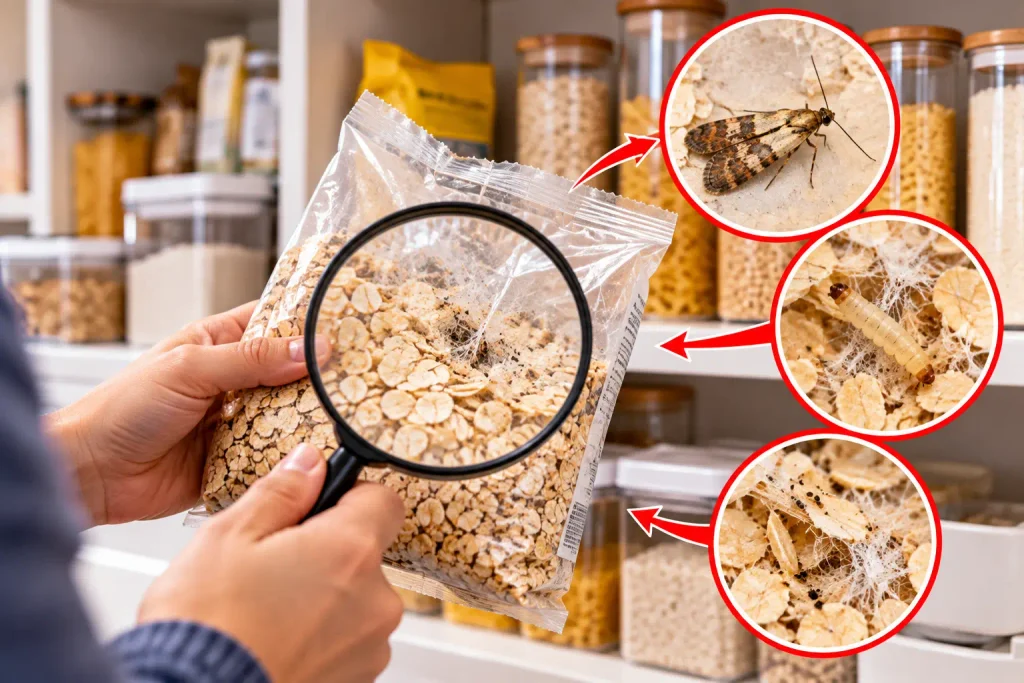
Pay particular attention to products that have been stored for a long time.
If something looks suspicious, keep it away from other food until you can determine whether it is contaminated.
3. Clean Your Pantry Regularly
Crumbs and spilled dry food can accumulate in corners, shelf edges, and cabinet gaps.
Remove food from the affected shelf and clean:
- Shelf surfaces
- Corners
- Cracks
- Cabinet edges
- Under containers
- Areas behind stored food
Food crumbs and spills can also attract other kitchen pests. For more prevention tips, read our guide How to Stop Ants From Coming Into Your Kitchen: 9 Easy Ways.
Vacuuming can help remove crumbs and debris from difficult-to-reach areas.
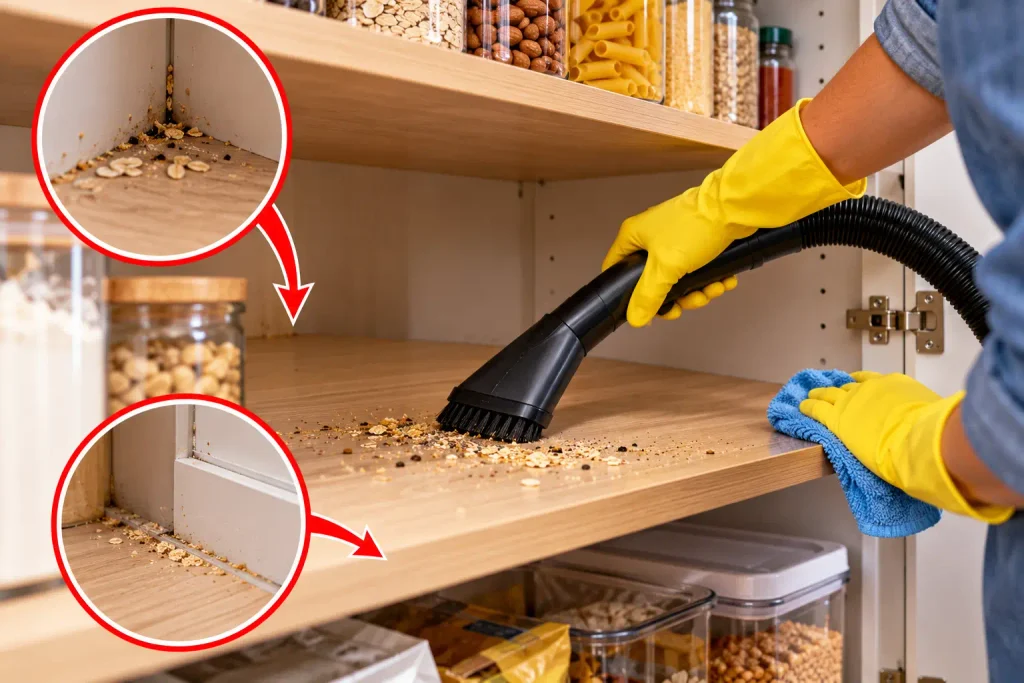
After cleaning, empty the vacuum contents appropriately so any insects or larvae collected during cleaning don’t remain nearby.
4. Throw Away Infested Food
If you find clear signs of pantry moth activity inside a food package, don’t simply remove the visible moths and put the food back.
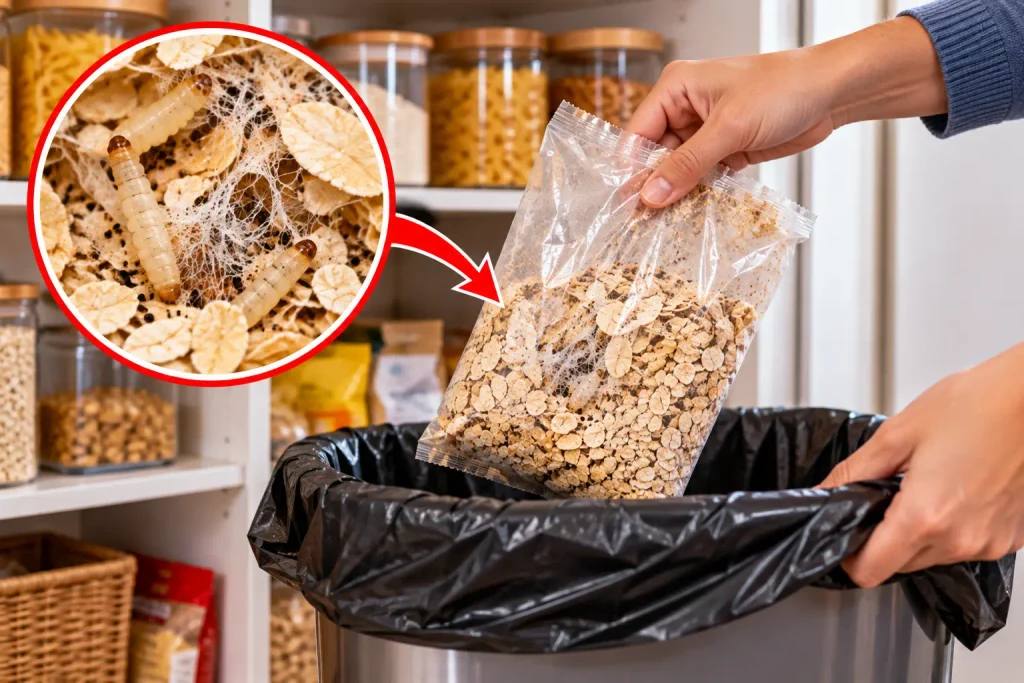
Look for:
- Webbing
- Larvae
- Cocoons
- Clumped food
- Unusual odors
- Visible insects
Seal heavily infested food in a bag and dispose of it appropriately.
Then inspect nearby food products because pantry pests can spread to other stored items.
Important: Don’t transfer suspicious food into a clean container. The container can protect the food, but it won’t make already-infested food safe from pantry pests.
5. Inspect Nearby Dry Foods
Finding pantry moths in one package means you should check surrounding products too.
Inspect:
- Flour
- Rice
- Pasta
- Cereal
- Pet food
- Baking supplies
- Nuts
- Seeds
- Dried fruits
- Spices and other dry ingredients
Even packages that look unopened deserve a quick inspection if they have been stored near an infested product.
6. Keep Your Pantry Dry and Clean
A clean storage area makes it easier to notice pest activity early.
Keeping food properly stored and cleaning up spills can help reduce other household pest problems, too. Learn more in our article Why Are Flies Coming Into My House? 9 Common Reasons and Easy Fixes.
Wipe shelves regularly and clean up spills or food particles as soon as possible.
Avoid storing damaged or open food packages for long periods.
If your pantry has persistent moisture, investigate the source rather than simply wiping the surface. Damp conditions can create other household problems and may damage food packaging.
7. Use Older Pantry Foods First
Long-stored food gives you fewer opportunities to notice a developing problem.
Try a simple first-in, first-out system:
- Put newer products behind older ones.
- Use older packages first.
- Check products that have been stored for a long time.
- Discard food that is expired, damaged, or questionable.
This makes pantry organization easier and helps you notice unusual changes in stored food.
8. Don’t Leave Open Food Unprotected
Open bags and loosely folded packages can make it easier for pantry pests to spread.
After using dry ingredients, close the original package securely or transfer the food to an appropriate airtight container.
Keep pet food sealed too, especially if it is stored near the kitchen pantry.
9. Monitor the Pantry After Cleaning
Cleaning the pantry once isn’t always enough if you have already found pantry moths.
For the next few weeks, regularly check:
- Pantry corners
- Food containers
- Shelf edges
- Stored grains
- Pet food
- Areas where moths were previously seen
If moth activity continues, look for another infested food source rather than assuming the remaining adult moths are the entire problem.
How to Find the Source of Pantry Moths
If pantry moths keep appearing, don’t focus only on the moths flying around the kitchen.
Start by checking the food-storage area systematically.
Step 1: Remove everything from the affected shelf
Place the food somewhere clean and inspect each package.
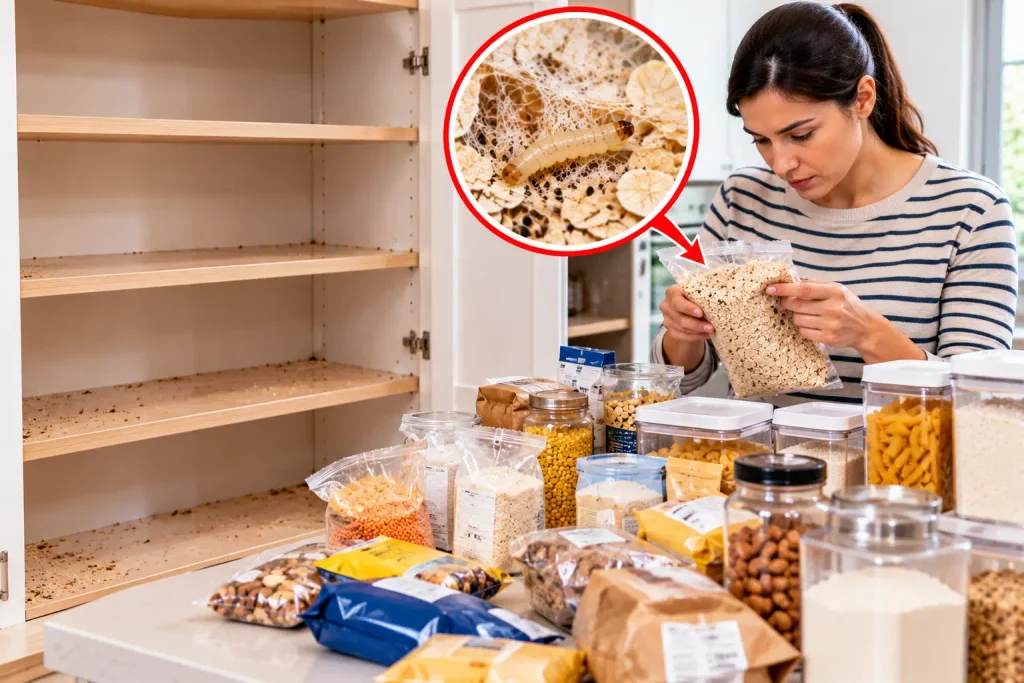
Step 2: Look for signs of infestation
Check for webbing, larvae, cocoons, holes, clumping, or unusual residue.
Step 3: Inspect nearby products
Pantry moth problems aren’t always limited to one package.
Step 4: Clean the empty shelf
Vacuum corners and wipe the surfaces thoroughly.
Step 5: Return only inspected food
Use sealed containers whenever practical.
What Should You Do If You Already Have Pantry Moths?
If you already see pantry moths, prevention alone may not be enough.
Start by finding and removing the source.
Don’t just kill the adult moths and stop there.
Adult moths may continue appearing if larvae or eggs remain in an infested food product.
A better approach is:
Find the source → discard infested food → clean the pantry → inspect nearby foods → store food securely → monitor the area.
Common Pantry Moth Mistakes to Avoid
Avoid these common mistakes:
- Keeping visibly infested food
- Checking only the package where you first saw a moth
- Leaving flour or grains in open bags
- Ignoring pet food
- Cleaning shelves without checking stored food
- Returning suspicious food to the pantry
- Using pesticides without identifying the source
- Assuming one cleaning session has completely solved the problem
The goal is to remove the source and prevent the infestation from spreading.
When Should You Get Professional Pest Control Help?
Consider professional help if:
- Pantry moth activity continues after thorough cleaning
- You cannot find the source
- The infestation keeps spreading
- Moths are appearing throughout several storage areas
- You have a large or recurring infestation
- You are unsure how to safely deal with the problem
A professional can help identify the pest and determine whether there is a hidden source that you have missed.
How to Keep Pantry Moths From Coming Back
Once you have dealt with an infestation, maintain a simple prevention routine:
- Store dry foods in sealed containers.
- Check new food packages before storing them.
- Clean pantry shelves regularly.
- Use older foods first.
- Keep open packages sealed.
- Inspect pet food.
- Remove questionable or damaged food.
- Keep the pantry organized so every package is easy to inspect.

These small habits make it easier to notice a problem before it becomes widespread.
Regular pantry inspections are one part of keeping your home in good condition. For a broader routine, explore our Monthly Home Maintenance Checklist: 20 Things to Check Every Month.
Frequently Asked Questions
What attracts pantry moths?
Pantry moths commonly infest stored dry foods such as flour, grains, cereals, nuts, dried fruits, pet food, and other pantry products.
Can pantry moths come from sealed packages?
They can sometimes be introduced through contaminated food products before the package reaches your home. That’s why checking dry foods and transferring them to appropriate sealed containers can be helpful.
Should I throw away food with pantry moths?
If food shows clear signs of infestation, such as larvae or webbing, it’s generally better to discard it rather than trying to save it.
How long does it take to get rid of pantry moths?
There is no single timeframe because it depends on whether the infestation source has been completely removed. If moths continue appearing after cleaning, inspect nearby dry foods again and look for a missed source.
Can pantry moths come back?
Yes. They can return if an infested food source remains or new contaminated food is introduced. Regular inspection and proper food storage can help reduce the chance of another infestation.
Final Takeaway
How to prevent pantry moths comes down to a few consistent habits: inspect dry foods, remove infested products, clean pantry shelves, store food in suitable airtight containers, and monitor the area after cleaning.
If you already have pantry moths, focus on finding the source rather than simply killing the adult moths. Once the source is removed and your pantry is kept clean and organized, it becomes much easier to prevent the problem from returning.