These pre-monsoon checks are especially useful in regions that experience seasonal monsoon rainfall, but the same maintenance steps can help prepare any home for a period of heavy rain.
Preparing your home before monsoon can help you catch leaks, blocked drains, damaged seals, and other problems before heavy rain turns them into costly repairs.
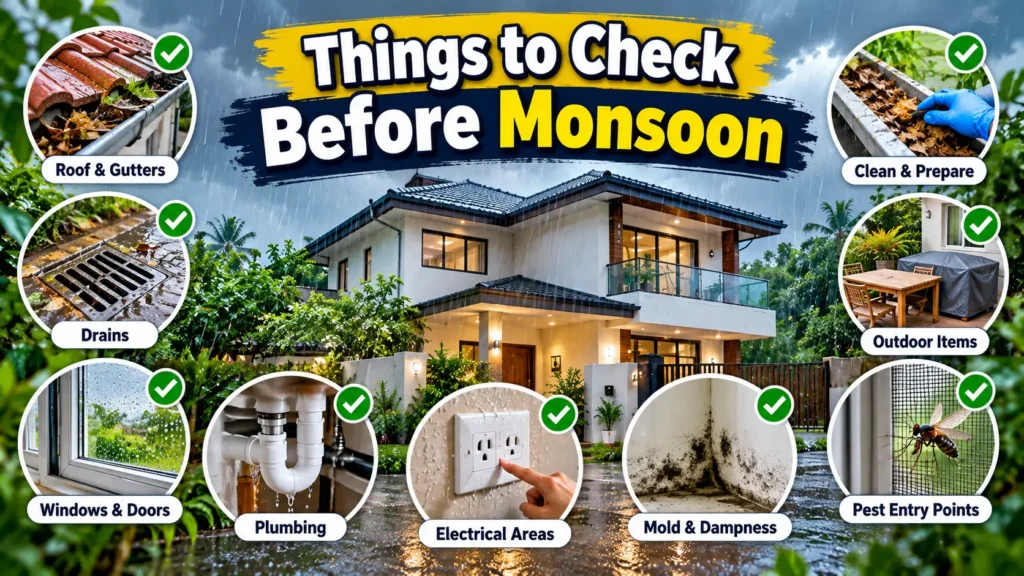
Before the rainy season begins, take some time to inspect the areas of your home that are most exposed to rain and moisture. Roofs, gutters, drains, windows, doors, plumbing, electrical areas, and outdoor spaces all deserve attention.
You don’t need to repair everything yourself. The goal is to find potential problems early, fix simple issues safely, and get professional help when necessary.
Here are 15 practical things to check before monsoon.
Why Should You Prepare Your Home Before Monsoon?
Heavy rain can expose problems that may not be obvious during dry weather.
A small crack, blocked drain, loose roof tile, damaged seal, or leaking pipe can become a much bigger problem when rainwater starts entering or collecting around your home.
A pre-monsoon inspection can help you:
- Find roof leaks early
- Clear blocked gutters and drains
- Check doors and windows for water entry
- Identify plumbing leaks
- Reduce dampness and moisture problems
- Check for pest entry points
- Protect outdoor furniture and equipment
- Spot electrical safety concerns
- Prepare your home for heavy rainfall
15 Things to Check Before Monsoon
Here are 15 practical things to check before monsoon.
| Area | What to Check | Priority |
|---|---|---|
| Roof | Cracks, damaged tiles, waterproofing | High |
| Gutters | Leaves, debris, and blockages | High |
| Drains | Water flow and visible blockages | High |
| Windows & Doors | Seals, caulk, and visible gaps | Medium |
| Plumbing | Leaks, dampness, and corrosion | High |
| Walls & Ceilings | Damp patches, cracks, and stains | High |
| Electrical Areas | Moisture, damaged cords, and exposed wiring | High |
| Outdoor Areas | Cracks, openings, and water collection | Medium |
| Pest Entry Points | Gaps around doors, windows, and pipes | Medium |
| Mold & Damp Areas | Mold, musty odors, and condensation | High |
| Outdoor Furniture | Covers, cushions, tools, and equipment | Medium |
| AC & Ventilation | Filters, drain lines, and visible leaks | Medium |
1. Inspect the Roof for Damage
Start with the roof if you can inspect it safely.
Look for:
- Cracked or broken roof tiles
- Damaged waterproofing
- Loose materials
- Visible gaps
- Water stains
- Damaged flashing
- Areas where water may collect
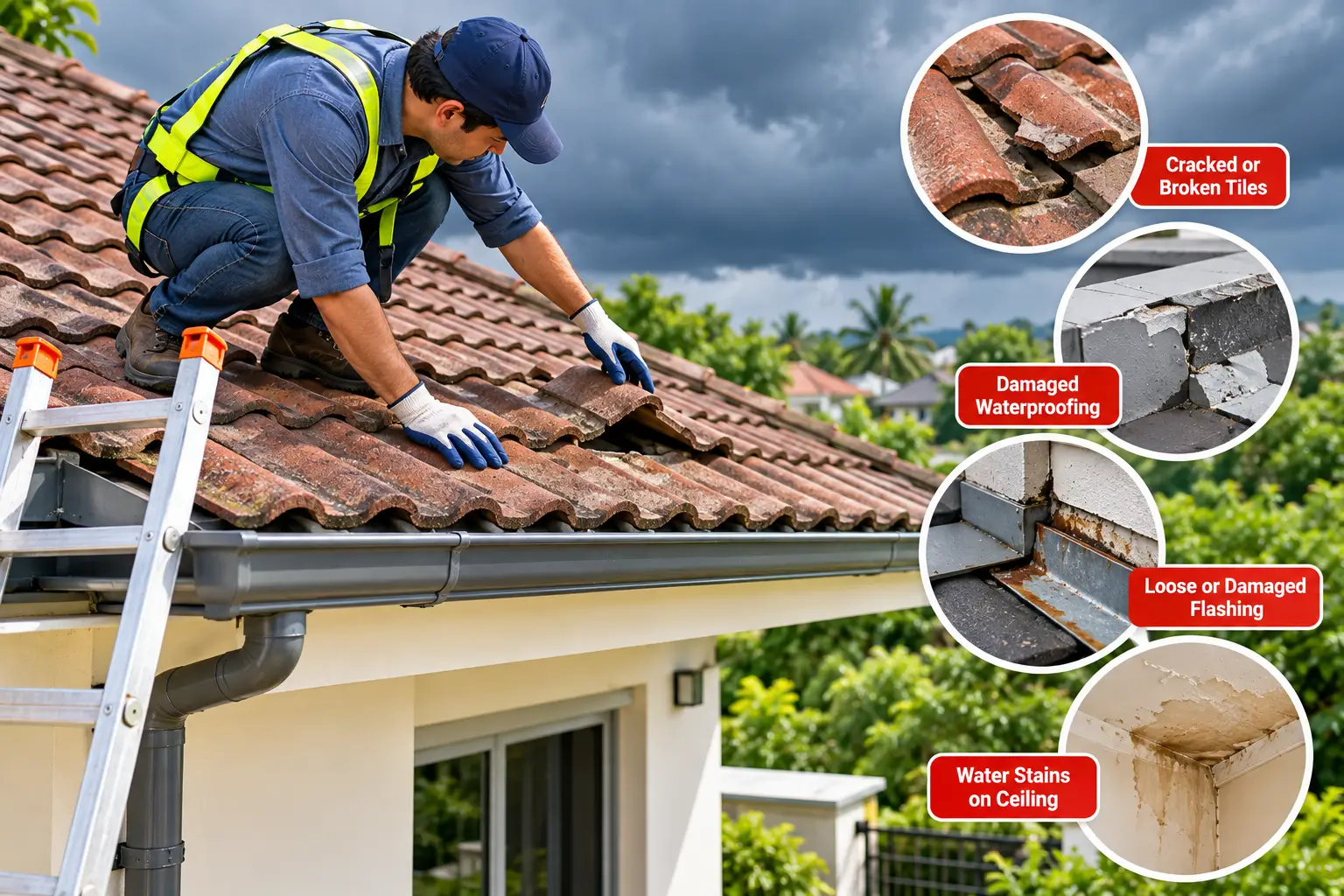
Don’t climb onto a wet or slippery roof. If the roof is difficult or dangerous to access, have it inspected by a qualified professional.
Inspect the roof from ground level whenever possible. Avoid climbing onto roofs, especially when they are wet, steep, or difficult to access.
Small roof problems are easier to address before heavy rain arrives.
2. Clean Gutters and Downspouts
Leaves, dirt, twigs, and other debris can collect in gutters and downspouts.
A blocked gutter may prevent rainwater from draining properly and can cause water to overflow near walls, windows, or the foundation.
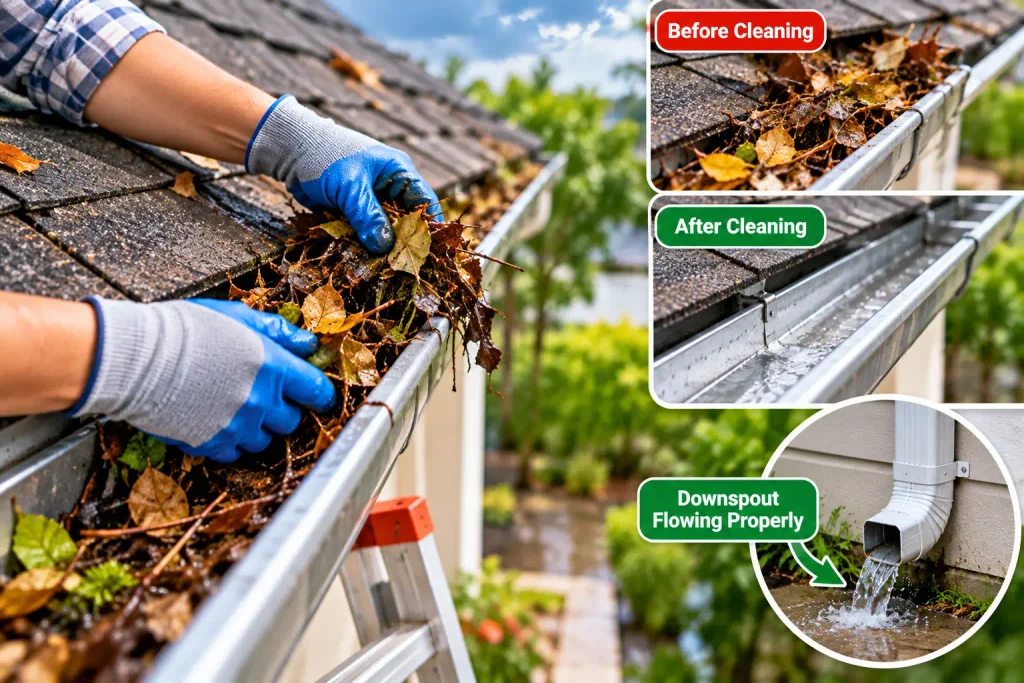
Before monsoon:
- Remove leaves and debris
- Check that water can flow through the gutter
- Inspect visible joints for damage
- Check downspouts for blockages
- Make sure water is directed away from the house where appropriate
For additional guidance on protecting your home from heavy rain, see the U.S. EPA’s guidance on heavy rains and home moisture, which recommends keeping gutters and downspouts free of debris and directing rainwater away from the home.
If you are not comfortable working at height, get professional help instead of using an unsafe ladder.
3. Check Drains Around Your Home
Blocked outdoor drains can become a major problem during heavy rain.
Inspect:
- Yard drains
- Balcony drains
- Terrace drains
- Driveway drains
- Floor drains
- Rainwater outlets
Remove leaves, dirt, plastic, and other visible debris.
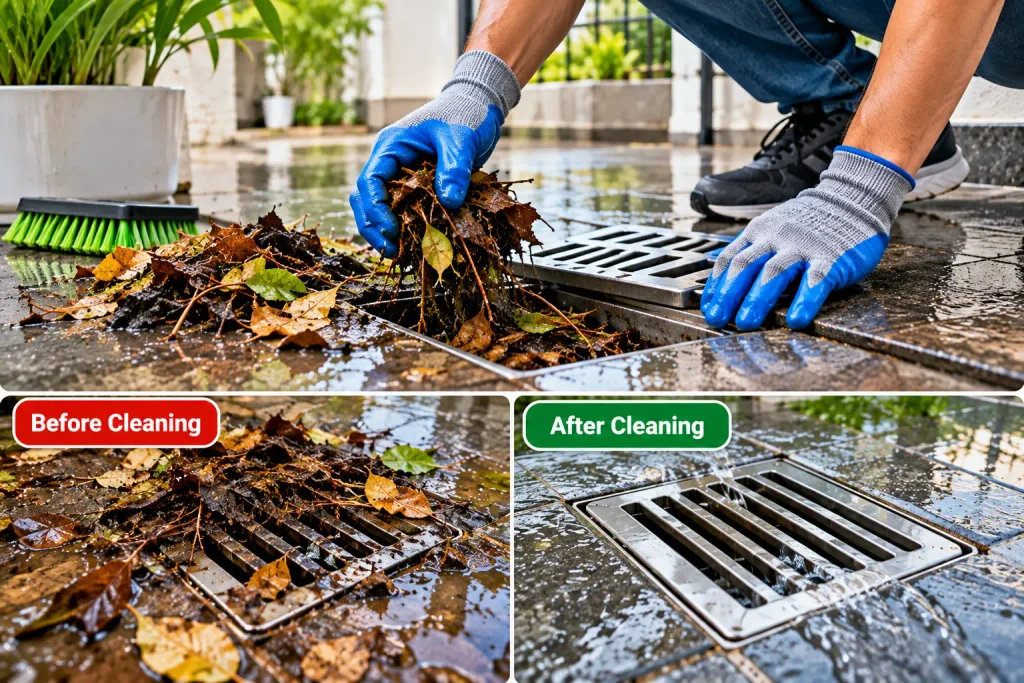
Don’t push debris deeper into a drain where it can create another blockage.
4. Inspect Bathroom and Kitchen Drains
Indoor drains also deserve attention before the rainy season.
Check your:
- Kitchen sink
- Bathroom sink
- Shower drain
- Floor drain
- Utility-area drain
Watch for slow drainage, unpleasant odors, or water backing up.
If a drain is already draining slowly, it’s better to investigate it before heavy rain puts additional pressure on your drainage system.
Related guide: If your kitchen sink is already difficult to drain, check our guide How to Unclog a Kitchen Sink
5. Check Doors and Windows for Water Entry
Rain can enter through small gaps around doors and windows.
Inspect:
- Window seals
- Door seals
- Window frames
- Door thresholds
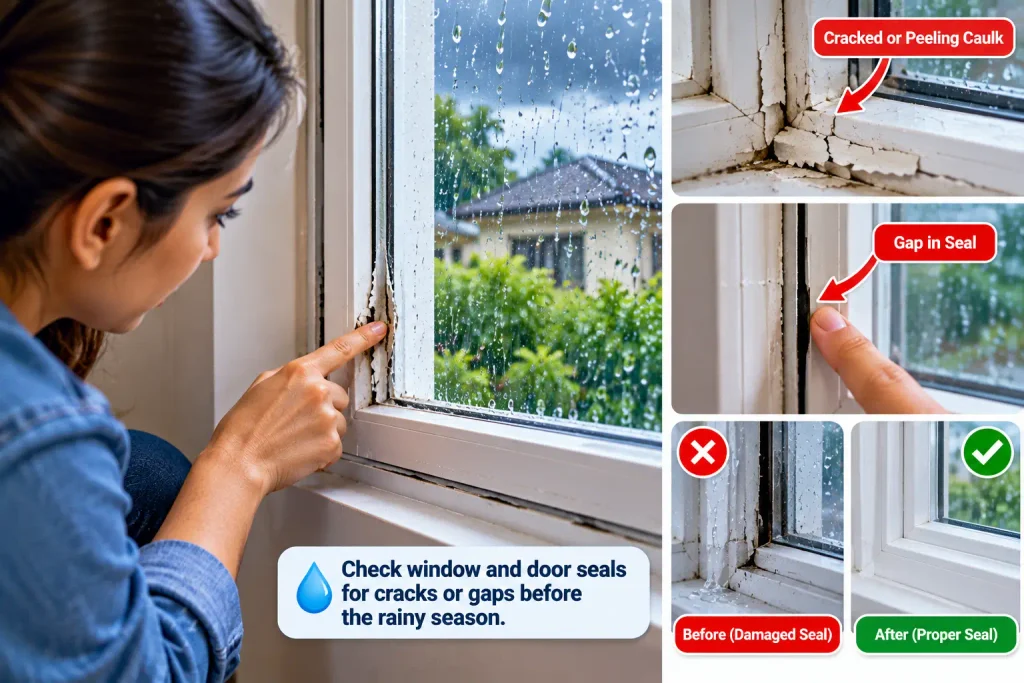
- Damaged caulk
- Cracks around frames
- Torn window screens
Close each window and door properly and look for visible gaps.
If the sealant is cracked, peeling, or separated from the surface, it may need repair before the rainy season.
6. Inspect Walls and Ceilings for Existing Dampness
Before monsoon starts, check your walls and ceilings for signs of an existing moisture problem.
Look for:
- Dark stains
- Peeling paint
- Bubbling paint
- Cracks
- Damp patches
- Mold or mildew
- Discoloration
Don’t simply paint over a damp area.
First try to identify where the moisture is coming from. Otherwise, the problem may return after the next period of heavy rain.
7. Check Plumbing for Leaks
Inspect visible plumbing around your home.
Look under:
- Kitchen sinks
- Bathroom sinks
- Toilets
- Washing machines
- Water heaters
- Exposed pipe connections
Look for dripping water, damp cabinets, water stains, or corrosion.
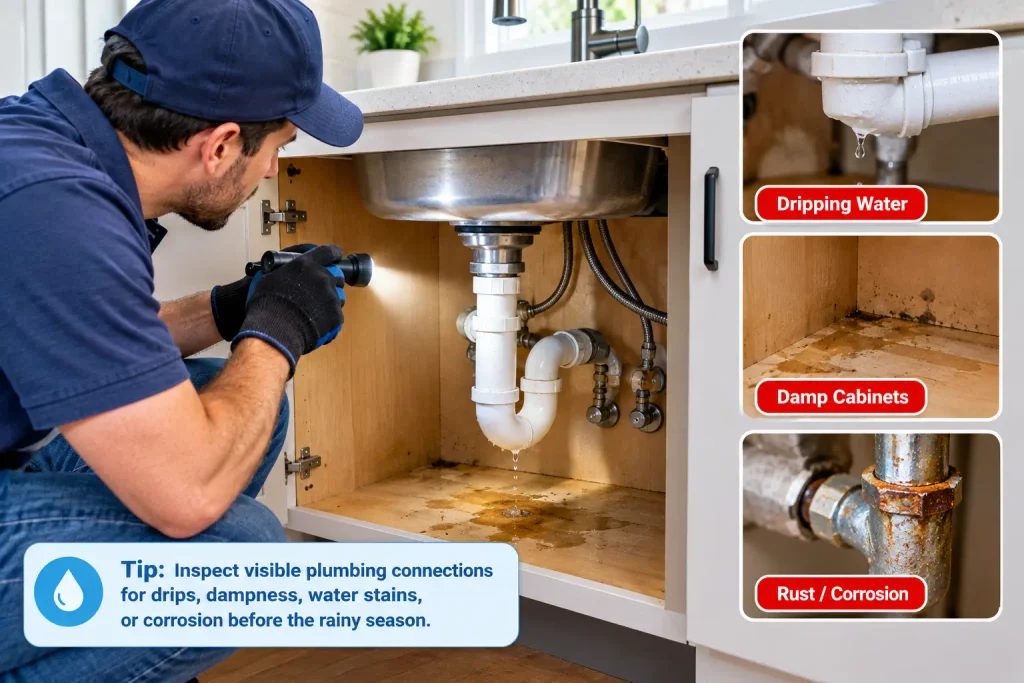
A small plumbing leak may become harder to notice once the rainy season brings additional moisture into the home.
If your faucet is already dripping, you can also check our guide How to Fix a Leaky Faucet: Easy Step-by-Step Guide
8. Check Your Toilet and Flush System
Flush each toilet and make sure it works normally.
Watch for:
- A loose handle
- A sticking handle
- Water continuing to run
- Weak flushing
- Water around the toilet base
If the handle feels loose, see our guide Toilet Handle Feels Loose? 6 Easy Fixes to Try
And if the toilet keeps running after flushing, our guide Toilet Won’t Stop Running? 8 Easy Fixes to Try can help you troubleshoot the problem.
9. Inspect Electrical Areas for Moisture
Water and electricity can be a dangerous combination.
Check accessible areas for:
- Water near outlets
- Damaged electrical cords
- Cracked switches or outlet covers
- Exposed wiring
- Signs of water entering electrical areas
Never attempt electrical repairs if you are not qualified to do them.
If water is reaching electrical equipment or wiring, keep away from the area and contact a qualified professional.
10. Check Outdoor Walls and Openings
Walk around the outside of your home and inspect visible areas.
Look for:
- Cracks around windows
- Gaps around pipes
- Damaged exterior sealant
- Openings around cables
- Cracks in walls
- Areas where water may collect
Seal suitable small gaps with an appropriate exterior product according to the manufacturer’s instructions.
For larger cracks or structural concerns, get professional advice.
11. Inspect Your Home for Pest Entry Points
Rainy weather can change where pests look for shelter.
Check around:
- Doors
- Windows
- Pipes
- Drains
- Wall cracks
- Utility openings
- Storage areas
Seal suitable gaps where practical.
Also keep food waste and garbage properly covered.
If you notice ants repeatedly entering your kitchen, read our guide How to Stop Ants From Coming Into Your Kitchen: 9 Easy Ways
12. Check for Mold and Damp Areas
Bathrooms, kitchens, storage rooms, and other poorly ventilated areas can develop moisture problems.
Before monsoon, check for:
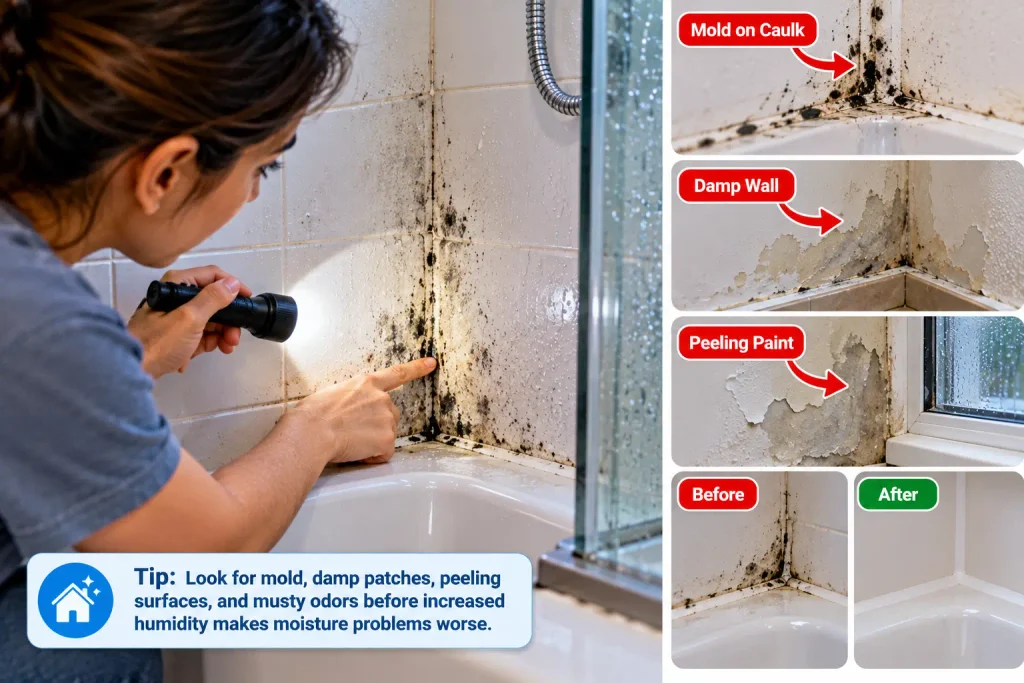
- Dark spots
- Mold on caulk
- Musty odors
- Damp walls
- Condensation
- Peeling surfaces
For more information about preventing moisture and mold problems, see the EPA’s mold and moisture guide. It explains why controlling moisture and drying wet areas quickly are important for preventing mold growth.
If you find black mold stains around bathroom caulk, see our guide How to Remove Black Mold Stains From Bathroom Caulk Safely
Don’t cover moldy or damaged caulk with fresh caulk. Remove damaged material, clean and dry the area, and address the moisture source first.
13. Prepare Outdoor Furniture and Equipment
Rain can damage items left outside for long periods.
Before monsoon:
- Move suitable furniture indoors
- Cover outdoor equipment properly
- Protect tools from prolonged moisture
- Store cushions in a dry location
- Secure lightweight objects
- Check outdoor electrical equipment
- Keep important items away from areas that may flood
Make sure covers allow appropriate ventilation where needed rather than trapping moisture underneath.
14. Check Air-Conditioning and Exhaust Systems
Inspect accessible AC and ventilation components before the rainy season.
Check:
- Filters
- Drain lines
- Visible water leaks
- Outdoor AC unit area
- Exhaust fans
- Vent openings
Clean or replace filters according to the equipment manufacturer’s recommendations.
If you notice unusual water leakage or an AC problem you cannot safely identify, contact a qualified technician.
15. Make a Pre-Monsoon Repair List
After checking your home, write down everything that needs attention.
Divide your list into:
Fix Now
- Active leaks
- Electrical safety problems
- Blocked drains
- Serious roof damage
- Major water-entry points
Fix Soon
- Damaged seals
- Minor cracks
- Loose hardware
- Small plumbing problems
- Damaged screens
Monitor
- Minor cosmetic damage
- Small areas that need observation
- Non-urgent maintenance
This makes it easier to prioritize repairs instead of trying to fix everything at once.
Quick Pre-Monsoon Home Checklist
You can save this shorter version and use it before the rainy season:
- ☐ Inspect roof and waterproofing
- ☐ Clean gutters
- ☐ Check downspouts
- ☐ Clear outdoor drains
- ☐ Check bathroom and kitchen drains
- ☐ Inspect windows and doors
- ☐ Check walls and ceilings
- ☐ Inspect plumbing for leaks
- ☐ Test toilets and flushes
- ☐ Check electrical areas for moisture
- ☐ Inspect exterior walls and openings
- ☐ Look for pest entry points
- ☐ Check for mold and dampness
- ☐ Protect outdoor furniture and equipment
- ☐ Inspect AC and ventilation
- ☐ Make a repair priority list
Common Pre-Monsoon Maintenance Mistakes
Avoid these common mistakes:
- Waiting until heavy rain starts before checking the roof
- Ignoring a slow drain
- Painting over damp walls
- Ignoring cracked window seals
- Leaving gutters full of leaves
- Blocking drainage areas with stored items
- Ignoring small plumbing leaks
- Using damaged electrical equipment near water
- Leaving garbage uncovered
- Trying to repair dangerous electrical or structural problems yourself
A few hours of preparation can be much easier than dealing with water damage during heavy rain.
When Should You Call a Professional?
Some problems should not be treated as DIY projects.
Get professional help if you find:
- Major roof damage
- Significant water leakage
- Structural cracks
- Electrical problems
- Water entering electrical areas
- Major plumbing leaks
- Persistent mold or moisture
- Serious drainage problems
- A repair that requires working at dangerous heights
If you’re unsure whether a repair is safe, don’t take unnecessary risks.
Frequently Asked Questions
What should I check before monsoon?
Check your roof, gutters, drains, windows, doors, plumbing, walls, electrical areas, and outdoor spaces for leaks, damage, blockages, or moisture.
How do I prepare my house for heavy rain?
Clear drainage paths, inspect the roof and gutters, repair water-entry points, check plumbing, protect outdoor items, and address existing dampness or leaks before heavy rain arrives.
Should I clean my gutters before monsoon?
Yes. Remove leaves and other debris and check that water can flow through the gutters and downspouts properly.
How can I prevent water from entering through windows?
Inspect window seals, frames, and surrounding caulk for cracks or gaps. Repair suitable damaged seals and address larger gaps or structural problems professionally.
What should I do if I find damp walls before monsoon?
Don’t simply paint over them. First investigate the source of moisture and repair the underlying problem.
Is it safe to check electrical areas during monsoon preparation?
You can visually inspect accessible areas, but never handle exposed wiring or electrical equipment near water. Get a qualified professional for electrical repairs or unsafe conditions.
How often should I prepare my home for monsoon?
Do a thorough inspection before the rainy season and continue checking areas such as drains, gutters, leaks, and moisture during periods of heavy rain.
Final Takeaway
Things to check before monsoon include your roof, gutters, drains, windows, doors, plumbing, walls, electrical areas, pest entry points, and outdoor spaces.
The best time to find a leak, blocked drain, damaged seal, or other home problem is before heavy rain exposes it.
Use the checklist above to inspect your home, prioritize important repairs, and get professional help for problems that are unsafe or beyond your experience.
A little preparation before monsoon can help your home stay drier, safer, and easier to maintain during the rainy season.